
Gloucester Cathedral
In 1327 a deposed king was murdered at Berkeley Castle, and the great abbeys of the west country would not take the body. Bristol refused it. Kingswood refused it. Malmesbury refused it. The abbot of Gloucester sent his own carriage, brought Edward II here and buried him north of the high altar — and within a generation the abbey was rich enough to rebuild its entire east end in a style nobody had seen before. Whether that money came from pilgrims or from the Crown is still argued about. What it bought is not in doubt: the first Perpendicular quire in England, the earliest fan vault in the world, and a window the size of a tennis court.
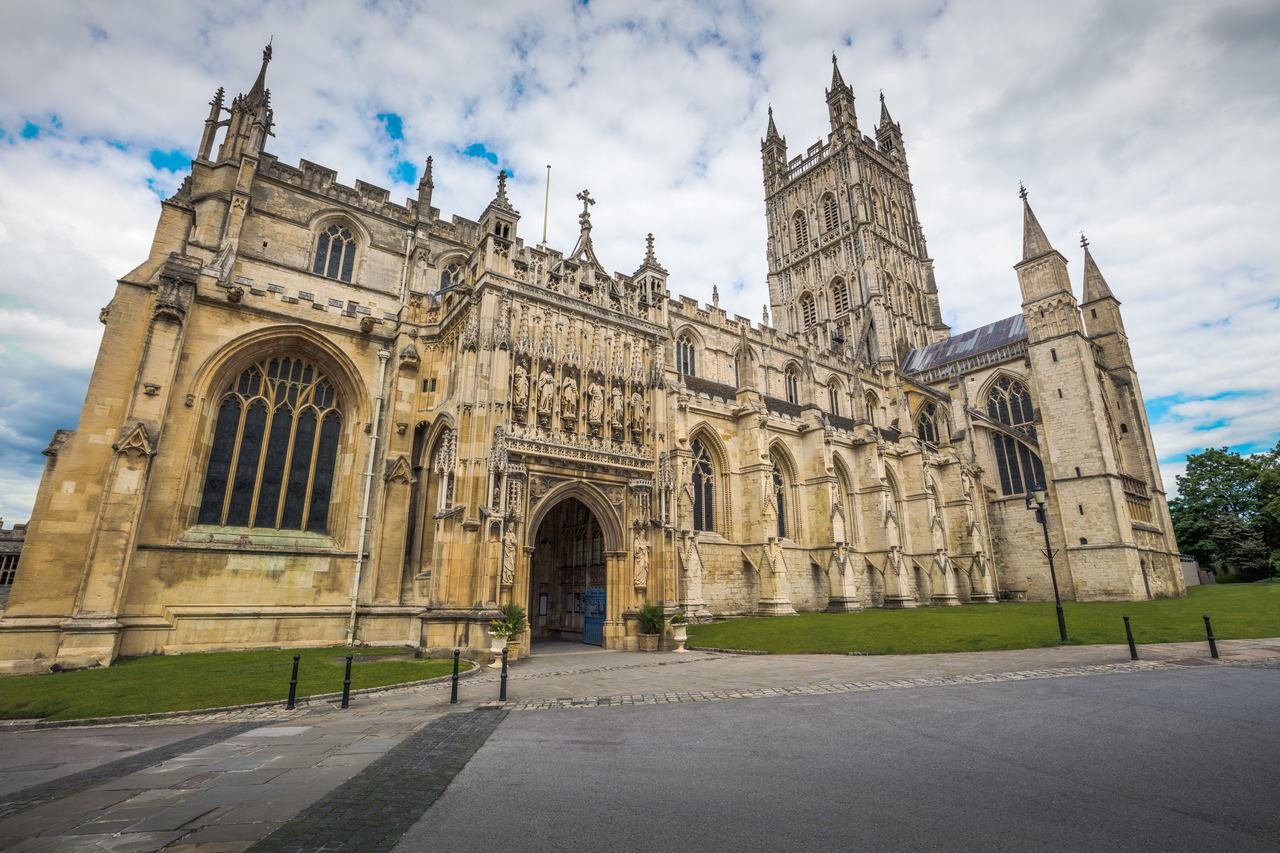
A Norman abbey with a Gothic cage inside it
Serlo, the first Norman abbot, began the present church in 1089 on a site that had held a religious house since 679. What he built is still there and still obvious: the nave marches east on colossal cylindrical piers, plain, heavy and Romanesque, and that is what visitors see first. The crypt underneath is his too, one of only four apsidal cathedral crypts in England.
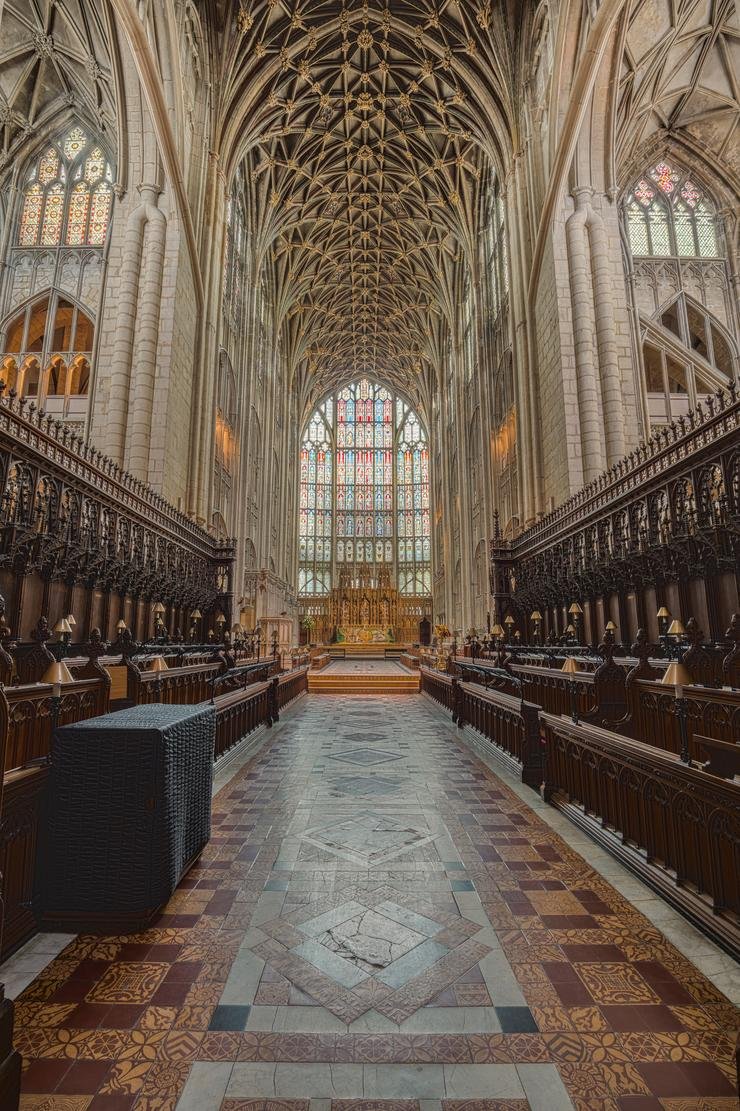
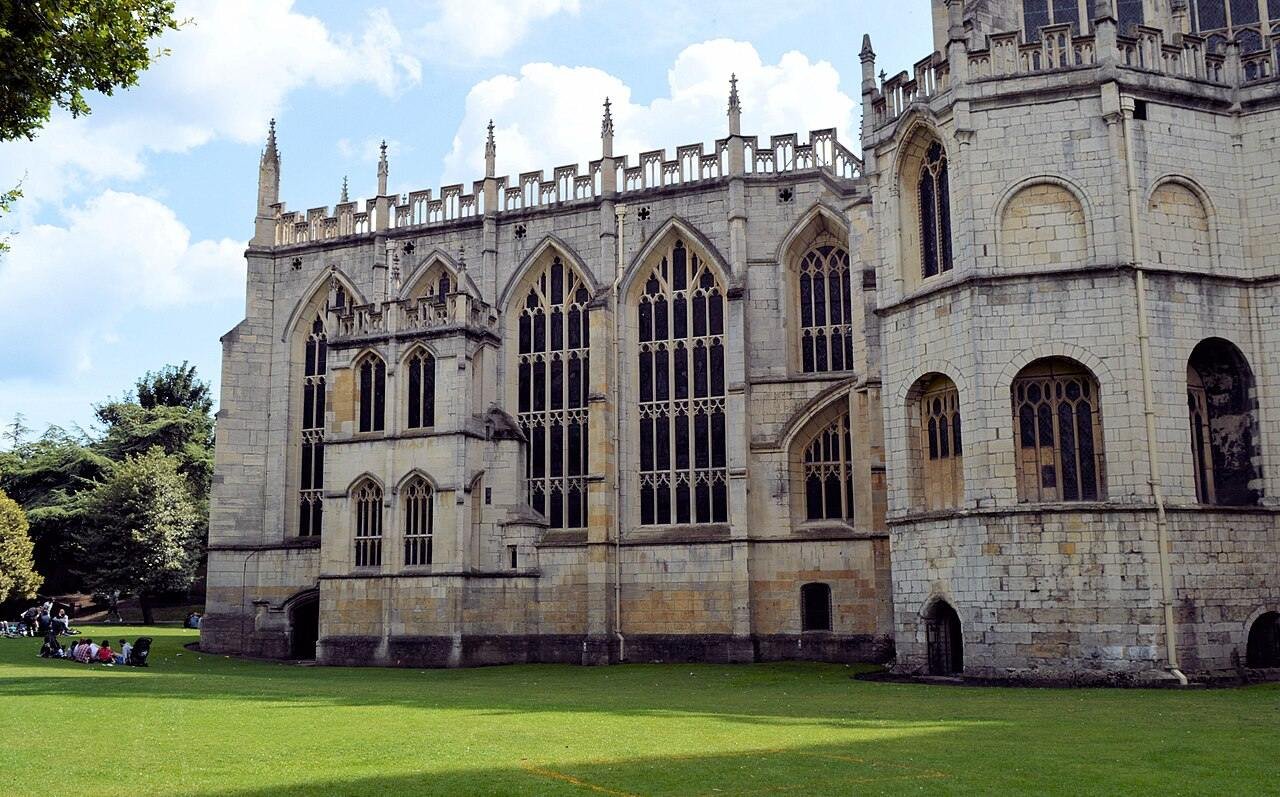
Then, after Edward II’s burial, the monks did something clever and thrifty. Rather than demolish the Norman quire, they encased it. A skin of slender vertical stone panelling was built over and inside the old Romanesque work, the roof was raised into a lierne vault, and the east wall was replaced with glass. The Norman masonry is still behind it, carrying the load. Stand in the quire and you are inside a fourteenth-century cage that has been fitted into an eleventh-century box, and the joint is nearly invisible.
That remodelling, from about 1337 onwards, is where the Perpendicular style — the last and most English phase of Gothic — effectively begins. It then ran for two hundred years, and the great town churches of East Anglia and Somerset and the chapels of Cambridge and Windsor are all descendants of what was worked out here on a budget.
The monastery was dissolved in 1540 and re-founded the following year as a cathedral, which is why so much of the monastic layout — cloister, chapter house, lavatorium — survives intact when most English monasteries are grass and stumps.
The visitor’s cheat sheet
| Where | 12 College Green, Gloucester, GL1 2LX |
|---|---|
| Getting there | A ten to fifteen minute walk from both the railway station and the bus station, in the middle of the city. Parking in Cathedral Close is for pass holders only, with eight Blue Badge spaces on a first-come basis; use the public car parks or the Park and Ride |
| Opening hours | Mon–Fri 10am–5pm, Sat 10am–4pm, Sun 12pm–2.30pm and 4pm–5pm. Times vary for services and events — check the What’s On calendar before you travel |
| Admission | Free, by voluntary donation. The cathedral suggests £5 an adult and states that it costs £7,600 a day to run, with no regular government funding |
| Guided tours | Highlights, 50 minutes, adult £8 and child £4, several times daily, including the Harry Potter cloister. Crypt, 25 minutes, adult £6 and child £3. Cloister, 30 minutes, adult £6 and child £3, on selected Saturdays. Library, 60 minutes, adult £15 and child £8, up 38 spiral steps |
| Tower tour | 269 steps, about an hour, adult £15 and child £8. Children must be 6 or over and accompanied by an adult over 18. No bag storage; assistance dogs only. Book online |
| How long | An hour and a half for the building; half a day with the tower and a tour |
| Best time | Weekday mornings. The Great East Window wants sun behind it, which means the first half of the day |
| Whispering gallery | There is one, high above the quire behind the Great East Window, and access is limited and can close at short notice for services. Ask at the welcome desk on the day rather than counting on it |
Hours and admission checked against the official site in September 2026. They change; the official site is always the last word.
Entry is free and the good bits are not hidden behind a ticket — the cloister, the quire, the tomb and the window are all part of an ordinary visit. What costs money is the tower climb and the short guided tours, and of those the crypt tour at £6 is the one almost nobody takes and probably should.
What to see, in the order you meet it
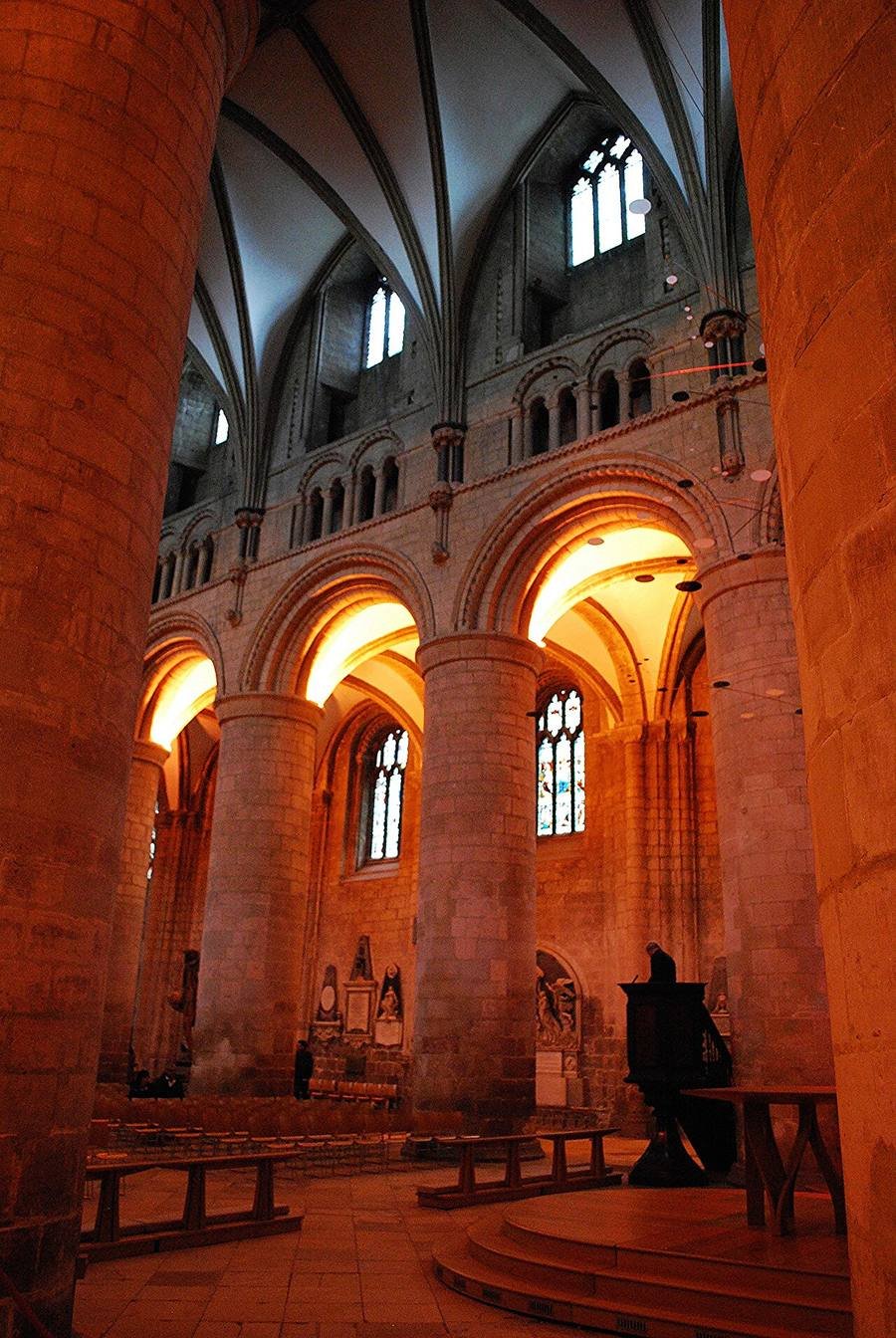
The Norman nave
Fourteen bays of drum piers over six feet in diameter, carrying round arches, with a thirteenth-century vault dropped on top after a fire. It is deliberately unfashionable: by the time the east end was being rebuilt in the newest manner the monks left the nave alone, and the contrast between the two halves of the building is the whole point of a visit here.
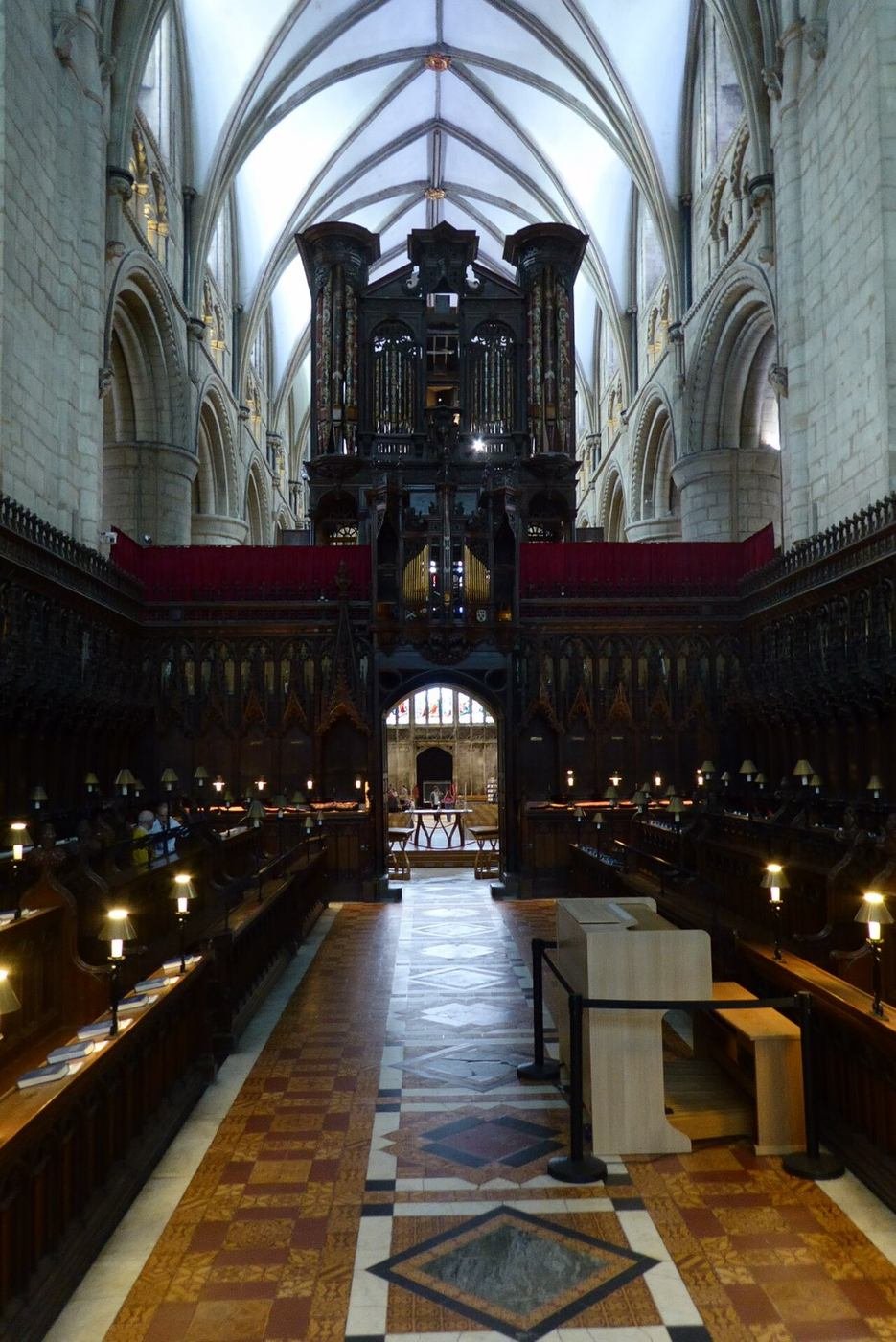
The quire and its vault
High above the floor, the lierne vault knits so many short ribs together that the roof stops reading as a series of bays and becomes a single continuous net. Look for the angel musicians in the bosses. This is also one of the best places in England to hear an organ; the case is seventeenth century and survived the Commonwealth.
The Great East Window
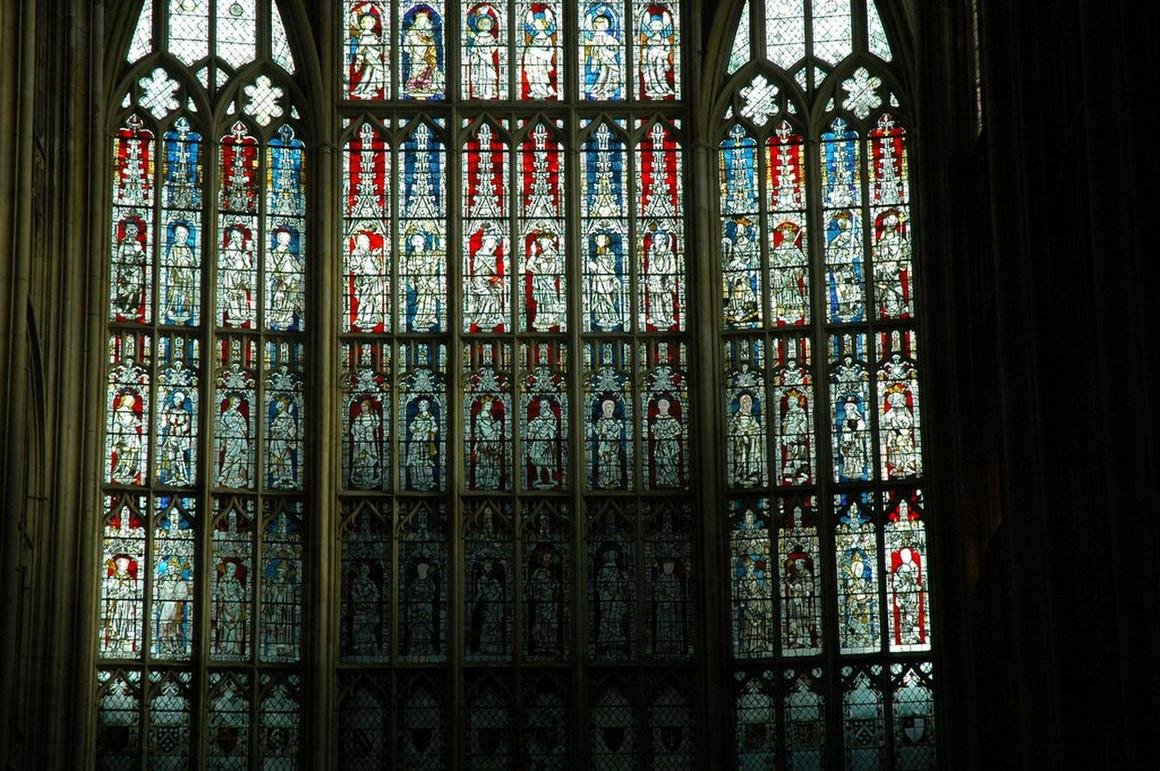
Around 1350 the entire east wall was replaced by glass: twenty-two metres high and twelve across, about the size of a tennis court, and the largest window in the world when it was made and still the largest surviving expanse of fourteenth-century glass in the country. It is thought to commemorate local men who fought at Crécy in 1346, and among the saints and kings in the upper lights there is a small figure of a man hitting a ball with a club — often called the earliest image of golf in existence, which is a claim worth enjoying and not leaning on.
Edward II
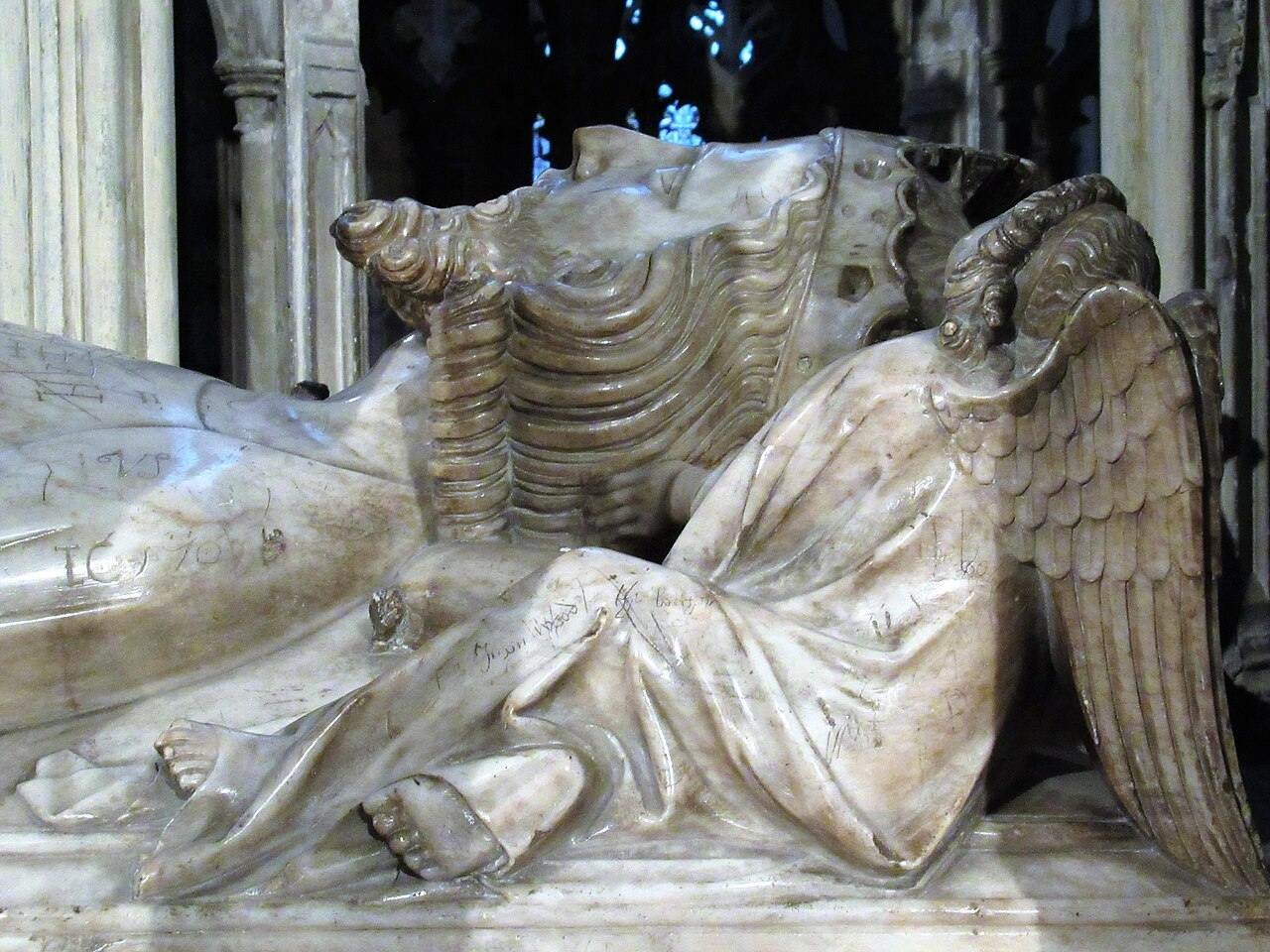
North of the high altar, under a canopy of pale stone cut so fine it looks like sugar work, lies the king this building was paid for by. The effigy is alabaster, and it does not look like a man who died badly: the face is calm, young and idealised, which was the point. He was killed at Berkeley Castle in September 1327 after being deposed by his wife and her lover, and the manner of his death is the subject of a story so lurid that it has crowded out the evidence for what actually happened. His son Edward III paid for the tomb.
Robert Curthose
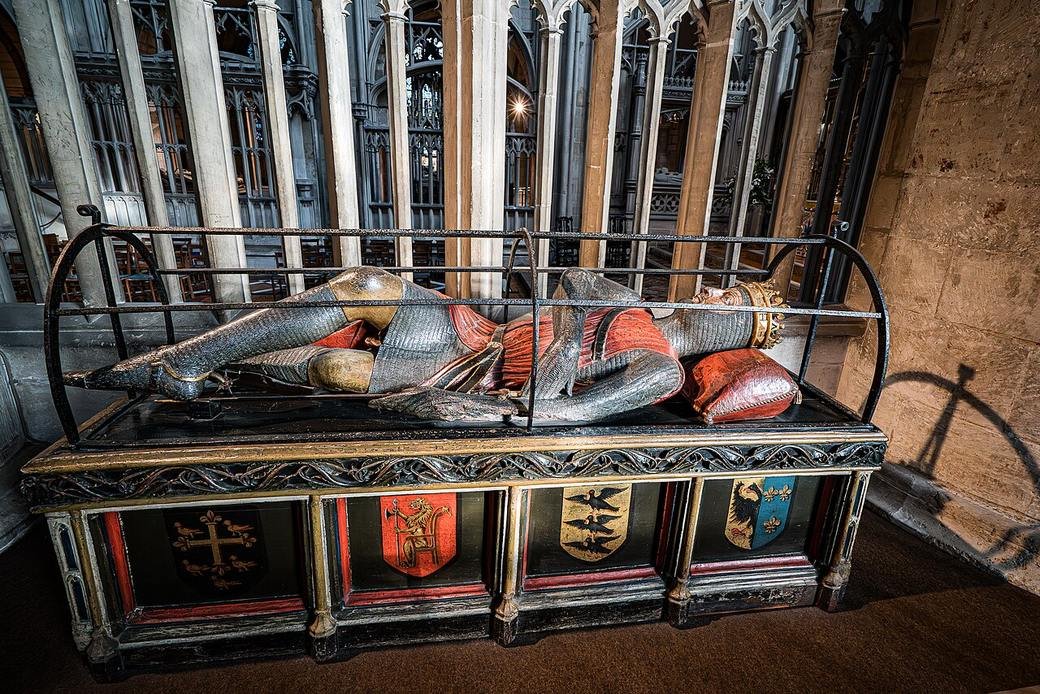
In the middle of the quire, a painted wooden figure lies with its legs crossed: Robert Curthose, eldest son of William the Conqueror, who went on the First Crusade, was offered the crown of Jerusalem, turned it down, lost England to his youngest brother and spent the last twenty-eight years of his life a prisoner. The effigy is thirteenth century, carved from bog oak, made long after he died, and it is one of very few wooden effigies to survive in England.
The chapter house, and the Domesday court
Off the east cloister walk is the chapter house, Norman, barrel-vaulted, and carrying one of the better claims in English history. At Christmas 1085 William the Conqueror held his court at Gloucester and, in the chronicler’s words, had “deep speech with his counsellors” about the survey of England that became the Domesday Book. The court met at Gloucester: that much is solid. Whether it sat in this room is not, because the chapter house as it stands was probably built a little after 1085 — so the order was most likely given a few yards from where you are standing, in the building this one replaced. The cathedral tells it carefully, and so should anyone repeating it.
The coronation of Henry III
On 28 October 1216 a nine-year-old boy was crowned king in this church. His father John had died ten days earlier with half the country in French hands and the royal regalia lost in the Wash, so the ceremony was improvised: no crown, no Westminster, a hurried service in the abbey that had happened to be safe, and a plain gold circlet said to have been his mother’s. Henry III was crowned again at Westminster four years later, once the kingdom was back together. He remains the only English monarch since the Conquest to have been crowned anywhere other than Westminster Abbey — which makes this one of only two churches in England where it has ever happened.
The building kept its habit of hosting the state. Parliament met here in 1378, in the monastic buildings, and Richard II came with it.
The cloister, and the first fan vault
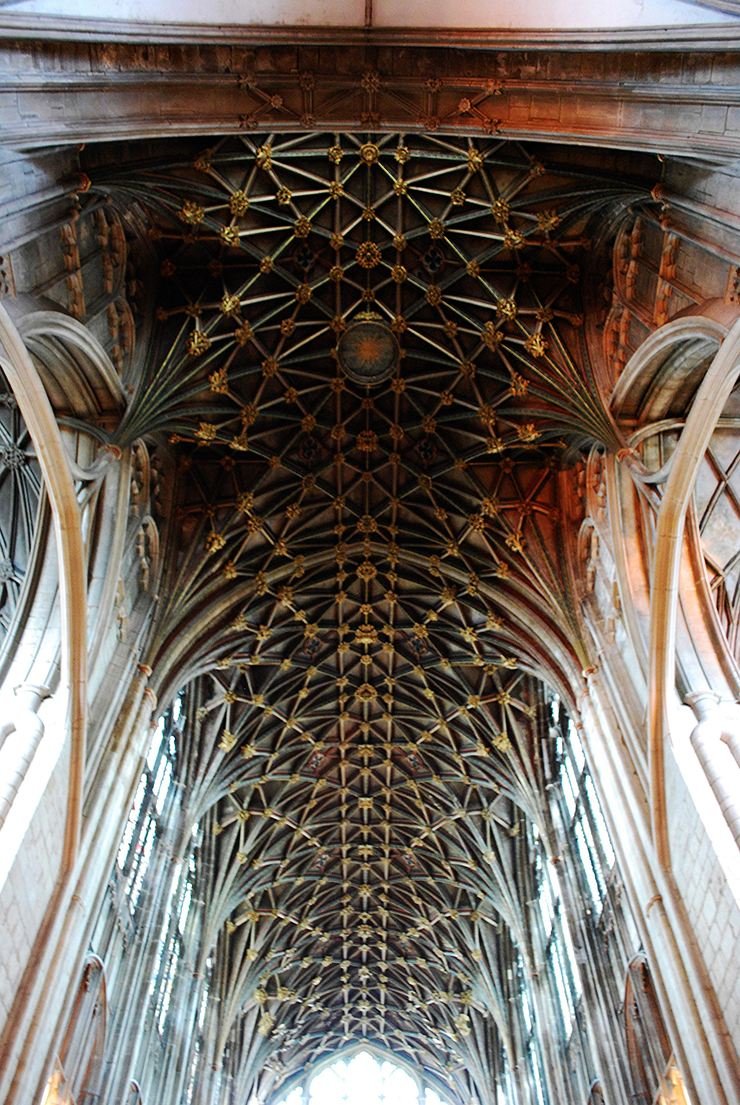
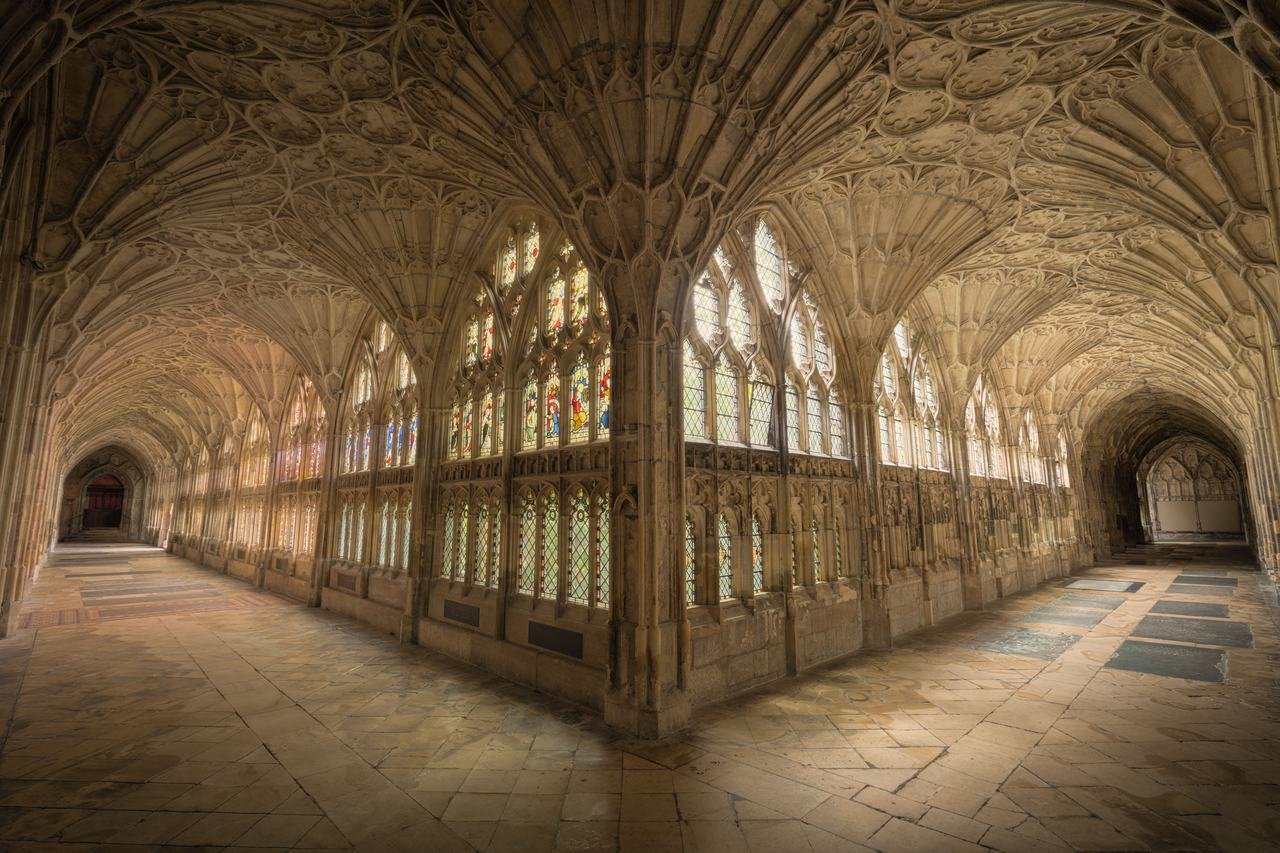
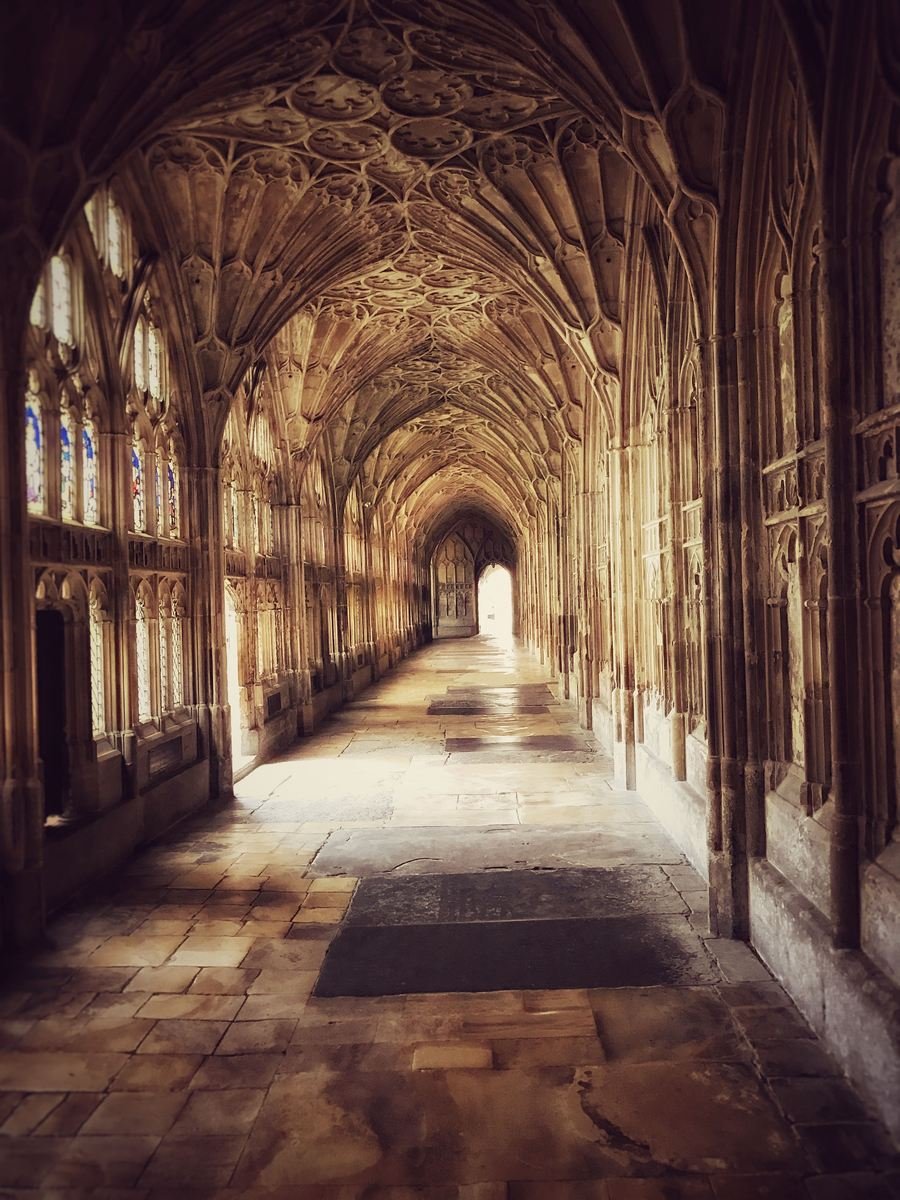
Out of the north aisle and into the reason architects come here. Between about 1351 and 1412 the cloister was rebuilt with a vault of inverted stone cones, each rib springing from the same point and opening at the same angle, so the ceiling reads as a row of half-open fans. Nobody had built one before. Every fan vault afterwards — Bath, King’s College, Henry VII’s chapel at Westminster — descends from this cloister, and it was worked out here on a monastic corridor rather than in a cathedral nave.
The Hogwarts corridors
The same cloister played the corridors of Hogwarts in the first, second and sixth Harry Potter films, and a good share of the cathedral’s visitors arrive because of it. The film crews chose it for exactly the reason it matters architecturally: nothing else in England looks like that. Walk it twice — once for the films and once looking up.
The lavatorium
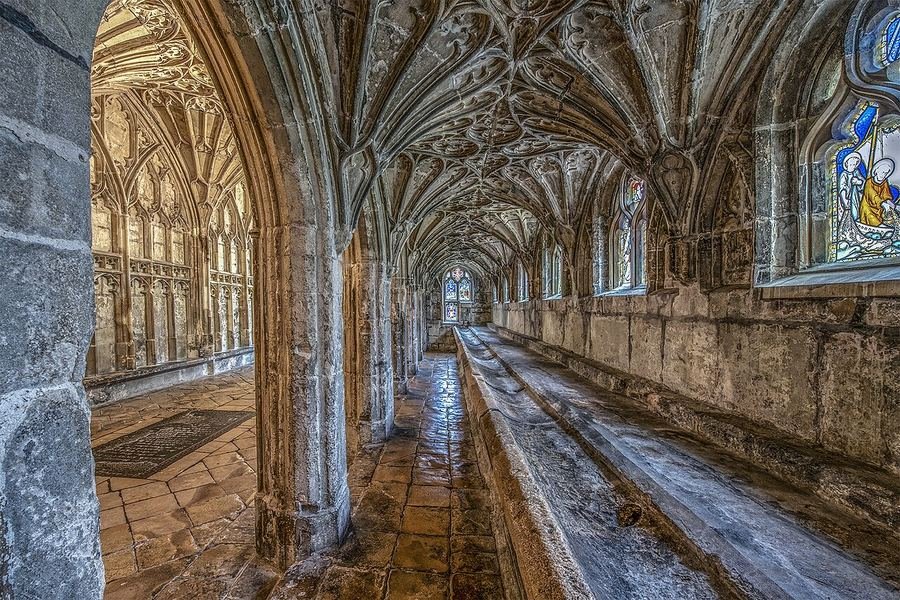
In the north walk, a long stone trough runs under a row of windows: the monks’ washing place, with a recess opposite for the towels and a small room beside it for the monk whose job was to keep them. It is the most ordinary thing in the building and the most direct link to the people who lived here.
The crypt
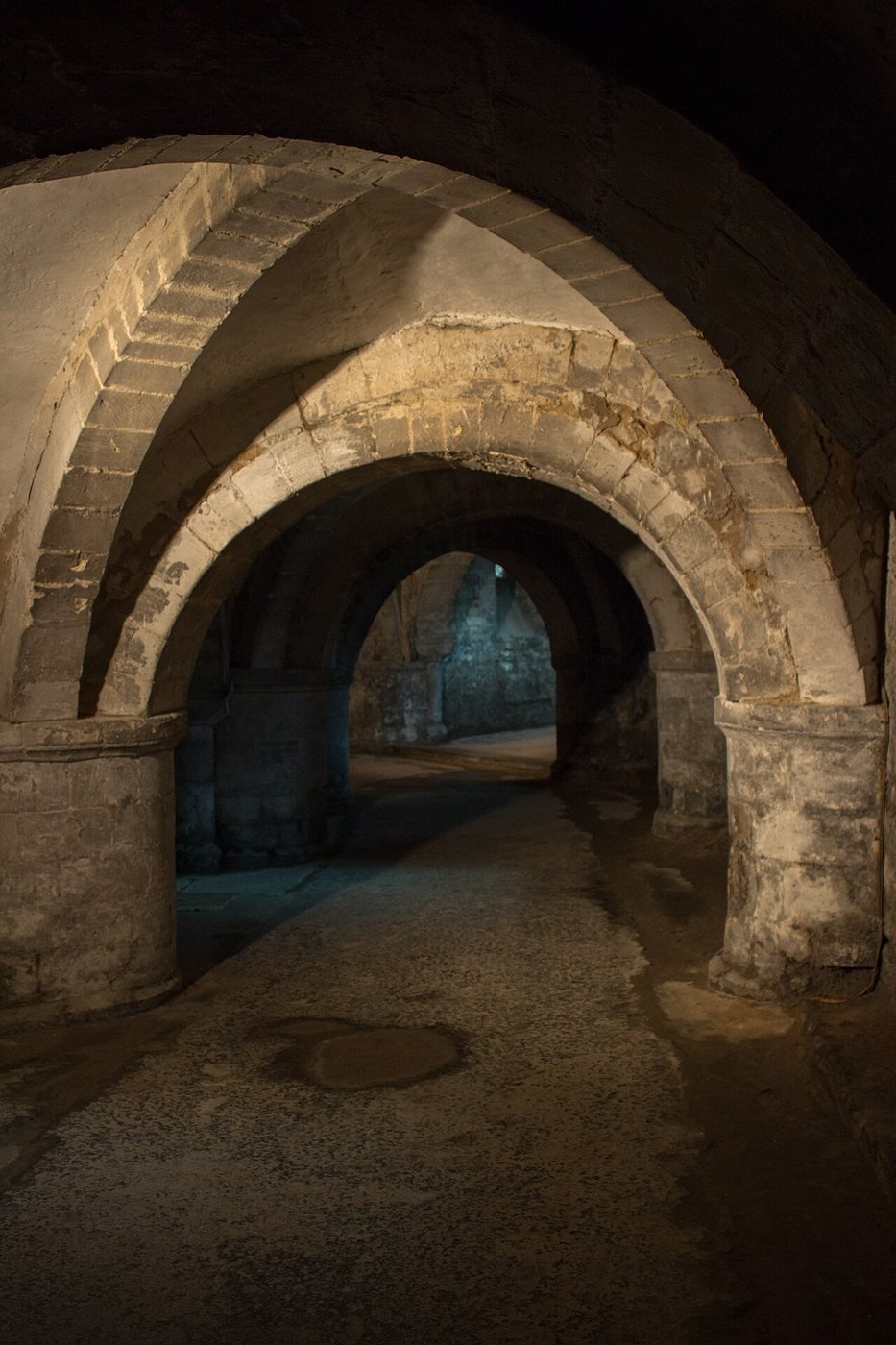
Down the steps from the south transept is Serlo’s crypt of about 1089, low, round-arched and almost unaltered. The piers were reinforced within a few decades of being built, because the Normans overreached and the church above began to move. The 25-minute crypt tour is the cheapest thing on the price list and the one that most changes how you read the rest of the building.
The Lady Chapel
Beyond the east window, all but detached from the church, the Lady Chapel was finished around 1500: a glass box with barely any wall left, and the last major work before the monastery was dissolved. Its modern glass by Tom Denny, installed in 1992, is worth going in for on its own.
The tower
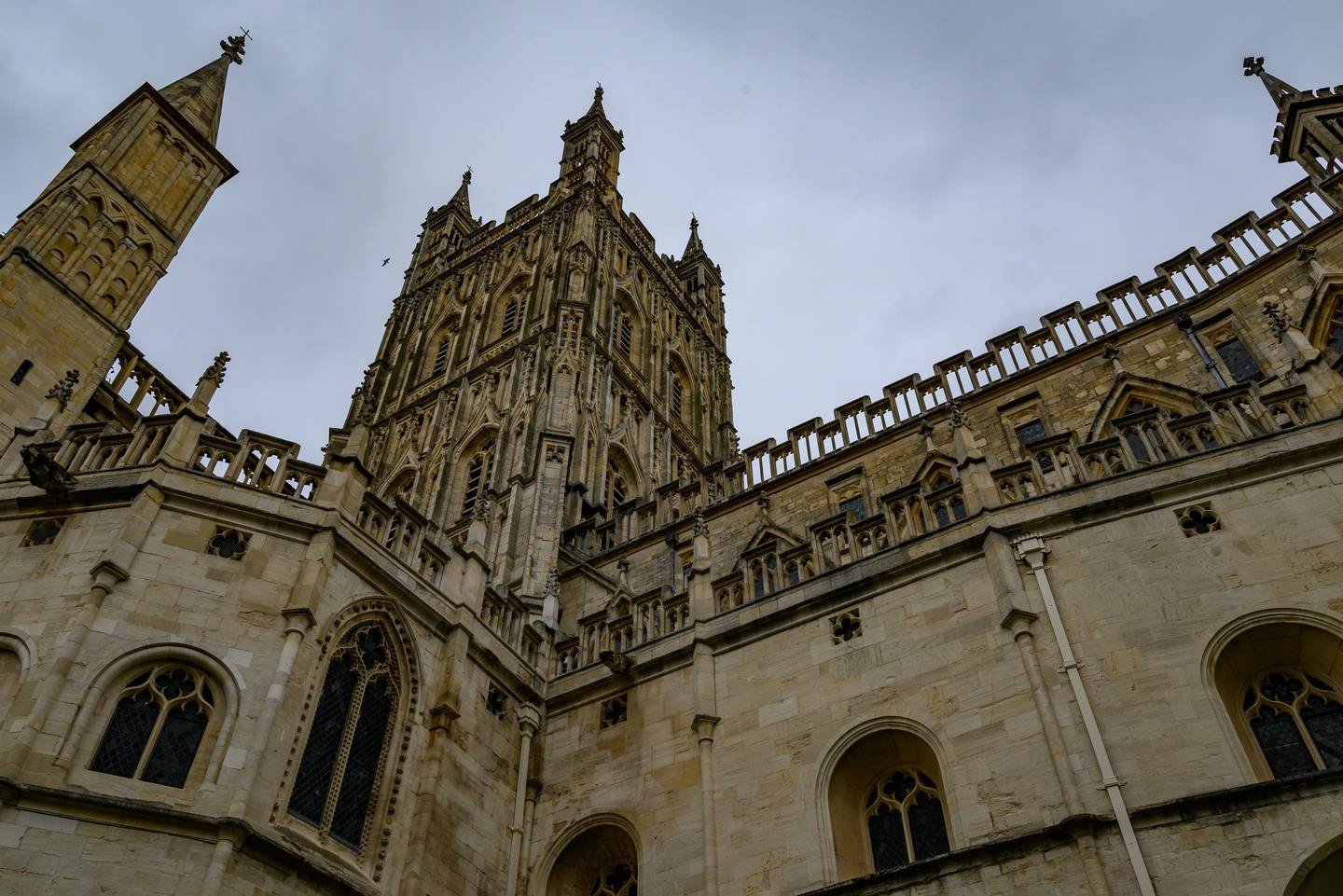
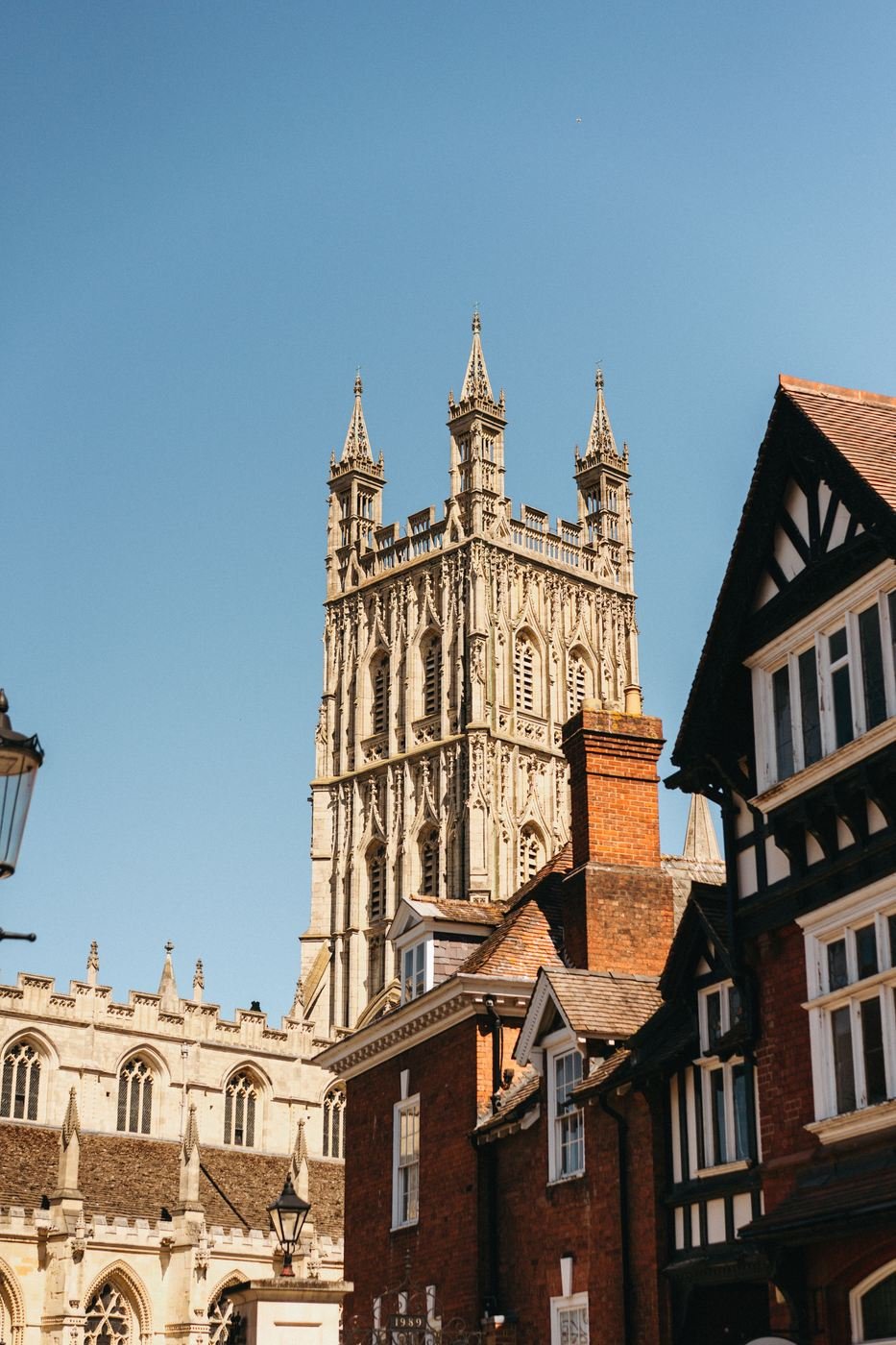
Two hundred and twenty-five feet, finished in the fifteenth century by a mason who signed his work into the stonework, and crowned with an openwork parapet that is structurally pointless and visually perfect. The tower tour is 269 steps and takes an hour; on a clear day the Malverns are about forty miles off and entirely visible.
Tickets and tours
Nothing to book, except the climb
Entry is free, so the only decisions are which tours to add. The tower tour at £15 is the one to book online in advance because places are limited; the Highlights tour at £8 and the crypt tour at £6 can be bought at the welcome desk when you arrive. If you are only doing one paid thing and the tower does not appeal, take the crypt.
Tour and hotel links go to GetYourGuide and Booking.com. This site earns nothing from them at present — they are here because they are the quickest way to check what is actually available.
Don’t miss
- The first fan vault In the cloister, begun about 1351. Everything of its kind anywhere descends from it.
- The golfer A small figure with a club in the Great East Window, often called the earliest image of golf.
- The lavatorium The monks’ washing trough in the north walk, with the towel recess opposite.
- Robert Curthose A crusader in painted bog oak, one of the few wooden effigies left in England.
- The join in the quire Norman masonry behind a Perpendicular skin. Look for where the old work shows through.
- The crypt 1089, almost untouched, and reinforced within decades because it was already moving.
- Tom Denny’s glass 1992, in the Lady Chapel, and entirely at home among the medieval work.
Insider tips
Go in the morning, for the window. The Great East Window faces east, so it is lit from behind for the first half of the day and goes flat and grey by mid-afternoon. The same is true of the quire. Arrive at ten and you get both at their best, and the cloister to yourself before the film pilgrims appear.
Donate. Entry is free and they suggest £5, against a running cost of £7,600 a day with no regular public funding. A cathedral that charges nothing is making a choice that only works if visitors make theirs.
Sunday is the awkward day — two short visiting windows either side of services, and easy to get wrong. Any weekday is better.
If the tower tour is the reason you are coming, book it before you travel. Sixty minutes, 269 steps, minimum age six, no bags, and it does not run every day.
Ask at the desk about the whispering gallery. It exists, high up behind the Great East Window, but access is limited and it closes at short notice when there is a service in the quire.
Common questions
Is Gloucester Cathedral free to visit?
Yes. General entry is by voluntary donation, and the cathedral suggests £5 an adult. It costs them about £7,600 a day to keep the building open and they receive no regular government funding, so the suggested donation is worth taking seriously. Guided tours and the tower climb are charged separately.
Can you climb the tower at Gloucester Cathedral?
Yes, on a guided tower tour: 269 steps, about an hour, £15 for adults and £8 for children, with views said to reach forty miles to the Malvern Hills. Children must be at least six and with an adult over eighteen. There is no bag storage, so travel light, and book online rather than turning up hopefully.
Was Harry Potter filmed at Gloucester Cathedral?
Yes — the cloisters stood in for the corridors of Hogwarts in the first, second and sixth films. They are part of the ordinary visit and cost nothing to walk through. What the films do not tell you is that you are looking at the earliest fan vaulting in England, begun around 1351.
Why is Edward II buried at Gloucester?
Because nowhere else would take him. He was deposed in 1327 and died at Berkeley Castle twenty miles away, almost certainly murdered, and the great abbeys at Bristol, Kingswood and Malmesbury refused the body. Abbot Thoky of Gloucester accepted it, and the king’s tomb turned the abbey into a place of pilgrimage.
Did pilgrims pay for the rebuilding of Gloucester Cathedral?
That is the traditional story and it is disputed. Pilgrims certainly came to Edward II’s tomb, and the abbey’s remodelling followed. But Pevsner argued the money came mainly from royal donations rather than pilgrim offerings, and the argument has never been settled. The honest version is that the king’s tomb made the abbey rich by one route or another.
What are the opening hours at Gloucester Cathedral?
Monday to Friday 10am to 5pm, Saturday 10am to 4pm, and on Sunday two short windows, noon to 2.30pm and 4pm to 5pm. Services and special events change the times, sometimes at short notice, so the cathedral’s own What’s On calendar is the thing to check on the morning of your visit.
Where to stay and eat nearby
The cathedral sits in a close in the middle of the city, ten minutes from the station, and Gloucester Quays has redeveloped the Victorian docks into somewhere worth eating. The cathedral has its own café in the south transept. Gloucester also makes a practical base for the Forest of Dean and the Wye Valley, and it is forty minutes from Bath by road.
More English cathedrals
- Wells Cathedral — the other great West Country cathedral, and an hour and a half south.
- Bath Abbey — whose fan vaults are the descendants of the ones in this cloister.
- Durham Cathedral — Norman architecture at its most uncompromising.
- Ely Cathedral — another Norman nave with an astonishing later invention dropped into the middle.