
Glastonbury Abbey
In 1184 the abbey burned down. In 1191, with the rebuilding stalled for want of money, the monks announced that while digging in the cemetery they had found a coffin sixteen feet down, and with it a lead cross reading Here lies buried the renowned King Arthur in the Isle of Avalon. Pilgrims came. The money came. Historians have been polite about it ever since, and modern opinion is close to unanimous: it was a fundraising exercise by an institution in serious trouble. That does not make the place less interesting. It makes it one of the best-documented pieces of medieval marketing in England, and you can stand on the spot.
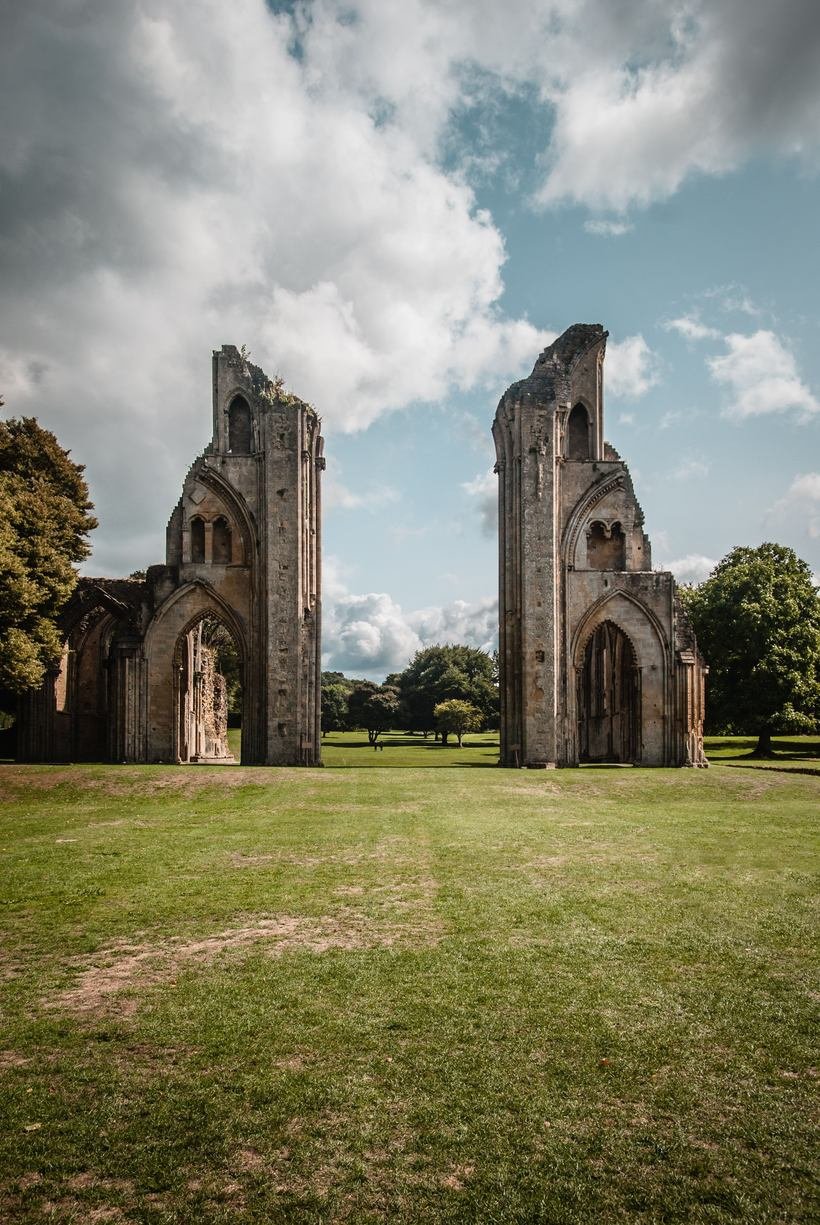
The richest abbey in England, and then a field
A monastery existed here by the seventh century, and probably earlier: a British Christian community on what was then an island in the marshes. Ine of Wessex endowed a stone church about 712. Dunstan, abbot here from about 940 and later Archbishop of Canterbury, reformed English monasticism from this house and made it the wealthiest in the country. Three Anglo-Saxon kings were buried here — Edmund I, Edgar and Edmund Ironside.
The fire of 1184 destroyed almost everything, including the ancient wattle church that was the community’s most treasured possession. Rebuilding began at once and the Lady Chapel was consecrated in 1186, on the site of the lost church, which is why the most complete building here is also the oldest part of the new one.
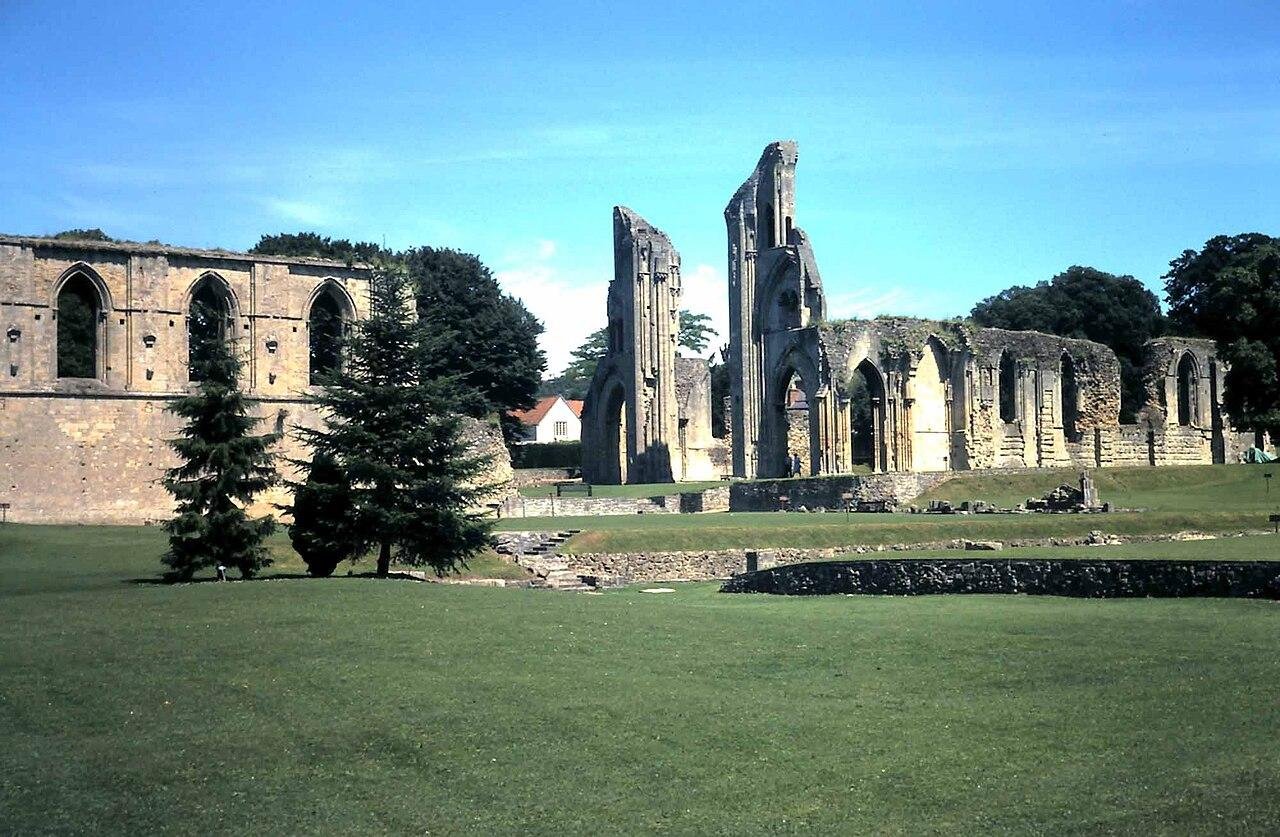
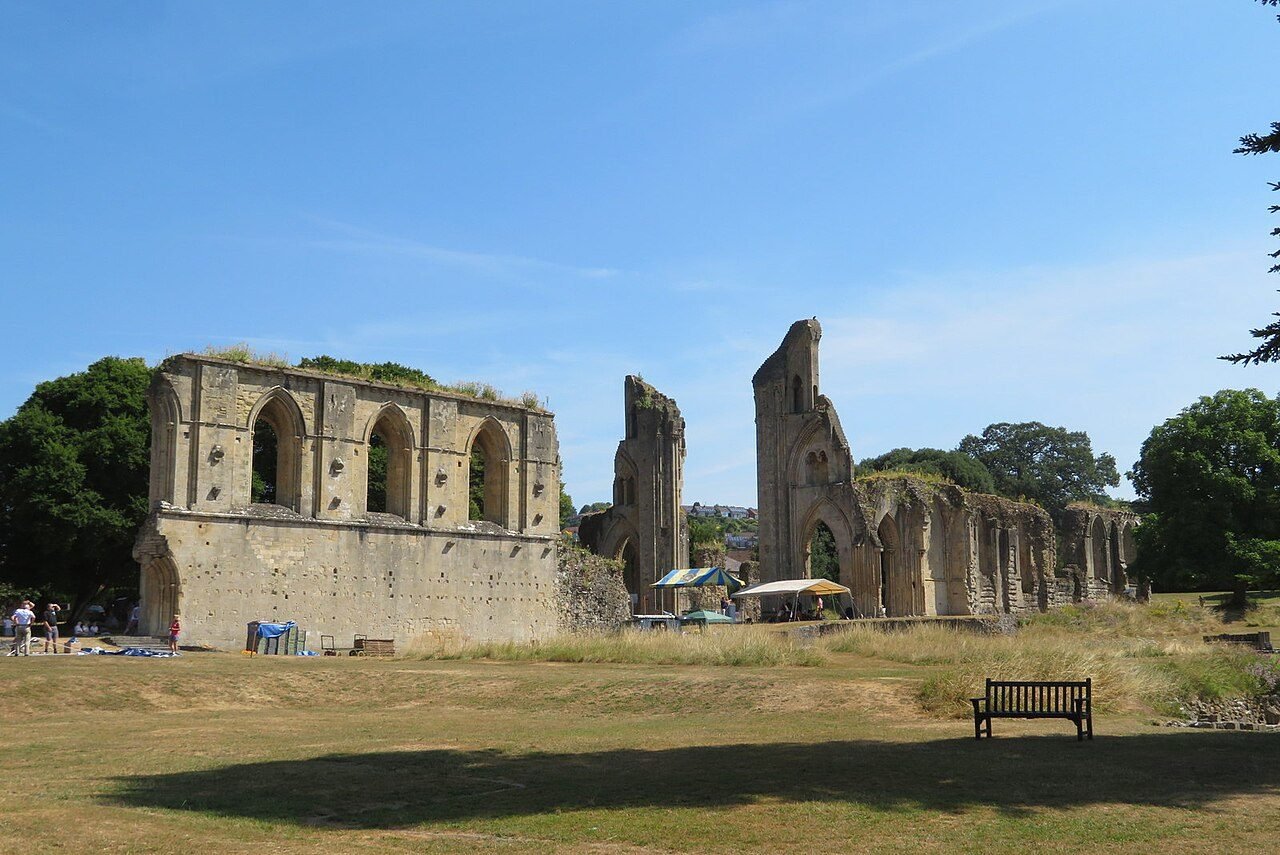
By the fifteenth century Glastonbury was the second richest religious house in England, after Westminster. Then, in 1539, the king’s commissioners arrived. The abbey was seized, the abbot was executed, the lead came off the roofs, and for three hundred years the site was a quarry. The buildings did not fall down. They were carried away, piece by piece, into the walls and roads of Somerset. That is why so little stands: not decay, but re-use.
The visitor’s cheat sheet
| Where | Magdalene Street, Glastonbury, Somerset, BA6 9EL — the main gates are in the middle of the town |
|---|---|
| Getting there | There is no useful railway station. The nearest is Castle Cary, on the Paddington to Plymouth line, and onward travel from there is by taxi only. Buses run from Bristol (376 and 374), Bristol/Bridgwater (375) and Yeovil (77), and stop next to the abbey |
| Parking | Pay and display in Silver Street, BA6 8BS. The nearest accessible parking is St Dunstan’s car park on Magdalene Street, BA6 9EH, with direct access to the abbey |
| Opening hours | Seven days a week except Christmas Day, currently 10am–6pm. Last entry is always 45 minutes before closing, so it moves with the seasonal hours |
| Admission | Adult £14 online, £15 on the gate; the online price includes a voluntary donation and a non-donation price is also offered. Two under-16s go free with each paying adult; additional under-16s £6.60. Groups of ten adults or more get 10 per cent off. Online tickets are sold until 6pm the day before |
| How long | Two hours, and longer with a picnic |
| Best time | Morning, before the town fills up. The ruins face the light better early, and the grounds are at their emptiest |
| Food | The Yard Café at the entrance is outside the ticket barrier and open to anyone. A seasonal Garden Café runs inside the grounds April to September. Picnics are welcome, but not in the Great Church or the Lady Chapel |
| Nearby | Glastonbury Tor is about a mile away, National Trust, free, and a stiff climb. Wells is six miles north |
Hours and admission checked against the official site in September 2026. They change; the official site is always the last word.
Two under-16s go free with every paying adult all year round, on general admission. It is on the abbey’s own site but easy to miss, and it makes this one of the cheapest family visits in the West Country. The other thing worth knowing before you arrive: the Tor is not included and is not here — it is a mile away and belongs to the National Trust.
What to see, in the order you meet it
The museum, and the model
Start inside, at the entrance, with the scale model of the abbey as it stood before 1539. Five minutes there makes the rest of the site legible: without it, the ruins read as a handful of walls in a park, and with it you can see that you are standing in the fourth-longest church in medieval England. The museum also holds finds from the excavations, which have been going on here for more than a century.
The Lady Chapel
The most complete building on the site and the first thing to walk to. It was consecrated in 1186, only two years after the fire, on the exact footprint of the old wattle church — a deliberate act of continuity by a community that had just lost its holiest object. The late Romanesque carving round the north doorway is worn but still legible, and the interior is roofless but intact to the wall-heads.
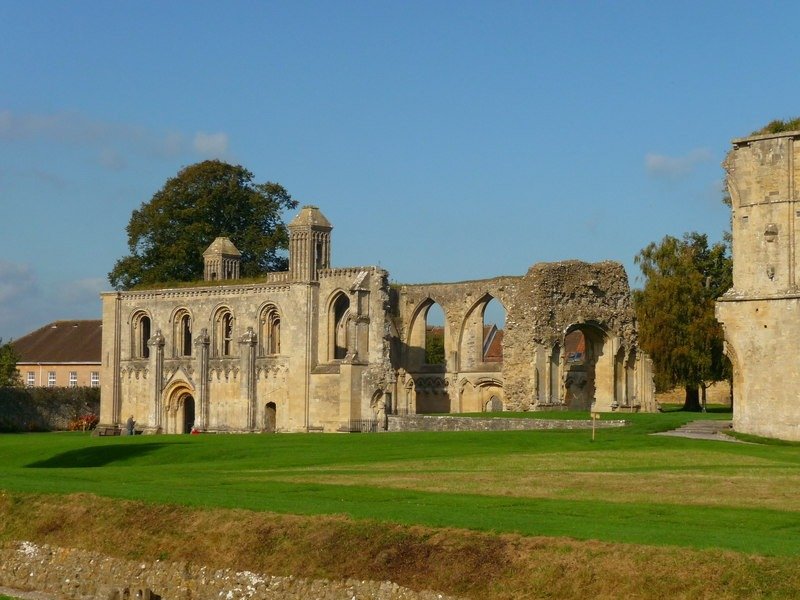
The crypt below it
Around 1500 Abbot Bere dug a crypt underneath the Lady Chapel and dedicated it to St Joseph, which meant lowering the ground and building steps down. It is one of the few places here where you are indoors, and it is the clearest physical evidence of how seriously the abbey took the Joseph of Arimathea story by the end — seriously enough to rebuild for it.
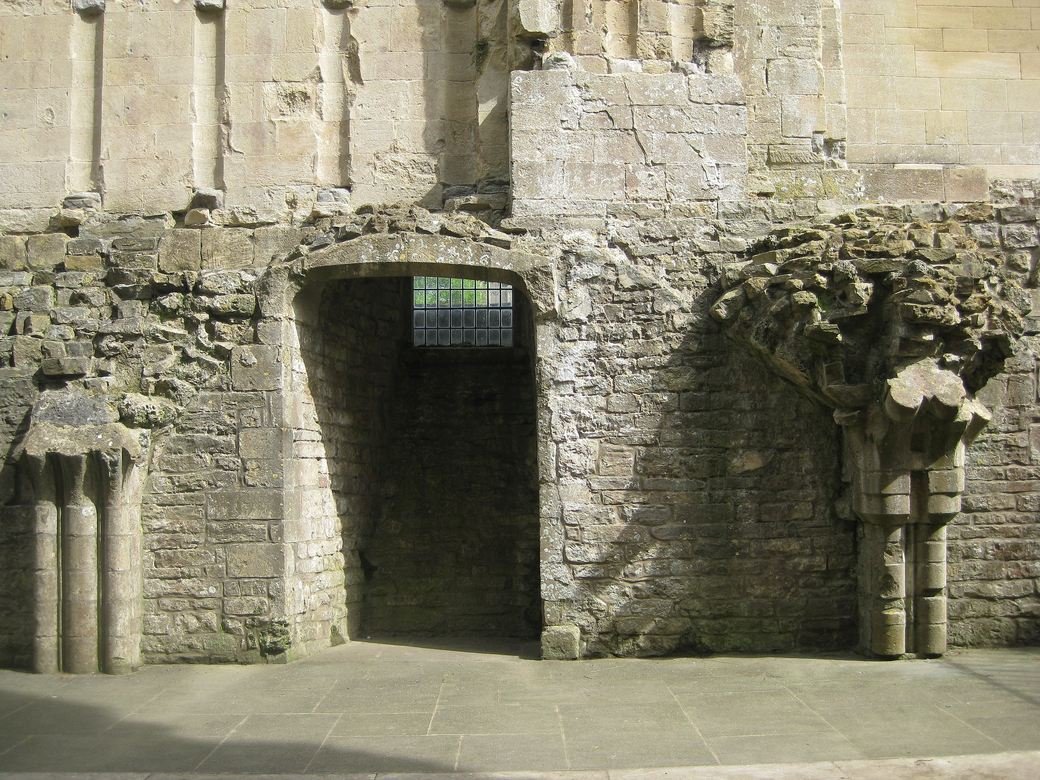
The great church
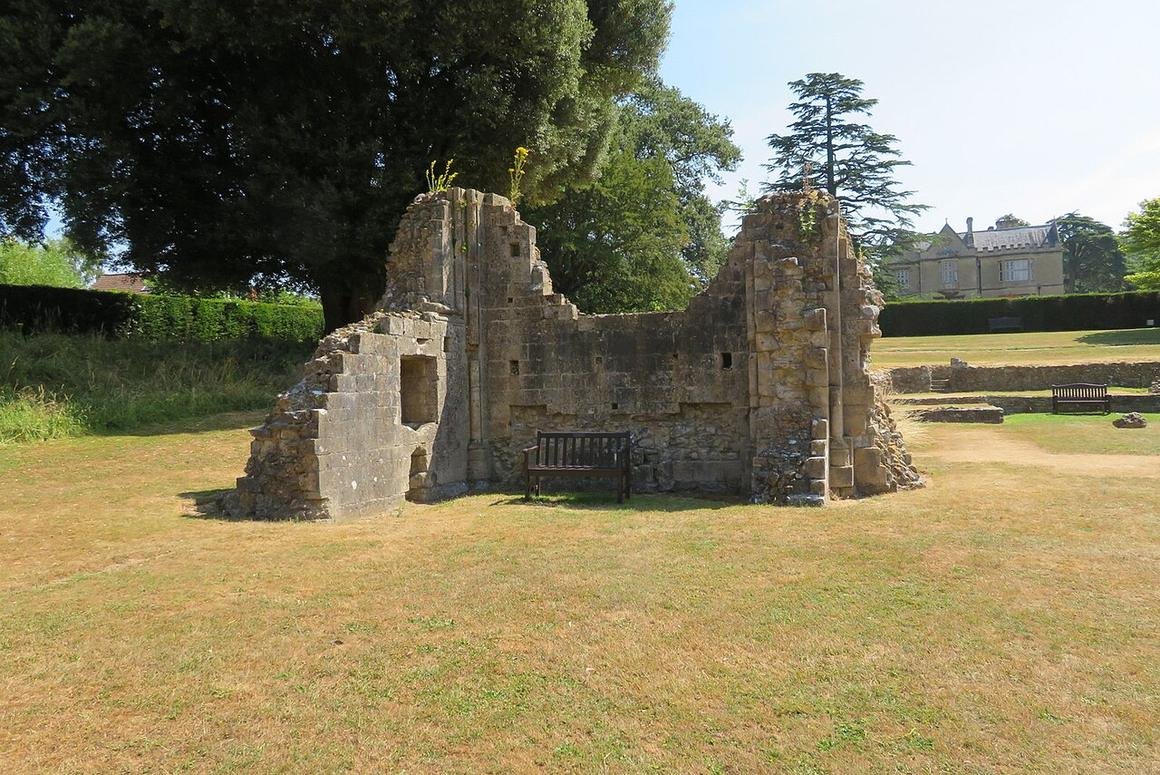
Beyond the Lady Chapel the nave begins, and what survives is mostly at ankle height: pier bases, wall stubs, the outline of the aisles in the mown grass. Two fragments of the crossing still stand to their full height, and they are the only way to feel the scale. The church was about 220 feet long before the east end was extended; the Edgar Chapel at the far end took it beyond 400. Walk the length of it on the grass. It takes a surprisingly long time.
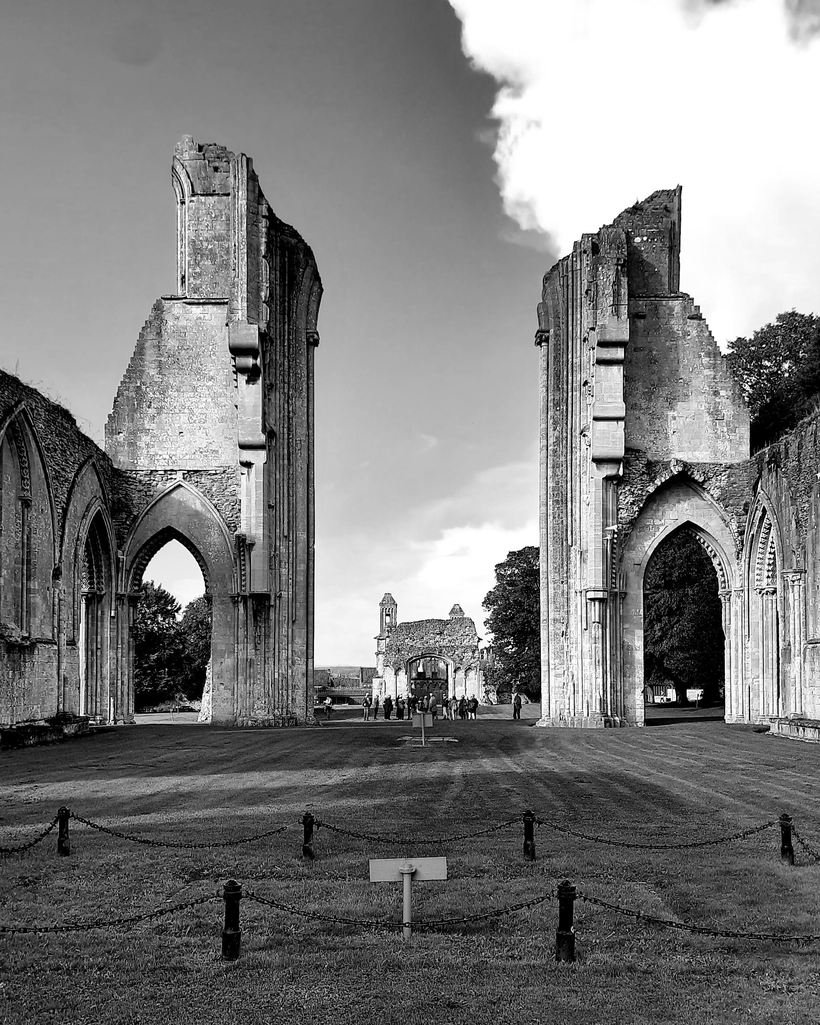
The site of Arthur’s grave
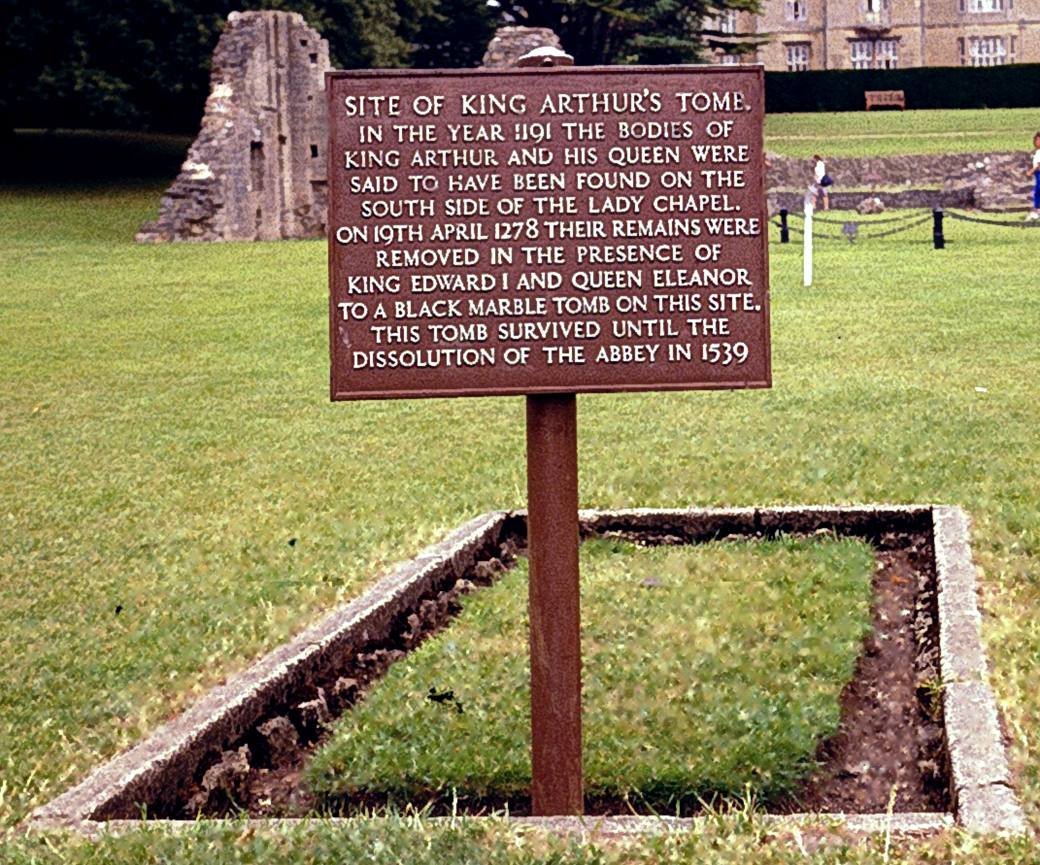
In front of where the high altar stood, a low sign in the grass marks the place where the bones found in 1191 were reburied in 1278, in a black marble tomb, in the presence of Edward I and Queen Eleanor. The king had his own reasons for attending: a Welsh and Breton tradition held that Arthur had never died and would return, which was inconvenient for an English king conquering Wales. A funeral settles that.
Be careful how you tell the rest. The lead cross was seen and described by the antiquary John Leland in the sixteenth century and by Camden after him, and then it was lost — it has never been examined by anyone able to test it. So it was not exposed as a forgery; it simply disappeared. And the monks never admitted anything. What can be said is that the discovery came at exactly the moment the abbey needed money, that the pattern fits a dozen similar medieval relic discoveries, and that no serious historian now takes it at face value.
What the archaeology actually shows
Glastonbury has been dug more thoroughly than almost any monastic site in Britain — thirty-six seasons of excavation between 1904 and 1979 — and for most of that time the results were reported by excavators who already knew what they hoped to find. C. A. Ralegh Radford, who dug here from the 1950s, announced an early Celtic monastic community, and identified the spot where the monks had supposedly exhumed Arthur.
A project led by Professor Roberta Gilchrist at the University of Reading went back through the entire excavation archive with modern methods and published its findings in 2015. The results cut both ways, which is what makes them worth reading. Radford’s two headline claims did not survive: neither the pre-Conquest cloister he believed was the earliest in England, nor the reputed site of the exhumation of Arthur’s grave, is supported by the evidence.
But the same reassessment pushed the site’s history in the other direction. It found new evidence of occupation here in the fifth or sixth centuries, earlier than Radford had been able to demonstrate, and it re-dated a remarkable glass furnace complex to the late seventh century, three hundred years earlier than anyone had thought. The legends lost; the place itself turned out to be older and more important than the digging had proved.
The Abbot’s Kitchen
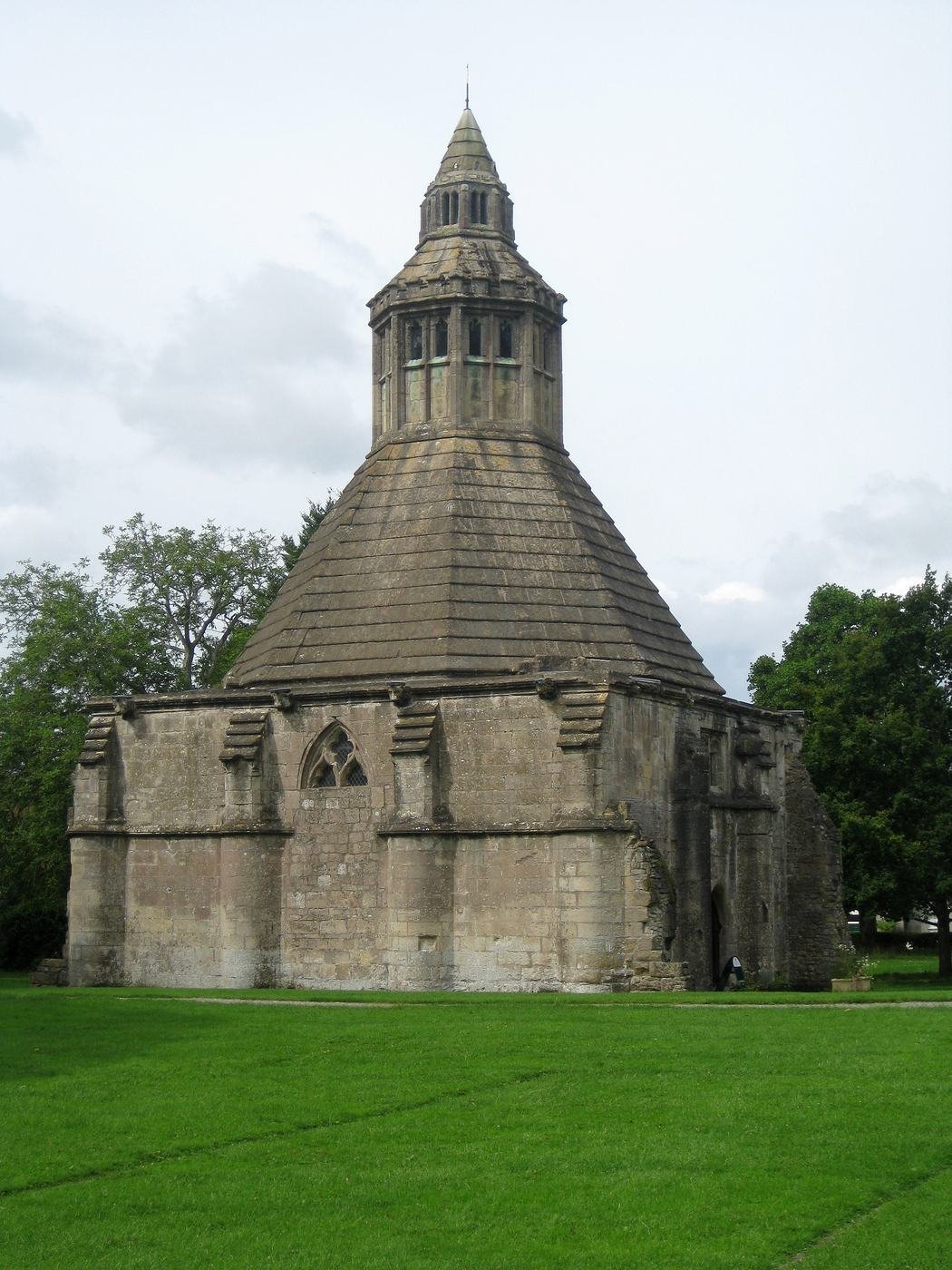
Across the grass stands a square stone building with an octagonal roof, and it is the one complete room left on the site: the Abbot’s Kitchen, built in the fourteenth century, with a great fireplace in each of its four corners and a lantern at the apex to draw the smoke. It is one of the best-preserved medieval kitchens in Europe, and it survived because it was useful — the site’s later owners kept it for storage while the church was being carted away.
The Holy Thorn
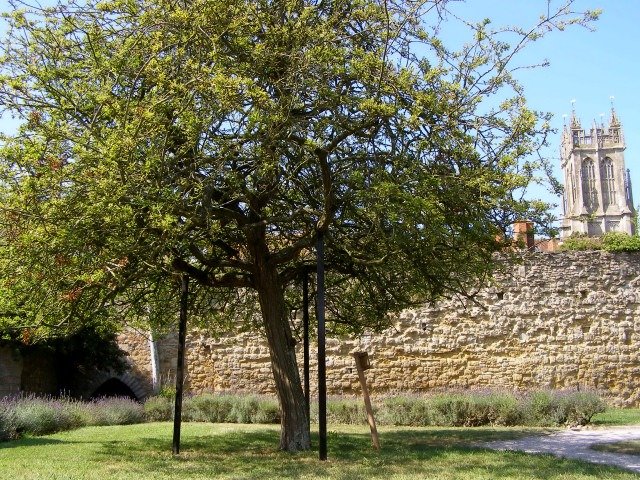
Somewhere on most visits someone will ask about the thorn. The legend is that Joseph of Arimathea came here after the crucifixion, pushed his staff into the ground on Wearyall Hill, and it took root. The tree involved is a real variety of hawthorn that flowers twice a year, in spring and again around midwinter, which is what gave the story its evidence. It is first recorded in an early sixteenth-century text — late, in other words, not ancient. Cuttings have been sent to the monarch at Christmas since the reign of James I, and descendants of the tree grow in the abbey grounds.
The grounds, the fishponds and the landscape
The ticket buys 36 acres, and most of it is parkland rather than ruin. The abbey ran a working landscape out here — fishponds, a mill leat, drainage across the Levels — and a medieval house this size was an agricultural corporation as much as a religious one. It is also simply a good place to sit, and the abbey encourages picnics everywhere except the Great Church and the Lady Chapel.
1539, and the Tor
Richard Whiting had been abbot for nearly twenty years when the commissioners came. He refused to surrender the abbey. He was tried at Wells, convicted of treason, dragged up Glastonbury Tor on a hurdle and hanged, drawn and quartered there on 15 November 1539, at about eighty years old. His head was set over the abbey gate and the quarters sent to four Somerset towns.
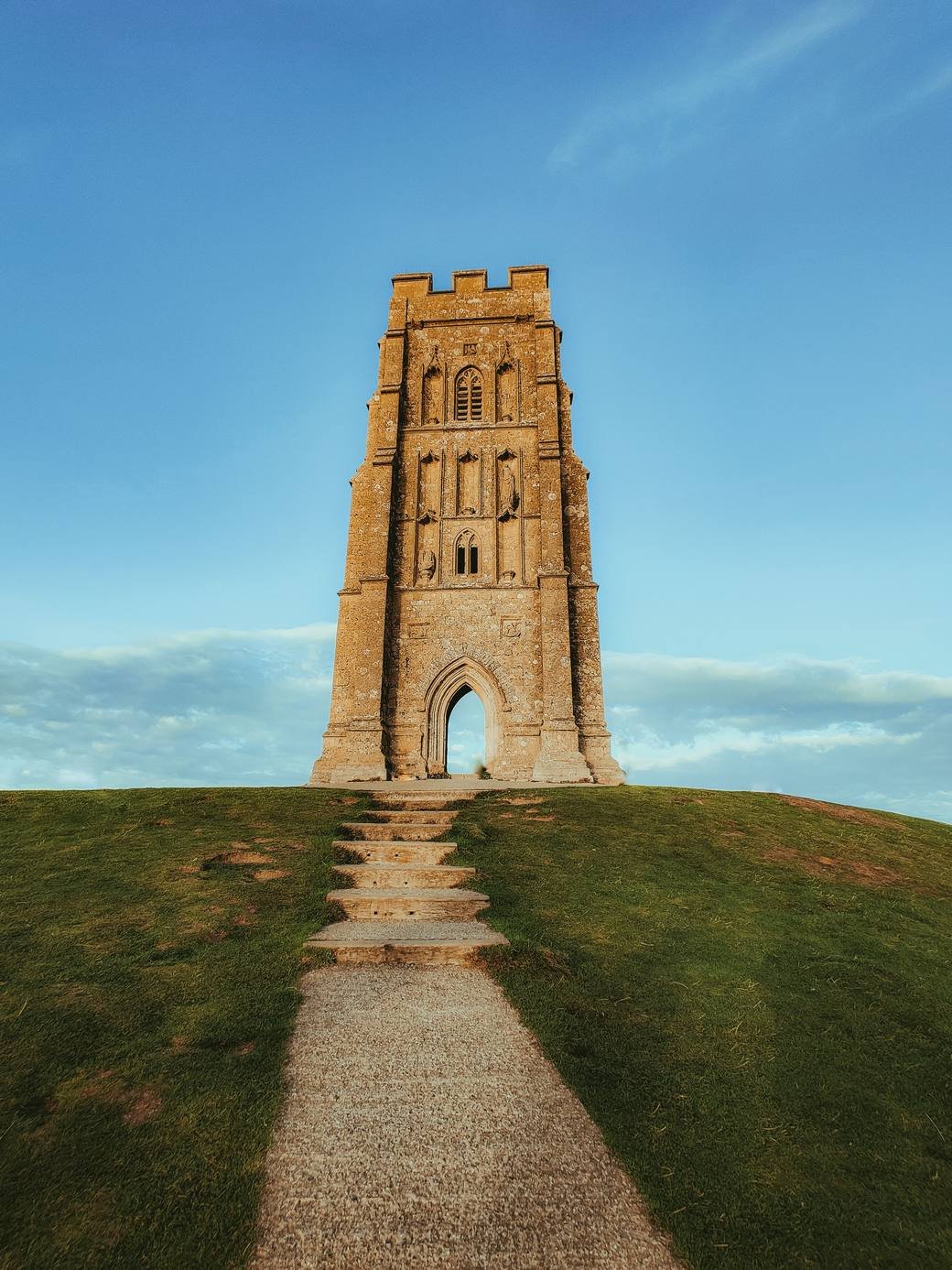
You can see the Tor from parts of the grounds, and after that it is not really possible to look at it as scenery. It is a mile away, free to climb, and belongs to the National Trust rather than to the abbey.
Tickets and tours
Book online and bring the children
Online admission is £14 against £15 at the gate, and online sales close at 6pm the day before, so this is a decision to make the night before rather than in the car park. The free-child policy is the real saving: two under-16s per paying adult, all year, on general admission. Tickets are for a named date and are not refundable, and everyone in the party has to arrive together.
Tour and hotel links go to GetYourGuide and Booking.com. This site earns nothing from them at present — they are here because they are the quickest way to check what is actually available.
Don’t miss
- The model in the museum Five minutes with it before you walk out makes the whole site readable.
- The sign in the grass Marking where Arthur and Guinevere were reburied in 1278, in front of a king who wanted the matter closed.
- The Abbot’s Kitchen Four corner fireplaces and a smoke lantern. The only complete room left.
- The Lady Chapel crypt Dug about 1500 for St Joseph, and the one place here you are properly indoors.
- The north doorway carving Late Romanesque, weathered, and better than it first looks.
- The length of the nave Pace it out on the grass. It is the fourth-longest medieval church in England under your feet.
- The Tor from the grounds Where the last abbot was executed in 1539.
Insider tips
Two children go free with every adult. It is not a school-holiday offer or a promotion — it runs all year on general admission, and further under-16s are £6.60. Nothing else of this quality in the West Country is that cheap for a family.
Book the night before. Online is £14 against £15 at the gate, and online sales stop at 6pm the day before your visit, so the saving is only available to people who plan a day ahead.
Last entry is 45 minutes before closing, whatever the closing time happens to be that month. Arriving at half past five in high summer is fine; arriving at half past three in midwinter may not be.
Do not plan on the Tor being part of this. It is a mile away, uphill, National Trust, and free, and it wants an hour of its own and proper shoes.
Take a picnic. The abbey allows it everywhere except the Great Church and the Lady Chapel, there are tables and benches, and 36 acres is a lot of walking to do hungry. The Yard Café at the entrance is open to anyone without a ticket.
Common questions
How much does it cost to visit Glastonbury Abbey?
Adult admission is £14 booked online and £15 on the gate, and the online price includes a voluntary donation. The policy worth knowing about is that each paying adult can bring two under-16s in free, all year round; further children are £6.60 each. Groups of ten or more adults get 10 per cent off automatically.
Is King Arthur really buried at Glastonbury Abbey?
Almost certainly not. In 1191, seven years after a fire destroyed the monastery, the monks announced that they had found the grave of Arthur and Guinevere sixteen feet down in the cemetery, with a lead cross naming him. Historians generally regard it as a fundraising exercise for the rebuilding. The remains were reburied before the high altar in 1278 in the presence of Edward I, and the tomb was destroyed at the Dissolution. A sign in the grass marks the spot.
What are the opening hours at Glastonbury Abbey?
Open seven days a week except Christmas Day, currently 10am to 6pm, with last entry 45 minutes before closing. That rule is the one to remember, because the closing time moves with the season and the last-entry time moves with it.
Is Glastonbury Tor part of the abbey?
No. The Tor is about a mile away, it is looked after by the National Trust, and it is free to climb. It is not included in the abbey ticket and it is not visible from most of the abbey grounds. Visitors regularly arrive expecting one site and find two, half an hour apart on foot.
Did Joseph of Arimathea found Glastonbury Abbey?
There is no historical evidence for it. The legend that Joseph came to Glastonbury in the first century, bringing the Holy Grail and planting his staff, which rooted and became the Holy Thorn, is a medieval story rather than an ancient one. The abbey itself was a going concern by the seventh century, which is early enough to be remarkable without any of this.
How long do you need at Glastonbury Abbey?
Two hours. It is 36 acres and the ruins are spread across them, and the museum at the entrance is worth twenty minutes before you start walking. On a fine day people take a picnic and stay considerably longer.
Where to stay and eat nearby
Glastonbury town is immediately outside the gates and is unlike anywhere else in England; the high street is worth an hour by itself. The town has plenty of places to eat and a reasonable choice of small hotels and B&Bs. Wells is six miles north and makes the obvious pairing, and Bath is under an hour by car. There is no useful train, so this is a place you reach by road.
More English cathedrals and abbeys
- Wells Cathedral — six miles north, and what Glastonbury might have looked like if it had survived.
- Bath Abbey — a monastery that became a parish church instead of a quarry.
- Rock of Cashel — another great ruined religious site read from its foundations up.
- Kylemore Abbey — a Benedictine house that is still a Benedictine house.