
Norwich Cathedral
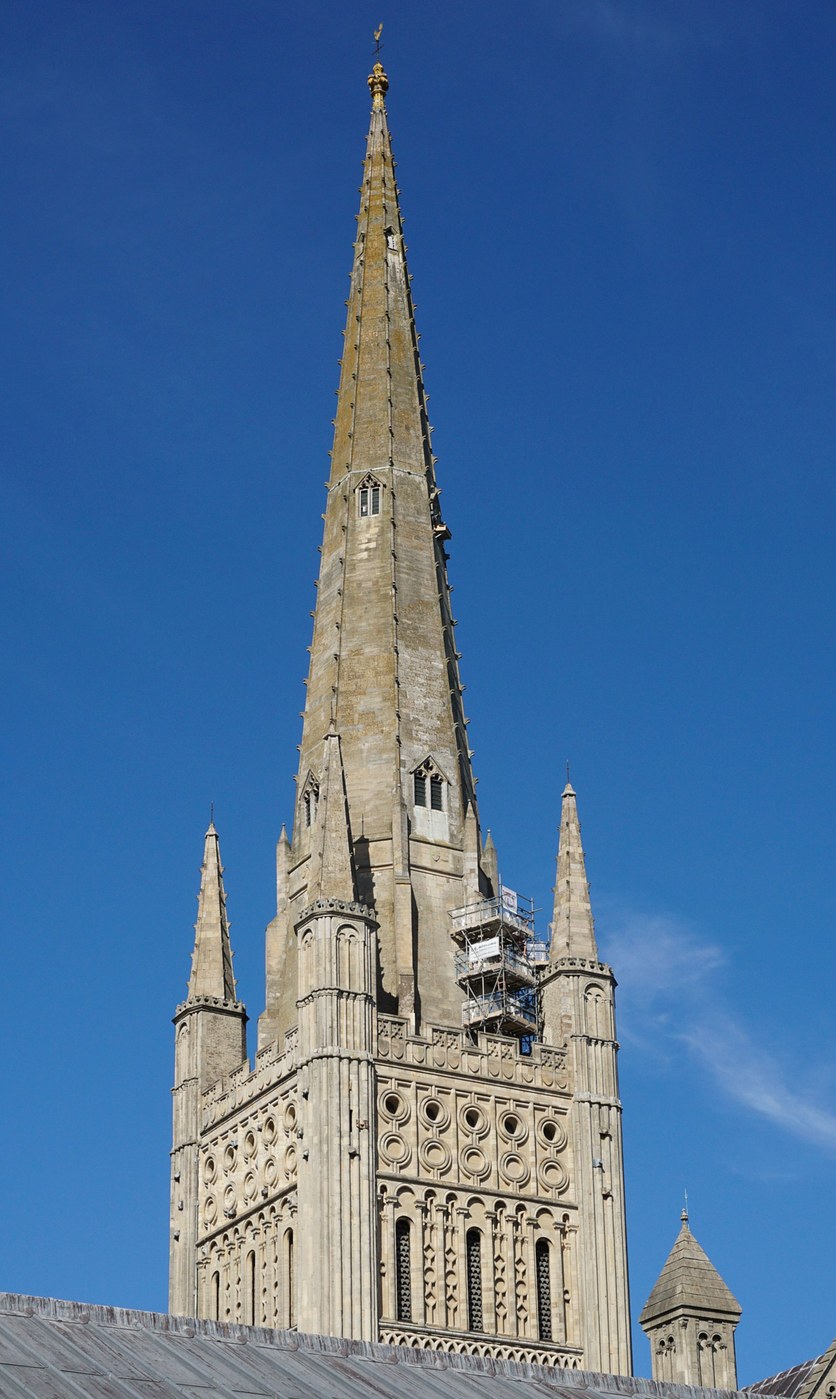
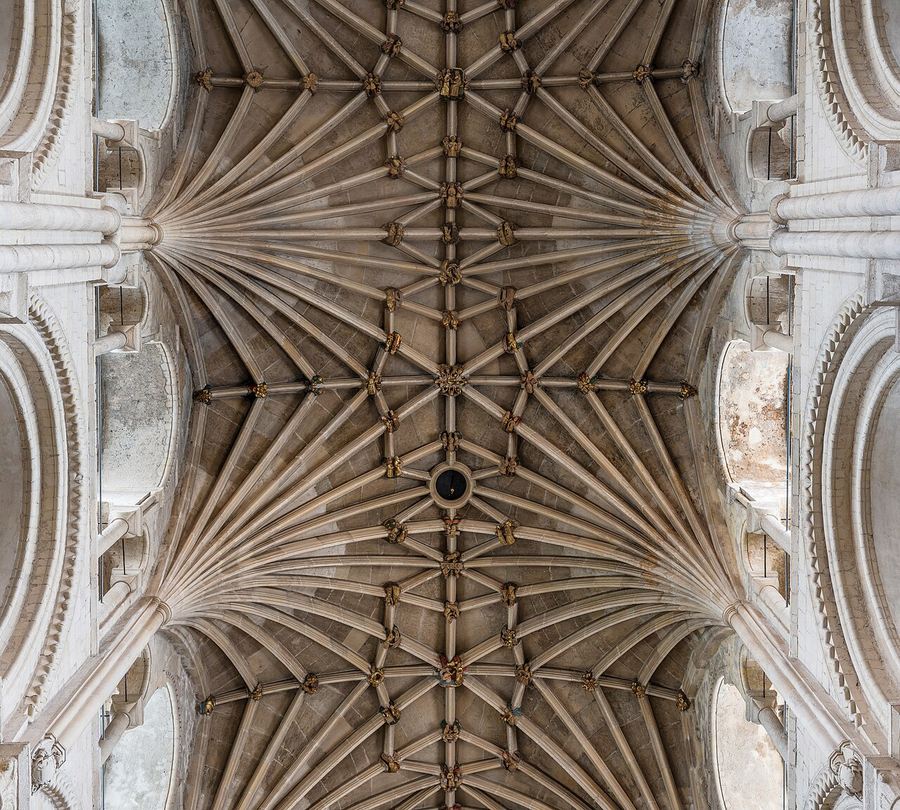
Norwich Cathedral has one of the largest collections of carved and painted roof bosses in the world — over a thousand of them — and most visitors walk underneath without looking up. Above them rises the second-tallest spire in England, and beside them lies the largest cloister of any English monastery. It is a Norman cathedral of the first rank that somehow remains one of the least crowded.
A bishop's church for a Norman city
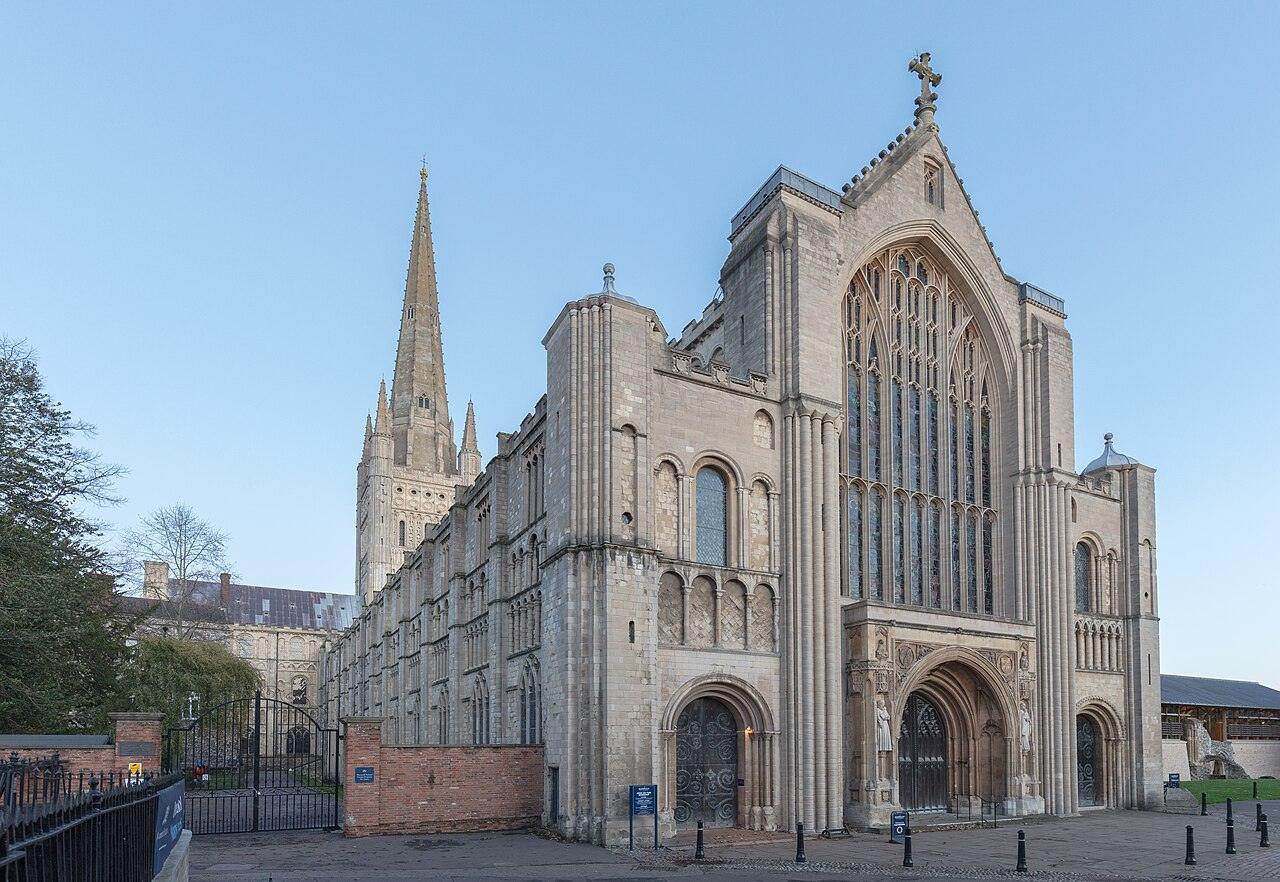
The cathedral was begun in 1096 by Herbert de Losinga, the first bishop of Norwich, who had moved the seat of the East Anglian bishops here from Thetford. He is said to have done it partly in penance: he had bought his bishopric, and the pope made him build churches to make up for it. The building he started was a Benedictine priory church as well as a cathedral, built of pale limestone shipped from Caen in Normandy and brought up the river to a quay at the foot of the Close. By about 1145 the Norman church was complete, from the apse at the east end to the west front, with its great central tower.
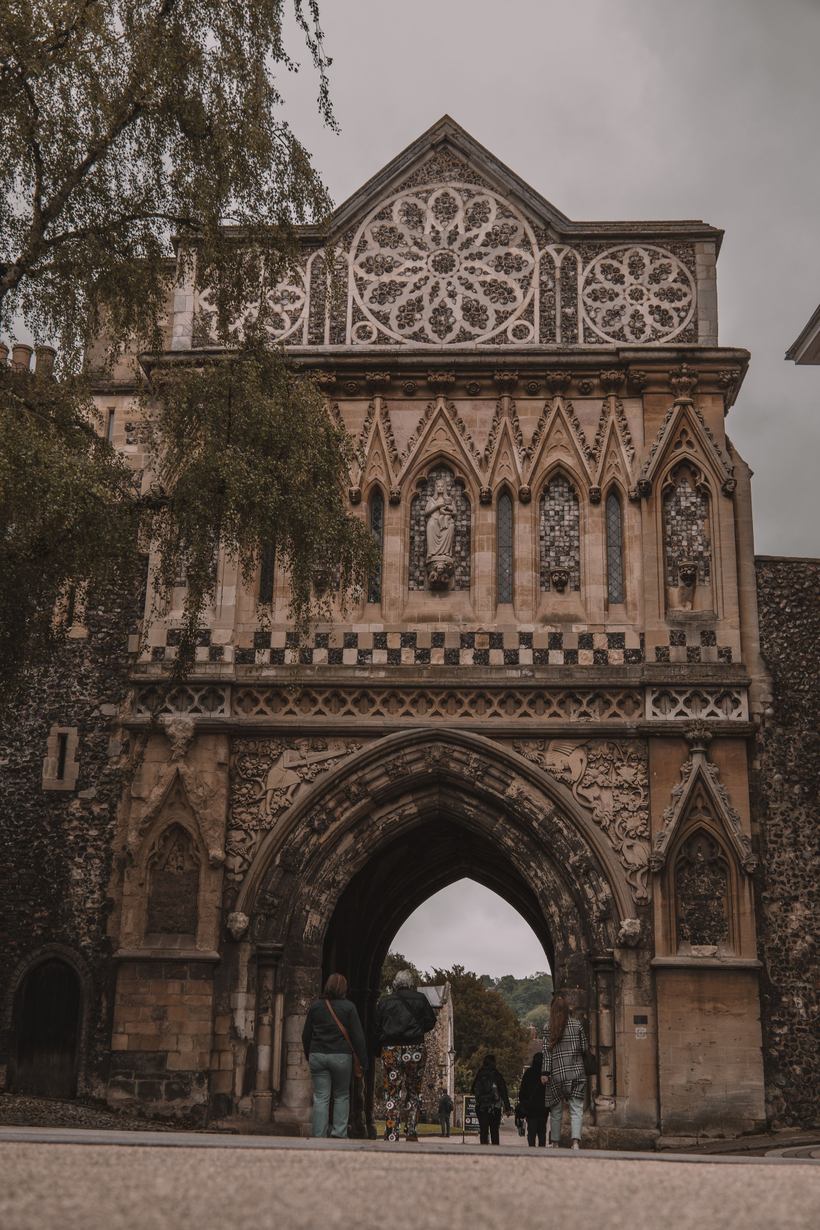
It was not a peaceful place. In 1272 a long-running dispute between the monks and the citizens of Norwich ended with a riot in which the priory buildings were set on fire. The townspeople were made to pay, and part of their penance was the Ethelbert Gate, which still stands at the entrance to the Close. In 1463 lightning set the wooden spire alight and it fell into the nave, burning so hot that parts of the Caen stone turned pink, as you can still see. Bishop Walter Lyhart replaced the wooden nave roof with the stone vault and its bosses; Bishop James Goldwell later vaulted the presbytery and built the stone spire that stands today.
At the Dissolution the monastery was closed but the cathedral survived. In 1643 it was attacked by a Puritan mob, which smashed the glass and the organ and burned the furnishings in the market place.
The visitor's cheat sheet
| Where | 65 The Close, Norwich, NR1 4DH, just east of the city centre |
|---|---|
| Getting there | Norwich station is about a 10-minute walk along the river; direct trains from London Liverpool Street take under two hours |
| Opening hours | Daily 7am–6.30pm. Services and events can restrict parts of the building, and any changes are posted on the cathedral website |
| Admission | Free; donations are invited. Free ground-floor guided tours; the Upper Level Tour is about £10 and runs on Wednesday and Saturday mornings |
| How long | 1–1.5 hours; 2 hours or more with a guided tour and the Close |
| Best time | Late afternoon, when the low sun turns the cloister stone gold, then stay for Evensong |
| Dress code | No formal code; respectful dress as in any working church |
| Dogs | Well-behaved dogs on leads are welcome |
Hours and admission checked against the official site in September 2026. They change; the official site is always the last word.
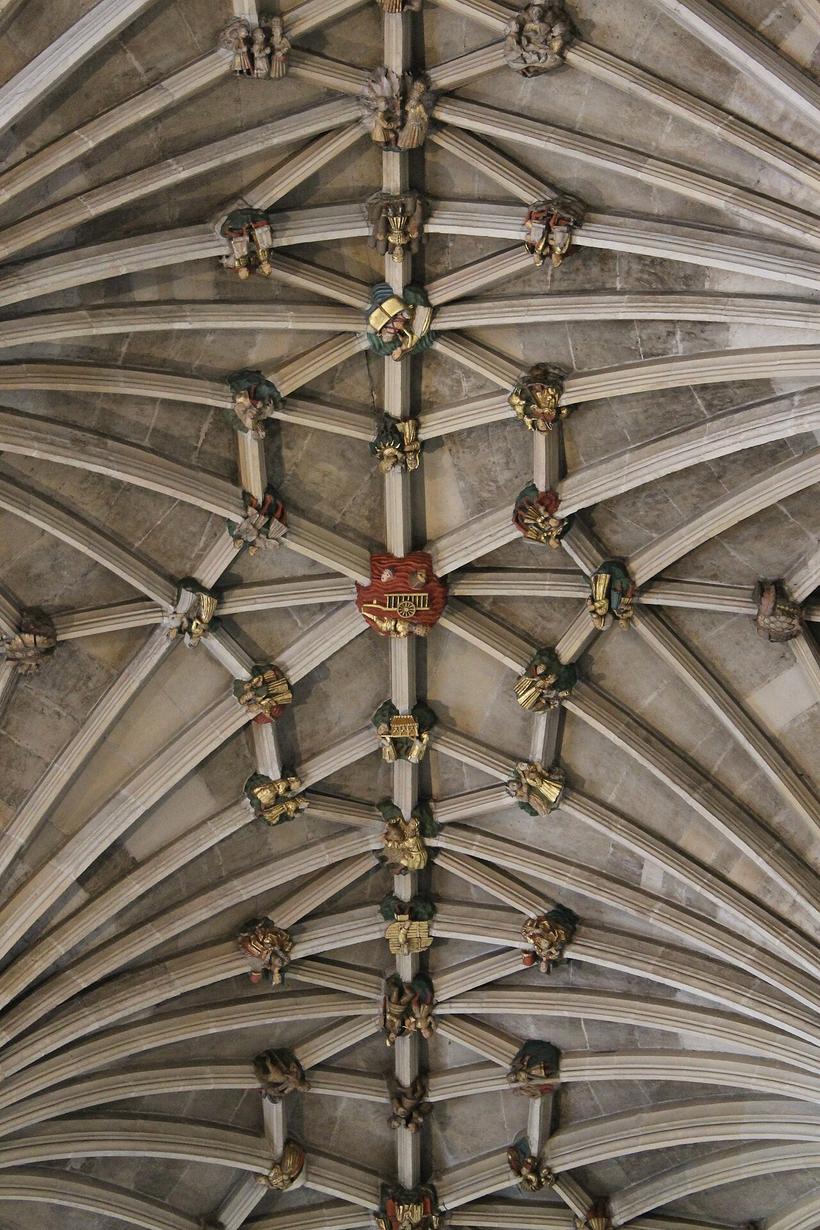
Look up, then look down. The bosses are too high to read with the naked eye. The cathedral puts out mirror trolleys so you can study the vault by looking down into the glass, which is easier on the neck. Binoculars are better still.
What to see, in the order you meet it
The Close and the gates
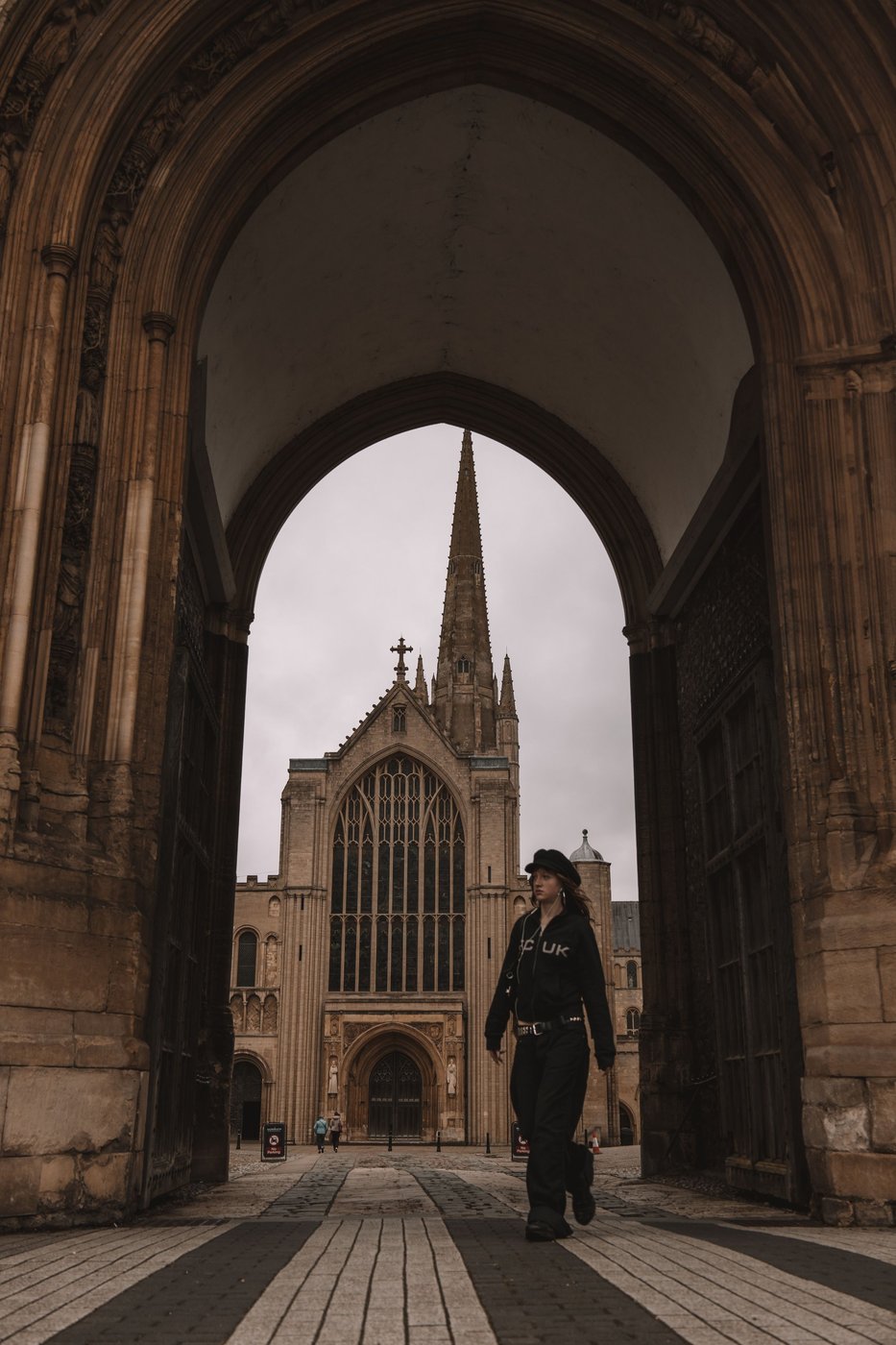
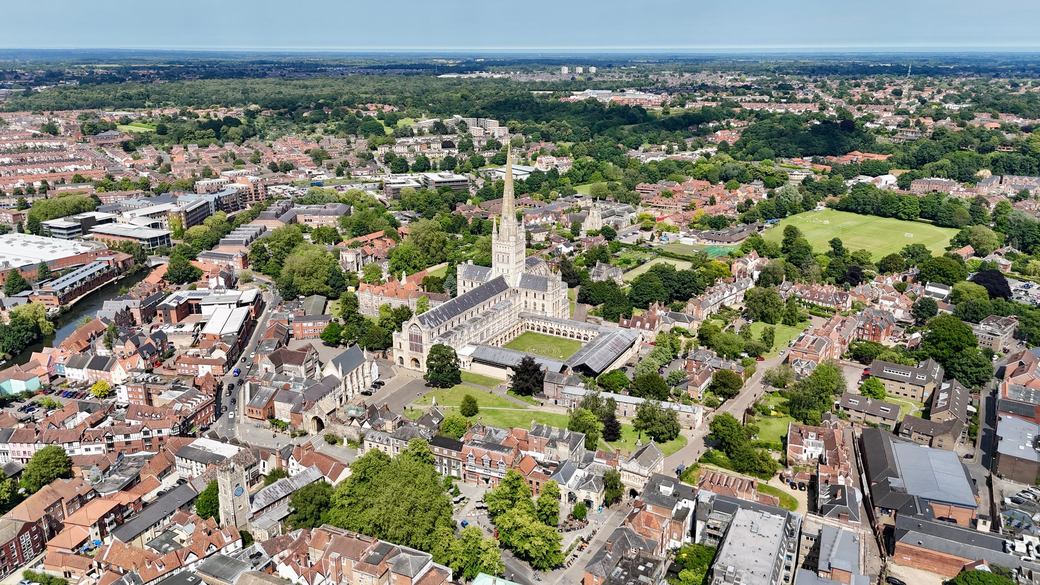
Arrive through the Close, not the car park. Coming from the city centre, you pass through either the Ethelbert Gate or the Erpingham Gate of 1420, built by Sir Thomas Erpingham, who commanded the English archers at Agincourt and kneels in stone above the arch. The Close behind them is one of the largest in England: a quiet quarter of old houses and lawns running down to the river and the medieval water-gate of Pull’s Ferry.
The nave and the bosses
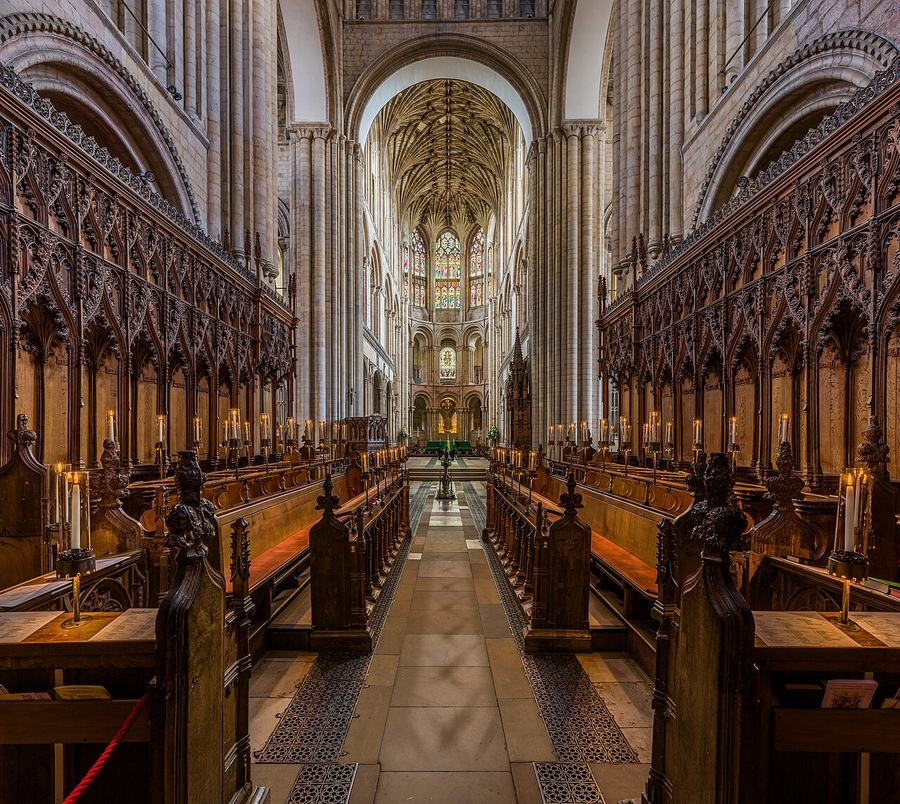
Inside, the nave is Norman: fourteen bays of round arches, with a gallery and a clerestory above, in the creamy Caen stone. Laid over it is the stone vault of the 1460s, and along its ribs run the nave bosses, carved and painted as a continuous sequence from the Creation at the east end to the Last Judgement at the west. You can pick out Noah’s Ark, Jonah and the whale, Samson and the lion, the Nativity and the Crucifixion.
The font that came from a chocolate factory
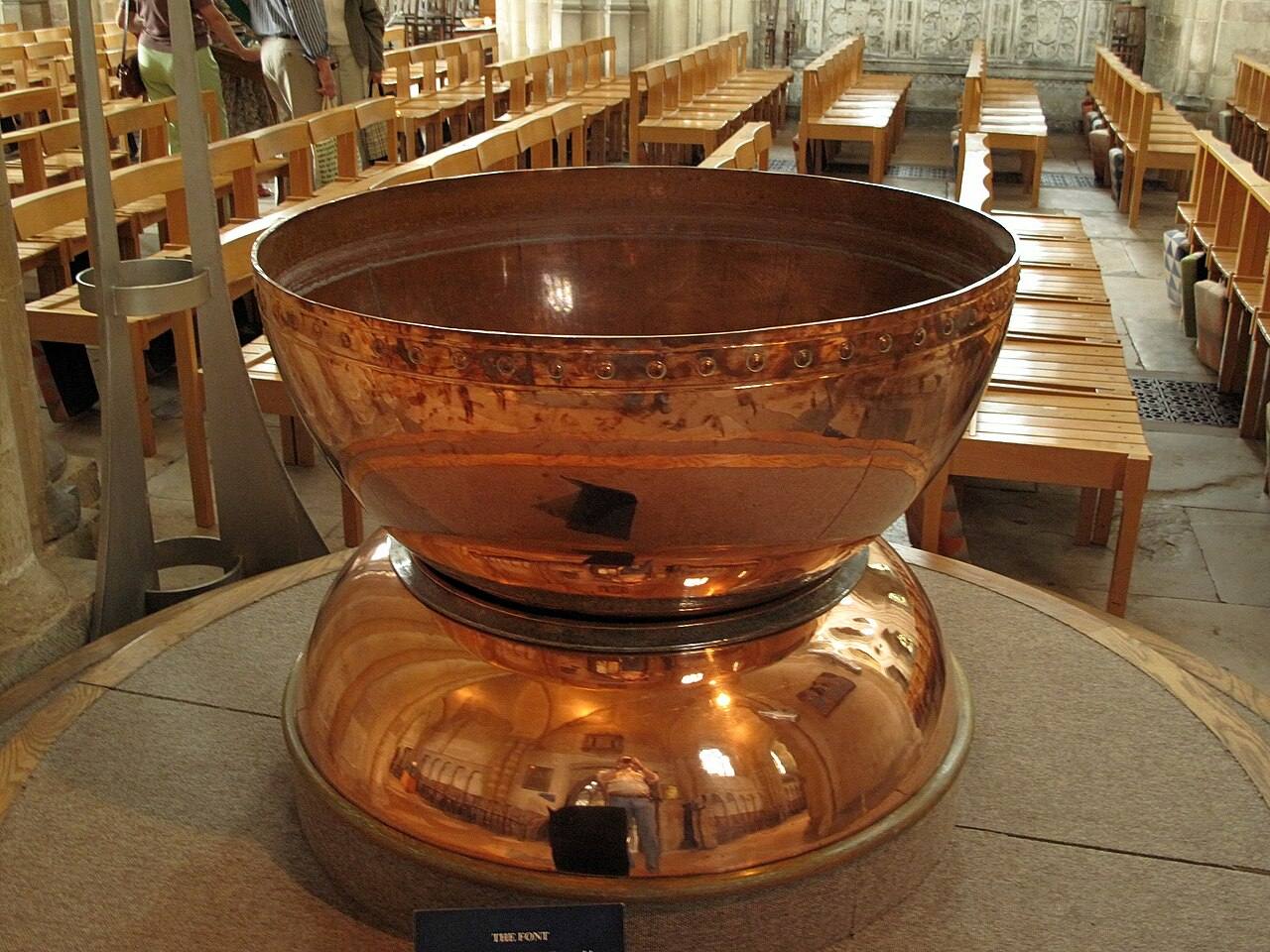
Near the west end stands the font, and it is not medieval. It is a large copper pan that was used for mixing at the Rowntree Mackintosh chocolate factory in Norwich, rescued when the factory closed in the 1990s and mounted on a new base. It is a reminder of the city’s working past, and it catches the light beautifully.
The presbytery and the bishop's throne
Beyond the choir, the presbytery ends in a semicircular Norman apse, one of very few left in an English cathedral. Behind the high altar, raised on steps, is the bishop’s throne. Fragments of it are thought to be older than the building itself — possibly from the Saxon cathedral at North Elmham — and Norwich is one of the few cathedrals in northern Europe whose bishop’s seat still stands in its original position behind the altar.
The Despenser Retable
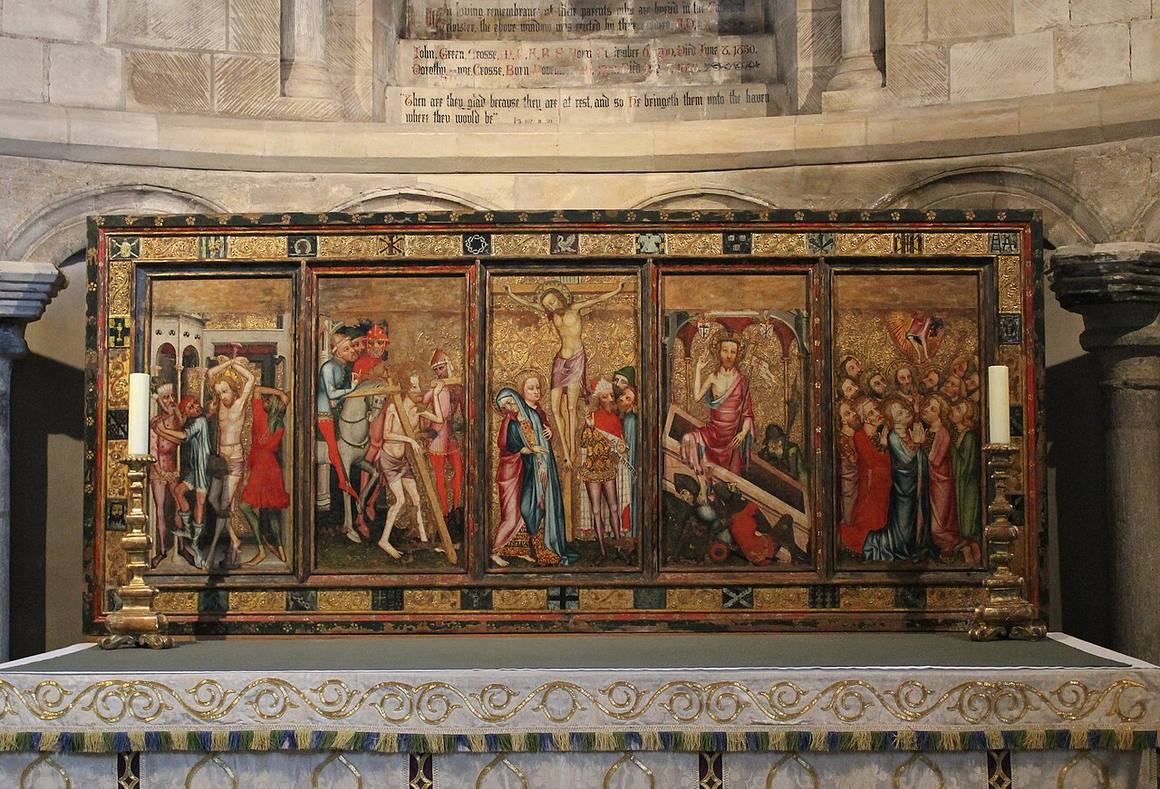
In St Luke’s Chapel is the finest medieval painting in the building: an altarpiece of five scenes of the Passion, from the Flagellation to the Ascension, painted in the late fourteenth century and associated with Bishop Henry Despenser, the fighting bishop who had crushed the Peasants’ Revolt in Norfolk in 1381. It survived the iconoclasts because somebody turned it face down and used it as a table, where it stayed until it was discovered in 1847.
The cloister
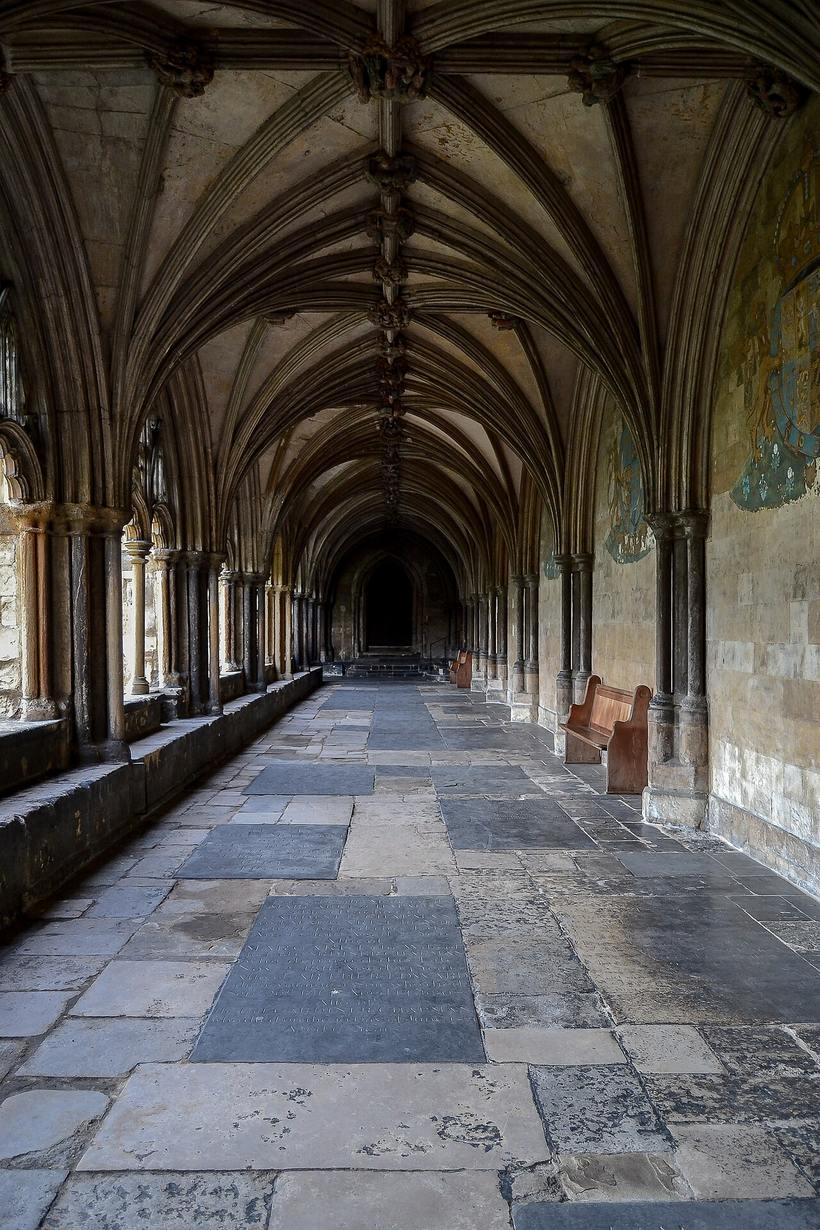
Go out through the south aisle into the cloister. Built between 1297 and about 1430, it is the largest monastic cloister in England. Its vaults have hundreds more bosses, and these are low enough to see properly: scenes from the Apocalypse, the life of Christ, saints and green men. In the middle is the garth, the lawn, with the best view of the spire in the building.
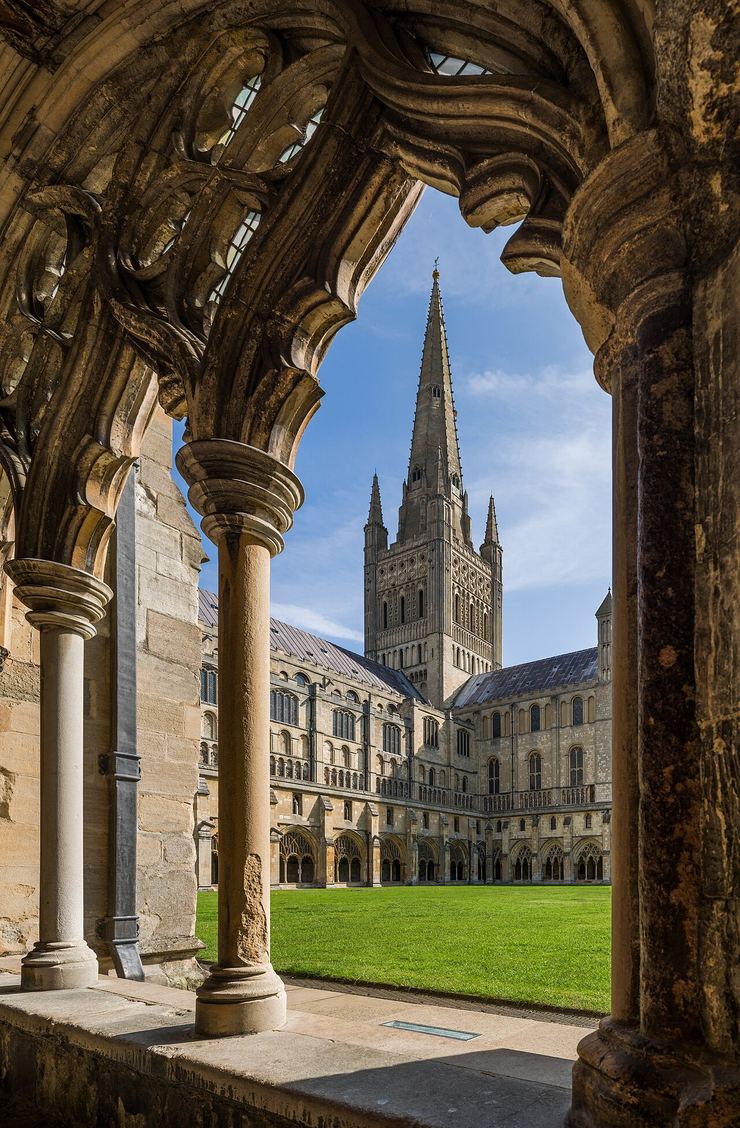
Off the cloister are the modern Refectory, in the footprint of the monks’ dining hall, and the Hostry, opened in 2010, where the visitor centre and exhibitions are.
Edith Cavell's grave
Outside the east end, on the lawn known as Life’s Green, is the grave of Edith Cavell, the Norfolk nurse executed by the Germans in Brussels in 1915 for helping Allied soldiers escape occupied Belgium. Her body was brought home in 1919, and the grave is still visited and tended.
Tickets and tours
The free tours are the best value in Norwich
Volunteer guides run free ground-floor tours through the day, subject to availability. To go higher, the Upper Level Tour takes you into parts of the building not normally open, for about £10; it runs on Wednesday and Saturday mornings and is worth booking.
Tour and hotel links go to GetYourGuide and Booking.com. This site earns nothing from them at present — they are here because they are the quickest way to check what is actually available.
Don't miss
- The nave bosses The story of the world in stone, Creation at one end and Judgement at the other.
- The cloister The largest monastic cloister in England, with bosses you can actually see.
- The pink stone Look at the lower walls of the nave for the stone scorched pink in the fire of 1463.
- The Despenser Retable Five Passion scenes of the late 1300s, saved by being used as a table.
- The chocolate-factory font A copper pan from the old Rowntree Mackintosh works.
- The bishop's throne Behind the high altar, and possibly older than the cathedral.
- The view from the cloister garth The spire, the tower and the whole south side in one frame.
Insider tips
Walk down to the river. From the east end, the Close leads down to Pull’s Ferry, the old water-gate on the River Wensum where the Caen stone was landed. The riverside path then takes you back towards the station.
Evensong is sung most days at 5.30pm, and the cathedral is open until 6.30pm, which means it is one of the few English cathedrals you can visit at the end of a working day.
In spring and summer, look at the spire for the peregrine falcons that have nested there in most years since 2011. The cathedral usually sets up a watch point and a webcam in the nesting season.
Norwich rewards a full day. The Norman castle, St Julian’s Church, where the mystic Julian of Norwich lived as an anchoress, and Elm Hill, a cobbled medieval street, are all within fifteen minutes’ walk. The Roman Catholic cathedral of St John the Baptist, a Victorian Gothic giant on the other side of the centre, is worth seeing too.
Common questions
Is Norwich Cathedral free to visit?
Yes. There is no admission charge and the cathedral is open every day; donations are invited. Guided tours of the ground floor are free too. The Upper Level Tour, which goes up into the galleries, costs around £10 and should be booked.
How tall is the spire of Norwich Cathedral?
About 96 metres (315 feet). It was completed around 1480 and is the second-tallest cathedral spire in England after Salisbury’s. Peregrine falcons have nested on it in most recent years.
What are the Norwich roof bosses?
The carved and painted stones at the intersections of the vault ribs. Norwich has more than a thousand of them, in the nave, the transepts and the cloister, one of the largest collections anywhere. Those in the nave tell the story of the Bible from Creation to the Last Judgement.
How long do you need at Norwich Cathedral?
Around an hour and a half for the church and the cloister. Allow two hours or more if you join a free guided tour or want to walk through the Close to the river.
Can you bring a dog into Norwich Cathedral?
Yes: well-behaved dogs on a lead are welcome, which makes Norwich unusual among English cathedrals. Check the cathedral website for the current rules before you go.
Where to stay and eat nearby
The Refectory café in the cloister is the obvious lunch. Tombland, just outside the gates, and Elm Hill have pubs and cafes. The city centre is compact, and anywhere within it is a short walk from the Close.
More English cathedrals
- Ely Cathedral — the other great East Anglian cathedral, an hour away by train
- Peterborough Cathedral — a Norman monastery church with a painted ceiling
- Salisbury Cathedral — the only spire in England taller than Norwich’s
See all the cathedrals and churches worth visiting in England →