
Basilica of St Anthony, Padua
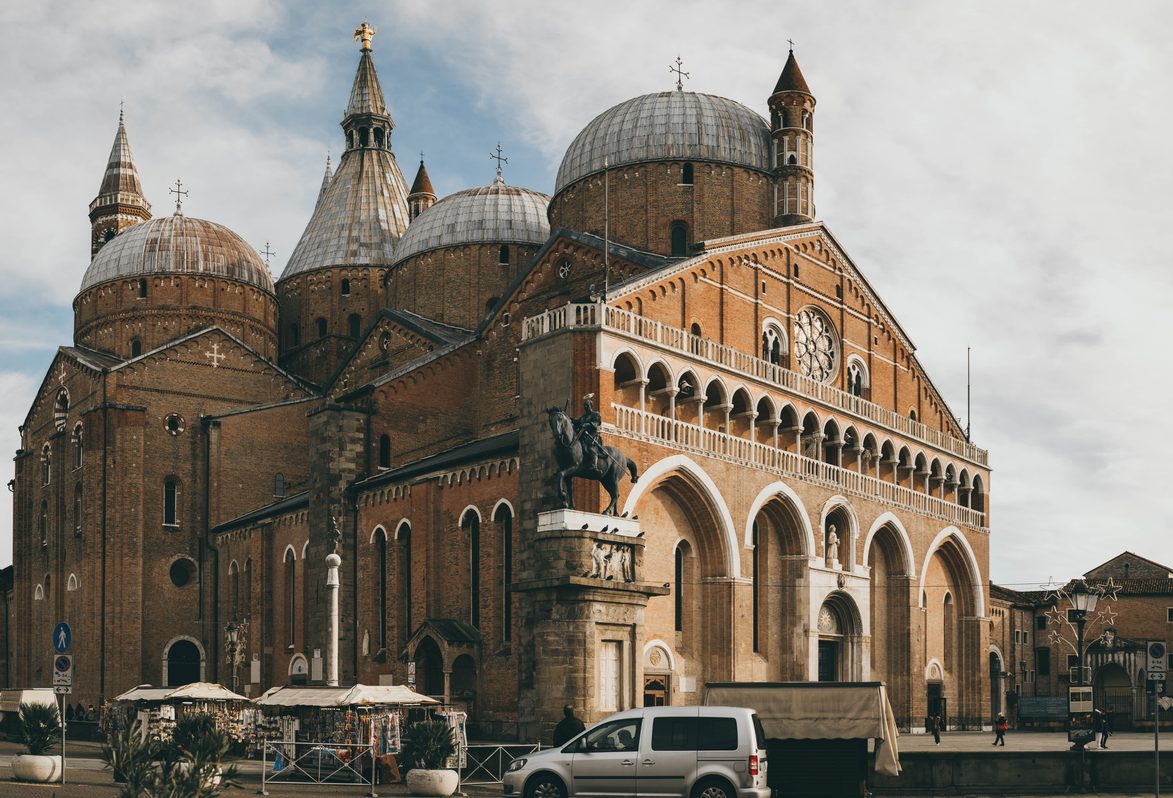
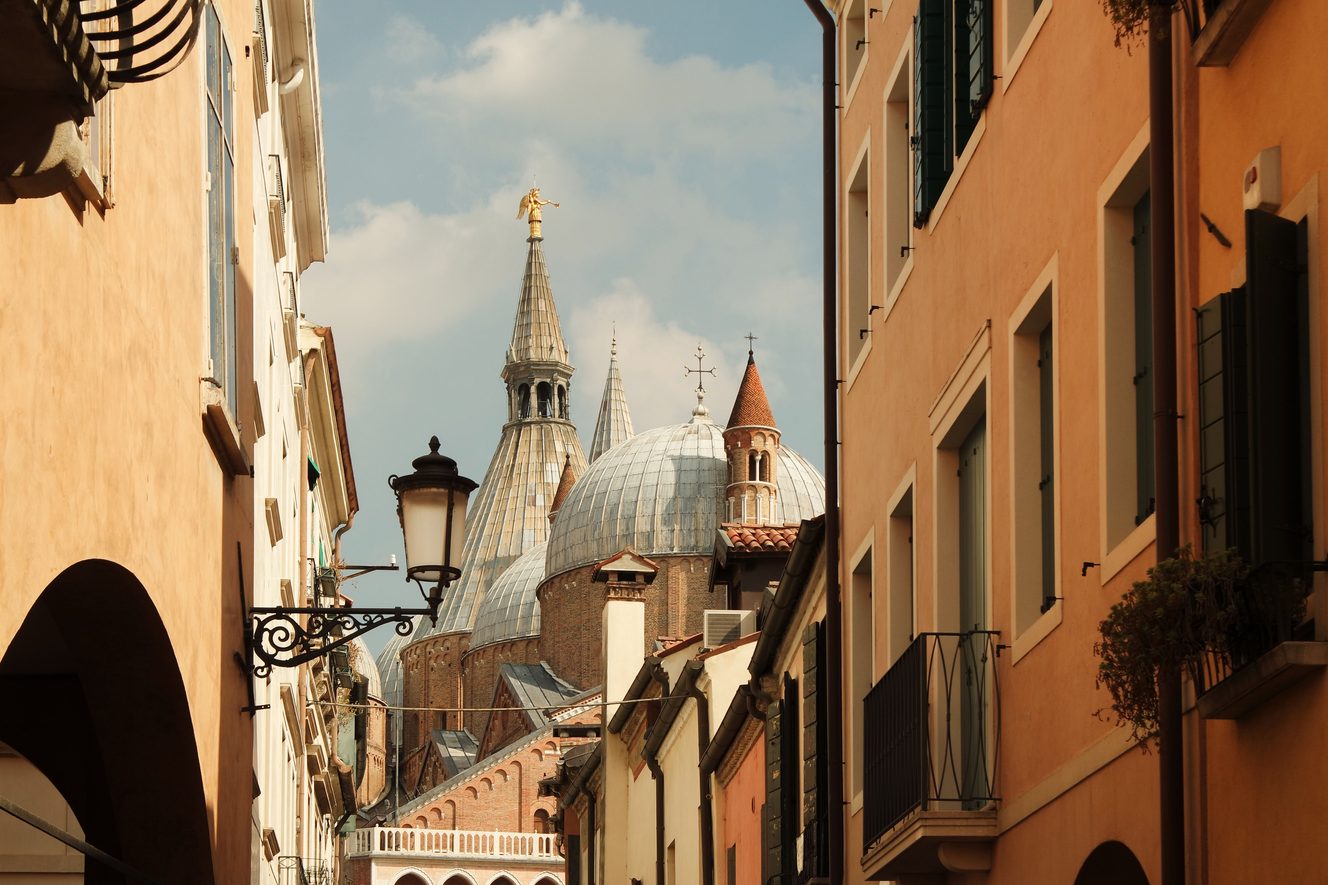
The Basilica of St Anthony, known in Padua simply as “il Santo”, the Saint, is one of the great pilgrim churches of the world: a brick basilica crowned by eight domes and two minaret-like towers, built over the tomb of St Anthony of Padua. Pilgrims queue to touch his tomb, and the basilica also holds Donatello’s bronzes for the high altar and frescoes by Altichiero. It is free.
The saint and his basilica
Anthony was born in Lisbon, around 1195, and became a Franciscan friar and a famous preacher. He spent his last years in Padua, and died just outside the city on 13 June 1231. He was made a saint less than a year later, one of the fastest canonisations in history, and the basilica was begun soon afterwards, around his burial place in the little church of Santa Maria Mater Domini, which survives inside it. It was largely finished by 1310.
The building mixes styles: a Romanesque front, Gothic buttresses and apse with radiating chapels, and Byzantine domes like those of St Mark’s in Venice. Under the 1929 Lateran agreements the basilica and its convent became the property of the Holy See, though they remain in Italy, and since 1933 they have been governed by a pontifical delegate; the friars who serve it are Conventual Franciscans.
The visitor’s cheat sheet
| Where | Piazza del Santo 11, Padua; about 25 minutes’ walk from the station, or the tram to the Santo stop |
|---|---|
| Opening hours | Daily from 6.15am; closes 6.45pm on weekdays in winter, 7.25pm on weekdays in summer and on Saturdays, Sundays and holidays all year |
| Admission | Free; Museo Antoniano, Oratory of St George and Scuola del Santo €10 together (€7 reduced, family €20), Tuesday–Sunday 9am–1pm and 2pm–6pm, closed 25 December and 1 January (2026) |
| Chapel of the Relics | Monday–Friday 9am–noon and 2.30pm–6.30pm; Saturday 9am–7pm; Sunday and holidays 8am–7pm |
| Rules | No photography inside; suitable clothing |
| How long | An hour; half a day with the Oratory and Scuola |
Hours and admission checked against the official site in October 2026. They change; the official site is always the last word.
No photographs. All photography and filming are forbidden inside the basilica, and dress must be suitable. The Chapel of the Relics closes at lunchtime on weekdays; the basilica itself stays open all day.
What to see
The nave
The interior is vast and dim, under domes and painted vaults, lined with the monuments of Venetian generals and scholars. Mass follows Mass through the day; keep to the edges during services.

The Chapel of St Anthony
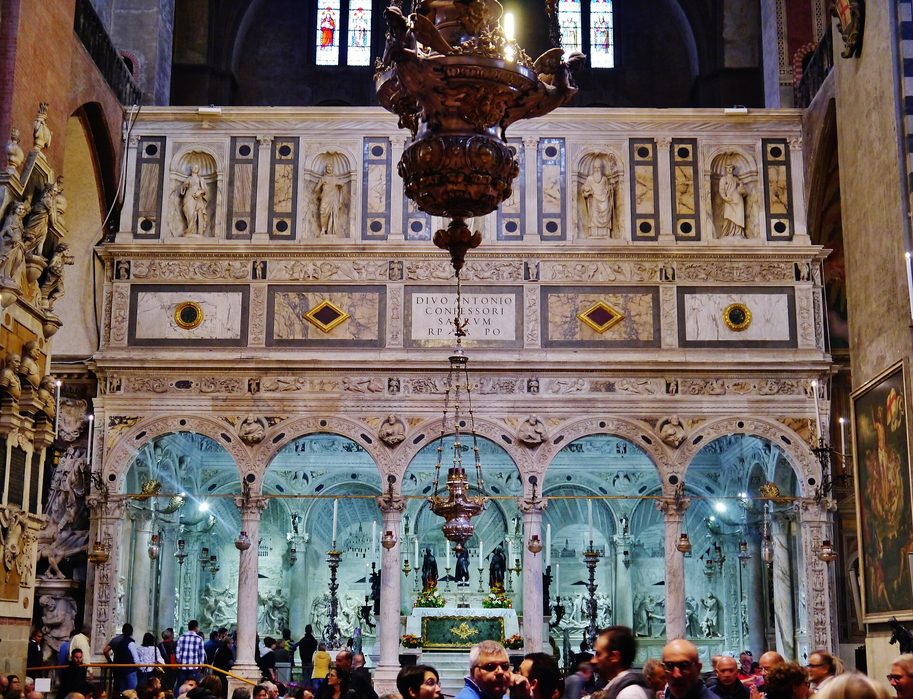
Off the left aisle is the saint’s tomb, in a white marble Renaissance chapel begun in 1500. Its walls are lined with nine large marble reliefs of his miracles, by the best sculptors of the Venetian Renaissance, among them Tullio and Antonio Lombardo and Jacopo Sansovino. Pilgrims file round behind the altar to lay a hand on the tomb, and many leave photographs and notes of prayer or thanks.
Donatello’s high altar
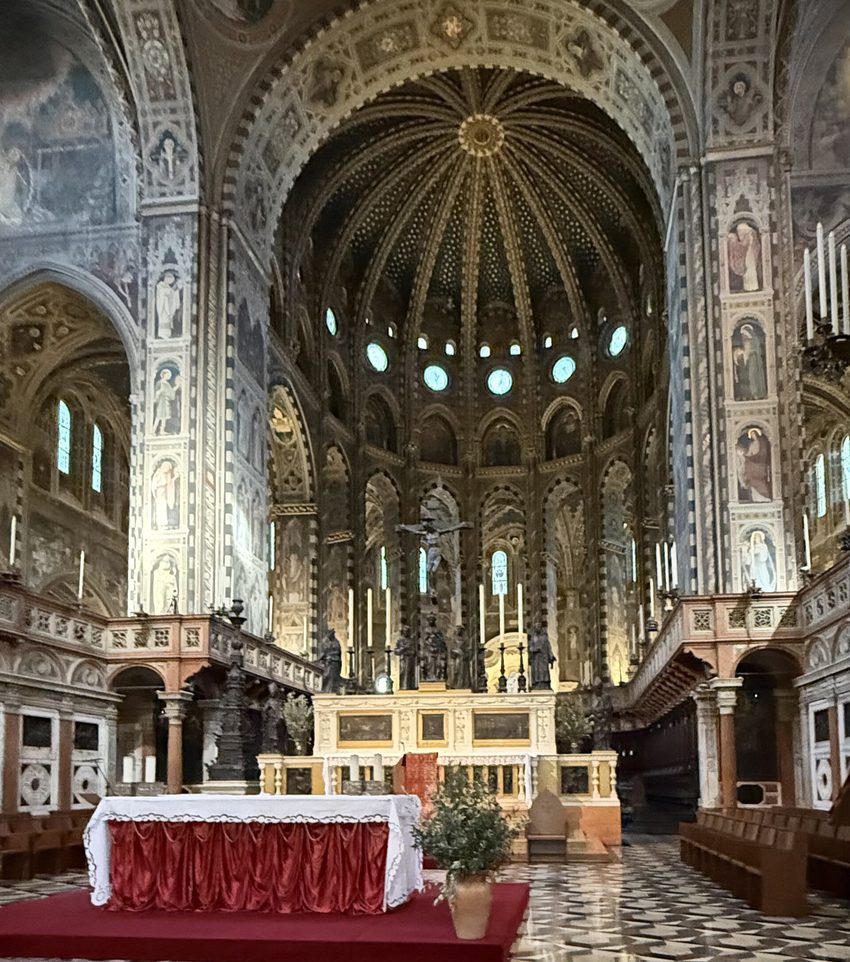
Donatello spent about ten years in Padua, and in the late 1440s made the bronzes for the high altar: a Madonna and Child with six saints, a crucifix, and reliefs of St Anthony’s miracles. The altar was taken apart in the 16th century, and the present arrangement dates from 1895.
The Chapel of the Relics
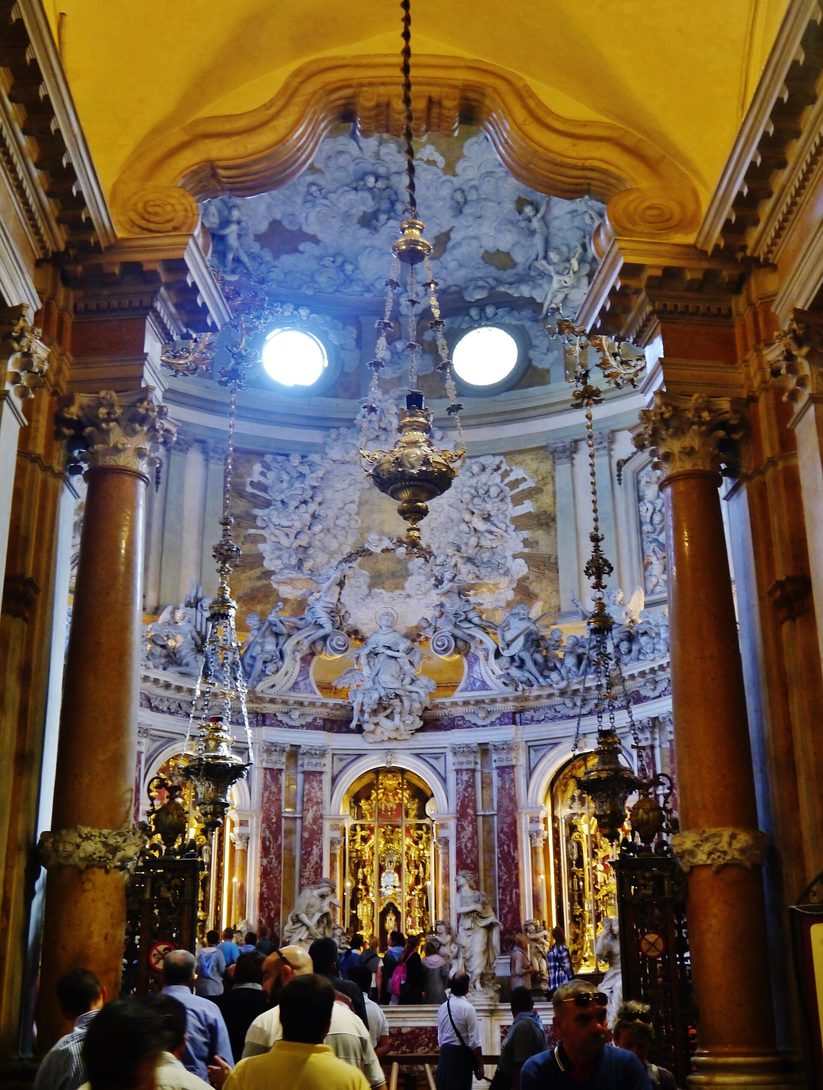
Behind the high altar, a Baroque chapel of the 1690s by Filippo Parodi, a pupil of Bernini, keeps the saint’s relics: his tongue, found incorrupt when his body was moved in 1263, in a silver-gilt reliquary of 1436, and his chin. The friars also keep his tunic here, and the chest in which his body was laid.
Altichiero’s frescoes
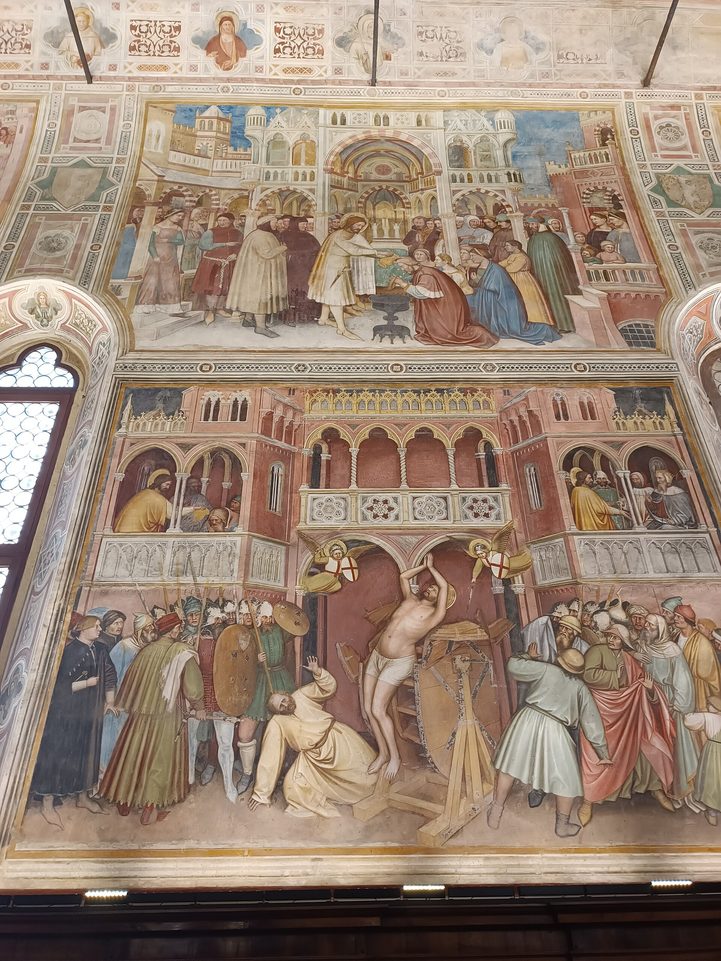
Opposite the saint’s chapel, the Chapel of St James is painted with a great Crucifixion and the story of St James by Altichiero, with Jacopo Avanzi, in the 1370s. These, and the frescoes of the Oratory of St George outside, are part of the UNESCO listing of Padua’s 14th-century fresco cycles.

Around the square
On the left of the square, the Oratory of St George, a funerary chapel of the Lupi family, is entirely painted by Altichiero, who finished it in 1384. Beside it, the Scuola del Santo, the hall of the saint’s confraternity, has frescoes of his miracles, three of them early works by Titian, of 1511. Both are on the museum ticket, with the Museo Antoniano, off the cloisters.
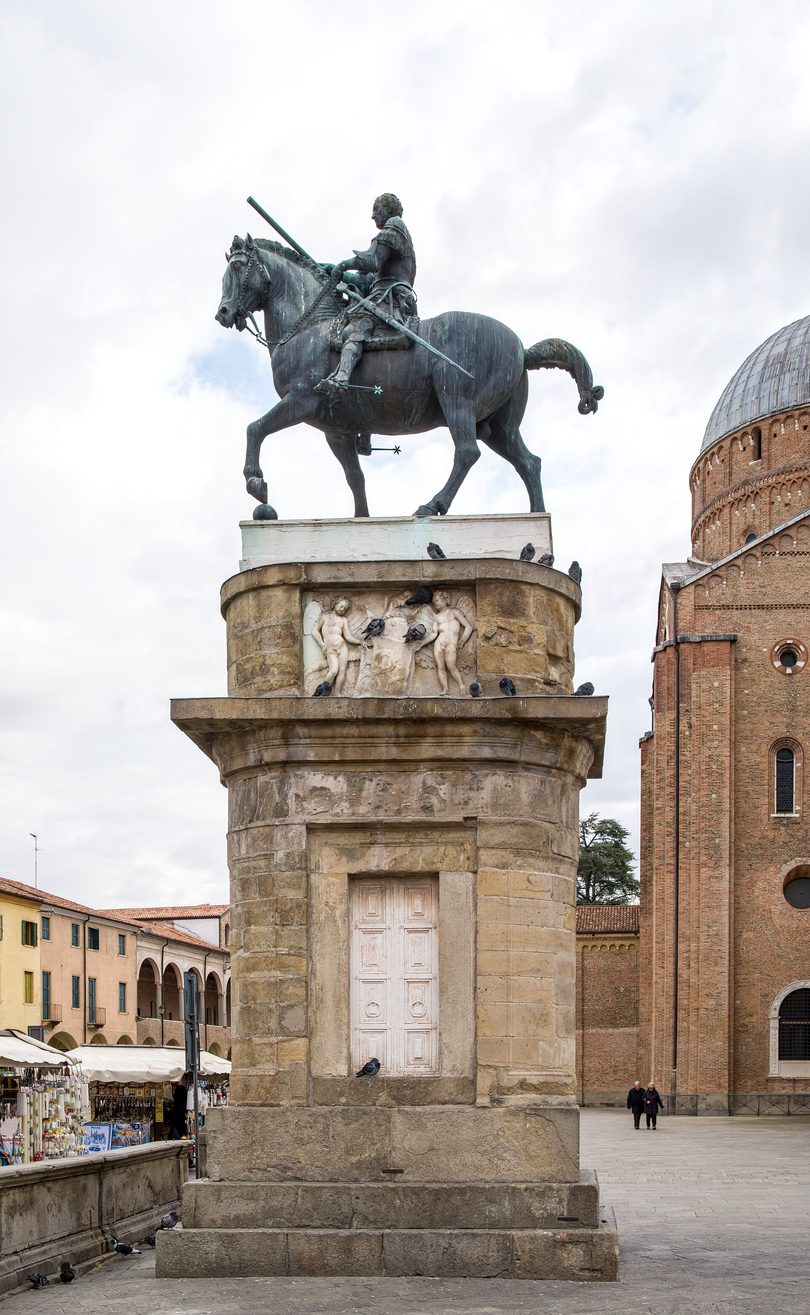
In front of the basilica stood Donatello’s Gattamelata, the first great bronze equestrian statue since antiquity, set up in 1453. It was taken down in October 2025 to be restored in a workshop next to the basilica, and in 2026 its pedestal stood empty while it too was being consolidated.
The feast of St Anthony
St Anthony’s feast, on 13 June, is preceded by thirteen days of prayer, the Tredicina, and ends in the evening with a procession of his statue and relics through the city. 2031 will be the 800th anniversary of his death.

Tours and where to stay
The basilica is free, and museum tickets are sold at the information office in the Magnolia Cloister. Padua is less than half an hour from Venice by fast train, and many tours combine the basilica with Giotto’s Scrovegni Chapel, which must be booked ahead.
These links go to GetYourGuide and Booking.com. This site earns nothing from them at present — they are here because they are the quickest way to check what is actually available.
Don’t miss
- The tomb Join the pilgrims filing past.
- The marble reliefs Nine miracles, in the saint’s chapel.
- Donatello’s bronzes On the high altar.
- The tongue In the Chapel of the Relics.
- Altichiero In the Chapel of St James and the Oratory.
Insider tips
Walk on to Prato della Valle. A few minutes south of the basilica is Prato della Valle, one of the largest squares in Italy, an oval of statues and canals, with the Benedictine basilica of Santa Giustina on its far side. The Scrovegni Chapel is on the walk from the station, but must be booked in advance.
Common questions
Is the Basilica of St Anthony free?
Yes, the basilica, the saint’s tomb and the Chapel of the Relics are free. One ticket, €10 in 2026 (€7 reduced), covers the Museo Antoniano, the Oratory of St George and the Scuola del Santo.
Can you take photographs in the Basilica of St Anthony?
No. The basilica’s rules forbid all photography and filming inside. Suitable clothing is also required.
When is the Basilica of St Anthony open?
Every day from 6.15am. It closes at 6.45pm on weekdays in winter and at 7.25pm on weekdays in summer, and at 7.25pm all year on Saturdays, Sundays and holidays. Masses are said throughout the day.
Where is Donatello's Gattamelata?
The bronze statue was taken down from its pedestal in front of the basilica in October 2025 and is being restored in a temporary workshop next door. In 2026 no date had been set for its return, and it was not yet decided whether it would go back outdoors. The work is expected to run into 2027.
Is St Anthony buried in Padua?
Yes. St Anthony, born in Lisbon, died near Padua on 13 June 1231 and was buried here at his own wish. His tomb is in the Chapel of St Anthony, on the left of the nave, and pilgrims queue to touch it. His tongue and chin are kept in reliquaries in the Chapel of the Relics.
More churches in Italy
- Basilica of St Francis, Assisi — the tomb of the founder of Anthony’s order.
- St Mark’s Basilica — half an hour away by train, and the model for the Santo’s domes.
- Lisbon Cathedral — where Anthony is said to have been baptised.