
Lisbon Cathedral (Sé de Lisboa)
Lisbon Cathedral, the Sé, is the oldest church in the city: a fortress-like Romanesque cathedral built after the Christian conquest of 1147, on the site of the main mosque. Though badly damaged in the earthquake of 1755, it kept its Romanesque front and nave, and inside are a dark Romanesque nave, a Gothic ambulatory with medieval tombs, and the font where St Anthony of Padua is said to have been baptised. Since May 2026 a ticket has been needed for the tourist visit.
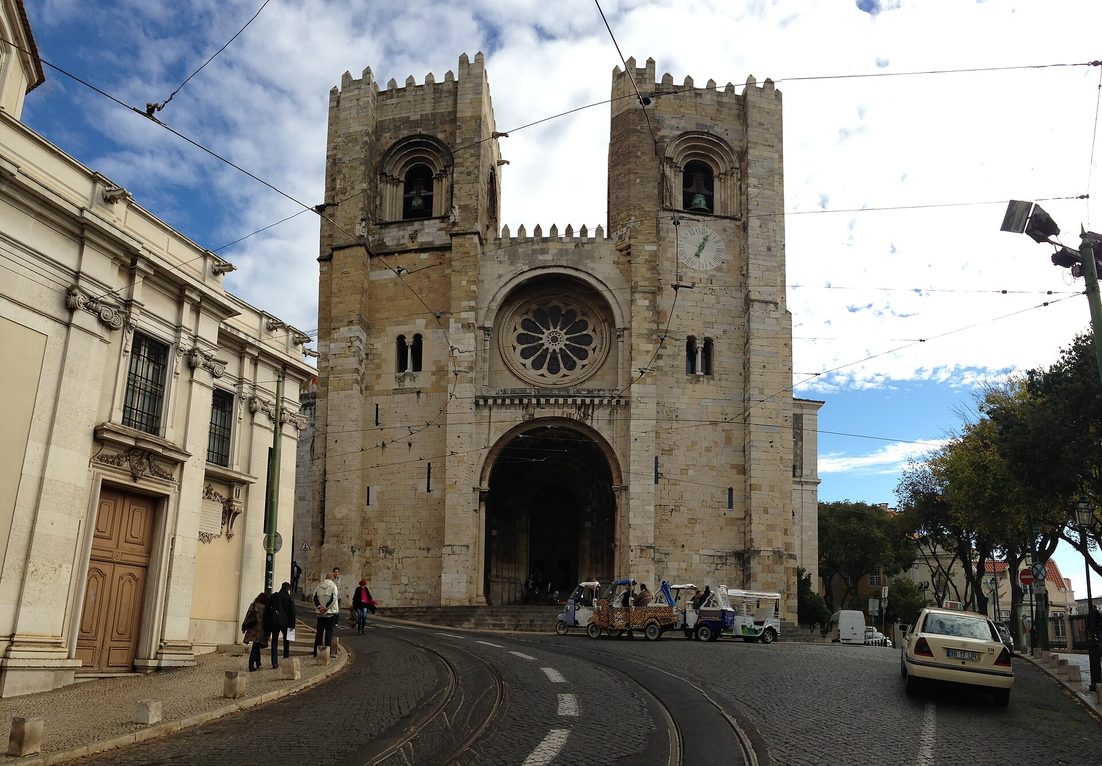
The oldest church in Lisbon
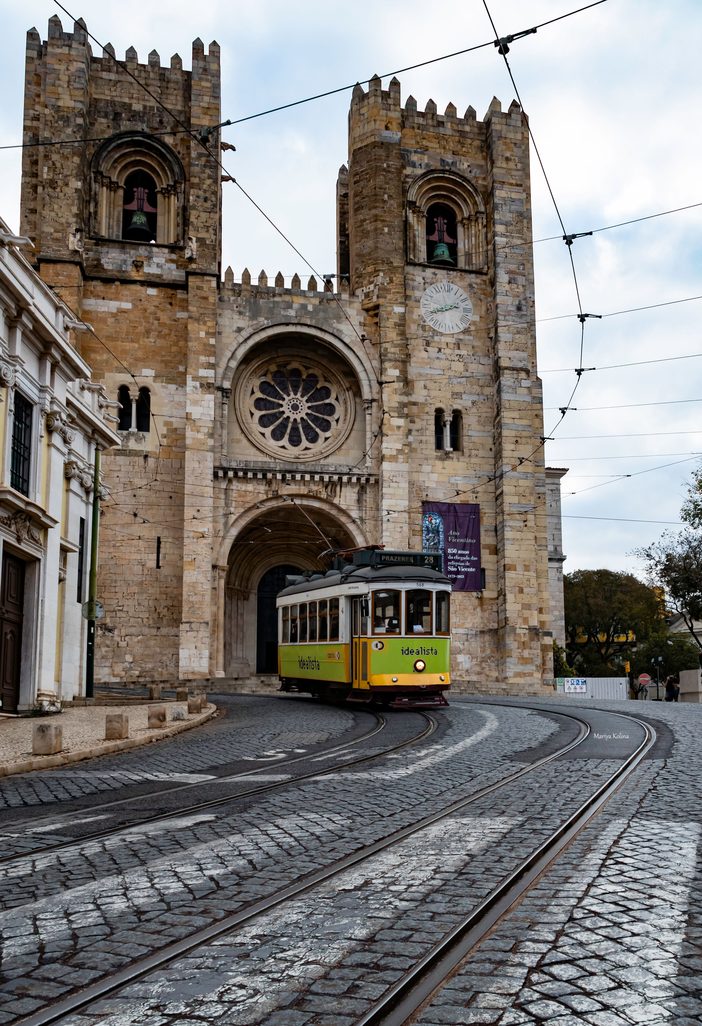
In 1147 Afonso Henriques, the first king of Portugal, took Lisbon from the Moors with the help of crusaders from northern Europe on their way to the Holy Land. One of them, Gilbert of Hastings, an Englishman, became the first bishop of the reconquered city, and the new cathedral was built on the site of the great mosque. Its west front, two crenellated towers either side of a rose window, still looks like the castle gate of a frontier town.
King Dinis added a Gothic cloister at the end of the 13th century, and in the 14th Afonso IV replaced the Romanesque apse with a Gothic chancel and ambulatory, to serve as a royal pantheon. Earthquakes damaged the cathedral more than once, and the great earthquake of 1755 wrecked the chancel, much of the cloister and part of the south tower; the chancel was rebuilt in the Baroque style. In the 20th century restorers stripped away later additions to bring back its medieval look.
The visitor’s cheat sheet
| Where | Largo da Sé, 1100-585 Lisbon; trams 28 and 12E stop outside |
|---|---|
| Opening hours | Monday–Saturday 10am–6pm (November–March or April); 9.30am–7pm on most days in summer, last entry 30 minutes before closing. Closed to visitors on Sundays, holy days and during Mass |
| Admission | €7; children 7–12 and Lisboa Card €5; under-7s free; phone audio guide €3 extra (2026) |
| Mass | Sunday 11.30am; Tuesday–Thursday 5.30pm |
| Cloister | Restored, but not yet reopened to visitors (October 2026) |
| How long | Forty-five minutes to an hour |
Hours and admission checked against the official site in October 2026. They change; the official site is always the last word.
Not on Sundays. The cathedral is closed to sightseers on Sundays and holy days, and visits stop during Mass. The official website gives two slightly different summer timetables; on Wednesdays and Saturdays it may close at 6pm.
What to see
The nave and the upper choir
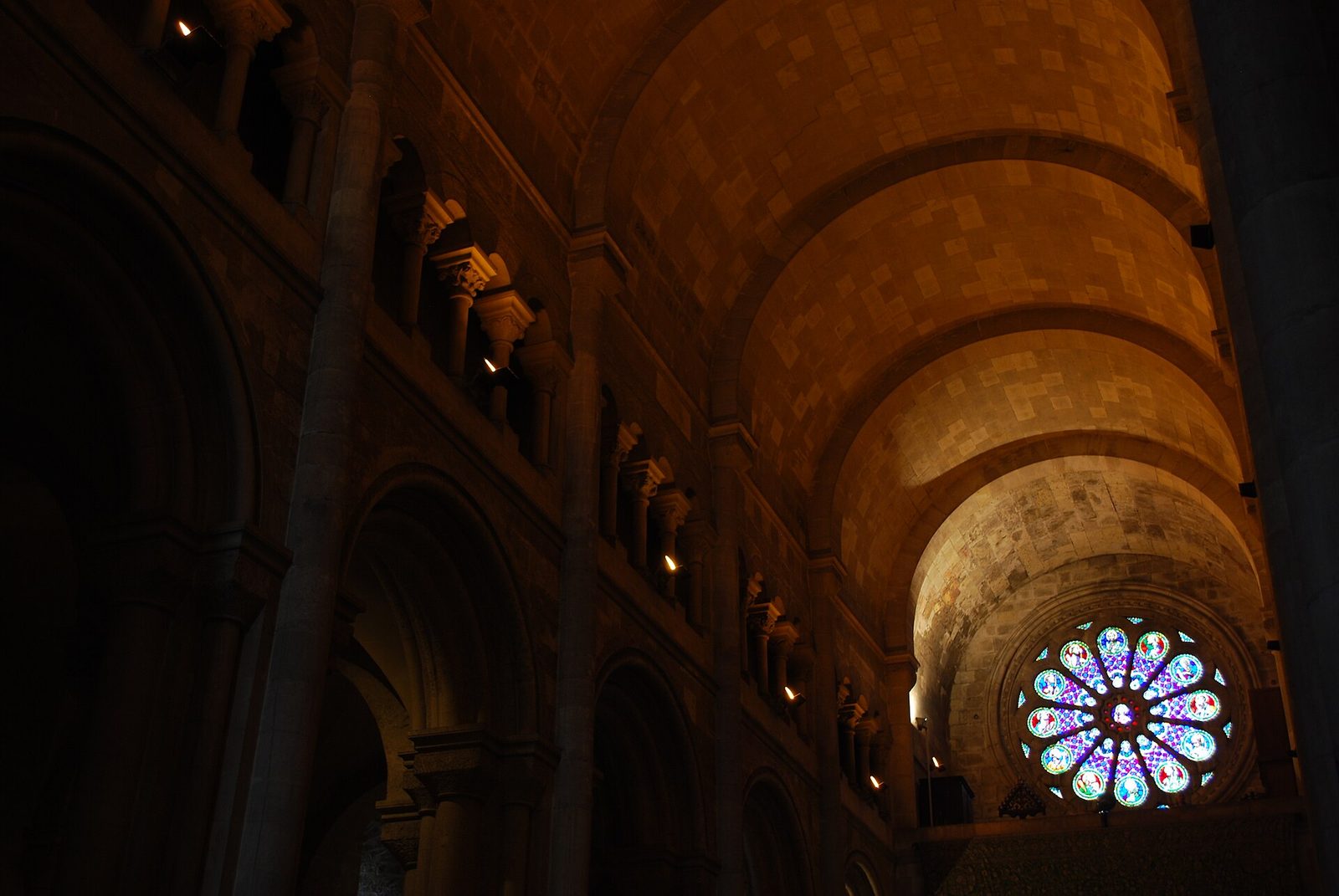
Inside, the nave is Romanesque, sombre and massive, with round arches and the rose window glowing at the west end. The ticket includes the climb to the upper choir, under the rose window, and the balcony between the towers, looking down the nave and out over the roofs of the Alfama.
The ambulatory and its tombs
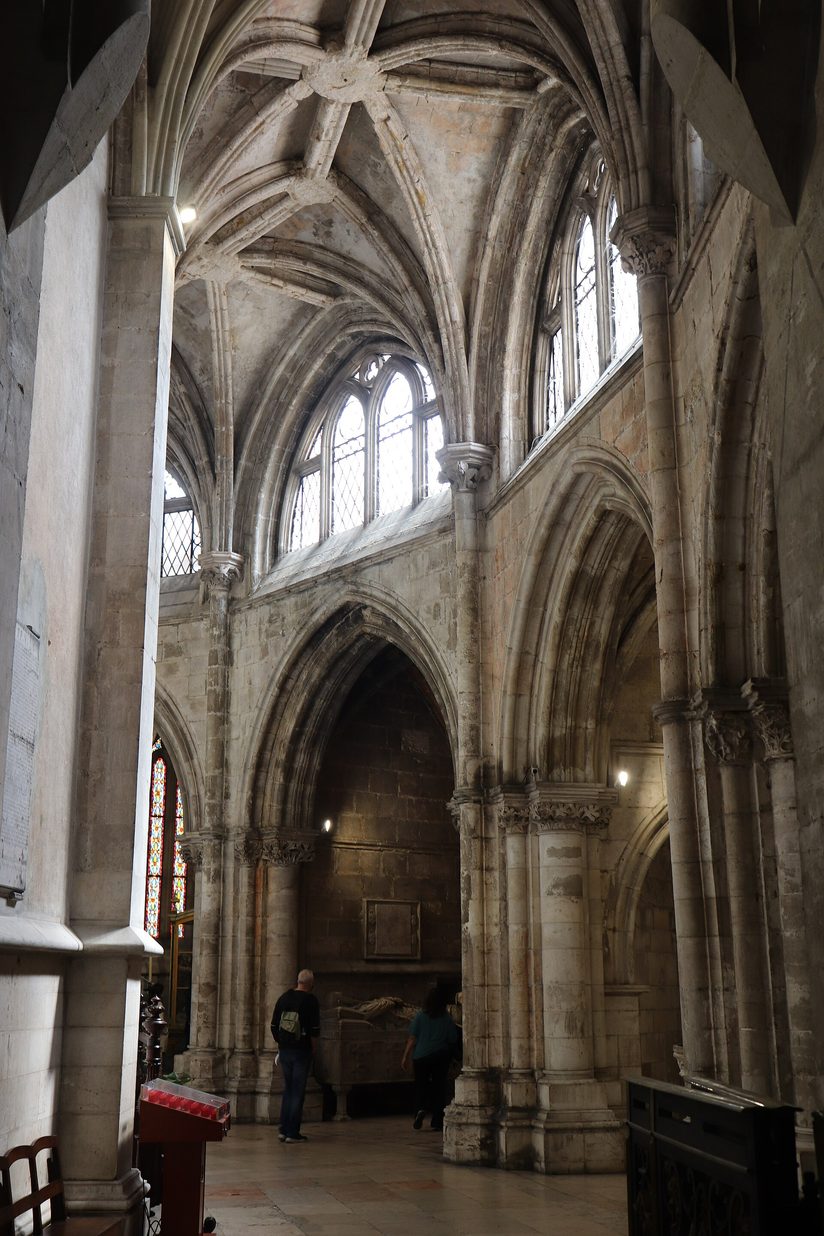
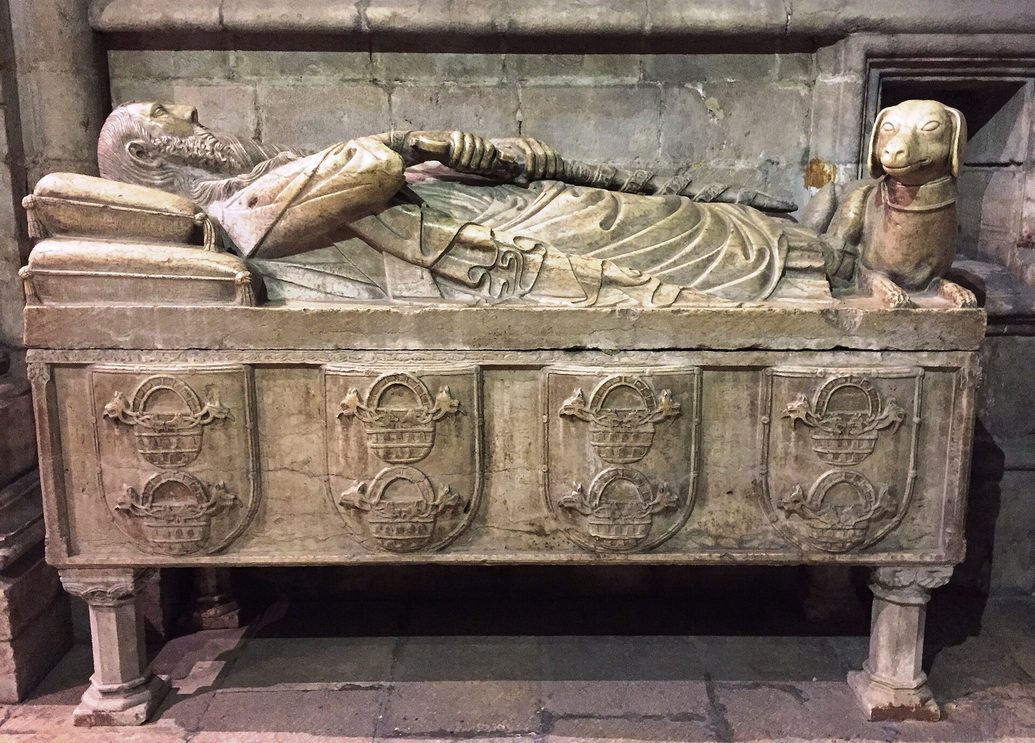
Behind the high altar, the Gothic ambulatory is ringed by chapels. In one lie Lopo Fernandes Pacheco, a 14th-century nobleman, with his sword and a dog at his feet, and his wife Maria de Vilalobos, reading her book of hours. Afonso IV and his queen, Beatriz, are buried in the chancel. The Bartolomeu Joanes chapel, built in the early 14th century by a rich merchant, holds his Gothic tomb.
The baptistery and the crib
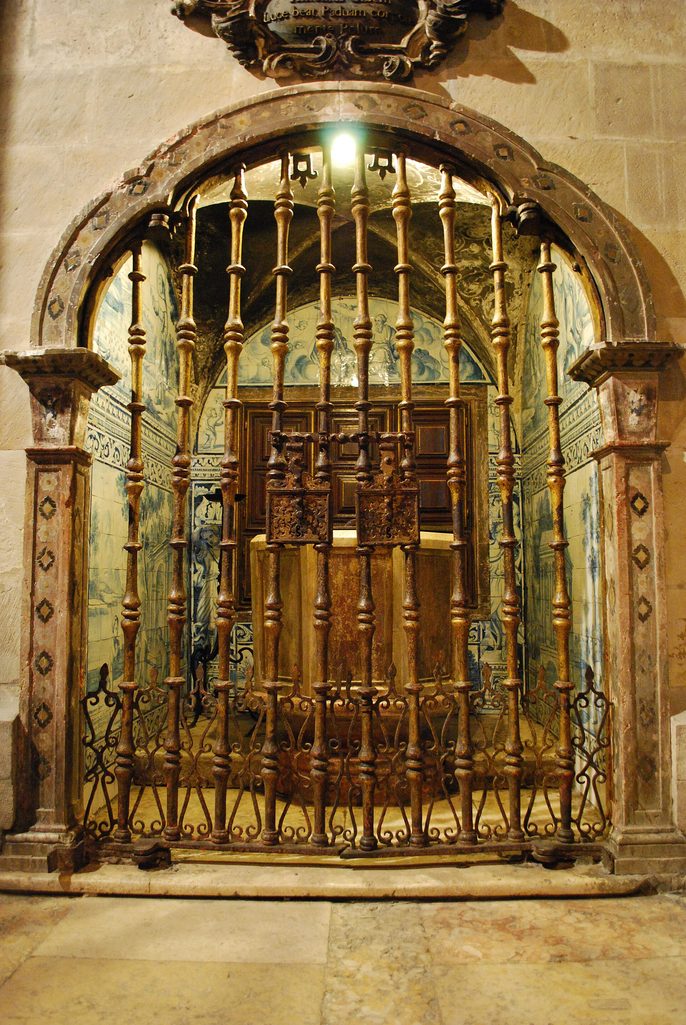
Just inside the door, on the left, is the baptistery, reportedly part of the ticketed route since the 2026 changes. Its font, by tradition, is the one in which St Anthony of Padua, born in Lisbon, was baptised; a relic of the saint is shown there, and the tiles include St Anthony preaching to the fishes. In the chapel of St Ildefonso is a clay Nativity crib of 1766 by the sculptor Joaquim Machado de Castro, full of everyday figures.
The treasury
Upstairs, the treasury holds the cathedral’s vestments, silver and reliquaries, among them two reliquaries of St Vincent, Lisbon’s patron, whose relics were brought to Lisbon by ship in 1173, accompanied, so the story goes, by ravens. The finest piece is the jewelled monstrance of the Patriarchate, still used on special occasions.
The cloister
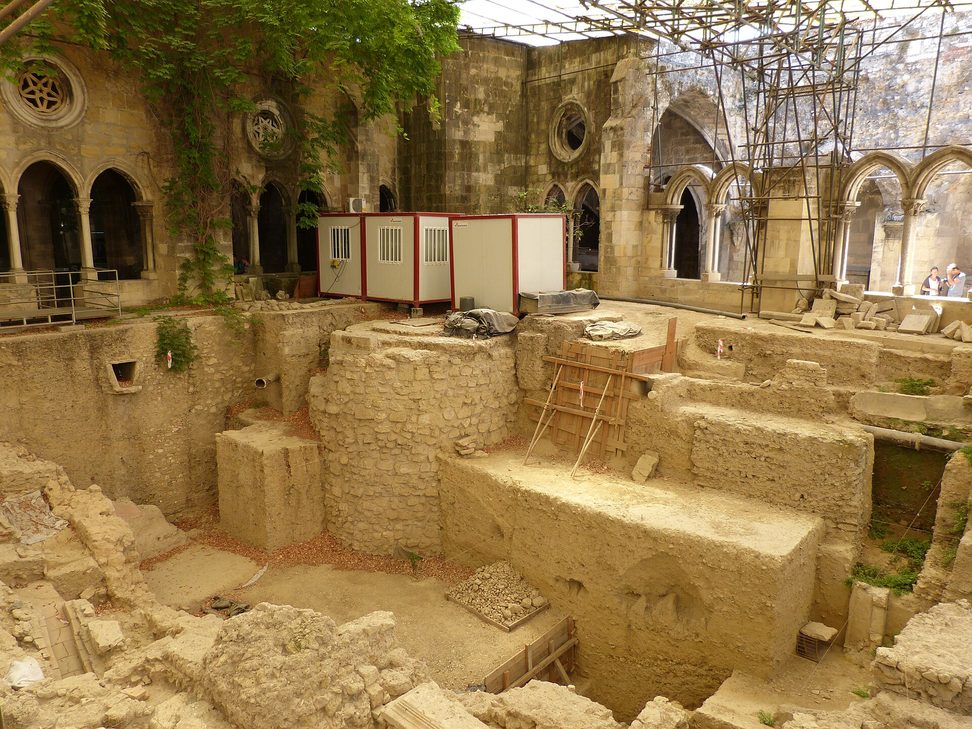
Excavations in the cloister since 1990 have uncovered a Roman street with shops, and the walls of an Almoravid mosque complex of the 12th century, the mosque that the cathedral replaced. A new archaeological centre built around them was completed in 2025, but in October 2026 the cloister had not yet reopened to visitors.
Tours and where to stay
Tickets are sold at the cathedral. Many walking tours of the Alfama, and the tram 28 tours, start or stop here; the cathedral is a good first stop on the climb to the castle.
These links go to GetYourGuide and Booking.com. This site earns nothing from them at present — they are here because they are the quickest way to check what is actually available.
Don’t miss
- The west front A castle gate of a cathedral.
- The balcony Between the towers, on the ticket.
- Lopo’s dog Faithful at his master’s feet.
- St Anthony’s font Just inside the door.
- The monstrance In the treasury.
Insider tips
Cross the square. The Church of Santo António, opposite, stands on the site of the house where St Anthony was born, and has a small museum of the saint next door. On 12 June, the eve of his feast and Lisbon’s holiday, couples are married in the cathedral in the “St Anthony weddings”, and the city parties all night.
Common questions
How much does it cost to visit Lisbon Cathedral?
Since May 2026 the tourist visit costs €7 for adults, €5 for children aged 7–12 and with the Lisboa Card, and is free for under-7s. The ticket includes the upper choir, the balcony between the towers, the treasury and the nave and ambulatory. A phone audio guide costs €3 more. A space set aside for prayer remains free to enter.
When is Lisbon Cathedral open?
Monday to Saturday, from 10am to 6pm in winter and from 9.30am to 7pm on most days in summer, with last entry half an hour before closing. It is closed to visitors on Sundays and holy days, and during Mass.
Can you see the cloister of Lisbon Cathedral?
Not yet. A long restoration of the cloister and its excavations, which have uncovered a Roman street and the remains of the city’s 12th-century mosque, was completed in 2025, but in October 2026 the cloister had still not reopened to visitors.
Was St Anthony of Padua baptised in Lisbon Cathedral?
Yes, by tradition: he was born in Lisbon, near the cathedral, around 1195, and the font in the baptistery is said to be the one in which he was baptised. The Church of Santo António across the square stands on the site of his birthplace.
How do you get to Lisbon Cathedral?
Trams 28 and 12E both stop at Sé, right outside. On foot it is an uphill walk of about ten minutes from the Baixa or Praça do Comércio, on the way up to the Alfama and the castle.
More churches in Portugal
- Jerónimos Monastery — Lisbon’s great Manueline monastery, at Belém.
- Basilica of St Anthony, Padua — where the Lisbon-born saint is buried.
- Porto Cathedral — the other Romanesque fortress cathedral, on its hill above the Douro.