
Igreja do Carmo, Porto
The Igreja do Carmo is the Porto church with the great wall of blue and white tiles, on the corner by the university, and one of the most photographed buildings in the city. It is really two churches, the Carmo and the older Carmelitas, standing side by side, with a house no more than a metre and a half wide hidden between them. The tiles cost nothing to see; €8 buys the church, the hidden house, the catacombs and the roof.
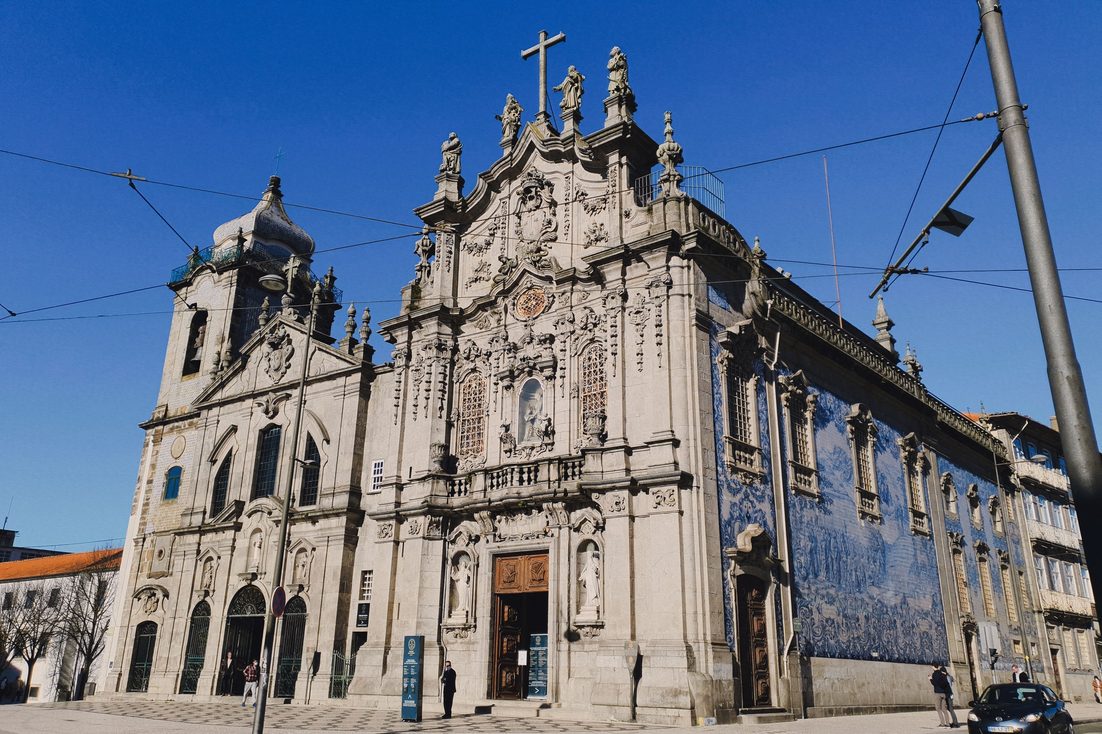
Two churches and a hidden house
The older of the pair, on the left as you face them, is the Igreja dos Carmelitas, built in 1619–28 for a convent of Discalced Carmelite friars; it has a sober classical front, remodelled in the 1750s, and a Baroque interior. In 1751 the Third Order of Our Lady of Carmel, a brotherhood of lay people founded in Porto in 1736, bought land from the friars to build a church of its own right next door. The first stone was laid on 29 August 1756, to a design by the architect and painter José Figueiredo Seixas, with a contribution from Nicolau Nasoni, and the church opened in 1768. Its facade is Rococo, with St Anne in a glazed niche over the door and the four Evangelists on the skyline.
Between the two churches is the Casa Escondida, the “hidden house”, probably built around 1768 and between 1 and 1.5 metres wide. Why it was built is not known for certain. The favourite story is that it kept the Carmelite nuns of one church apart from the monks of the other, but both communities were men; the likelier answer is that the two churches were not allowed to share a wall. The convent of the Carmelitas became a barracks after the religious orders were abolished in 1834, and the National Republican Guard still uses it; both churches were made national monuments in 2013.
The visitor’s cheat sheet
| Where | Corner of Rua do Carmo and Praça de Carlos Alberto, Porto; 10 minutes’ walk from São Bento |
|---|---|
| Opening hours | Daily 9.30am–5pm November–March, 9.30am–6pm April–October; may change on holidays |
| Admission | €8 for the church, Casa Escondida, catacombs and rooftop; the tiled wall and the Carmelitas church are free |
| Mass | Daily 9am |
| Rooftop | Reached by steep, narrow stairs |
| How long | Thirty to forty-five minutes for the circuit, plus a few minutes outside |
Hours and admission checked against the official site in October 2026. They change; the official site is always the last word.
What to see
The tiled wall
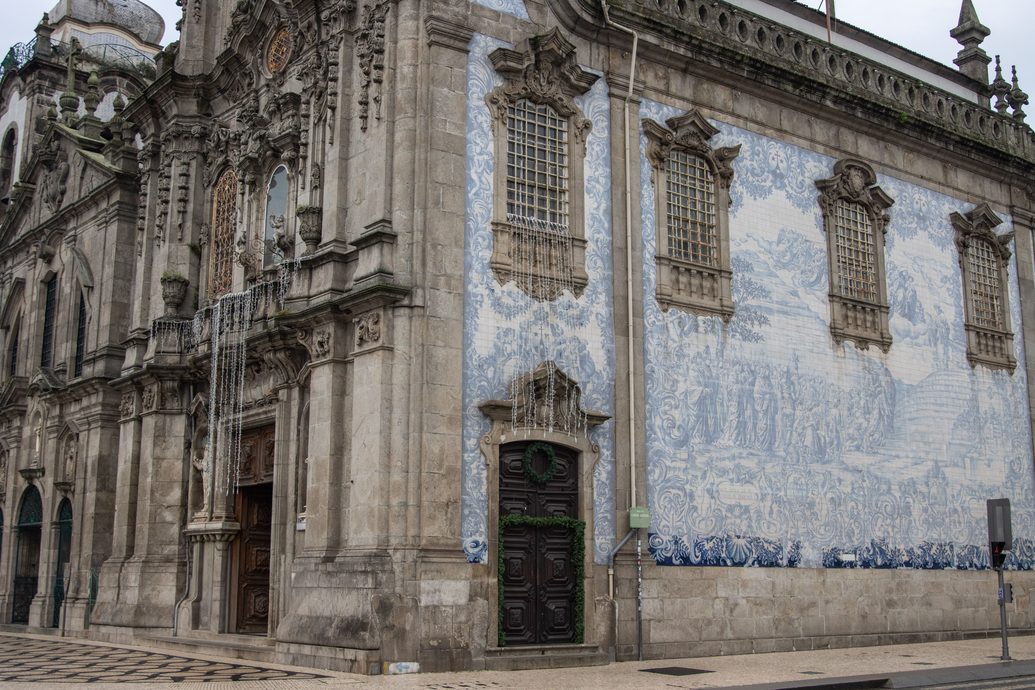
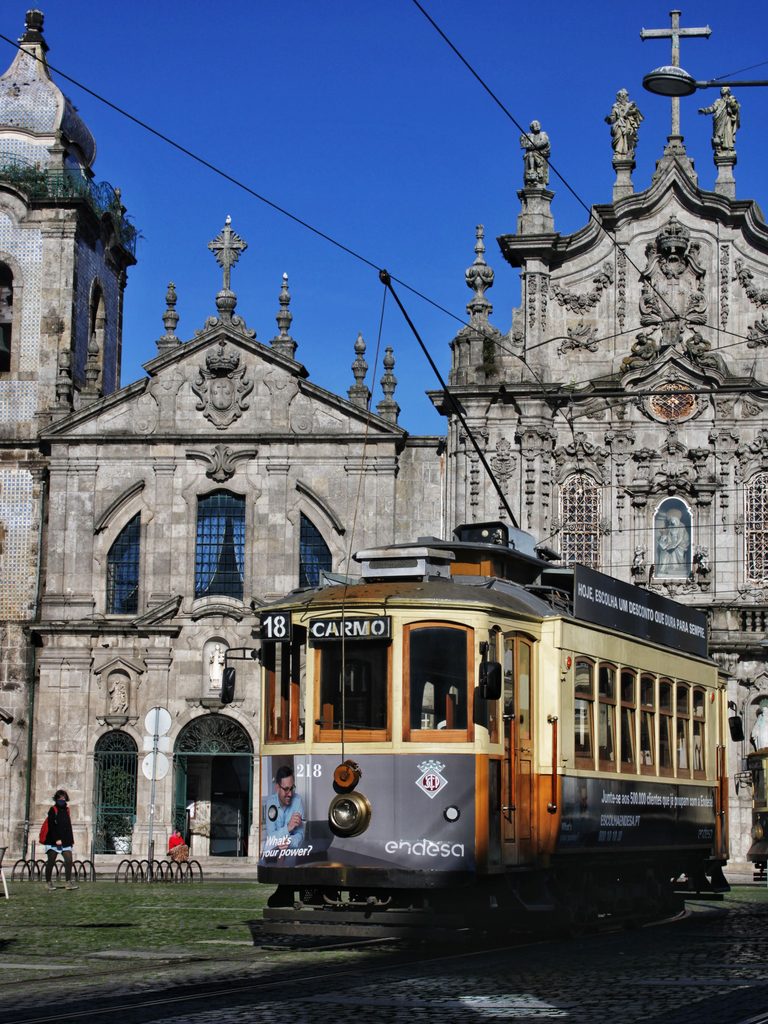
The east side of the Carmo, along Rua do Carmo, is covered by a single great azulejo panel of 1912. It was designed by the Italian Silvestre Silvestri and painted by Carlos Branco at the Senhor do Além and Torrinha factories across the river in Vila Nova de Gaia, and it shows the founding of the Carmelite order and Our Lady of Carmel giving the scapular on Mount Carmel. It looks 18th-century, but it is a revival work, considered the finest example of early-20th-century church tiling in the Porto region. The best place to see it whole is across the street, by the tram stop.
The church
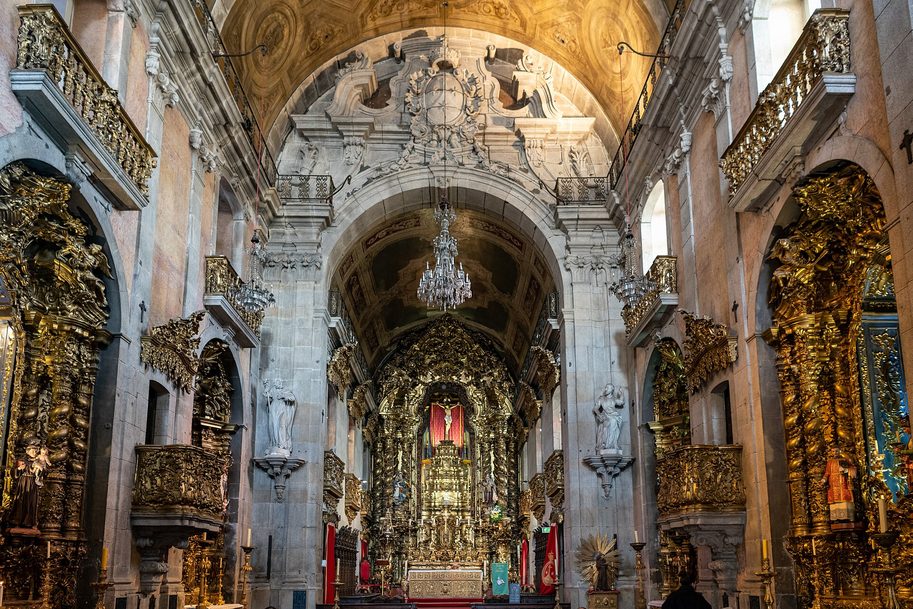
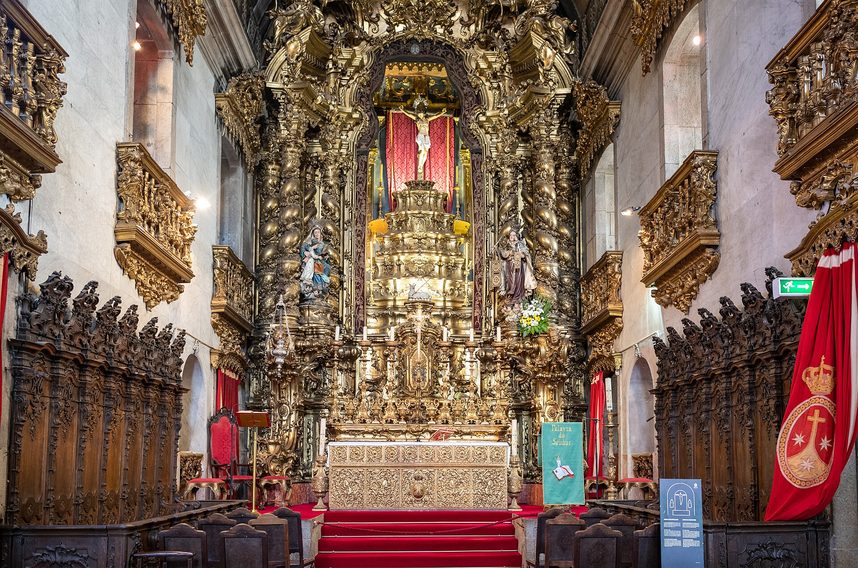
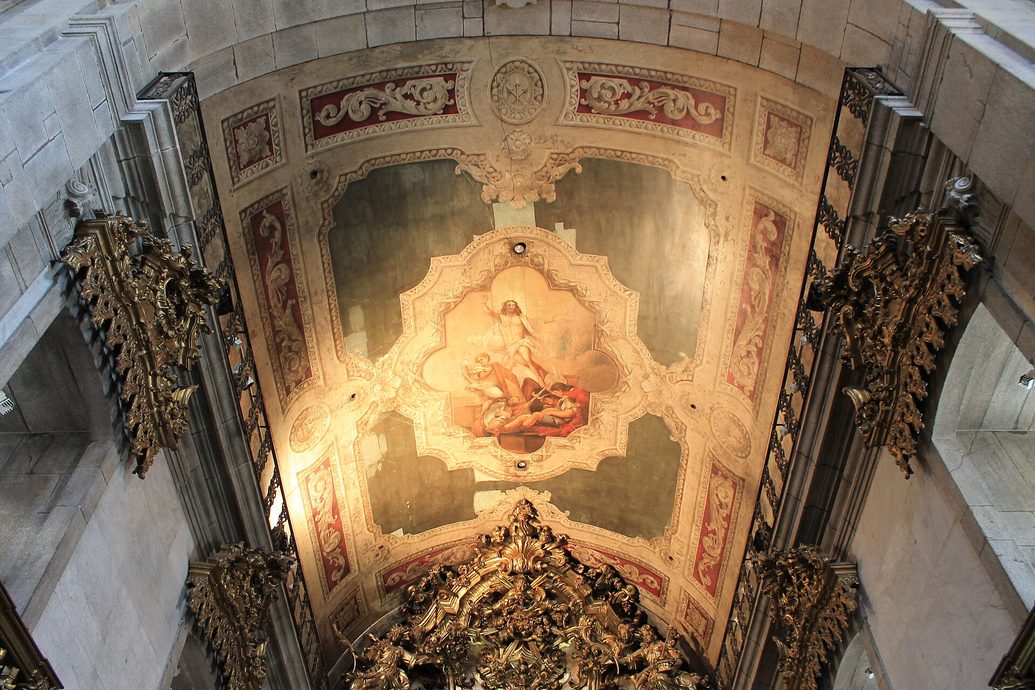
Inside, the Carmo has a single nave lined with pink marble and six side altars of gilt wood, carved in 1771, leading to a high altarpiece made by Francisco Pereira Campanhã in 1773. The altars follow the Passion, from the Agony in the Garden to the Crucifixion, and the Resurrection is painted on the ceiling. There are two organs, of 1806 and 1880.
The circuit: hidden house, catacombs and rooftop
The ticketed circuit, run by the Third Order, which still owns the church, goes through the sacristy and the order’s historic rooms, the library and galleries, and down into the catacombs where members of the order were buried. Then comes the Casa Escondida, three floors of tiny rooms joined by a stair, and finally the rooftop, up steep stairs, with views over the city. The sacristy of the Carmo has a path over the roof of the Carmelitas, so that its bells, hung in the Carmelitas tower, could be rung.
The Igreja dos Carmelitas
The older church next door is not part of the ticket and is free to enter when open, at times posted on the door. Its tower, on the far left, is faced with patterned tiles, and the statues on the front are painted clay made to look like stone.
Tours and where to stay
Tickets for the circuit are sold at the church or online through Ticketline, linked from the Third Order’s website. Most walking tours of Porto pass the tiled wall; the streets around the Carmo and Clérigos are a central place to stay.
These links go to GetYourGuide and Booking.com. This site earns nothing from them at present — they are here because they are the quickest way to check what is actually available.
Don’t miss
- The tiled wall Best seen from across Rua do Carmo.
- The Casa Escondida A house between two churches.
- The catacombs Where the order buried its members.
- The rooftop Views over the old city.
- The Carmelitas The older church next door, free.
Insider tips
Come early for the photograph. The tiled wall is busiest from late morning, when walking tours arrive. Livraria Lello, the bookshop with the famous staircase, is a few minutes down Rua das Carmelitas, and the Clérigos church and tower are just beyond; both are worth combining with the Carmo.
Common questions
How much does it cost to visit the Igreja do Carmo?
€8, for the church and the “circuit”: the Casa Escondida, the sacristy and historic rooms, the catacombs and the rooftop. Tickets are sold on the spot or online. The tiled wall outside costs nothing to see, and the neighbouring Carmelitas church is free.
What is the Casa Escondida?
The “hidden house”: a narrow house, between 1 and 1.5 metres wide, squeezed between the Carmo and the Carmelitas church next door, behind a plain door you would walk past. Probably built around 1768, it has three floors with a bedroom, a sitting room and a kitchen, and was lived in by chaplains, craftsmen and later doctors. It has been open to visitors since 2018.
Why are there two churches side by side?
The Carmelitas, on the left, was built in 1619–28 for the Discalced Carmelite friars; the Carmo, on the right, was built in 1756–68 for the Third Order of Carmel, a lay brotherhood. The popular story says the house between them kept nuns apart from monks, but both communities were men; the likelier explanation is that two churches were not allowed to share a wall.
When is the Igreja do Carmo open?
Every day, 9.30am–5pm from November to March and 9.30am–6pm in summer. Mass is said daily at 9am.
Who made the famous tiled wall?
The panel was put up in 1912. It was designed by the Italian Silvestre Silvestri and painted by Carlos Branco at the Senhor do Além and Torrinha factories in Vila Nova de Gaia, and shows the founding of the Carmelite order and the gift of the scapular on Mount Carmel.
More churches in Portugal
- Porto Cathedral — the Sé, on its hill above the river, with a tiled Gothic cloister.
- Bom Jesus do Monte — the Baroque staircase sanctuary above Braga.
- Jerónimos Monastery — Lisbon’s Manueline masterpiece.