
Down Cathedral, Downpatrick
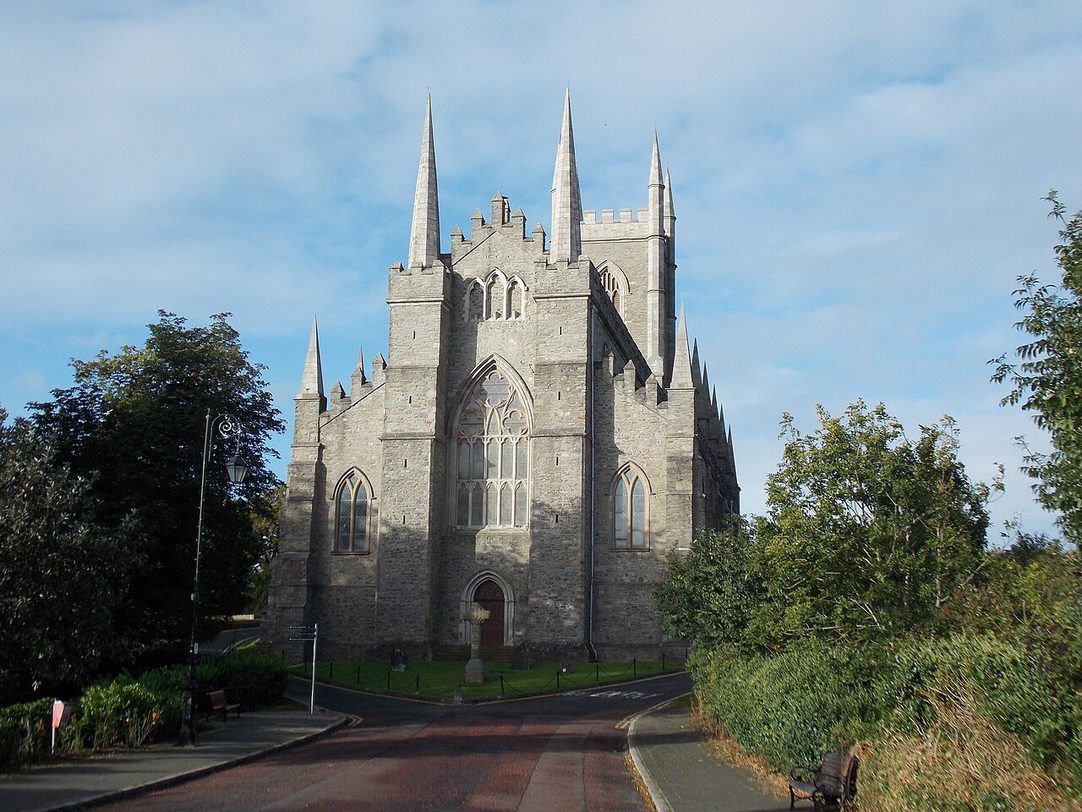
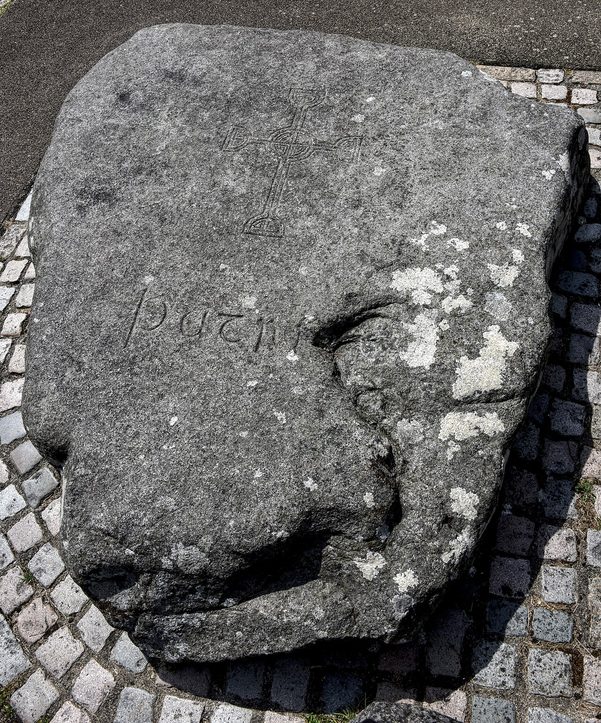
On a hill above Downpatrick, a small cathedral stands beside the place where St Patrick is said to be buried. Pilgrims have come here for more than a thousand years. The building has been burned, abandoned and rebuilt, and what you see today is a Georgian reconstruction of the medieval abbey church, with box pews inside and a great granite slab in the churchyard marked simply “Patric”.
Patrick's hill
Tradition holds that St Patrick died in 461 and was buried on the Hill of Down. A church stood here early, and in the twelfth century St Malachy, bishop of Down, repaired it. After the Norman knight John de Courcy conquered the area, he brought in Benedictine monks in 1177, and in 1185 claimed to have found the bones of Patrick, Brigid and Columba, Ireland’s three patron saints, which were reburied in the cathedral with great ceremony.
The cathedral was burned in the wars of the fourteenth century, restored in 1412 and burned again in 1538, by the Lord Deputy, Lord Grey. The monastery was dissolved soon afterwards and the church lay in ruins for two and a half centuries. In 1790 the Irish Parliament granted £1,000 to rebuild it; it reopened in 1818. The granite slab over Patrick’s grave was laid in 1900.
The visitor's cheat sheet
| Where | English Street, Downpatrick, County Down, BT30 6AB |
|---|---|
| Getting there | About 21 miles south of Belfast on the A7; Translink buses from Belfast to Downpatrick bus station, then a short walk up the hill |
| Opening hours | Monday–Friday 10am–3.30pm; Saturday by appointment; Sunday for the 11.30am service; churchyard open at all times |
| Admission | Free; donations welcome; booked group tours for a small charge |
| How long | Under an hour; half a day with the museum and the Saint Patrick Centre |
| Best time | A weekday, when the cathedral is open; 17 March if you like crowds |
| Dress code | None; it is a working cathedral |
| Tours | Guided tours for groups of ten or more, booked ahead |
Hours and admission checked against the official site in October 2026. They change; the official site is always the last word.
The font that became a trough. The cathedral’s font, probably eleventh-century, was found in 1927 being used as a water trough. It was brought back into the cathedral in 1931.
What to see, in the order you meet it
St Patrick’s grave
In the churchyard, a huge slab of Mourne granite carved with the name “Patric” marks the traditional grave. It was put there in 1900, partly to stop pilgrims taking away soil from the grave as a relic.
The high cross
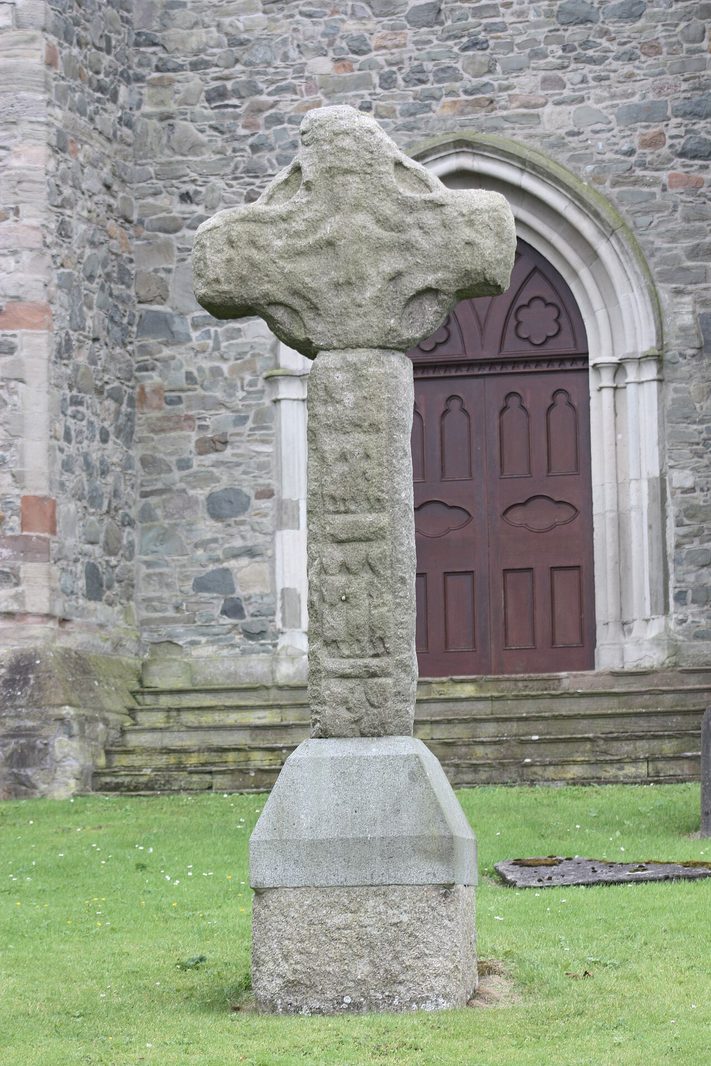
Outside the east end stands a high cross. It is a replica: the original, of the tenth or eleventh century, was moved into Down County Museum in 2015 to protect it.
The interior
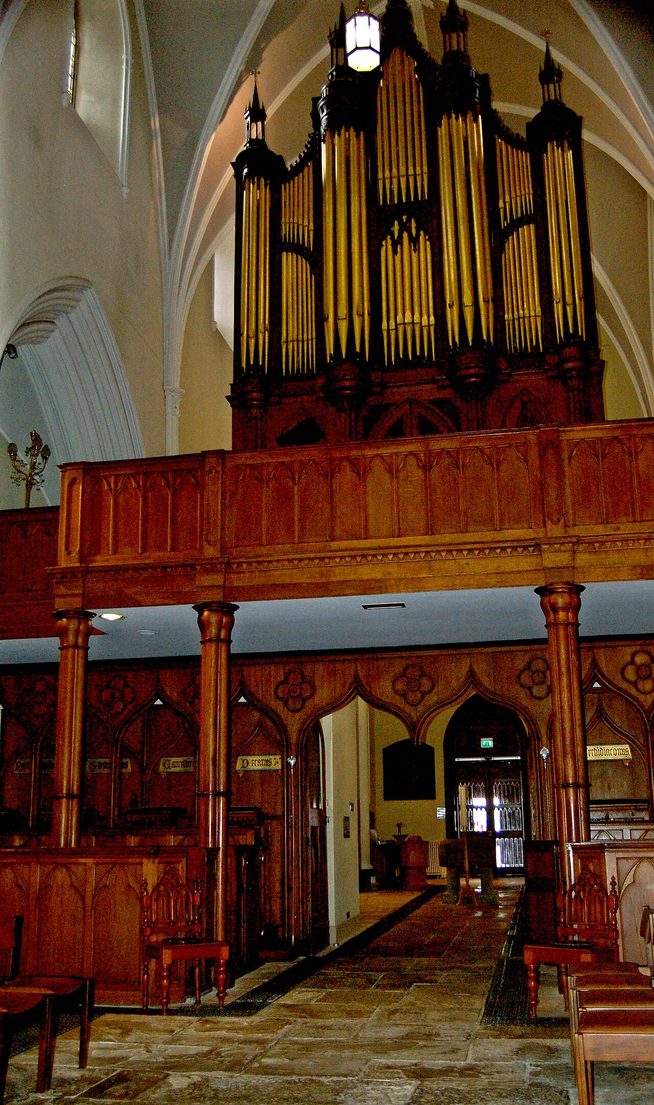
Inside, the nave has Georgian box pews and an organ installed in 1802 and rebuilt several times since; it is being restored again in 2026. In the porch are fragments of early carved crosses.
Visiting
Free to visit
Entry is free. Groups of ten or more can book a guided tour through the cathedral office.
The hotel link goes to Booking.com. This site earns nothing from it at present — it is here because it is the quickest way to check what is actually available.
Don't miss
- Patrick’s grave The granite slab of 1900.
- The high cross And the original in the museum.
- The box pews A Georgian interior.
- Down County Museum Free, in the old gaol next door.
- The Saint Patrick Centre Patrick’s story, in the town below.
- Inch Abbey Cistercian ruins about a mile away.
Insider tips
Follow Patrick’s trail. Saul, two or three miles away, is where Patrick is said to have founded his first church; a small church built in 1932 stands on the site. With Inch Abbey and the Struell Wells, it makes a half-day loop from the cathedral.
Common questions
Is St Patrick really buried at Down Cathedral?
Tradition has held so for many centuries. In the Middle Ages John de Courcy claimed to have found the bones of Patrick, Brigid and Columba here and reburied them in the cathedral. Nobody knows for certain where Patrick was buried, but the hill has been a place of pilgrimage for well over a thousand years, and a slab of Mourne granite has marked the traditional grave since 1900.
When is Down Cathedral open?
The cathedral is open Monday to Friday from 10am to 3.30pm; on Saturdays it opens by appointment, and on Sundays for the 11.30am service. The churchyard and St Patrick’s grave can be visited at any time.
Is there an admission charge?
No. Entry is free and donations are welcome. Groups of ten or more can book a guided tour, for a small charge.
What else is there to see in Downpatrick?
Down County Museum, in the old county gaol next to the cathedral, is free and keeps the original high cross. The Saint Patrick Centre in the town tells Patrick’s story and has a café. Nearby are the ruins of Inch Abbey, the church at Saul on the traditional site of Patrick’s first church, and the holy wells at Struell.
How do you get to Downpatrick from Belfast?
Downpatrick is about 21 miles south of Belfast on the A7, about 45 minutes by car. Translink buses run from Belfast to Downpatrick bus station, from which the cathedral is a short walk up the hill.
Where to stay and eat nearby
The Saint Patrick Centre has a café, and Downpatrick’s town centre has others. Most visitors come for the day from Belfast, or stay along the shores of Strangford Lough.
More churches in Northern Ireland
- Grey Abbey — a Cistercian ruin across Strangford Lough
- Armagh’s two cathedrals — on the hill where Patrick founded his church