
Grey Abbey, County Down
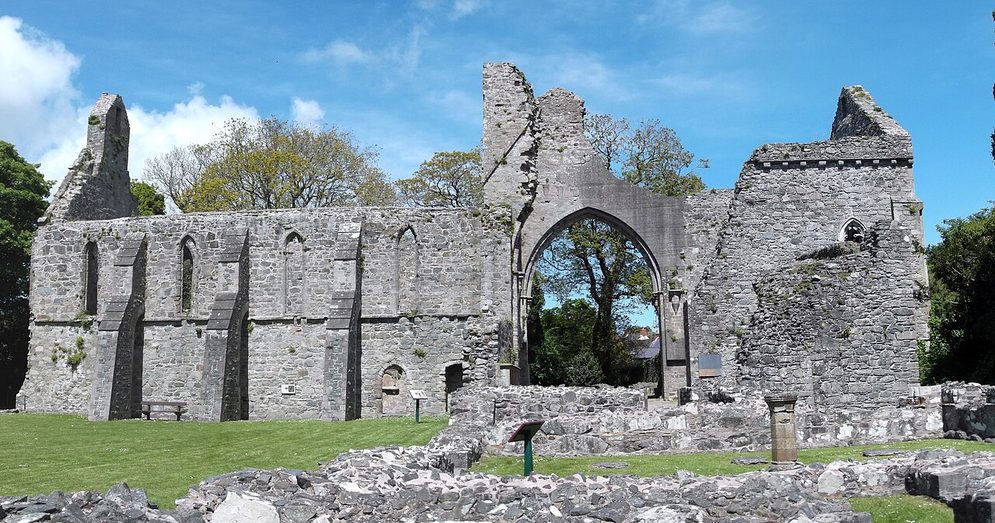
On the shore of Strangford Lough, in the parkland of an eighteenth-century estate, stand the ruins of a Cistercian abbey founded in 1193. Its pointed lancet windows are among the earliest Gothic architecture in Ireland, and its founder was a woman: Affreca, daughter of the King of Man. It is free, rarely busy, and one of the most peaceful places in Northern Ireland.
Affreca's abbey
John de Courcy, the Norman knight who conquered eastern Ulster in 1177, married Affreca, daughter of Godred, King of Man. In 1193 she founded this abbey for Cistercian monks from Holm Cultram in Cumbria, dedicating it to St Mary of the Yoke of God. A female founder was unusual among Cistercian houses.
The abbey was dissolved in 1541, and in 1572 it was burned by Sir Brian O’Neill so that English settlers in the Ards could not use it as a stronghold. In the early seventeenth century the land passed to the Montgomery family, who re-roofed the nave as the parish church; it was used until 1778, when a new church was built. The ruins now stand in the grounds of the Montgomerys’ house, Rosemount (now called Grey Abbey House), which is private.

The visitor's cheat sheet
| Where | Main Street, Greyabbey, Newtownards, County Down, BT22 2NQ |
|---|---|
| Getting there | On the A20 along Strangford Lough, about 7 miles south-east of Newtownards; free car park on site |
| Opening hours | Check before travelling (reported closed for storm-damage tree work in autumn 2026); visitor centre Saturday 1–4pm and Sunday 2–4.30pm (phone to check) |
| Admission | Free |
| How long | About an hour |
| Best time | A spring or summer weekend, when the visitor centre and garden are at their best |
| Dress code | Outdoor shoes; grass and gravel |
| Tours | Occasional free tours by the Friends of the Abbey, for example on European Heritage Open Days |
Hours and admission checked against the official site in October 2026. They change; the official site is always the last word.
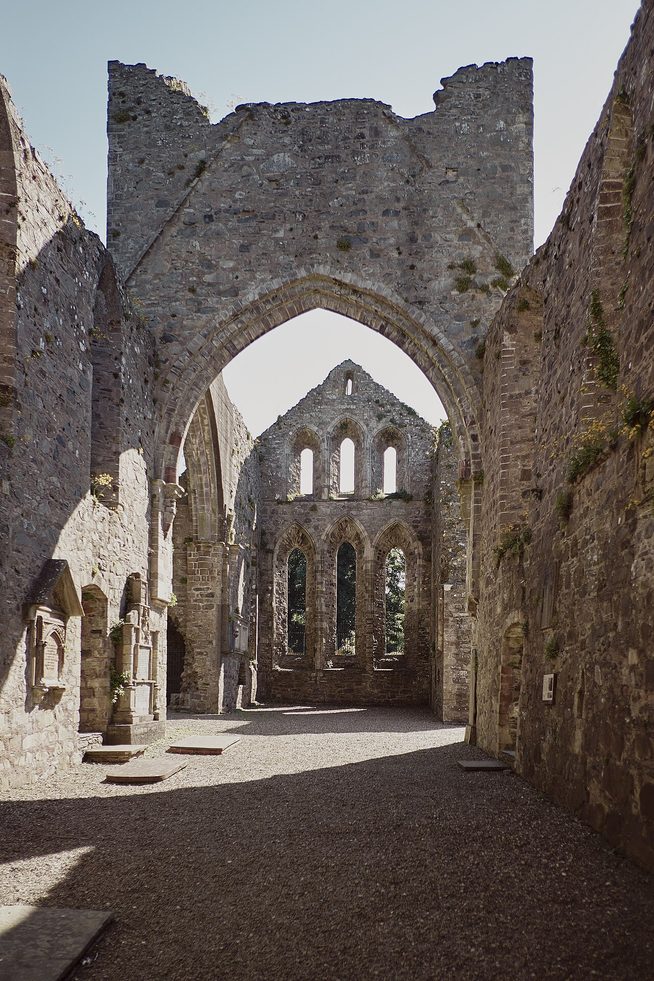
The earliest Gothic in Ireland. Grey Abbey’s pointed lancets and its west doorway are among the first examples of the Early Gothic style in Ireland, brought over by the Anglo-Norman settlers and their Cistercian monks.
What to see, in the order you meet it
The visitor centre and the physic garden
From the car park, start at the small visitor centre, then walk through the recreated medieval physic garden, planted with herbs the monks would have known.
The church
The church has an aisleless nave and a short chancel. At the west end is the most elaborate carving in the abbey, the west doorway; at the east end, tall lancet windows rise in two tiers. Inside are two effigies: a knight of about 1300, drawing his sword, and a woman traditionally said to be Affreca.

The cloister buildings
South of the church are the foundations of the cloister and the monks’ buildings: the chapter house, which had aisles, and the refectory, where you can still see the pulpit from which a monk read aloud during meals.
Visiting
Free to visit
Entry and parking are free. The visitor centre’s hours are limited, so phone ahead if you want to see it.
The hotel link goes to Booking.com. This site earns nothing from it at present — it is here because it is the quickest way to check what is actually available.
Don't miss
- The west doorway Early Gothic carving.
- The east lancets Tall windows in two tiers.
- The effigies A knight and, perhaps, Affreca.
- The refectory pulpit For reading during meals.
- The physic garden Medieval herbs by the ruins.
- Strangford Lough The lough shore just below the village.
Insider tips
Make a loop of the lough. Grey Abbey is on the east shore of Strangford Lough. Drive down to Portaferry, take the short ferry across to Strangford, and you are a few miles from Downpatrick and Down Cathedral, with the ruins of Inch Abbey nearby.
Common questions
Is Grey Abbey free to visit?
Yes. Grey Abbey is a state care monument looked after by the Department for Communities, and there is no charge. Parking is free.
When is Grey Abbey open?
Check before you travel. In autumn 2026 the local tourism website reported the site closed for tree work after storm damage. When open, the visitor centre opens on Saturdays from 1pm to 4pm and Sundays from 2pm to 4.30pm; phone 028 9082 3207 before making a special trip.
Who founded Grey Abbey?
Affreca, daughter of Godred, King of Man, and wife of John de Courcy, the Norman conqueror of Ulster. She founded it in 1193 for Cistercian monks from Holm Cultram in Cumbria. A female effigy in the church is traditionally said to be hers, though its style suggests it was carved about a century after her death.
What is the physic garden?
Beside the ruins is a recreated medieval physic garden, planted with the kinds of herbs the monks would have grown for medicine and cooking.
How do you get to Greyabbey?
The village is on the east shore of Strangford Lough, about 7 miles south-east of Newtownards. Ulsterbus services between Belfast and Portaferry run along the lough shore through the area, and the abbey has its own free car park.
Where to stay and eat nearby
Greyabbey is a small village known for its antique shops. Newtownards, 7 miles north, has more places to eat and stay, and Belfast is under an hour away.
More churches in Northern Ireland
- Down Cathedral — St Patrick’s grave, across the lough
- Armagh’s two cathedrals — the seat of Ireland’s archbishops