
Byland Abbey
Byland is the quiet one of the great Yorkshire abbeys: a Cistercian ruin in open country below the Hambleton Hills, free to visit and often almost empty. Its west front, with the lower half of a vast rose window, is one of the most striking ruins in England, and inside the church some of the finest medieval floor tiles in the country are still where the monks laid them.
Forty years on the move
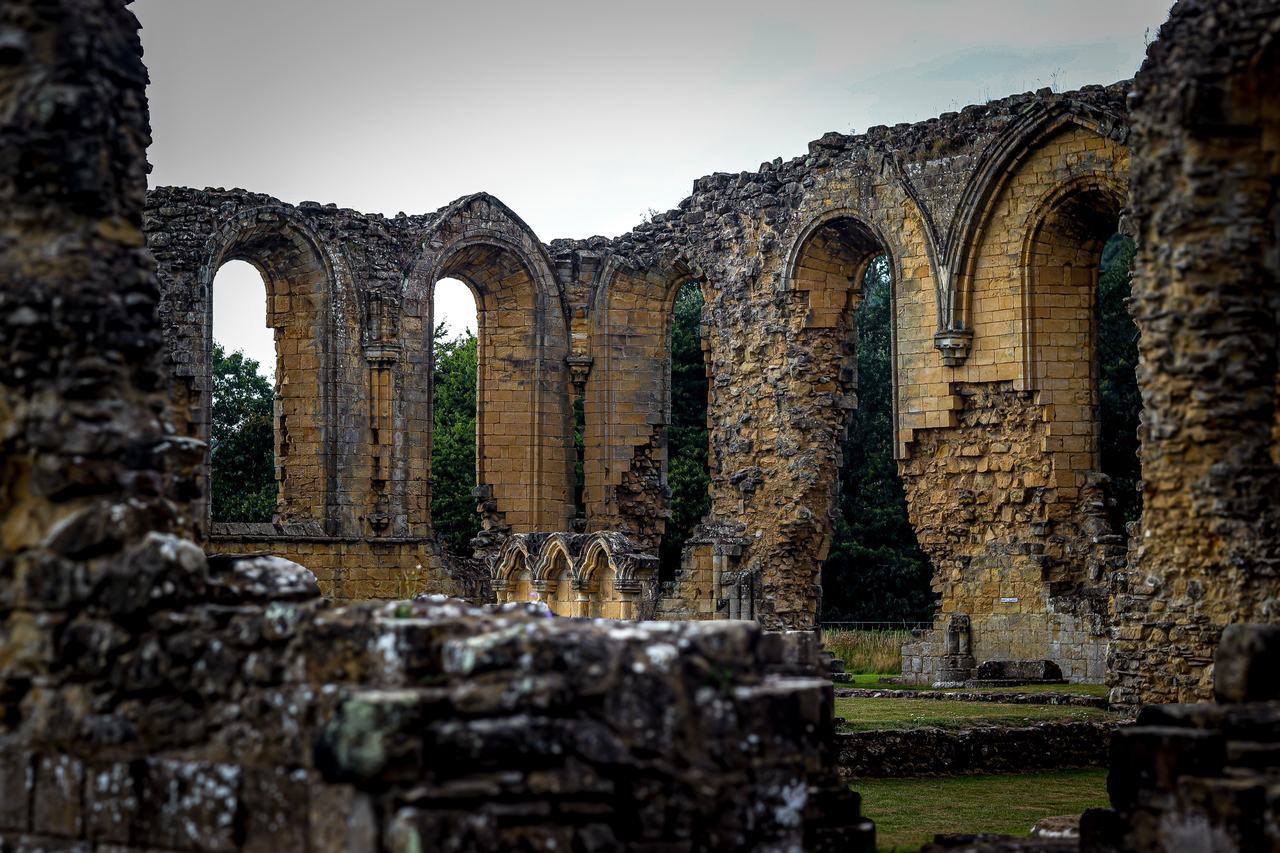
The community began in 1134, when monks of the order of Savigny left Furness Abbey to found a new house at Calder in Cumbria. Raided by the Scots, they moved again and again — to Hood, to Old Byland, and to Stocking — and in 1147, when the Savigniac houses were merged with the Cistercians, they became Cistercian monks. In 1177 they finally moved into their new abbey here, on marshland they had drained themselves and built on since the 1150s.
Their new church was among the largest and finest of its time in the north, an early Gothic building that influenced churches across the region. In 1322 a Scottish army surprised Edward II nearby at the Battle of Old Byland, and the king fled to York, leaving much of his baggage behind. The abbey was surrendered to Henry VIII in 1538.
The visitor's cheat sheet
| Where | Byland, Coxwold, North Yorkshire, YO61 4BD |
|---|---|
| Getting there | By car, near Coxwold, about 6 miles south-west of Helmsley; small car park (about 9 spaces); nearest station Thirsk |
| Opening hours | Grounds open at any reasonable time in daylight; museum April–October, usually Fri–Mon 12 noon–4pm |
| Admission | Free; free guided tours at 2pm at weekends in season |
| How long | About an hour |
| Best time | Between April and October, when the floor tiles are uncovered |
| Dress code | Outdoor site; uneven grass |
| Tours | Free guided tours at weekends in season; small museum |
Hours and admission checked against the official site in October 2026. They change; the official site is always the last word.
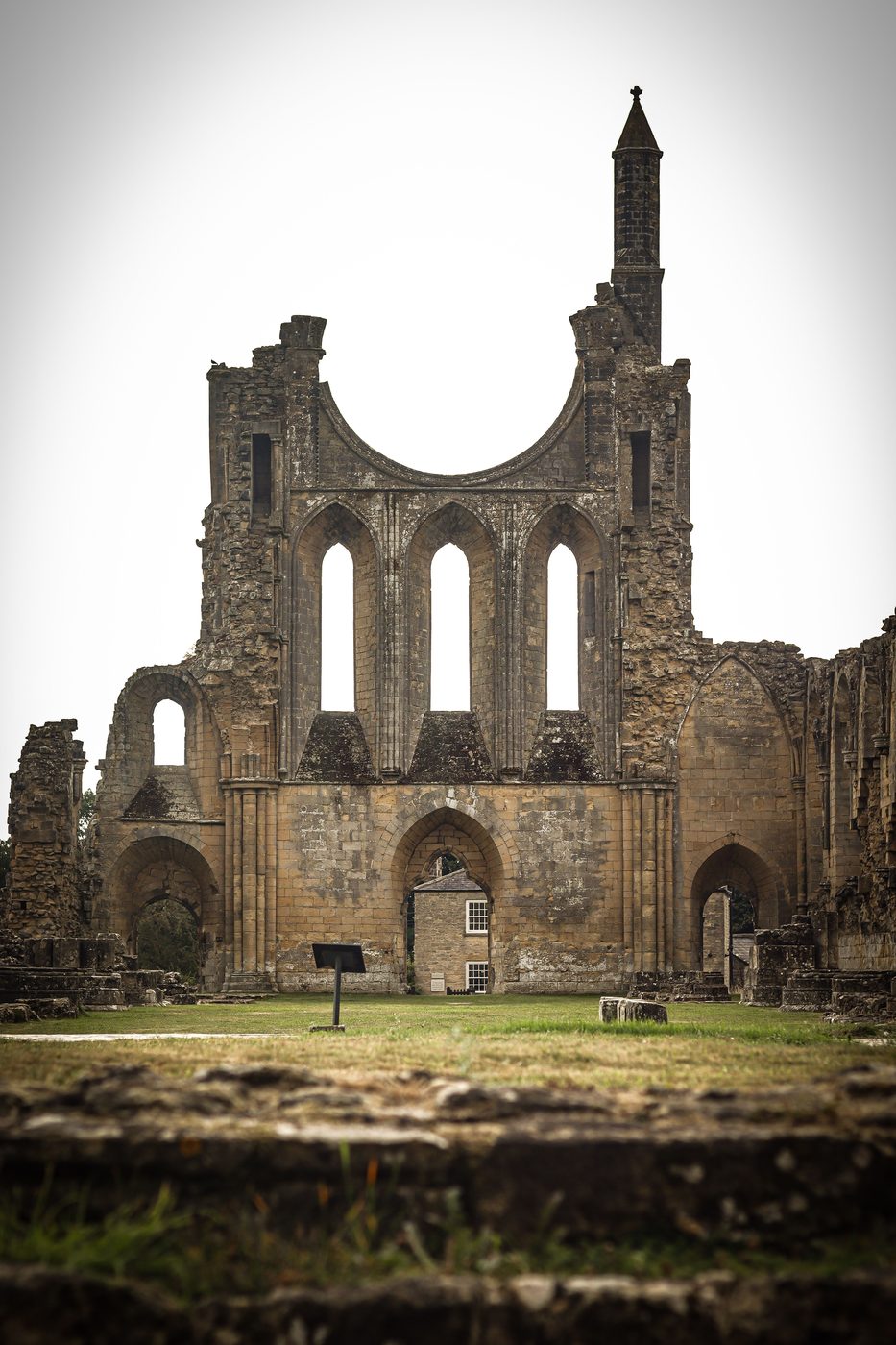
Half a rose window. Only the lower half of the west rose window survives, but it shows how big it was: almost as wide as the great rose window in the south transept of York Minster, which it is thought to have inspired.
What to see, in the order you meet it
The west front
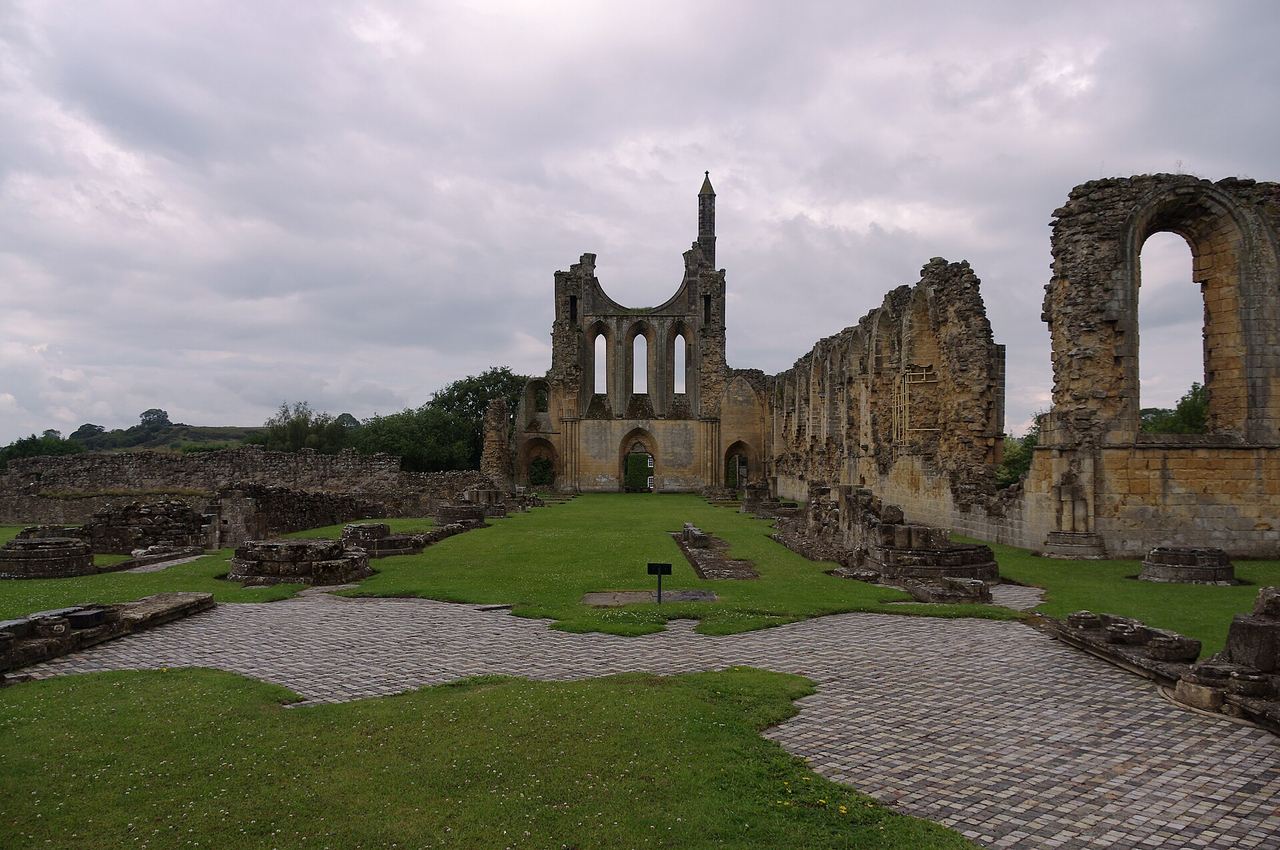
The west front stands across the end of the nave, one turret still rising to its full height and the great curve of the rose window above three tall lancet windows and the west doorway. It is best seen from the road and from inside the church, looking west.
The church
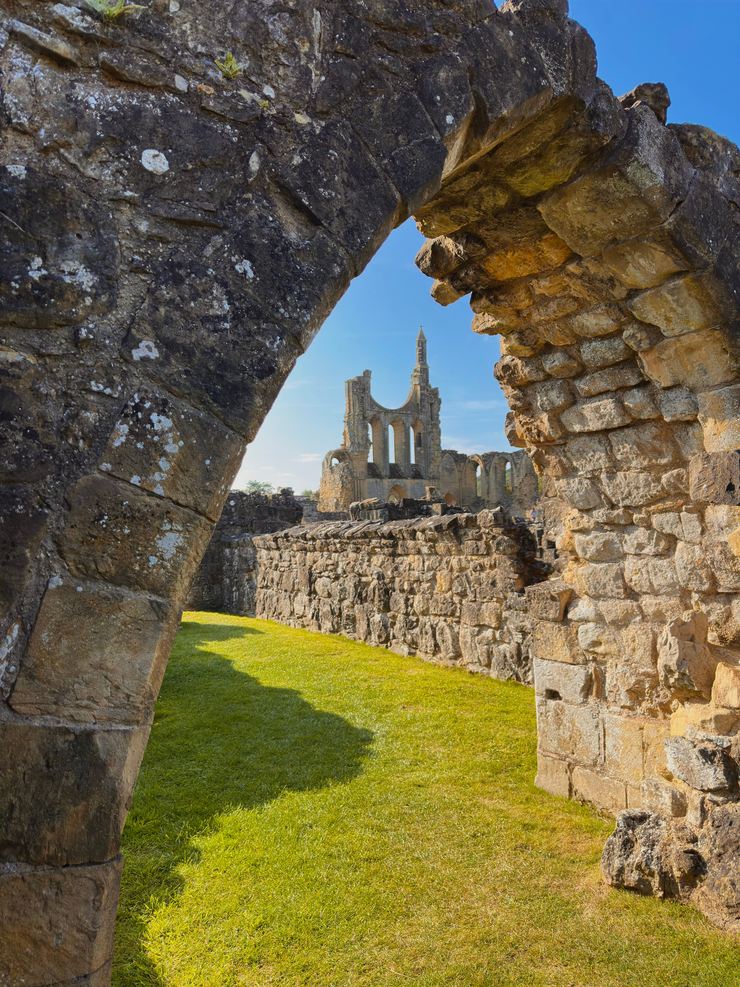
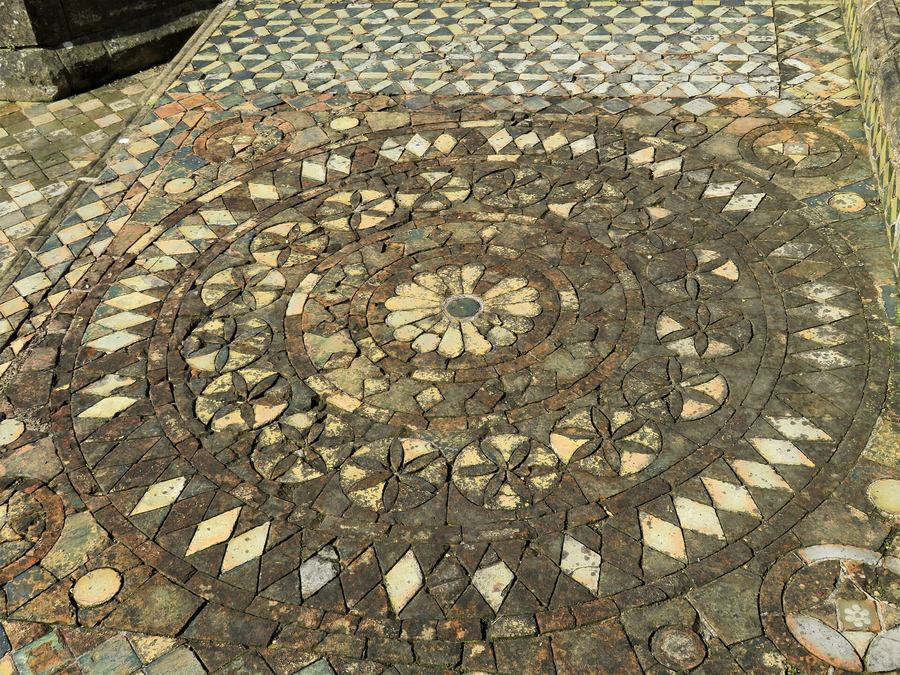
The nave and transepts are marked by the bases of the pillars and the lower walls, enough to show the length of the church. In the south transept, and in parts of the presbytery, the glazed floor tiles of the thirteenth century survive, green and yellow, laid in circles and geometric patterns.
The cloister and the lay brothers’ lane
South of the church lay the cloister. Between it and the west range, where the lay brothers lived, ran a walled lane that let them reach their part of the church without entering the monks’ cloister. The museum displays carved stone and finds from the site.
Visiting
Free to visit
Byland Abbey is free and open at any reasonable time in daylight. The small museum opens from April to October, usually Friday to Monday from 12 noon to 4pm, and there are free guided tours at 2pm at weekends in season. The floor tiles are covered in winter.
The hotel link goes to Booking.com. This site earns nothing from it at present — it is here because it is the quickest way to check what is actually available.
Don't miss
- The west front Half of a great rose window.
- The floor tiles Thirteenth-century, still in place.
- The lay brothers’ lane A rare survival.
- The museum Carved stone from the abbey.
- Coxwold A pretty village two miles away.
- Rievaulx Byland’s great neighbour, a short drive north.
Insider tips
Pair it with Rievaulx. Byland and Rievaulx are a short drive apart, and seeing both in a day shows two sides of the Cistercians: Rievaulx in its steep wooded valley, Byland in open farmland. Coxwold, with Shandy Hall, the home of the novelist Laurence Sterne, is just to the south.
Common questions
Does it cost anything to visit Byland Abbey?
No. Byland Abbey is cared for by English Heritage and is free to visit. The site is open at any reasonable time in daylight hours.
When is the museum open?
The small museum, staffed by volunteers, opens from April to October, usually Friday to Monday from 12 noon to 4pm, and free guided tours run at 2pm at weekends in season. Check the English Heritage website before you go.
Can you see the floor tiles all year?
No. The medieval tiles are covered with protective material over the winter, roughly from November to March, so visit between spring and autumn if you want to see them.
Is Byland linked to York Minster?
The great rose window of Byland’s west front is thought to have inspired the rose window in the south transept of York Minster. Byland’s church was one of the most influential early Gothic buildings in the north of England.
How do you get to Byland Abbey?
Byland is near Coxwold, about six miles south-west of Helmsley. There is a small car park of about nine spaces opposite the abbey; take care of passing traffic. Toilets are at the back of the Abbey Inn opposite. The nearest station is Thirsk.
Where to stay and eat nearby
The Abbey Inn stands opposite the ruins, and Helmsley and Thirsk have more places to stay.
More English churches
- Rievaulx Abbey — the first Cistercian abbey in the north
- York Minster — with the rose window Byland inspired
- Fountains Abbey — the largest monastic ruin in England
See all the cathedrals and churches worth visiting in England →