
Rievaulx Abbey
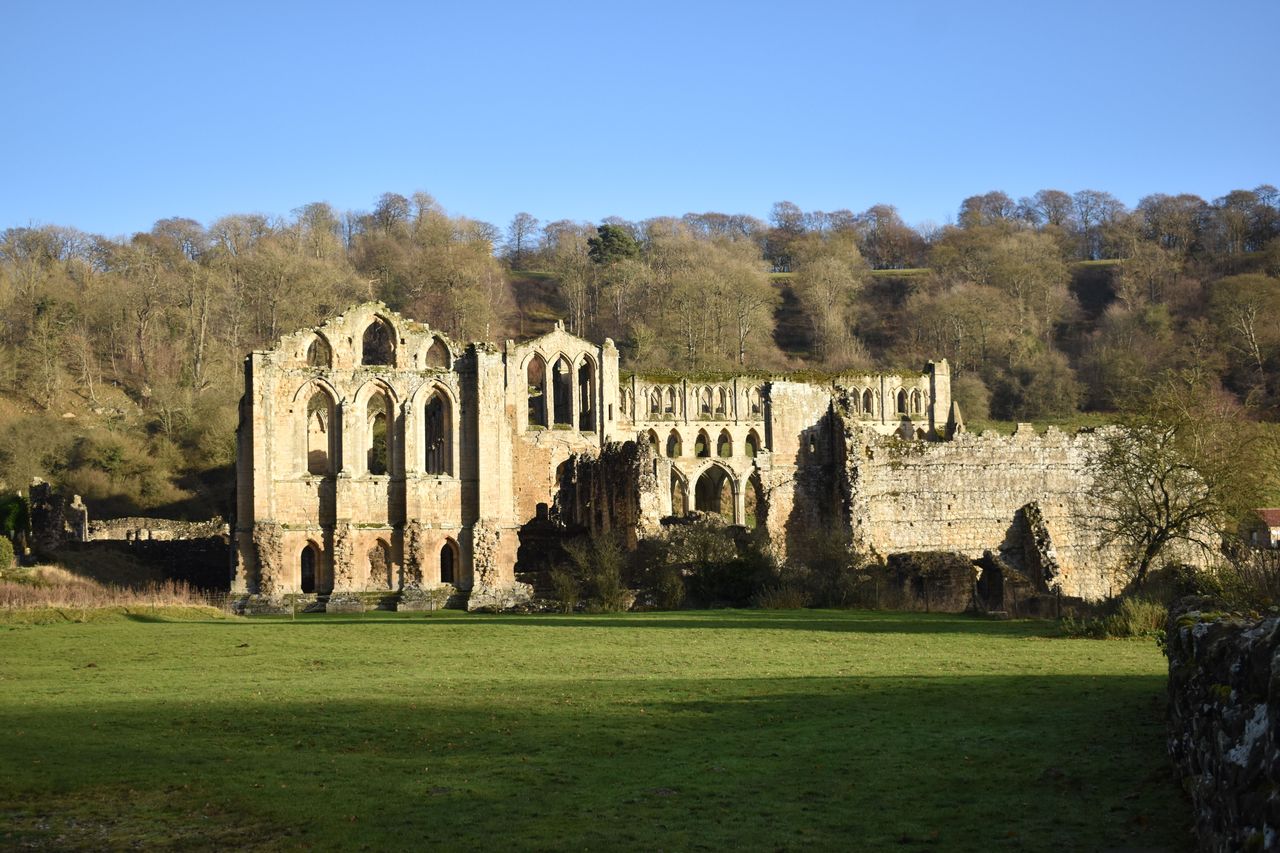
Deep in a wooded valley on the edge of the North York Moors stand the soaring ruins of Rievaulx, the first Cistercian abbey in the north of England. In the twelfth century it was home to hundreds of monks and lay brothers under St Aelred, one of the most loved writers of the Middle Ages. Its presbytery still rises almost to its full height, and for many visitors this is the most beautiful monastic ruin in England.
The first Cistercians in the north
Rievaulx was founded in 1132 by twelve monks sent from Clairvaux in France by St Bernard, on land given by Walter Espec, the lord of Helmsley. The valley of the Rye gave them the isolation the Cistercians wanted, and they reshaped it, moving the course of the river to make room for their buildings.
Under Aelred, abbot from 1147 to 1167, Rievaulx grew to some 140 monks and 500 lay brothers, and became rich on sheep, wool and iron. Debts, disease, Scottish raids and the Black Death brought it low, and by the Dissolution in 1538 only about twenty monks remained. The buildings were stripped and left as a ruin.
The visitor's cheat sheet
| Where | Rievaulx, near Helmsley, North Yorkshire, YO62 5LB |
|---|---|
| Getting there | By car from Helmsley, about 2.5 miles, or on foot along the Cleveland Way; car park at the abbey |
| Opening hours | Main season daily 10am–5pm, last entry 4.30pm; reduced opening in winter |
| Admission | English Heritage ticket, roughly £11–£14 for adults, cheaper booked online; free for English Heritage and National Trust members |
| How long | 1.5 to 2 hours, with the museum |
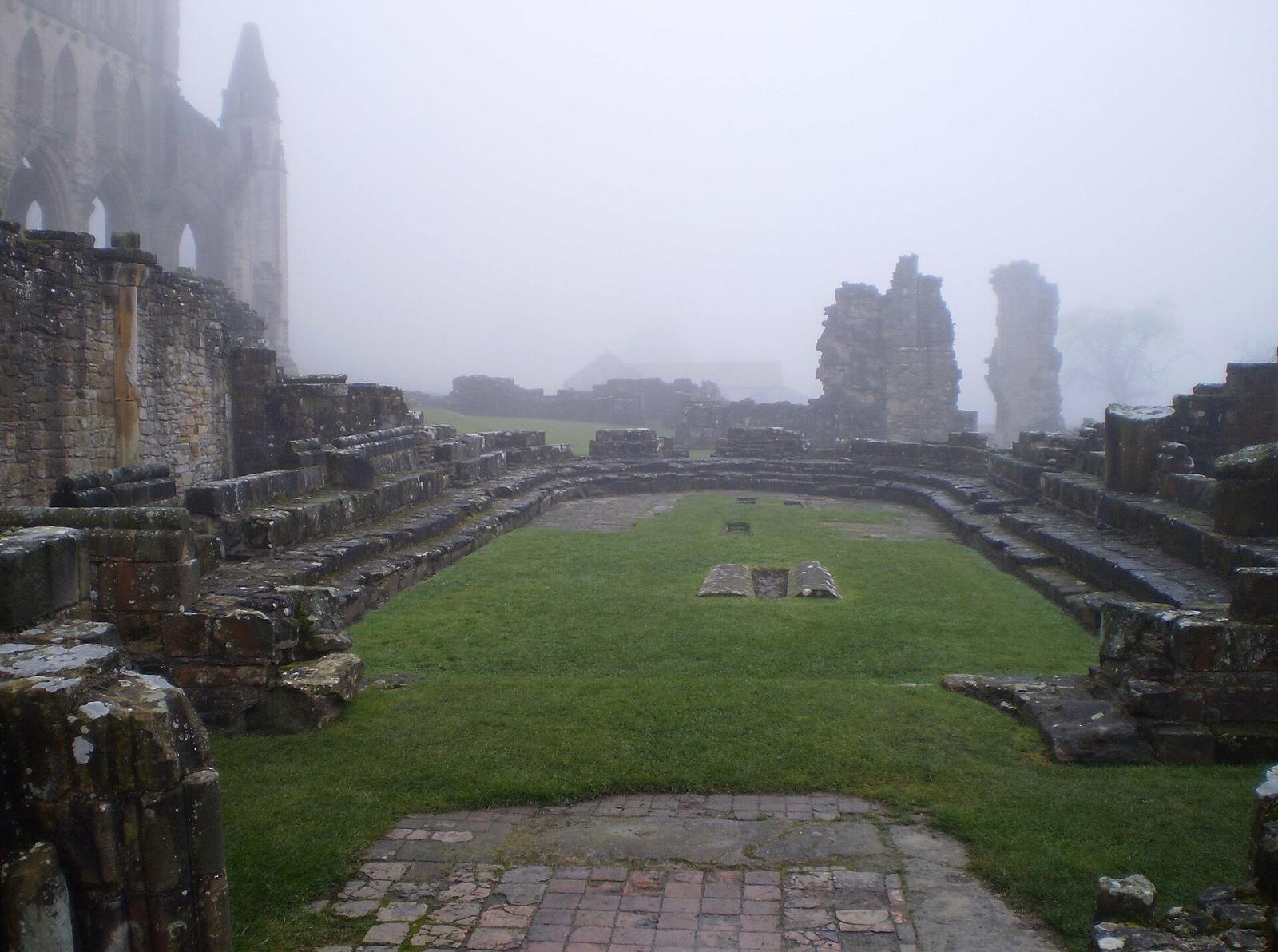
| Best time | A spring or autumn morning, when mist lies in the valley |
| Dress code | Outdoor site; wear good shoes |
| Tours | Audio tour; museum and café on site |
Hours and admission checked against the official site in October 2026. They change; the official site is always the last word.
A river moved by monks. The Rye once ran closer to the abbey. The monks diverted it to the west to gain flat ground for building, and moved it again later in the twelfth century. The old course can still be traced in the grounds.
What to see, in the order you meet it
The museum
Begin in the museum, which tells the story of the abbey through carved stone, tools and objects found on the site, and shows how the ruins were stripped after 1538.
The church
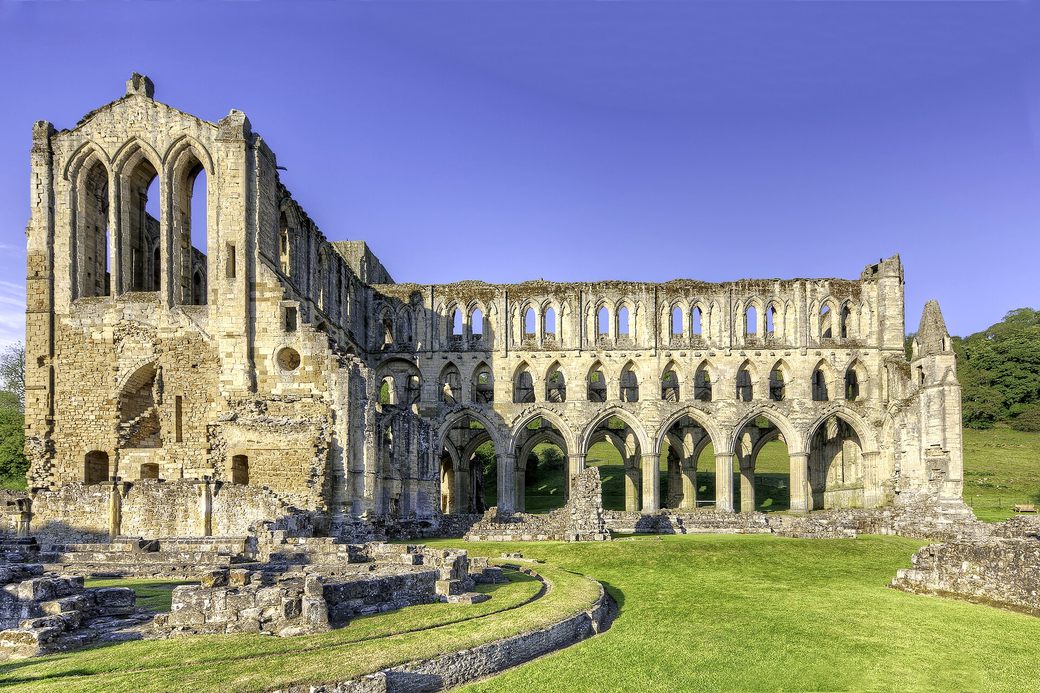
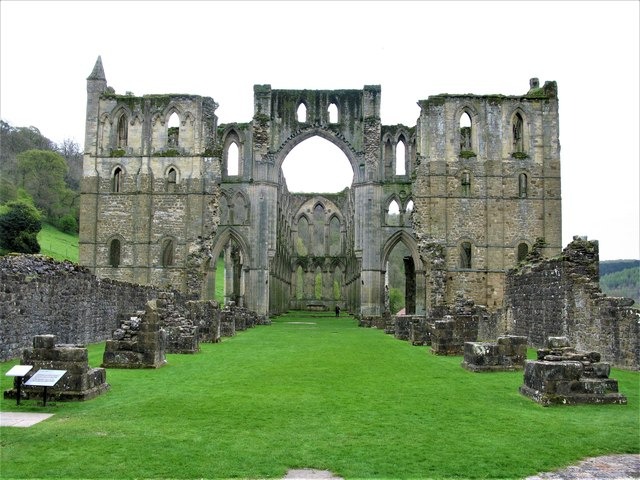
The nave is low and broken, but beyond it the thirteenth-century presbytery rises in three tiers of arches, one of the finest pieces of Early English Gothic architecture in the north. Because of the shape of the valley the church is aligned roughly north–south rather than east–west.
The cloister and the refectory
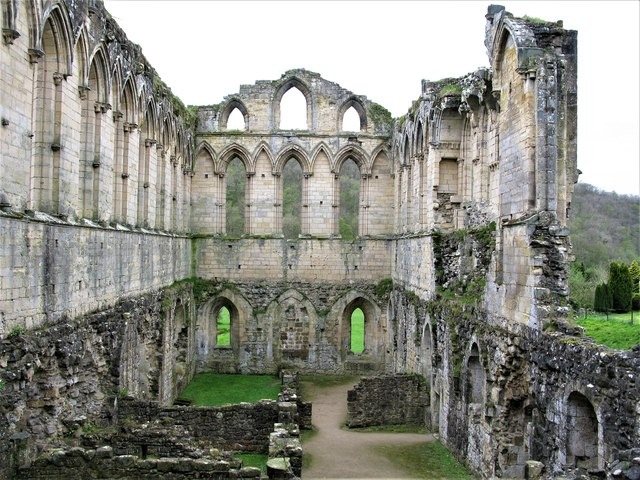
Around the cloister, the chapter house is where St Aelred is said to have been buried. The great refectory, where the monks ate, still stands to a great height, with tall lancet windows.
Rievaulx Terrace
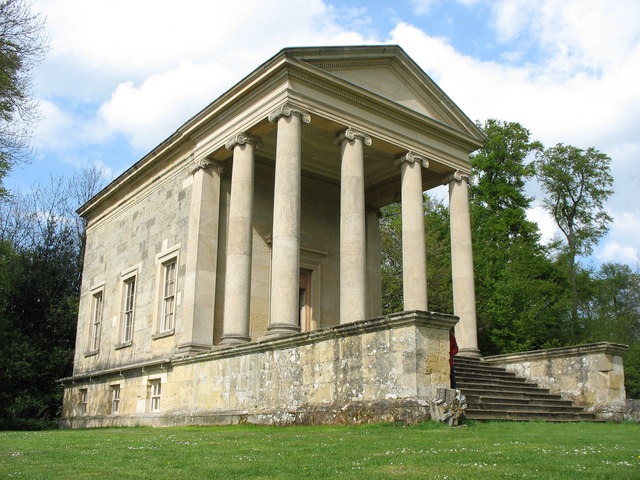
On the hill above, Rievaulx Terrace, owned by the National Trust and run by English Heritage since 2026, is a grassy Georgian walk with two temples, laid out in the 1750s so that the Duncombes and their guests could look down on the ruins.
Tickets and tours
English Heritage ticket
Expect to pay roughly £11–£14 for an adult, depending on the date, with savings for booking online in advance. English Heritage members go free, and so do National Trust members. Open daily 10am–5pm in the main season; winter hours are reduced. A joint ticket also covers Rievaulx Terrace on the hill above.
The hotel link goes to Booking.com. This site earns nothing from it at present — it is here because it is the quickest way to check what is actually available.
Don't miss
- The presbytery Three tiers of Gothic arches.
- The refectory Still standing to its full height.
- The museum Carved stone and the story of the abbey.
- The old river course Moved by the monks.
- Rievaulx Terrace The view down on the ruins.
- Helmsley A market town with its own castle.
Insider tips
Walk in from Helmsley. The Cleveland Way runs from Helmsley to Rievaulx, about two and a half miles through woods and fields, and arriving on foot is the best way to see the abbey appear in its valley. There is a café overlooking the ruins.
Helmsley Castle, also English Heritage, is in the town, and Byland Abbey, another Cistercian ruin, is a short drive away.
Common questions
How much does it cost to visit Rievaulx Abbey?
Rievaulx is run by English Heritage, which sets prices by date: expect roughly £11–£14 for an adult, less if you book online in advance. English Heritage members go free, and so do National Trust members. Check the English Heritage website for today’s price.
When is Rievaulx open?
In the main season it is open daily from 10am to 5pm, with last entry at 4.30pm. Winter opening is reduced, so check the English Heritage website before you travel.
What is Rievaulx Terrace?
A Georgian landscaped walk along the hillside above the abbey, laid out in the 1750s by Thomas Duncombe, with two classical temples and views down on to the ruins. It is owned by the National Trust and, since 2026, run by English Heritage, with a joint ticket available for the abbey and terrace. The terrace is on the hill above the abbey with no direct access between the two, so allow time to get from one to the other.
Who was St Aelred?
Aelred, abbot from 1147 to 1167, was one of the great writers of the twelfth century. Under him Rievaulx grew to some 140 monks and 500 lay brothers, and his treatise On Spiritual Friendship is still read today.
How do you get to Rievaulx Abbey?
The abbey is about two and a half miles west of Helmsley. You can drive, or walk from Helmsley on the Cleveland Way. There is a car park at the abbey. The nearest stations are Thirsk and Malton.
Where to stay and eat nearby
Helmsley has inns, restaurants and places to stay round its market square.
More English churches
- Fountains Abbey — the other great Cistercian abbey of Yorkshire
- Whitby Abbey — on its clifftop above the sea
- York Minster — about an hour away
See all the cathedrals and churches worth visiting in England →