
St Albans Cathedral
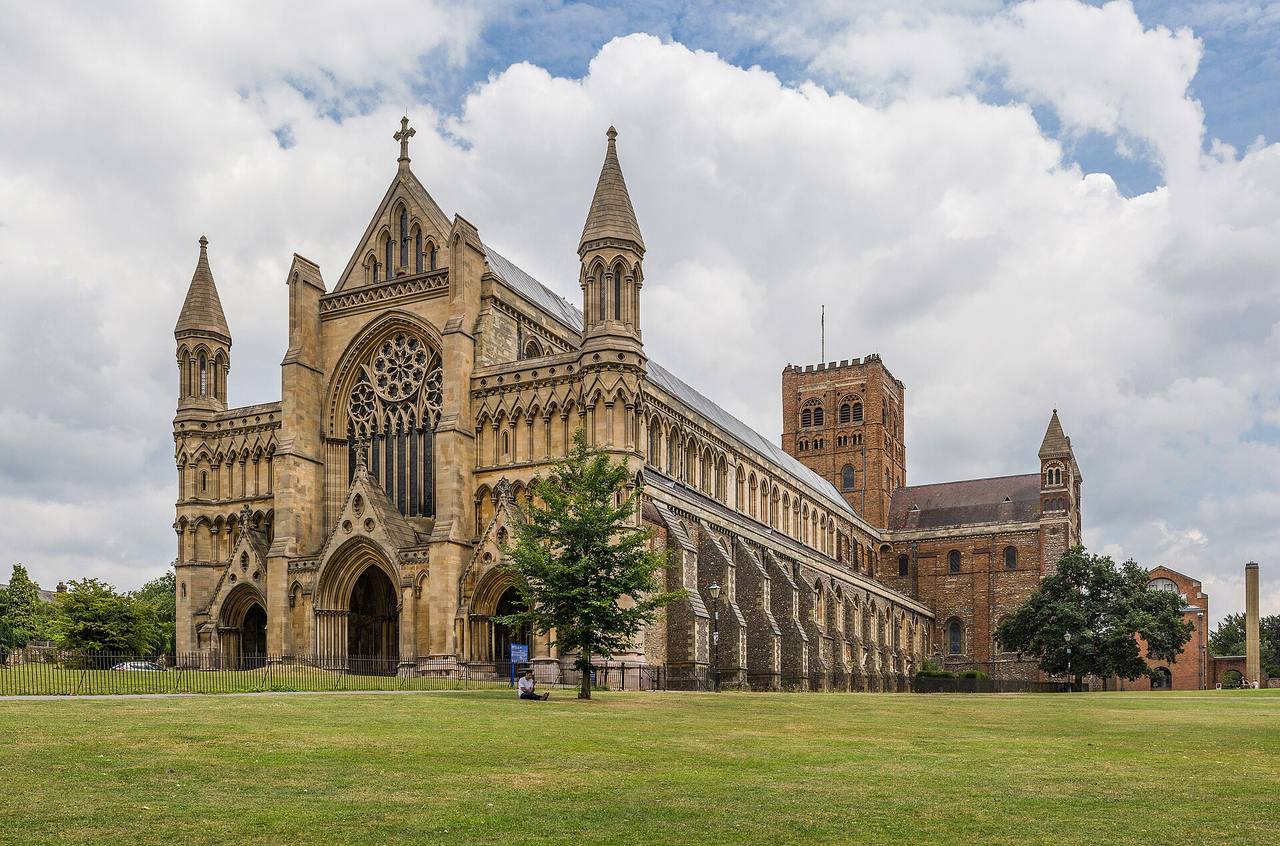
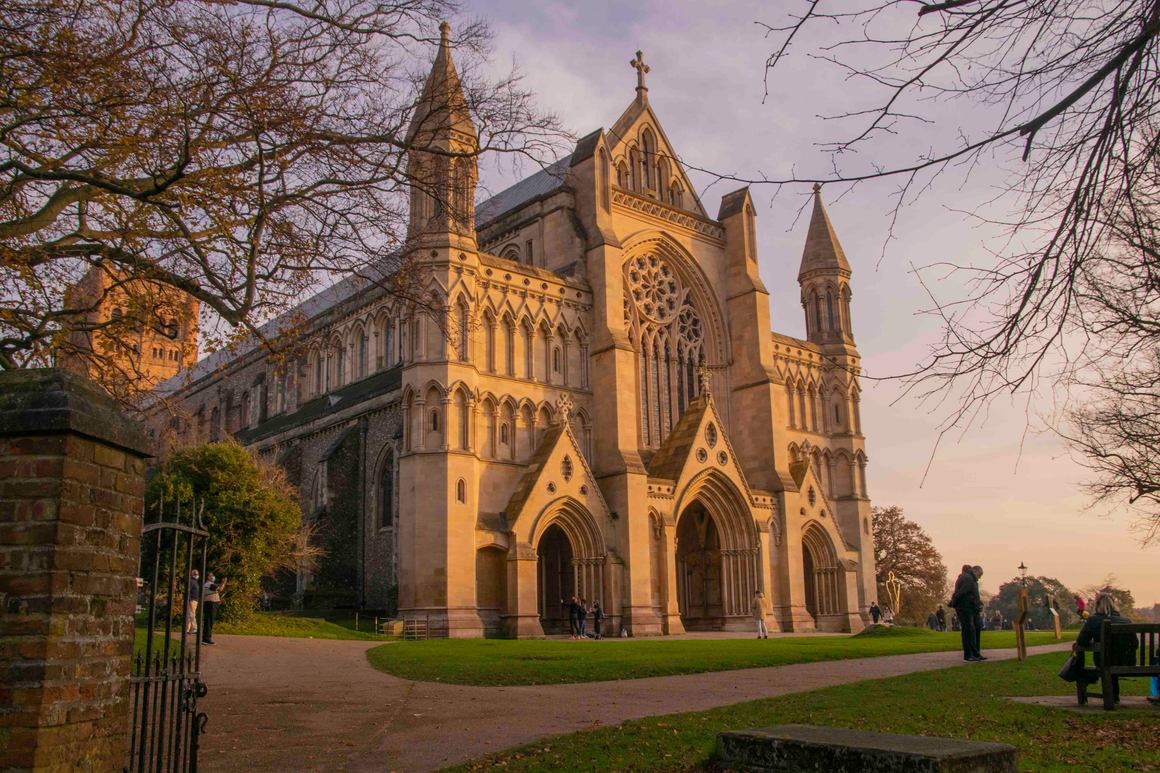
St Albans Cathedral stands on the hill where Alban, the first Christian martyr in Britain, is said to have been beheaded by the Romans. It has been a place of pilgrimage for some sixteen hundred years. The Normans built its great tower out of bricks taken from the ruins of the Roman city in the valley below, the medieval monks covered its pillars with paintings, and its nave is one of the longest in England. Twenty minutes by train from London, it is one of the easiest great English churches to reach, and one of the least crowded.
Alban, Offa and the Norman abbey
Alban lived in Verulamium, a Roman town on the river Ver. According to Bede, writing in the eighth century, he sheltered a Christian priest who was fleeing persecution, was converted by him, and, when soldiers came, put on the priest’s cloak and gave himself up in his place. He was beheaded on the hill outside the town. The date is uncertain — the third century or the early fourth — but a church marked the place by the fifth century.
Tradition credits King Offa of Mercia with founding a Benedictine abbey here in 793. After the Norman Conquest, Abbot Paul of Caen, a kinsman of Archbishop Lanfranc, began a new and enormous church in 1077, using the brick and tile of Roman Verulamium as building material; it was consecrated in 1115. St Albans became the premier abbey of England, and the only Englishman ever to become pope, Nicholas Breakspear, who took the name Adrian IV in 1154, grew up nearby.
In 1323 five bays of the south side of the nave collapsed and were rebuilt in the Gothic style. Two battles of the Wars of the Roses were fought in the town, in 1455 and 1461. At the Dissolution the abbey was closed, and in 1553 the townspeople bought the church to be their parish church. It became a cathedral in 1877.
The visitor's cheat sheet
| Where | Sumpter Yard, St Albans, Hertfordshire, AL1 1BY; enter through the Welcome Centre on the south side |
|---|---|
| Getting there | St Albans City station (Thameslink from London St Pancras, about 20 minutes) is a 15-minute walk; St Albans Abbey station is closer |
| Opening hours | Daily 9am–5pm. Services and events occasionally close parts of the building; the cathedral lists planned closures on its website |
| Admission | Free; donations welcome. Daily guided tours are free, with a donation requested |
| How long | 1–1.5 hours; 2 hours with a guided tour |
| Best time | A weekday, for one of the free tours, then lunch in the Abbot’s Kitchen |
| Dress code | No formal code; respectful dress as in any working church |
| Dogs | Dog-friendly, on a lead |
Hours and admission checked against the official site in October 2026. They change; the official site is always the last word.
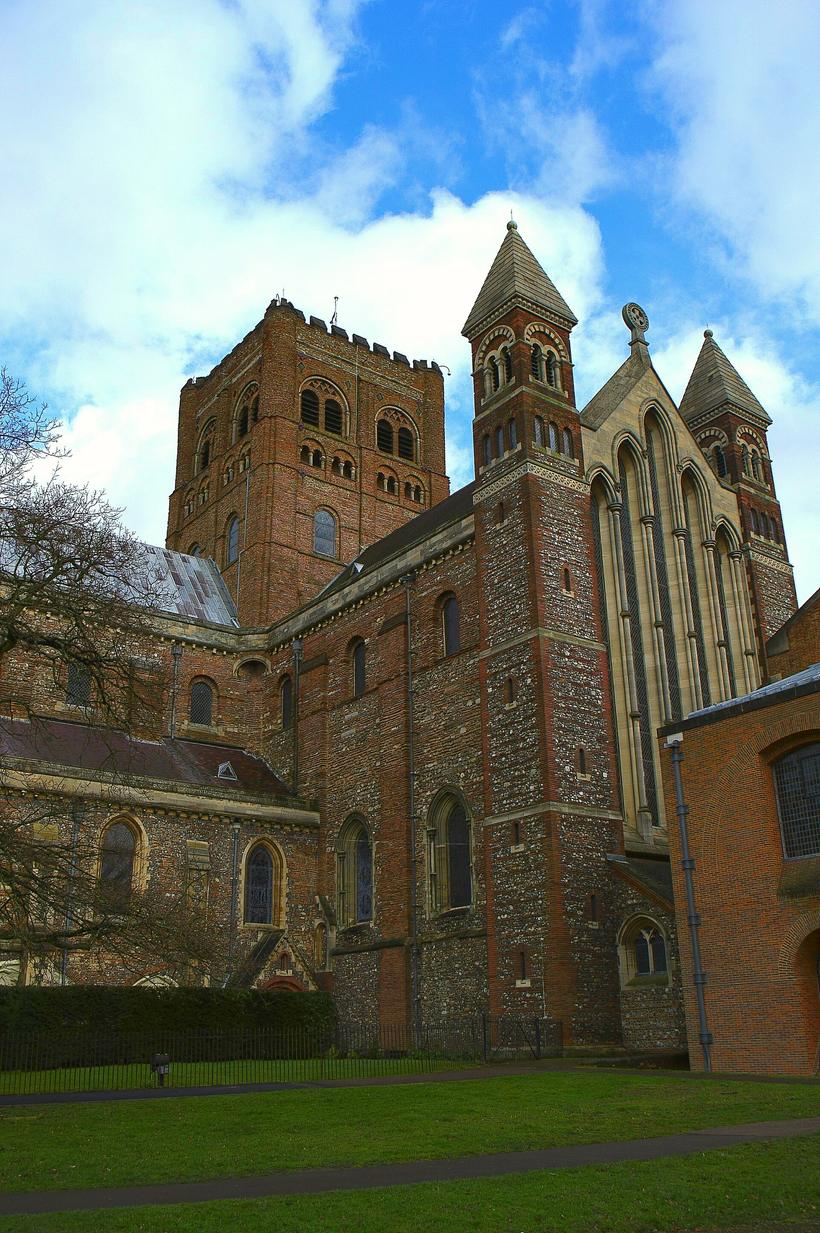
Built from a Roman city. Look at the central tower and the Norman walls from outside: they are made of thin red Roman bricks and tiles, taken from the ruins of Verulamium in the valley below. The Normans had no good building stone nearby, and the Romans had left a city’s worth of it lying about.
What to see, in the order you meet it
The nave
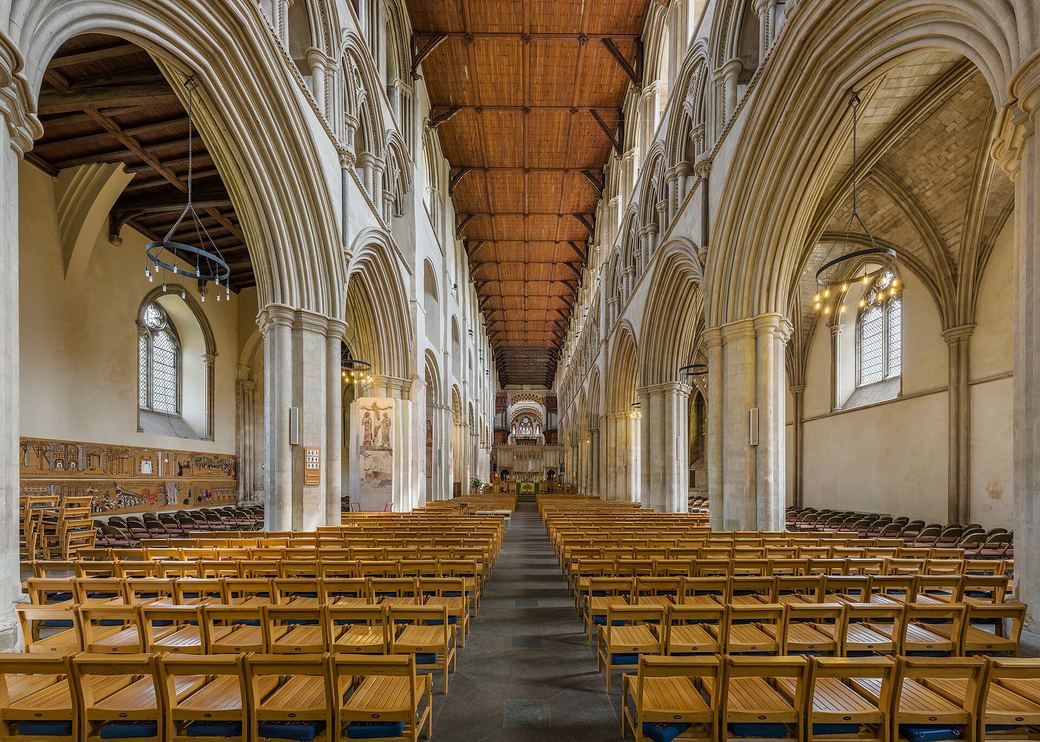
Visitors enter through the Welcome Centre on the south side. Go first to the west end of the nave and look east: some 85 metres of nave, one of the longest in England. Then look at its two sides, which do not match. On the north side the eastern arches are Norman, plain and round on massive square piers of plastered brick. The western bays on both sides are thirteenth-century Gothic, added when the nave was lengthened. And on the south side, five bays that collapsed in 1323 were rebuilt in Gothic style to match.
The wall paintings
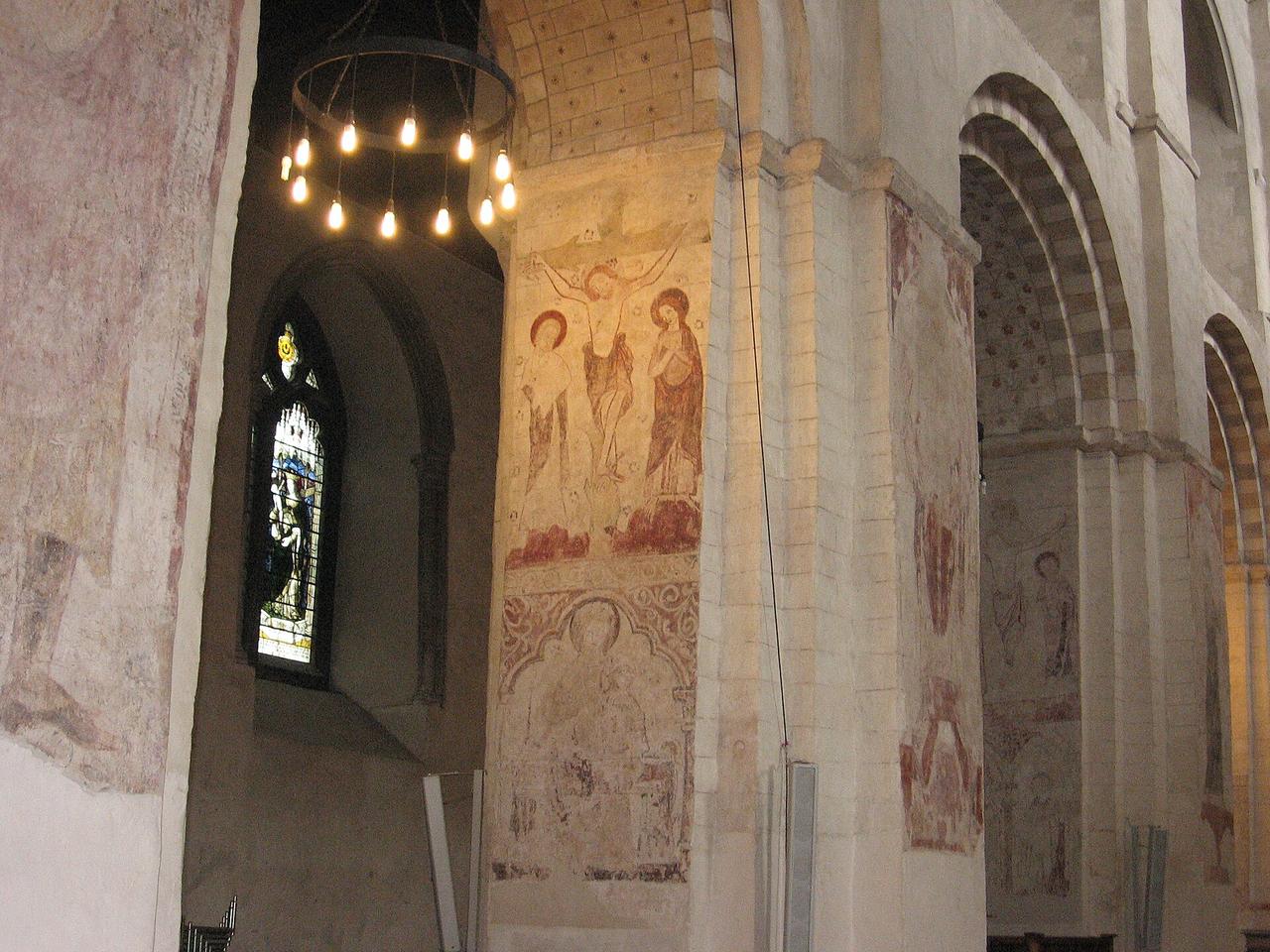
On the west faces of the Norman piers on the north side are paintings of the Crucifixion, each with the Virgin and St John, and with an Annunciation or another scene below. They were painted in the thirteenth century, perhaps by monks of the abbey’s own workshop, and were whitewashed over at the Reformation and uncovered in the nineteenth century. They are among the finest surviving medieval wall paintings in England, and the reason most visitors stop in the nave for longer than they expected.
The choir and presbytery
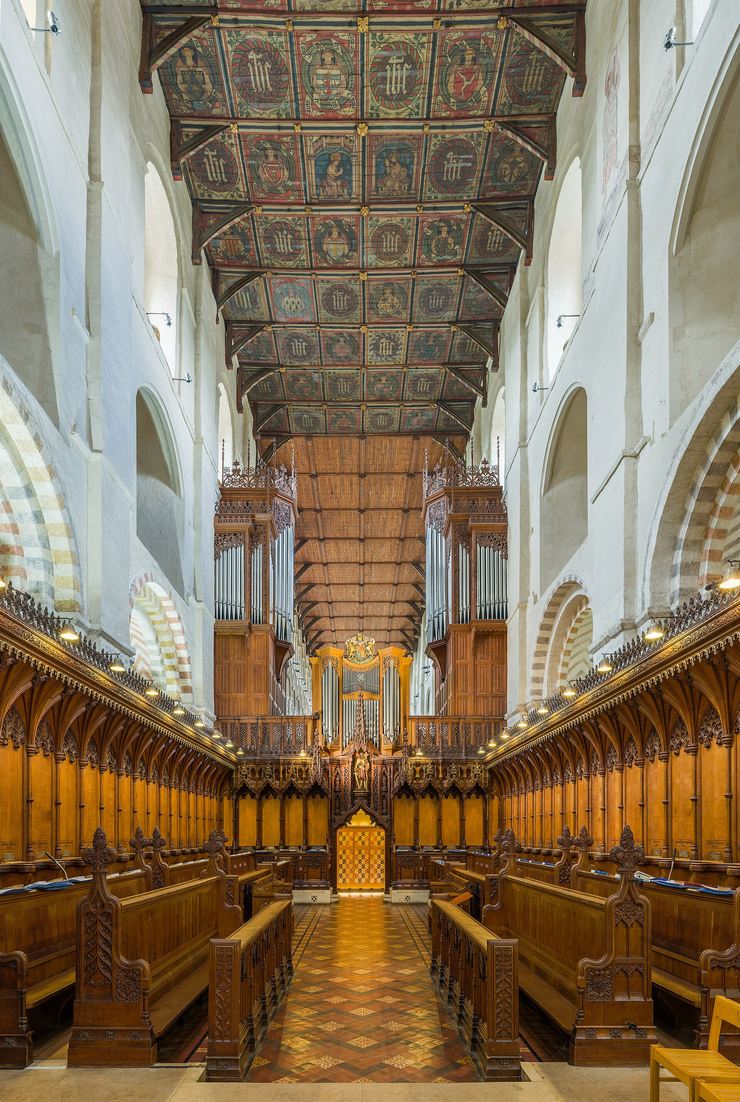
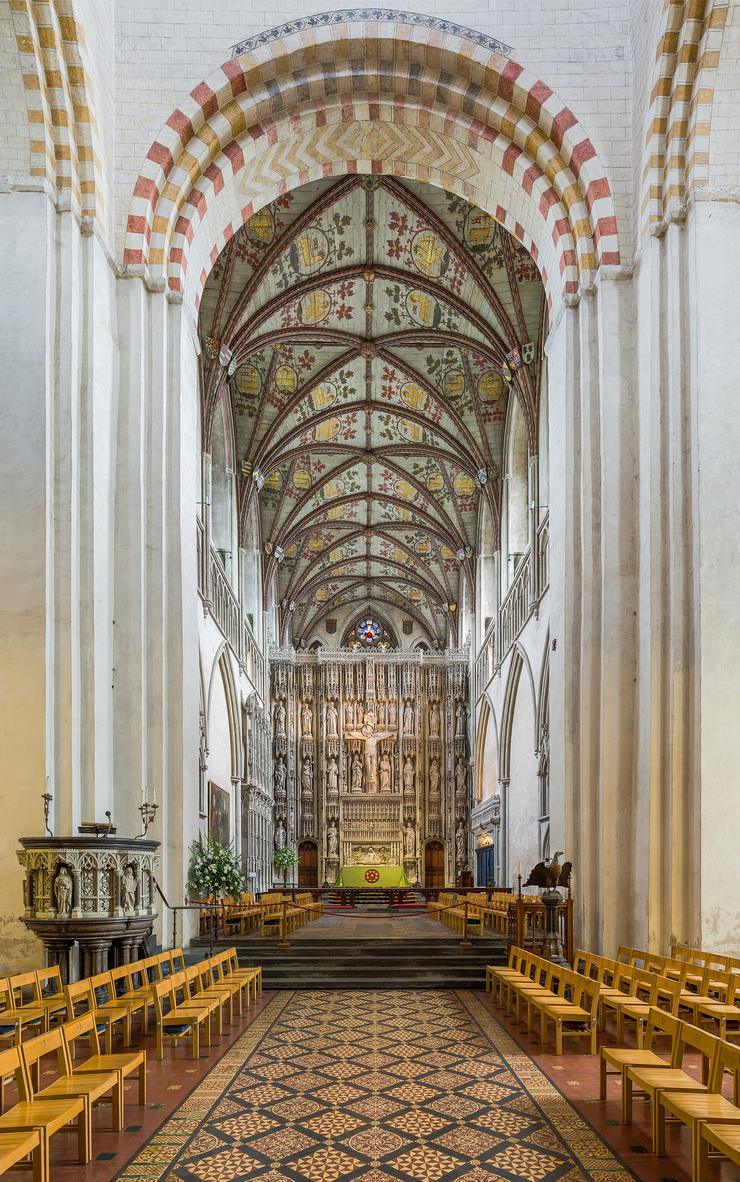
East of the crossing, the choir has a painted wooden ceiling, and the presbytery beyond it a later painted vault. Above the crossing, the inside of the Norman tower is painted too. At the east end of the presbytery stands the Wallingford Screen, built behind the high altar in the 1480s under Abbot William of Wallingford. Its statues were destroyed at the Reformation; the figures that fill it now were added in the late nineteenth century.
The shrine of St Alban
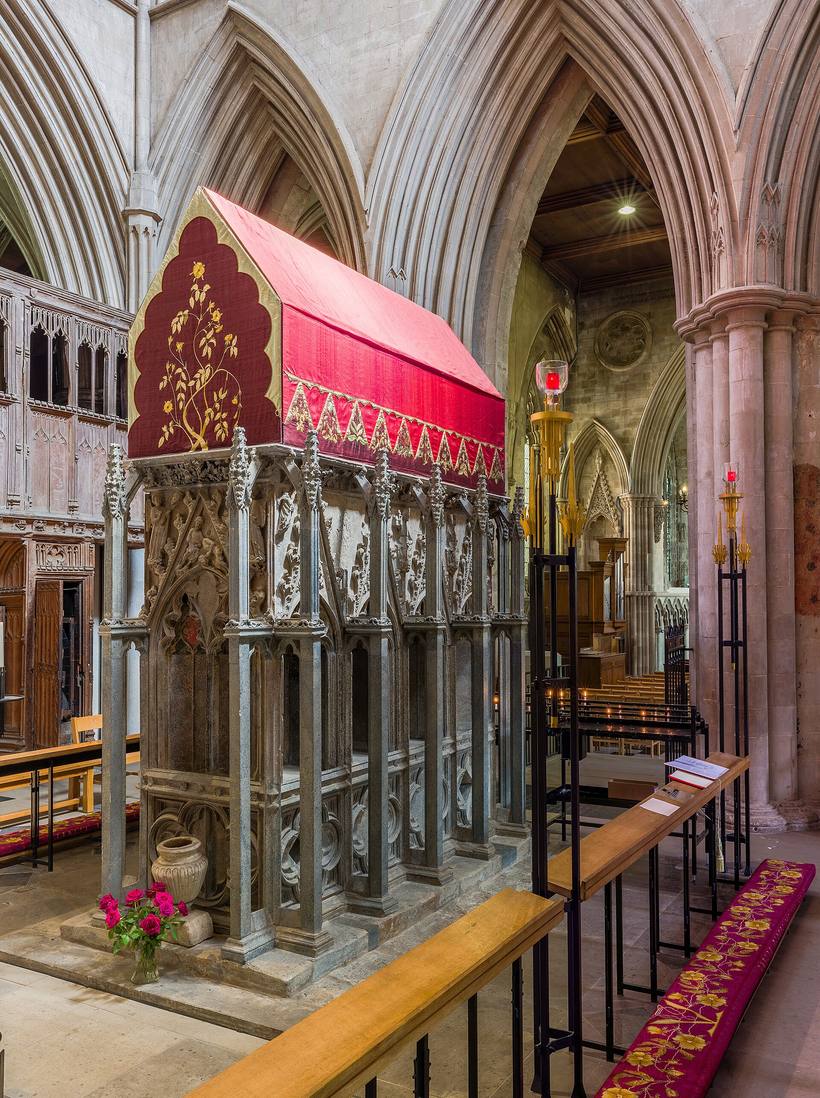
Behind the screen is the shrine of St Alban, the heart of the building. The marble pedestal on which the saint’s relics rested was made in the early fourteenth century and smashed at the Dissolution; its pieces were used to fill in walls. In 1872 some two thousand fragments were found and painstakingly reassembled, and the shrine has been restored again since, most recently in the 2020s. Today it carries an embroidered canopy, and pilgrims still come to pray here.
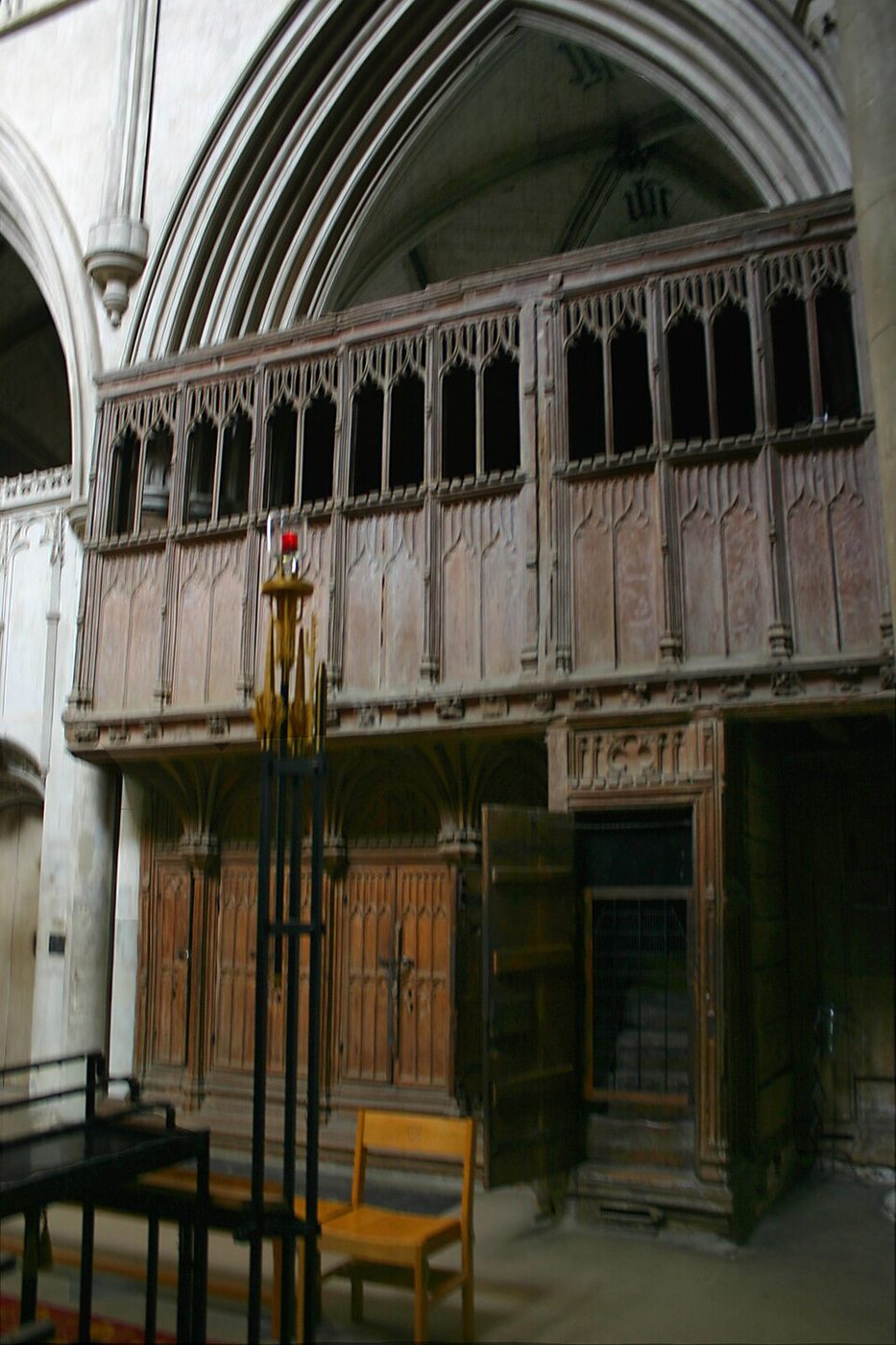
Beside the shrine is the oak watching loft, built in about 1400, from which a monk kept watch over the shrine and its offerings day and night. Its lower part is carved with small scenes of country life. Nearby is the tomb of Humphrey, Duke of Gloucester, the youngest brother of Henry V.
The rose window and the Victorian west end
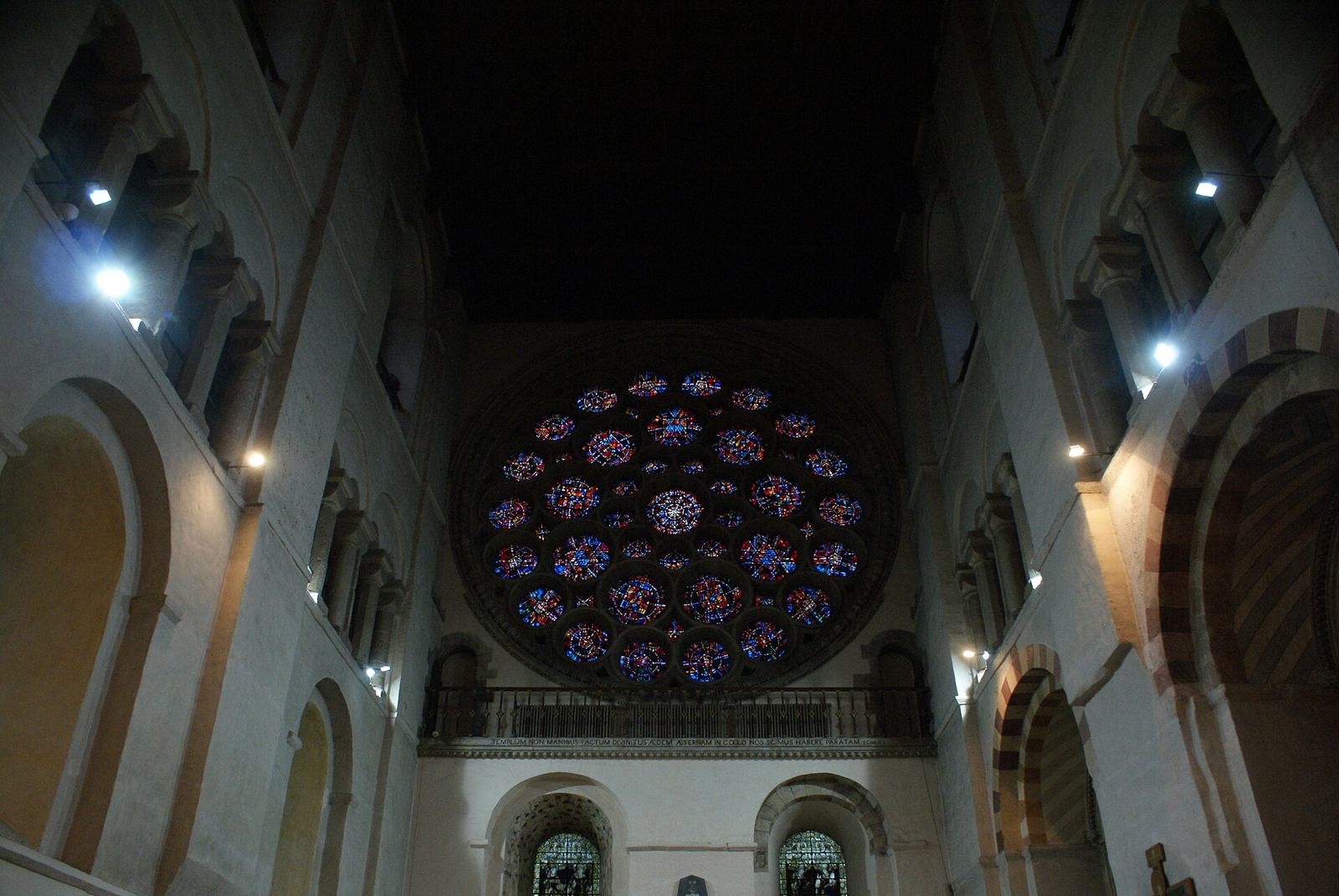
The cathedral was in poor repair in the nineteenth century, and its restoration was taken over by the wealthy lawyer and amateur architect Lord Grimthorpe, who paid for much of it himself and did it his own way. He rebuilt the west front and the end of the north transept, giving the transept a huge rose window; it was filled in 1989 with abstract glass by Alan Younger, unveiled by Diana, Princess of Wales. Grimthorpe’s work is still argued over, but his west front and north transept are the faces of the cathedral most visitors photograph.
Tickets and tours
Free tours every day
Entry is free. Guided tours run every day, free of charge with a donation requested, and need no booking: on weekdays at 11.30am, 1.05pm and 2.15pm, on Saturdays at 10.45am, 11.30am, 1.05pm and 2.30pm, and on Sundays at 1.05pm and 2pm. Meet in the south transept. Tower tours and themed tours run on set dates; book them through the cathedral’s What’s On pages.
The hotel link goes to Booking.com. This site earns nothing from it at present — it is here because it is the quickest way to check what is actually available.
Don't miss
- The wall paintings Thirteenth-century Crucifixions on the nave piers.
- The two sides of the nave Norman on one side, Gothic on the other.
- The shrine of St Alban Reassembled from two thousand fragments.
- The watching loft Where the monks kept guard over the shrine.
- The Roman-brick tower Best seen from the outside, on the south side.
- Verulamium The Roman city, in the park below the cathedral.
Insider tips
Walk down to Verulamium. From the west end of the cathedral a path leads down the hill, past the old Fighting Cocks inn, into Verulamium Park, where you can see stretches of the Roman city wall, a mosaic floor with its hypocaust and, in the museum, one of the best collections of Roman finds in Britain. It is the best way to understand where the cathedral’s bricks came from.
The Abbot’s Kitchen café, beside the Welcome Centre, is open daily from 9am to 4pm. St Albans has a street market on Wednesdays and Saturdays, and a fifteenth-century Clock Tower in the middle of the town, said to be the only surviving medieval town belfry in England.
Common questions
Is St Albans Cathedral free to visit?
Yes. There is no admission charge, and donations are welcome. The daily guided tours are free, with a donation requested, and no booking is needed for individuals.
Who was St Alban?
Alban is remembered as the first Christian martyr in Britain. According to the story told by Bede, he was a citizen of the Roman city of Verulamium who sheltered a fugitive priest, was converted, and was beheaded on the hill where the cathedral now stands. The date is uncertain; it may have been in the third century or the early fourth.
Does St Albans Cathedral have the longest nave in England?
The cathedral says so: its nave is about 85 metres long. Winchester Cathedral, which is longer overall, makes a similar claim for its own nave, so it is fair to say that St Albans has one of the longest naves in England.
Are there guided tours of St Albans Cathedral?
Yes, daily and free. They run on weekdays at 11.30am, 1.05pm and 2.15pm, with extra tours on Saturdays and two on Sundays, last about an hour and start in the south transept. Tower tours and specialist tours run on set dates and are booked through the cathedral’s What’s On pages.
How do you get to St Albans Cathedral?
St Albans City station, about twenty minutes from London St Pancras by Thameslink, is about fifteen minutes’ walk away. St Albans Abbey station, on the branch line from Watford Junction, is closer. Enter through the Welcome Centre in Sumpter Yard, on the south side.
Where to stay and eat nearby
St Albans is an easy day trip from London, but it has good hotels, pubs and restaurants of its own, especially along St Peter’s Street and around the market.
More English churches
- St Paul's Cathedral — twenty minutes away by train
- Westminster Abbey — another great Benedictine abbey church
- Ely Cathedral — the Ship of the Fens, an hour to the north-east
See all the cathedrals and churches worth visiting in England →