
Bristol Cathedral
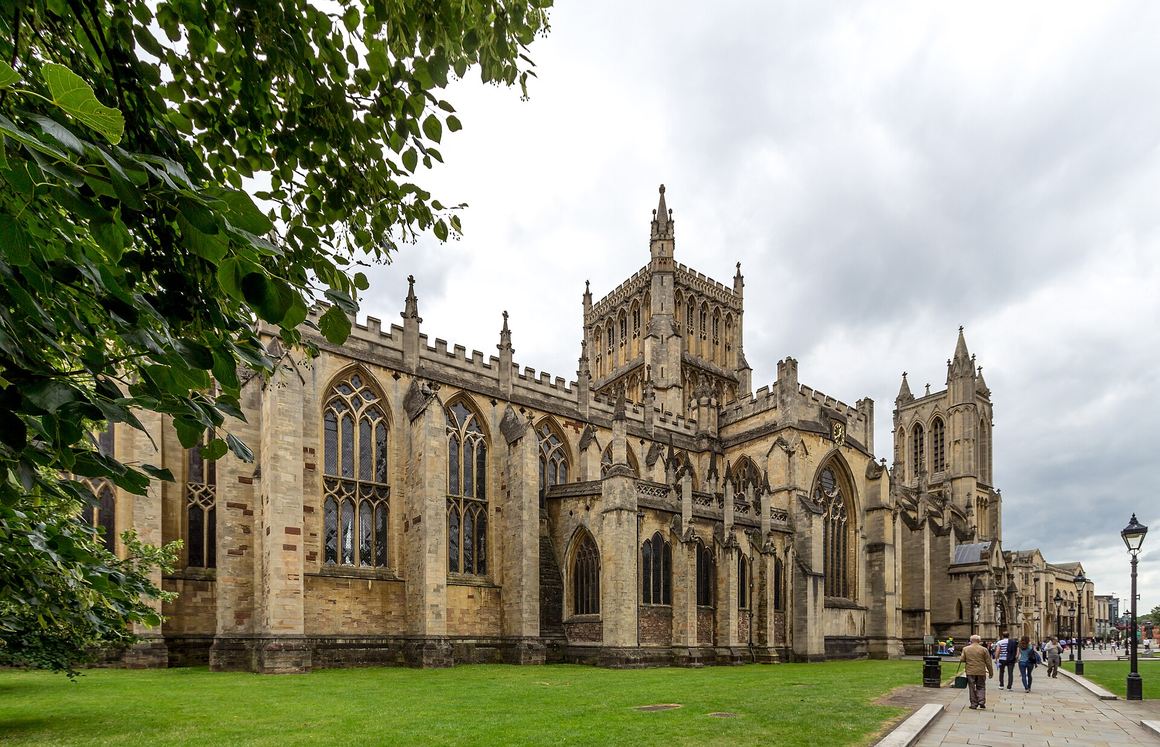
From College Green, Bristol Cathedral looks like a fairly ordinary Gothic church with a Victorian front. Inside, it holds one of the most original buildings of the Middle Ages: an east end begun in 1298 in which the aisles rise to the full height of the choir, making a single tall hall, with bridges of open stonework flying across the aisles where other churches have flying buttresses outside. Add a Norman chapter house carved over every inch, a Lady Chapel painted in medieval colours and a row of strange star-shaped tomb recesses, and it is one of the most rewarding cathedrals in England for anyone who likes to look closely.
An abbey, a cathedral and a nave seven centuries late
The church began as an abbey of Augustinian canons, founded in 1140 by Robert Fitzharding, a rich Bristol merchant who later became the first Lord Berkeley; his descendants were buried here for centuries. Of the Norman abbey the gatehouse, parts of the transepts and the chapter house survive.
In 1298 Abbot Edmund Knowle began rebuilding the east end in a startlingly new way, and it was largely finished in the fourteenth century. The nave was pulled down in the early sixteenth century to be rebuilt to match, but the new nave was still unfinished when the abbey was dissolved in 1539, and its half-built walls were pulled down. In 1542 Henry VIII made the church the cathedral of the new Diocese of Bristol, and for more than three hundred years it had no nave at all.
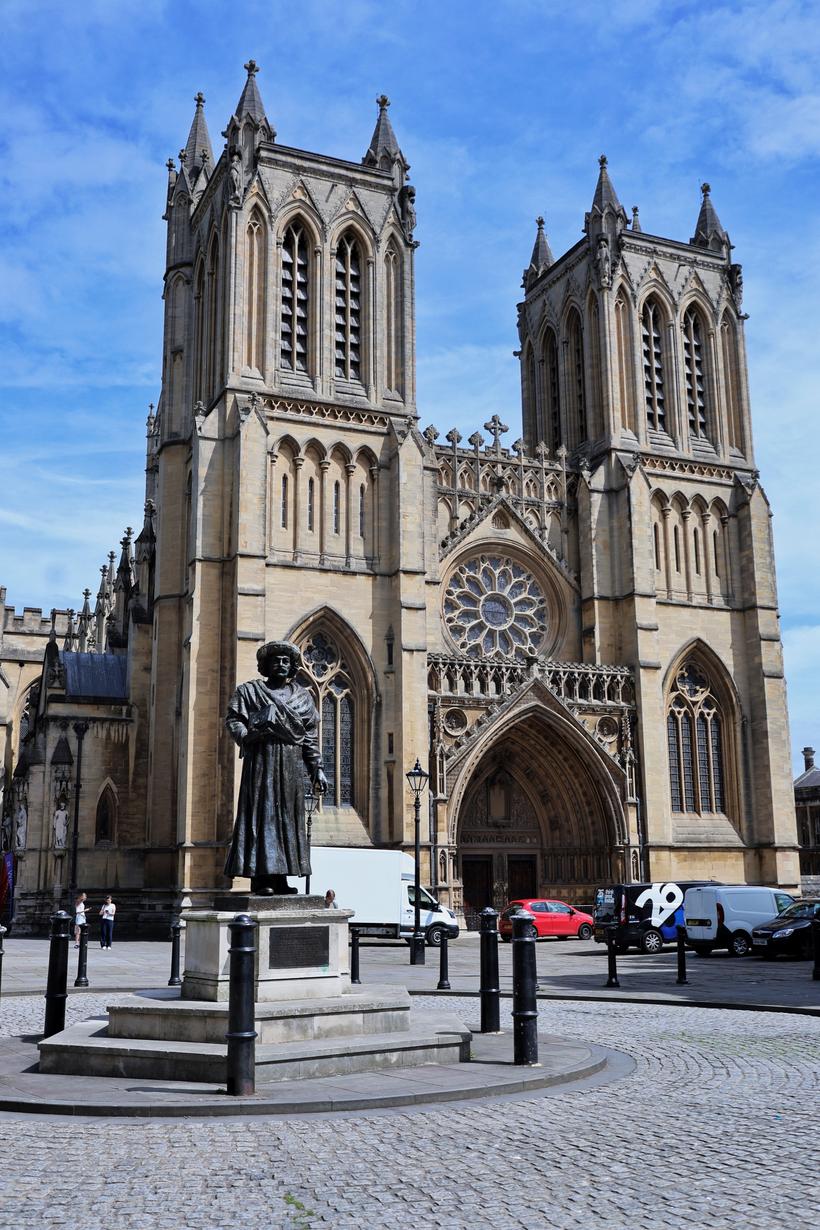
The nave you see today was designed by George Edmund Street and built from 1868, following the style of the medieval choir; after Street's death the west towers were completed to J. L. Pearson's design in 1888. In March 1994 the first women to be ordained priests in the Church of England were ordained here.
The visitor's cheat sheet
| Where | College Green, Bristol, BS1 5TJ, in the city centre near the Harbourside |
|---|---|
| Getting there | Bristol Temple Meads is about 25 minutes’ walk; buses stop on College Green. No parking at the cathedral; public car parks at Millennium Square and College Street |
| Opening hours | Visiting hours Mon–Sat 10am–4pm; Sun 11.30am–3pm. The building opens earlier for services; special services and events can change the times |
| Admission | Free; entry is by donation, with £5 per person suggested. Guided tours ticketed separately |
| How long | About 1 hour; 2 with a tour |
| Best time | A weekday morning, then lunch at the café in the cloister |
| Dress code | No formal code; respectful dress as in any working church |
| Access | Building works for a new lift and step-free routes may close some areas for a time; the Elder Lady Chapel can be closed |
Hours and admission checked against the official site in October 2026. They change; the official site is always the last word.
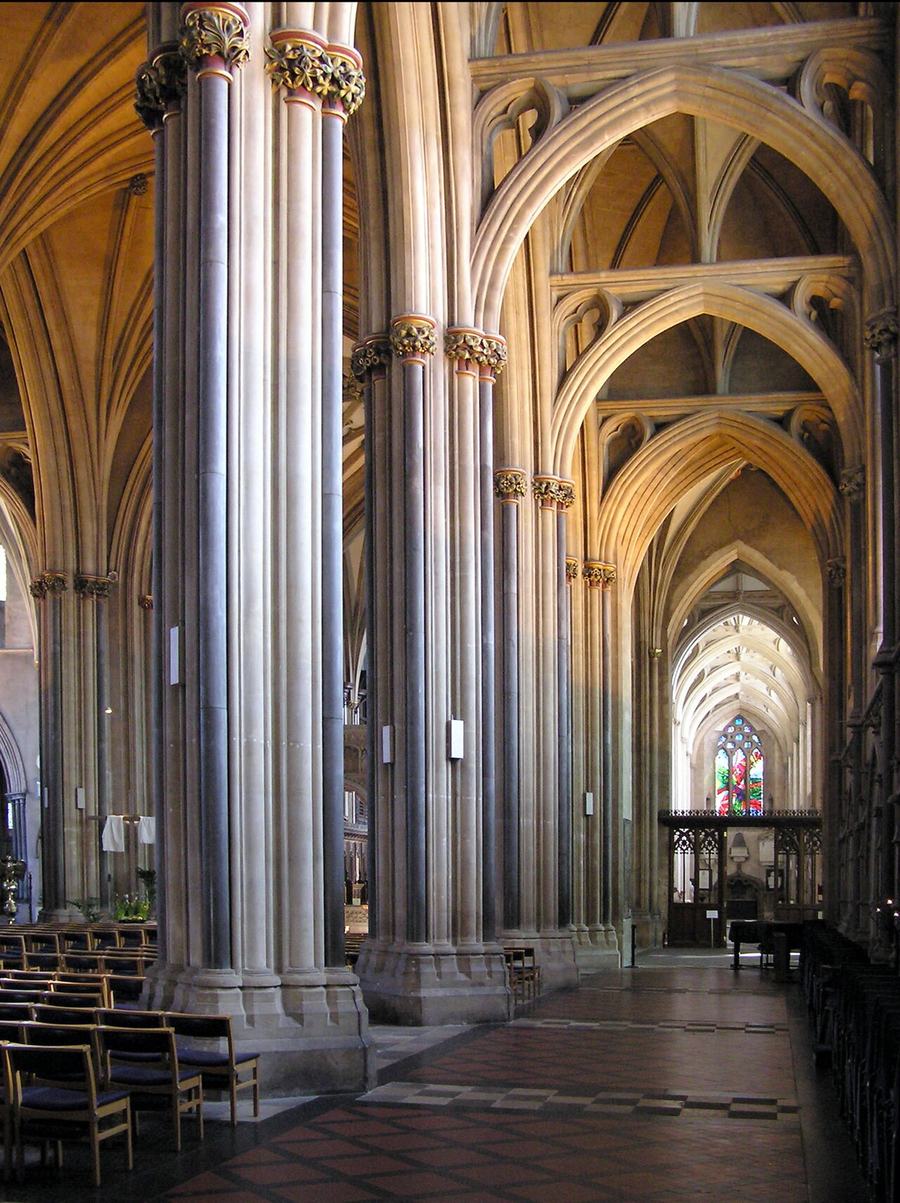
Look up in the aisles. The single most important thing to see at Bristol is not a monument but a piece of engineering: in the choir aisles, the stone ribs that hold the high walls steady are carried on open bridges across the aisle, like flying buttresses brought indoors. It is a solution almost unique in medieval architecture.
What to see, in the order you meet it
The nave
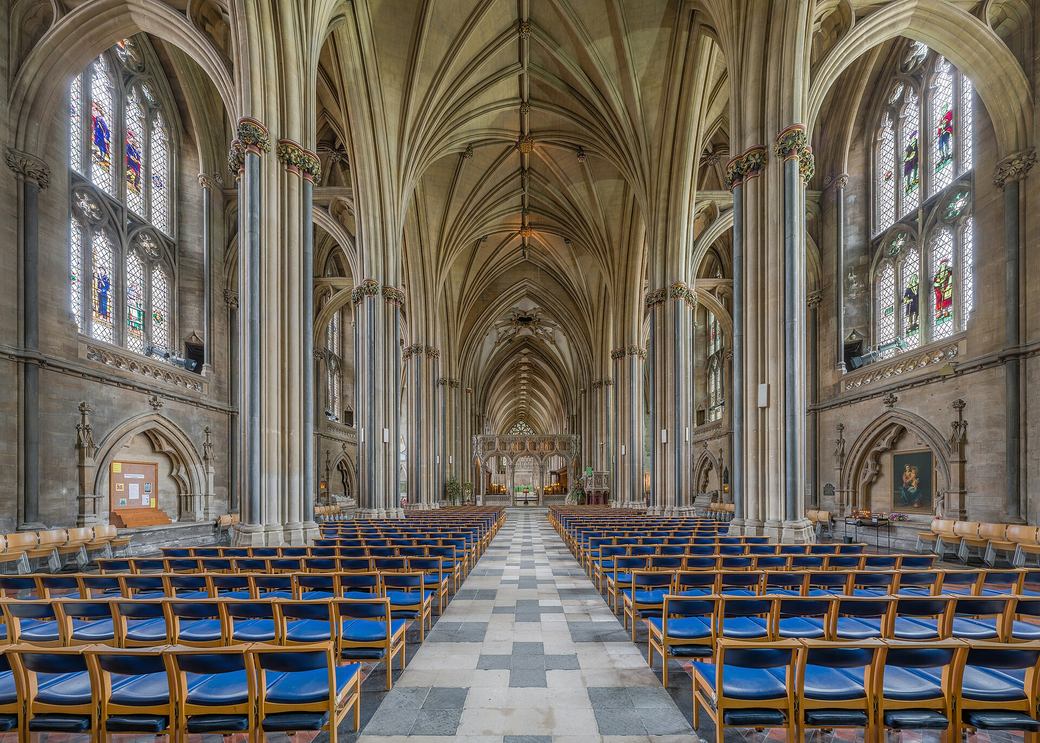
You enter through the west door into Street’s nave. It is a good Victorian building, and it copies the medieval choir well enough that many visitors never realise it is six centuries younger. Street even kept the medieval hall-church design, with aisles as tall as the nave.
The chapter house
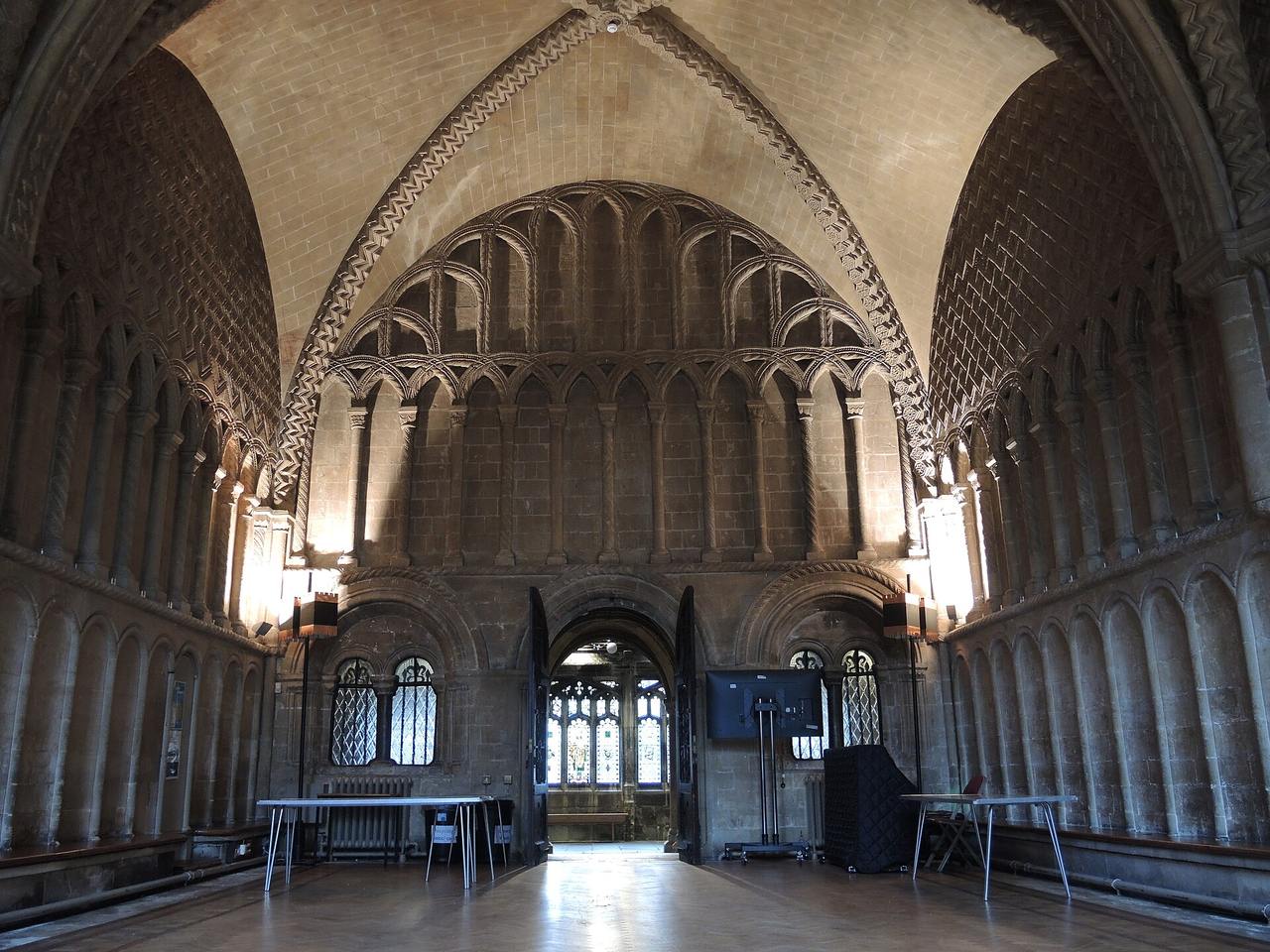
From the south transept a passage leads to the chapter house, built in about 1150–70. It is one of the finest Norman rooms in England. Almost every surface of its walls is covered in carved decoration — intersecting arches, zigzags, lozenges and interlace — and its rib vault is one of the early ones in the country. In the south transept, a stone slab carved with the Harrowing of Hell, made before the Norman Conquest, was found under the chapter house floor in the nineteenth century.
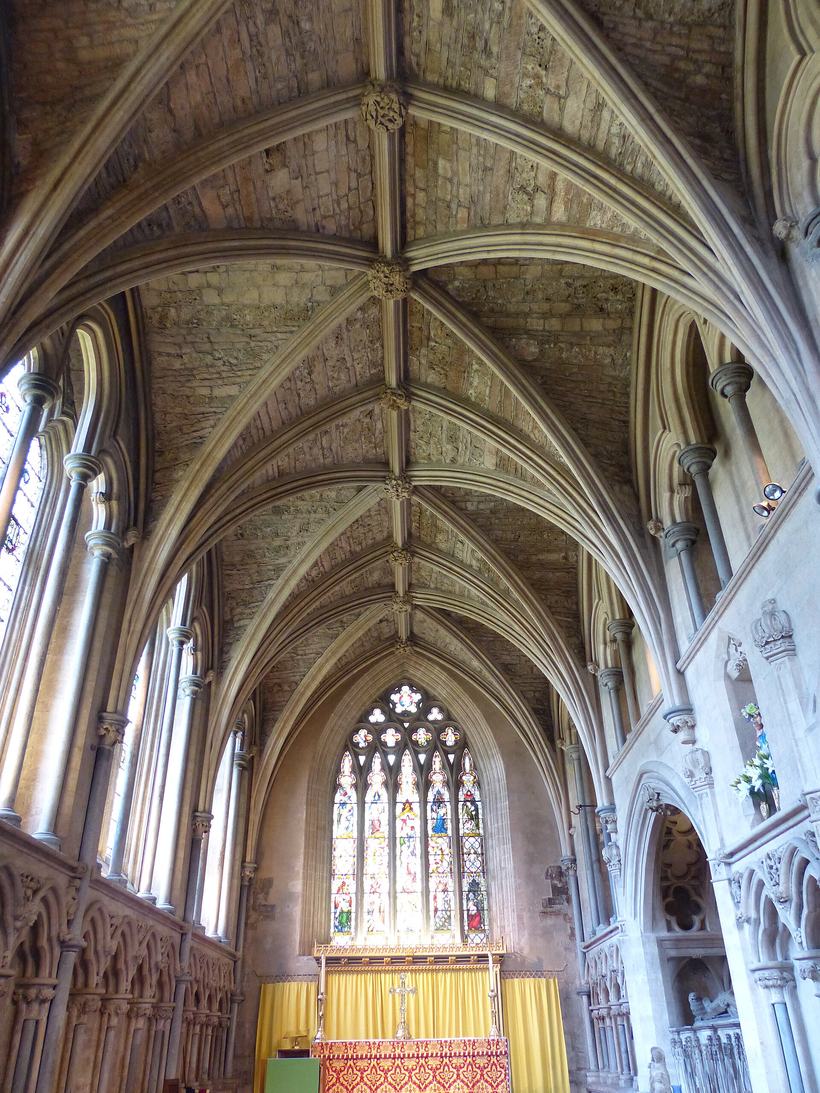
The Elder Lady Chapel
Off the north transept is the Elder Lady Chapel, built in about 1220, probably by masons who had worked at Wells. Its slender shafts and lancet windows are elegant, but look at the carving on the capitals and corbels: animals, including a fox running off with a goose and monkeys playing instruments.
The choir and the hall church
Go into the choir, then step into one of its aisles and look across. The aisles are as high as the choir itself, so there is no clerestory and the light comes in through the tall aisle windows. This is a hall church, a form more common in Germany than in England, and Bristol’s is the finest medieval example in Britain.
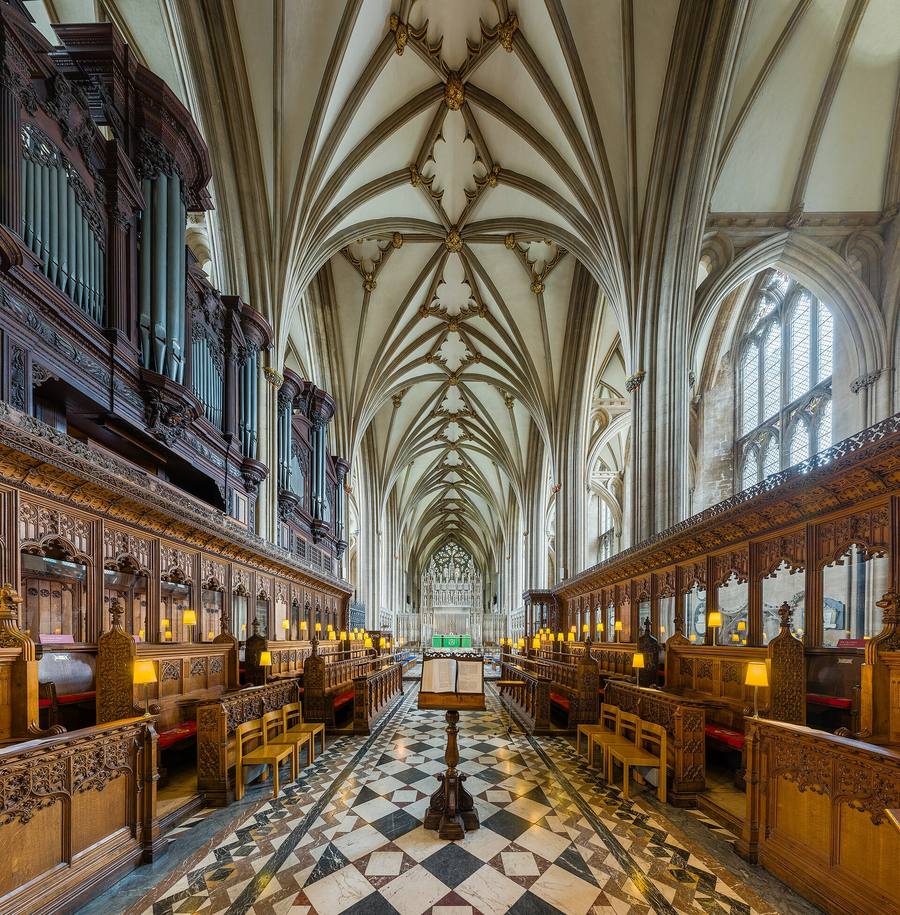
To make it stand up, the master mason put the bracing that other cathedrals have outside, as flying buttresses, inside the aisles. In each bay a horizontal stone beam runs across the aisle at the level of the springing of the vault, and from it ribs rise to the vault like the bones of a skeleton. The result is known as the skeleton vault, and it is almost unique.
The Eastern Lady Chapel and the star-shaped recesses
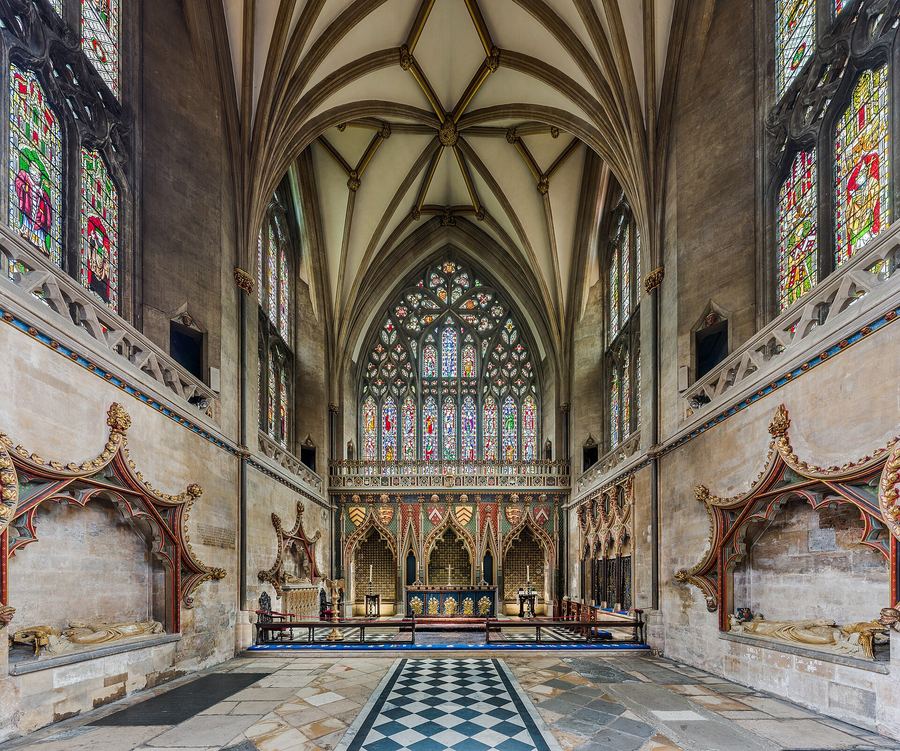
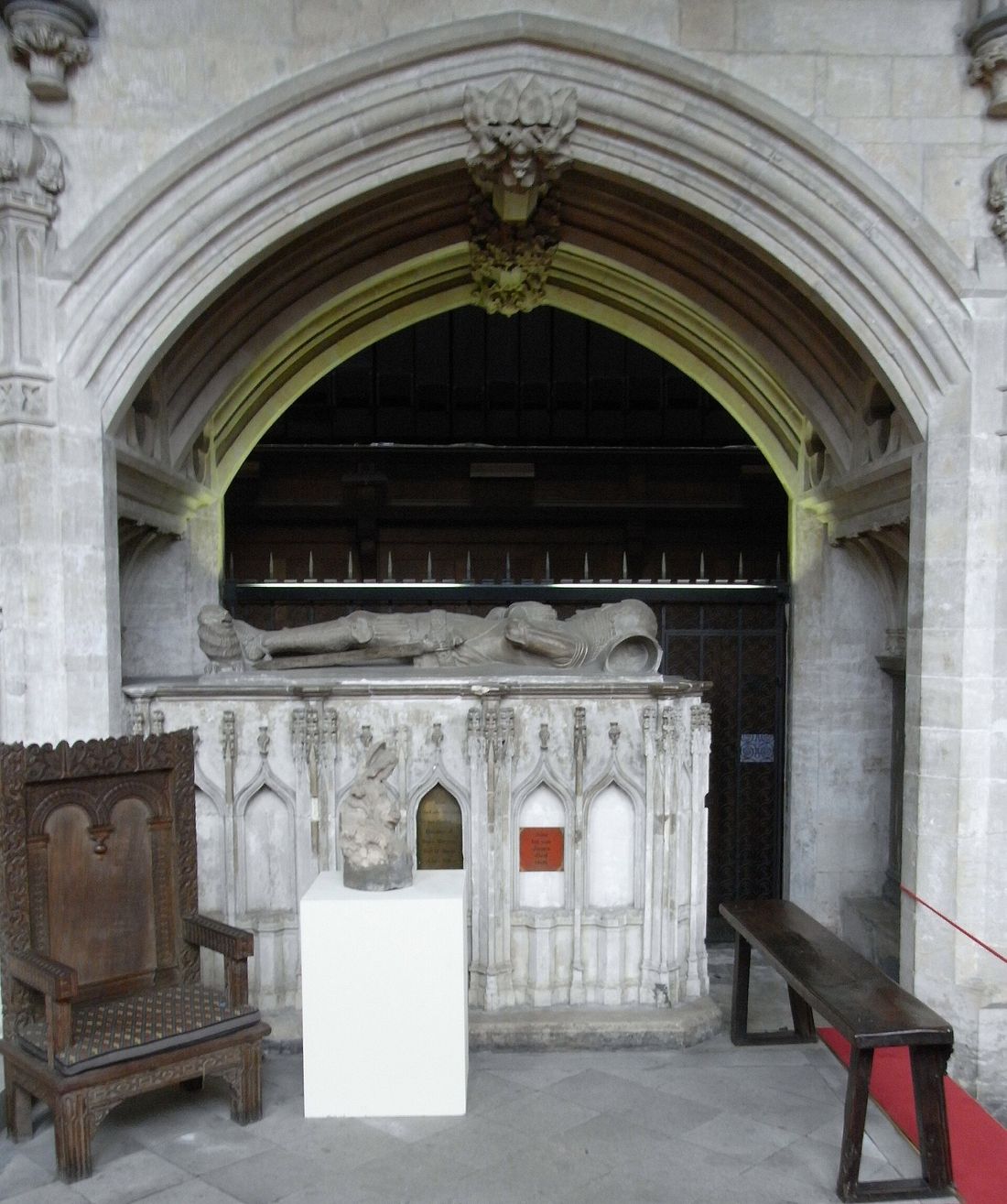
At the east end, the Eastern Lady Chapel has been repainted in strong medieval colours based on traces of the original paint. Along the walls of the choir aisles and the Lady Chapel are tomb recesses whose arches are made of inverted half-arches, forming a star-shaped outline. These “stellate” recesses are a Bristol speciality: in the Lady Chapel they frame the tombs of medieval abbots, and in the south choir aisle the tombs of the Berkeley family, whose ancestor founded the abbey.
Tickets and tours
Highlights and the tower
Entry is by donation, with £5 suggested. Guided Highlights Tours of 45 to 60 minutes take in the chapter house and the stories behind the building. From May to August, Tower Tours climb 172 steps to the bells and the roof. Both are booked through the cathedral’s website and start at the Welcome Area inside the main entrance.
The hotel link goes to Booking.com. This site earns nothing from it at present — it is here because it is the quickest way to check what is actually available.
Don't miss
- The skeleton vault Flying ribs indoors, in the choir aisles.
- The hall choir Aisles as tall as the choir: the finest in Britain.
- The chapter house A Norman room carved over every surface.
- The Elder Lady Chapel The fox, the goose and the musical monkeys.
- The star-shaped recesses A Bristol invention, round the Berkeley tombs.
- The Harrowing of Hell A carved slab from before the Norman Conquest.
Insider tips
Cross the road to the Lord Mayor's Chapel. Opposite the cathedral on College Green is the Lord Mayor’s Chapel, a medieval hospital chapel owned by the city, full of tombs and old glass. It is open to the public on Saturdays and is easy to miss.
The cathedral sits at the foot of Park Street, a few minutes from the Harbourside. Nearby are the Norman abbey gatehouse on College Square, the M Shed museum on the waterfront and, a short bus ride away, the church of St Mary Redcliffe, which Elizabeth I is said to have called the fairest in England.
Common questions
Is Bristol Cathedral free to visit?
Entry is by voluntary donation, with £5 per person suggested. Guided Highlights Tours and, from May to August, Tower Tours are ticketed separately.
What is a hall church?
A church in which the aisles are the same height as the central space, so that there is no clerestory and the whole interior is one tall room. Bristol’s east end, begun in 1298, is the finest medieval example in Britain.
Is the nave of Bristol Cathedral medieval?
No. The medieval nave was pulled down before the Reformation to be rebuilt, and the work was never finished. The present nave was designed by G. E. Street and built from 1868; the west towers were finished in 1888. It was designed to match the medieval choir, so most visitors never notice.
Can you climb the tower of Bristol Cathedral?
Yes, on a guided Tower Tour, which runs from May to August, weather permitting. It climbs 172 steps up a narrow spiral stair, past the bells, to views over the city.
How do you get to Bristol Cathedral?
The cathedral is on College Green in the city centre. Bristol Temple Meads station is about 25 minutes’ walk away, with buses and taxis from the station; many city bus routes stop on College Green. There is no parking at the cathedral.
Where to stay and eat nearby
Pinkmans Café, in the cloister, serves lunch, coffee and cakes. The Harbourside and Park Street, both a few minutes away, have a huge choice of restaurants, and the city centre has hotels at every price.
More English churches
- Wells Cathedral — an hour south, by the masons who probably built the Elder Lady Chapel
- Bath Abbey — fifteen minutes by train
- Gloucester Cathedral — up the Severn, with the first fan vaults
See all the cathedrals and churches worth visiting in England →