
Westminster Abbey
Forty monarchs have been crowned here since 1066, and the coronation happens on one specific patch of floor: a thirteenth-century mosaic pavement of porphyry and glass, laid by Italian craftsmen in 1268, which for most of the twentieth century was kept under carpet because it was wearing out. A few feet away stands the chair they sit in, made in 1300, scratched with the initials of eighteenth-century schoolboys who broke in to carve them. The abbey is not a museum of the monarchy. It is the working equipment, still in use, with the scuffs.
A French cathedral built by an English king
Edward the Confessor built a Norman abbey here and was buried in it a week after it was consecrated, at the end of 1065. William the Conqueror was crowned in that building on Christmas Day 1066 — the Norman guards outside, hearing the shouting of acclamation and assuming a riot, set fire to the surrounding houses. Almost nothing of Edward’s church survives above ground.
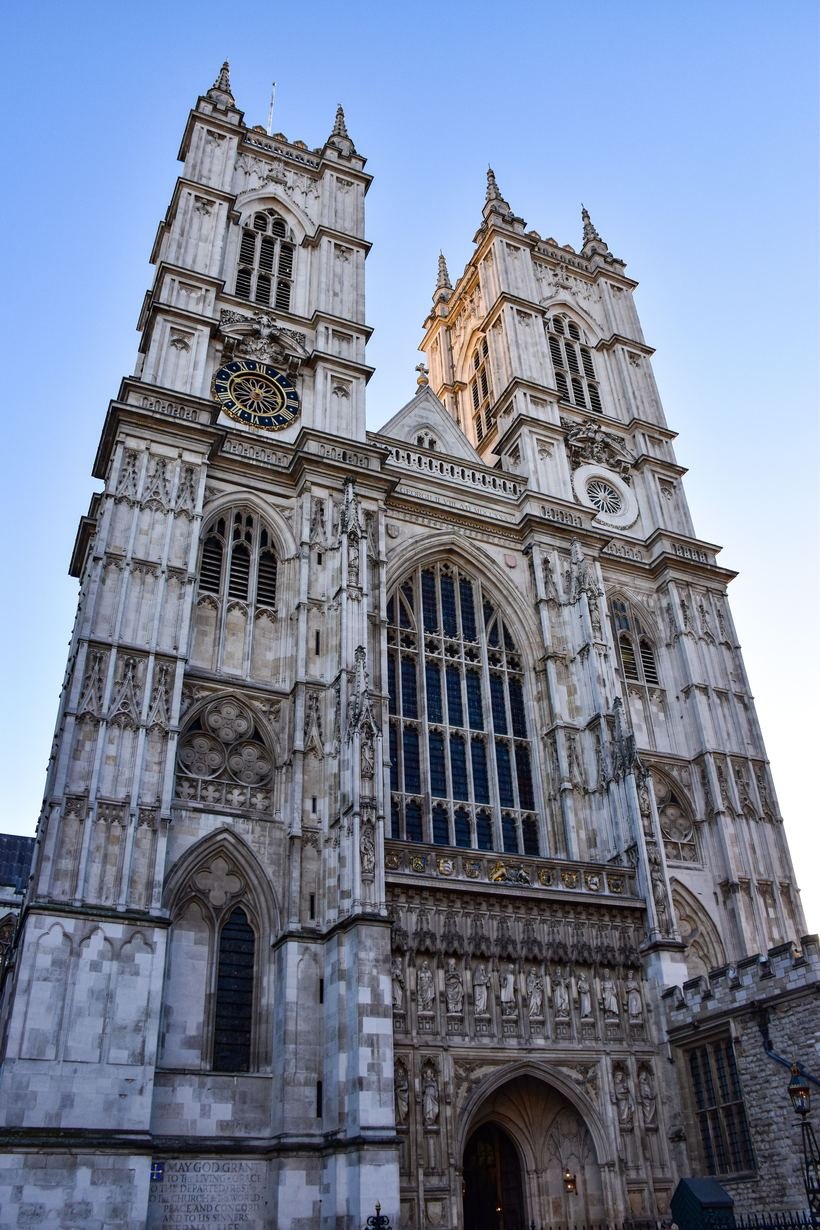
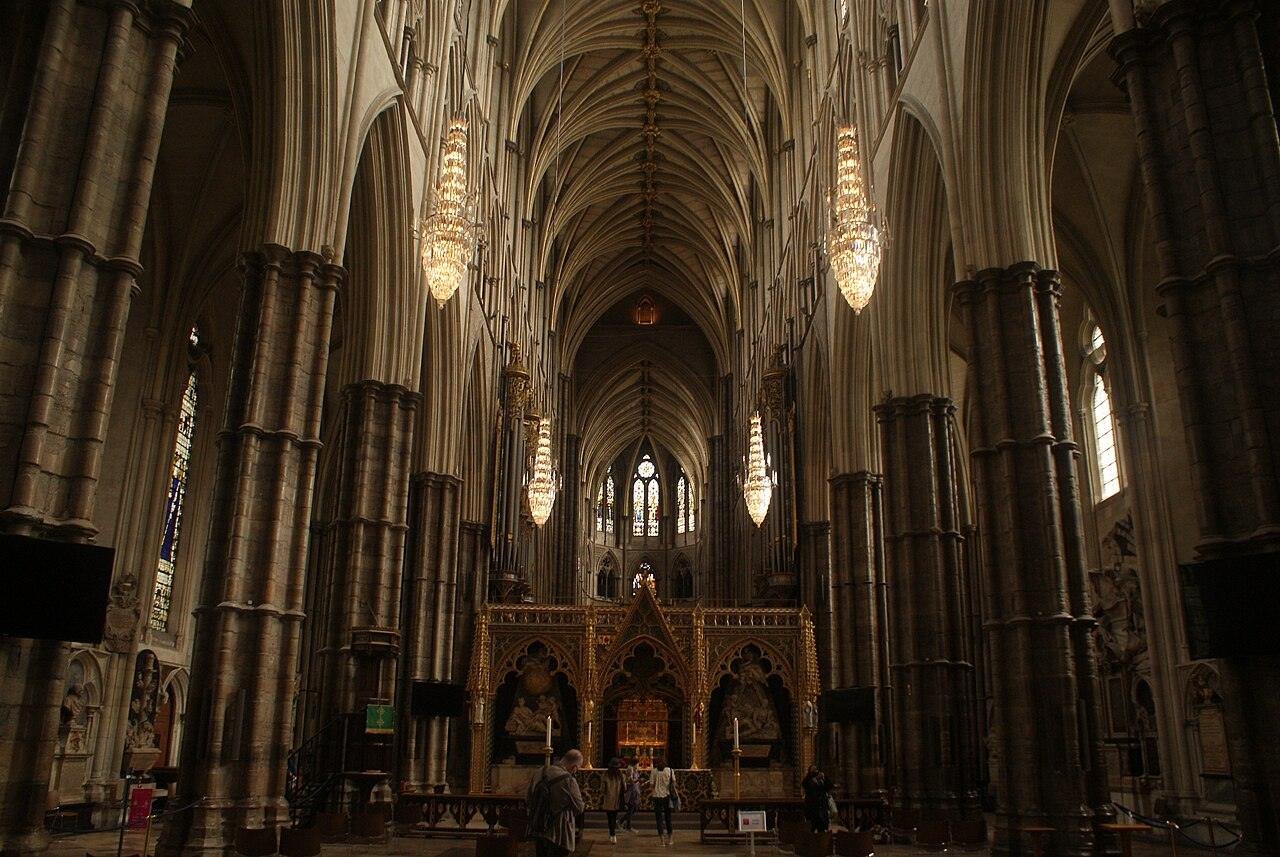
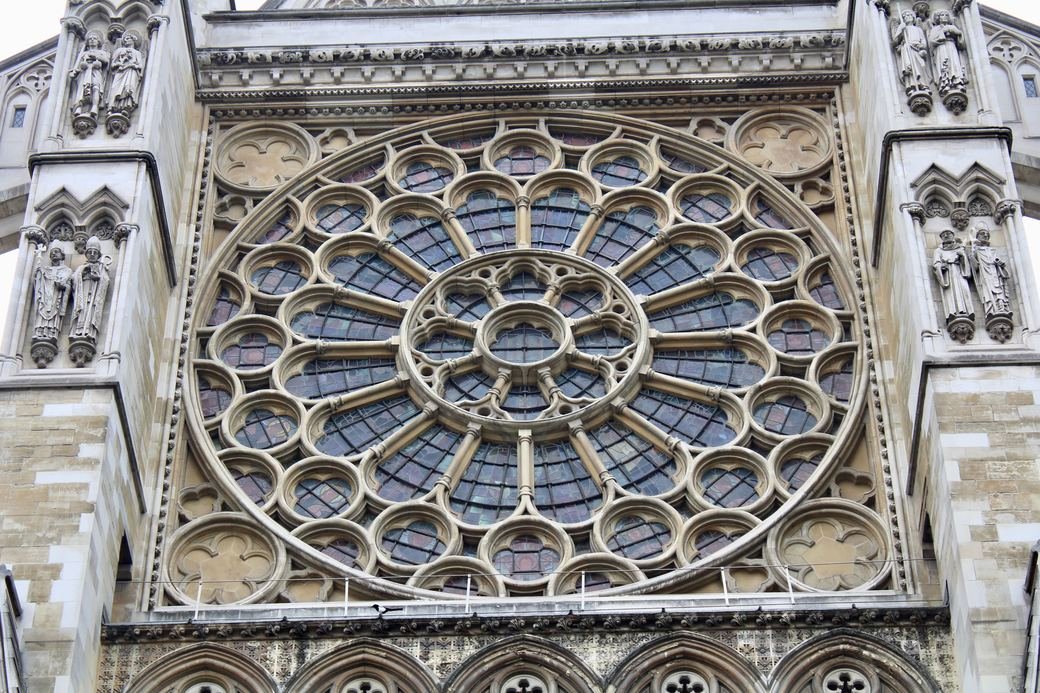
What visitors walk into is Henry III’s. From 1245 he pulled down the Norman church and rebuilt it in the newest French manner, with the tallest vault in England at 102 feet, an apse-and-radiating-chapels plan straight out of Reims, and a rose window in each transept. It was a political building as much as a religious one: Henry was devoted to the Confessor, and he built a shrine church around his saint and put his own tomb beside it. The nave was finished piecemeal over the next two centuries and the medieval masons kept to the thirteenth-century design throughout, which is why the abbey looks all of a piece and is not.
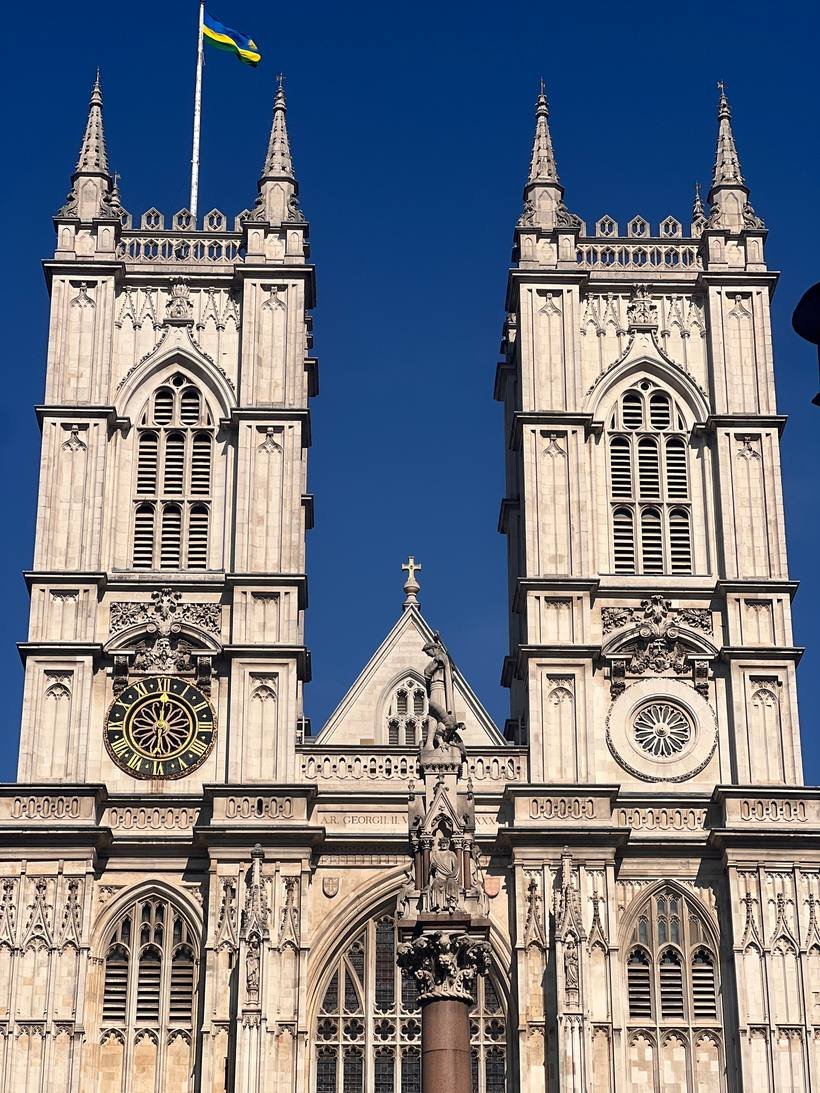
The two west towers that everybody photographs are not medieval at all. They were designed by Nicholas Hawksmoor and finished in the 1740s, in a Gothic that is really a Georgian idea of Gothic. And the abbey has not been an abbey since 1560: Elizabeth I made it a royal peculiar, a church answering directly to the sovereign rather than to any bishop, which is what it remains. Its actual name is the Collegiate Church of St Peter, Westminster.
The visitor’s cheat sheet
| Where | 20 Deans Yard, Westminster, London, SW1P 3PA |
|---|---|
| Getting there | Westminster underground station (Jubilee, District and Circle lines) is two minutes away; St James’s Park is five. Victoria and Waterloo are both a fifteen-minute walk |
| Opening hours | Monday to Saturday for visitors, 9.30am to 3.30pm, with the Queen’s Diamond Jubilee Galleries 10am to 3pm and St Margaret’s Church 11am to 3.30pm. Closed to sightseeing on Sundays, when services are open to all |
| Admission | Adult £31; over-65s and students £28; children 6–17 £14; under-6s free. Includes the Cloisters, Chapter House and Pyx Chamber. Prices vary by season — check the abbey’s site before booking |
| Diamond Jubilee Galleries | A separate timed ticket, £5 for adults and free for under-18s, reached by lift in the Weston Tower |
| Verger-guided tour | £10 on top of admission, about 90 minutes, maximum twenty people, and the only way to reach the Shrine of Edward the Confessor. It can only be booked on arrival at the abbey, not online in advance |
| How long | Two to three hours, and longer if you take the verger tour |
| Best time | First entry on a weekday, or the last hour before admission closes. Midday is the crush |
| Free entry | There is no charge to attend a service. Evensong on a weekday afternoon puts you in the quire with the choir, which no ticket can buy |
| Photography | Permitted in most of the abbey for personal use, but not everywhere — the rules change from time to time and are signed at the door |
Hours and admission checked against the official site in September 2026. They change; the official site is always the last word.
The one booking decision that matters is the verger-guided tour. It is £10 on top of admission, it is the only way into the Shrine of Edward the Confessor, and it cannot be booked online in advance — you book it when you arrive, and there are twenty places. Get there at opening and ask at the desk before you do anything else.
What to see, in the order you meet it
The nave and the Unknown Warrior
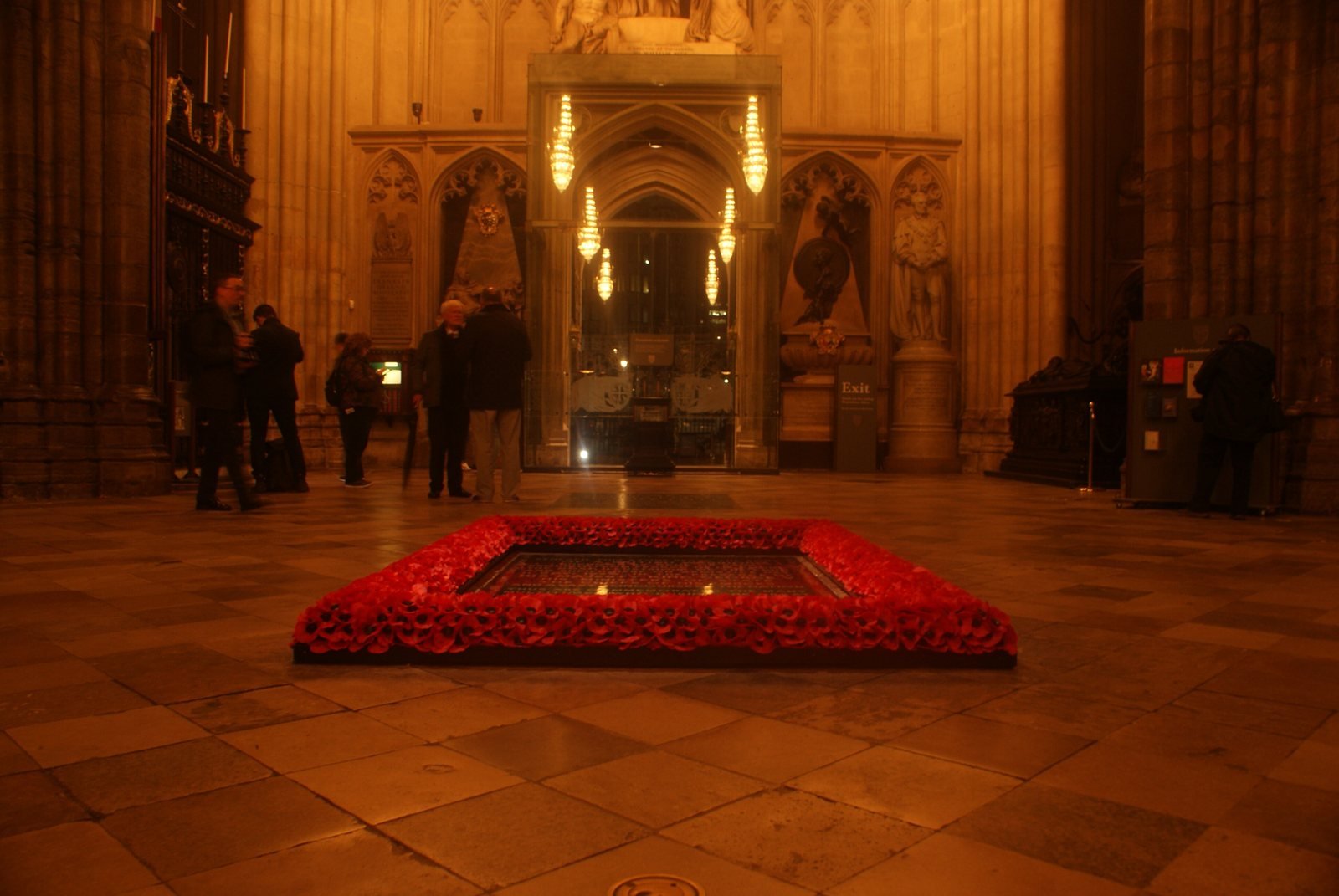
You come in by the north transept and out through the west end, so the Unknown Warrior comes near the finish, but it is the first thing to say about the building. In November 1920 an unidentified British soldier was brought back from France and buried just inside the west door in soil brought with him, under a slab of Belgian marble. An estimated 1.25 million people filed past in the first week. It is the only floor stone in the abbey that nobody is permitted to walk on, and when royal brides leave the abbey they lay their bouquet on it.
The Cosmati pavement
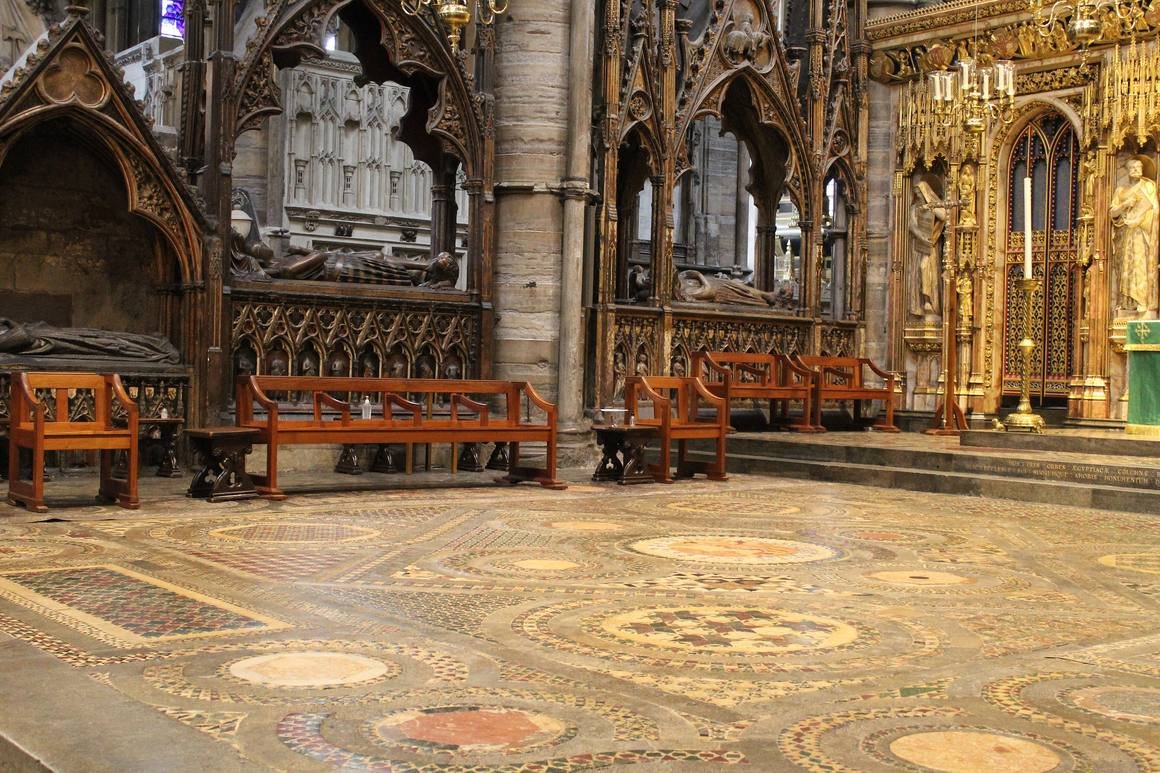
In front of the high altar is a floor of porphyry, serpentine and coloured glass in interlocking geometry, about twenty-five feet square and made of roughly thirty thousand pieces. Italian workmen laid it in 1268 for Henry III; a lost inscription set out a calculation of the age of the world in it. It spent much of the last century hidden under carpet for its own protection and was conserved and uncovered in 2010. Every coronation since 1308 has happened on this spot.
The Coronation Chair, and the empty shelf
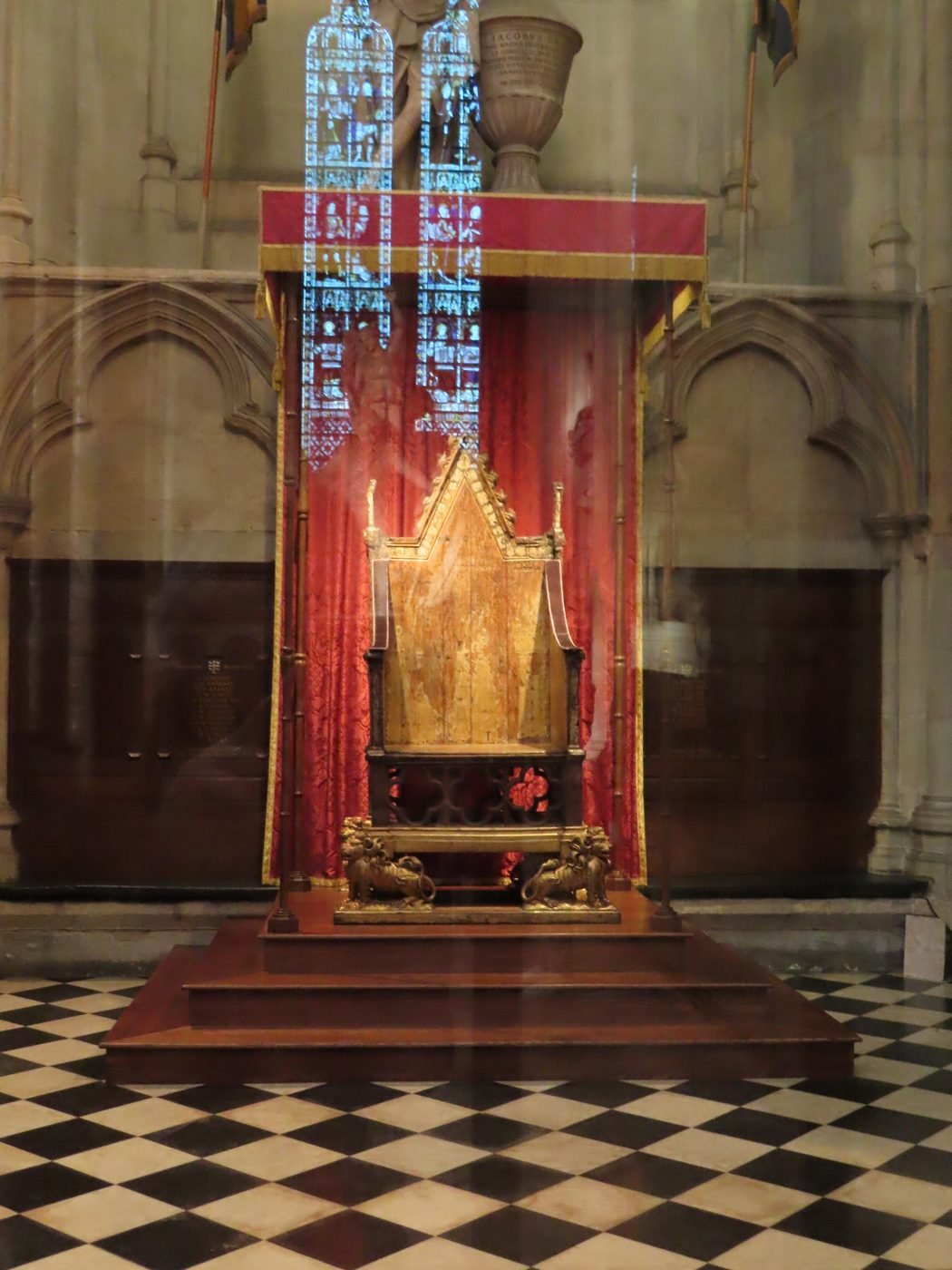
Edward I had the chair made in 1300–01 to hold the Stone of Scone, which he had taken from Scotland. It is oak, it was once painted and gilded, and it is covered in graffiti cut by Westminster schoolboys and visitors in the eighteenth and nineteenth centuries.
The Stone is not in it, and has not been since 1996, when it was formally returned to Scotland and put in Edinburgh Castle. Since 30 March 2024 it has been on permanent display at Perth Museum. It comes south only for a coronation: it left Scotland on 27 April 2023, was under the chair for Charles III on 6 May, and went back within the month. If you have read that the Stone lives in the abbey, or in Edinburgh Castle, both were true once and neither is true now.
The Shrine of Edward the Confessor
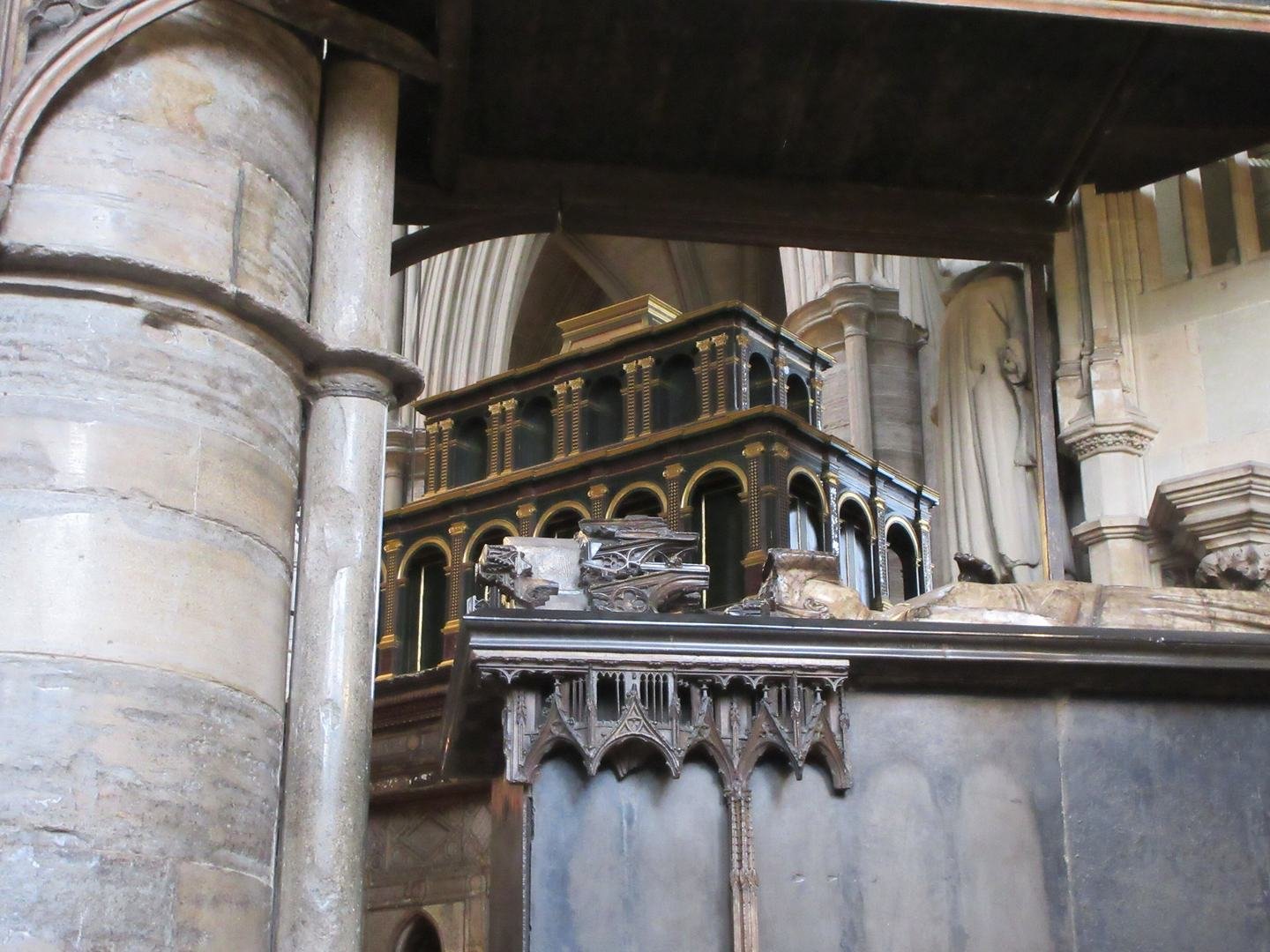
Behind the high altar, raised on its own platform, is something that should not exist. At the Reformation the shrines of English saints were destroyed and their relics scattered. Edward survived — dismantled under Henry VIII, reassembled under Mary I, and never emptied. He is the only major English saint still lying in his own shrine, and the recesses in the base are where the sick knelt to be near him. The kings and queens buried in a ring around the shrine chose those spots to be close to the saint.
Henry VII’s Lady Chapel
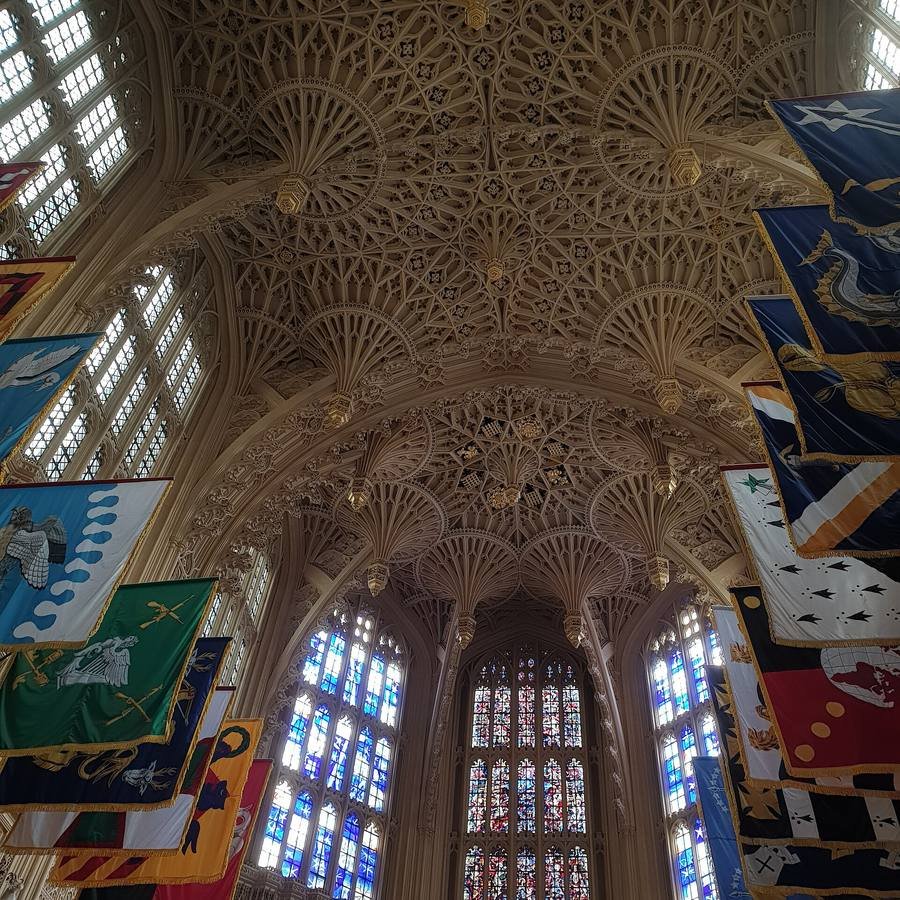
Go up the steps at the east end into the most extravagant room in England: a pendant fan vault of carved stone hanging in mid-air, ninety-five statues of saints in their niches, and the banners of the Order of the Bath overhead. John Leland called it orbis miraculum. Henry VII and Elizabeth of York lie in the middle under a gilt-bronze effigy by Torrigiano, a Florentine who had broken Michelangelo’s nose in a fight as a student and left Italy in a hurry.
Elizabeth I, Mary I, and Mary Queen of Scots
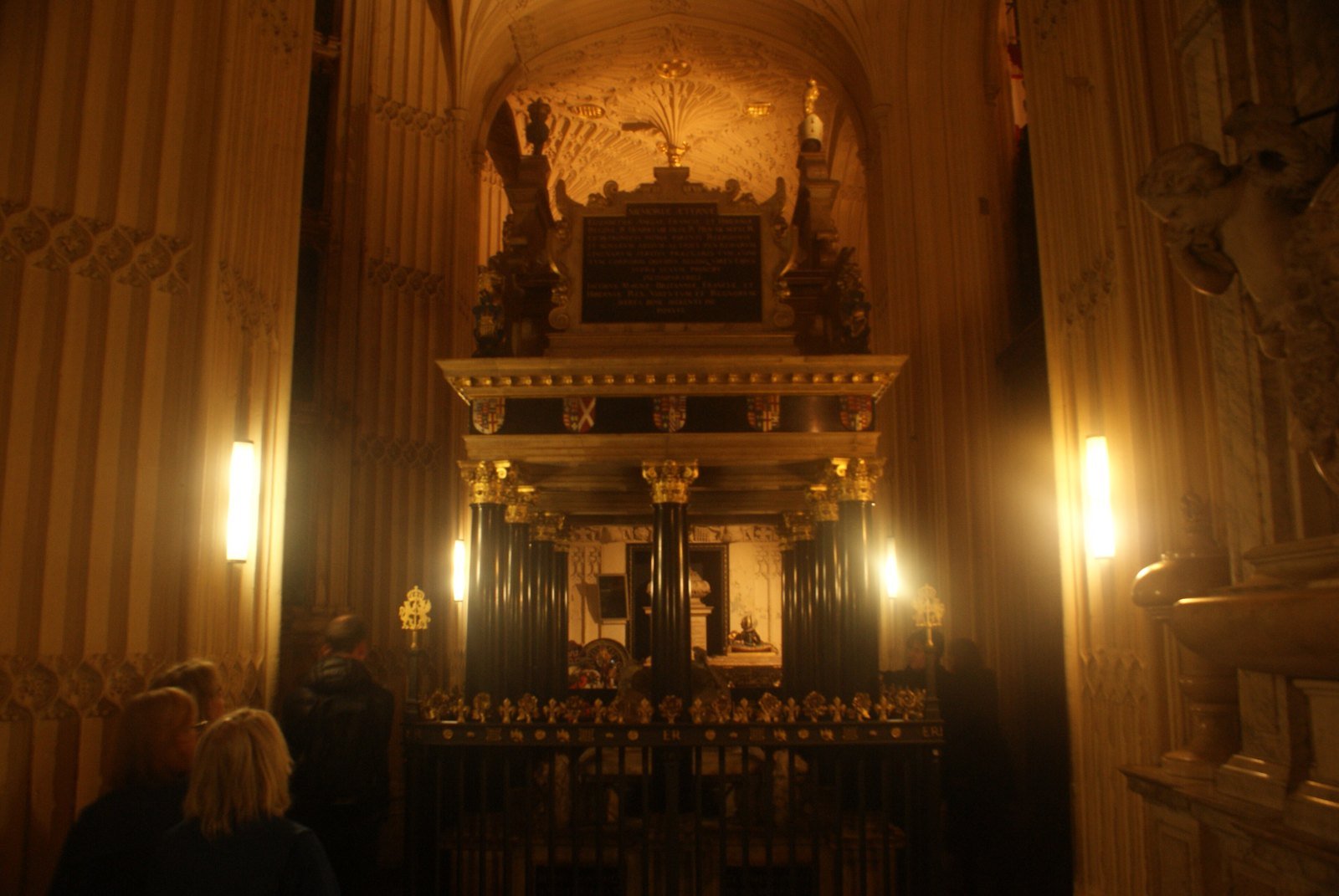
In the north aisle of the chapel, Elizabeth I lies in a tomb she shares with her half-sister Mary — Protestant and Catholic, rivals in life, in one grave with an inscription asking that they rest together in the hope of resurrection. James I put them there. In the south aisle, the same king gave his mother Mary, Queen of Scots, a monument distinctly grander than Elizabeth’s. She was the woman Elizabeth had executed. He moved her here from Peterborough, and made sure the tomb was higher.
Poets’ Corner
Chaucer was buried in the south transept in about 1400, not because he was a poet but because he had been Clerk of the King’s Works and lived nearby. A grander tomb was built for him in 1556, and other writers began asking to be near him. That accident is the origin of the whole tradition.
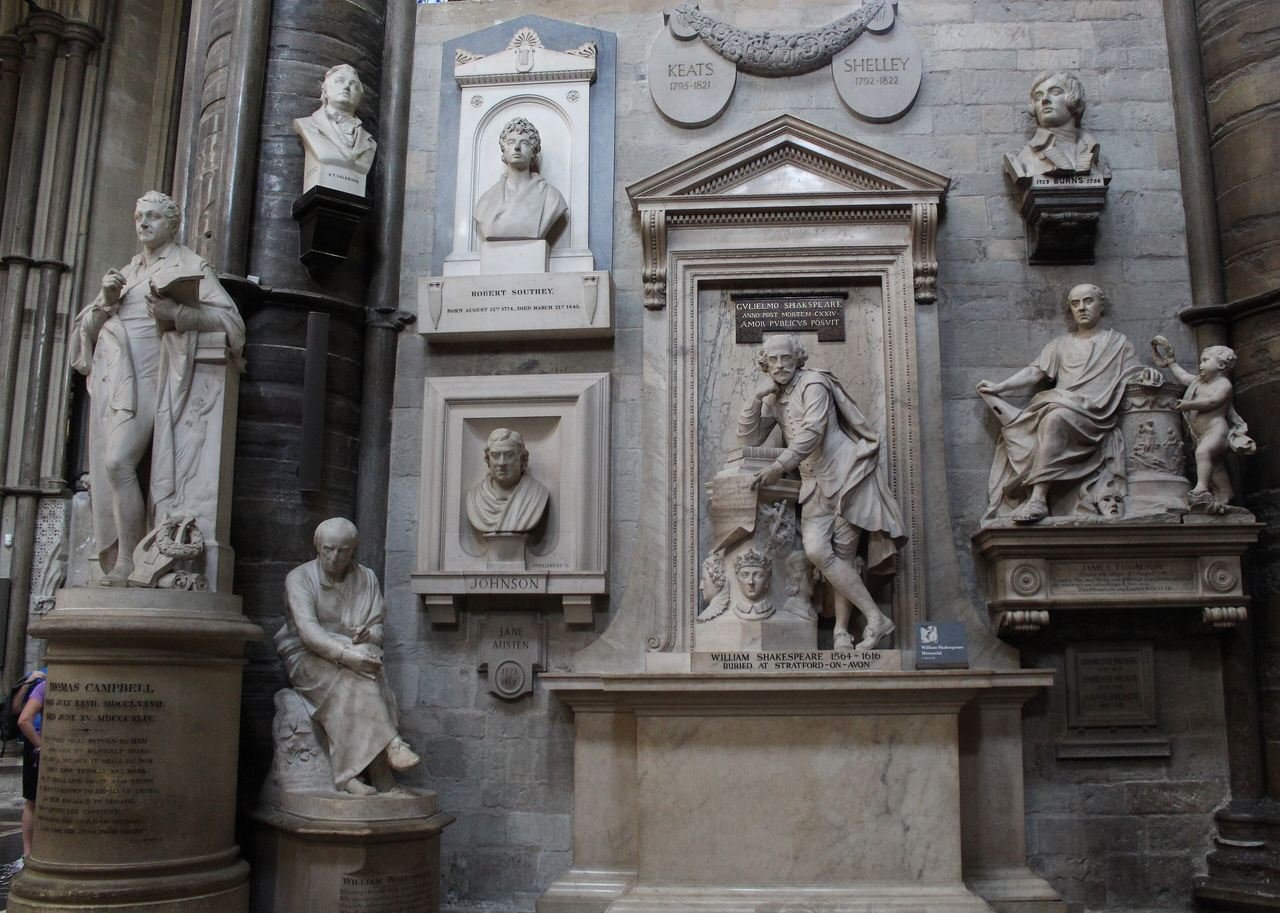
Read the wording as you go, because the difference between the two kinds of memorial here is the thing most visitors miss. Dickens, Kipling, Tennyson, Hardy, Johnson and Browning are buried under your feet. Shakespeare, Milton, Austen, Blake, the Brontës and Wordsworth are commemorated only. Hardy is both and neither: his ashes are here and his heart is in Dorset.
The scientists
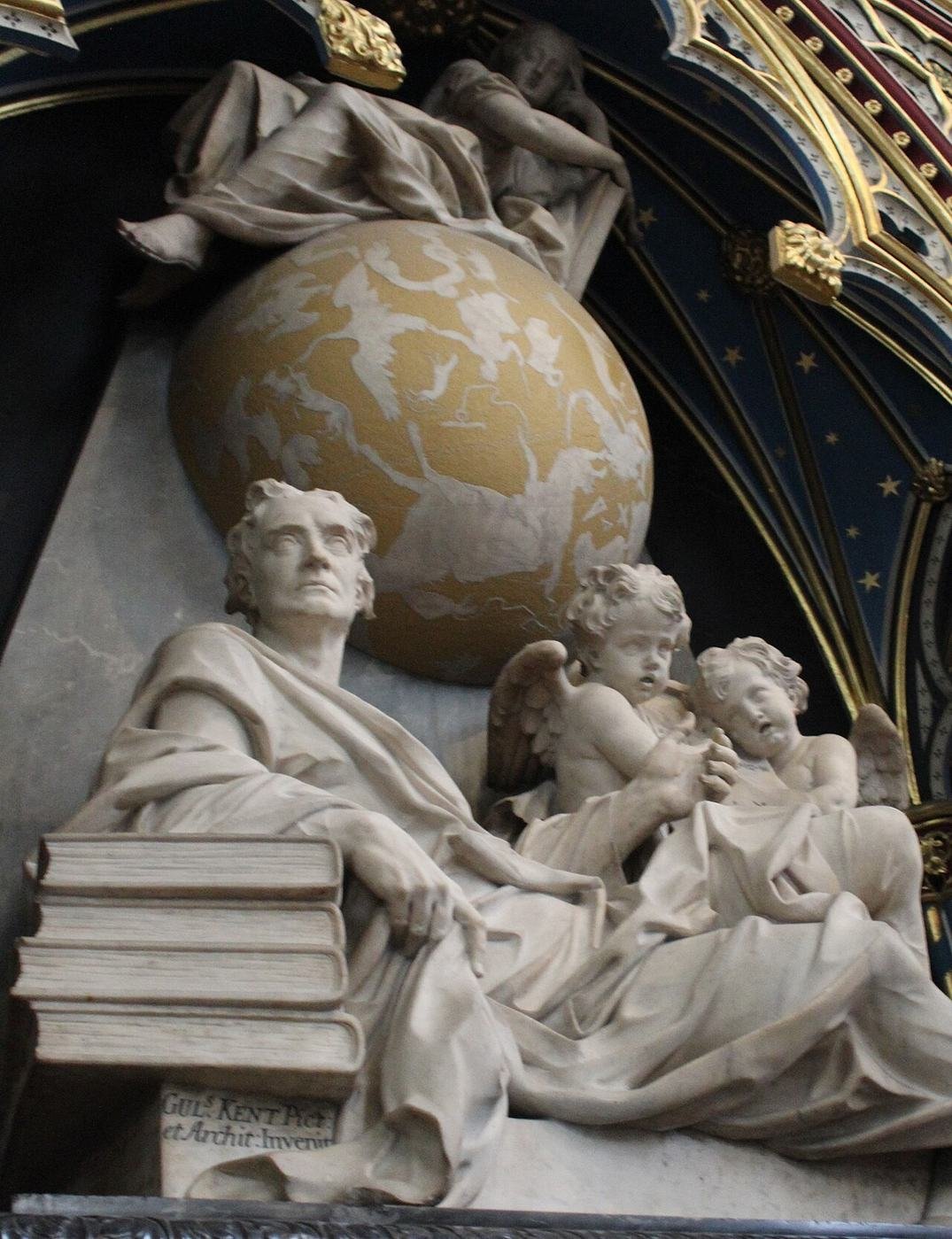
Newton’s monument dominates the choir screen, and the ground in front of it has become the abbey’s scientific quarter. Darwin was buried a few feet away in 1882 — the Church of England burying the author of the Origin of Species with full honours, which is a fact worth sitting with. Stephen Hawking’s ashes were interred between them in June 2018, his stone carrying the equation for the entropy of a black hole.
The Chapter House and the Pyx Chamber
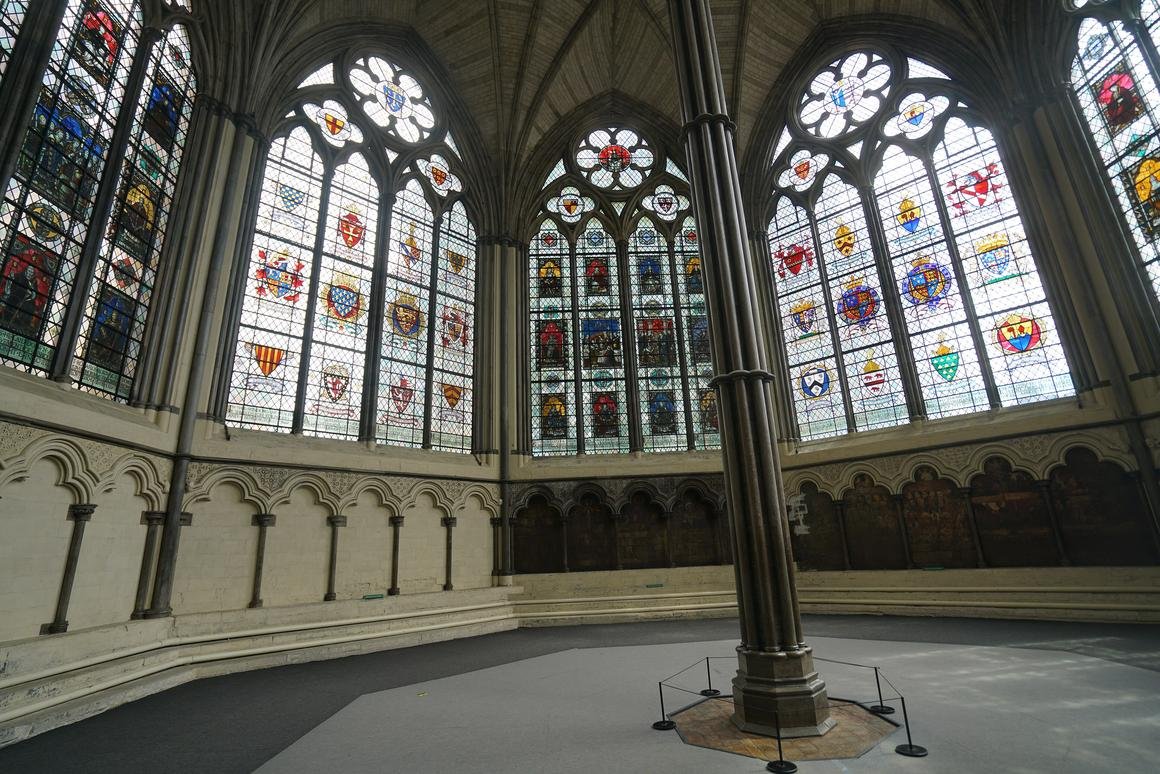
Out through the east cloister is the Chapter House of 1250–59, an octagon nearly sixty feet across carried on one slim central pier, with a mid-thirteenth-century tiled floor that is largely the original and apocalypse paintings on the walls from the century after. The King’s Great Council met here, and the Commons used it as a debating chamber in the fourteenth century, which makes it a plausible birthplace of the English parliament.
Next door, the Pyx Chamber is late eleventh century and one of the oldest spaces in the whole complex — a survival from the Confessor’s abbey, used as a treasury, with a door that may be the oldest in Britain.
The Cloisters and College Garden
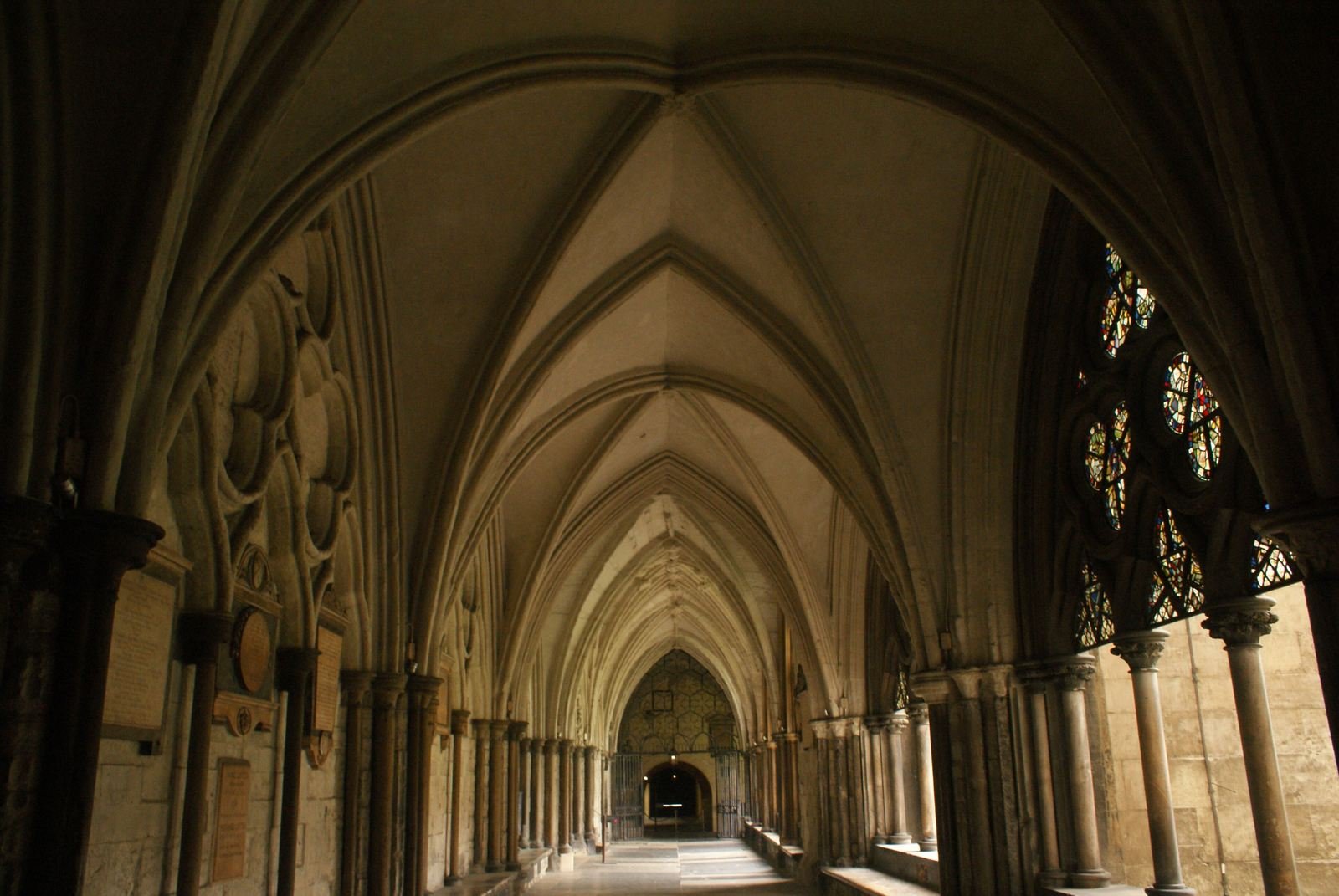
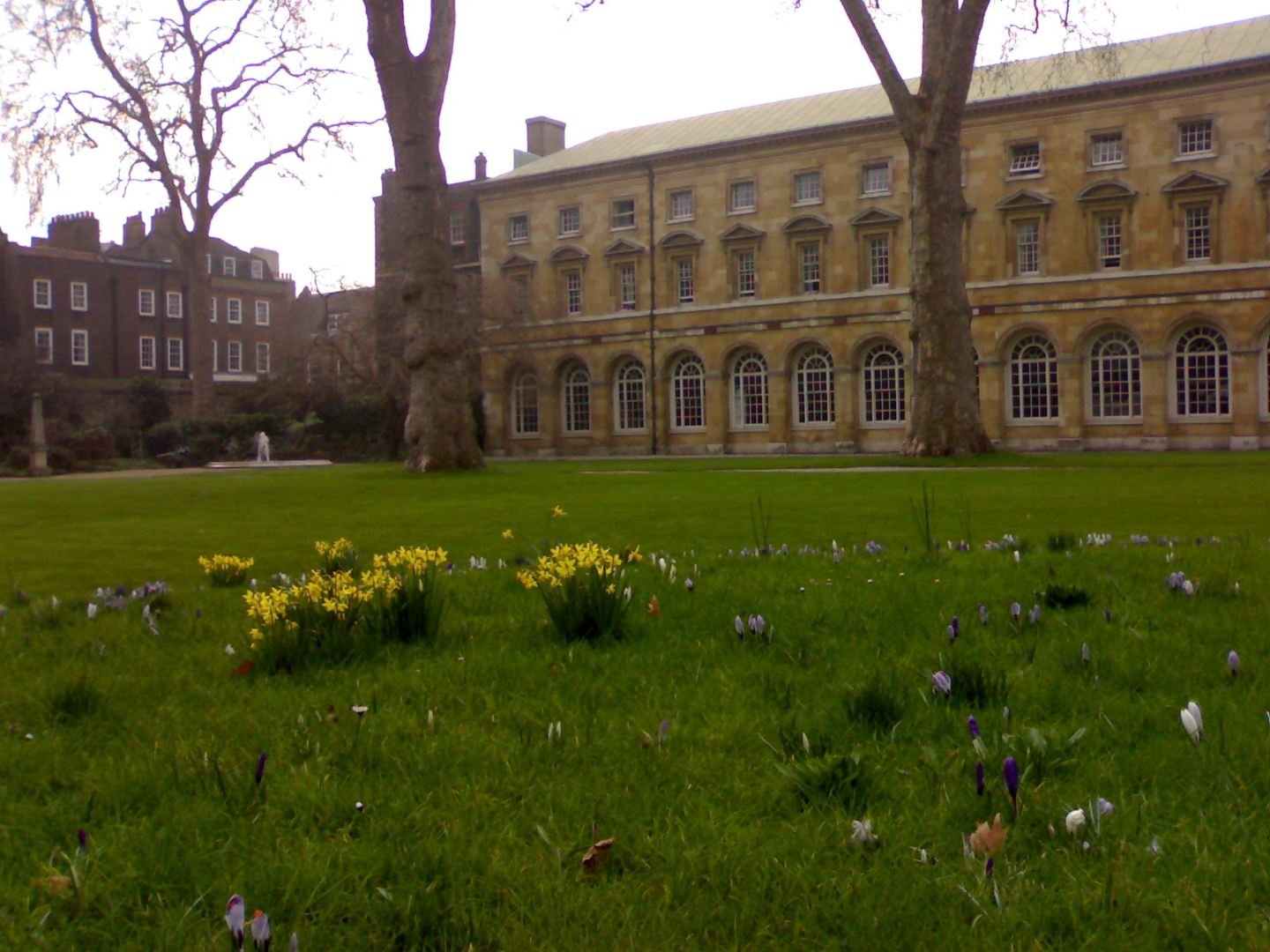
The cloisters are thirteenth and fourteenth century and are included in the ticket; most visitors hurry through them. Beyond, College Garden has been cultivated for nine hundred years, beginning as the monks’ infirmary garden for medicinal herbs. It is the quietest green space within sight of Parliament.
The Queen’s Diamond Jubilee Galleries
Opened in 2018, seventy feet up in the medieval triforium and reached by a lift in the new Weston Tower, these galleries were shut to the public for seven hundred years. They hold the Westminster Retable — thought to be the altarpiece of Henry III’s church and the earliest surviving English panel-painted altarpiece — along with the funeral effigies that were carried at royal funerals, and a view down the length of the nave that nobody else gets. It is a £5 add-on for adults and free for children, and it is the best five pounds in the building.
What the building is still for
It is easy to treat the abbey as a collection of tombs, and then be surprised by how much of it is in current use. At least sixteen royal weddings have taken place here since 1100, the most recent in 2011. The funeral of Diana, Princess of Wales, was held here in September 1997, and the state funeral of Elizabeth II in September 2022, watched by more people than any broadcast in British history. Charles III was crowned on the Cosmati pavement in May 2023, in a chair made in 1300, over a stone borrowed back from Perth for the occasion.
Between those events it is a church with a choir and a daily round of services, a school, a garden and a staff of vergers who will tell you, if you ask, which flagstones move. The scaffolding you may see is routine: a building of this age is never finished being repaired.
Tickets and tours
Book admission ahead, book the verger tour on the day
Timed admission tickets sell out in summer, so book those online. The verger-guided tour works the other way round: it is sold only at the abbey, on the day, to twenty people at a time, and it is the single thing that changes the visit — ninety minutes, the Shrine of Edward the Confessor, and a guide who works in the building. Ask at the desk the moment you get in, or telephone the day before to check whether tours are running.
Tour and hotel links go to GetYourGuide and Booking.com. This site earns nothing from them at present — they are here because they are the quickest way to check what is actually available.
Don’t miss
- The empty shelf Under the Coronation Chair. The Stone of Scone has been at Perth Museum since March 2024 and comes back only for coronations.
- The graffiti on the chair Cut by Westminster schoolboys. One of them signed and dated his work.
- The Cosmati pavement Uncovered in 2010 after decades under carpet. Every coronation since 1308 has happened on it.
- Torrigiano’s effigies By the sculptor who broke Michelangelo’s nose and had to leave Italy.
- Hawking’s stone Between Newton and Darwin, carrying his black hole entropy equation.
- The Chapter House tiles Mid-13th century and largely original — you walk on them in overshoes.
- The Pyx Chamber door One of the oldest in Britain, made from a tree felled in the eleventh century.
- College Garden Nine hundred years of continuous cultivation, and almost empty at lunchtime.
Insider tips
Go to Evensong instead, or as well. It costs nothing, it happens most weekday afternoons, and you are seated in the quire rather than shuffling round it in a crowd. You will not see the museum pieces, but you will hear the building do the thing it was built for, which is a different and better sort of visit.
Arrive at opening. The abbey takes a large volume of visitors through a narrow one-way route, and by mid-morning the shrine chapels and Poets’ Corner move at a shuffle. The last hour before admission closes is the second-best window.
Do not confuse the three Westminster churches. The abbey is the coronation church. Westminster Cathedral is Roman Catholic, half a mile away, and free to enter. St Margaret’s, in the abbey’s own churchyard, is the parish church of the House of Commons and is included in your ticket — most people walk past it.
Take the audio guide. It is included, it is narrated by Jeremy Irons, and in a building this dense with memorials it is the difference between looking at a thousand names and understanding thirty of them.
Sundays are for worship only. If a Sunday is the only day you have, go to a service and see St Paul’s instead, which has its own separate Sunday arrangement.
Common questions
How much does it cost to visit Westminster Abbey?
Adult admission is £31, with over-65s and students at £28 and children aged 6 to 17 at £14. Under-6s go free. The price covers the church, the Cloisters, the Chapter House and the Pyx Chamber. The Queen’s Diamond Jubilee Galleries are a separate timed ticket at £5 for adults and free for under-18s. Prices are seasonal, so check the abbey’s own site before you budget.
Is the Stone of Scone in the Coronation Chair?
No. The Stone was returned to Scotland in 1996 and has been on permanent display at Perth Museum since 30 March 2024. It comes back to Westminster only for a coronation — it travelled down for Charles III in 2023 and went straight home afterwards. The shelf under the Coronation Chair is empty, and a surprising number of guidebooks and websites have not caught up.
Can you see the Shrine of Edward the Confessor?
Not on a standard ticket. The shrine sits behind the high altar and is normally closed to general visitors. The way in is the verger-guided tour, which costs £10 on top of admission, runs about 90 minutes and takes a maximum of twenty people. It cannot be booked in advance online — you book it at the abbey on the day, so arrive early and ask at the desk.
Who is buried in Poets' Corner?
Fewer of them than people assume. Chaucer was buried there around 1400, and Dickens, Kipling, Tennyson, Hardy and Dr Johnson are among those who really lie there. Shakespeare, Milton, Austen, the Brontës and Blake are commemorated only — the memorial is a monument, not a grave.
How is Westminster Abbey different from Westminster Cathedral?
Completely. The abbey is the Anglican coronation church, a royal peculiar answering directly to the Crown rather than to a bishop. Westminster Cathedral, half a mile away and built in the 1890s in red brick and Byzantine stripes, is the mother church of Roman Catholic England and Wales. Visitors book the wrong one every week.
How many monarchs have been crowned at Westminster Abbey?
Forty, beginning with William the Conqueror on Christmas Day 1066 and most recently Charles III in May 2023. Three English monarchs since 1066 were never crowned at all — Edward V, Lady Jane Grey and Edward VIII — which is why the count of reigns and the count of coronations do not match.
Where to stay and eat nearby
Westminster is government territory and thin on good food; the pubs round Parliament fill with civil servants at six and empty at eight. The Cellarium Café in the abbey’s own fourteenth- century vaults is better than it needs to be and does not require a ticket. For a bed, Victoria and Pimlico are ten minutes’ walk and cost considerably less than anything on Parliament Square.
More English cathedrals and abbeys
- St Paul’s Cathedral — two miles east, and the other half of London’s ceremonial life.
- Westminster Cathedral — the Roman Catholic mother church, and the one people book by mistake.
- Canterbury Cathedral — where the archbishop who crowns the monarch has his seat.
- Glastonbury Abbey — what happens to an abbey that does not become a royal peculiar.