
Sherborne Abbey
Sherborne Abbey has been a cathedral, a monastery and a parish church, and it is built of Ham stone, which turns gold in the sun. Its great treasure is overhead: a fan vault that runs the length of the church, the earliest of its kind over the main body of a great English church, put up after a riot in 1437 in which the townspeople set fire to the building. The marks of that fire are still on the walls. It is one of the loveliest churches in the West Country, in one of its handsomest towns.
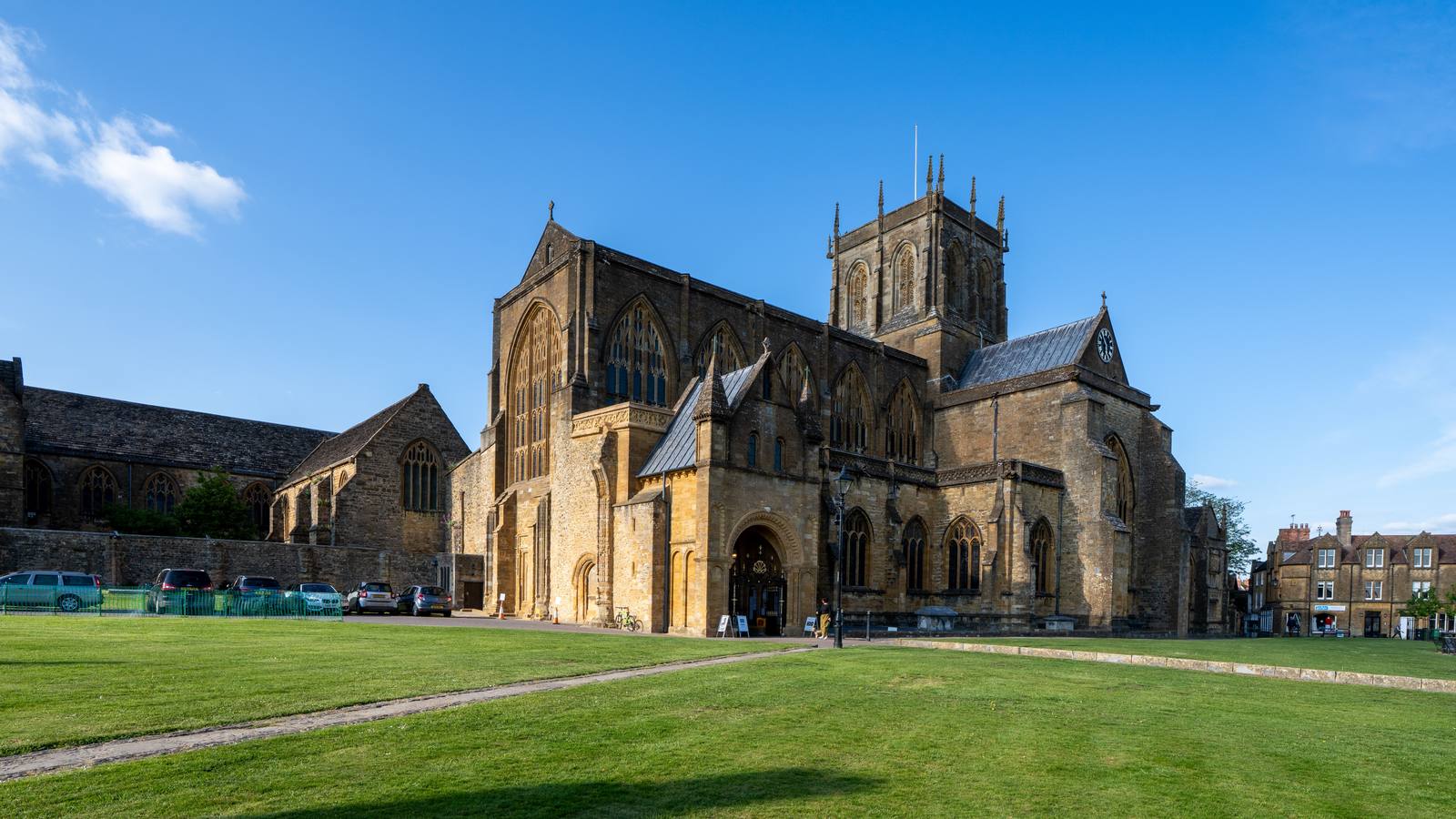
Aldhelm, the Saxon kings and the riot of 1437
In 705 Aldhelm, an abbot and scholar, became the first Bishop of Sherborne, and the church here became the cathedral of the western half of Wessex. Two of Alfred the Great’s elder brothers, Kings Æthelbald and Æthelberht, were buried here in the 860s. In 998 the cathedral clergy were replaced by Benedictine monks, and in 1075 the bishop moved his seat to Old Sarum, the predecessor of Salisbury. Sherborne remained an abbey.
The townspeople worshipped in a part of the abbey church, and they and the monks quarrelled for generations over doors, fonts and bells. In 1437 the quarrel became a riot, and a burning arrow, or perhaps a brazier, set the abbey on fire. The monks rebuilt the choir and, later in the century, the nave in the Perpendicular style, with the fan vaults that make the church famous; the town was made to pay towards the cost. At the Dissolution in 1539 the abbey was sold, and in 1540 the townspeople bought the church to be their parish church.
The visitor's cheat sheet
| Where | The Abbey Close, Sherborne, Dorset, DT9 3LQ, in the middle of the town |
|---|---|
| Getting there | Sherborne station (trains from London Waterloo and Exeter) is about 5 minutes’ walk; car parks in the town |
| Opening hours | Mon–Sat 8am–5pm; Sun 11am–5pm. Services, events and special occasions can change the times |
| Admission | Free; donations welcome. Free guided tours April to November |
| How long | About 1 hour |
| Best time | A sunny morning, when the golden vault glows |
| Dress code | No formal code; respectful dress as in any working church |
| Dogs | Not allowed, except assistance dogs. The abbey has no public toilets |
Hours and admission checked against the official site in October 2026. They change; the official site is always the last word.
Look for the fire. Ham stone turns pink when it is burned. In the quire and at the crossing, the stonework of the old church that survived the fire of 1437 is still stained red, nearly six centuries later.
What to see, in the order you meet it
The south porch
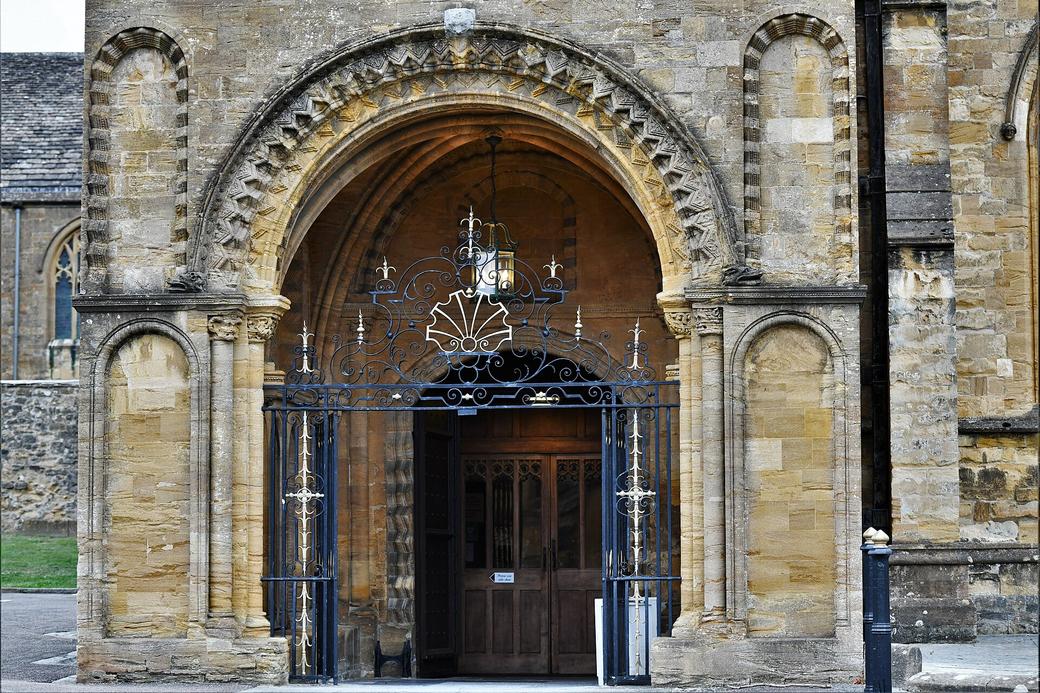
You enter through the south porch, a Norman porch of about 1180; only its upper storey was rebuilt, in the 1850s. Its round arch is one of the few reminders that the abbey before the fire was a Norman building.
The nave and the fan vault
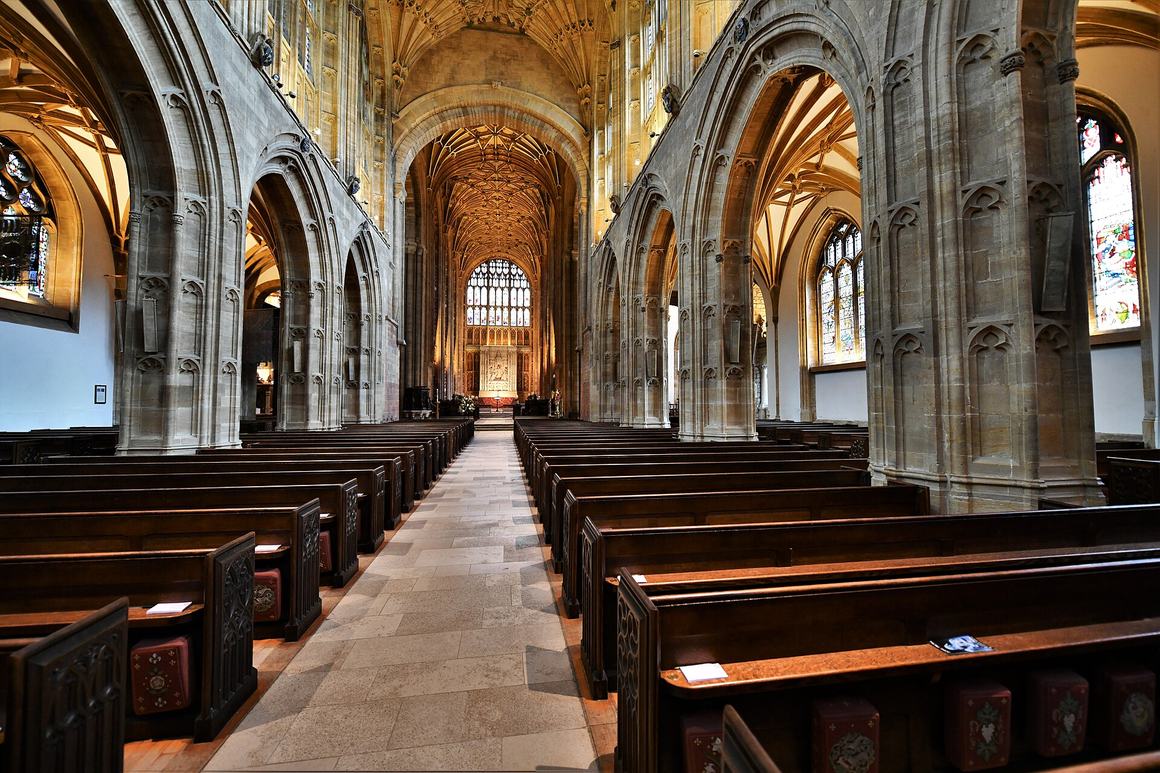
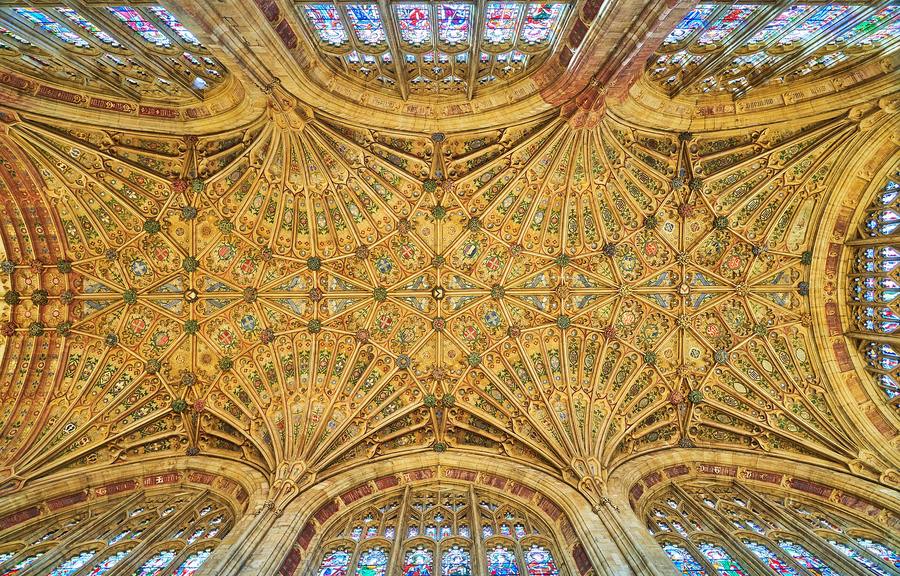
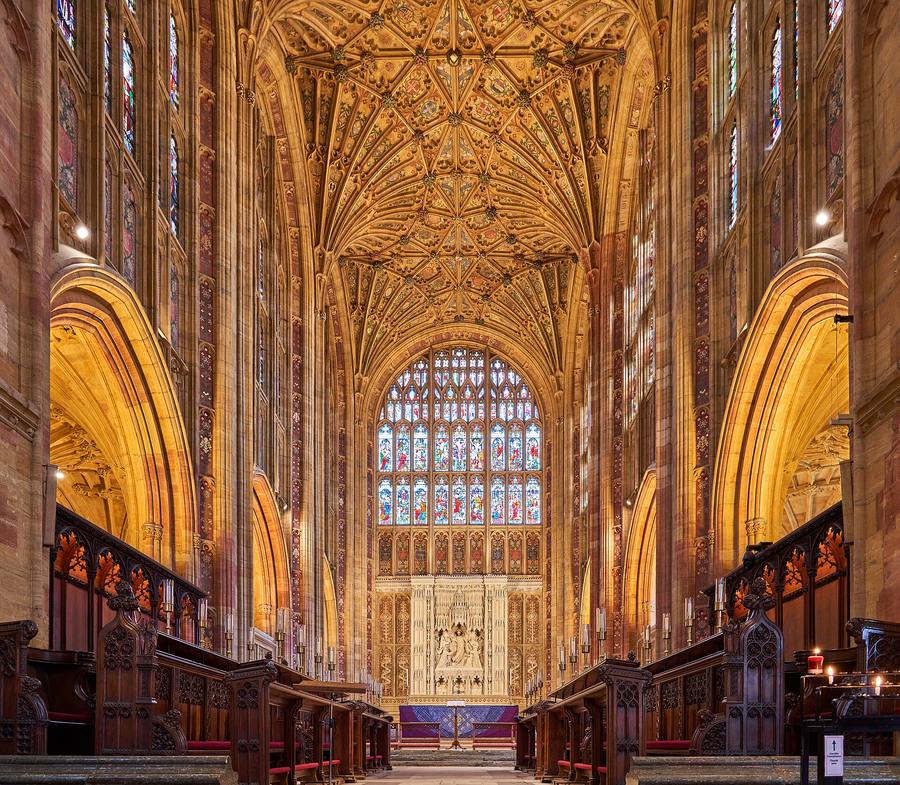
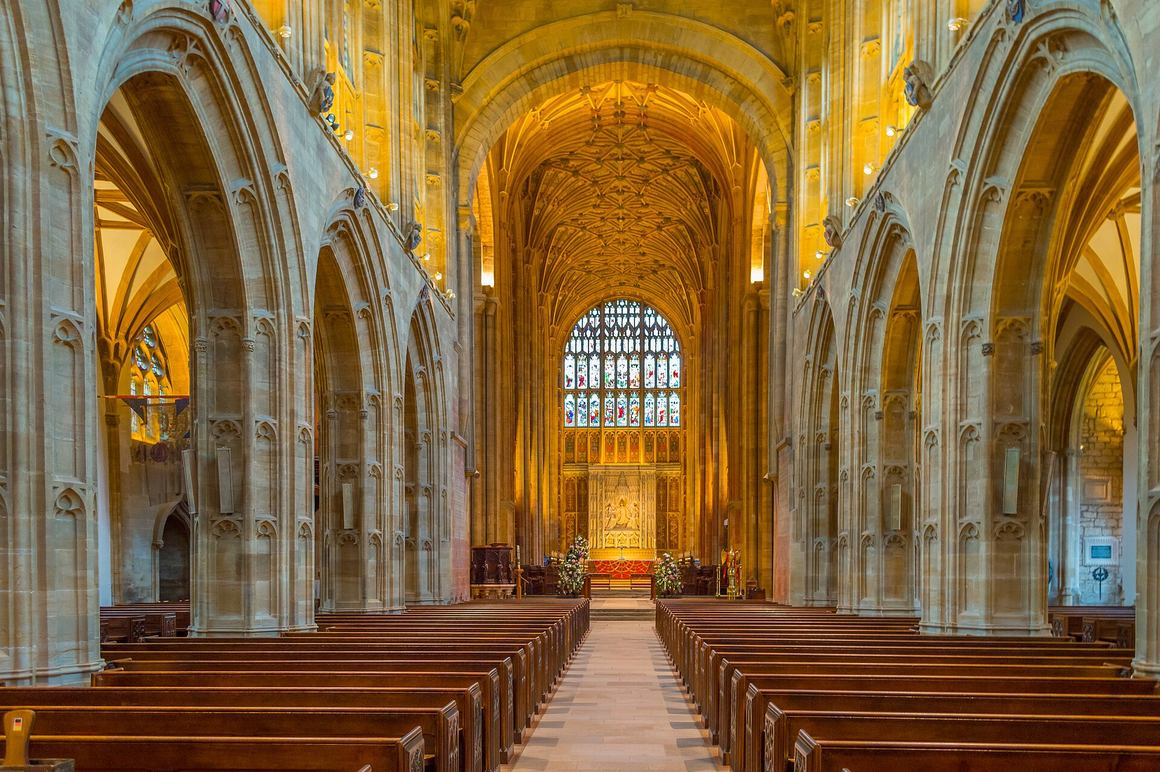
Step inside and look up. The fan vault spreads out across the whole width of the nave in a net of ribs, golden in the light from the clerestory. The choir, begun before the fire, was completed and vaulted after it; the nave vault followed later in the fifteenth century. Earlier fan vaults, such as the cloister at Gloucester, cover small spaces; Sherborne was the first to span the main body of a great church, and a model for the great fan vaults that followed.
The crossing and the choir
At the crossing, look at the reddened stone of the piers, the scars of the fire. Then go into the choir, where the vault is at its richest. The choir has been the setting for Sherborne School’s services for centuries; the school and the abbey are next-door neighbours.
The Lady Chapel
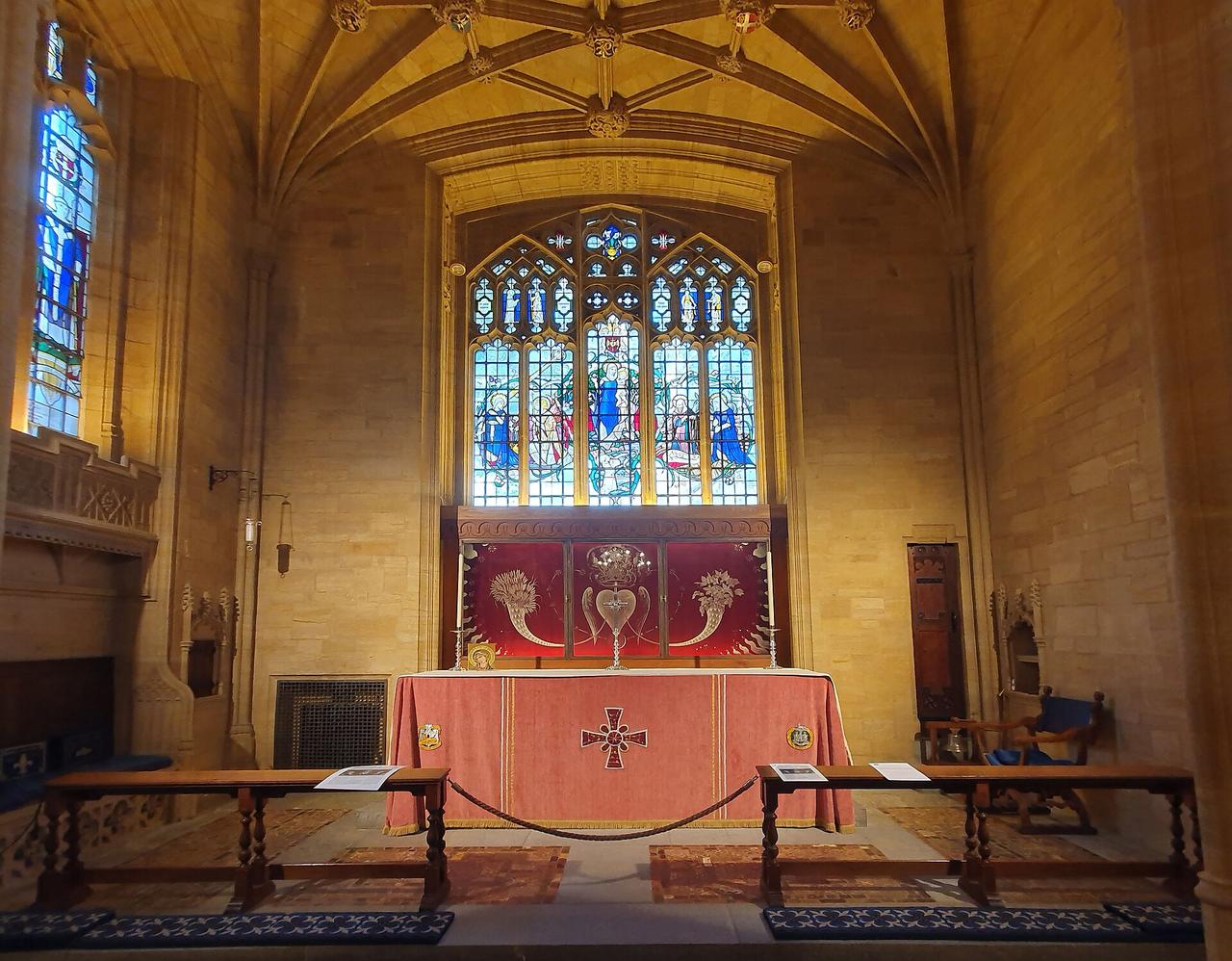
At the east end is the Lady Chapel. After the Dissolution part of it was turned into a house for the headmaster of the school; it was given back to the abbey and restored in the 1930s. Its reredos is a panel of engraved glass by Laurence Whistler, of the late 1960s.
The tombs and the west window
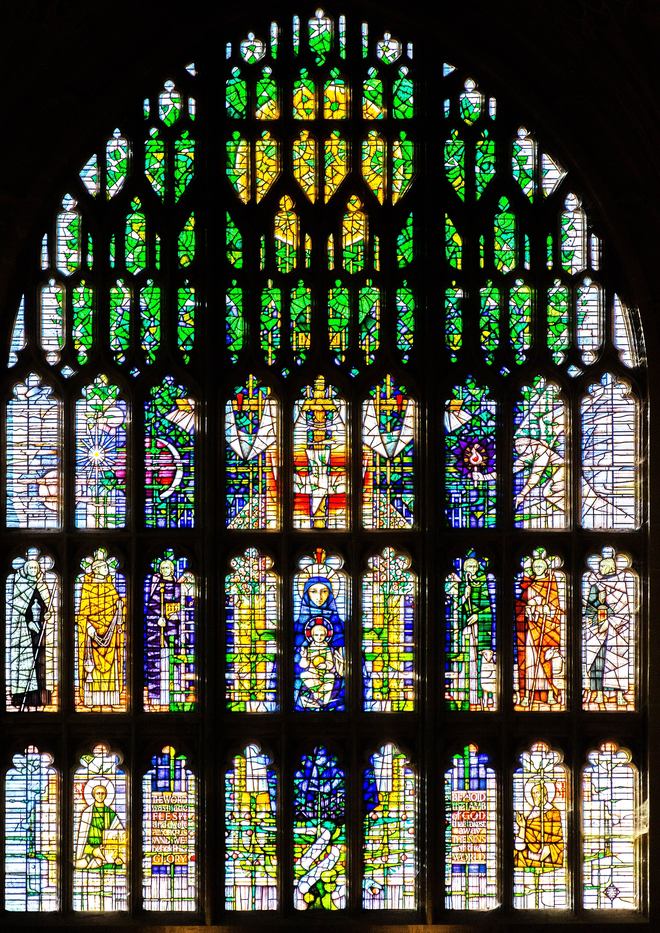
Around the church are monuments to the Digby family, owners of Sherborne Castle, and to Sir John Horsey, who bought the abbey at the Dissolution and sold the church to the town. The great west window was filled with glass by John Hayward, installed in 1997.
Tickets and tours
Free, with free tours
There is no charge to visit. Free guided tours of the abbey take place regularly between April and November; groups can arrange their own tour in advance through the abbey’s website.
The hotel link goes to Booking.com. This site earns nothing from it at present — it is here because it is the quickest way to check what is actually available.
Don't miss
- The fan vault The whole length of the church, golden overhead.
- The burnt stone The red scars of the fire of 1437.
- The Norman porch A survivor of the church before the fire.
- The Saxon kings Alfred’s brothers were buried here.
- The Whistler glass An engraved glass reredos in the Lady Chapel.
- The west window John Hayward’s glass of 1997.
Insider tips
Make a day of it. Sherborne has two castles: the ruined Old Castle, a medieval bishop’s fortress run by English Heritage, and Sherborne Castle, built by Sir Walter Raleigh in the 1590s, with a lake and grounds by Capability Brown. Both are a short walk from the abbey across the town.
Sherborne’s streets of golden stone, its almshouse of 1437 beside the abbey and the medieval Conduit on Cheap Street make the town worth walking. The abbey has no public toilets; there are public ones in the town.
Common questions
Is Sherborne Abbey free to visit?
Yes. There is no admission charge and donations are welcome. Free guided tours run on a regular basis from April to November; larger groups can book tours in advance.
Why is the fan vault at Sherborne so important?
Fan vaults, in which ribs spread out like the sticks of a fan, are an English invention. The first were small, in cloisters and chapels. Sherborne’s, built over the choir in the decades after 1437 and then over the nave, is the earliest surviving fan vault over the main body of a large church, and one of the most beautiful.
Was Sherborne Abbey a cathedral?
Yes, in Anglo-Saxon times. St Aldhelm became the first Bishop of Sherborne in 705, and two of Alfred the Great’s elder brothers, Kings Æthelbald and Æthelberht, were buried here. The bishop’s seat moved to Old Sarum in 1075, and the church remained a Benedictine abbey. Since 1540 it has been the parish church of Sherborne.
Are dogs allowed in Sherborne Abbey?
No, except guide dogs and other assistance dogs.
How do you get to Sherborne Abbey?
Sherborne station, on the line from London Waterloo to Exeter, is about five minutes’ walk away. By car, Sherborne is on the A30 between Shaftesbury and Yeovil, with public car parks in the town.
Where to stay and eat nearby
Cheap Street, which runs up from the abbey, has tearooms, pubs and restaurants. There are old coaching inns and small hotels in the town.
More English churches
- Wells Cathedral — under an hour north
- Christchurch Priory — Dorset’s other great monastic church
- Salisbury Cathedral — where Sherborne’s bishops went
See all the cathedrals and churches worth visiting in England →