
Chester Cathedral
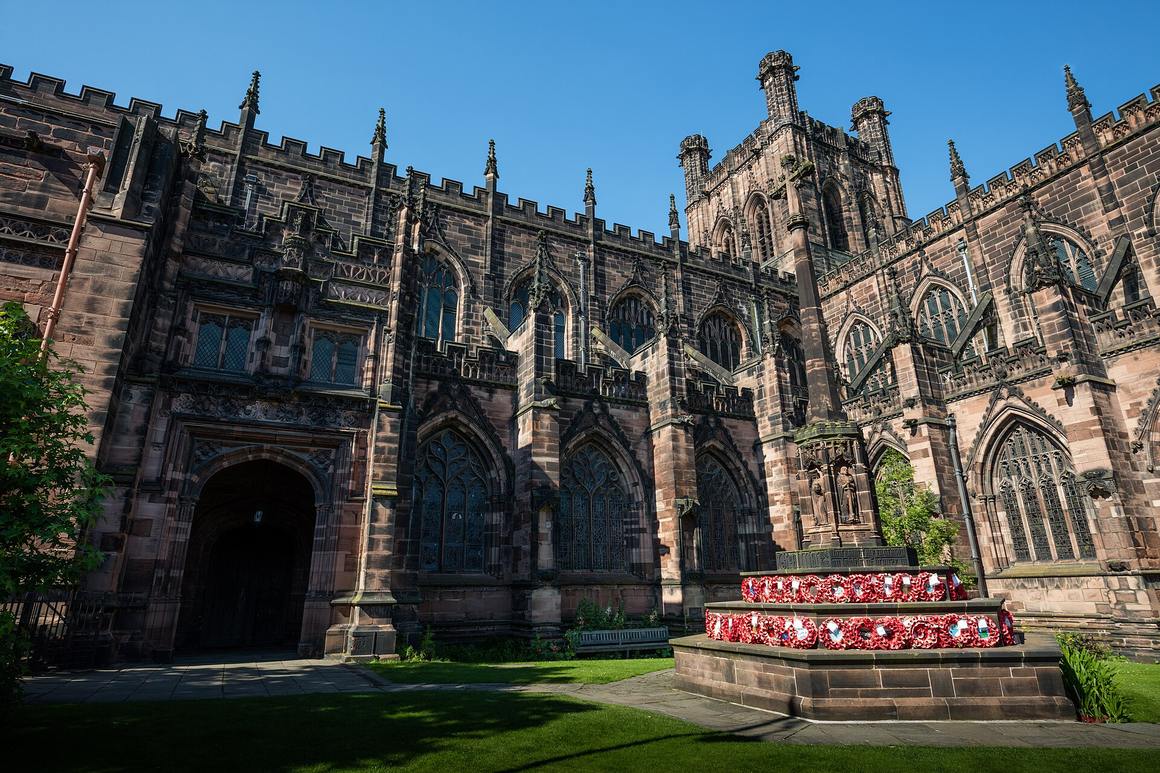
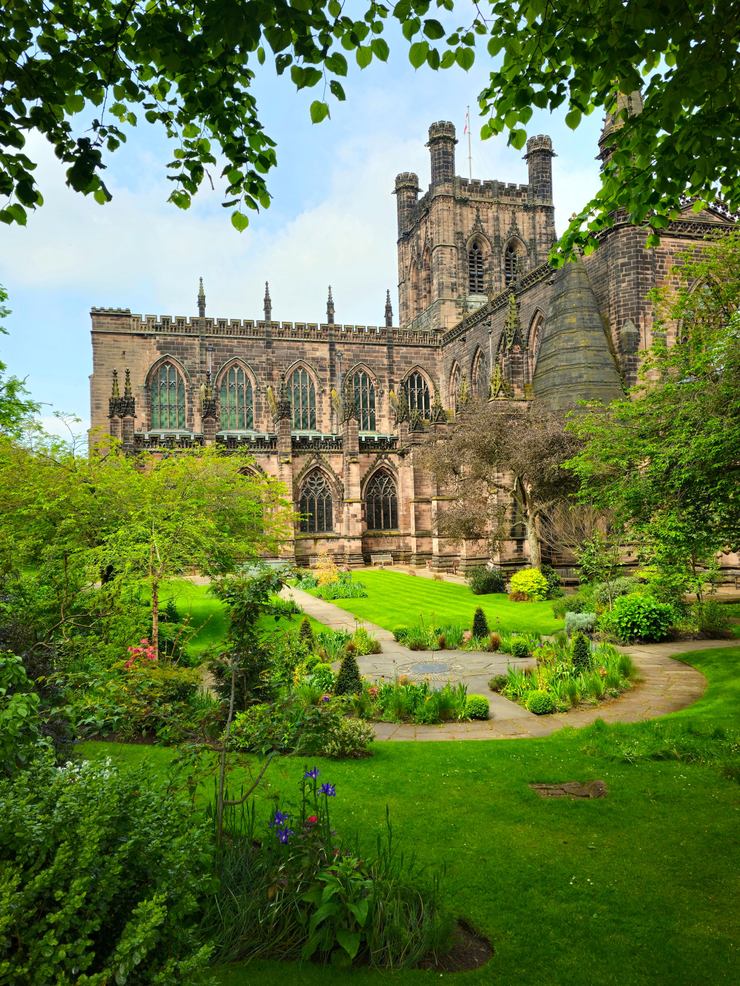
Chester Cathedral was a Benedictine abbey for four and a half centuries before it was a cathedral, and it still feels like one. Around its red sandstone church are a cloister, a monks’ dining hall with its stone pulpit, and a chapter house, among the most complete set of monastic buildings in England. Inside the church are quire stalls carved in about 1380 that are among the most beautiful medieval woodwork anywhere, and the rebuilt shrine of an Anglo-Saxon princess. It stands in the middle of a walled Roman city, a few steps from the Rows.
Werburgh, the Benedictines and Henry VIII
Werburgh was an Anglo-Saxon princess and abbess who died in about 700. Her relics were brought to Chester in the ninth or tenth century, perhaps to keep them safe from the Vikings, and a church was built for them. In 1092 Hugh Lupus, the Norman Earl of Chester, refounded it as a Benedictine abbey, with the help of Anselm, later Archbishop of Canterbury.
The Norman church was rebuilt in the Gothic style, slowly, over almost three centuries, from the Lady Chapel in the thirteenth century to the nave and the tower in the early sixteenth. The abbey was dissolved in 1540, and in 1541 Henry VIII made its church the cathedral of the new Diocese of Chester. In the nineteenth century George Gilbert Scott restored it heavily, and much of the outside, including the stonework of the tower and the south transept, is his.
The visitor's cheat sheet
| Where | St Werburgh Street, Chester, CH1 2DY, inside the city walls near the Eastgate Clock |
|---|---|
| Getting there | Chester station is about 15 minutes’ walk; direct trains from London, Manchester and North Wales. Park and Ride and city-centre car parks |
| Opening hours | Mon–Sat 9.30am–6pm; Sun 10am–6pm. Special events and services sometimes change the times |
| Admission | Free for most of the year; a small entry fee is charged in summer and at Christmas (under-6s free) |
| How long | 1–1.5 hours, including the cloister and refectory |
| Best time | A weekday morning, then a walk on the city walls |
| Dress code | No formal code; respectful dress as in any working church |
| Dogs | Well-behaved dogs on a short lead welcome, except in signed areas |
Hours and admission checked against the official site in October 2026. They change; the official site is always the last word.
An abbey that kept its buildings. At most dissolved abbeys the cloister and the monks’ buildings were sold off and pulled down. At Chester they passed to the new cathedral, so you can still walk the cloister, eat in the room where the monks ate and stand where they met each day.
What to see, in the order you meet it
The nave
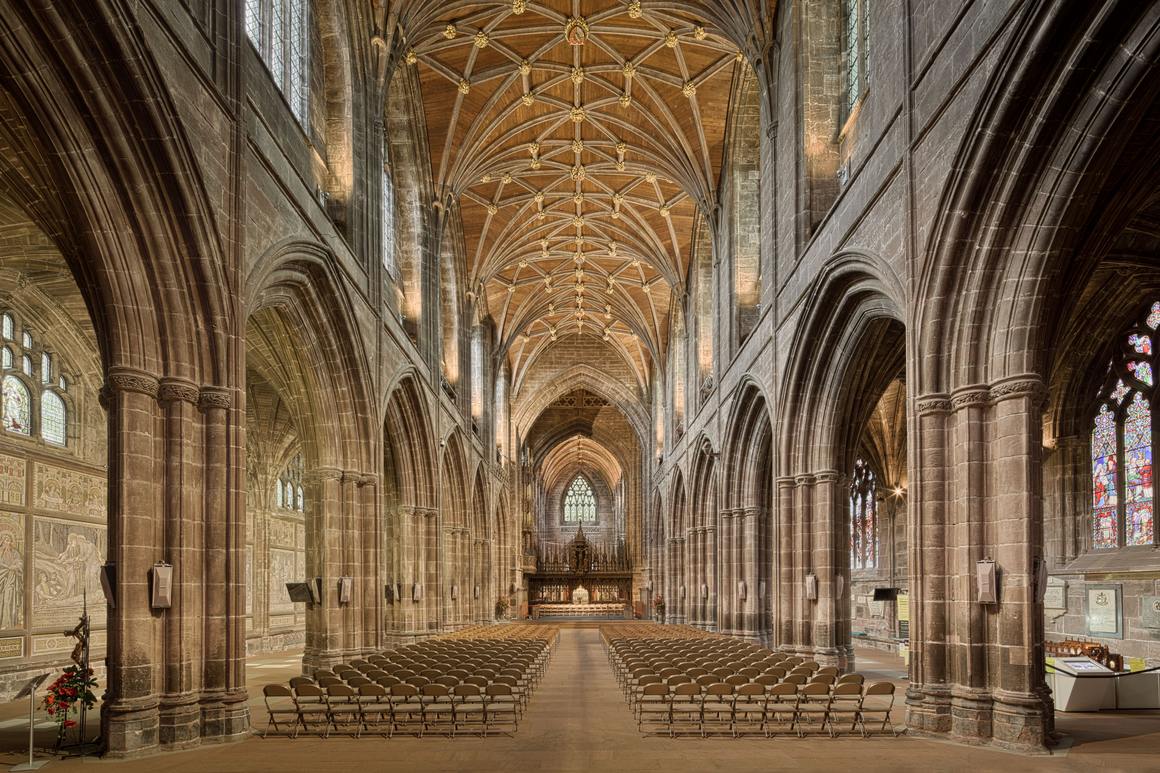
The nave was finished in the early 1500s, only a few decades before the abbey was closed. Its north aisle wall is covered in Victorian mosaics of Old Testament patriarchs and prophets. At the west end, the consistory court, where the bishop’s court sat, keeps its wooden furniture of around 1600, a unique survival in England.
The quire
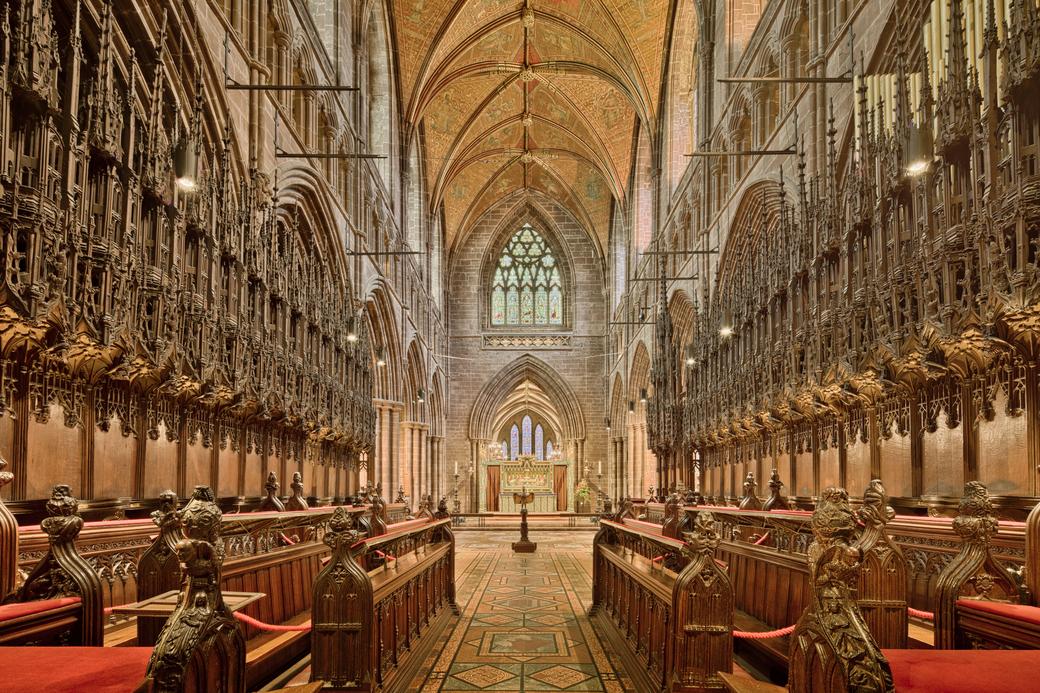
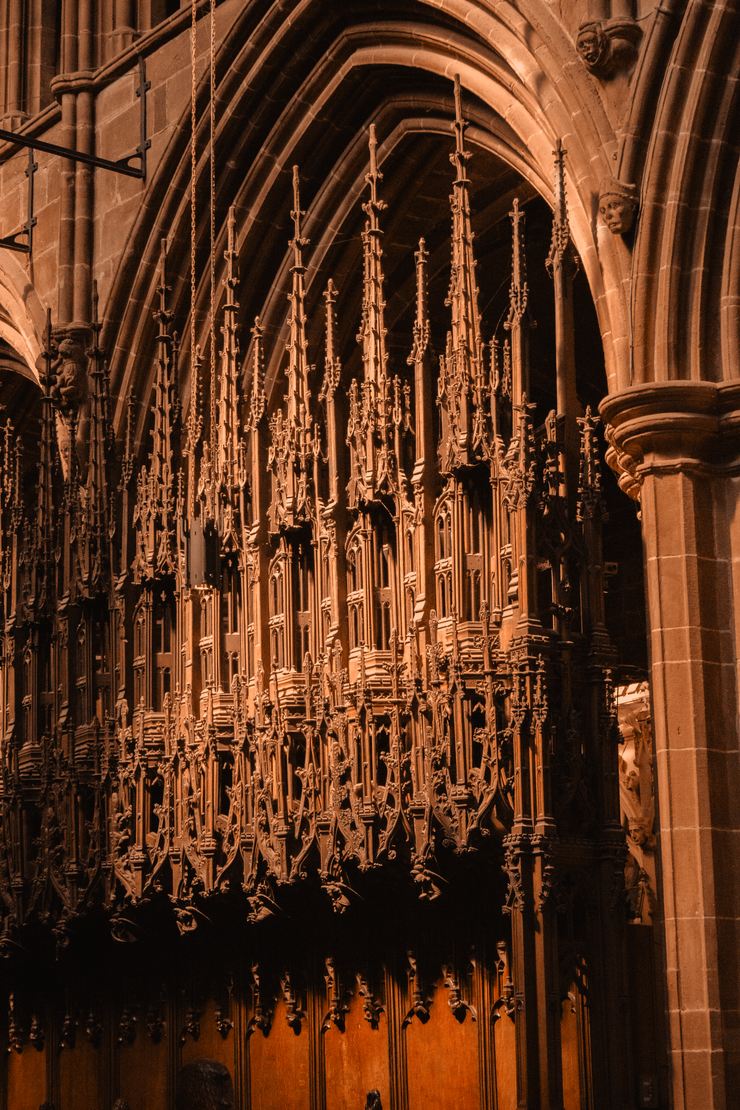
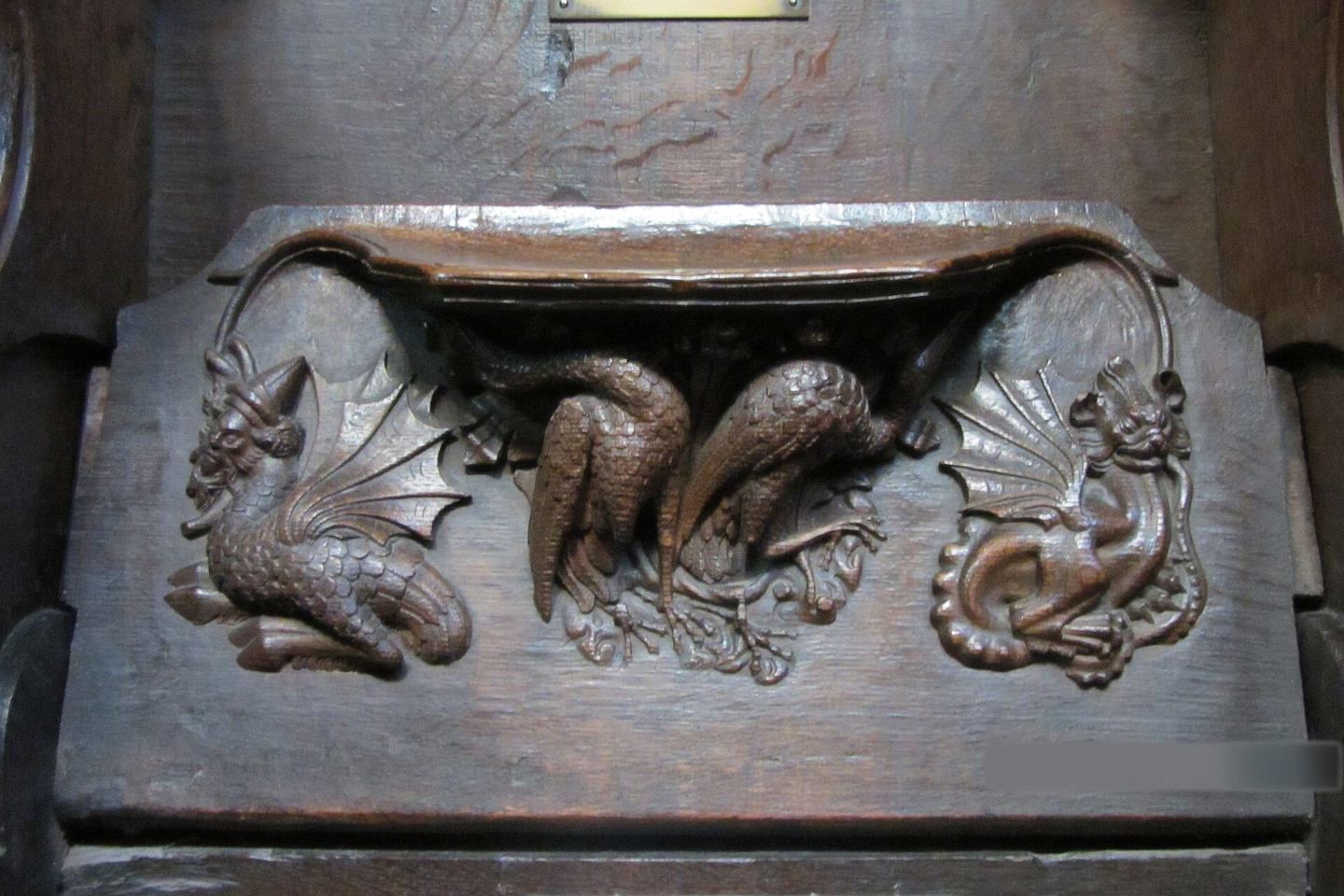
Through the screen is the quire, the glory of the cathedral. The stalls were made in about 1380, and above them rise canopies of carved oak, spiky with pinnacles, as delicate as lace. Under the seats are the misericords, carved with knights, beasts, a pelican, a fox and scenes of medieval life; the stall ends are rich with carving too.
The Lady Chapel and the shrine of St Werburgh
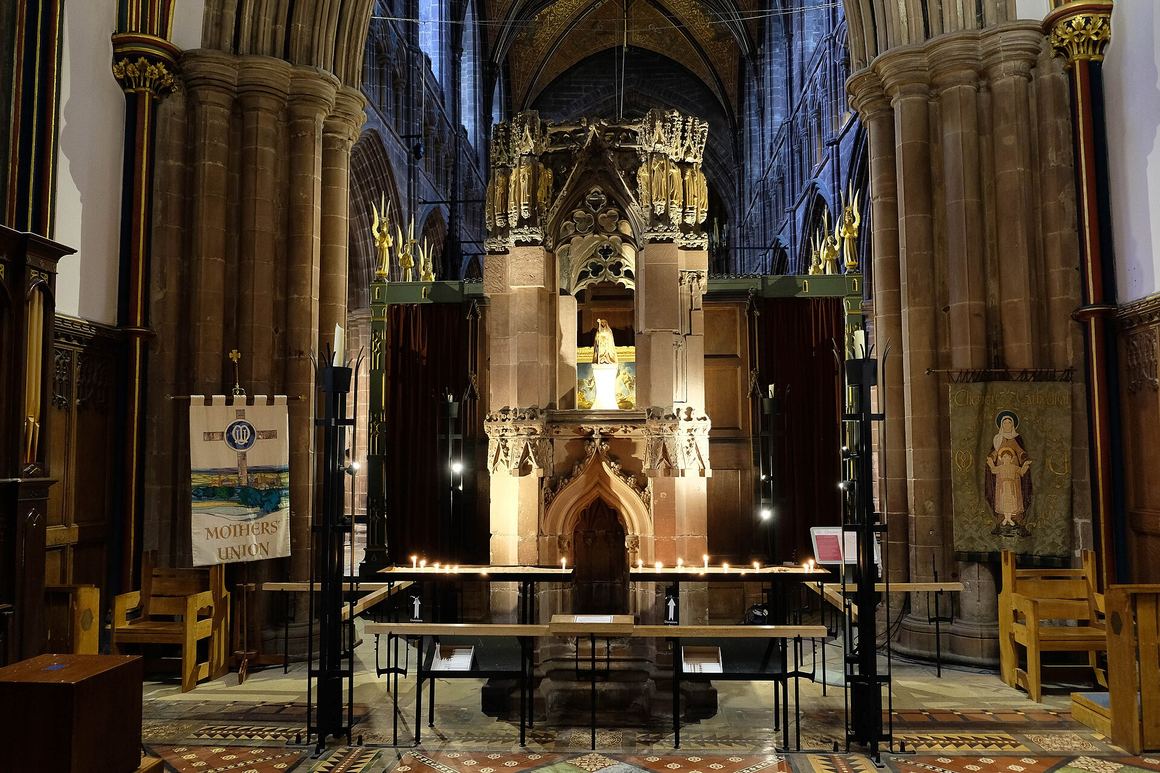
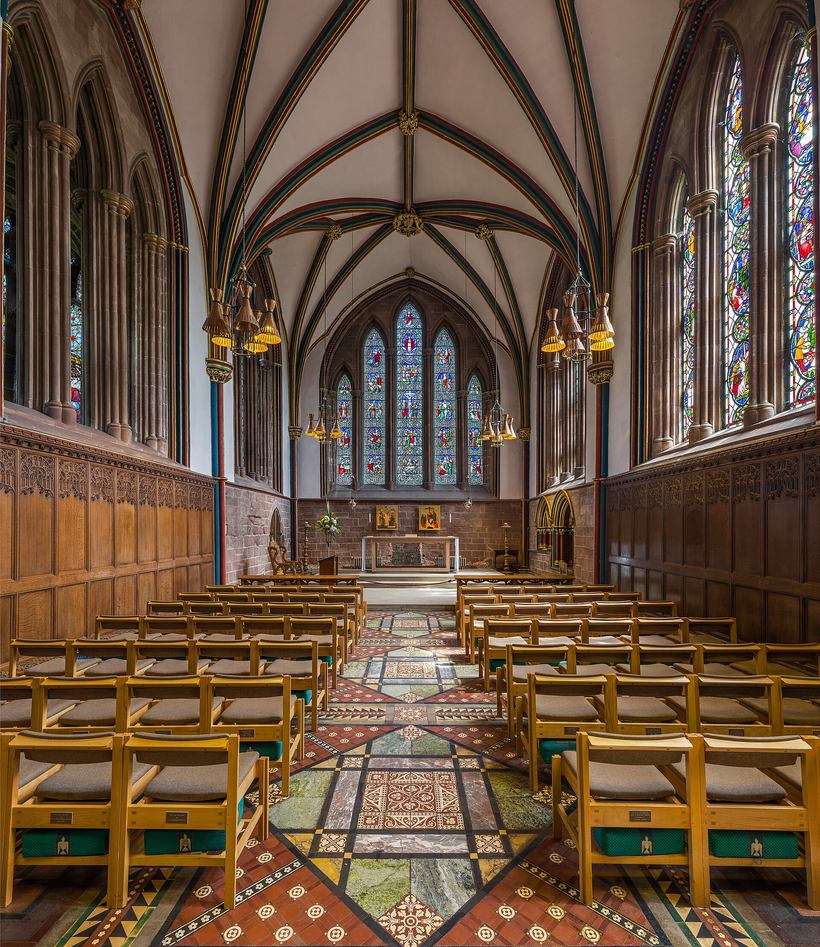
At the east end is the Lady Chapel, built in the later thirteenth century. In it stands the shrine of St Werburgh, a stone base of the fourteenth century on which her relics rested. It was broken up at the Reformation, and its pieces were found in the 1870s and reassembled later in the century. It is still a place of prayer.
The cloister
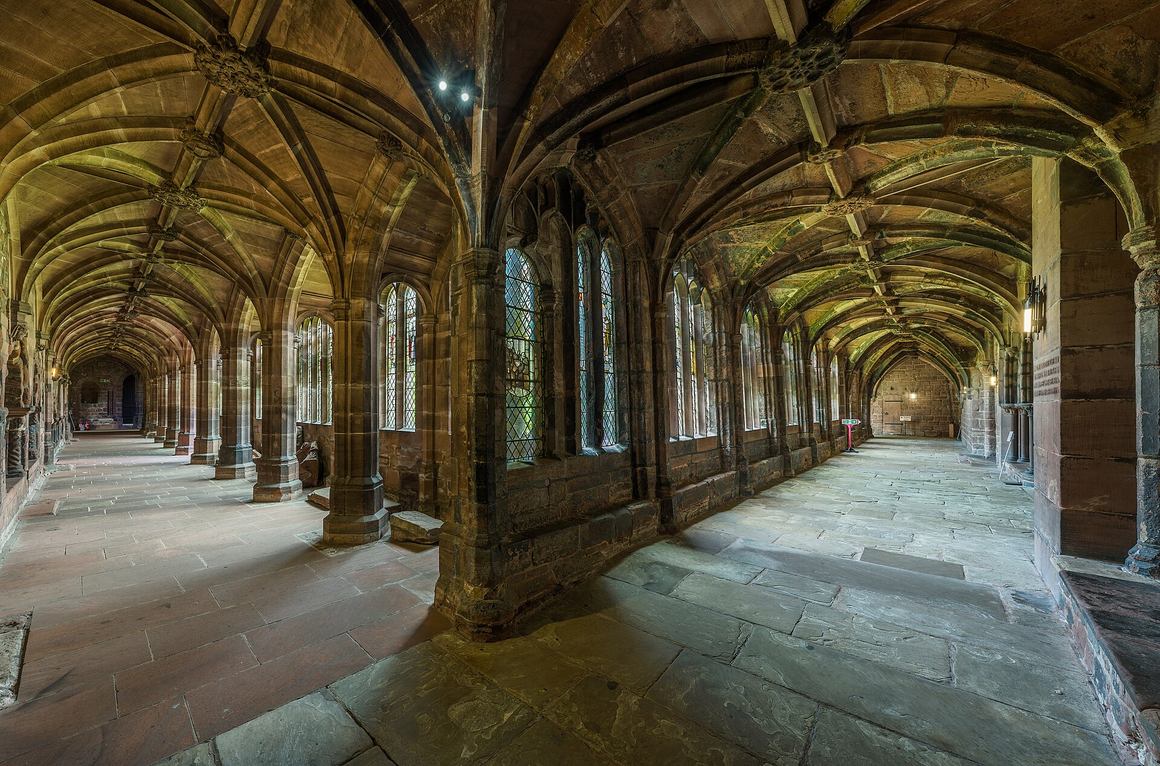
The cloister, on the north side of the church, was rebuilt in the early sixteenth century and restored in the twentieth. Its windows are filled with modern glass of saints, and the garden in the middle has a fountain and a sculpture.
The refectory and the chapter house
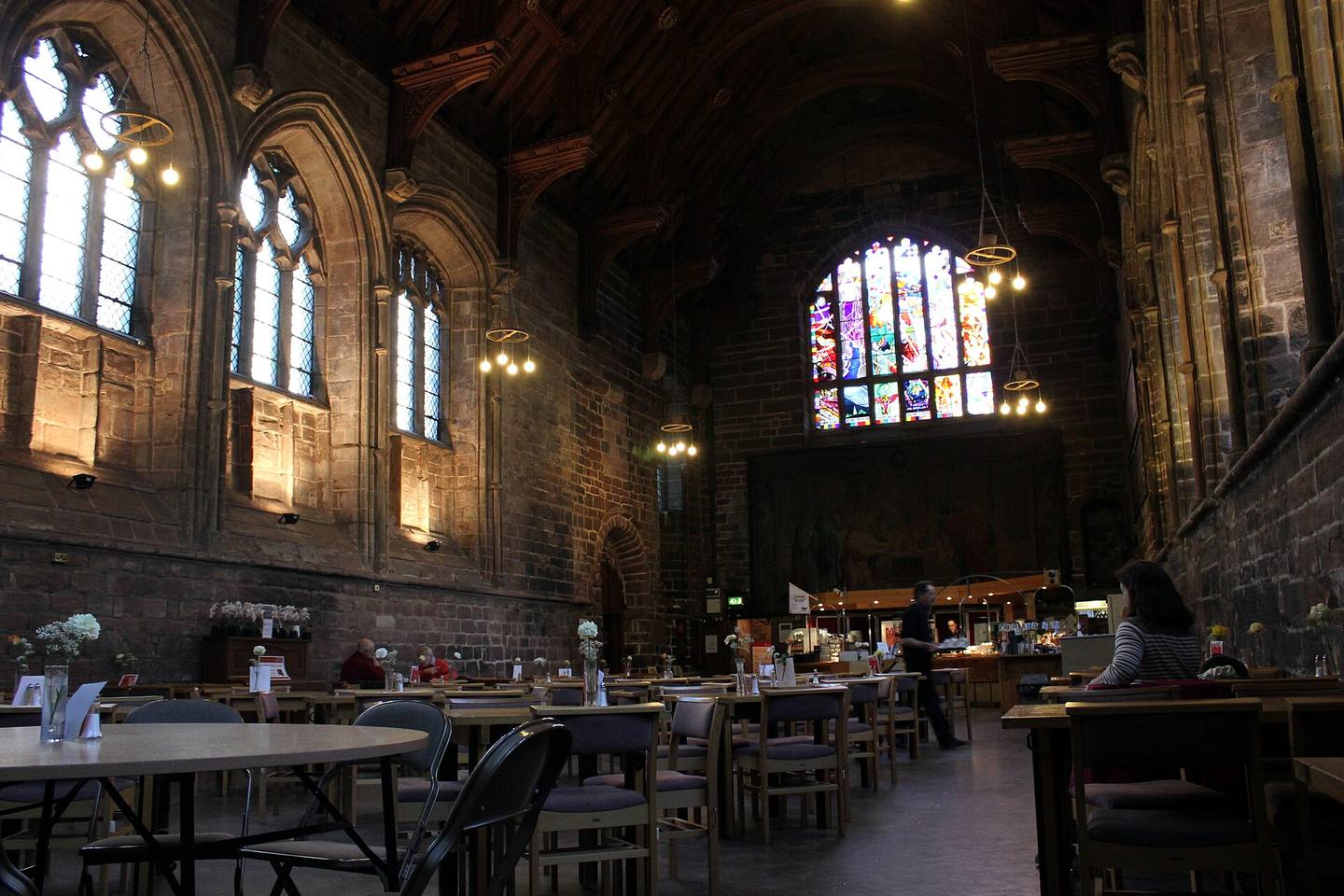
Off the cloister is the refectory, the monks’ dining hall. Set into its wall is a stone pulpit with a staircase rising to it in the thickness of the wall, from which a monk read aloud during meals; it is one of very few to survive in England. The refectory is now the cathedral café. The chapter house, of the thirteenth century, is reached from the east walk of the cloister through a vaulted vestibule.
Tickets and tours
Free most of the year
Entry is free for most of the year; a small entry fee is charged in summer and at Christmas. The cathedral runs guided tours and, on some dates, tours of the tower and roof; these are listed and booked on its website.
The hotel link goes to Booking.com. This site earns nothing from it at present — it is here because it is the quickest way to check what is actually available.
Don't miss
- The quire stalls Carved oak of about 1380, among the finest anywhere.
- The misericords Medieval beasts and stories under the seats.
- St Werburgh's shrine Broken at the Reformation, reassembled by the Victorians.
- The refectory pulpit Where a monk read aloud at meals.
- The cloister Still the heart of the old abbey.
- The consistory court A church court of around 1600, furniture and all.
Insider tips
Walk the walls. Chester’s city walls, the most complete in Britain, pass right beside the cathedral. Climb up near the Eastgate Clock and walk the stretch to the east of the cathedral for the best views of it and of its free-standing bell tower of 1975, the Addleshaw Tower.
The Rows, Chester’s medieval two-tier shopping galleries, are two minutes away, and the Roman amphitheatre is just outside the Newgate. Allow a whole day for the city.
Common questions
Is Chester Cathedral free to visit?
For most of the year, yes. The cathedral charges a small entry fee during the summer and at Christmas, with children aged five and under free. Check the cathedral’s website for the current arrangements.
Why does Chester Cathedral have so many monastic buildings?
It was a Benedictine abbey, dedicated to St Werburgh, from 1092 until 1540, and Henry VIII made it a cathedral the following year. Because the church and its buildings passed straight from the monks to the new cathedral, the cloister, refectory and chapter house survived, making Chester one of the most complete medieval monasteries in England.
What is special about the quire stalls?
They were carved in about 1380 and are among the finest medieval woodwork in England, with tall spiky canopies and carved misericords under the seats showing animals, legends and scenes from everyday life.
Are dogs allowed in Chester Cathedral?
Yes. Well-behaved dogs are welcome on a short lead, though not in some areas, which are signed, and there may be times when dogs cannot come in because of events.
How do you get to Chester Cathedral?
The cathedral is in the middle of the walled city, a short walk from the Eastgate Clock and the Rows. Chester station is about fifteen minutes’ walk, with direct trains from London, Manchester and North Wales.
Where to stay and eat nearby
Café 1092, in the refectory, serves lunch and cakes. The Rows and the streets inside the walls have plenty of pubs and restaurants, and Chester has hotels to suit every budget.
More English churches
- Liverpool Cathedral — forty minutes away by train
- Lichfield Cathedral — three spires in the Midlands
- York Minster — across the Pennines
See all the cathedrals and churches worth visiting in England →