
St Wenceslas Cathedral, Olomouc
Olomouc is the Czech Republic’s great undiscovered city, and its cathedral is the church of the Archbishop of Olomouc, the metropolitan see of Moravia: a Romanesque foundation, a Gothic hall church, a Baroque presbytery and a neo-Gothic skin, with a tower you can see from half the city. It is free and open from early morning, and it takes half an hour. What most visitors miss is next door. Beside the cathedral, in the Archdiocesan Museum, are the remains of a twelfth-century bishop’s palace with Romanesque windows, one of the rarest buildings in central Europe — and it is shown only in the summer.
Nine centuries on the castle hill
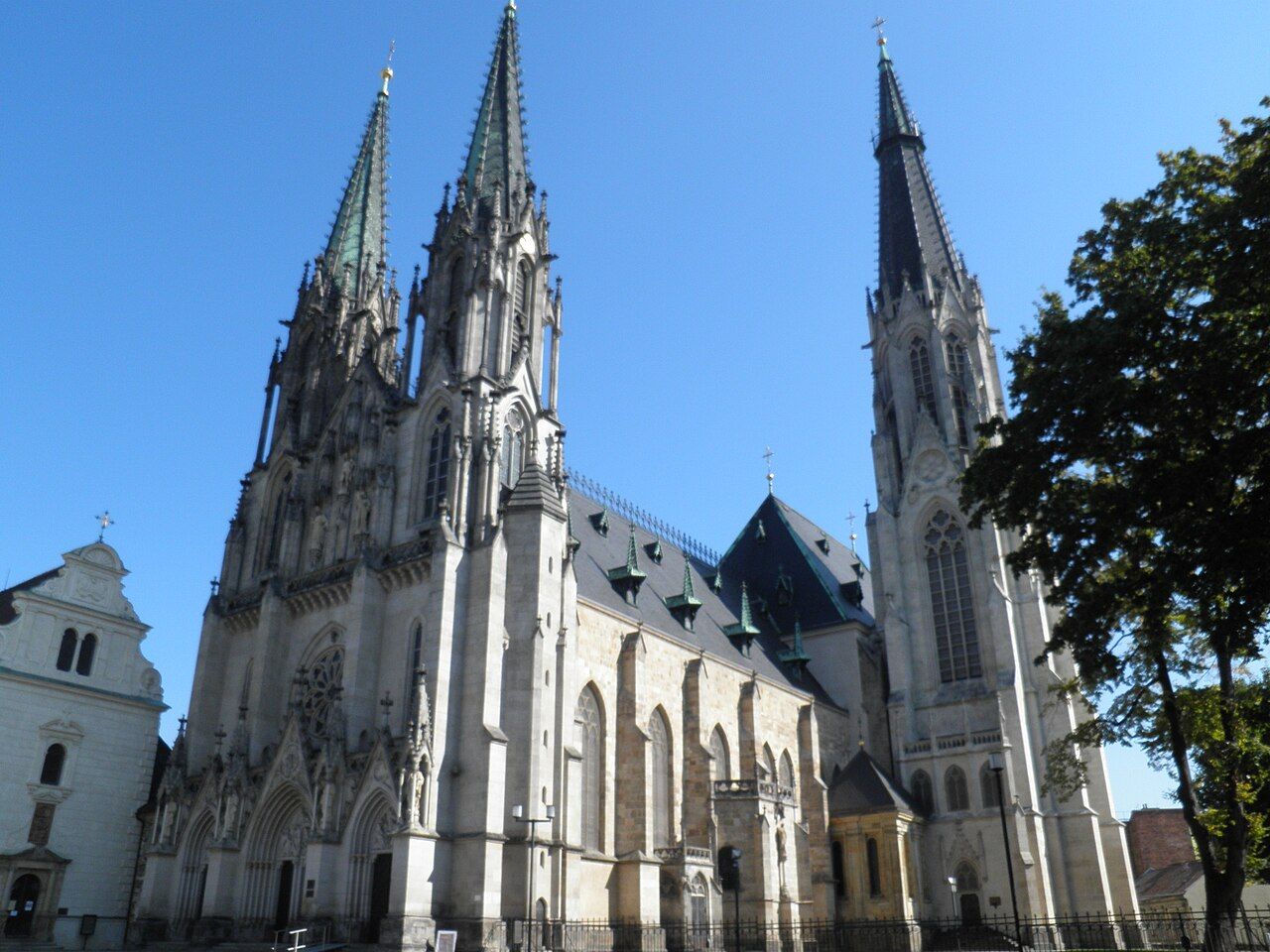
The cathedral stands on the site of the old Přemyslid castle, on a spur at the east end of the old town. A church was begun here in about 1107 by Svatopluk, the Přemyslid prince of Olomouc, and it was consecrated in 1131 by Bishop Jindřich Zdík, dedicated to Wenceslas, patron of the Czech lands. In 1141 Zdík moved the see here from the older church of St Peter, and St Wenceslas has been the principal church of Moravia ever since. Its bishops became archbishops in 1777.
Fires in 1204 and 1265 led to rebuilding in the Gothic style, and by the fourteenth century the Romanesque basilica had become a Gothic hall church with a cloister along its north side. It was also the scene of two moments of Czech history. On 4 August 1306 the young king Wenceslas III, last of the Přemyslid kings, was murdered in the dean’s house next door, and buried in the crypt. And in 1469 part of the Bohemian and Moravian nobility met in the cathedral to proclaim the Hungarian king Matthias Corvinus king of Bohemia.
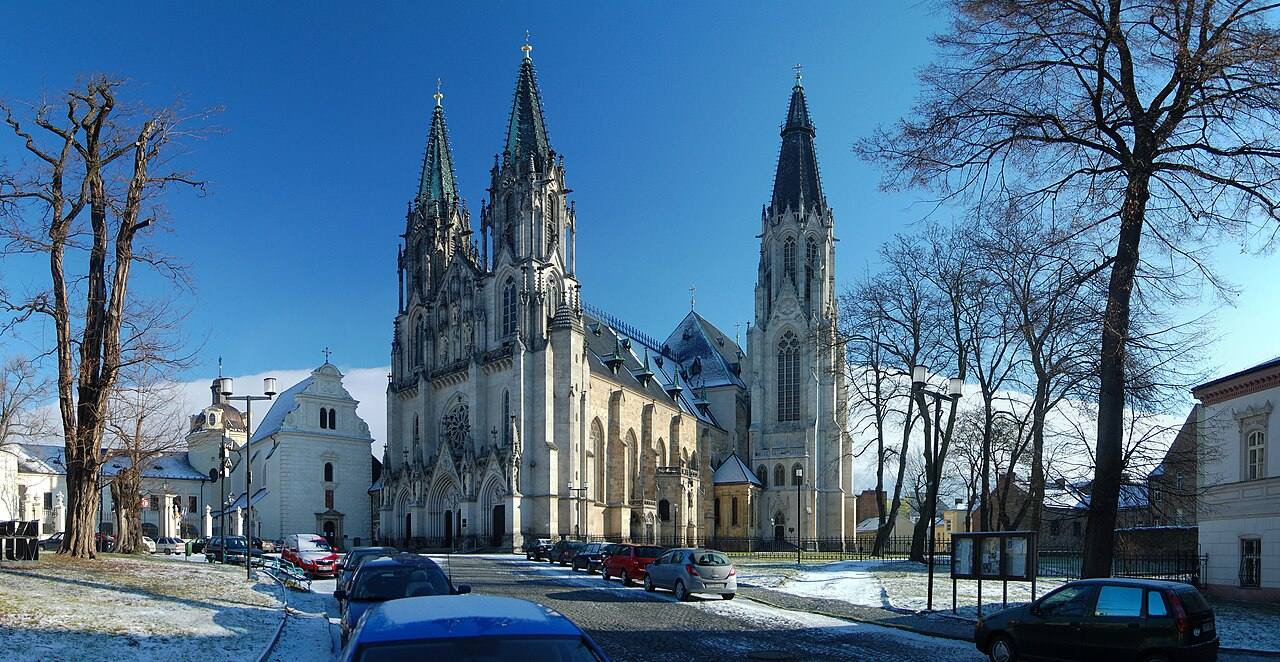
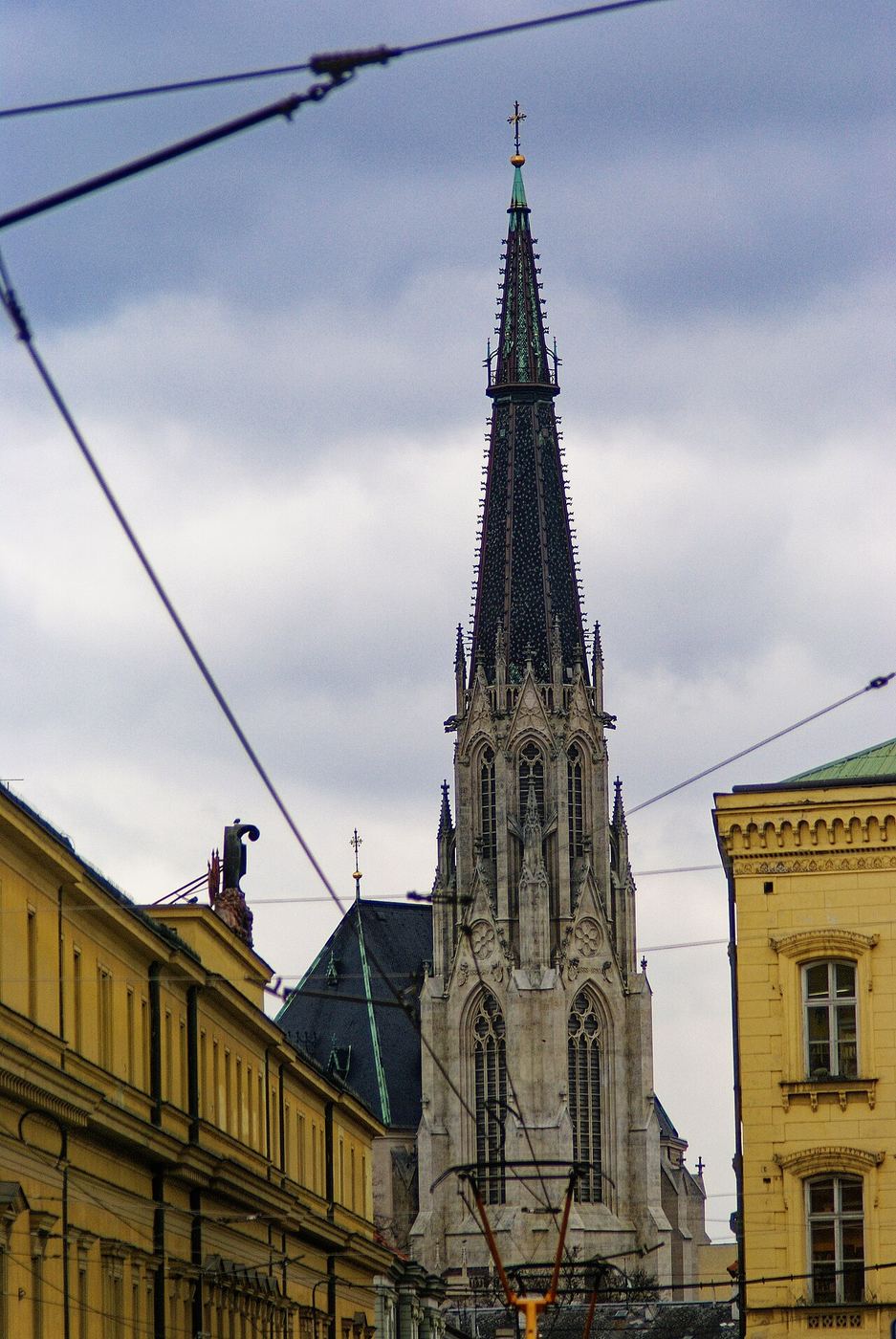
In 1616–18 Cardinal Franz von Dietrichstein added a vast Baroque presbytery over a new crypt, and in the eighteenth century the chapels were refitted. After lightning burned the towers in 1803 the front was rebuilt plainly. Then, between 1883 and 1892, Archbishop Friedrich von Fürstenberg had the whole building remade in the neo-Gothic style by the architect Gustav Meretta: a new west front with two 68-metre spires, a new chapel on the north side, and the great south tower.
The visitor’s cheat sheet
| Where | Václavské náměstí, Olomouc, on the castle hill at the east end of the old town. Tram stop U Dómu |
|---|---|
| Opening hours | Monday, Tuesday, Thursday, Friday and Saturday 6.30am–5.30pm; Wednesday 6.30am–4pm; Sunday 7.30am–5.30pm. Open for prayer only during services |
| Admission | Free. Crypt exhibition by voluntary contribution, about 70 Kč |
| Guided tours | 180 Kč (reduced 120 Kč), about 30 minutes, taking in the crypt. June and September at weekends, July and August Tuesday to Saturday, 10am–1pm and 2pm–5pm |
| Archdiocesan Museum | Next door. Wednesday to Sunday 10am–6pm, 200 Kč. The Romanesque Zdík Palace is shown only from April to September |
| Getting there | Fast trains from Prague in a little over two hours; tram from the station |
| How long | Half an hour for the cathedral; two hours with the museum and the Zdík Palace |
Hours and admission checked against the official site in September 2026. They change; the official site is always the last word.
Free, early, and best combined with the museum. The cathedral opens at 6.30am (7.30am on Sundays) and costs nothing. The Archdiocesan Museum next door is closed on Mondays and Tuesdays and costs 200 Kč, and its most remarkable room, the Romanesque Zdík Palace, is open only from April to September. If you are in Olomouc in the summer and it is not a Monday or Tuesday, do both.
The outside
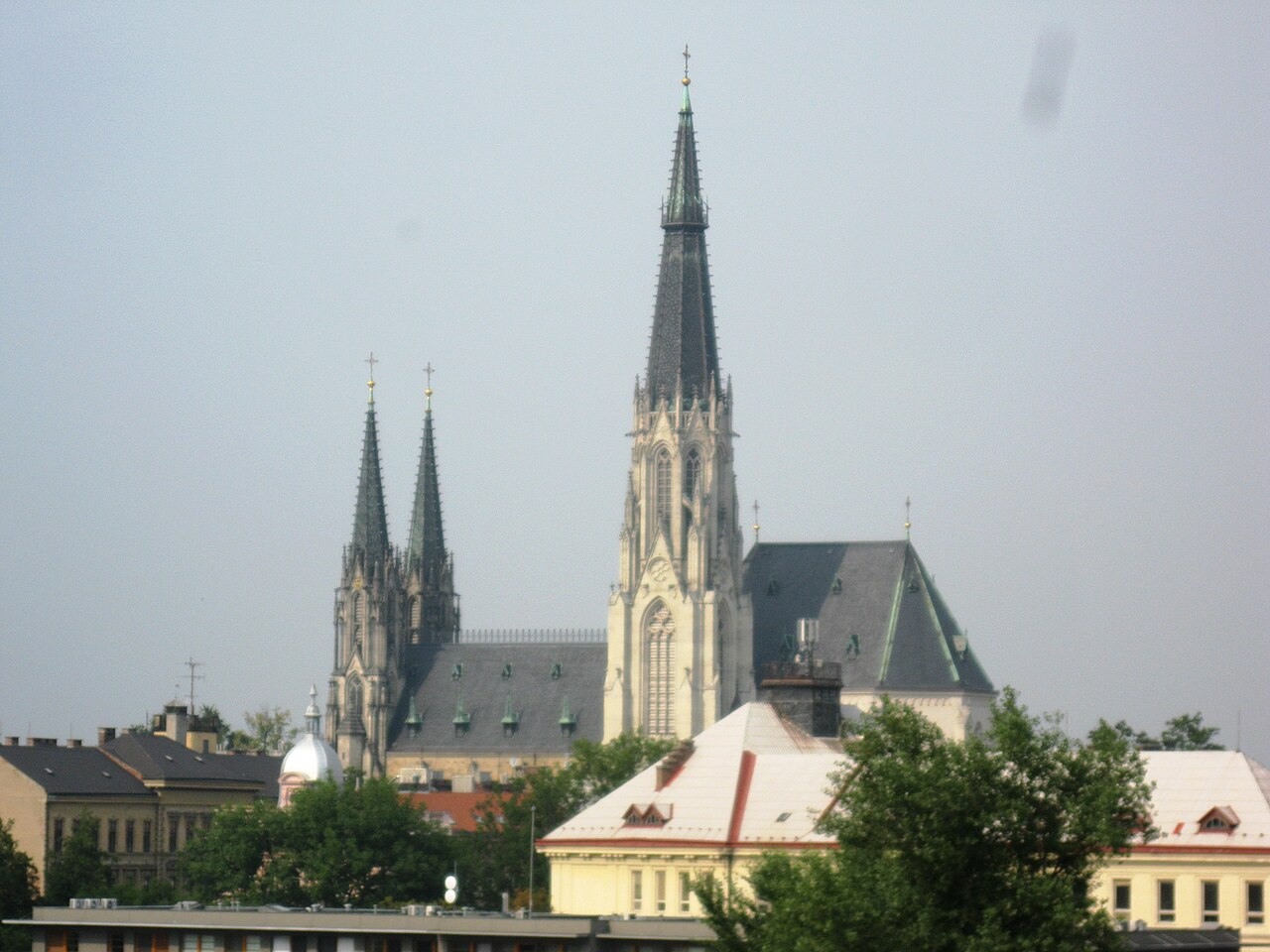
What you see from the square is almost entirely the work of the 1880s. The west front, with its three portals, the four evangelists and a rose window, was designed to give the old, patched-together cathedral a single dignified face, and it succeeds. The south tower, about 100 metres high, is the tallest church tower in Moravia and the second tallest in the country, after St Bartholomew’s in Plzeň. In its bell chamber hangs the Wenceslas bell, about 7.6 tonnes, the largest in Moravia.
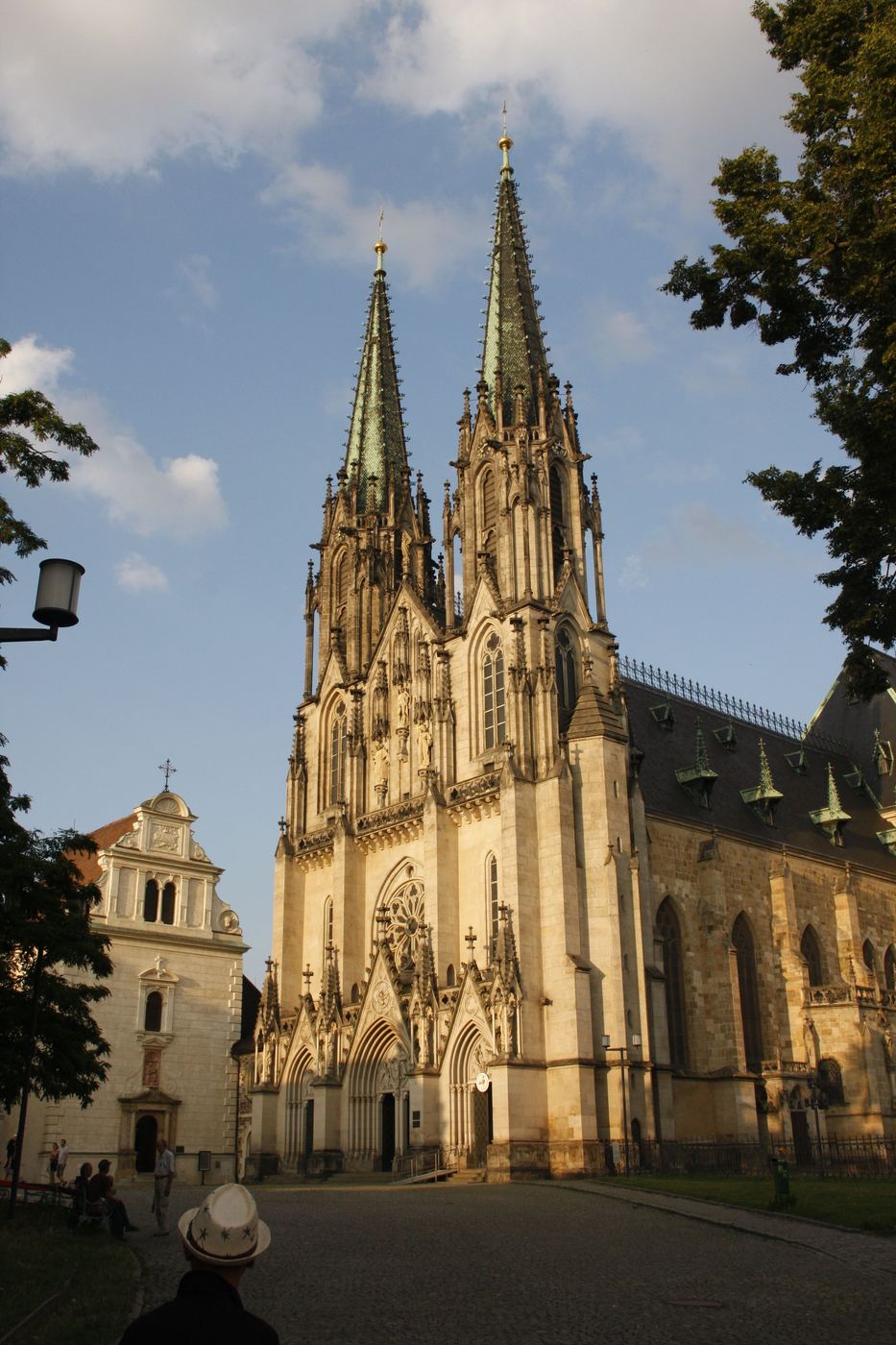
Beside the cathedral is the little church of St Anne, remodelled for Cardinal Dietrichstein in 1617, where the chapter used to elect the bishops. It is open around the morning and evening services.
Inside the cathedral
Inside, the structure of the Gothic cathedral is clear: a hall church, with the nave and aisles of almost equal height under rib vaults, so that the space feels broad and even. The neo-Gothic restoration swept away most of the Baroque altars and replaced them with fewer, lighter Gothic Revival ones, and filled the windows with new glass. Look for the granite slabs at the entrance with the names of every bishop and archbishop of Olomouc.
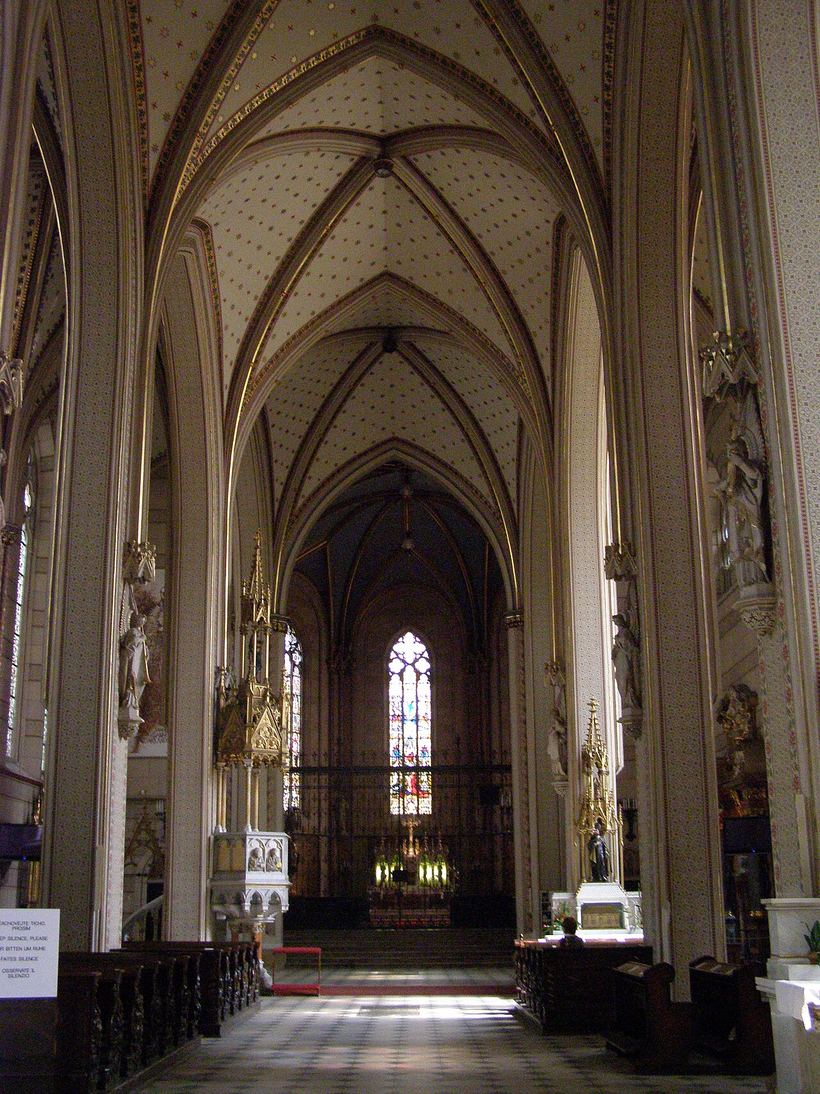
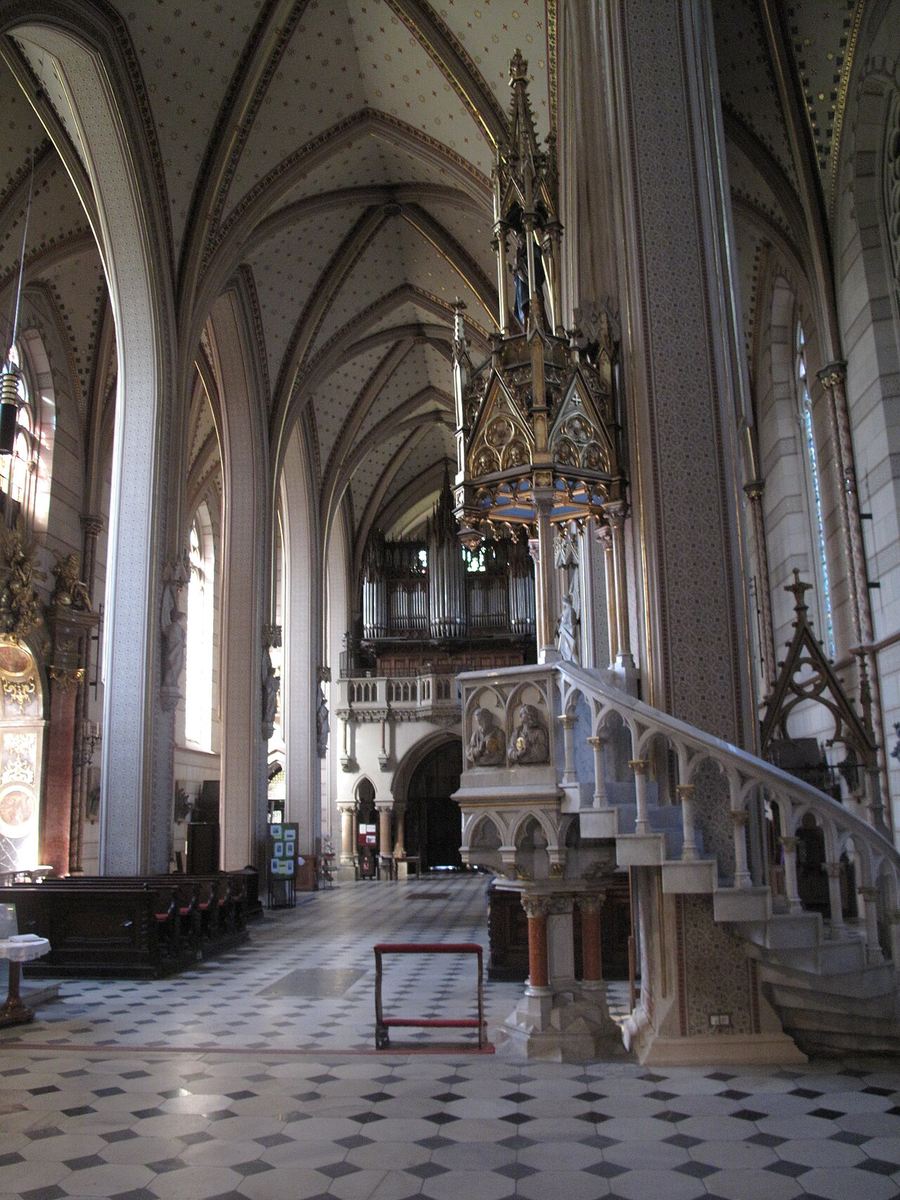
The raised presbytery at the east end is Dietrichstein’s, the largest Baroque presbytery in the country, though you would not guess it: it was regothicised in the 1880s. It is used for services and is separated from the nave by a high wrought-iron screen, so most visitors see it only from below. On the high altar are marble statues of the Fathers of the Eastern Church by Mino da Fiesole, carved in the 1460s for Santa Maria Maggiore in Rome and brought here for the 1880s rebuilding.
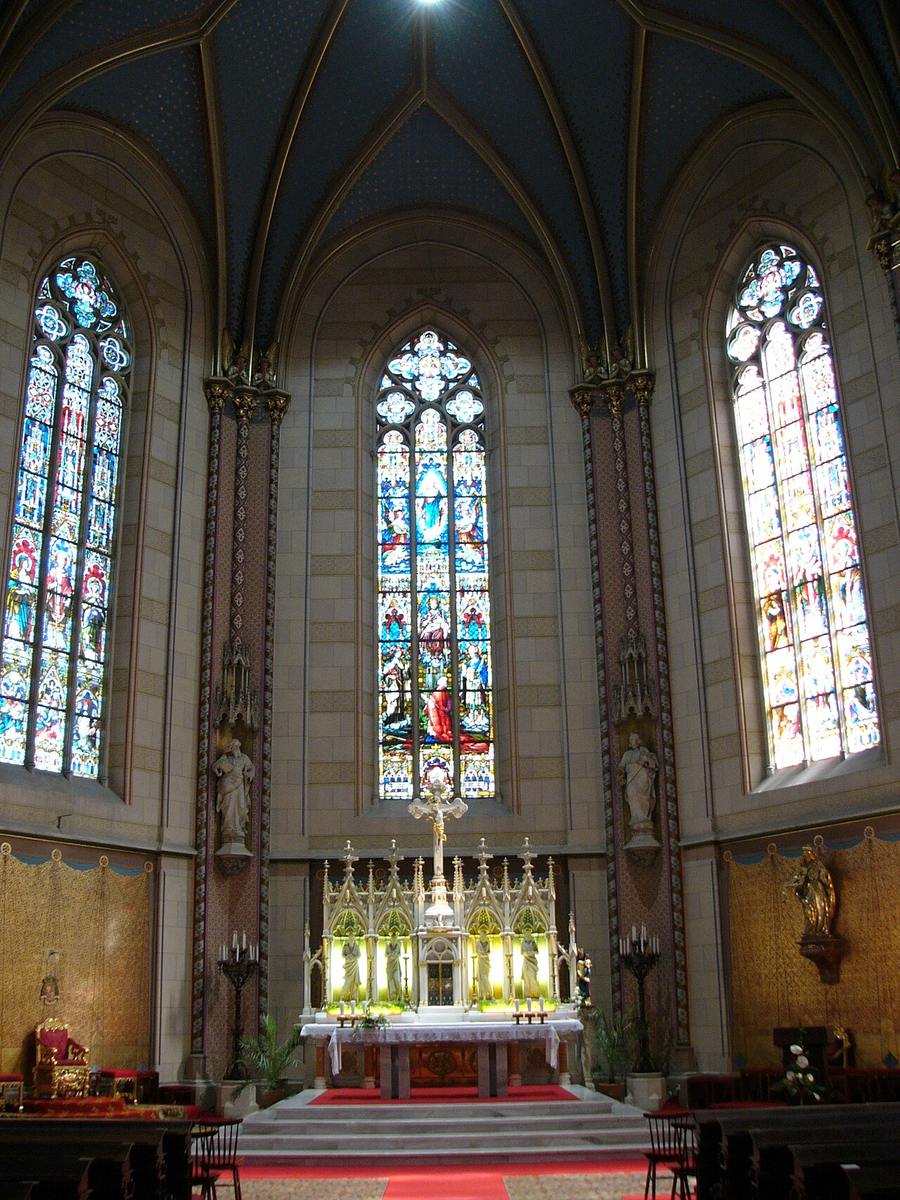
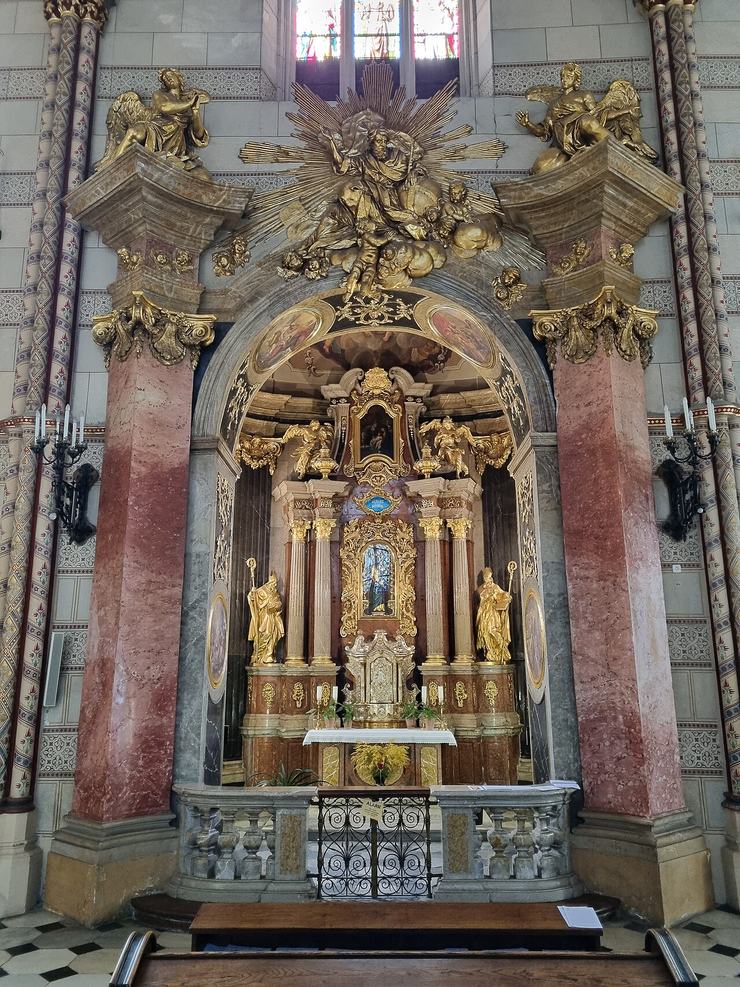
Two chapels escaped the regothicising. The Loreto chapel on the south side, originally a Gothic chapel of Saints Cyril and Methodius, was remade in the Baroque style and keeps its marble and gilding. The chapel of St Stanislaus, a late-Renaissance chapel built by Bishop Stanislav Pavlovský in 1582–91 over his family tomb, holds the Blessed Sacrament and is kept for prayer; visitors can look in from outside. At the foot of the south tower is the chapel of St John the Baptist, with the tombs of the archbishops, including Fürstenberg, who rebuilt the cathedral.
The crypt
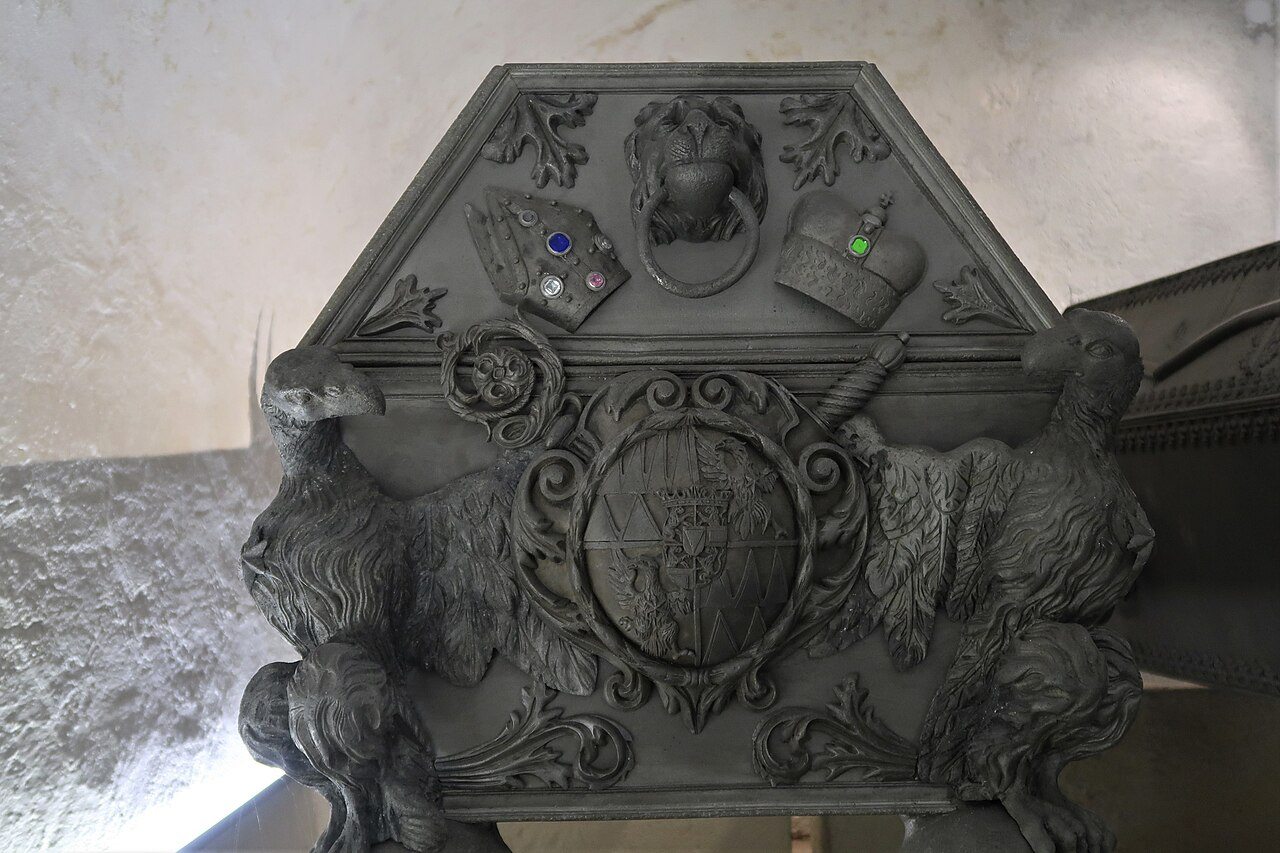
Under Dietrichstein’s presbytery is an early-Baroque crypt, reached by a double stair. It is used for exhibitions — the current one is on the history of the cathedral and its chapter — and from it steps lead down to the mausoleum of the bishops of Olomouc, restored in 2009–10 and set out as a place of quiet. The crypt is included on guided tours, and otherwise open for a voluntary contribution when the guides are on duty.
The Archdiocesan Museum and the Zdík Palace
Next door to the cathedral, in the former dean’s house and chapter buildings, is the Archdiocesan Museum, part of the Olomouc Museum of Art. Its treasury and paintings are fine, but the reason to go is the Zdík Palace: the remains of the palace Bishop Zdík built in the 1140s, with a row of Romanesque double windows carved with foliage, uncovered in the twentieth century. Very little secular Romanesque architecture of this quality survives anywhere in central Europe. The palace is shown only from 1 April to 30 September; the museum as a whole is open Wednesday to Sunday, 10am to 6pm, for 200 Kč.
The museum is also, on its site, where Wenceslas III was killed. The dean’s house where the murder took place stood here, and the king’s death in 1306 ended the dynasty that had ruled Bohemia since its legends began.
Olomouc beyond the cathedral
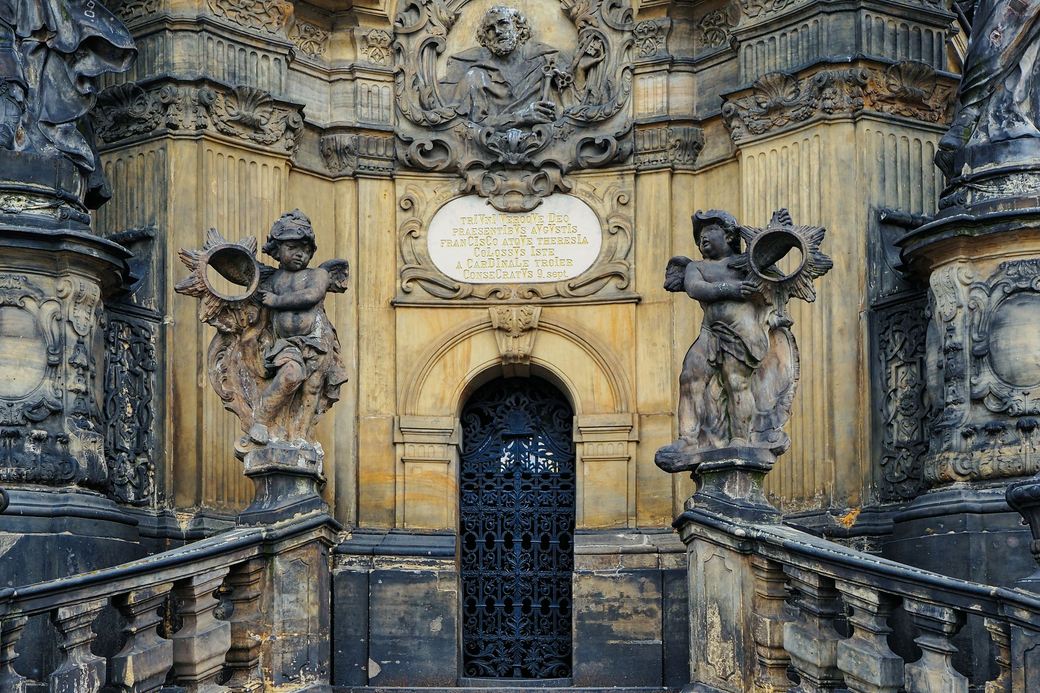
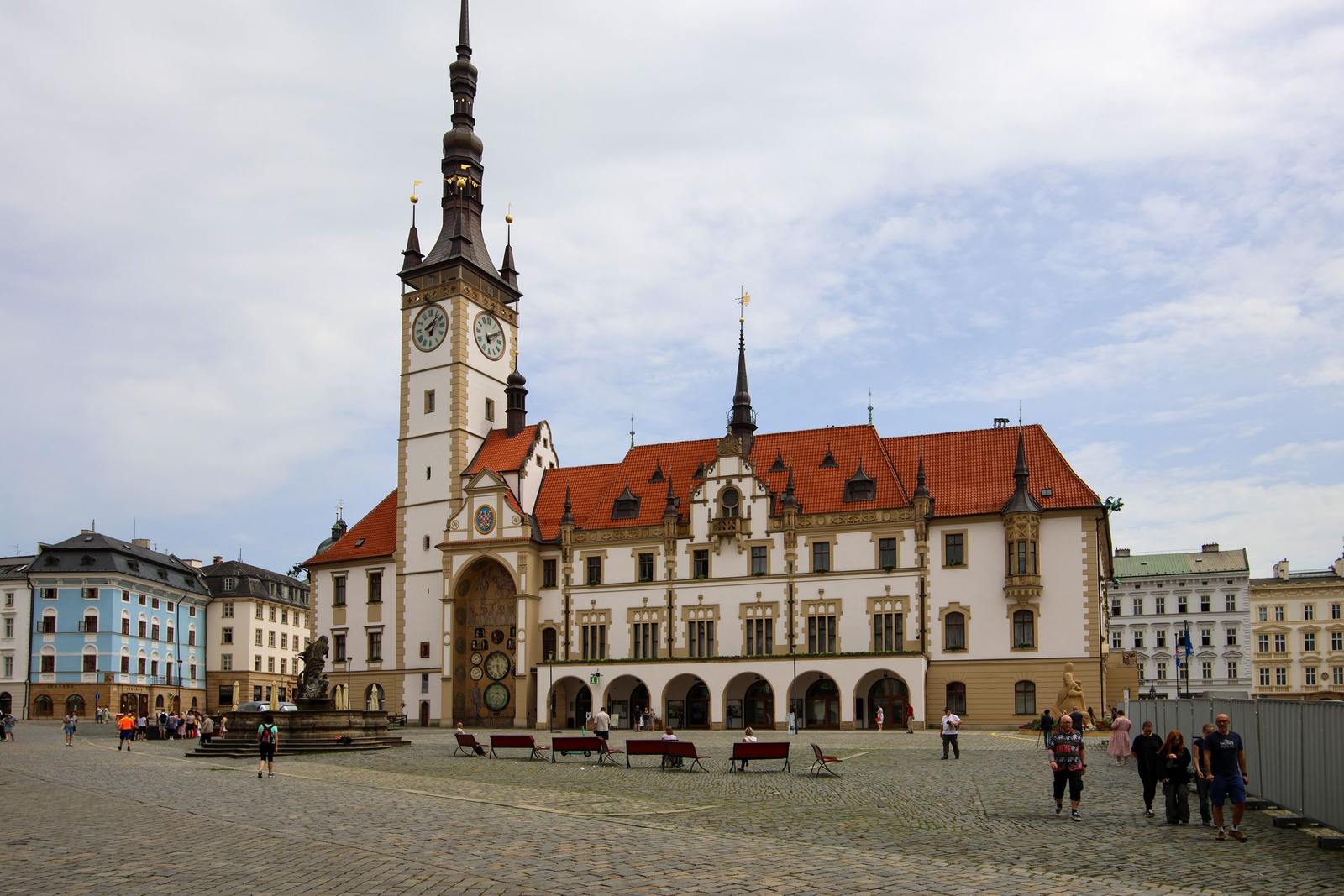
Most of Olomouc’s sights are within fifteen minutes’ walk of the cathedral. On the main square, Horní náměstí, is the Holy Trinity Column, a 35-metre Baroque column of saints and angels finished in 1754 and a UNESCO World Heritage Site since 2000. Beside it is the town hall, whose astronomical clock was remade after the Second World War in the style of Socialist Realism, with workers and athletes in place of saints.
Just outside the city, on a hill to the north-east, is the Baroque pilgrimage basilica of the Holy Hill, Svatý Kopeček, reached by bus, with a view back over the city and the plain. It is a good half-day, and a good reason to stay a night.
Getting there
Olomouc is on the main line from Prague to Ostrava. Fast trains take a little over two hours, and several companies run the route, so tickets are cheap. From the main station a tram runs to the stop U Dómu, just below the cathedral, in about ten minutes. Brno, with its own cathedral on the Petrov hill, is about an hour and a half away, and the pilgrimage basilica at Velehrad about an hour south by car.
Plan your visit
The cathedral needs no ticket. For somewhere to stay in the old town:
Some links are affiliate links. They cost you nothing extra and help keep this guide independent.
Frequently asked questions
Common questions
Is Olomouc cathedral free to enter?
Yes. The nave is open daily and entry is free; you are asked not to walk around during services. Guided tours cost 180 Kč, and the exhibition in the crypt asks for a voluntary contribution of about 70 Kč.
What are the opening hours of St Wenceslas Cathedral?
Monday, Tuesday and Thursday to Saturday 6.30am to 5.30pm; Wednesday 6.30am to 4pm; Sunday 7.30am to 5.30pm. When a service is on, the church is open for prayer only.
How tall is the tower of Olomouc cathedral?
The south tower is about 100 metres high: the tallest church tower in Moravia and the second tallest in the Czech Republic, after St Bartholomew’s in Plzeň. It was added in the neo-Gothic rebuilding of 1883–1892.
Who was murdered next to Olomouc cathedral?
Wenceslas III, the last king of the Přemyslid dynasty, was killed in the dean’s house next to the cathedral on 4 August 1306. He was buried in the cathedral crypt for twenty years before his sister had him moved to Zbraslav.
Is Olomouc a day trip from Prague?
It can be. Fast trains take a little over two hours, and the cathedral is a short tram ride from the station. But Olomouc has enough for a night: the Holy Trinity Column, the main square, and the basilica on the Holy Hill outside town.