
St Mary’s Cathedral, Tokyo
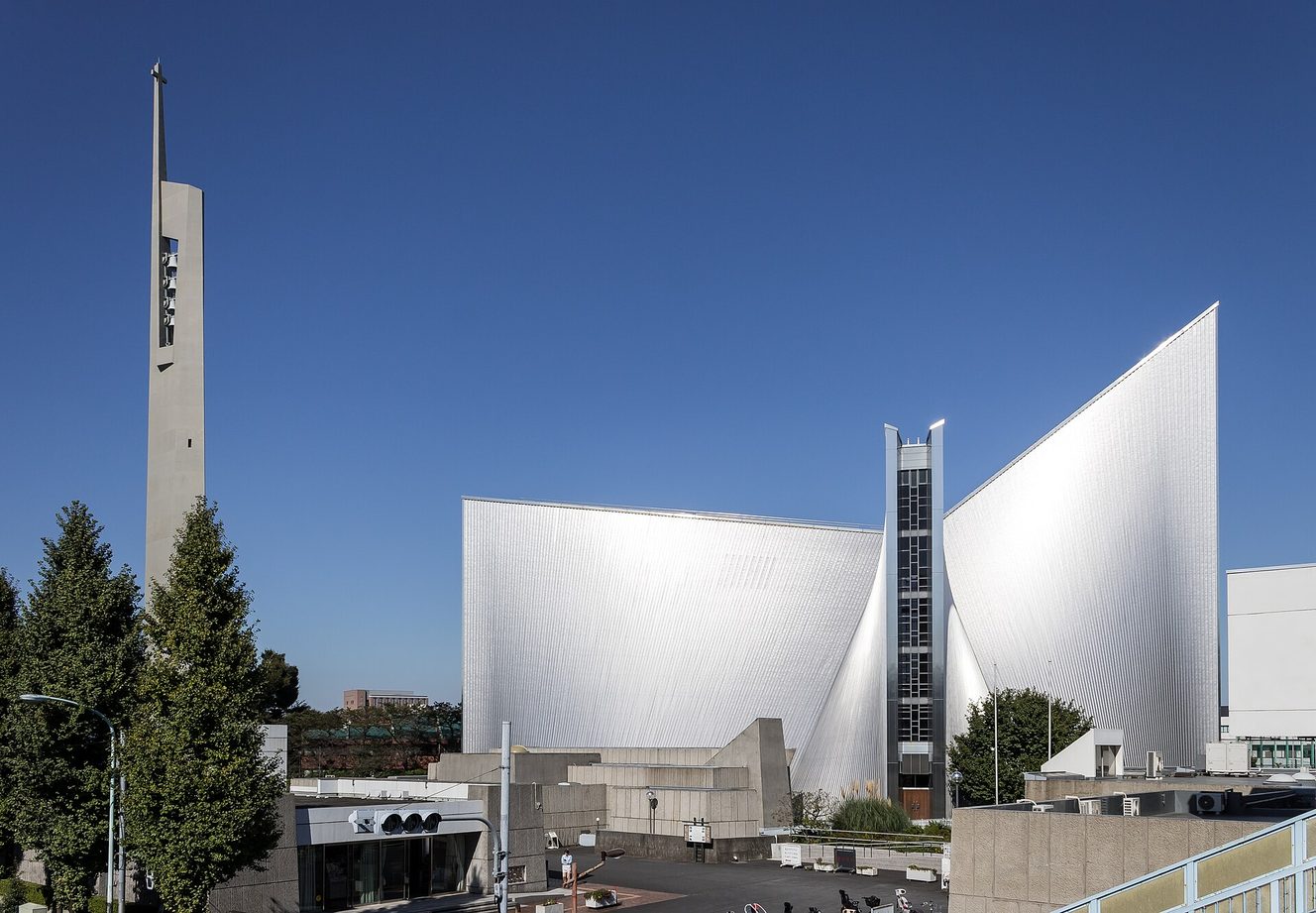
On a quiet hill in Bunkyo, Kenzo Tange built a cathedral like no other: eight curved walls of concrete, clad in shining steel, rising to a cross of light. Dedicated in 1964, the year of the Tokyo Olympics, St Mary’s is the cathedral of the Catholic Archdiocese of Tokyo and one of the great buildings of post-war Japan. It is free to visit.
From a wooden church to Tange’s cathedral
In 1886 the French missionary bishop Pierre Osouf bought land at Sekiguchi, through a Japanese parishioner because foreigners could not then own land. A wooden Gothic chapel, at first attached to a French-language school, was built here in 1899, and in 1920 it became the cathedral of Tokyo. On 25 May 1945 it burned in an American air raid; the Lourdes grotto of 1911 came through it.
The archdiocese, helped by the Archdiocese of Cologne, ran an invited competition for a new cathedral, with entries due in May 1962, between three of Japan’s leading architects: Kunio Maekawa, Yoshiro Taniguchi and Kenzo Tange. Tange won. Building began in 1963, and the cathedral was dedicated on 8 December 1964, the feast of the Immaculate Conception, about six weeks after the close of the Olympic Games for which Tange had designed the Yoyogi stadiums. The steel cladding and skylights were renewed in a major renovation in 2007. Tange’s own funeral was held here in March 2005.
The visitor’s cheat sheet
| Where | 3-16-15 Sekiguchi, Bunkyo-ku, Tokyo, opposite the Hotel Chinzanso |
|---|---|
| Opening hours | About 9am–5pm, when no Mass, wedding, funeral or concert is being held |
| Admission | Free |
| Mass | Monday–Saturday 7am; Sunday 8am and 10am; all in Japanese |
| Music | Organ Meditation (evening prayer and organ music), 6.30pm on the second Friday of each month except January and August; free, donations welcome |
| Photography | Not during Mass; keep quiet, as people come here to pray |
| Getting there | Toei bus Shiro 61 from Mejiro or Shinjuku to Hotel Chinzanso Tokyo-mae; Gokokuji or Edogawabashi stations (Yurakucho Line), 10–15 minutes’ walk |
| How long | Forty-five minutes |
Hours and admission checked against the official site in November 2026. They change; the official site is always the last word.
What to see
The building
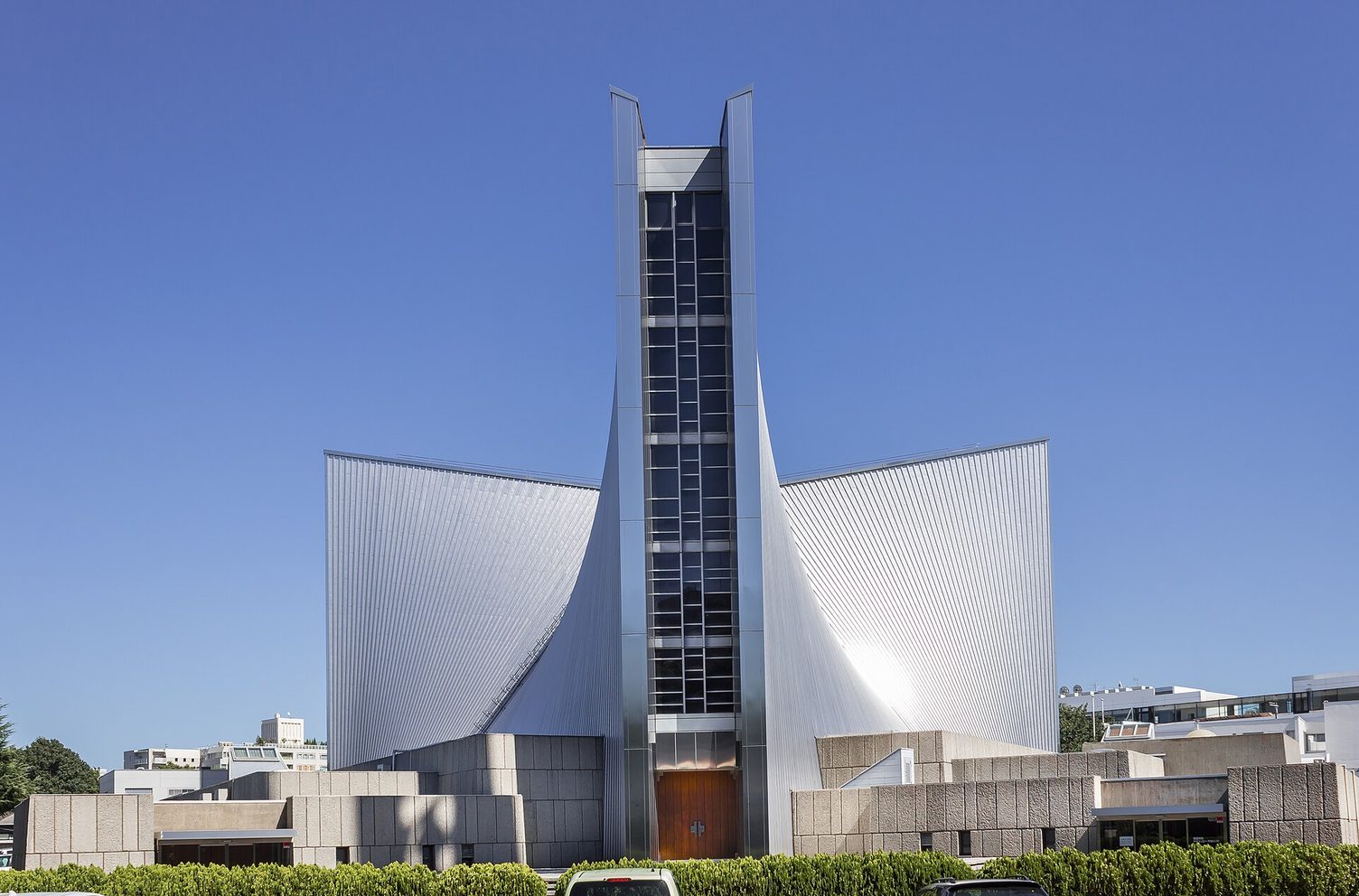
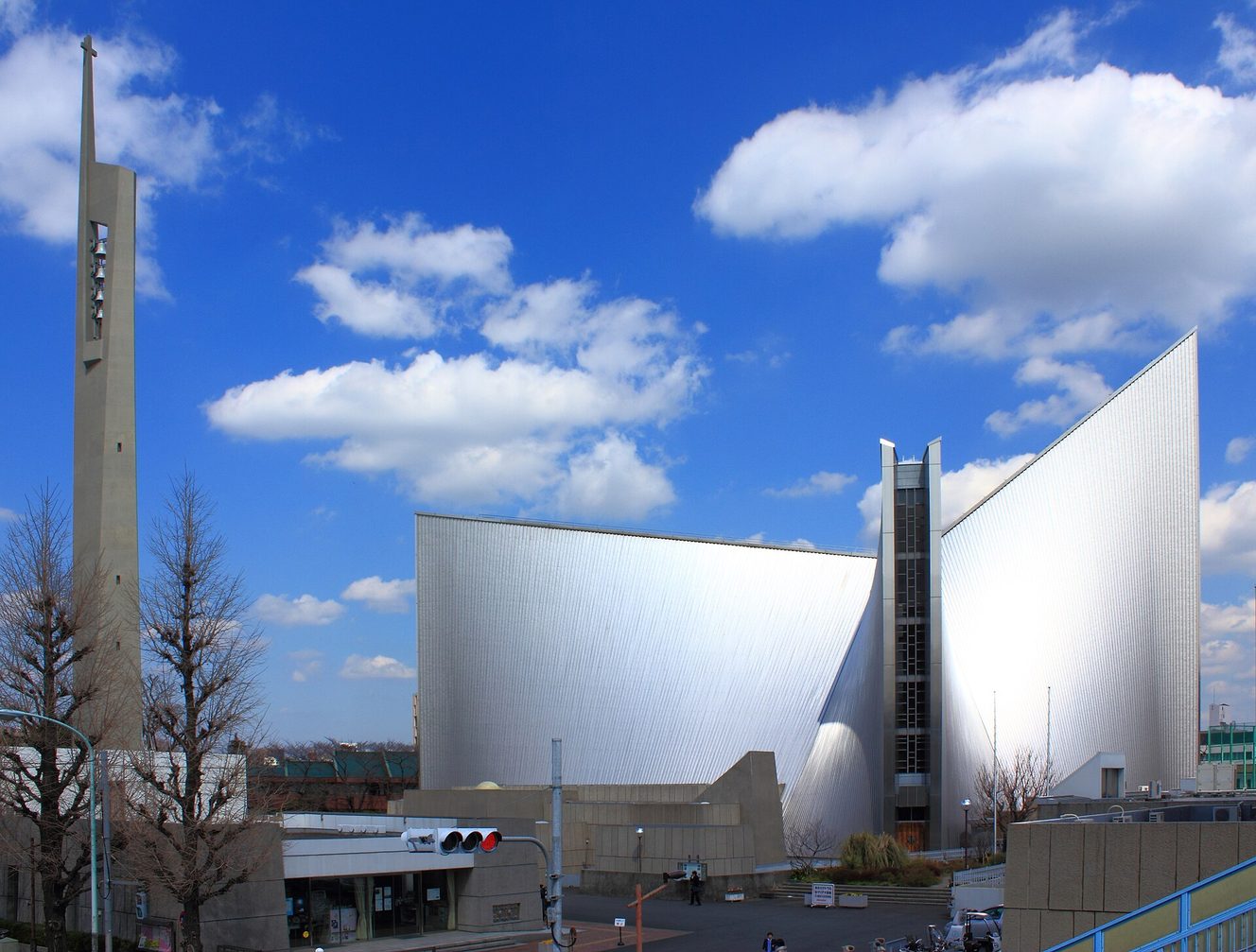
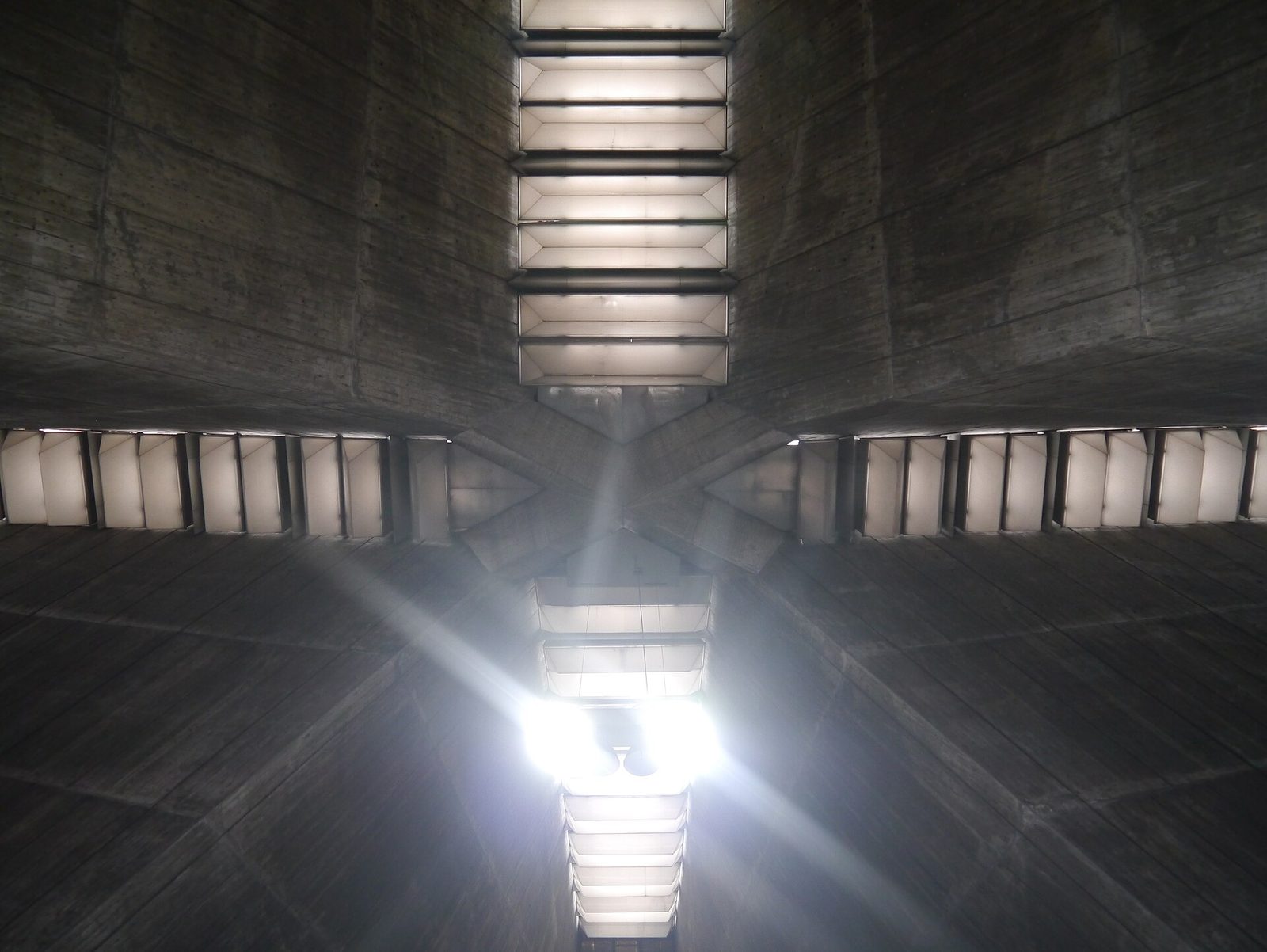
Seen from above, the cathedral is a cross. It is made of eight hyperbolic-paraboloid shells of reinforced concrete, leaning together in pairs; where they meet, a cross-shaped skylight runs along the ridges and down the ends of the building as tall slots of glass. Outside, the shells are clad in stainless steel that catches the light. The bell tower stands on its own beside the forecourt, about 62 metres high.

Inside
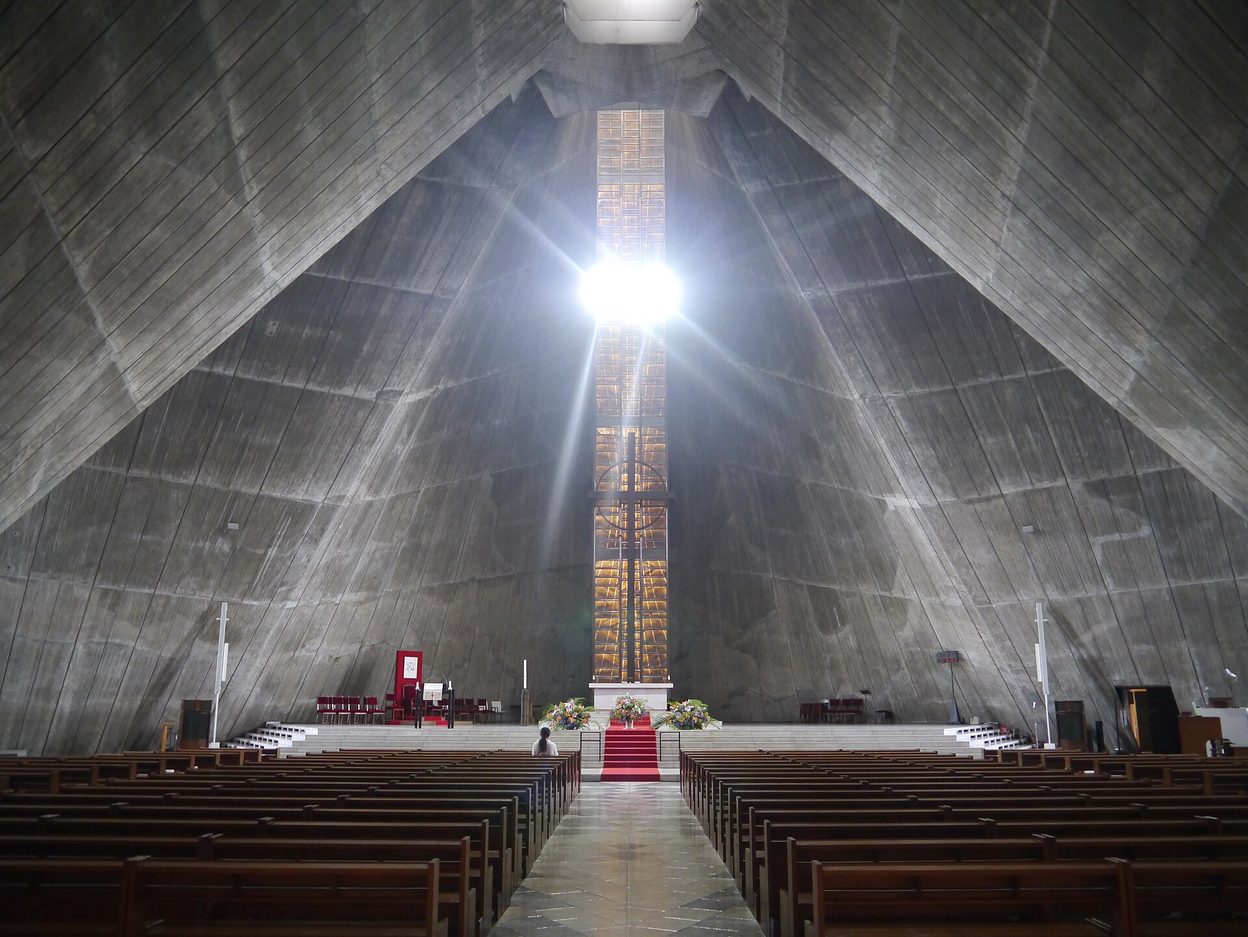
The interior is bare grey exposed concrete, with the walls rising steeply to the bright line of the skylight. It is dim, lofty and very quiet, with an echo that lasts several seconds, which suits the organ: a large instrument by the Italian firm Mascioni, installed in 2004. Inside the cathedral stands a full-size copy of Michelangelo’s Pietà.

The Lourdes grotto
At the back of the grounds is a rocky copy of the grotto at Lourdes, built in 1911 by a French missionary; it survived the raid of 1945.

A note on our pictures. Tange’s building is still in copyright, but Japanese law (Article 46 of the Copyright Act) allows architecture to be photographed and the photographs published.
Around the cathedral
The cathedral is in a green, residential corner of Bunkyo. Across the road, the Hotel Chinzanso Tokyo has a large landscaped garden, open to people using the hotel and its restaurants. Down the hill, the Kanda River is lined with cherry trees in Edogawa Park, a lovely walk in early April, and beside it is Shin-Edogawa Garden (also called Higo-Hosokawa Garden), a small stroll garden. Gokokuji, a large Buddhist temple founded in 1681, is a short walk to the north.

Getting there
The cathedral is not near a station. The simplest way is the Toei bus Shiro 61 (白61) from Mejiro station on the JR Yamanote Line, or from the west exit of Shinjuku station, to the Hotel Chinzanso Tokyo-mae stop, about a minute’s walk away. On the Tokyo Metro Yurakucho Line, Gokokuji station (exit 6) is about ten minutes’ walk, and Edogawabashi station (exit 1a) about fifteen, uphill.
Where to stay
Ikebukuro and Shinjuku are both a short bus or subway ride away, with plenty of hotels at every price.
This link goes to Booking.com. This site earns nothing from it at present — it is here because it is the quickest way to check what is actually available.
Don’t miss
- The cross of light Stand under the crossing and look up.
- The steel walls Best in low sun, from the forecourt.
- The Pietà A full-size copy of Michelangelo’s.
- The Lourdes grotto Built in 1911, at the back of the grounds.
Insider tips
Hear the organ. The cathedral holds a free Organ Meditation of music and evening prayer at 6.30pm on the second Friday of each month except January and August; check the cathedral’s website (in Japanese) for dates.
Take the bus one way. Ride the bus up from Mejiro and walk down through Edogawa Park to Edogawabashi station afterwards.
Common questions
Is St Mary's Cathedral Tokyo free to visit?
Yes. There is no ticket. Visitors are welcome from about 9am to 5pm when no Mass or other event is being held.
Who designed St Mary's Cathedral in Tokyo?
Kenzo Tange, who won a competition for it in 1962. It was dedicated on 8 December 1964, the year Tange’s Olympic stadiums opened, and his funeral was held here in 2005.
Is there a Mass in English?
No. Masses at the cathedral are in Japanese: weekdays and Saturdays at 7am and Sundays at 8am and 10am.
How do you get to St Mary's Cathedral Tokyo?
The easiest way is the Toei bus from Mejiro or Shinjuku stations to the Hotel Chinzanso Tokyo stop, opposite the cathedral. By subway, Gokokuji (exit 6) and Edogawabashi (exit 1a) on the Yurakucho Line are 10 to 15 minutes’ walk.
More churches to visit
- Oura Church, Nagasaki — Japan’s oldest standing church, where the Hidden Christians came forward in 1865.
- Urakami Cathedral, Nagasaki — rebuilt after the atomic bomb, near the Peace Park.
- Seoul Anglican Cathedral — a Romanesque cathedral under Korean tiled roofs.