
Seoul Anglican Cathedral
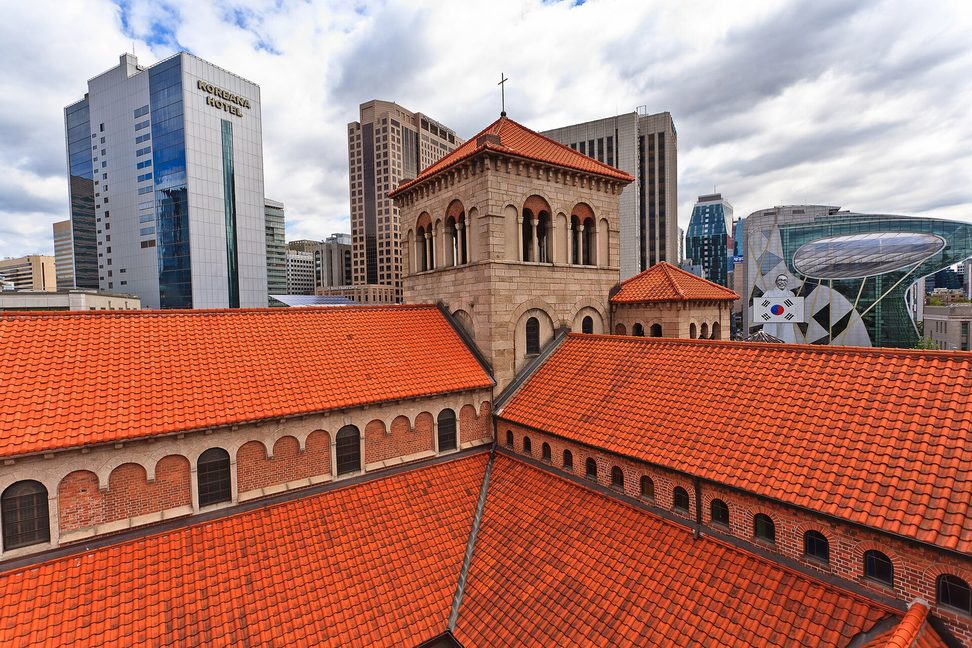
Behind the stone wall of Deoksugung Palace, a few steps from Seoul City Hall, stands one of the most unusual cathedrals in Asia: a Romanesque church of grey granite and red brick, roofed with Korean tiles. Designed by an English Arts and Crafts architect, it was begun in 1922, left unfinished for seventy years and completed to his drawings in 1996. It is free to visit.
A cathedral finished seventy years late
Anglican missionaries came to Korea in 1890. Their third bishop, Mark Trollope, wanted a cathedral for Seoul, and the Birmingham architect Arthur Dixon designed one in the Romanesque style, said to have been chosen because its low, round forms sit more comfortably beside Deoksugung Palace than a soaring Gothic design. Building began in 1922, but money ran out: when the cathedral was consecrated in 1926, only about half of the planned church stood.
It stayed that way for seventy years. Trollope died in 1930 and lies in the crypt. In 1950, during the Korean War, Bishop Cecil Cooper was taken north by the invading army and held for about two and a half years, until 1953. The cathedral was listed as a Seoul cultural property in 1978. In the 1990s Dixon’s original drawings were found in England, and the unfinished western part was completed to his plans; the finished cathedral was consecrated again on 2 May 1996.
June 1987
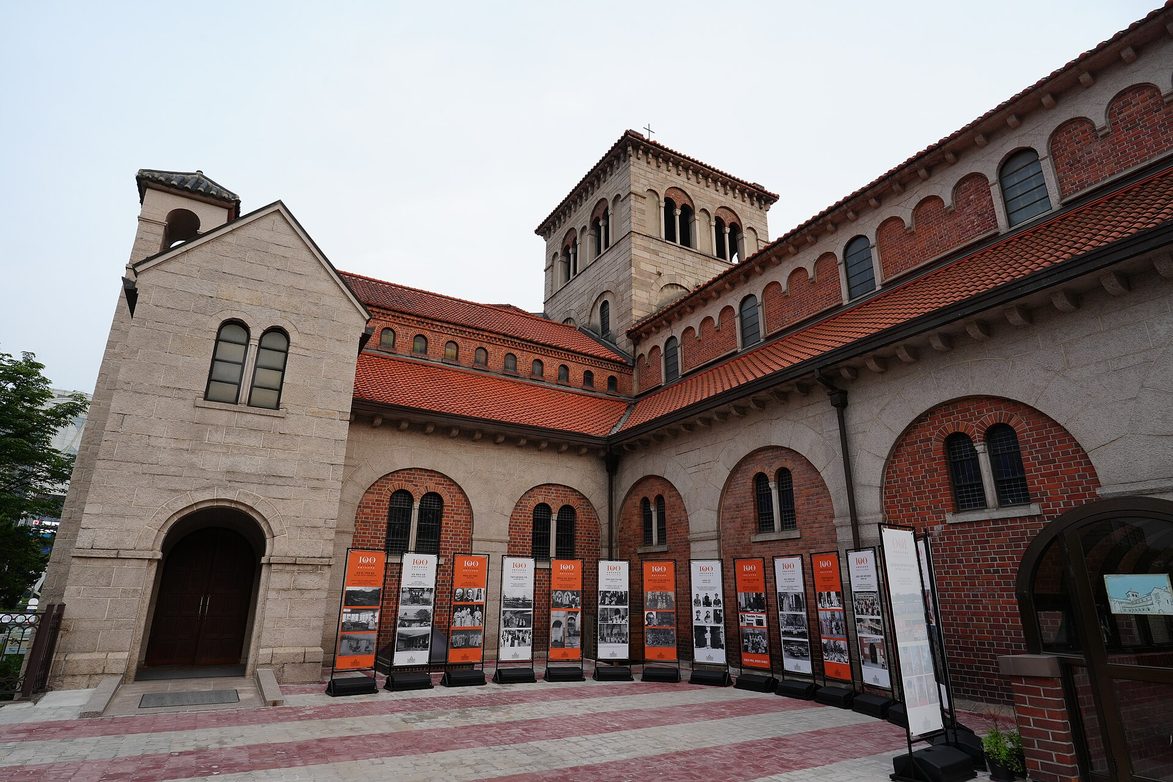
The cathedral has a place in the story of Korean democracy. On 10 June 1987 the national movement for a democratic constitution held its rally here: at dawn the cathedral bell rang 42 times to start the protests that became the June Democratic Struggle and led to direct presidential elections. A memorial stone in the grounds records it.
The visitor’s cheat sheet
| Where | 15 Sejong-daero 21-gil, Jung-gu, Seoul, beside Deoksugung Palace and close to City Hall |
|---|---|
| Opening hours | Tuesday to Saturday, about 11am to 4pm (some listings also give Monday and an earlier opening, so check on the day); not open for sightseeing on Sundays or during services |
| Admission | Free |
| Services | Sunday Eucharist in English at 9.30am in the crypt chapel; Korean services on Sundays |
| Photography | Not during services; otherwise quietly |
| Getting there | City Hall station (Lines 1 and 2), a few minutes’ walk |
| How long | Half an hour; half a day with Deoksugung and Jeongdong-gil |
Hours and admission checked against the official site in November 2026. They change; the official site is always the last word.
What to see
Outside
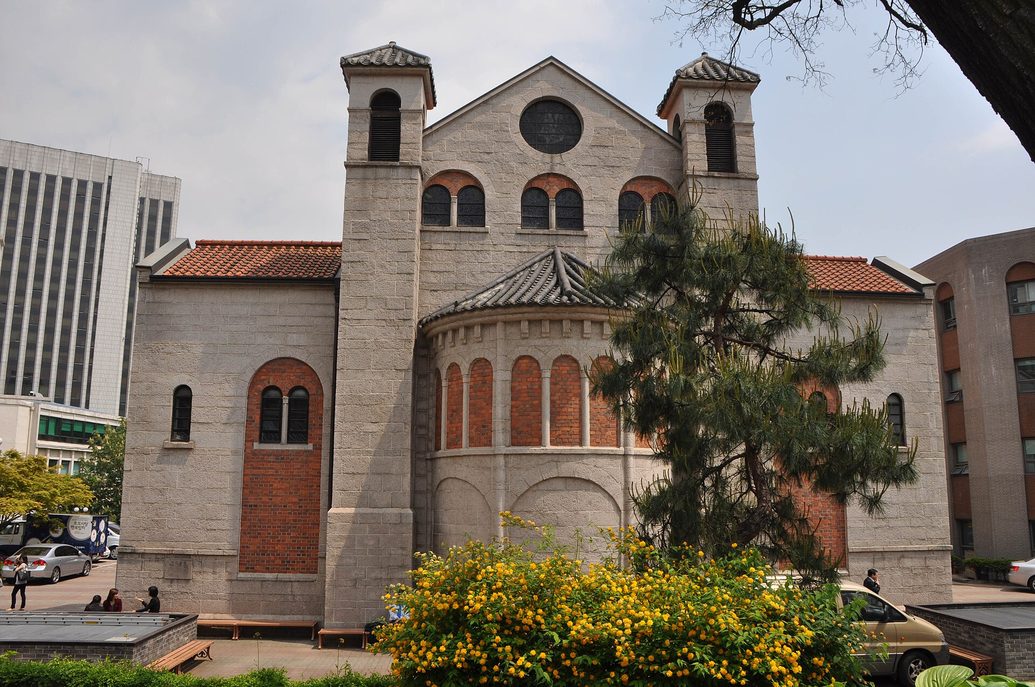
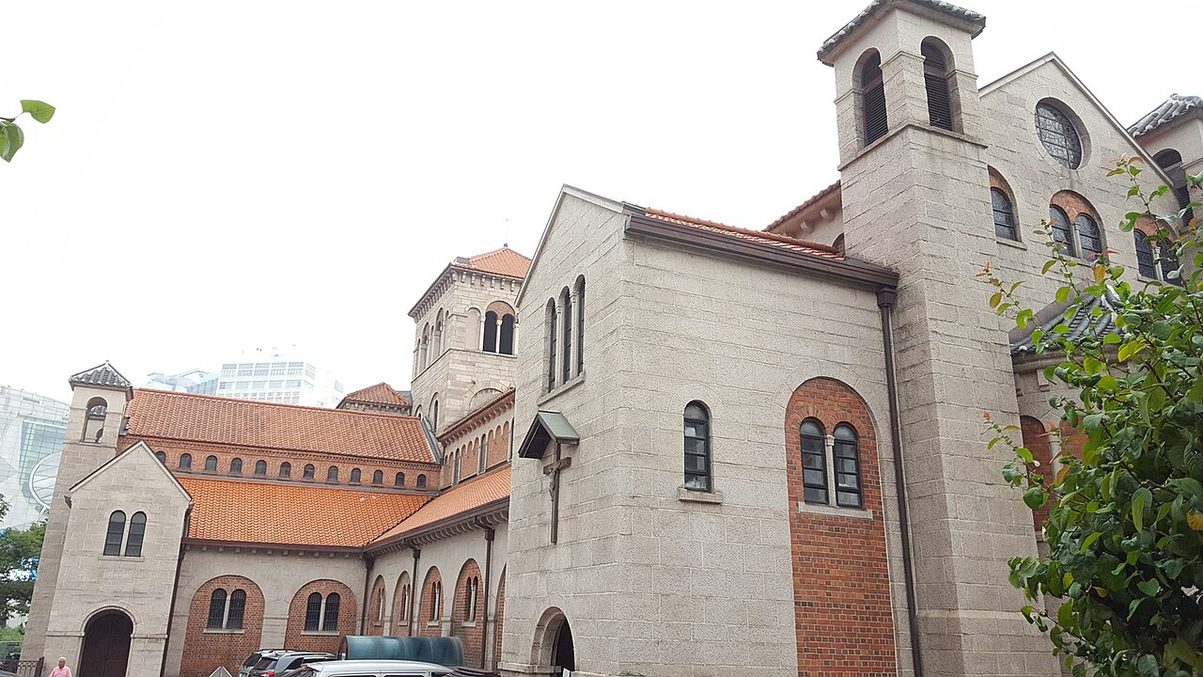
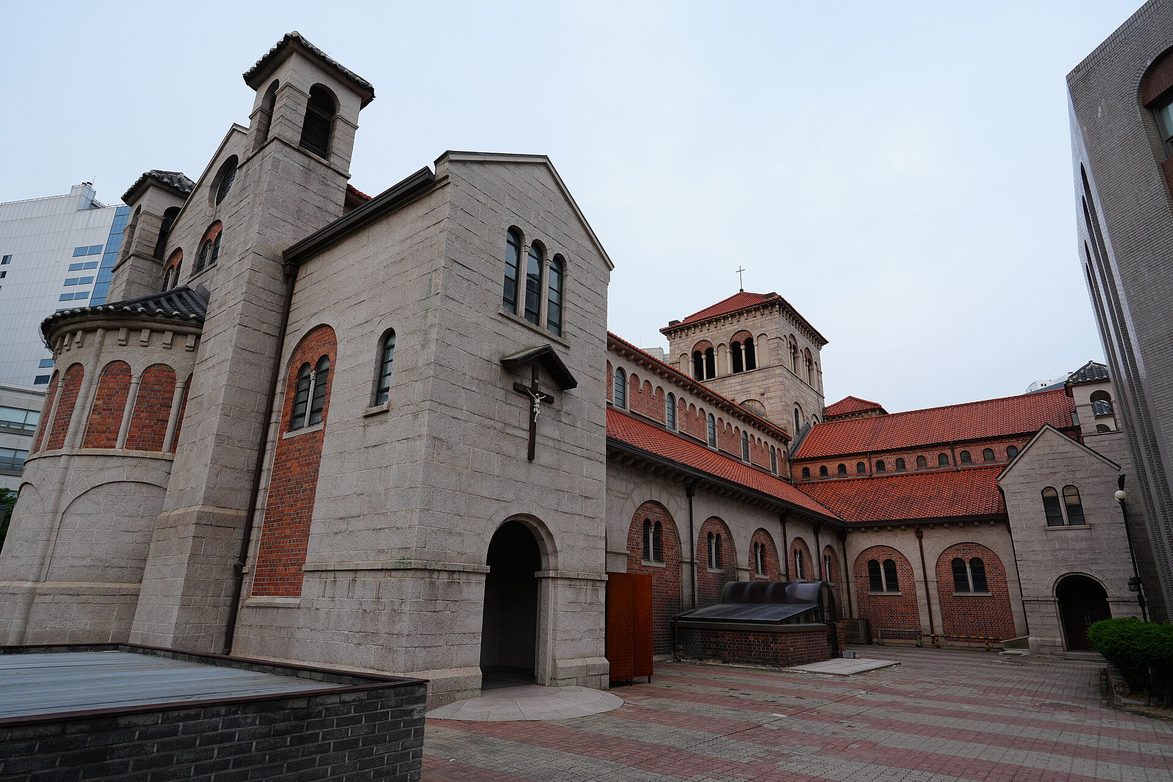
Walk round the outside first. The walls are of grey granite with bands and arches of red brick, and the roofs are of red tiles with the gently curved eaves of a Korean palace. The rounded apse at the east end, between two small towers, belongs to the first building of the 1920s; the central tower rises over the crossing.
Inside
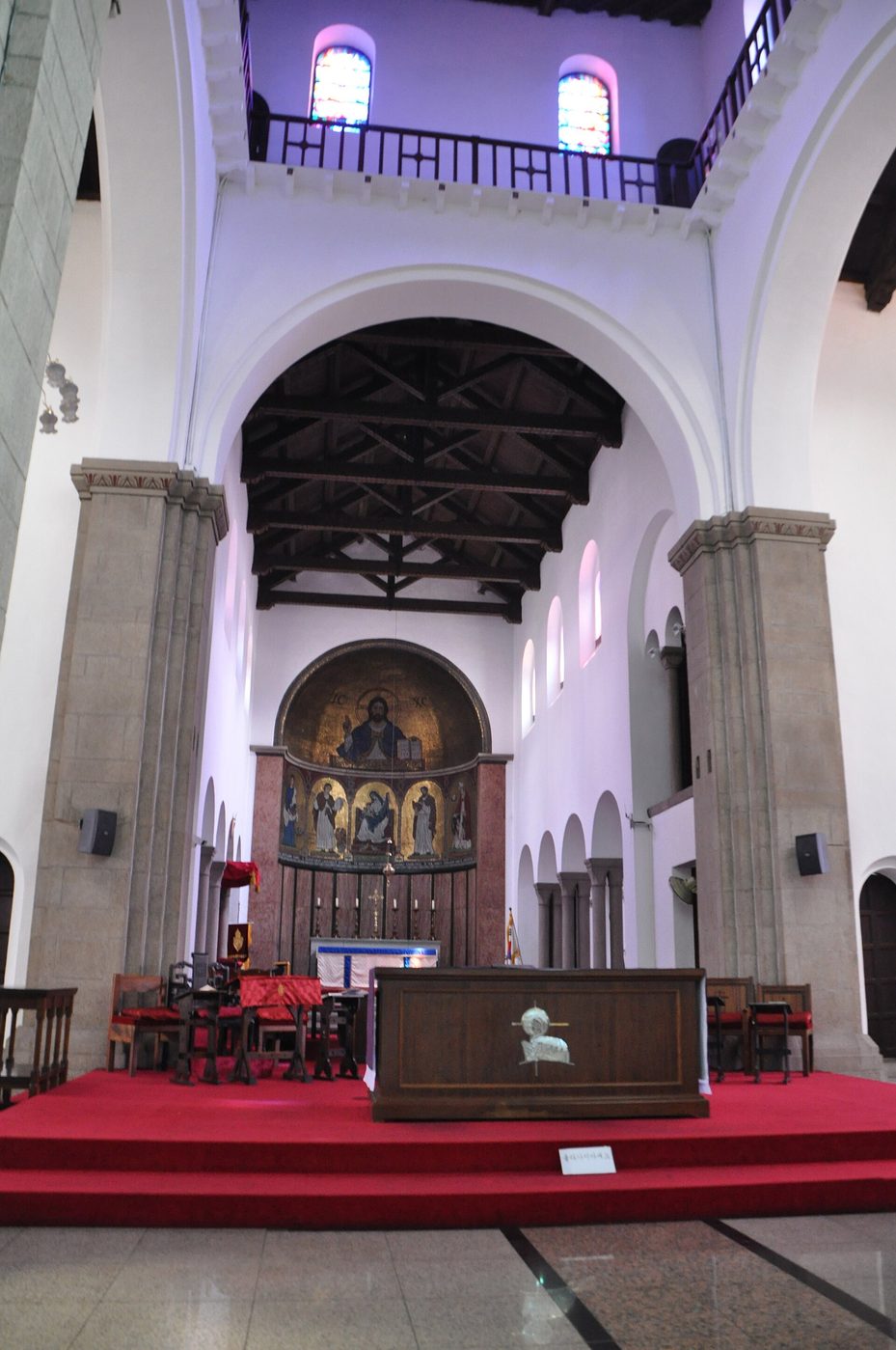
The nave is plain and white, with round arches on stout columns and a dark timber roof. Everything leads the eye to the apse, where a golden mosaic designed by George Jack, an Arts and Crafts designer who worked for William Morris’s firm, shows Christ in the half-dome above the Virgin and Child and saints. The organ, by Harrison & Harrison of Durham, was installed in 1985.

The crypt
Beneath the cathedral is the crypt chapel of St John the Baptist, where Bishop Trollope is buried and where the English-speaking congregation meets on Sunday mornings.
Around the cathedral
The cathedral stands in Jeongdong, the old diplomatic quarter. Deoksugung Palace is next door, and the tree-lined Deoksugung stone-wall road (Jeongdong-gil) runs past old legations, churches and schools from the late nineteenth century. Seoul City Hall and Seoul Plaza are a couple of minutes away.
Getting there
Take subway Line 1 or 2 to City Hall station; the cathedral is a few minutes’ walk away, behind the palace wall. Myeongdong Cathedral is about fifteen to twenty minutes’ walk to the east.
Where to stay
The City Hall and Gwanghwamun area puts the palaces, the cathedrals and the old diplomatic quarter within walking distance.
This link goes to Booking.com. This site earns nothing from it at present — it is here because it is the quickest way to check what is actually available.
Don’t miss
- The apse mosaic George Jack’s golden Christ above the altar.
- The roofs Romanesque walls under Korean tiled eaves.
- The crypt chapel Bishop Trollope’s resting place.
- Jeongdong-gil The stone-wall road beside Deoksugung Palace.
Insider tips
Come on a weekday. The cathedral is not open for sightseeing on Sundays, and the hours on other days are short, so aim for late morning or early afternoon.
Combine it with the palace. Deoksugung’s changing of the guard takes place at the Daehanmun gate, a short walk from the cathedral.
Common questions
Is Seoul Anglican Cathedral free to visit?
Yes. There is no charge to go in, though visitors are asked to come outside service times.
When is Seoul Anglican Cathedral open?
It is open to visitors from Tuesday to Saturday, about 11am to 4pm; some listings also give Monday and an earlier opening, so check on the day. On Sundays the building is in use for worship.
Is there a service in English?
Yes. The English-speaking congregation holds a Sunday Eucharist at 9.30am in the crypt chapel of St John the Baptist.
Why does the cathedral look half Korean?
The English architect Arthur Dixon designed a Romanesque church but gave it Korean tiled roofs with curved eaves. Only part was built in the 1920s; the rest was finished in 1996 to his original drawings.
More churches to visit
- Myeongdong Cathedral, Seoul — the Catholic cathedral, Gothic in red brick, consecrated in 1898.
- Yakhyeon Church, Seoul — Korea’s first Western-style church, above the martyrs’ shrine at Seosomun.
- St Mary’s Cathedral, Tokyo — Kenzo Tange’s steel-clad cathedral of 1964.