
Gyesan Cathedral, Daegu
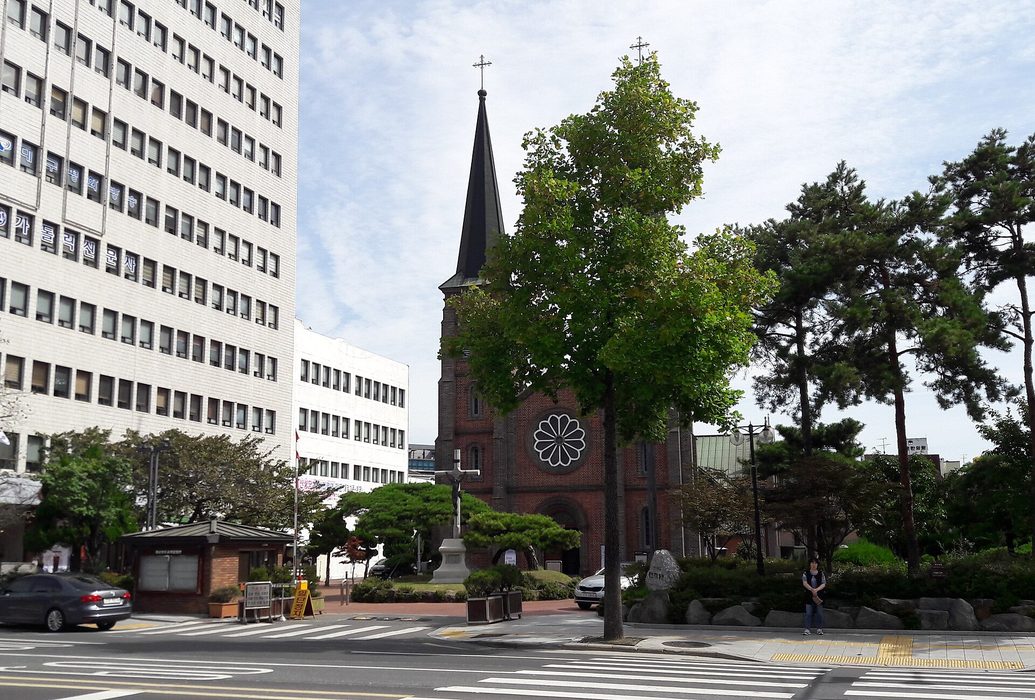
In the middle of Daegu, between office blocks and the old alleys of the herbal-medicine quarter, stands a red and grey brick church with two dark spires. Built in 1902 by French missionaries and Chinese craftsmen, and enlarged in 1918, it is the cathedral of the Archdiocese of Daegu and one of the oldest Western-style churches in Korea. It is free, and it is the first stop on the city’s walks through its modern history.
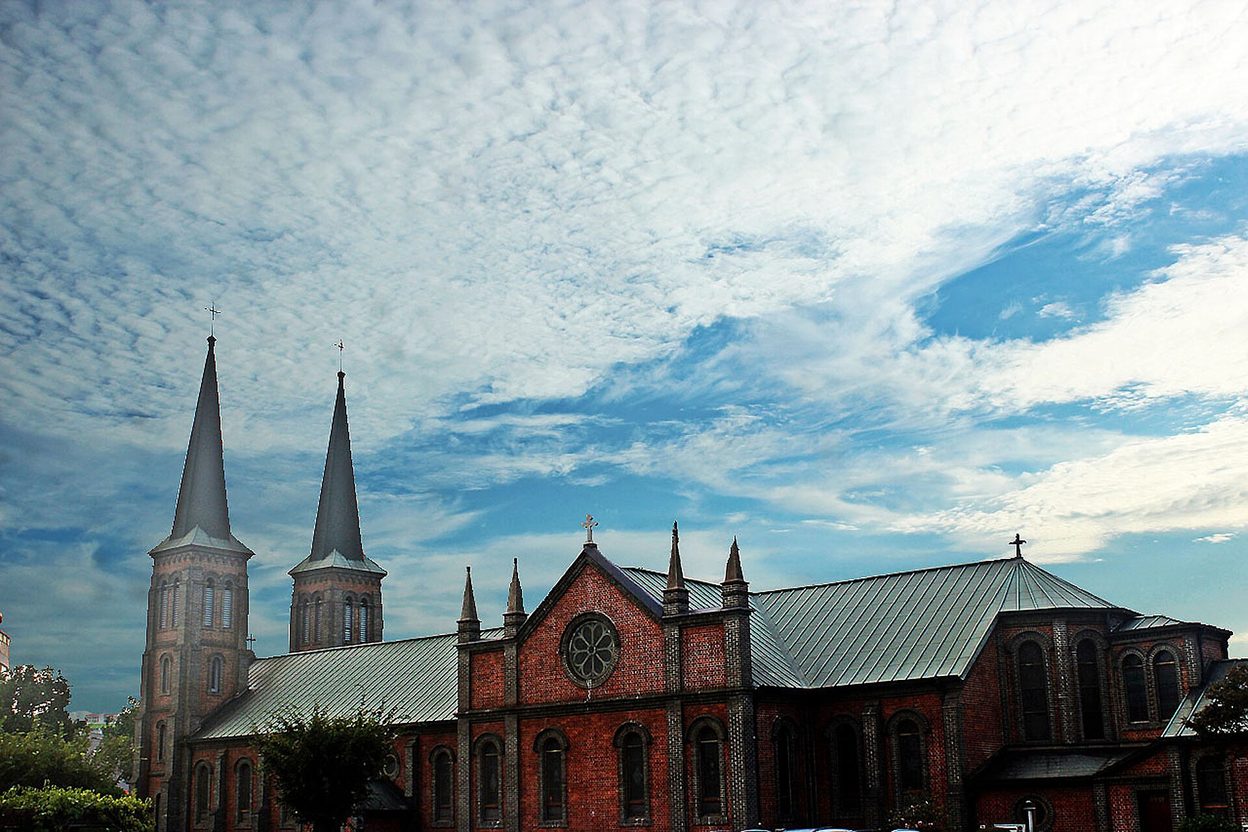
From a tiled chapel to a brick cathedral
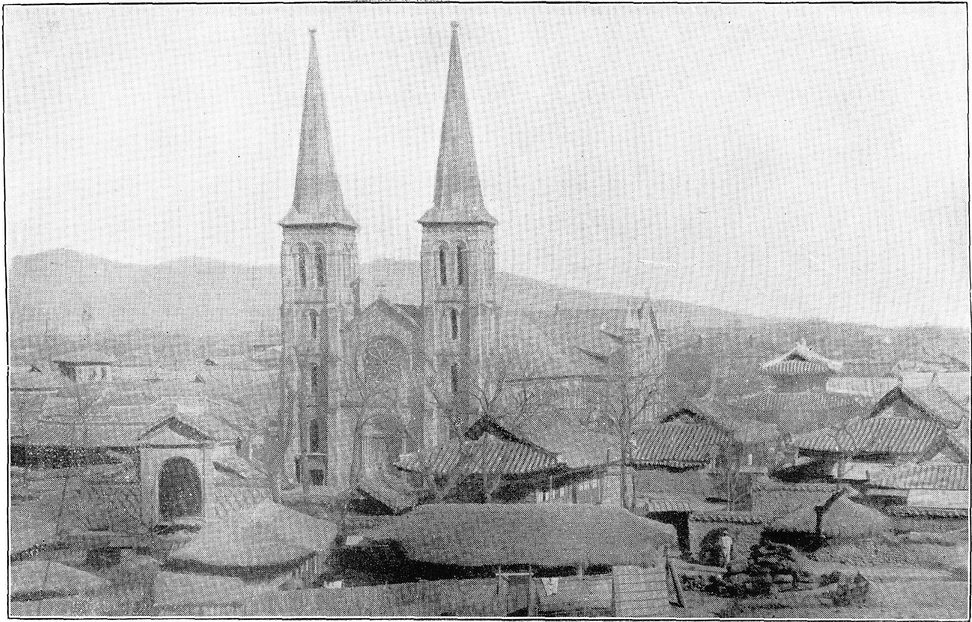
The Catholic parish of Daegu was founded in 1885, and its first priest was the French missionary Father Achille Paul Robert. On Christmas Day 1899 he dedicated a church in the Korean style, a cross-shaped building with a tiled roof, to Our Lady of Lourdes. It burned down within a year or two. Robert then built in brick, with bricklayers, plasterers and carpenters brought from China: the new church, with twin towers, was finished in 1902 and consecrated in 1903. Most sources say Robert designed it himself.
In 1911 Daegu became the seat of a new vicariate, and the church its cathedral. It was enlarged between 1911 and 1918, when transepts and an extra bay were added and the towers were raised to roughly twice their old height. It was designated Historic Site No. 290 in 1981, and in May 1984 Pope John Paul II came here during his visit for the two hundredth anniversary of the Catholic Church in Korea.
The visitor’s cheat sheet
| Where | 10 Seoseong-ro, Jung-gu, Daegu, opposite Cheongna Hill |
|---|---|
| Opening hours | Weekdays 10am–6pm for visitors, except during Mass and weddings; weekend hours are not published |
| Admission | Free |
| Mass | Sunday 6.30am, 8.30am, 9.30am, 11am (main), 4pm, 5.30pm, 8pm and 9.30pm; weekday Masses morning, midday and evening. Times change, so check locally |
| Photography | Not during Mass; otherwise quietly, leaving people at prayer undisturbed |
| Getting there | Daegu Metro Lines 2 and 3 to Cheongna Hill, then about 10 minutes’ walk; KTX from Seoul to Dongdaegu |
| How long | Half an hour; half a day with the Modern History Alley walk |
Hours and admission checked against the official site in November 2026. They change; the official site is always the last word.
What to see
The front and the spires
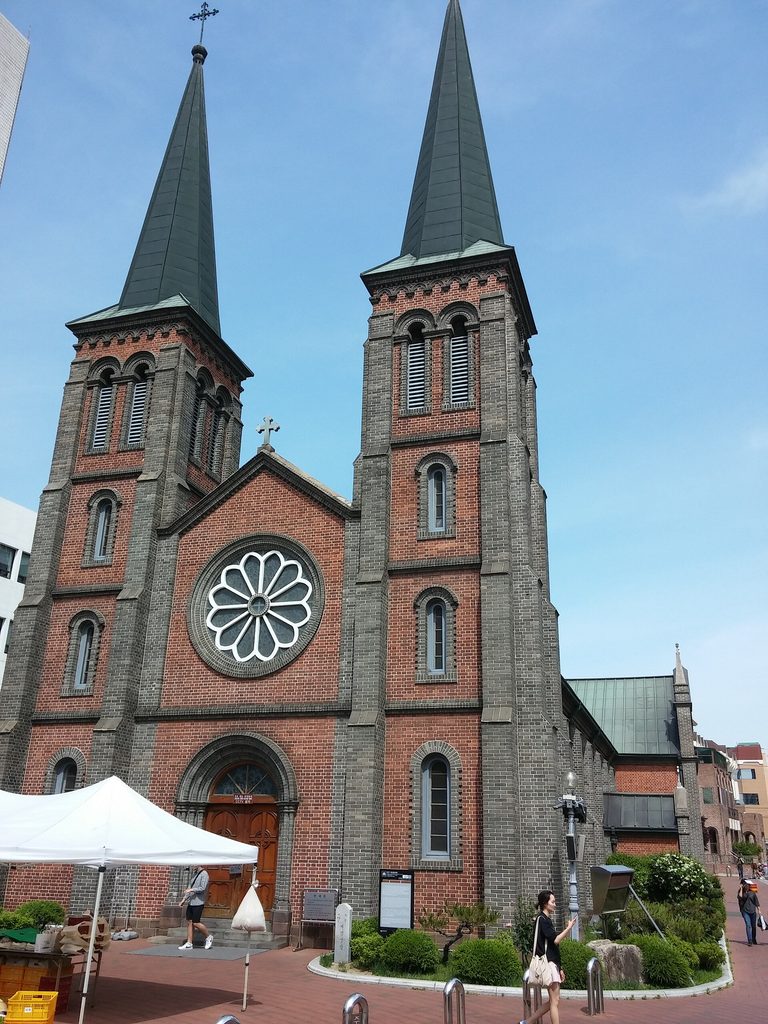
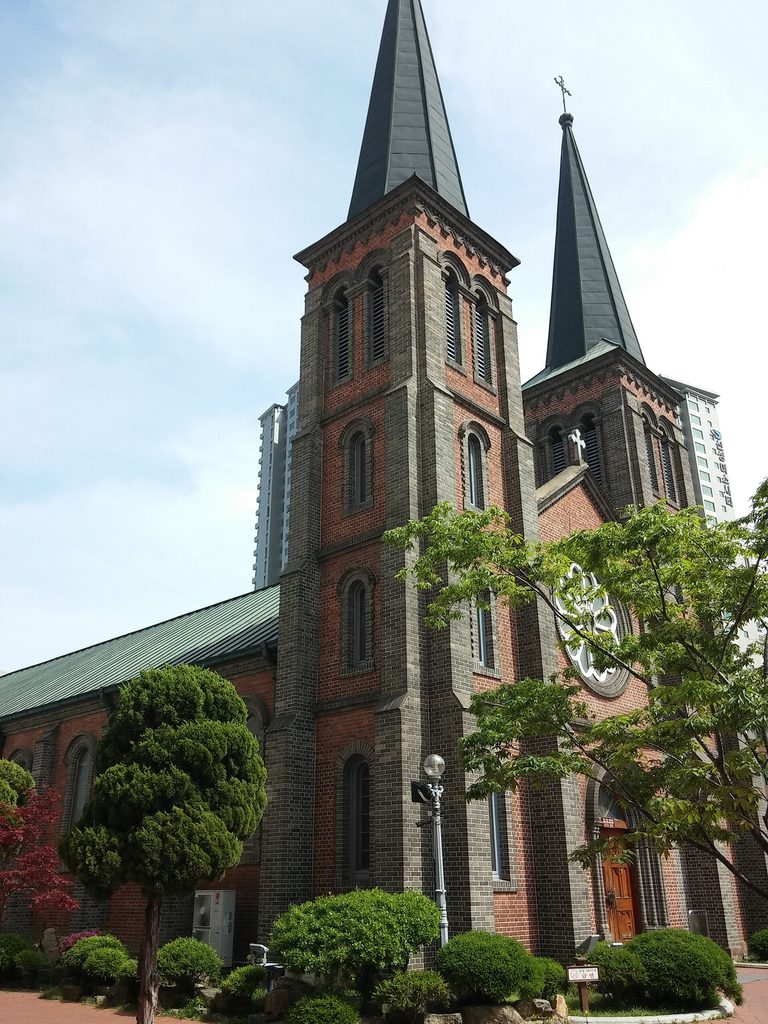
The church is Romanesque in its round arches and rose window, Gothic in its tall spires, and built of red and grey brick on a granite base.
Inside
The nave and two aisles are divided by grey columns under a vaulted ceiling. The first stained glass came from France in 1902; much of the glass was renewed when the church was restored in 1991–92, when the copper roof and marble floors were also put in. Relics of St Andrew Kim Taegon, Korea’s first Catholic priest, are enshrined in the church.

A note on our pictures. The makers of the modern windows are not recorded, so our pictures do not show the glass close up.

Around the cathedral
The cathedral is a stop on the Modern History Alley walk that Daegu’s Jung-gu district runs through the old centre. Across the road, the 3.1 Movement Road climbs 90 steps to Cheongna Hill; students took this way to the independence demonstration of March 1919. At the top stand three red-brick houses built for American missionaries around 1910. Nearby are the houses of the poet and independence activist Lee Sang-hwa and of Seo Sang-don, a leader of the National Debt Repayment Movement of 1907, and Seomun Market, one of the largest traditional markets in Korea, with a night market at weekends.

Getting there
From Seoul, KTX trains run from Seoul Station to Dongdaegu in about 1 hour 40 minutes to 2 hours. From Dongdaegu take Daegu Metro Line 1 to Banwoldang and change to Line 2 for Cheongna Hill, the interchange with Line 3; from there the cathedral is about ten minutes’ walk. There is little parking, and the small car park is kept for worshippers during Mass.
Where to stay
The old centre around the cathedral, Jung-gu, is the easiest base for walking the Modern History Alley and Seomun Market.
This link goes to Booking.com. This site earns nothing from it at present — it is here because it is the quickest way to check what is actually available.
Don’t miss
- The twin spires Raised to their present height in 1918.
- The 3.1 Movement Road The 90 steps across the road to Cheongna Hill.
- The missionary houses Red-brick houses of about 1910 on Cheongna Hill.
- Seomun Market Daegu’s great traditional market, with a weekend night market.
Insider tips
Start the walk here. See the cathedral first, then climb the 3.1 Movement Road to Cheongna Hill and follow the Modern History Alley route back down through the old centre.
Check the Mass times. There are Masses morning, midday and evening, and eight on Sundays; visitors cannot look round during them.

Common questions
Is Gyesan Cathedral free to visit?
Yes. There is no ticket. On weekdays visitors are welcome from about 10am to 6pm, except during Mass and weddings.
Can you take photographs inside Gyesan Cathedral?
Not during Mass. At other times visitors take photographs quietly; follow any signs and leave people at prayer undisturbed.
What is near Gyesan Cathedral?
The 3.1 Movement Road stairs and Cheongna Hill, with its early missionary houses, are across the road, and the cathedral is a stop on Daegu’s Modern History Alley walking route. Seomun Market is a short walk away.
How do you get to Gyesan Cathedral from Seoul?
Take the KTX from Seoul Station to Dongdaegu (about 1 hour 40 minutes to 2 hours), then the Daegu Metro to Cheongna Hill station on Lines 2 and 3, about ten minutes’ walk from the cathedral.
More churches to visit
- Jeondong Cathedral, Jeonju — the brick church of 1908–14 on the ground of Korea’s first martyrdoms.
- Myeongdong Cathedral, Seoul — the Gothic cathedral the French missionaries built in Seoul in the 1890s.
- Oura Church, Nagasaki — where Japan’s Hidden Christians made themselves known in 1865.