
Jeondong Cathedral, Jeonju
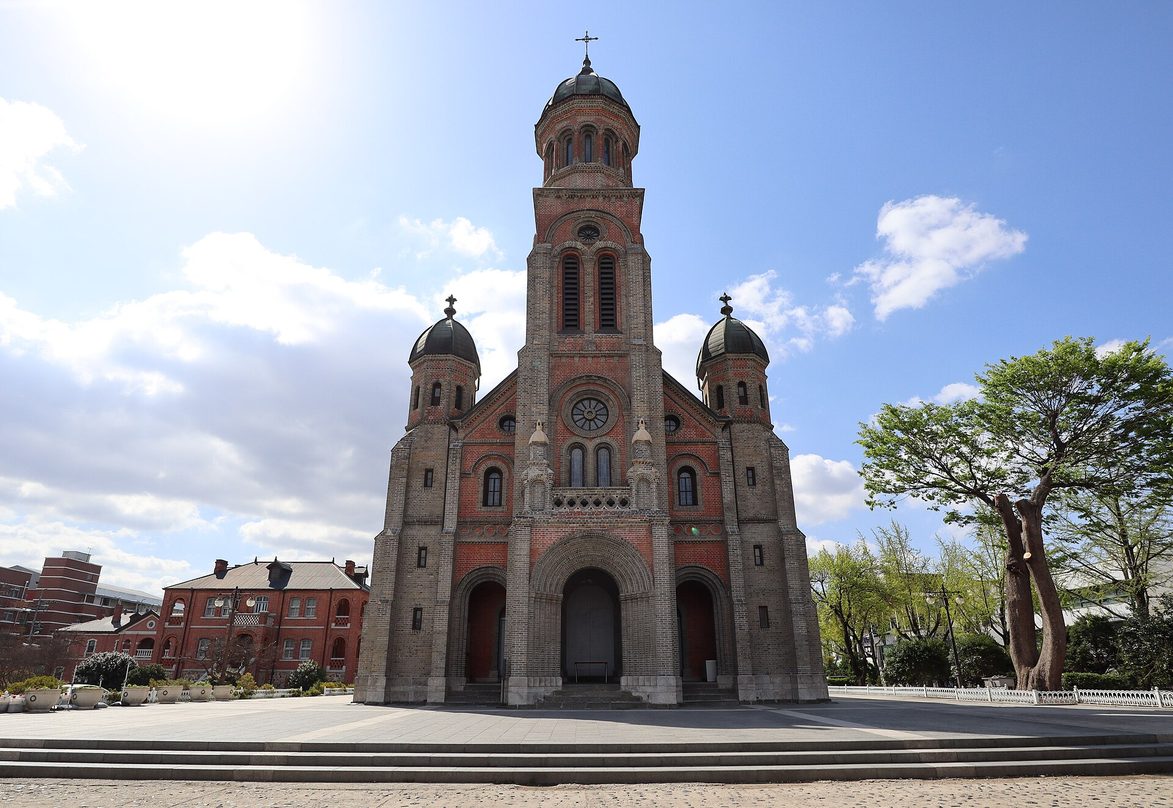
At the gate of Jeonju’s Hanok Village, among streets of tiled wooden houses, stands a red and grey brick church with three domed towers. It was built between 1908 and 1914 on the ground outside the old south gate of the city where, in 1791, Korea’s first Catholic martyrs were beheaded. It is free, and it is the natural start of a day in Jeonju.
The first martyrs
Catholicism reached Korea in the late eighteenth century through books brought back from China, and was taken up by scholars before any priest arrived. In 1791 two of them, the cousins Yun Ji-chung (Paul) and Gwon Sang-yeon (James), burned their ancestral tablets, following the Church’s ban on ancestral rites. To the Joseon court this was a rejection of the duties owed to ancestors, and both were beheaded outside the south gate of Jeonju. They are remembered as the first Catholic martyrs of Korea. Ten years later, in the persecution of 1801, Yu Hang-geom and others were executed at the same place.
Building the church
After Korea’s 1886 treaty with France, missionaries could work openly, and a parish was founded in Jeonju in 1889 or 1891 (sources differ). Father François-Xavier Baudounet bought land on the old execution ground, and building began in 1908 to the designs of Father Victor Louis Poisnel, the French missionary who had also designed Myeongdong Cathedral in Seoul. When the city walls were pulled down in 1911, stones from the wall by the south gate, Pungnammun, went into the foundations; Chinese craftsmen made hundreds of thousands of bricks for the church. The building was finished in 1914. It was designated Historic Site No. 288 in 1981.
The visitor’s cheat sheet
| Where | 51 Taejo-ro, Wansan-gu, Jeonju, at the entrance to the Jeonju Hanok Village, opposite Gyeonggijeon |
|---|---|
| Opening hours | 9am–5pm for visitors, except during Mass; hours can change with parish needs |
| Admission | Free |
| Mass | Sundays 6am, 9am, 10.30am and 5pm; Saturday 6am, 4pm and 6pm; Monday to Friday 6am, plus 11am Tuesday to Friday. Times can change, so check locally |
| Etiquette | A working parish church: no visiting during Mass; keep quiet and show respect to people at prayer |
| Getting there | KTX train or express bus from Seoul to Jeonju, then a 10–15-minute taxi or a local bus to the Hanok Village |
| How long | Half an hour; a day with the Hanok Village and Gyeonggijeon |
Hours and admission checked against the official site in November 2026. They change; the official site is always the last word.
What to see
The front and the towers
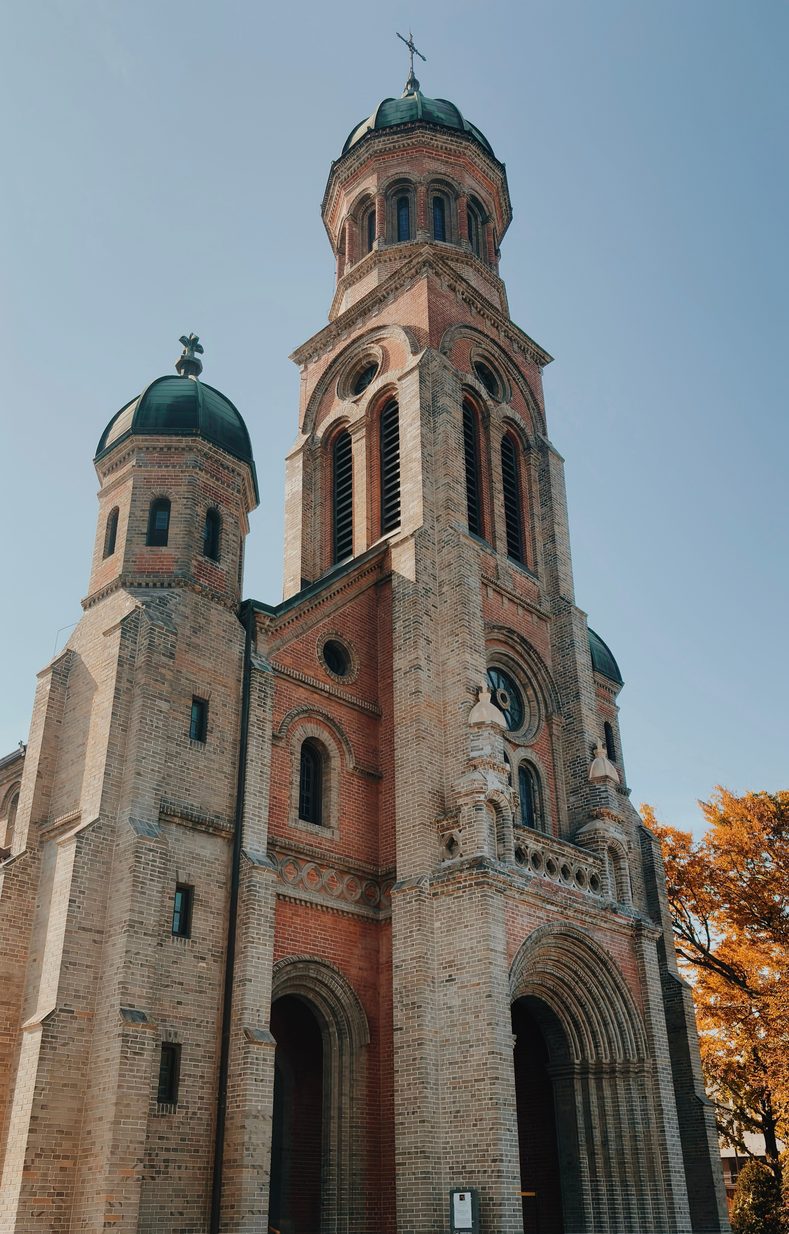
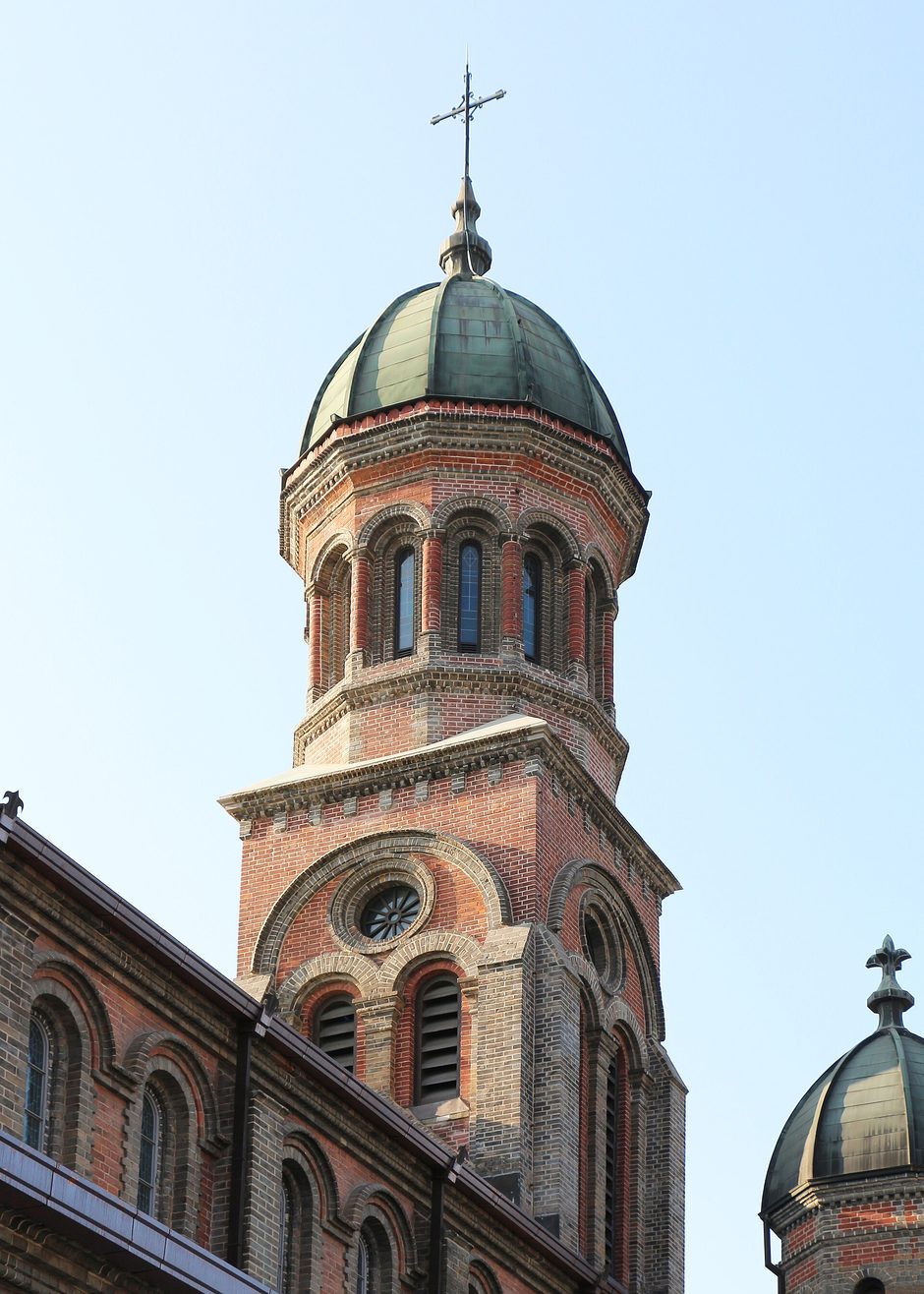
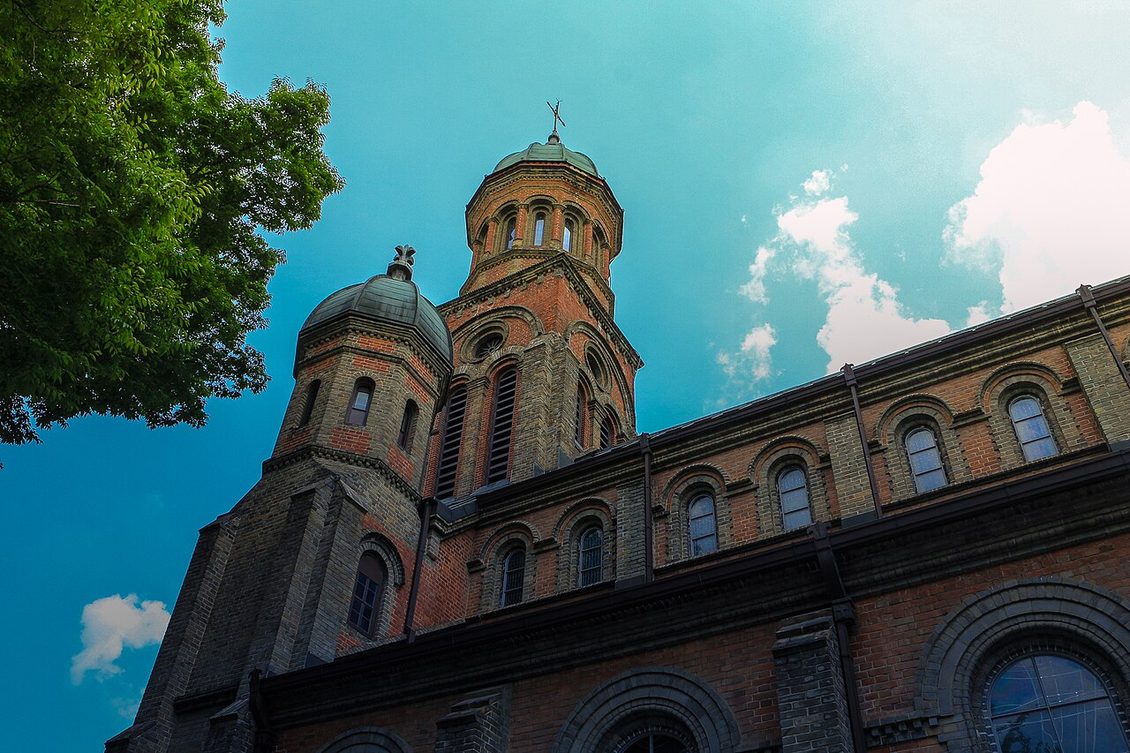
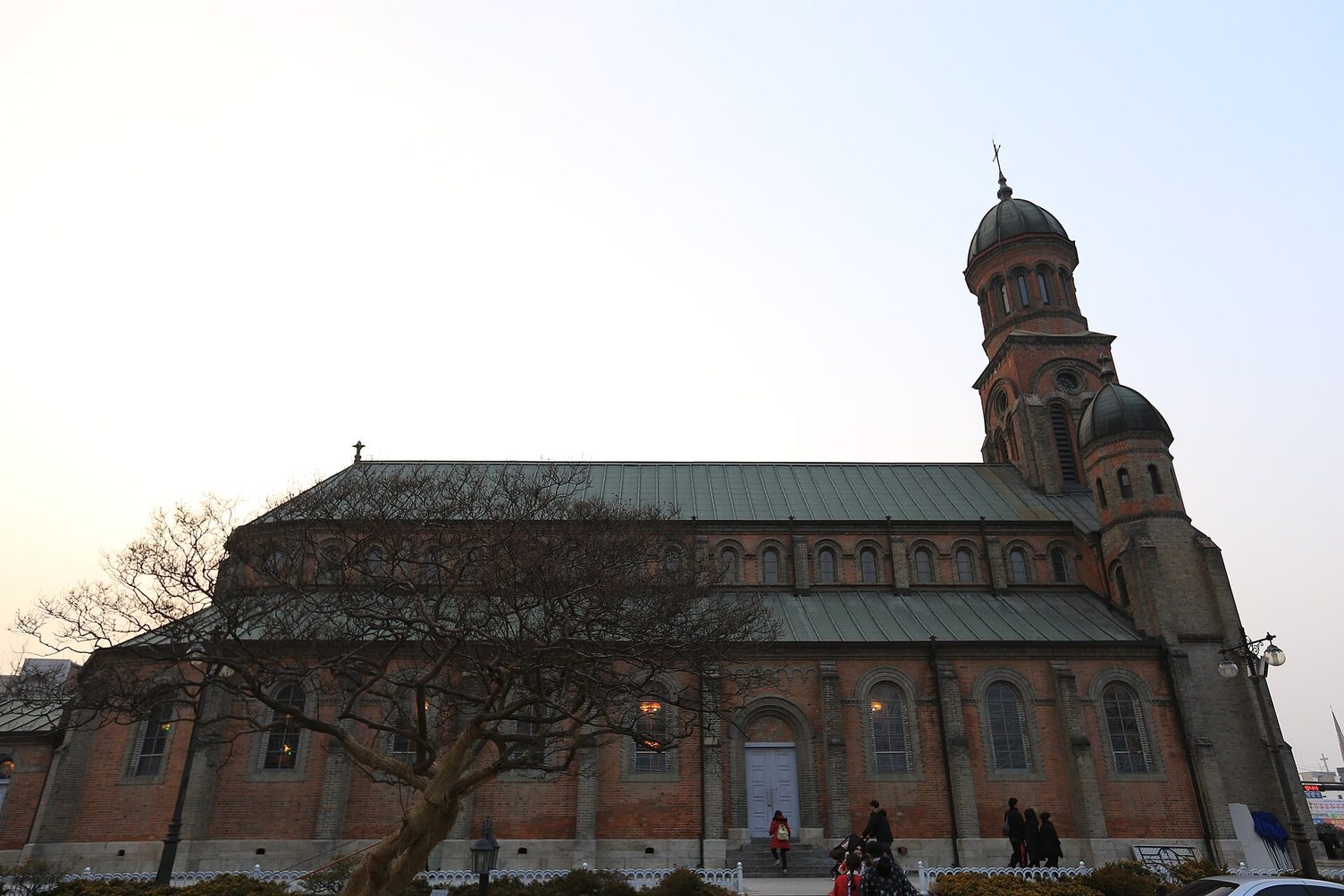
The style mixes Romanesque arches with Byzantine domes: a tall central bell tower over the door, two smaller domed towers either side, and walls of red brick banded with grey. It is often called the first Romanesque building in the Honam region of south-west Korea. Walk round the side to see the long row of arched windows down the nave.
Inside
Inside, rows of columns carry round arches and a ribbed, vaulted ceiling, lit by stained glass that glows in the sun. It is a busy parish church: go in quietly, and not during Mass.
A note on our pictures. The church is a place of prayer and the artists of its modern glass and statues are not recorded, so our photographs show the outside only.
The grounds
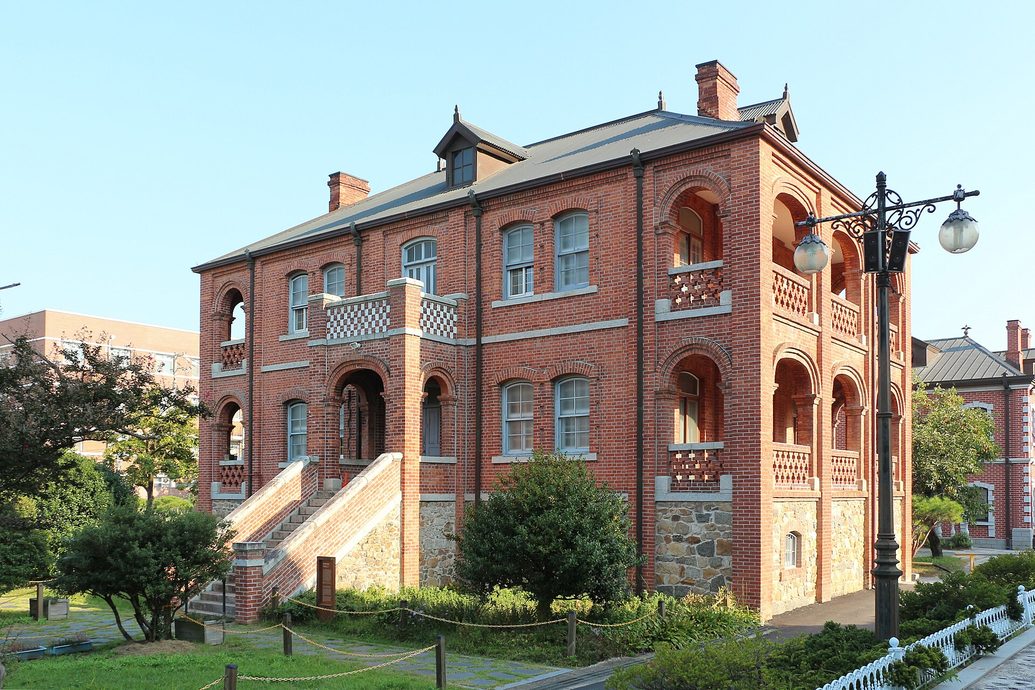
Around the church are red-brick parish buildings of the early twentieth century, and a statue commemorating the martyrs Yun Ji-chung and Gwon Sang-yeon.
Getting there
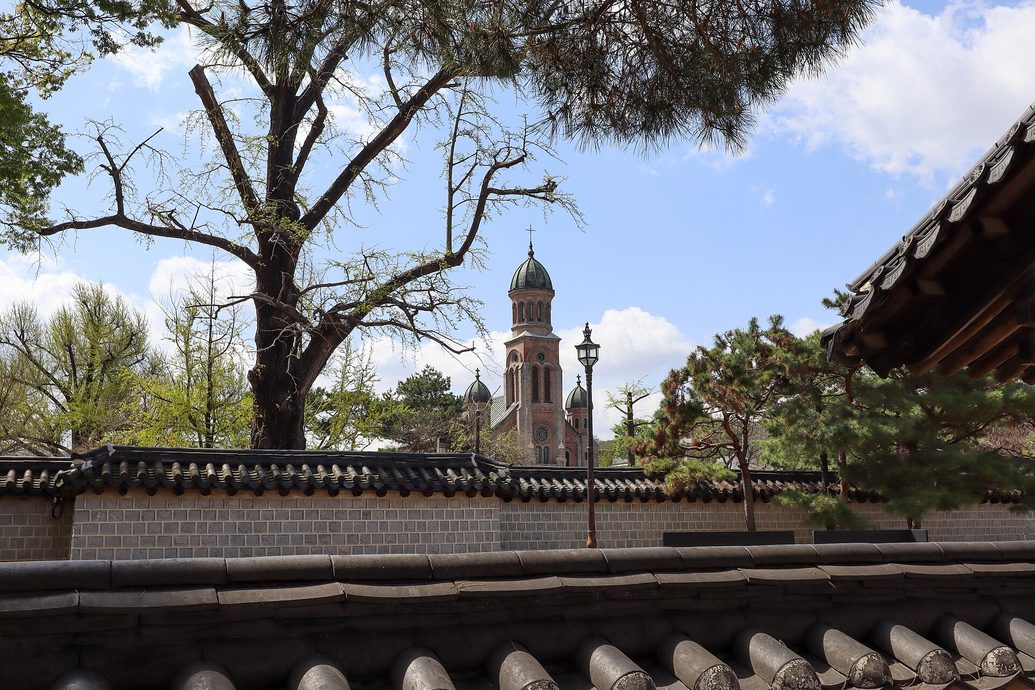
From Seoul, KTX trains run direct from Yongsan (about 1 hour 40 minutes) and Seoul Station (about two hours) to Jeonju. Express buses from Seoul take about two and three-quarter hours, longer at busy weekends. From Jeonju Station the Hanok Village is about 3 km, 15 minutes by taxi, or take a local bus; from the express bus terminal it is about 20 minutes’ walk. The cathedral stands on Taejo-ro at the entrance to the village, opposite Gyeonggijeon, the shrine to the founder of the Joseon dynasty, and a minute from Pungnammun gate.
Where to stay
Stay a night in the Hanok Village itself: many traditional houses take guests, and the lanes are quiet once the day visitors have gone.
This link goes to Booking.com. This site earns nothing from it at present — it is here because it is the quickest way to check what is actually available.
Don’t miss
- The three towers Byzantine domes over a Romanesque brick front.
- The martyrs’ ground Where Paul Yun Ji-chung and James Gwon Sang-yeon died in 1791.
- Gyeonggijeon The royal shrine across the road, with its old trees and tiled walls.
- Pungnammun The old south gate, whose wall stones are in the church’s foundations.
Insider tips
Come early. The square in front fills with visitors in hanbok taking photographs from late morning; the church is calmest soon after it opens.
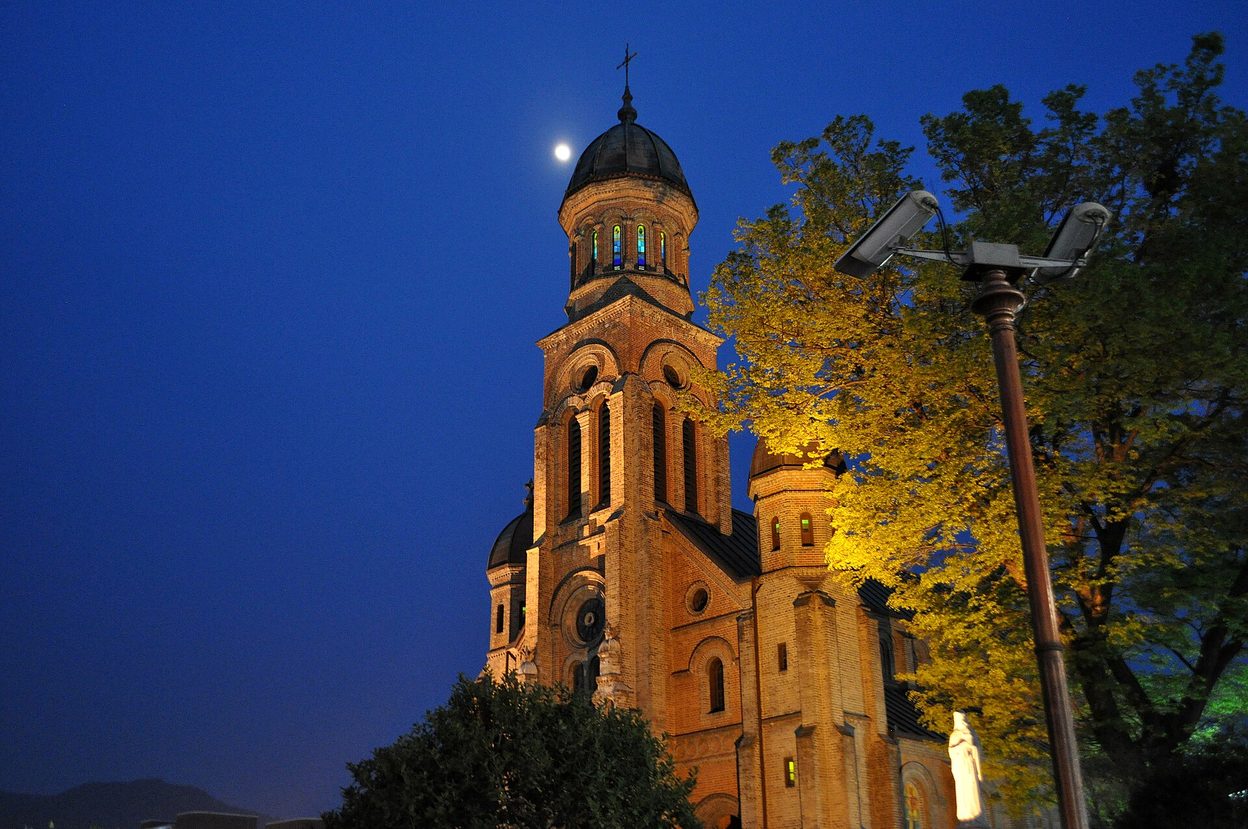
Come back after dark. The church is lit in the evening, and the front glows against the sky.
Avoid Mass times. Visitors are not admitted during Mass, and Sunday mornings are taken up by services.
Common questions
Is Jeondong Cathedral free to visit?
Yes. There is no ticket. Visitors are welcome from about 9am to 5pm, outside Mass times, though hours can change.
Can you go inside Jeondong Cathedral?
Yes, when no Mass is being said. It is a working parish church, so go in quietly and keep to the back if people are praying.
Who designed Jeondong Cathedral?
Father Victor Louis Poisnel of the Paris Foreign Missions, who also designed Myeongdong Cathedral in Seoul. The building was put up between 1908 and 1914 under Father François-Xavier Baudounet.
How do you get to Jeondong Cathedral from Seoul?
Take the KTX train from Yongsan (about 1 hour 40 minutes) or Seoul Station (about two hours) to Jeonju, or an express bus from Seoul (about two and three-quarter hours). From Jeonju Station a taxi to the Hanok Village takes about 15 minutes.
More churches to visit
- Myeongdong Cathedral, Seoul — Poisnel’s other great church, the Gothic cathedral of Seoul.
- Oura Church, Nagasaki — where Japan’s Hidden Christians made themselves known in 1865.
- Urakami Cathedral, Nagasaki — the cathedral of the Hidden Christians, destroyed in 1945 and rebuilt.