
Sacré-Cœur, Montmartre
The white basilica on top of Montmartre is visible from half of Paris, and from its steps you can see most of the city in return. It is free to go in, open from early morning until late at night, and one of the few great churches in Paris with no booking at all. What visitors are not always ready for is that it is a place of prayer first: prayer has gone on before the altar day and night since 1885, there is no photography inside, and the paid part of the visit, the climb up the dome, is a separate entrance outside.
A church built as a vow
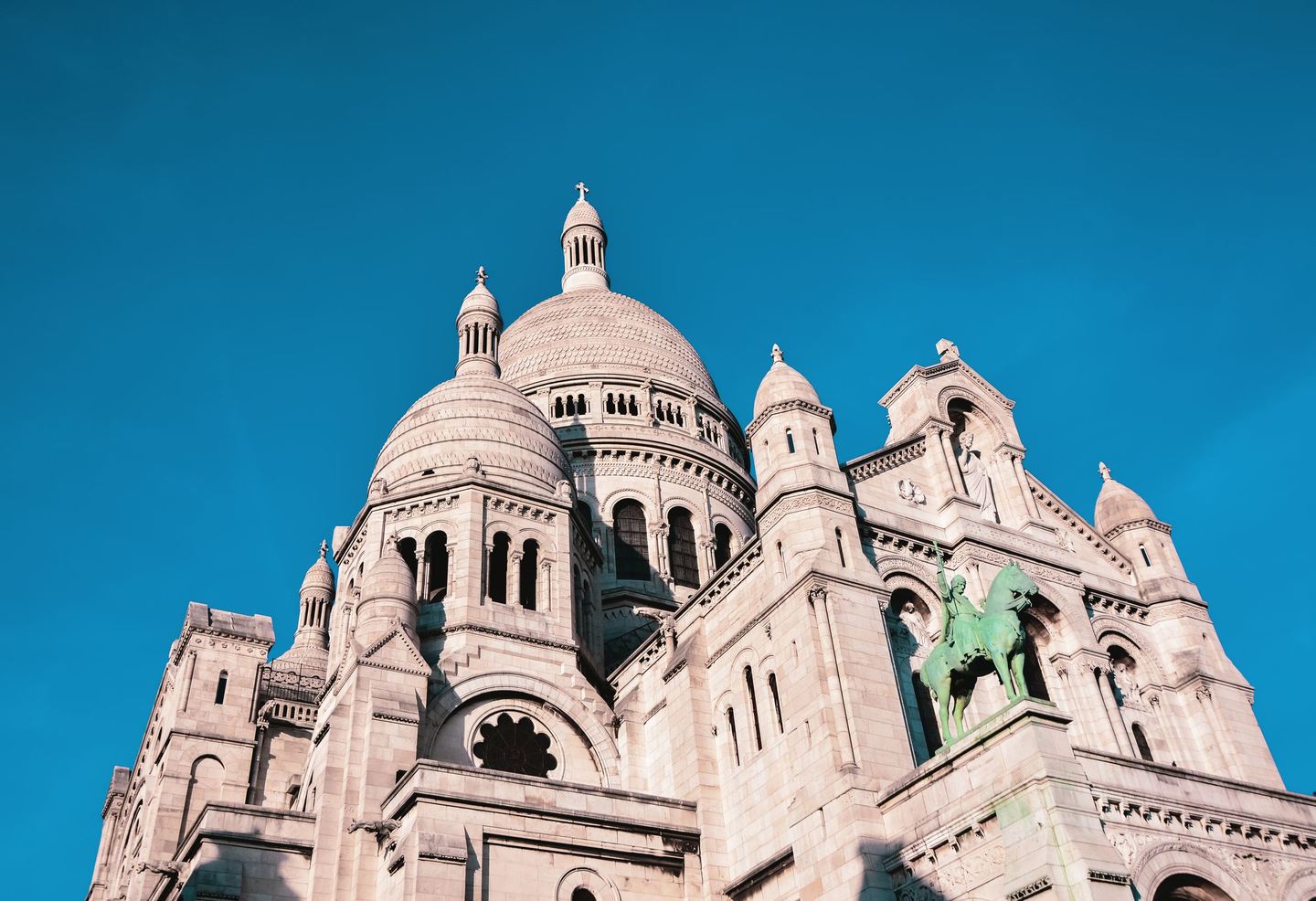
Sacré-Cœur is young by the standards of this guide. In 1870 France was defeated by Prussia, Paris was besieged, and in the spring of 1871 the city rose in the Commune and was put down with great bloodshed. Two Catholic laymen, Alexandre Legentil and Hubert Rohault de Fleury, had already vowed to build a church dedicated to the Sacred Heart of Jesus as an act of national penance, and the Archbishop of Paris chose the summit of Montmartre, the hill where by tradition Saint Denis, first bishop of Paris, had been martyred. In 1873 the National Assembly declared the project of public utility.
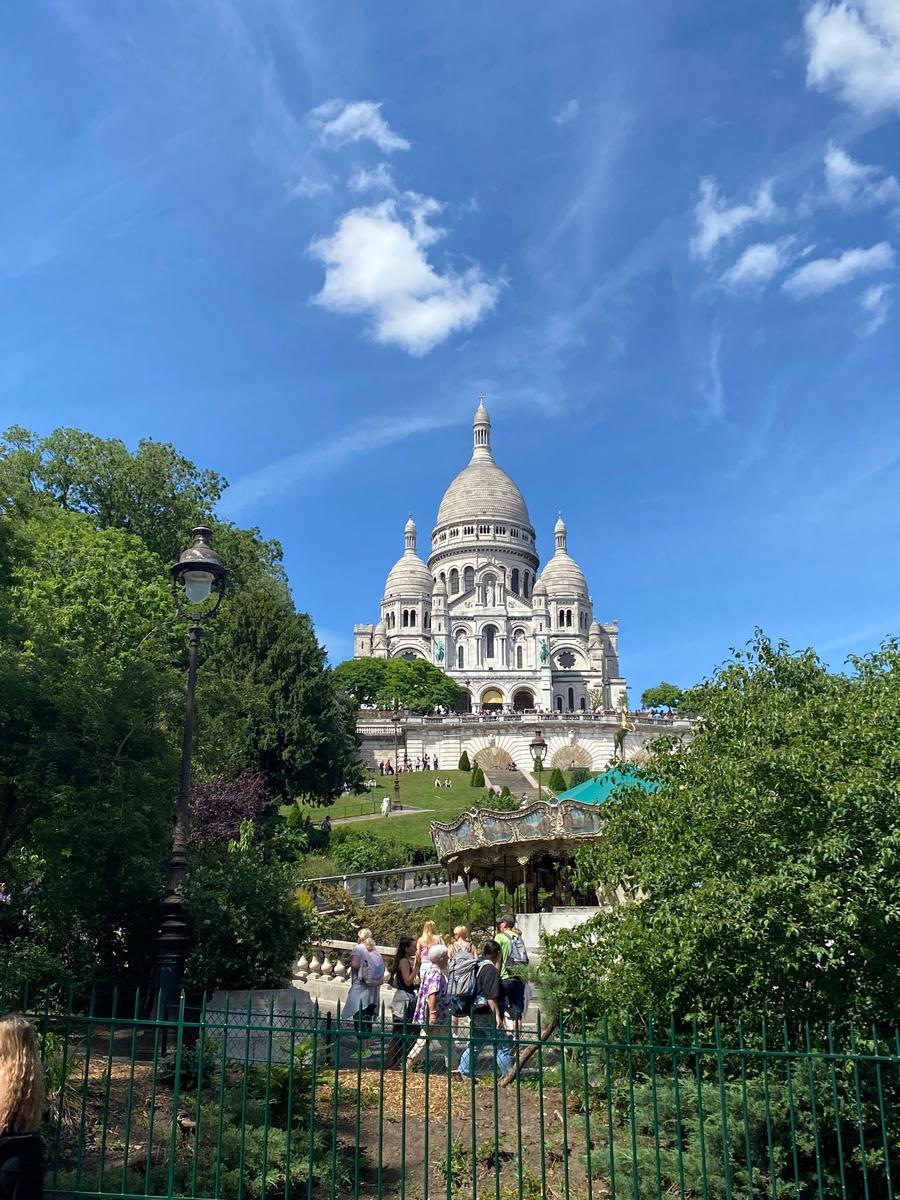
A competition drew seventy-seven designs, and the winner, Paul Abadie, proposed something quite unlike the Gothic churches of Paris: a Romano-Byzantine basilica of domes and cupolas, inspired by the cathedral of Saint-Front in Périgueux, which he had restored. The first stone was laid on 16 June 1875. The hill, riddled with old gypsum quarries, would not bear the weight, so the builders sank eighty-three shafts about thirty metres deep and filled them with masonry, and the church stands on them.
Abadie died in 1884, only nine years into the work, and five architects followed him. The basilica was paid for by subscription, largely small gifts from all over France, and took nearly forty years. It was finished in 1914, but the First World War delayed its consecration until 1919.
The visitor’s cheat sheet
| Where | Parvis du Sacré-Cœur, 75018 Paris, on the top of Montmartre. Métro Anvers (line 2) or Abbesses (line 12), then the stairs or the funicular |
|---|---|
| Opening hours | Every day, 6.30am–10.30pm |
| Admission | Free, with no booking. Security check at the door; ten to fifteen minutes’ wait between about 10.30am and 5pm |
| Dome | €8 adults, €5 children, tickets on the spot only. 10.30am–8.30pm, last entry 8pm, closed for a break around midday. About 300 steps, no lift. Entrance outside, on the left side of the basilica |
| Photography | Not allowed inside the basilica |
| Accessibility | Lift for visitors with reduced mobility at 35 rue du Chevalier-de-la-Barre, 8.30am–6.30pm |
| How long | Half an hour inside; an hour with the dome; longer if you walk up through Montmartre |
Hours and admission checked against the official site in September 2026. They change; the official site is always the last word.
Free, no booking, and no photos inside. Just turn up: the basilica is open every day from 6.30am to 10.30pm, and the queue is only for the security check. Inside, this is a place of continuous adoration, and photography is not allowed; guards will ask you to put your phone away. The dome is the one part you pay for, €8, cash or card on the spot, at a separate entrance outside on the left.
Getting up the hill
From the Métro at Anvers it is a short walk up rue de Steinkerque to the gardens of the square Louise-Michel, and then either the long stairs or the funicular. The funicular runs from Place Saint-Pierre, on the left of the gardens, takes about a minute and a half, and costs an ordinary Métro ticket. The alternative approach, from Abbesses through the lanes of old Montmartre, is longer and much prettier, and brings you to the basilica from behind.
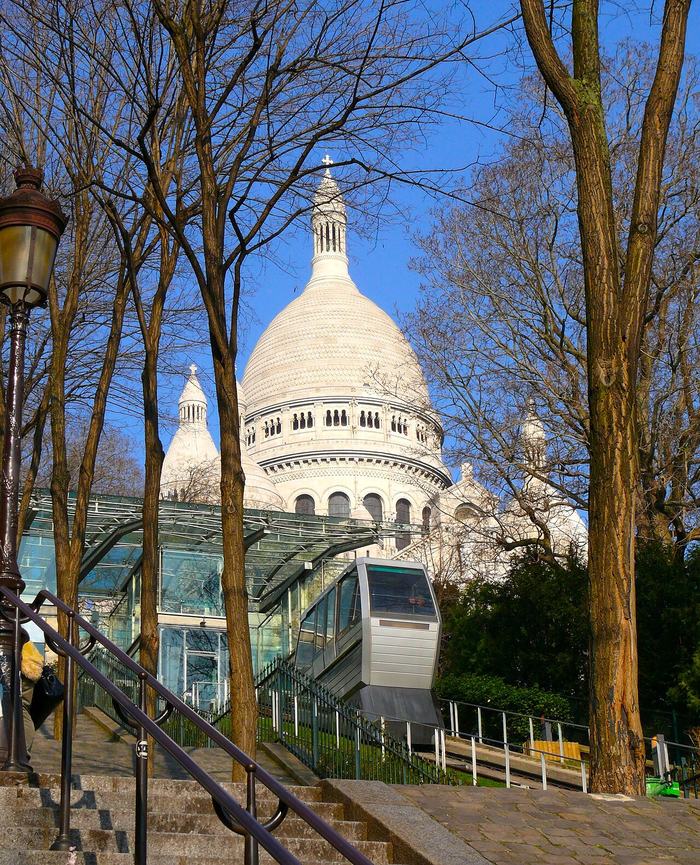
Visitors with reduced mobility have a lift, at 35 rue du Chevalier-de-la-Barre behind the basilica, open from 8.30am to 6.30pm.
The bracelet trick. On the steps and at the foot of the gardens, men approach visitors and try to tie a string “friendship bracelet” on their wrist, then demand money for it. A firm no and keep walking is all it takes. As anywhere crowded in Paris, keep your phone and wallet out of reach.
The outside
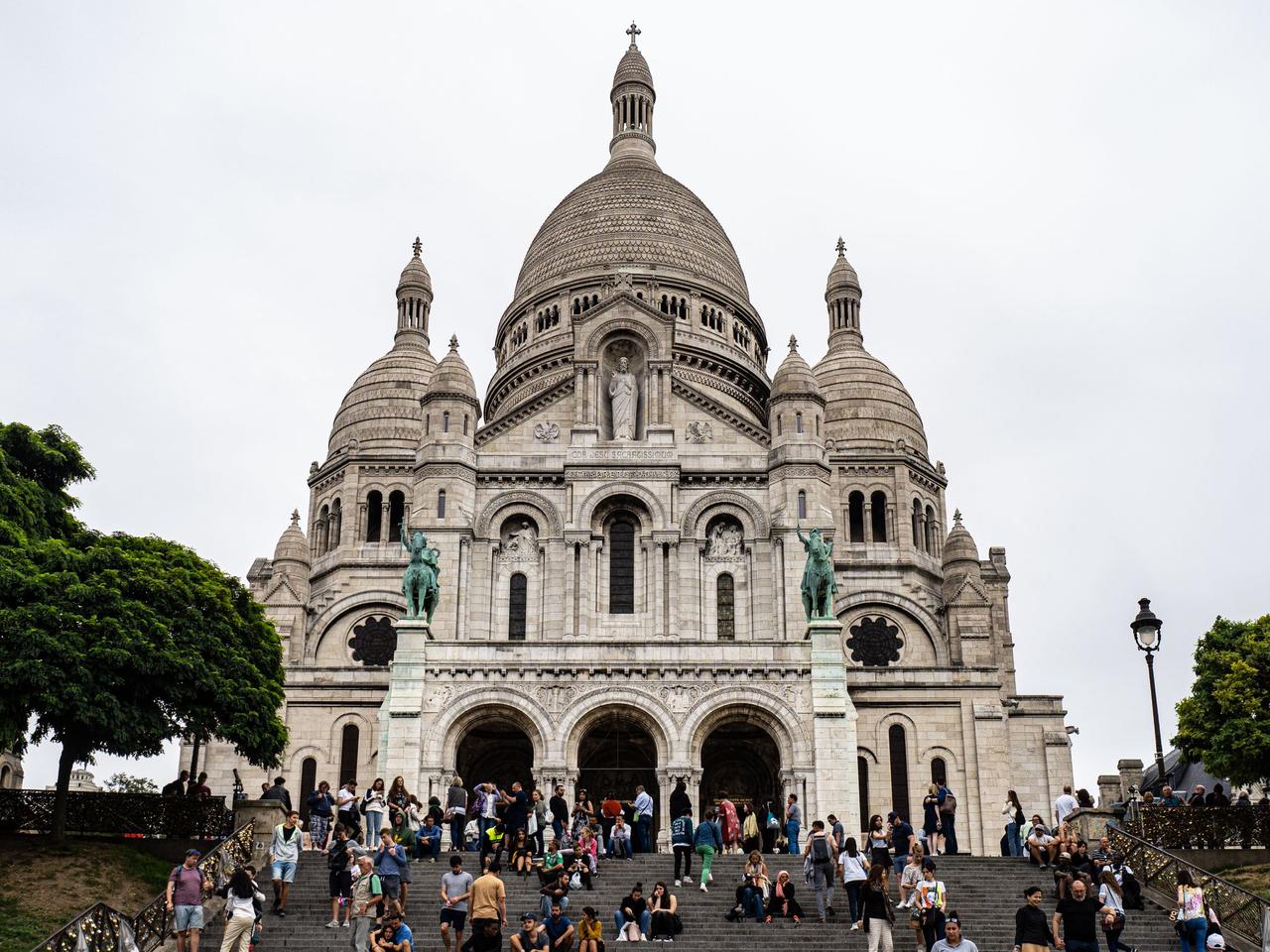
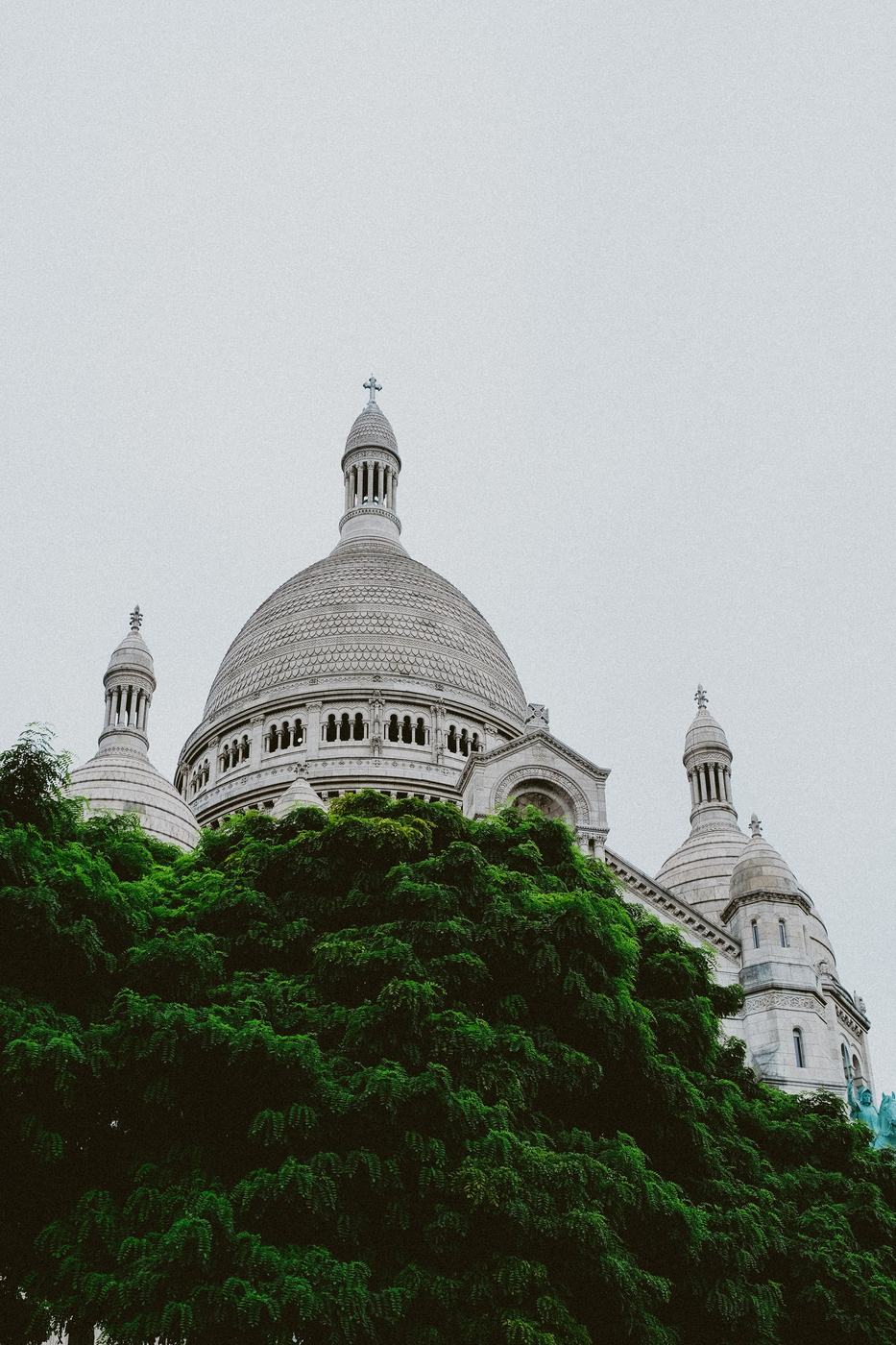
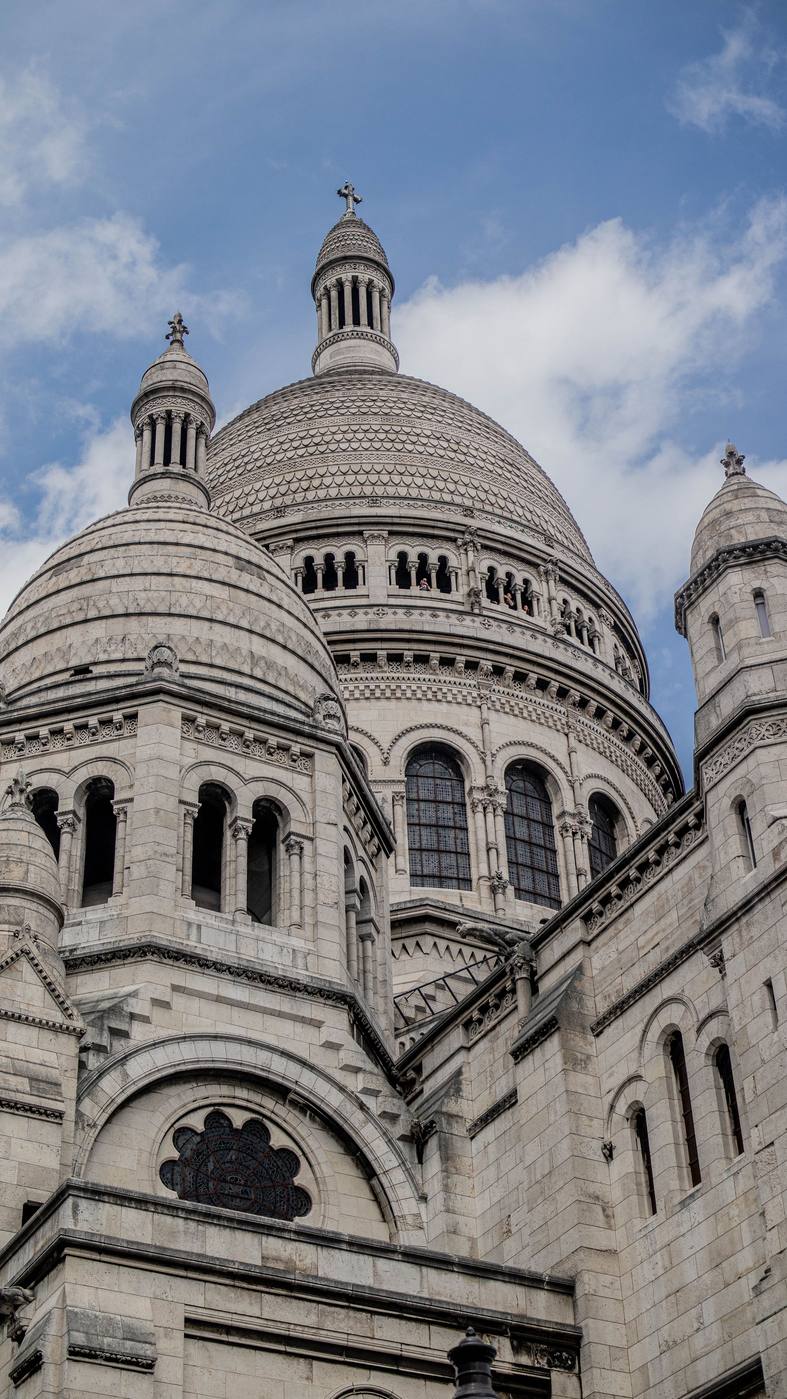
The first thing most people notice is the whiteness. The stone is travertine from Château-Landon, south-east of Paris, which releases calcite when it rains; rainwater bleaches it, and it has stayed white while the rest of Paris weathered grey. The main dome rises to eighty-three metres, and the whole building stands on the highest natural point in the city.
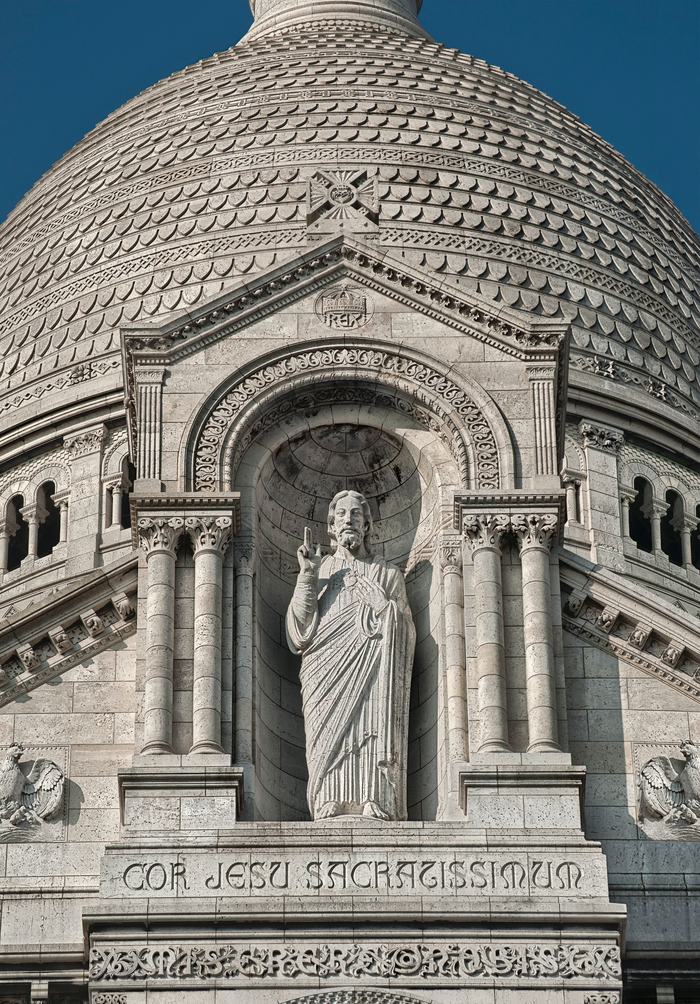
Over the porch are two bronze equestrian statues, of Joan of Arc and of Saint Louis, and in the niche above them a statue of Christ over the Latin dedication Cor Jesu Sacratissimum, to the Most Sacred Heart of Jesus.
The square bell tower behind the dome holds the Savoyarde, one of the heaviest bells in France at about nineteen tonnes. It was cast at Annecy in 1891, a gift of the dioceses of Savoy, and brought to Paris in 1895 on a wagon drawn by a team of horses.
Inside the basilica
The interior is darker and quieter than the outside suggests. The plan is a Greek cross under the great dome, and your eye goes straight to the apse. There, filling the half-dome above the altar, is the mosaic of Christ in Majesty by Luc-Olivier Merson, dedicated in 1923: Christ with his arms outstretched and his heart shown on his breast, surrounded by the Virgin, Joan of Arc, Saint Michael and figures representing France. At about 475 square metres it is one of the largest mosaics in the world.
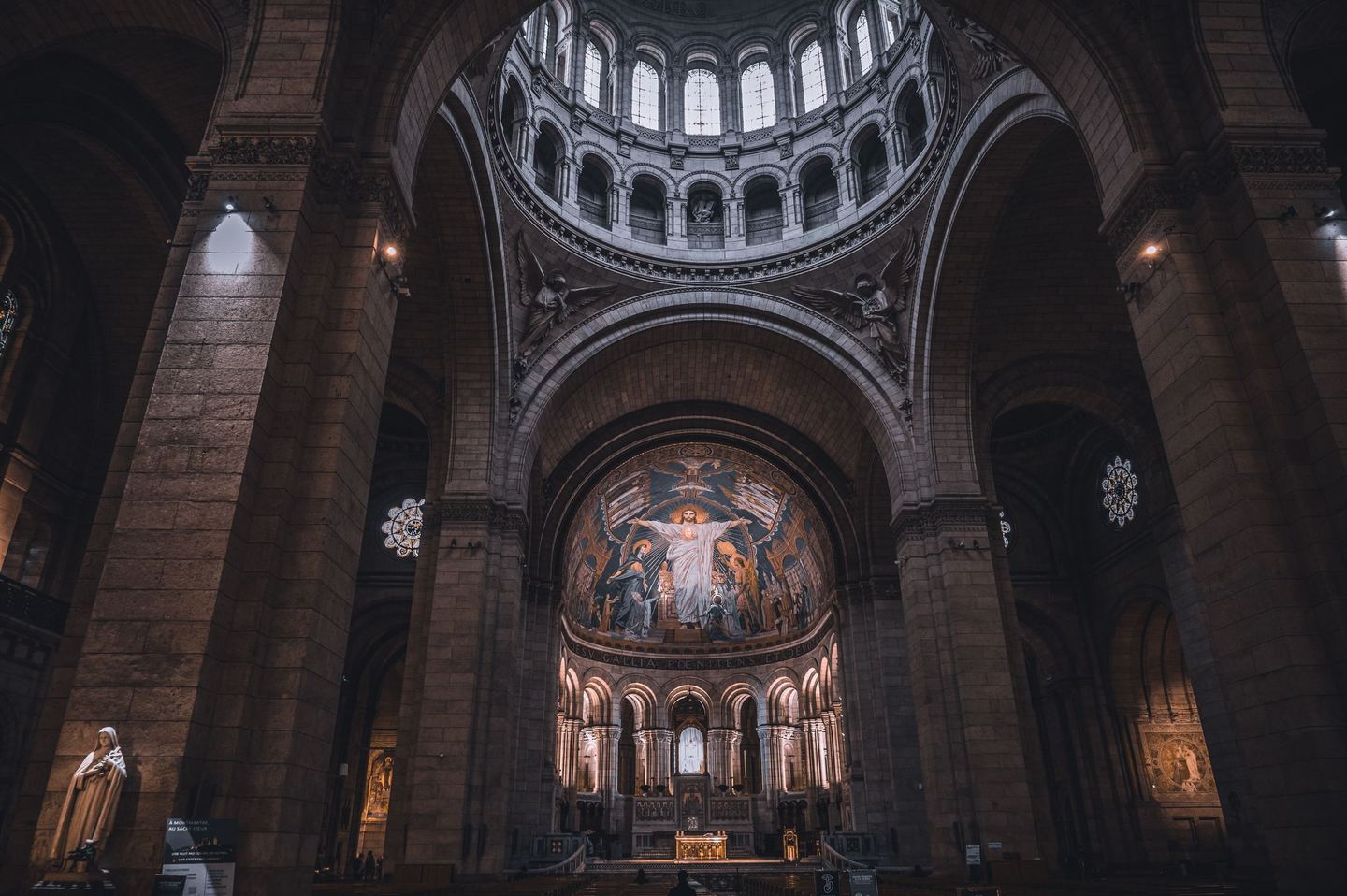
The Blessed Sacrament is exposed on the high altar, and adoration has continued without interruption, day and night, since 1885. That is the reason for the silence and for the rule against photographs. Pilgrims can arrange to spend a night in prayer in the basilica, and the guesthouse beside it exists for them.
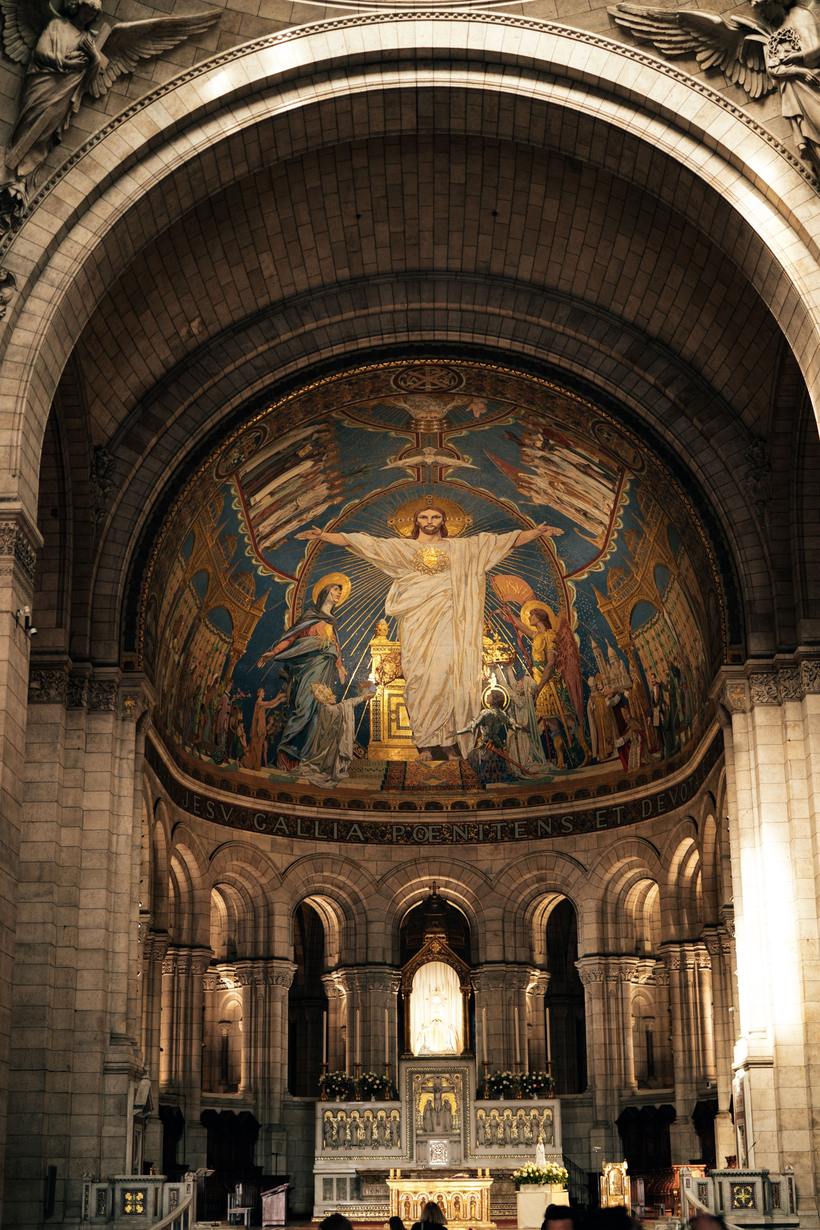
The great organ, by Aristide Cavaillé-Coll, is being restored and is not expected to be playable again until the summer of 2027. There are no concerts at Sacré-Cœur in any case: the basilica’s music is its liturgy, and Vespers and Masses are sung by the Benedictine sisters who serve it.
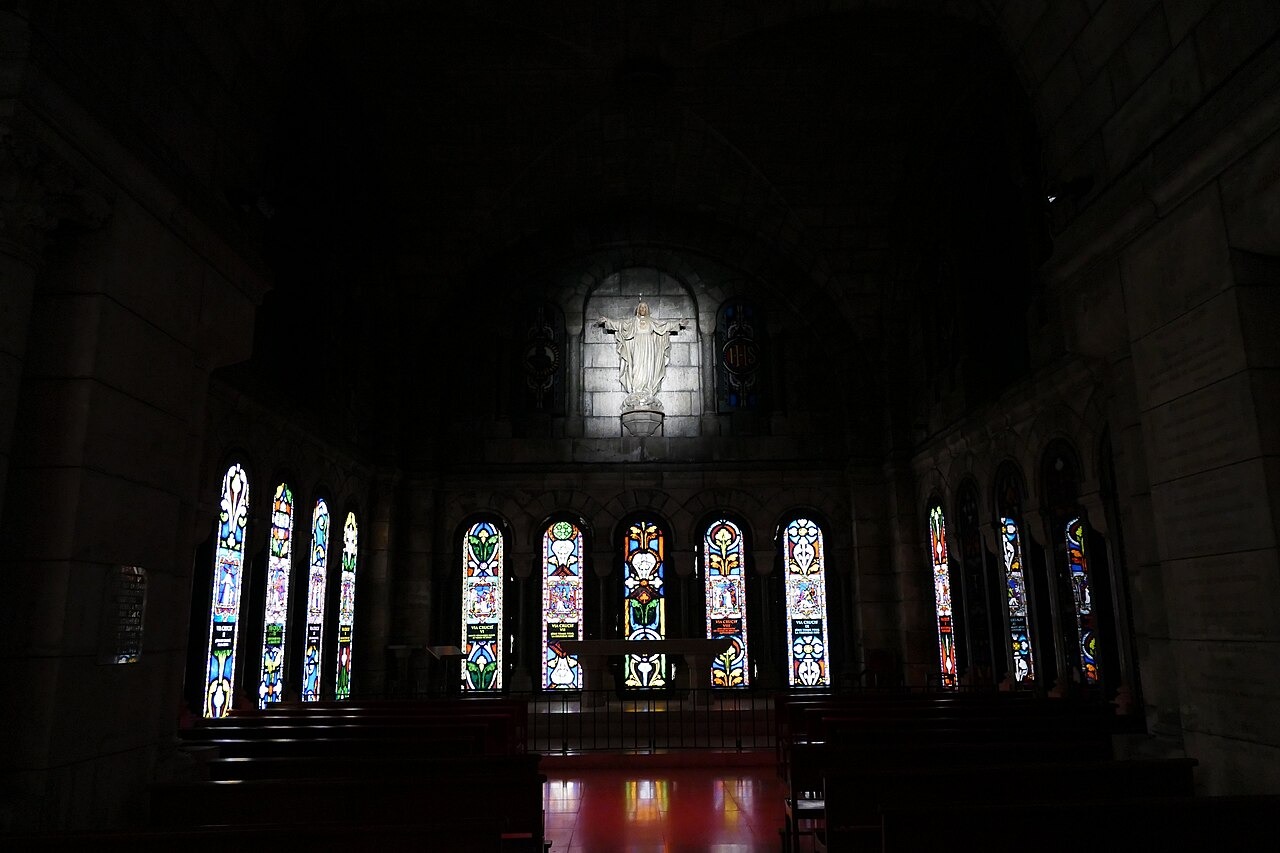
Beneath the choir is a large crypt with chapels of its own. It is not always open, but if it is on your visit, it takes only a few minutes.
The dome
The dome is one of the highest viewpoints in Paris, and the view from its gallery is the reason many people come. It is roughly three hundred steps, in narrow spiral stairs with no lift, and it takes you around the outside of the dome and then up to the open gallery. Tickets, €8 for adults and €5 for children, are sold only on the spot, at the entrance outside, to the left of the basilica after security, down into the moat. The dome opens at 10.30am and closes at 8.30pm, with last entry at 8pm, and shuts for a break in the middle of the day.
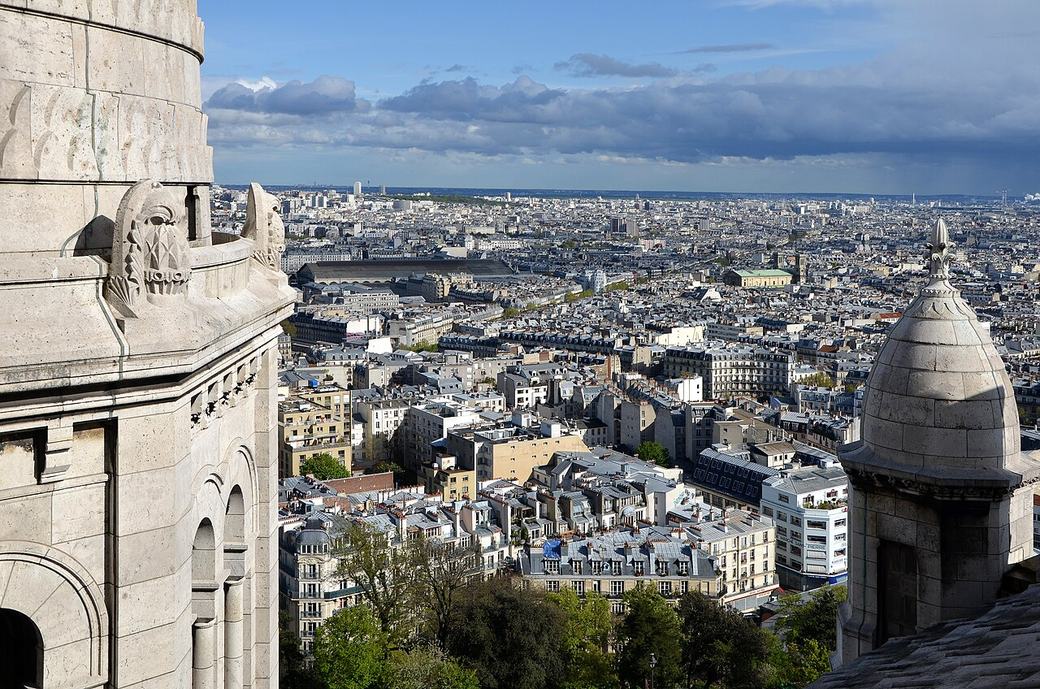
The dome is closed in bad weather and very high wind, and it is not for anyone who dislikes tight stairs. If the dome is shut, the view from the steps in front of the basilica is almost as good, and it is free.
A contested monument
It is worth knowing, before you go, that Sacré-Cœur has never been politically neutral. It was vowed in penance for the sins of France, it was declared of public utility by a conservative Assembly, and it rose on the hill where the Commune had begun. For generations of Parisians on the left it was a monument to the Commune’s defeat, and that argument has never quite ended. The basilica belongs to the City of Paris, and it was protected as a monument historique only in December 2022.
When to go
Because the basilica opens at 6.30am and closes at 10.30pm, you have more choice here than almost anywhere in Paris. Early morning is the best time of all: the steps are empty, the light is soft on the stone, and inside there are only people at prayer. The busiest hours are from late morning to late afternoon, when the tour coaches arrive and the queue for security grows. The steps are crowded again at sunset, when half of Montmartre comes to watch the light go over the city, and after dark the white domes are floodlit.
Remember that this is a working church. Mass is said several times a day, and while it is going on visitors are asked to keep to the side aisles and to keep quiet. Times are on the official website. The dome is closed in bad weather, so if the view is the reason you are going, pick a clear day.
Around Montmartre
Most visitors combine the basilica with a walk through Montmartre: the Place du Tertre with its painters, a few minutes west, the Musée de Montmartre, and the lanes down to Abbesses. Just west of the basilica is the church of Saint-Pierre de Montmartre, one of the oldest churches in Paris, consecrated in 1147 and all that remains of the royal abbey of Montmartre. It is free, quiet and a striking contrast: a small, dim Romanesque and Gothic church, in the shadow of the vast white basilica that was built to overshadow it.
Montmartre was a separate village until 1860, and it keeps something of that feeling once you step off the main streets. On its north slope is the Clos Montmartre, a small vineyard whose harvest is celebrated every October, and below it the Lapin Agile, the cabaret where Picasso and his friends drank before the First World War. The walk down through the rue de l’Abreuvoir and the rue Lepic to Abbesses takes half an hour and is the best way to leave the hill.
Sacré-Cœur is on the other side of the city from Notre-Dame and the Sainte-Chapelle. Line 4 from Cité to Barbès, then line 2 one stop to Anvers, takes about twenty-five minutes.
Plan your visit
Sacré-Cœur needs no ticket. For a guided walk through Montmartre, or somewhere to stay in Paris:
Some links are affiliate links. They cost you nothing extra and help keep this guide independent.
Frequently asked questions
Common questions
Is Sacré-Cœur free to enter?
Yes. Entry to the basilica is free, every day from 6.30am to 10.30pm, and there is no booking. Between about 10.30am and 5pm expect a wait of ten to fifteen minutes at the security check. Only the climb up the dome is paid.
How much is the Sacré-Cœur dome?
€8 for adults and €5 for children, paid on the spot: there is no online booking. The climb is about three hundred steps with no lift. The dome is open from 10.30am to 8.30pm, with last entry at 8pm, and closes for a break in the middle of the day.
Can you take photos inside Sacré-Cœur?
No. The basilica is a place of continuous prayer, with the Blessed Sacrament exposed day and night, and photography and filming are not allowed inside. You can take photographs from the dome and outside.
What is the easiest way up to Sacré-Cœur?
Take the funicular from Place Saint-Pierre, at the foot of the gardens, which runs on an ordinary Métro ticket and saves you the stairs. Visitors with reduced mobility can use the lift at 35 rue du Chevalier-de-la-Barre, behind the basilica, from 8.30am to 6.30pm.
Why was Sacré-Cœur built?
It was vowed after France’s defeat by Prussia in 1870, as a national act of penance dedicated to the Sacred Heart of Jesus. Building began in 1875 and the basilica was consecrated in 1919. That origin, and its site on the hill where the Paris Commune began in 1871, have kept it politically contentious ever since.