
St Peter’s Church, Barton-upon-Humber
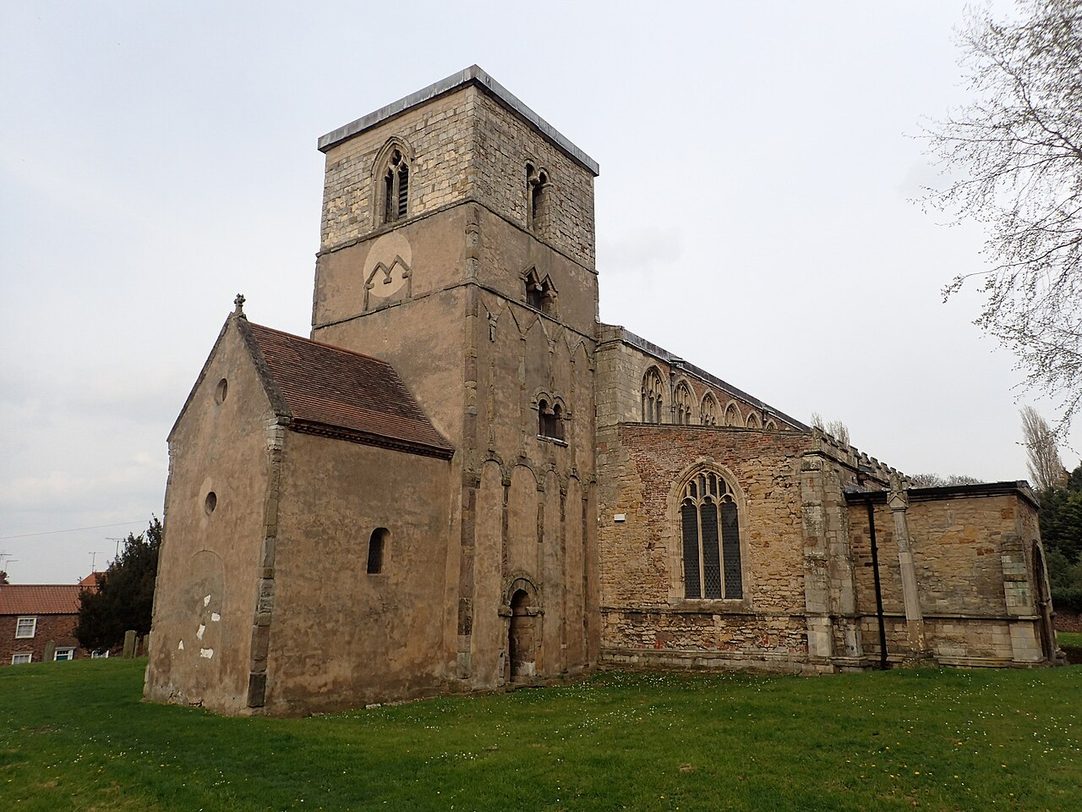
At the southern end of the Humber Bridge, in a quiet market town, stands one of the most important Anglo-Saxon buildings in England. The tower of St Peter’s was built around the year 1000, and a whole Gothic church later grew out of it. Below its floor archaeologists found nearly 3,000 burials, and the church now tells their story.
A tower that was once a church
The first church on the site was a ‘tower-nave’: the tower itself was the room where people worshipped, with a tiny baptistery on its west side and a small chancel on its east. The tower and the baptistery still stand. A third, belfry stage was added to the tower after the Norman Conquest.
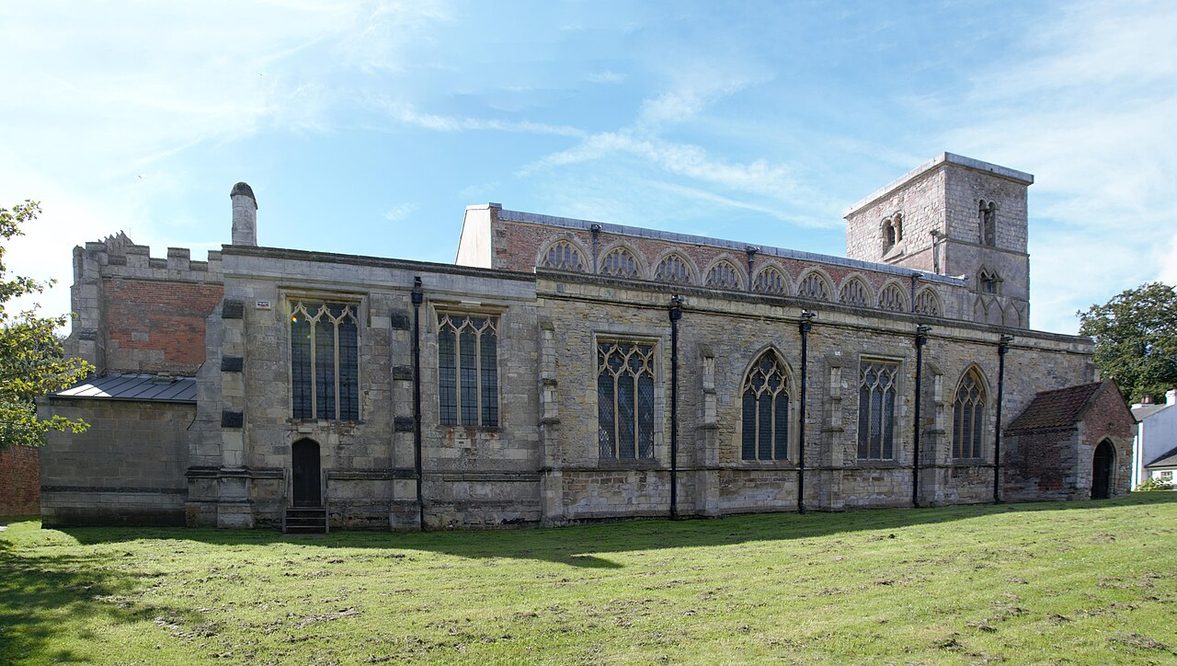
In the following centuries the church was rebuilt and extended eastwards, until the Saxon tower stood at the west end of a full Gothic church, with a fourteenth-century nave, a clerestory and a fifteenth-century chancel. In 1970 the congregation moved to St Mary’s (St Peter’s was declared redundant in 1972), the other medieval church in the town, a short walk away.
The visitor's cheat sheet
| Where | Beck Hill, Barton-upon-Humber, North Lincolnshire, DN18 5EX |
|---|---|
| Getting there | Barton-on-Humber station about 15 minutes’ walk; limited parking in nearby streets |
| Opening hours | Selected Sundays, 12pm–4pm (in 2026: six Sundays from May to October, the last on 18 October); outside visible at any reasonable time |
| Admission | Free; donations welcome; no need to book |
| How long | 45 minutes to an hour |
| Best time | An open Sunday, combined with the Humber Bridge |
| Dress code | No rule |
| Tours | Self-guided; ‘Buried Lives’ exhibition; three steps into the grounds |
Hours and admission checked against the official site in October 2026. They change; the official site is always the last word.
Where Saxon architecture was first recognised. In 1819 the architect Thomas Rickman studied St Peter’s tower, and it helped him and others to identify, for the first time, which English buildings were Anglo-Saxon rather than Norman.
What to see, in the order you meet it
The tower and the baptistery
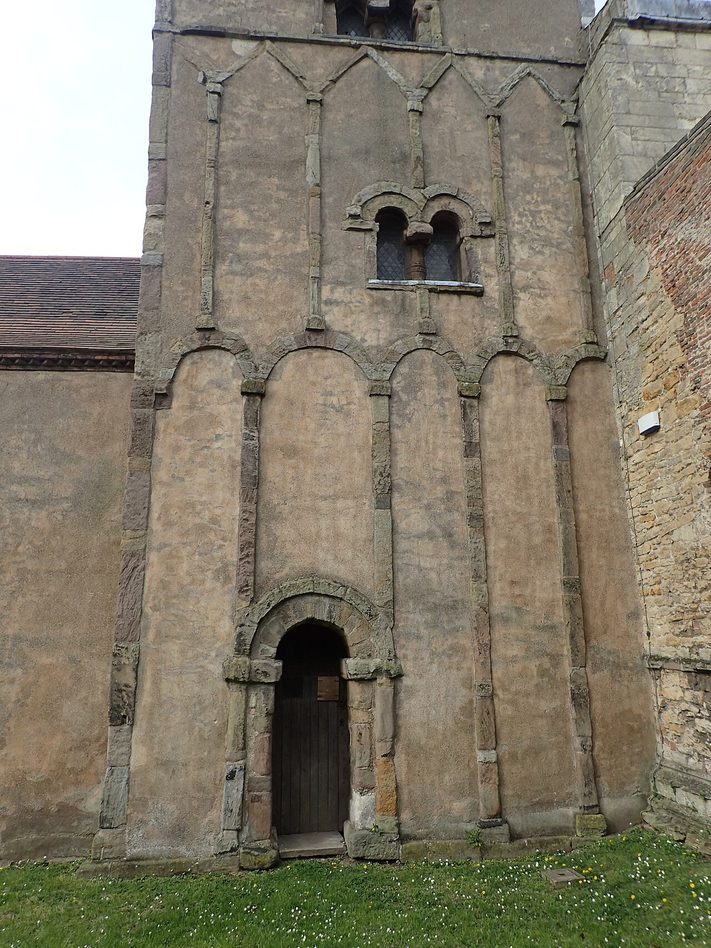
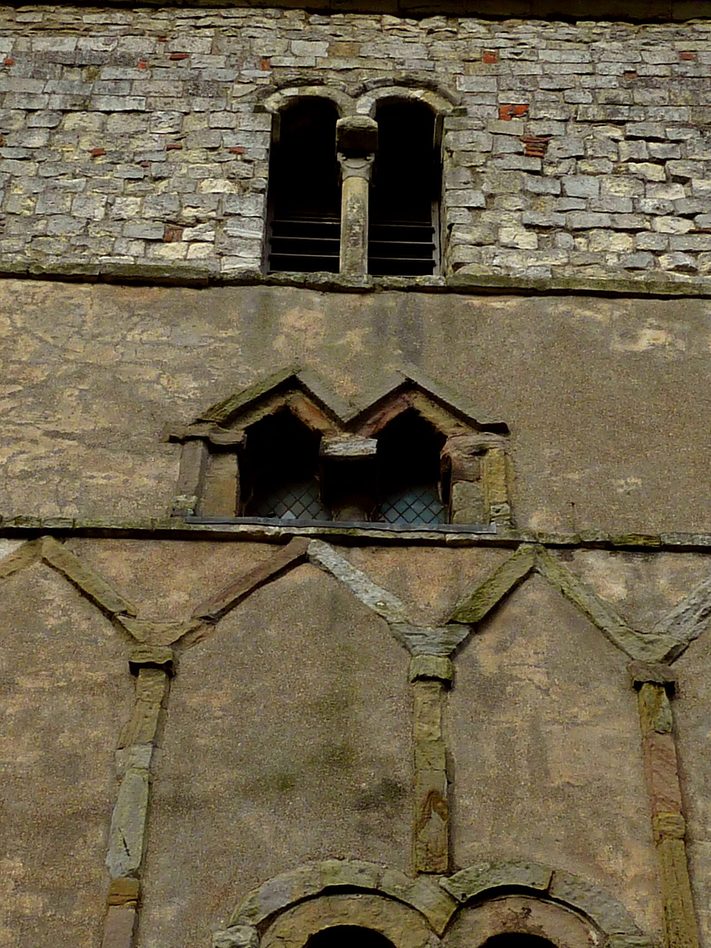
Walk round the outside first. The tower is covered in thin strips of stone, laid in patterns of vertical lines and round and triangular arches, with small paired windows divided by shafts. The corners are built in the long-and-short work typical of late Saxon masons. The little baptistery to the west is of the same period, and may be a little older.
Inside the tower
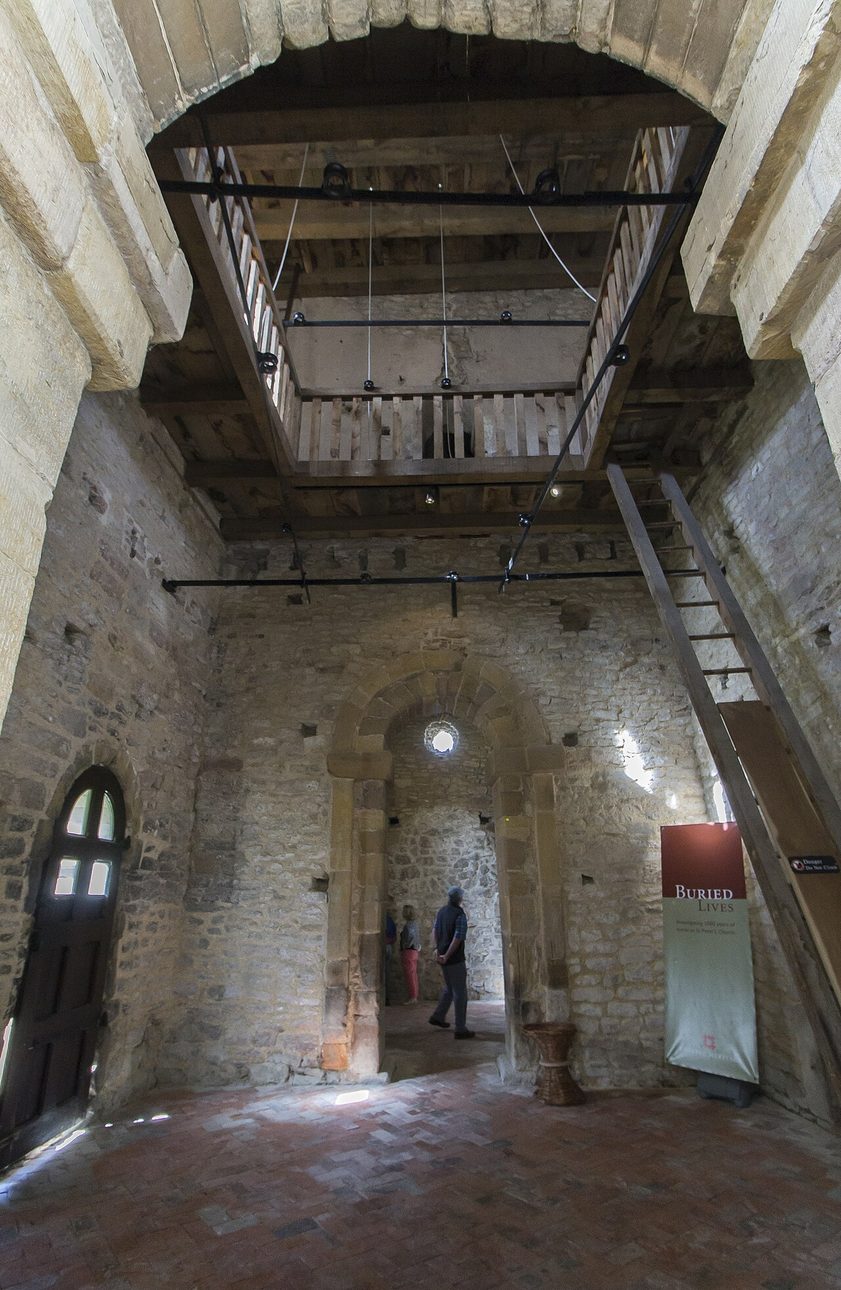
Step inside the tower and you are standing in the nave of the first church: a tall, plain, narrow room with Saxon doorways on its sides.
The Gothic church and ‘Buried Lives’
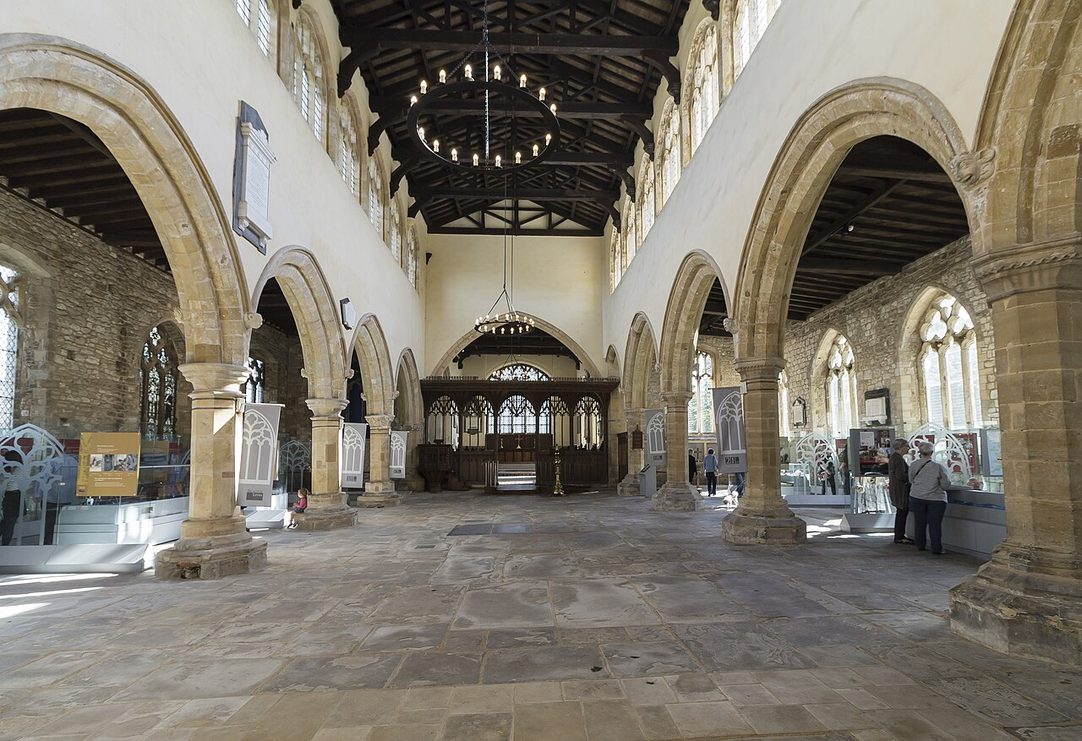
Beyond the tower is the large medieval church, empty of pews. Between 1977 and 1985 it was the scene of the most extensive excavation ever made of an English parish church, which recovered the remains of nearly 3,000 people buried over almost 900 years, from Anglo-Saxon to Victorian times. Some wooden coffins survived in the waterlogged ground. The ‘Buried Lives’ exhibition in the nave uses them to show what life and death were like in a small English town.
Visiting
Free, on selected Sundays
Entry is free, with donations welcome, and there is no need to book. The church opens on selected Sundays from 12pm to 4pm; check the English Heritage website for the dates.
The hotel link goes to Booking.com. This site earns nothing from it at present — it is here because it is the quickest way to check what is actually available.
Don't miss
- The Saxon tower Built around the year 1000.
- The baptistery The tiny west room of the first church.
- The paired windows Triangular and round heads.
- ‘Buried Lives’ The story of nearly 3,000 burials.
- The Gothic nave Empty, light and spacious.
- St Mary’s The town’s other medieval church, nearby.
Insider tips
Plan around the open Sundays. St Peter’s opens only a handful of times a year, so check the dates before you go. On the same day you can walk on the Humber Bridge or visit Hull Minster, half an hour away across the bridge.
Common questions
Does it cost anything to visit St Peter’s?
No. Entry is free, and English Heritage asks for a donation to help look after the church. There is no need to book.
When is St Peter’s open?
Only on selected days. In 2026 English Heritage opened it from 12pm to 4pm on six Sundays between May and October, the last on 18 October. Check the English Heritage website for the current dates. The outside of the tower can be seen from the churchyard at any reasonable time.
Why is the tower so important?
It is one of the finest Anglo-Saxon towers in England, built around the year 1000 and decorated with thin stone strips, round and triangular arches and small paired windows. It was the nave of the first church, with a little baptistery to the west and a chancel to the east.
What is the ‘Buried Lives’ exhibition?
Excavations in and around the church between 1977 and 1985 uncovered the remains of nearly 3,000 people, buried over about 900 years. The exhibition tells what their bones reveal about life, illness and death in a small English town. The remains were reburied in an ossuary at the church in 2007.
How do you get to Barton-upon-Humber?
Barton is on the south bank of the Humber, at the southern end of the Humber Bridge. Barton-on-Humber station, at the end of the line from Cleethorpes, is about 15 minutes’ walk from the church. There is limited parking in nearby streets.
Where to stay and eat nearby
Barton has pubs and cafés; for hotels, Hull is just across the Humber Bridge.
More English churches
- Hull Minster — across the bridge
- Lincoln Cathedral — the great church of Lincolnshire
- St Laurence, Bradford on Avon — another Anglo-Saxon survivor
See all the cathedrals and churches worth visiting in England →