
St Peter and St Paul, Lavenham
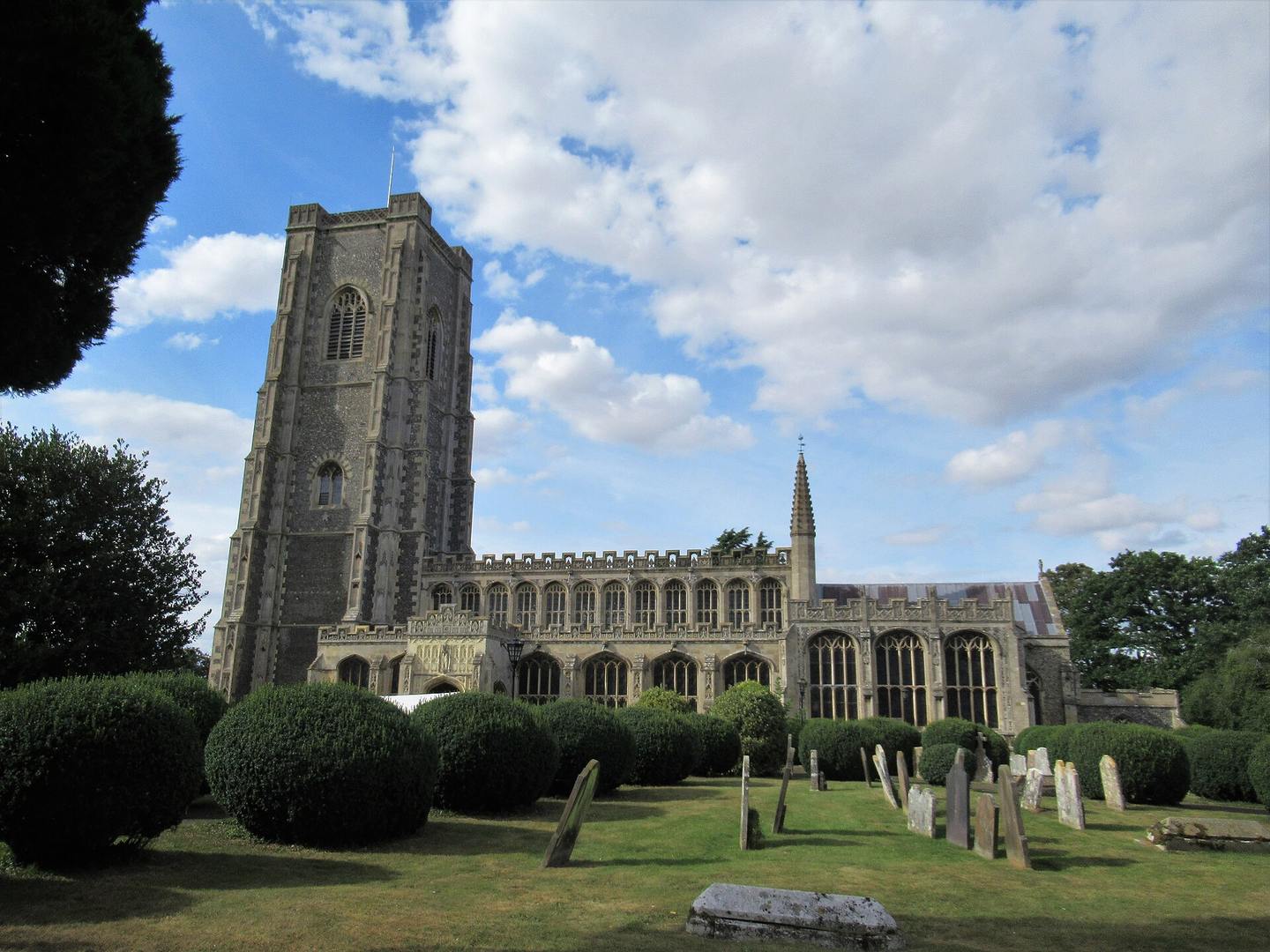
Lavenham is the most perfect medieval village in England, a tangle of crooked timber-framed houses built on the wool trade. At its top stands the church that the same money paid for: a vast, pale, late Gothic building with a tower that dominates the countryside for miles. Lavenham church is the greatest of the Suffolk wool churches and one of the last great churches built in England before the Reformation.
Built by an earl and a clothier
The chancel of an older church survives from about 1340, but the rest was rebuilt between about 1485 and 1525. The work was led by John de Vere, thirteenth Earl of Oxford, the lord of the manor, who had commanded Henry VII’s army at Bosworth, and by the clothiers of the Spring family, the richest in Lavenham. The master mason was probably John Wastell, who also worked on King’s College Chapel in Cambridge.
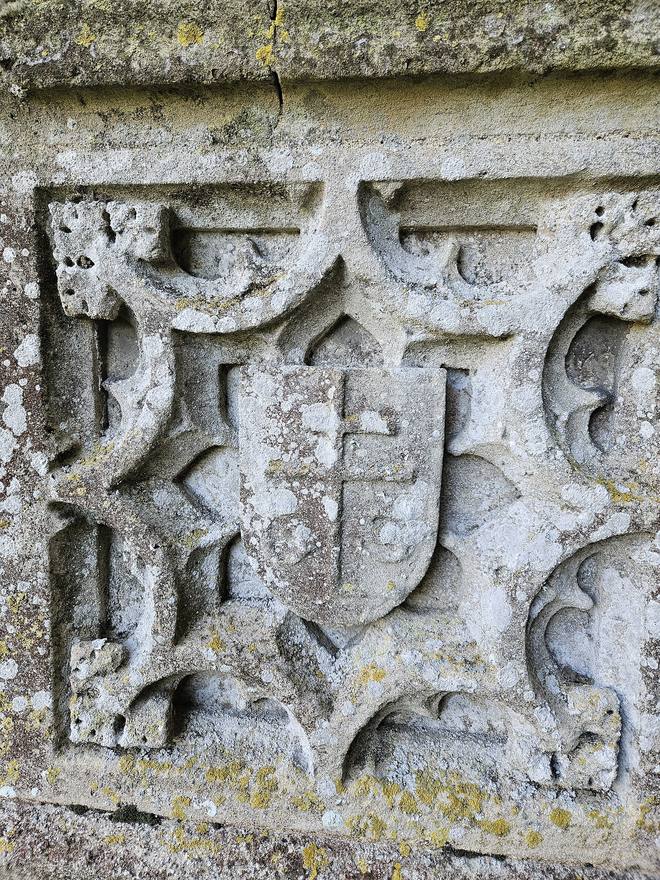
Both families left their mark. The Spring arms and Thomas Spring’s merchant’s mark appear more than thirty times on the outside of the church, and the stars of the de Veres run round the top of the tower. Within a few years of completion, the Reformation ended the age of building churches like this, and Lavenham’s cloth trade faded soon after, which is why the village, and its church, survived so little changed.
The visitor's cheat sheet
| Where | Church Street, Lavenham, Suffolk, CO10 9SA, at the top of the village |
|---|---|
| Getting there | No station; buses from Sudbury and Bury St Edmunds; parking in the village |
| Opening hours | Usually open daily in daylight hours, typically about 8.30am–4.30pm |
| Admission | Free; donations welcome |
| How long | 45 minutes to an hour |
| Best time | Morning, before the day visitors arrive in the village |
| Dress code | No formal code; respectful dress as in any working church |
| Tours | Tower open days on some bank holidays; groups can arrange visits through the parish |
Hours and admission checked against the official site in October 2026. They change; the official site is always the last word.
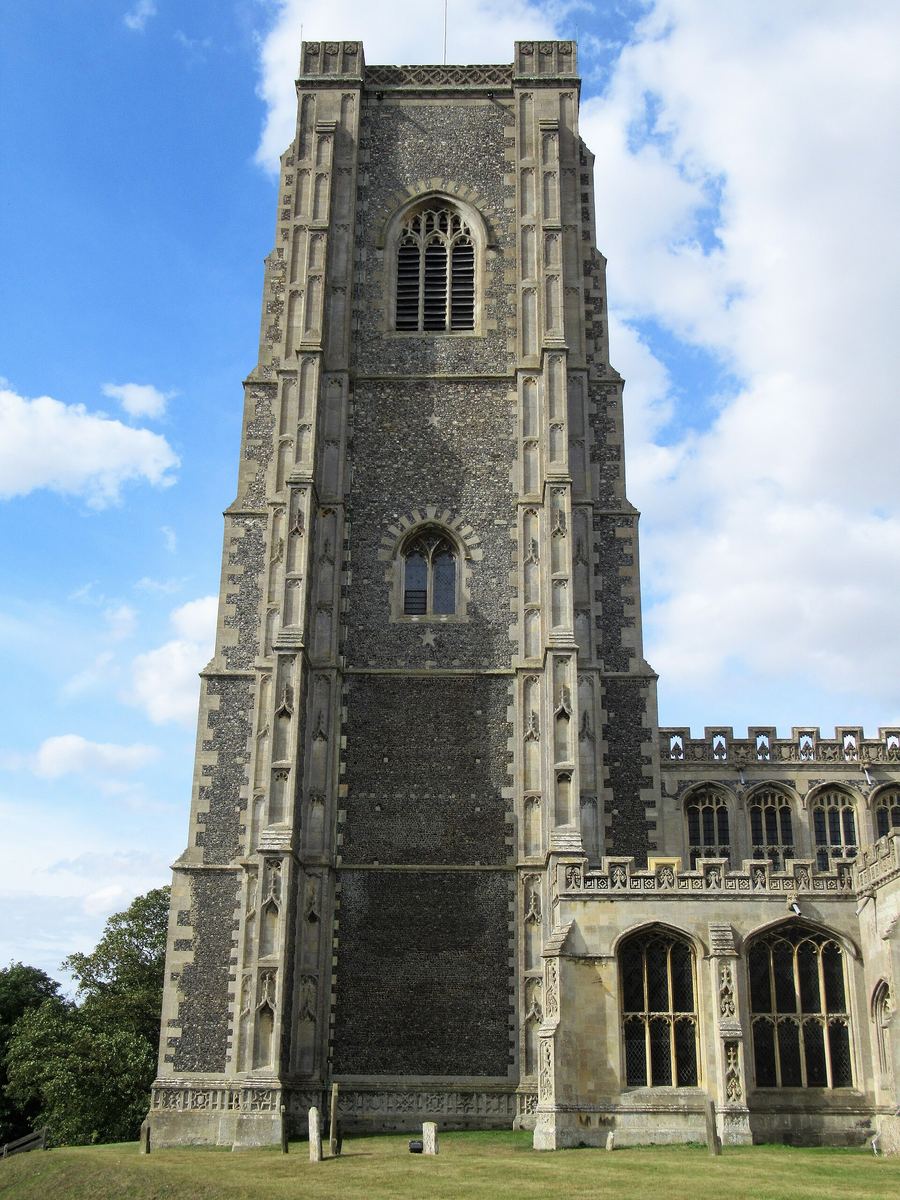
43 metres of tower. The tower, finished in 1525, is unusually tall for a parish church. It holds eight bells; the tenor, cast in 1625, has been called one of the finest-toned bells in England.
What to see, in the order you meet it
The tower and the porch
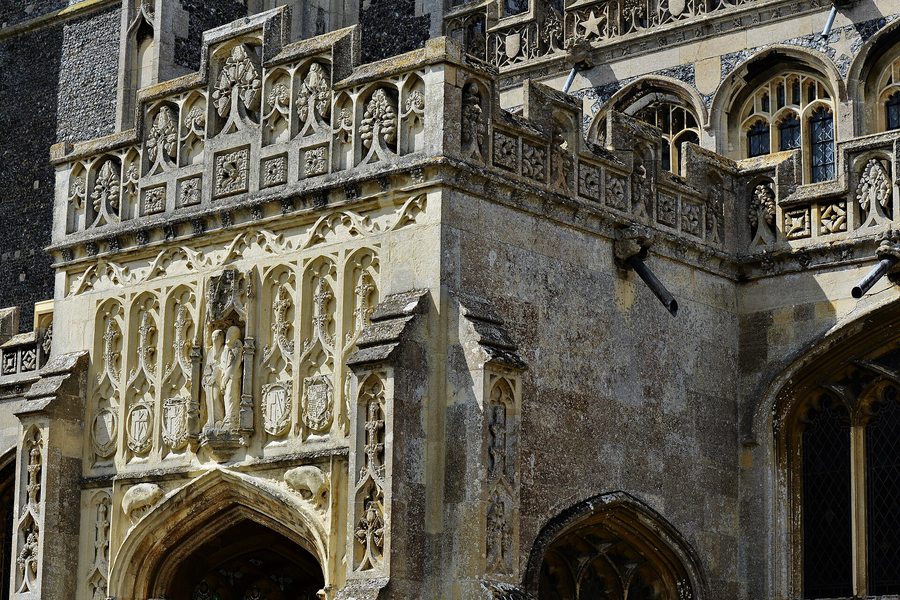
Walk round the outside to see the flint and stone flushwork and the Spring merchant’s marks. The south porch, given by the Earl of Oxford, is carved with the de Vere arms and badges.
The nave
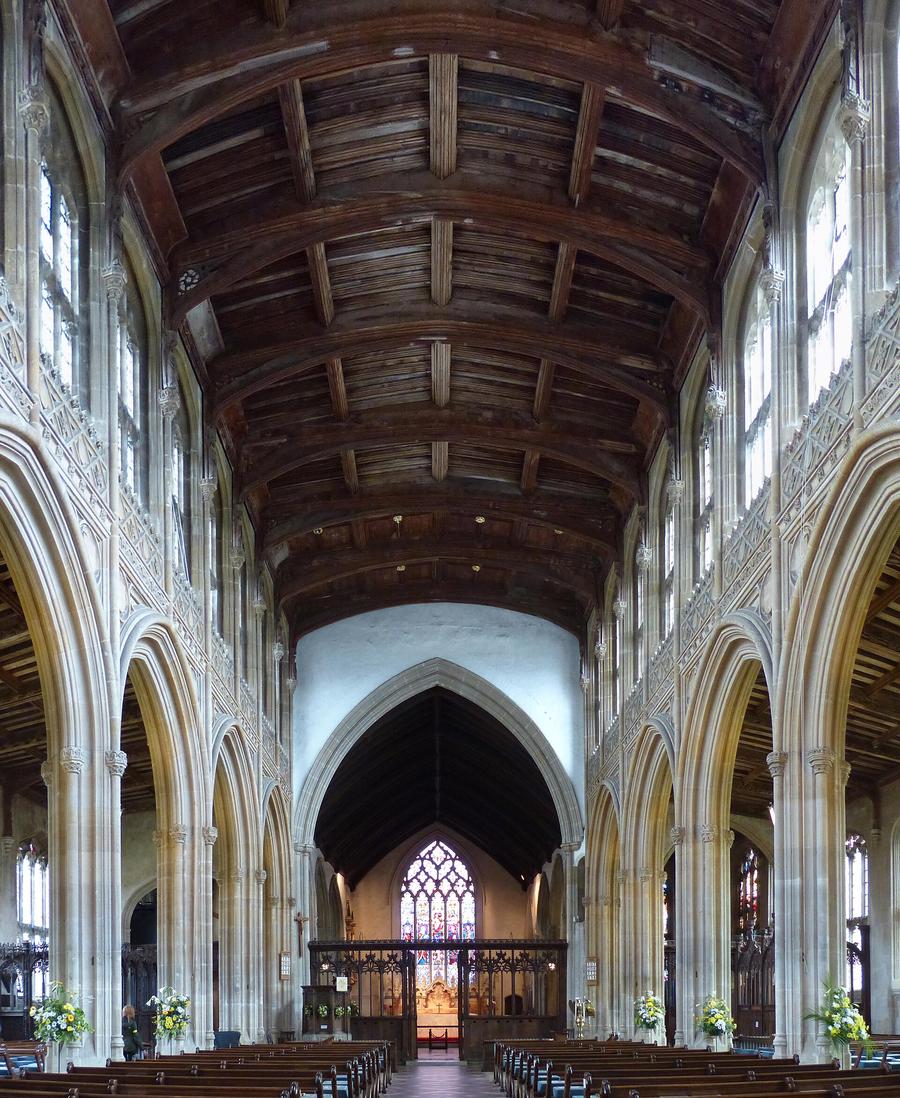
The nave is tall and full of light, with slender piers, a long clerestory and a carved fifteenth-century roof. The Victorian glass has its critics, but the proportions of the space are superb.
The screens
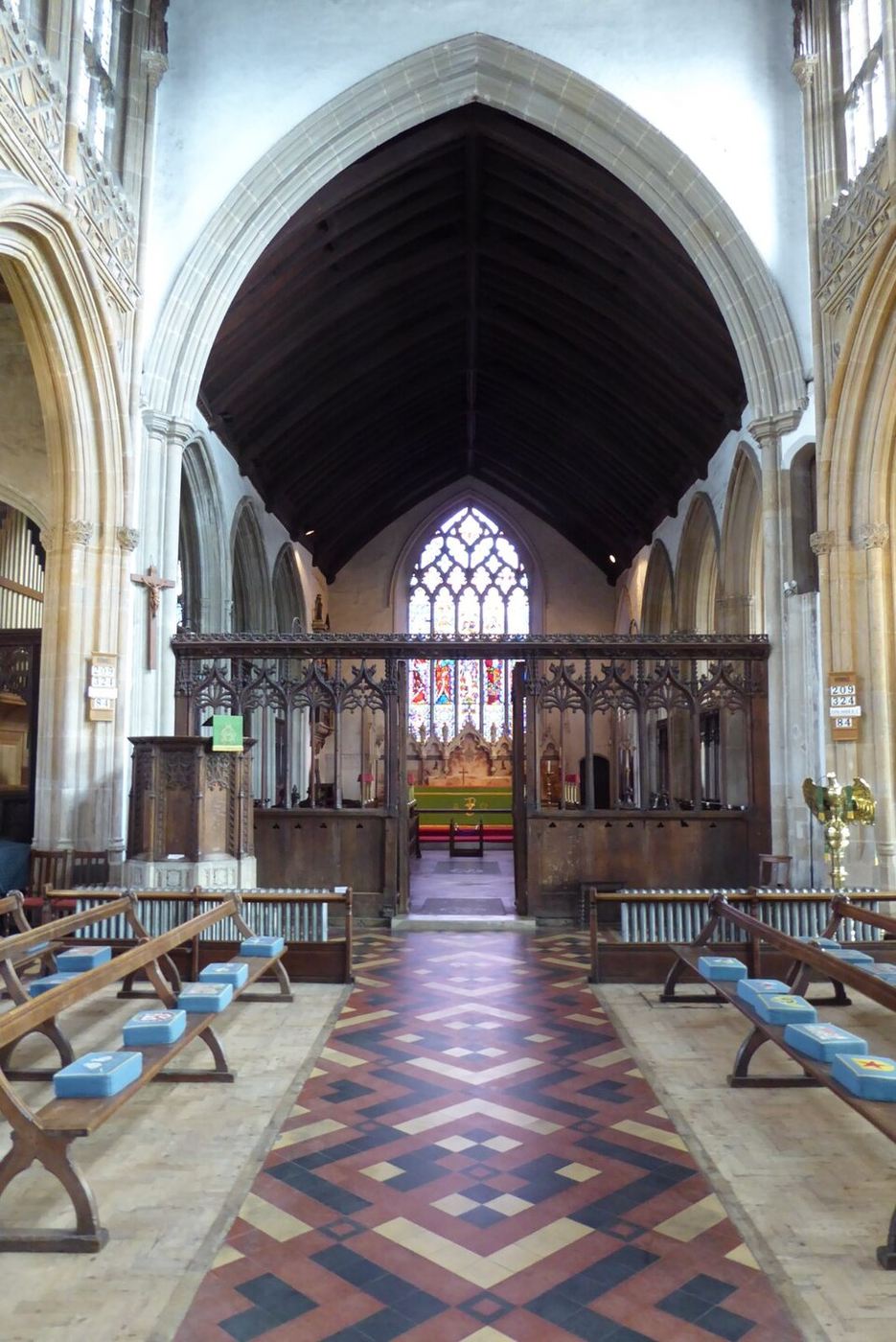
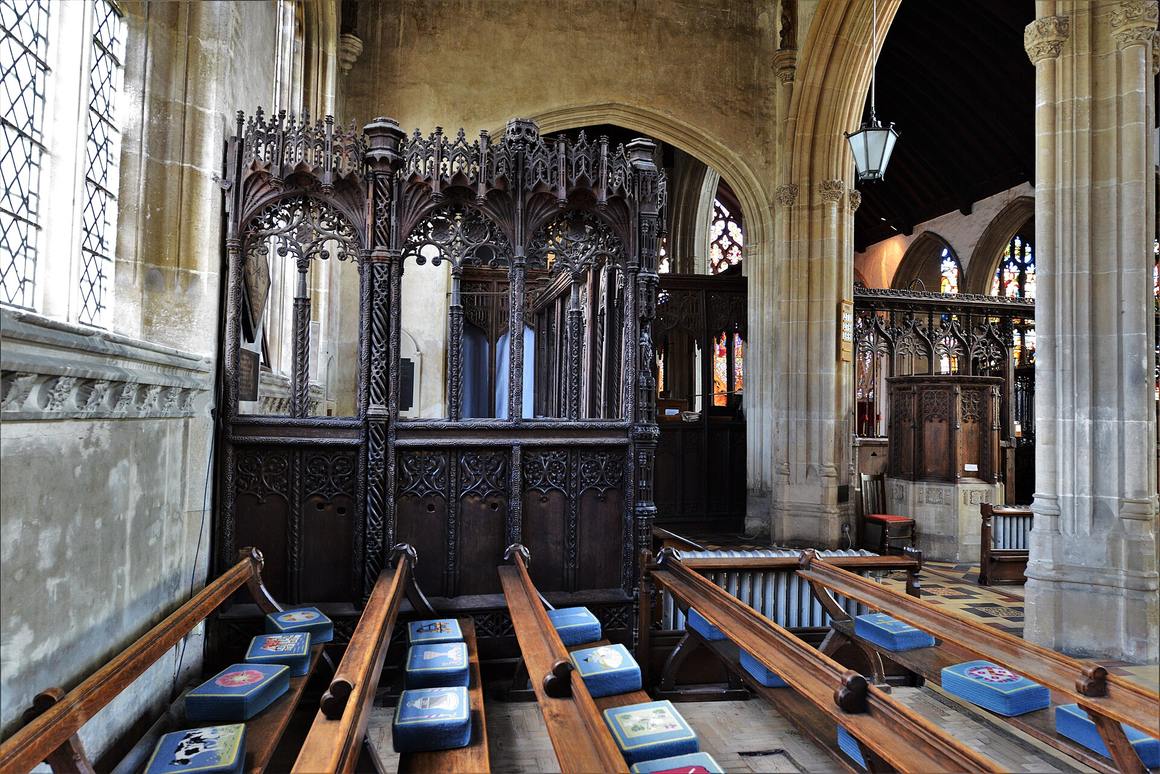
Lavenham is rich in medieval woodwork. Across the chancel arch is a screen of the fourteenth century, older than the nave it stands in. In the aisles, the carved wooden parcloses around the chantry chapels of the Spring family and of the clothier Thomas Spourne are among the finest in England.
The chancel
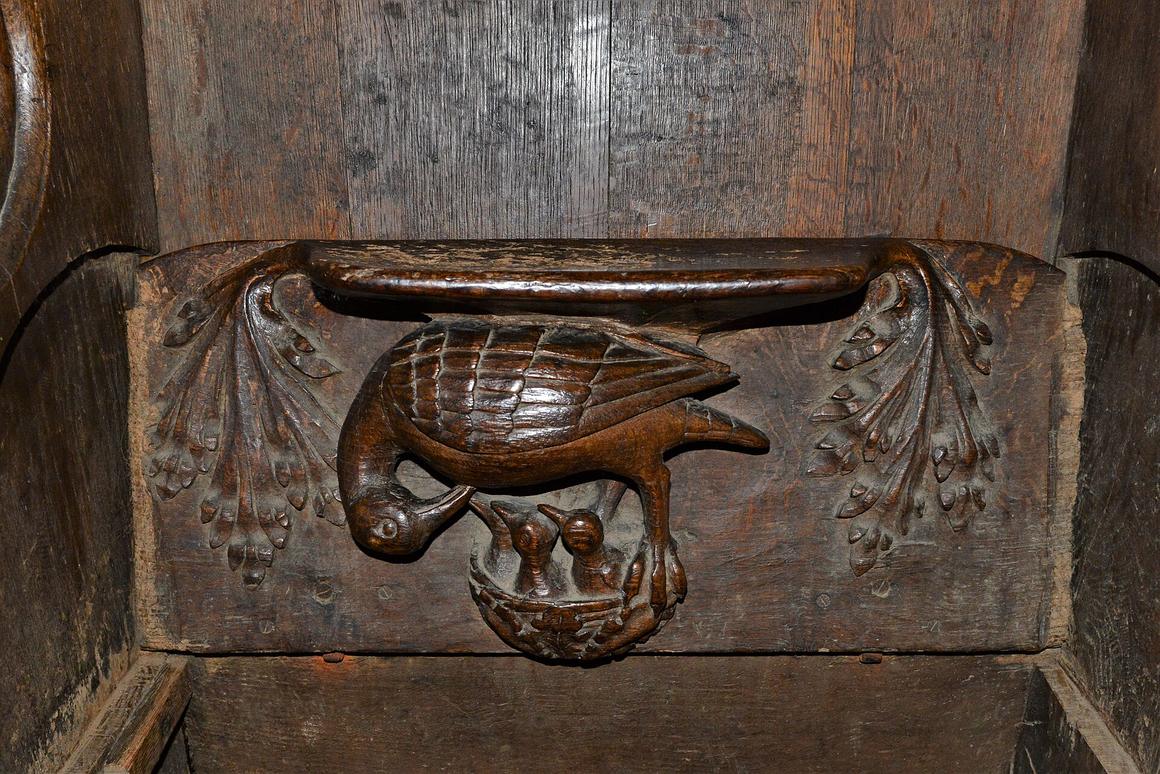
In the chancel, the oldest part of the church, the choir stalls keep five medieval misericords, among them a pelican feeding her young and strange half-human creatures playing music. The Spring Chapel and the Branch Chapel flank the chancel.
Tickets and tours
Free, every day
There is no entry fee and no booking. The church is usually open daily in daylight hours. The tower opens to visitors on occasional open days, usually bank holidays, listed on the church website.
The hotel link goes to Booking.com. This site earns nothing from it at present — it is here because it is the quickest way to check what is actually available.
Don't miss
- The tower Visible for miles across Suffolk.
- The merchant’s marks Thomas Spring’s sign, carved again and again.
- The parclose screens Some of England’s finest medieval woodwork.
- The chancel screen Older than the church around it.
- The misericords A pelican, and musicians half human.
- The village The Guildhall and Little Hall, minutes away.
Insider tips
Walk up from the market place. The church is at the top of the village, so walk up Church Street past the timber-framed houses and come back down by the Guildhall of Corpus Christi, now run by the National Trust. The village gets busy at weekends; early on a weekday is quietest.
Long Melford, with another spectacular wool church, is about four miles away, and the two make a fine day out together.
Common questions
Is Lavenham church free to visit?
Yes. There is no entry fee. The church receives no government funding for its upkeep, so donations are welcome.
When is Lavenham church open?
It is usually open every day in daylight hours, typically from about 8.30am to 4.30pm. It may be closed to visitors during services, weddings and funerals.
Can you climb the tower?
Only on occasional open days, usually on bank holidays, when the spiral stair is opened all the way to the roof. Dates are posted on the church website.
What is a wool church?
A church rebuilt with money from the wool and cloth trade. In the fifteenth century Lavenham was one of the richest towns in England, famous for its blue broadcloth, and its clothiers spent their fortunes on the church.
How do you get to Lavenham?
Lavenham is about 12 miles south of Bury St Edmunds and 7 miles north-east of Sudbury. There is no station; buses run from both towns. The church stands at the top of Church Street, at the south-west edge of the village.
Where to stay and eat nearby
Lavenham has old coaching inns, tea rooms and restaurants in its timber-framed houses.
More English churches
- Blythburgh Church — the Cathedral of the Marshes
- St Edmundsbury Cathedral — in Bury St Edmunds, 12 miles north
- Ely Cathedral — the Ship of the Fens
See all the cathedrals and churches worth visiting in England →