
Whitby Abbey
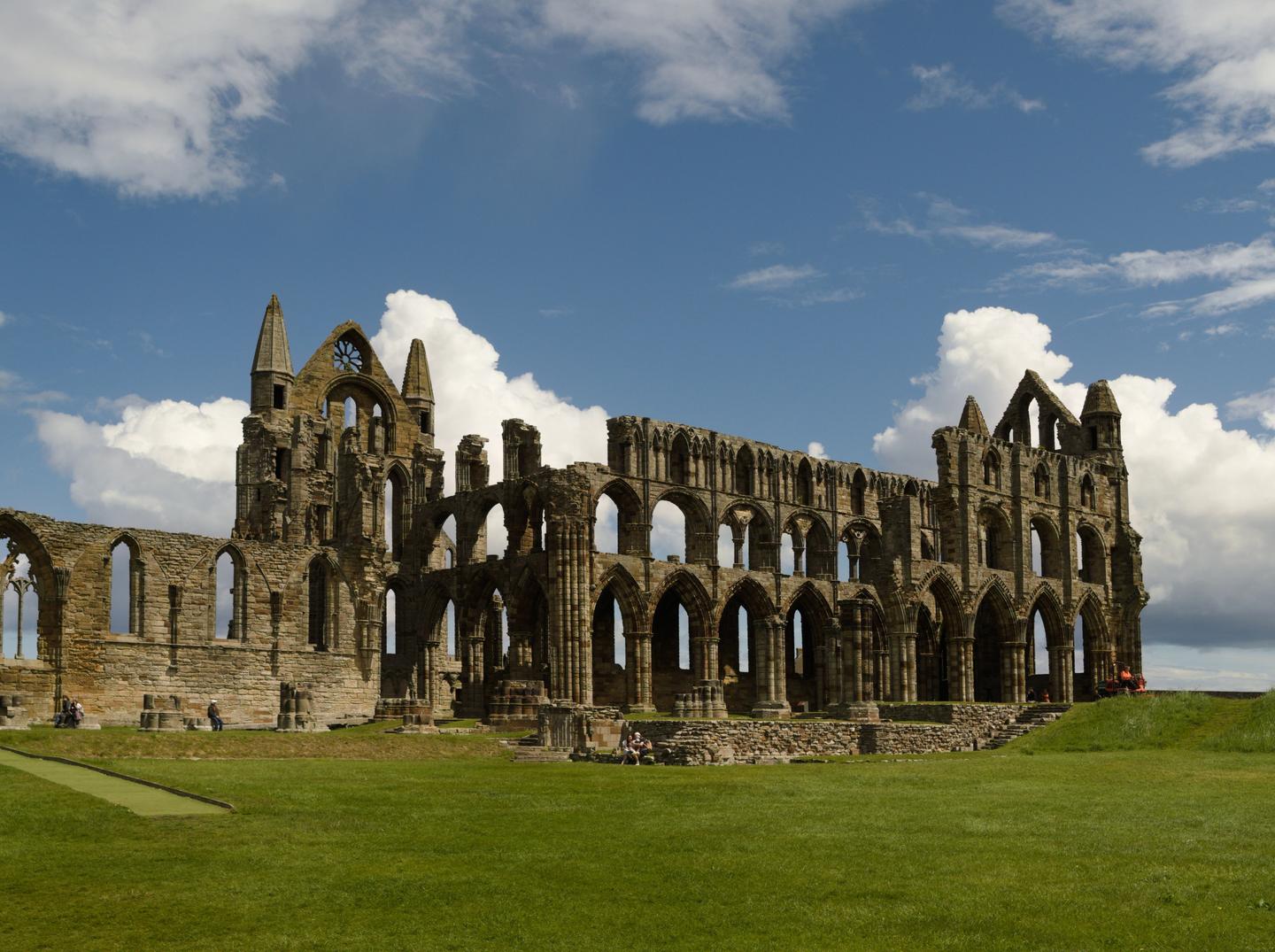
High on the East Cliff above Whitby, the gaunt ruins of the abbey have watched over the town and the North Sea for eight centuries. This headland was the home of St Hilda, the scene of the Synod that shaped the English church, and the place where the first English poet sang. Then, in 1897, Bram Stoker brought Dracula ashore below it, and Whitby has never been quite the same.
Hilda, the Synod and the poet
In about 657, with the support of King Oswiu of Northumbria, the abbess Hilda founded a monastery here, known as Streoneshalh. It was a double house of monks and nuns, and a great centre of learning. In 664 the Synod of Whitby met here and decided that the Northumbrian church would follow Rome rather than Iona in calculating the date of Easter. Here too, according to Bede, the cowherd Cædmon was given the gift of song and became the first English poet known by name.
Viking raids left the monastery desolate in the ninth century. After the Norman Conquest, Reinfrid, a soldier turned monk, refounded it as a Benedictine abbey, and the great church whose ruins stand today was built from the 1220s onwards. The abbey was dissolved under Henry VIII and passed to the Cholmley family, who built their house beside it. In December 1914 German warships shelled the headland and damaged the ruins.
The visitor's cheat sheet
| Where | Abbey Lane, Whitby, North Yorkshire, YO22 4JT, on the East Cliff |
|---|---|
| Getting there | Whitby station, then the 199 steps from the old town; or drive to the abbey car park |
| Opening hours | Main season daily 10am–5pm, last entry 4.30pm; reduced opening in winter |
| Admission | English Heritage ticket, roughly £13–£16 for adults, cheaper booked online; free for members |
| How long | 1 to 1.5 hours, with the museum |
| Best time | Early or late on a clear day; at dusk for the Gothic atmosphere |
| Dress code | Outdoor clifftop site; bring a windproof layer |
| Tours | Self-guided, with a visitor centre in Cholmley House |
Hours and admission checked against the official site in October 2026. They change; the official site is always the last word.
Snakes turned to stone. Legend says St Hilda rid the headland of snakes by turning them to stone and throwing them over the cliff. The ammonite fossils found on Whitby’s beaches were taken as proof, and the abbey’s coat of arms showed three of them.
What to see, in the order you meet it
The 199 steps and St Mary’s
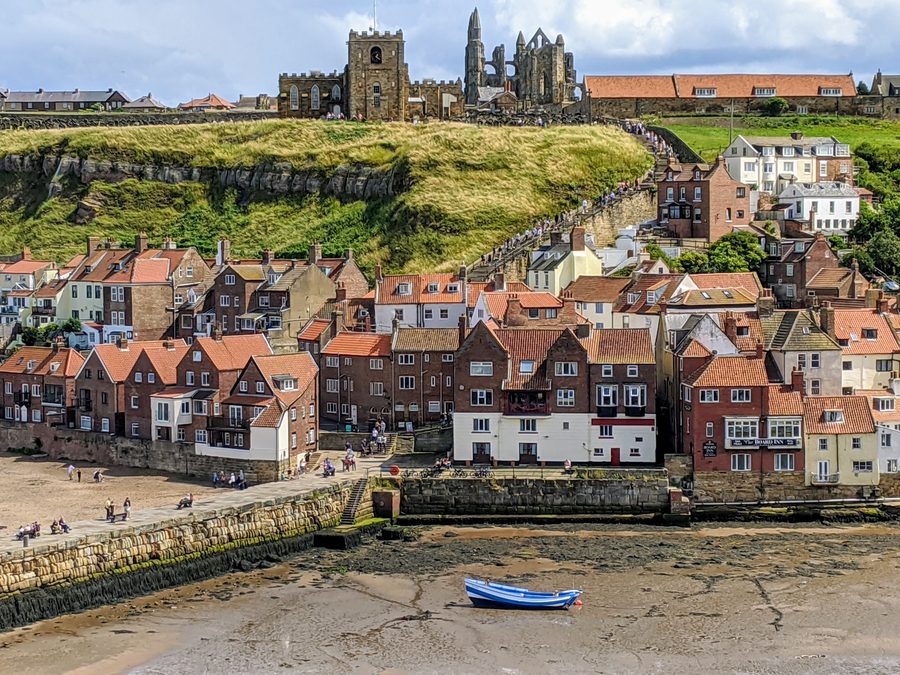
The classic way up is the 199 steps from the old town, past St Mary’s Church, with its box pews and galleries, and the churchyard where Lucy and Mina sat, and up which the Count ran from the wrecked ship.
The abbey church
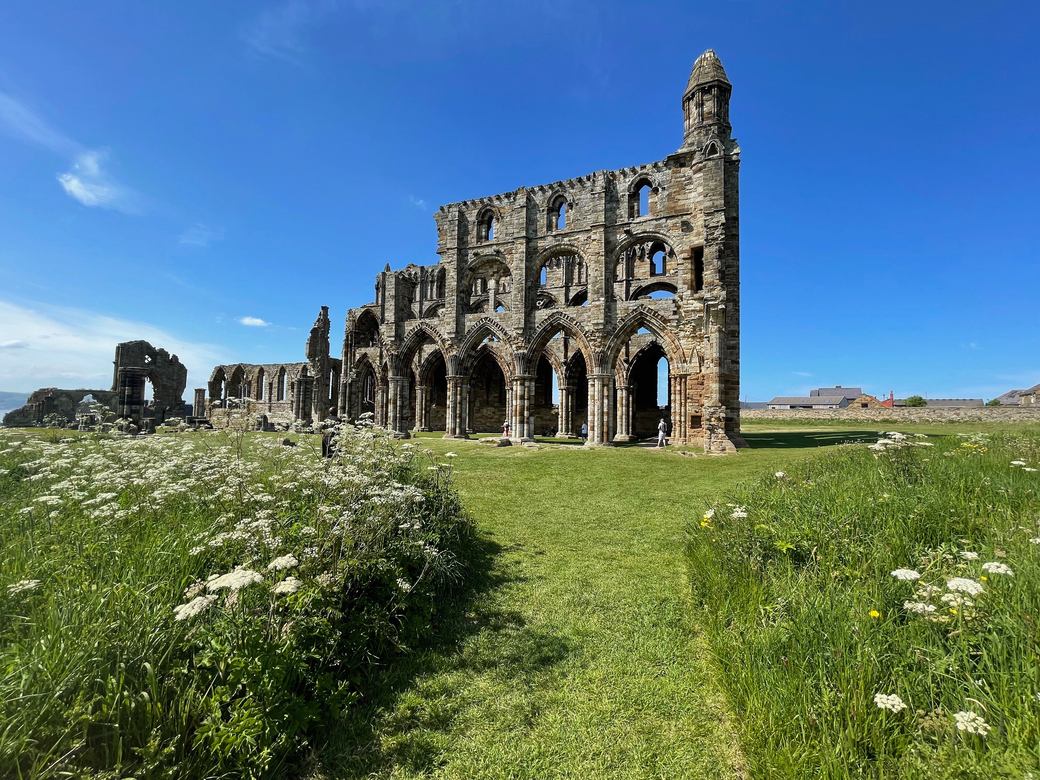
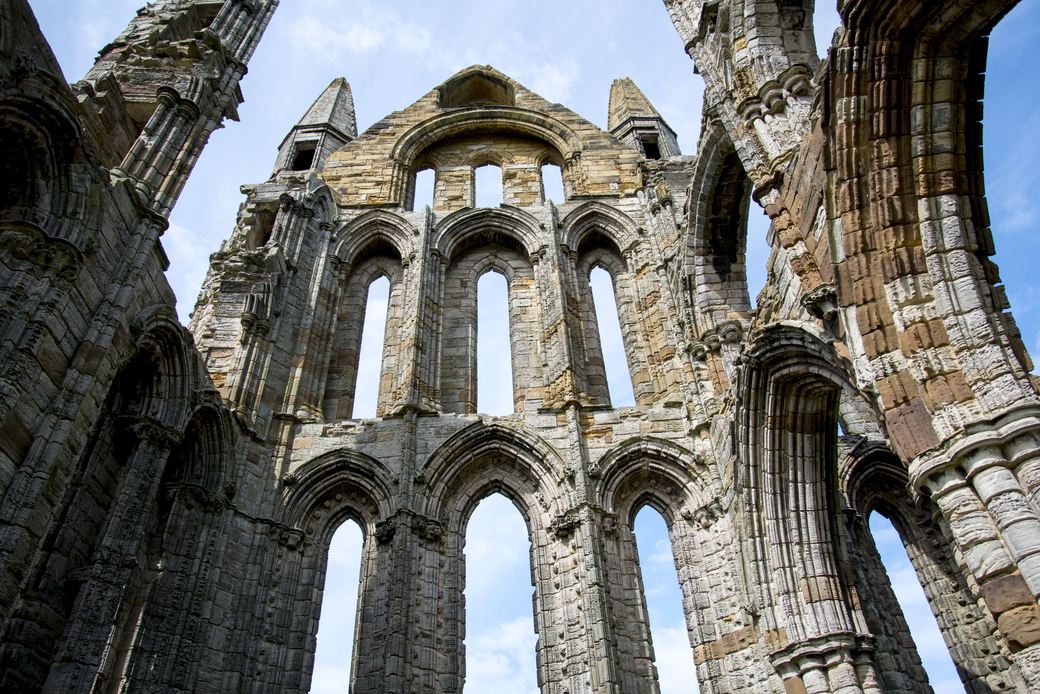
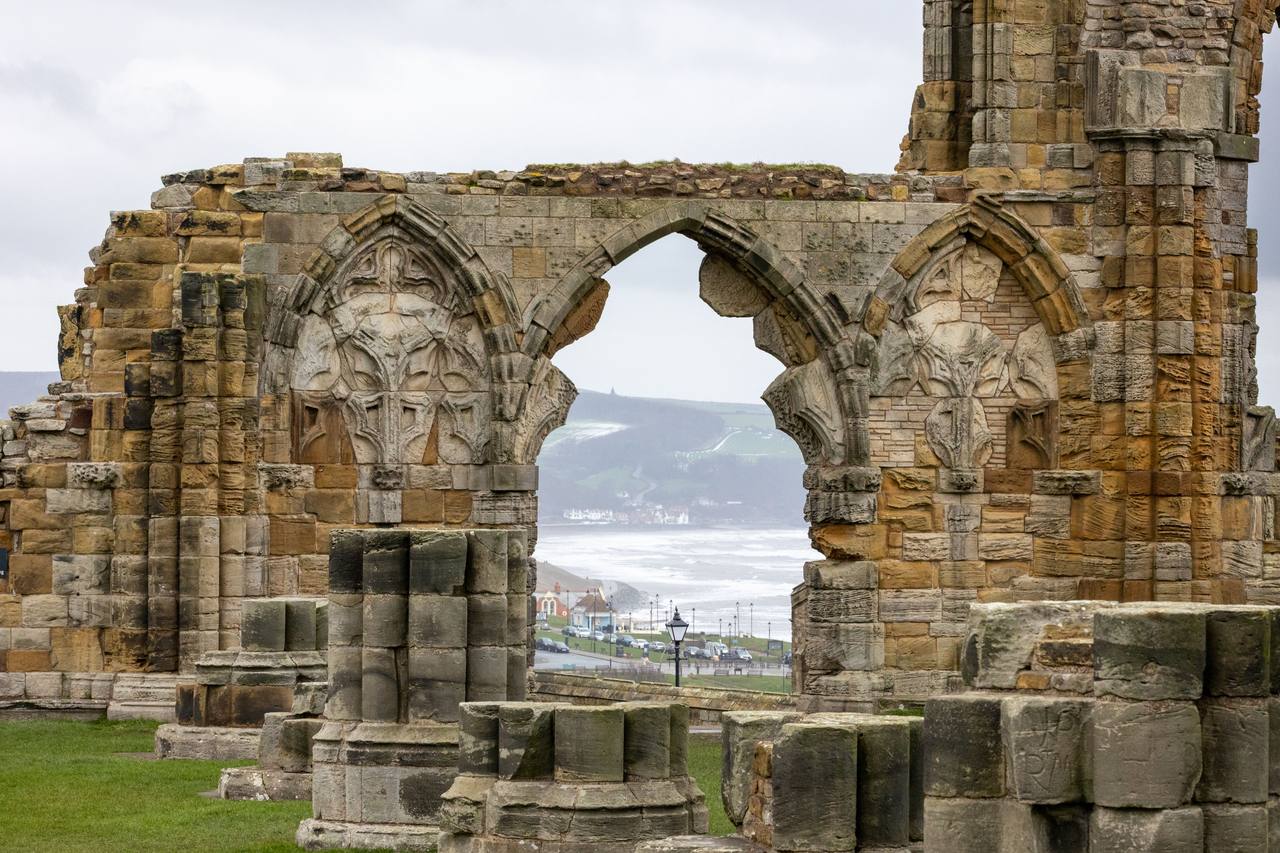
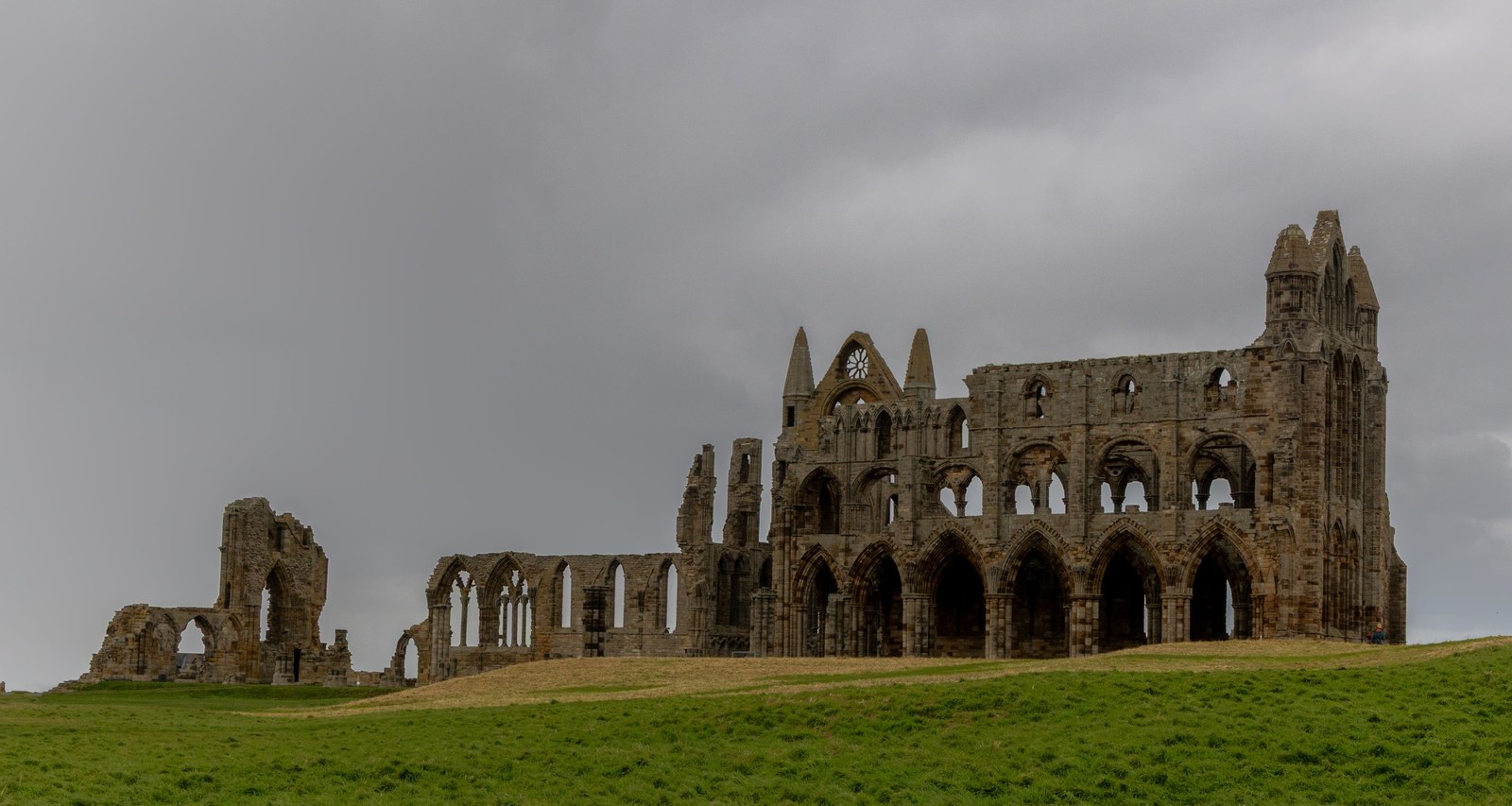
The ruins are mostly of the thirteenth-century church. The east end and the north transept still stand to a great height, with tiers of tall lancet windows, while the west front faces out across the headland.
Cholmley House
The visitor centre and museum are in the shell of the Cholmley family’s seventeenth-century house, with displays on Hilda, Cædmon, the abbey and Dracula.
Tickets and tours
English Heritage ticket
Expect to pay roughly £13–£16 for an adult, depending on the date, with savings for booking online in advance; English Heritage members go free. Open daily 10am–5pm in the main season, with reduced winter opening. St Mary’s Church, next door, is separate and free.
The hotel link goes to Booking.com. This site earns nothing from it at present — it is here because it is the quickest way to check what is actually available.
Don't miss
- The 199 steps The classic climb from the old town.
- The east end Three tiers of lancet windows.
- The view Over the harbour, the town and the sea.
- St Mary’s Church Box pews and a Dracula churchyard.
- The museum In the ruins of Cholmley House.
- The ammonites Hilda’s snakes, on the beach below.
Insider tips
Go early or late. Whitby is busy in summer and at the Goth weekends in spring and autumn. The abbey is at its most atmospheric in low light, and the headland is exposed, so bring a warm layer even in summer. There is a car park beside the abbey if you would rather not climb the steps.
Down in the town, the harbour, the fish and chips, the Captain Cook Memorial Museum and the jet jewellery shops are all part of a Whitby visit.
Common questions
How much does it cost to visit Whitby Abbey?
Whitby Abbey is run by English Heritage, which prices tickets by date: expect roughly £13–£16 for an adult, less if you book online in advance. English Heritage members go free. Check the English Heritage website for today’s price.
When is Whitby Abbey open?
In the main season it is open daily from 10am to 5pm, with last entry at 4.30pm. Winter opening is reduced, so check the English Heritage website before you go.
What is the connection with Dracula?
Bram Stoker stayed in Whitby in 1890 and set part of Dracula (1897) here: the Count comes ashore from a wrecked ship in the shape of a great dog and bounds up the East Cliff towards the churchyard of St Mary’s, below the abbey ruins.
Do I have to climb the 199 steps?
No. The steps from the old town are the classic way up, but you can drive or take a bus to the abbey car park on the headland.
How do you get to Whitby?
Whitby station, at the end of the Esk Valley line from Middlesbrough, is about ten minutes’ walk from the foot of the 199 steps. In summer the North Yorkshire Moors Railway also runs steam trains into Whitby.
Where to stay and eat nearby
Whitby has hotels, guest houses and famous fish and chips on both sides of the harbour.
More English churches
- Rievaulx Abbey — across the North York Moors
- York Minster — the great church of the north
- Hexham Abbey — another of the early Northumbrian monasteries
See all the cathedrals and churches worth visiting in England →