
Bolton Priory
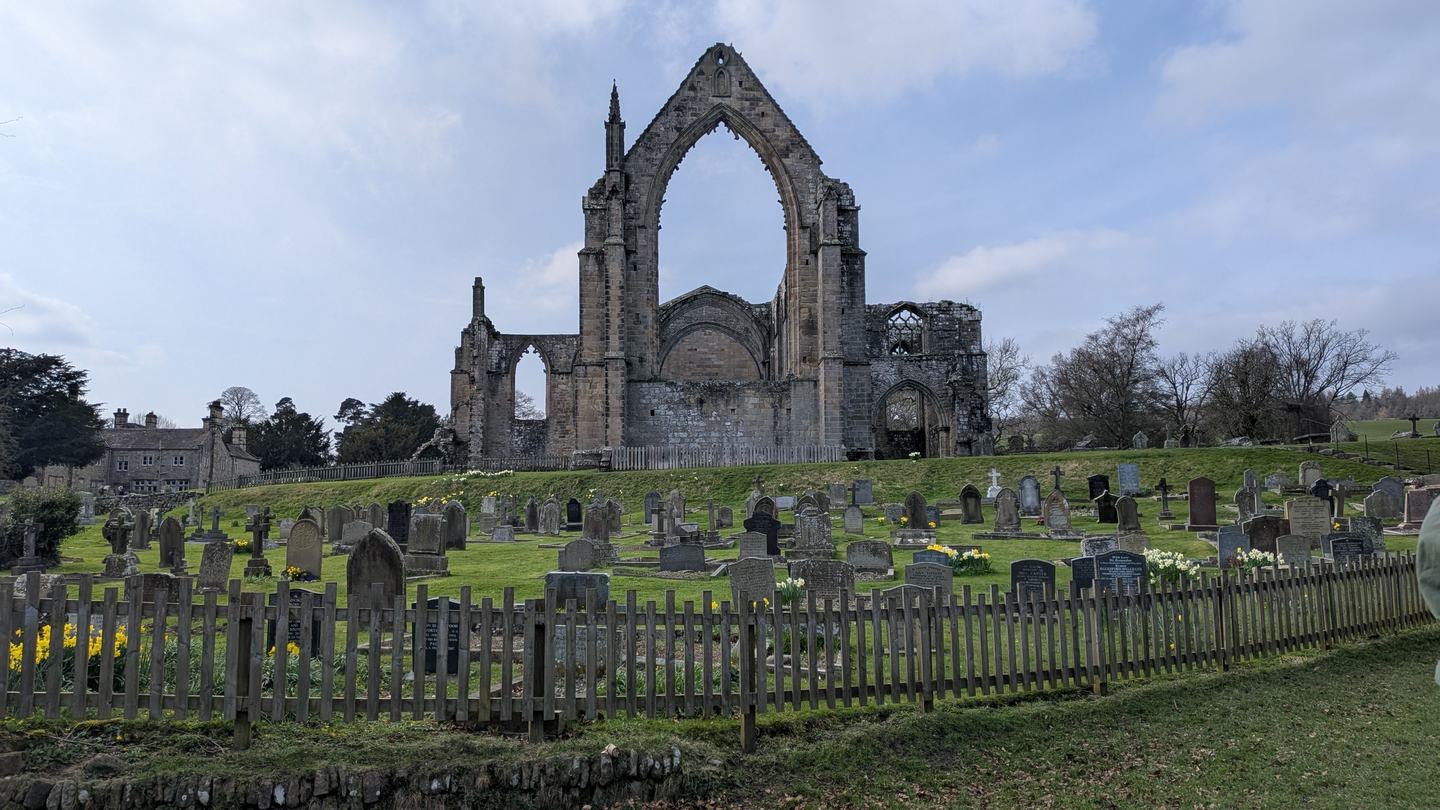
On a bend of the River Wharfe in the Yorkshire Dales, the ruined choir of Bolton Priory stands beside a church that never stopped being used. The canons’ nave was saved at the Dissolution for the people of the parish, and services have been held in it ever since. Painted by Turner and celebrated by Wordsworth, with stepping stones across the river and woodland walks to the Strid, it is one of the loveliest places in northern England.
The canons of the Wharfe
A community of Augustinian canons was founded at Embsay, near Skipton, in 1120. In about 1154 they moved to this site on the Wharfe, on land given by Alice de Rumilly of Skipton Castle. A local legend says she gave it in grief, after her son, the Boy of Egremond, drowned trying to leap the Strid.
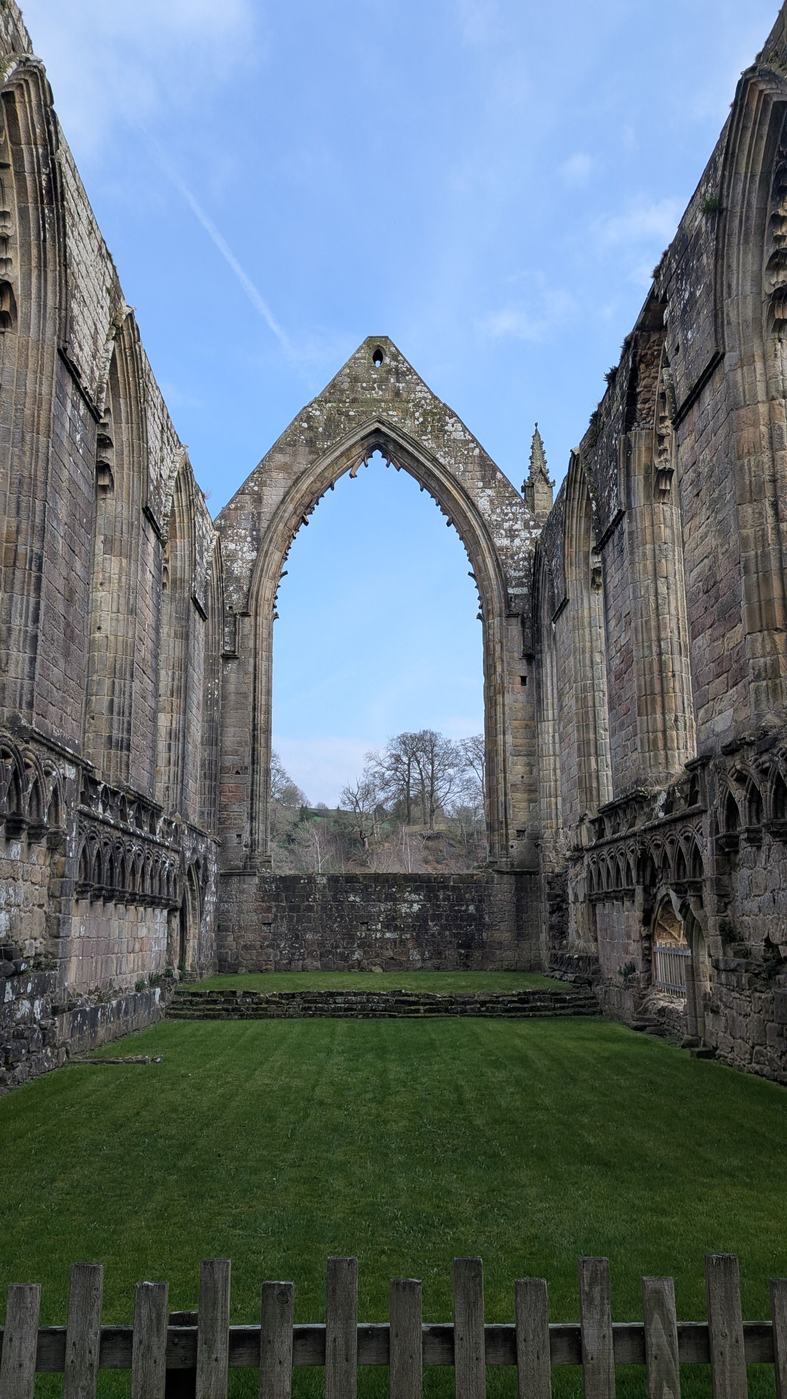
The canons built the church over the following two centuries, adding a longer choir and great Decorated windows in the fourteenth century. In 1520 Prior Richard Moone began a new west tower in front of the church, but in 1539 the priory was dissolved and the tower was left unfinished. Because the parish had always worshipped in the nave, that part of the church was kept, and the choir and the canons’ buildings fell into ruin.
The visitor's cheat sheet
| Where | Bolton Abbey, near Skipton, North Yorkshire, BD23 6AL |
|---|---|
| Getting there | By car on the B6160, about 6 miles from Skipton; estate car parks (roughly £12.50–£15 per car); steam railway to Bolton Abbey station, about 1.5 miles away |
| Opening hours | The church is open to visitors on most days; Sunday services at 8am and 10.30am. Check the estate website for car-park opening times |
| Admission | The church and ruins are free; the estate charges roughly £12.50–£15 per car for parking, less booked early |
| How long | An hour for the priory; half a day with a walk by the river |
| Best time | A weekday morning; summer weekends are very busy |
| Dress code | No rule; good shoes for the riverside paths |
| Tours | Self-guided |
Hours and admission checked against the official site in October 2026. They change; the official site is always the last word.
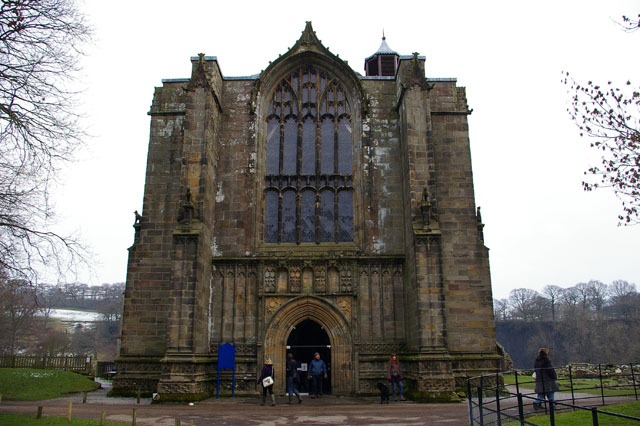
Finished 460 years late. Prior Moone’s west tower stood open to the sky for more than four centuries. It was finally roofed in the 1980s, and now forms the entrance to the church.
What to see, in the order you meet it
The west tower
The unfinished tower stands in front of the old west front of the church, so you see two west fronts one behind the other. Look for the carvings and inscription of Prior Moone on its face.
The Priory Church
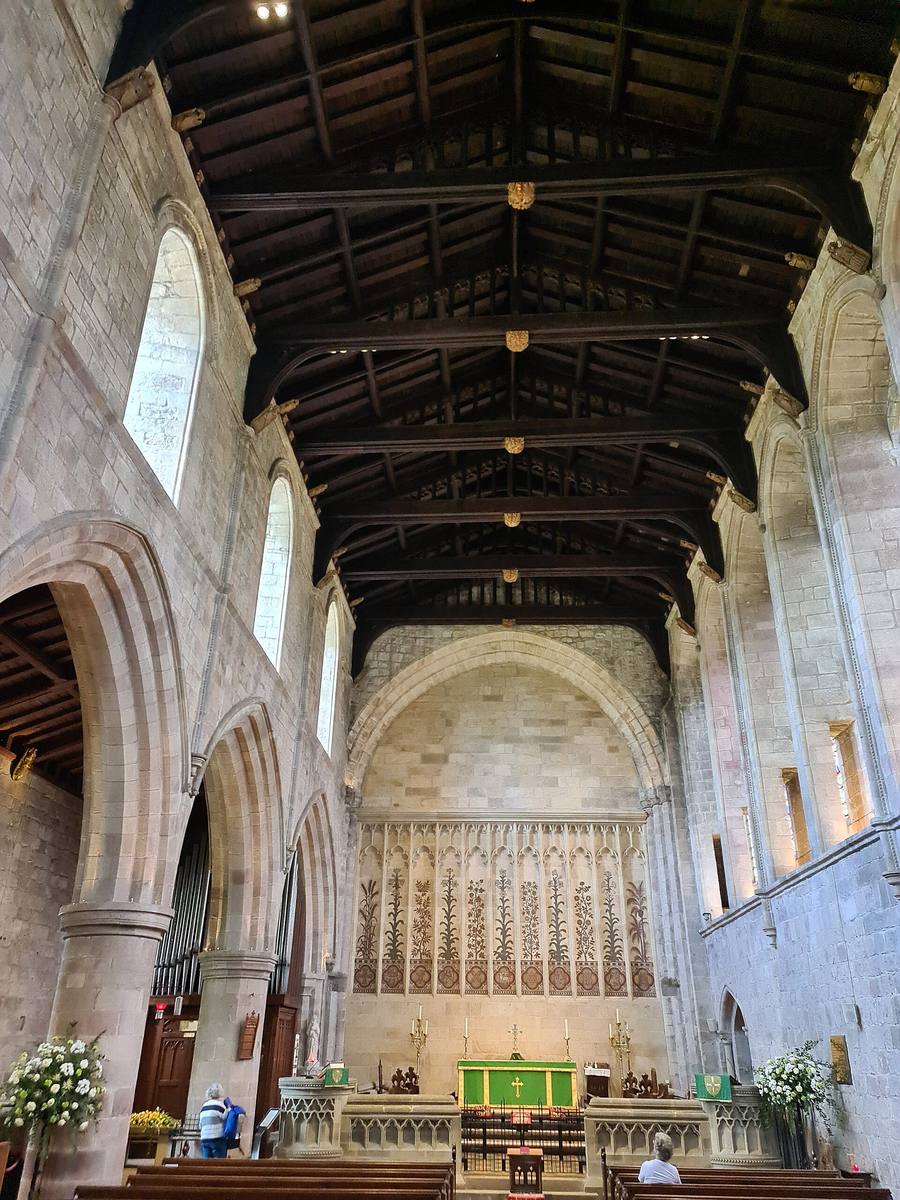
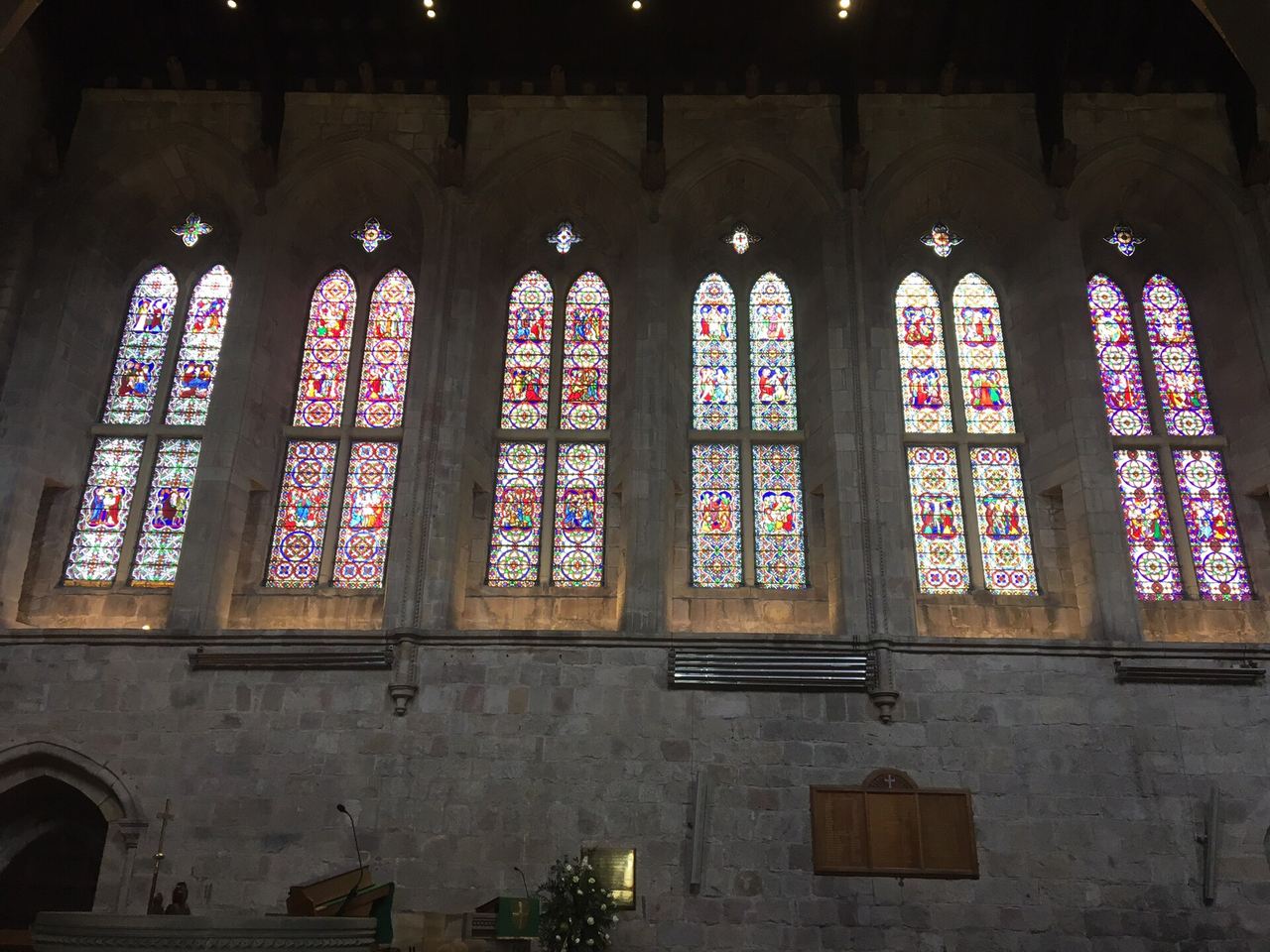
Inside, the church is the nave of the medieval priory, restored in the Victorian period. Along the south side is a row of windows designed by A.W.N. Pugin and put in in 1853, the year after his death, and at the east end, where the church was walled off from the ruined choir, are Victorian wall paintings.
The ruins
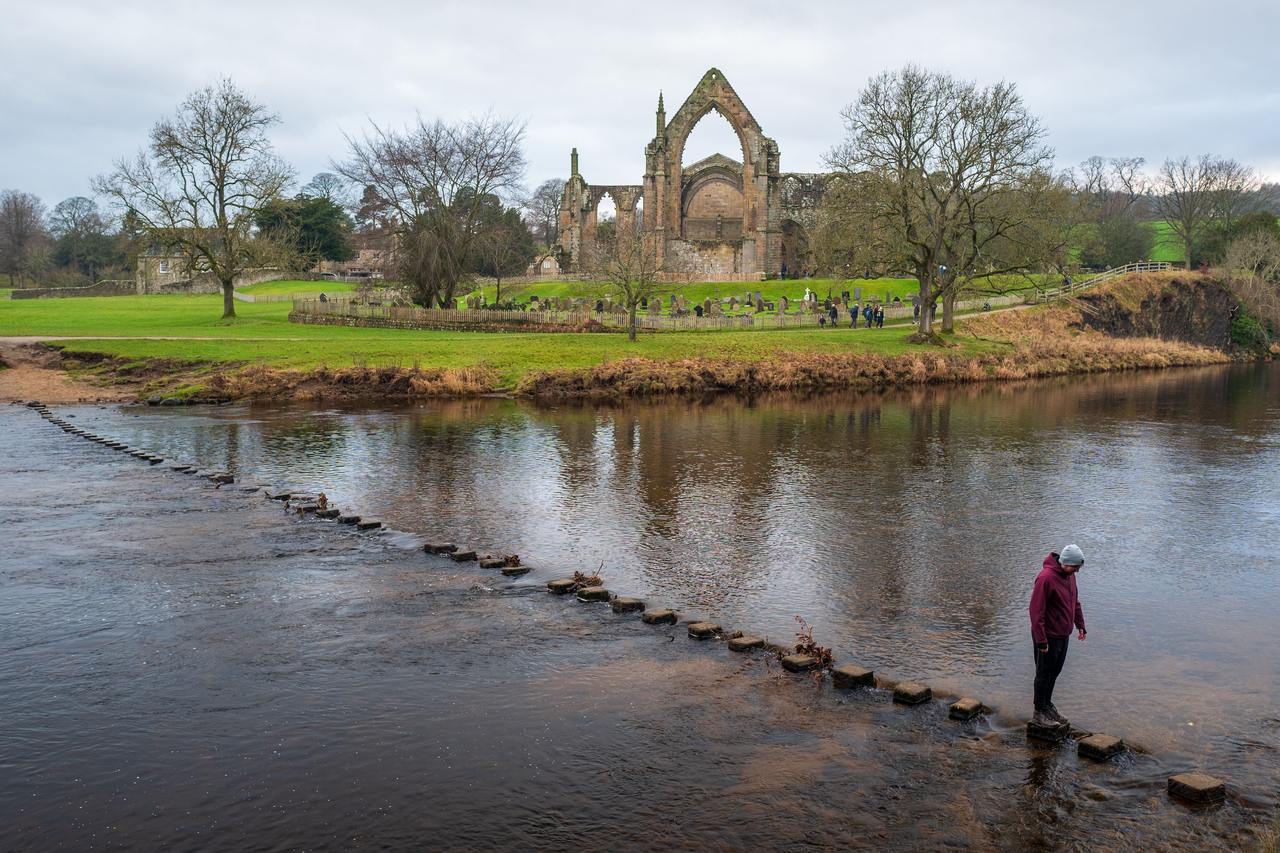
East of the church the roofless choir still has its tall east window and stretches of arcading, with the outlines of the cloister and the canons’ buildings marked on the grass. From the riverbank below you see the view that Turner and Landseer painted.
The river
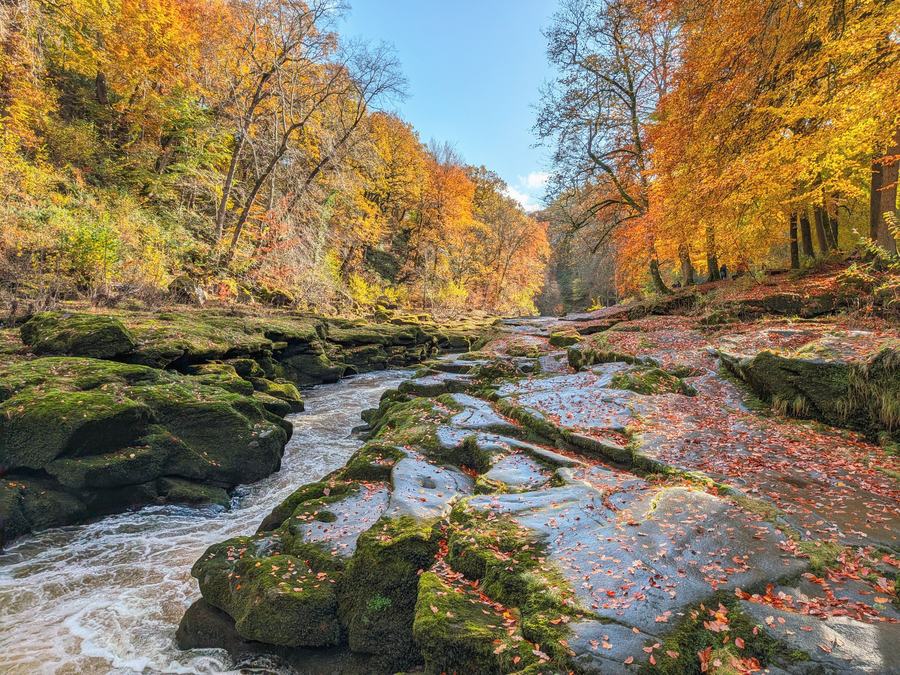
Below the priory, stepping stones and a footbridge cross the Wharfe. Paths lead upstream through Strid Wood to the Strid, where the whole river forces its way through a narrow gorge of rock, and on to the ruins of Barden Tower.
Visiting
Free to visit
There is no charge to visit the Priory Church or walk round the ruins; donations help keep the church open. The Bolton Abbey estate charges for parking, roughly £12.50–£15 per car, less if booked early. Visitors are welcome at the Sunday services at 8am and 10.30am.
The hotel link goes to Booking.com. This site earns nothing from it at present — it is here because it is the quickest way to check what is actually available.
Don't miss
- The ruined choir And its great east window.
- The Pugin windows Victorian glass along the south side.
- Prior Moone’s tower Begun in 1520, roofed in the 1980s.
- The stepping stones Across the Wharfe below the priory.
- The Strid Spectacular, and dangerous.
- Barden Tower A ruined hunting lodge upstream.
Insider tips
Walk to the Strid and back. From the priory, follow the river upstream through Strid Wood; it is a little over two miles each way, and you can return on the other bank. Keep well back from the edge at the Strid itself.
Common questions
Is it Bolton Abbey or Bolton Priory?
Both names are used. It was always a priory, a house of Augustinian canons, and the church is Bolton Priory. Bolton Abbey is the name of the village and of the Duke of Devonshire’s estate around it.
Does it cost anything to visit?
The Priory Church is free to visit, and the ruins are open to walk round. The Bolton Abbey estate charges for parking, roughly £12.50–£15 per car, at its car parks; check the estate’s website for the current charge and opening times.
When are the services?
The Priory Church is a parish church. On Sundays there is Holy Communion at 8am and a Sung Eucharist at 10.30am, and a midweek Communion on Wednesdays at 10am. Visitors are welcome.
Is it safe to swim at the Strid?
No. Upstream of the priory, the Wharfe is squeezed into a narrow, deep channel called the Strid, with strong currents and undercut rocks. It looks easy to jump across; do not try, and do not swim.
How do you get to Bolton Priory?
Bolton Abbey is on the B6160 about six miles east of Skipton. The Bolton Abbey car park is a short walk from the priory. The Embsay & Bolton Abbey Steam Railway runs to Bolton Abbey station, about a mile and a half away.
Where to stay and eat nearby
The estate has tea rooms and a riverside café at the Cavendish Pavilion, and Skipton, about six miles away, has plenty of places to stay.
More English churches
- Fountains Abbey — the great Cistercian ruin near Ripon
- Ripon Cathedral — with its Saxon crypt
- York Minster — the cathedral of the north
See all the cathedrals and churches worth visiting in England →