
Antwerp Cathedral (Cathedral of Our Lady)
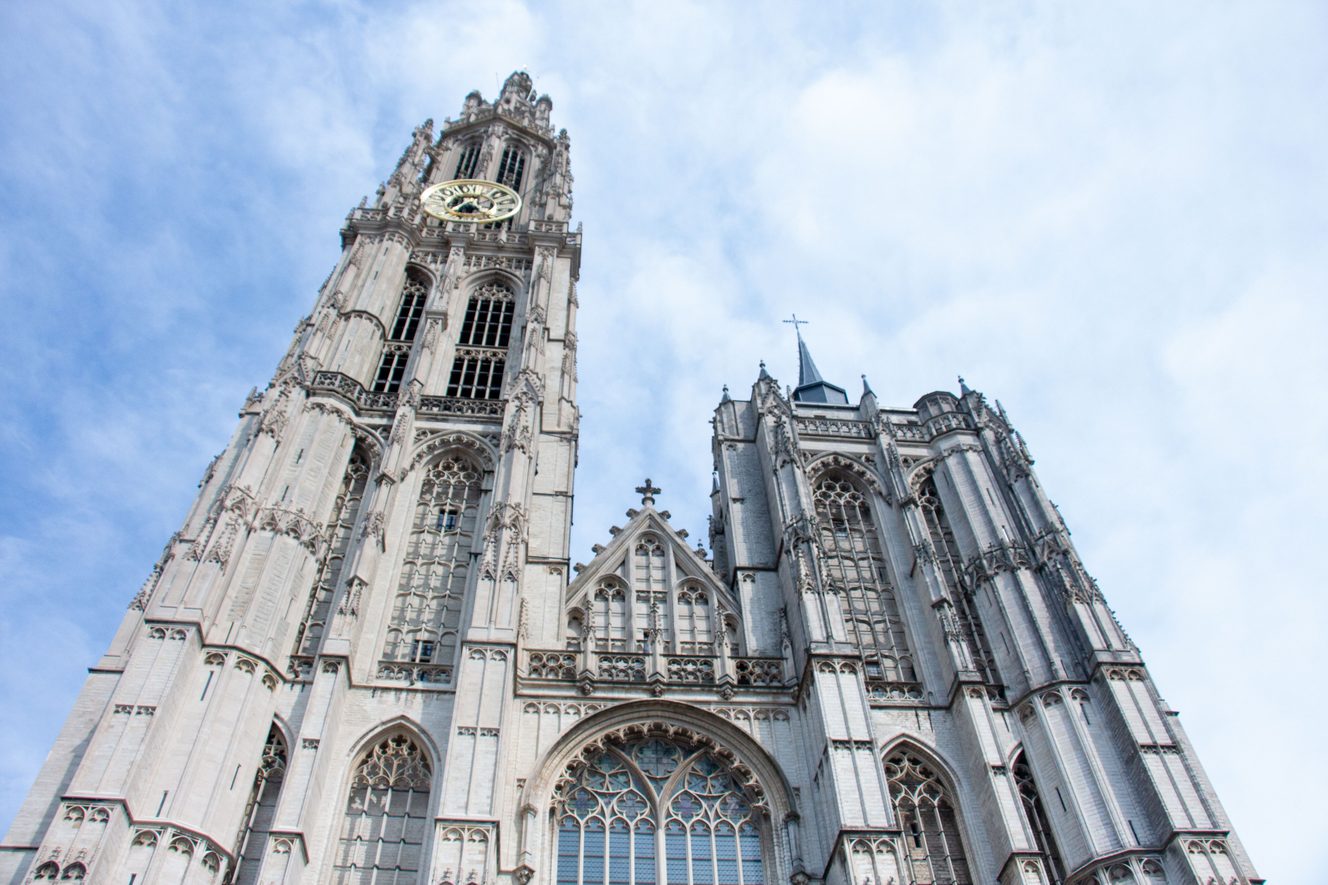
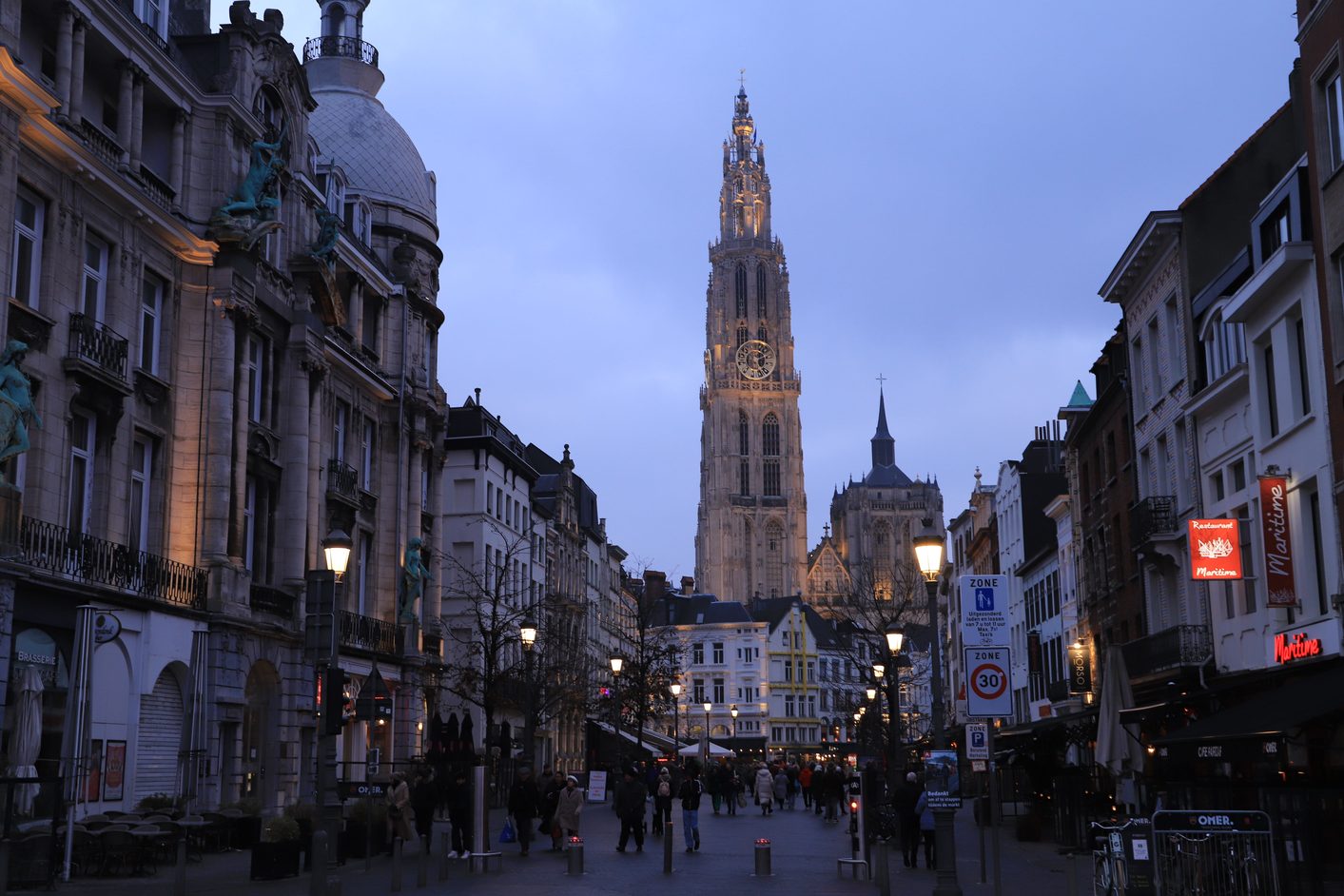
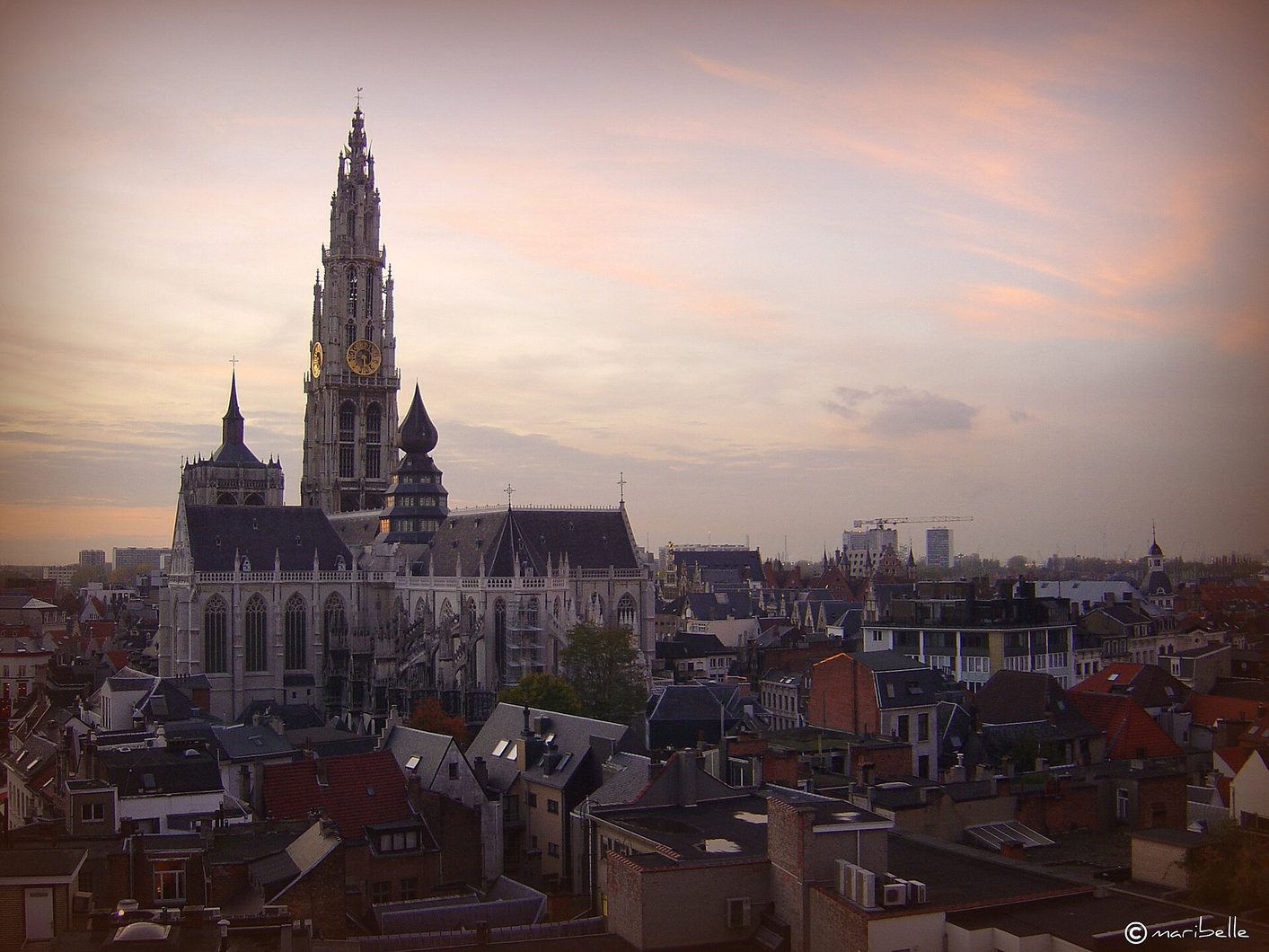
The Cathedral of Our Lady in Antwerp is the largest Gothic church in Belgium, and its 123-metre spire rises over the old town like lacework. Inside hang three great altarpieces by Peter Paul Rubens, who lived nearby — the paintings that Nello, the poor boy of A Dog of Flanders, longed to see.
A cathedral never finished
Building began in 1352 and went on until 1521. Two towers were planned; only the northern one was completed, finished in 1518, and it is still the tallest church tower in the Low Countries. The church had barely been finished when a fire in 1533 destroyed much of the interior, and in 1566 Protestant iconoclasts wrecked the rest. The French revolutionaries plundered it in 1794, and a few years later planned to demolish it.
Each time it was refurnished, which is why the interior mixes Gothic architecture with Baroque altars and 19th-century furnishings. It became a cathedral in 1559, lost the title in 1801 and regained it in 1961; a long restoration ran from 1965 to 1993. The tower is a UNESCO World Heritage Site as one of the belfries of Belgium and France.
The visitor’s cheat sheet
| Opening hours | Mon–Fri 10am–5pm, Sat 10am–3pm, Sun and public holidays 1pm–5pm; closed 1 January |
|---|---|
| Admission | 2026: adults €12, reduced €10, under-18s free. From 1 January 2027: €14 |
| Special hours | Closed to visitors all day on Sunday 20 December 2026; 24 December 10am–4pm; 25 December 2pm–5pm |
| Rubens | Three of the four Rubens altarpieces on show; the Resurrection is away for restoration |
| Tower | Guided climbs only, 515 steps; group climbs resume 2 April 2027 |
| Getting there | Tram or premetro to Groenplaats; about 20–25 minutes’ walk from Antwerpen-Centraal |
| How long | About an hour |
Hours and admission checked against the official site in November 2026. They change; the official site is always the last word.
The Rubens paintings
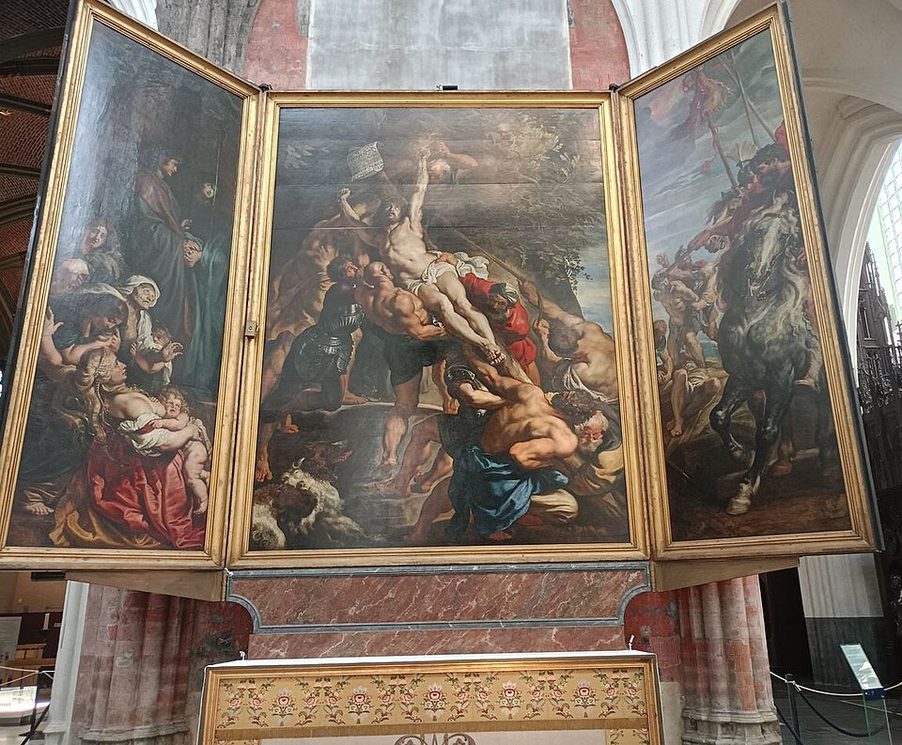
The Elevation of the Cross
Rubens painted this triptych around 1610, soon after coming home from Italy, for the church of St Walburga. It was brought to the cathedral’s north transept in 1816. The centre panel, more than four and a half metres high, shows Christ’s cross being heaved upright by straining men: pure muscle and diagonal movement.
The Descent from the Cross
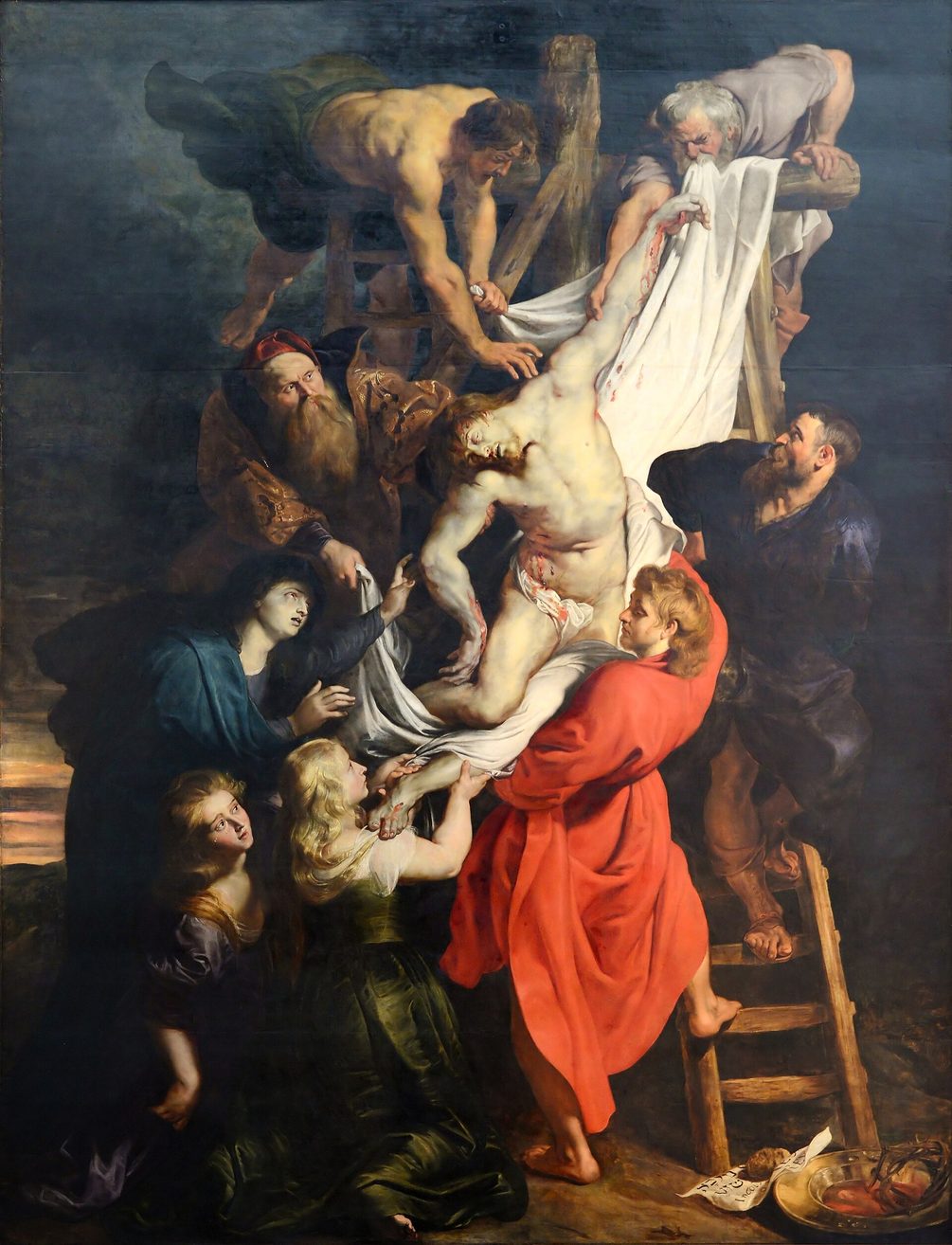
Facing it in the south transept is the Descent from the Cross of 1611–14, painted for the guild of harquebusiers and still close to the spot it was made for. The pale body of Christ slides down a white sheet into the arms of his followers. Note that a modern tribute to this painting by Sam Dillemans hangs beside it.
The Assumption and the Resurrection
Over the high altar is Rubens’s Assumption of the Virgin, painted in 1625–26 for that very place. The Resurrection, an epitaph for the printer Jan Moretus in the ambulatory, has been under restoration since January 2026, a job expected to take at least two years; a photograph of it hangs in its place.
What else to see
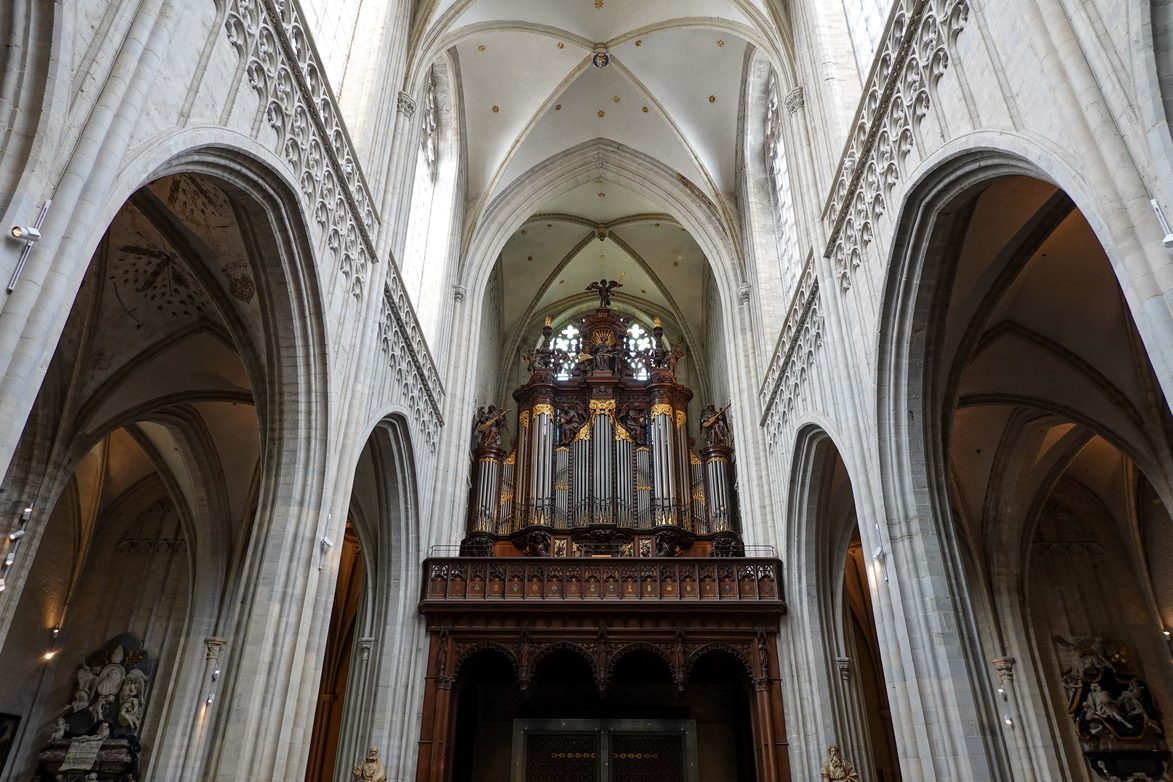
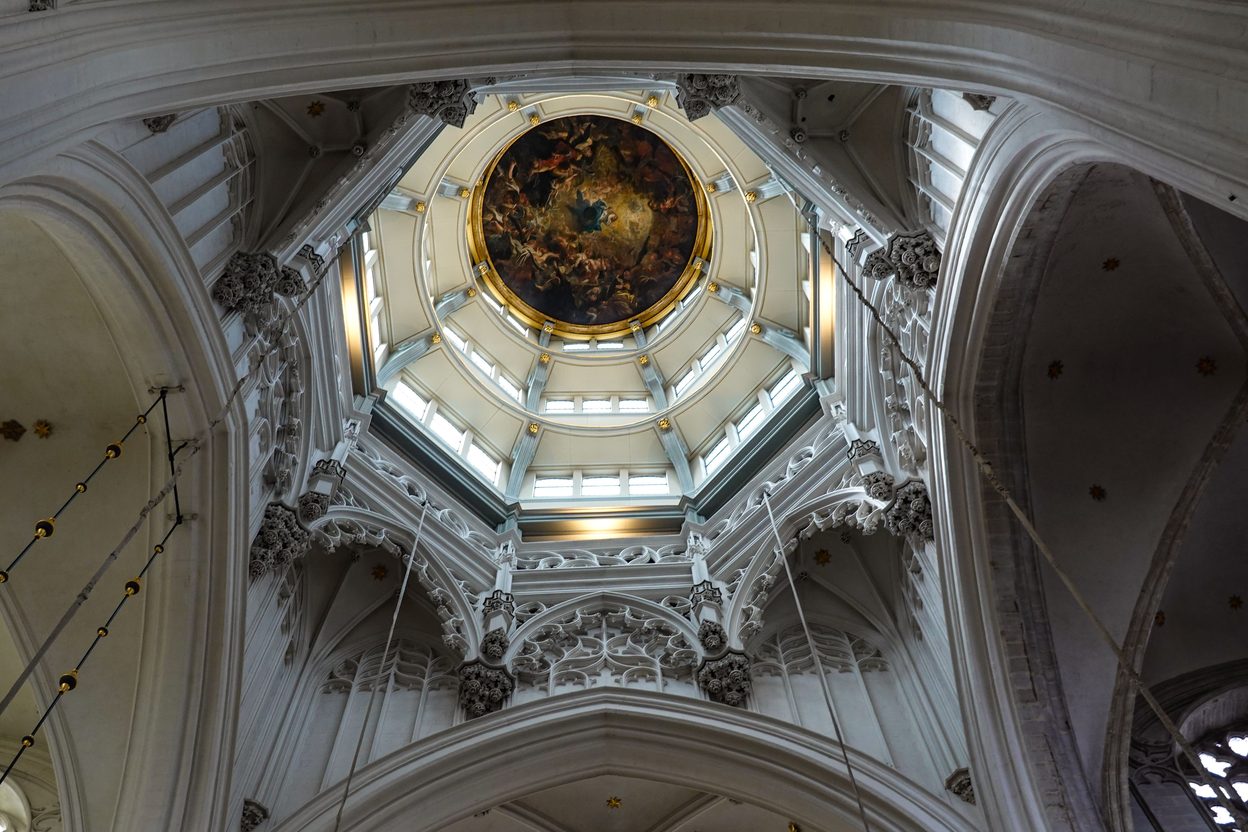
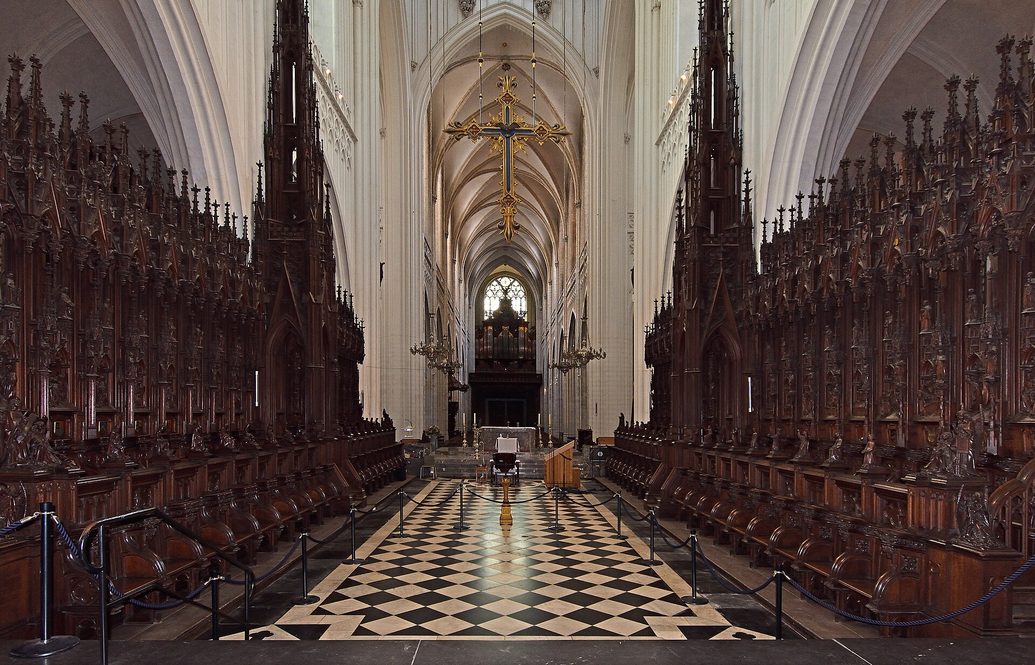
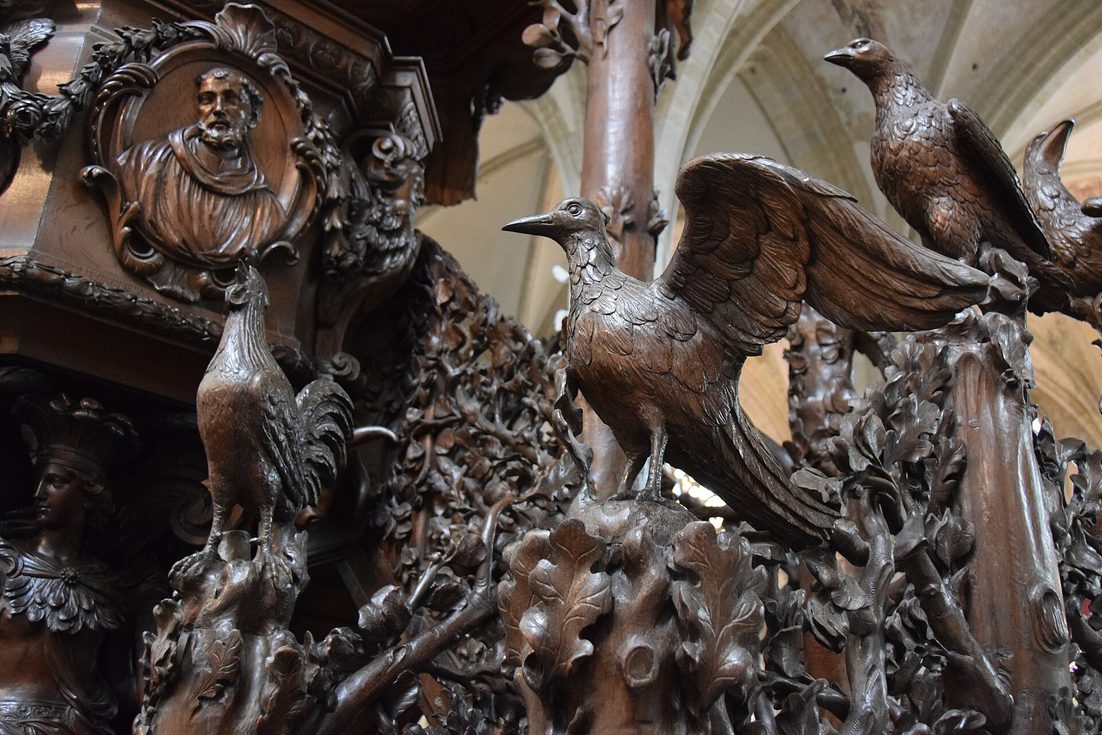
Look up at the crossing to see Cornelis Schut’s Assumption painted in the cupola in 1648. The Baroque pulpit is carved with birds, trees and figures of the four continents; the choir has elaborate 19th-century stalls; and Our Lady’s Chapel at the east end of the north aisle keeps the much-venerated statue of Our Lady of Antwerp. The great Schyven organ, begun in 1889, fills the west end.
Outside on Handschoenmarkt, in front of the west door, is the marble statue of Nello and Patrasche, put there in 2016, and an old well whose wrought-iron canopy, topped by a figure of Brabo, is said to have been forged by Quinten Matsys before he became a painter. The city carillonneurs play the tower bells every Monday, Wednesday and Friday from noon to 1pm.
Getting there
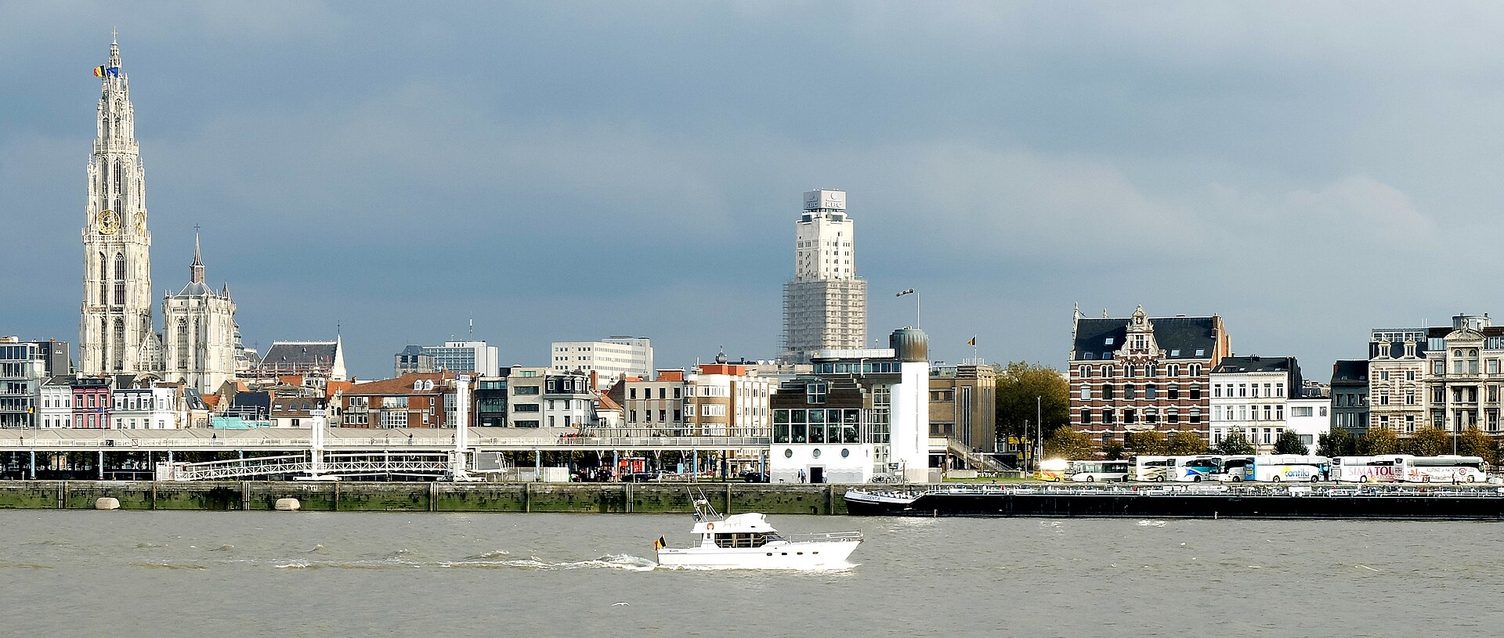
The cathedral is in the heart of the old town, between Groenplaats and Handschoenmarkt, a few minutes from the Grote Markt. Trams 3, 4, 5, 9 and 15 and several buses stop at Groenplaats. From Antwerpen-Centraal station it is about 20–25 minutes on foot along the Meir, the main shopping street. Trains from Brussels take about 40 minutes to an hour.
Tickets, tours and where to stay
Individual visitors buy tickets at the door; no booking is needed.
These links go to GetYourGuide and Booking.com. This site earns nothing from them at present — they are here because they are the quickest way to check what is actually available.
Don’t miss
- The Descent from the Cross Rubens at his most moving, in the south transept.
- The Elevation of the Cross Opposite, in the north transept.
- The cupola Stand at the crossing and look up.
- The carillon Monday, Wednesday and Friday at noon.
Insider tips
Join a free tour. Volunteer guides give free tours in several languages at set times during opening hours. Check the calendar on the cathedral’s website, then join on the spot.
Mind Saturday and Sunday. The cathedral closes at 3pm on Saturdays and opens only at 1pm on Sundays, so weekdays give the longest visit.
Common questions
How much does it cost to visit Antwerp Cathedral?
In 2026 a ticket costs €12, or €10 for students, over-60s and disabled visitors. Under-18s and residents of the province of Antwerp go free. From 1 January 2027 the adult price rises to €14.
Where are the Rubens paintings?
The Elevation of the Cross is in the north transept, the Descent from the Cross in the south transept, and the Assumption of the Virgin over the high altar. The fourth, the Resurrection, is being restored and is off display; a photograph stands in its place.
When is the cathedral open?
Weekdays 10am to 5pm, Saturdays 10am to 3pm, and Sundays and public holidays 1pm to 5pm. Sunday mornings are for worship. It closes on 1 January, and there are occasional special hours, so check the cathedral’s website before you go.
Can you climb the tower?
Only on a guided climb, run by the city’s Vleeshuis music museum rather than the cathedral: 515 steps to about 90 metres, for ages 10 and over. The 2026 season has ended; group climbs resume on 2 April 2027.
What is the statue of a boy and a dog outside?
Nello and Patrasche, from Ouida’s 1872 story A Dog of Flanders. In the story the poor boy longs to see the Rubens paintings, and is found dead in front of them in the cathedral, with his dog, on Christmas morning.
More churches in Belgium
- Church of Our Lady, Bruges — with Michelangelo’s Madonna and Child, about an hour and a half away by train.