
Church of Our Lady, Bruges
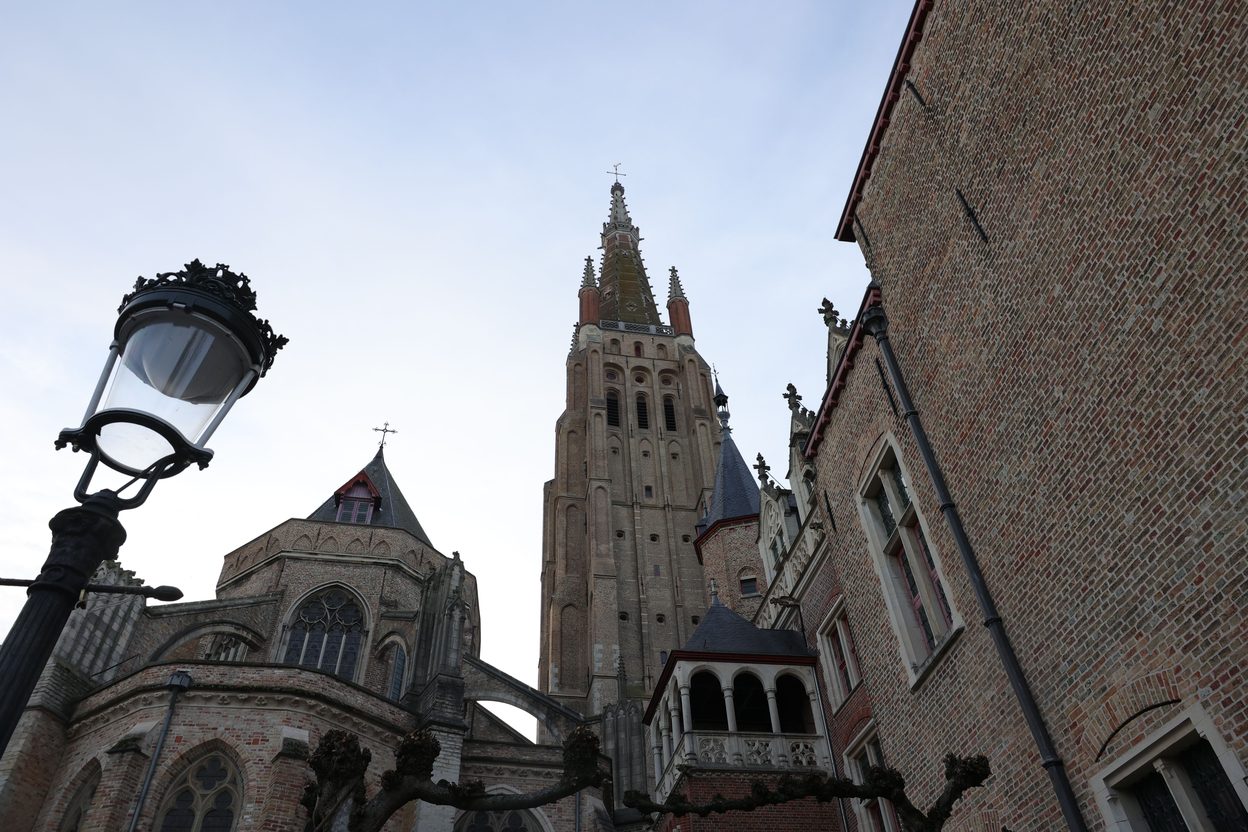
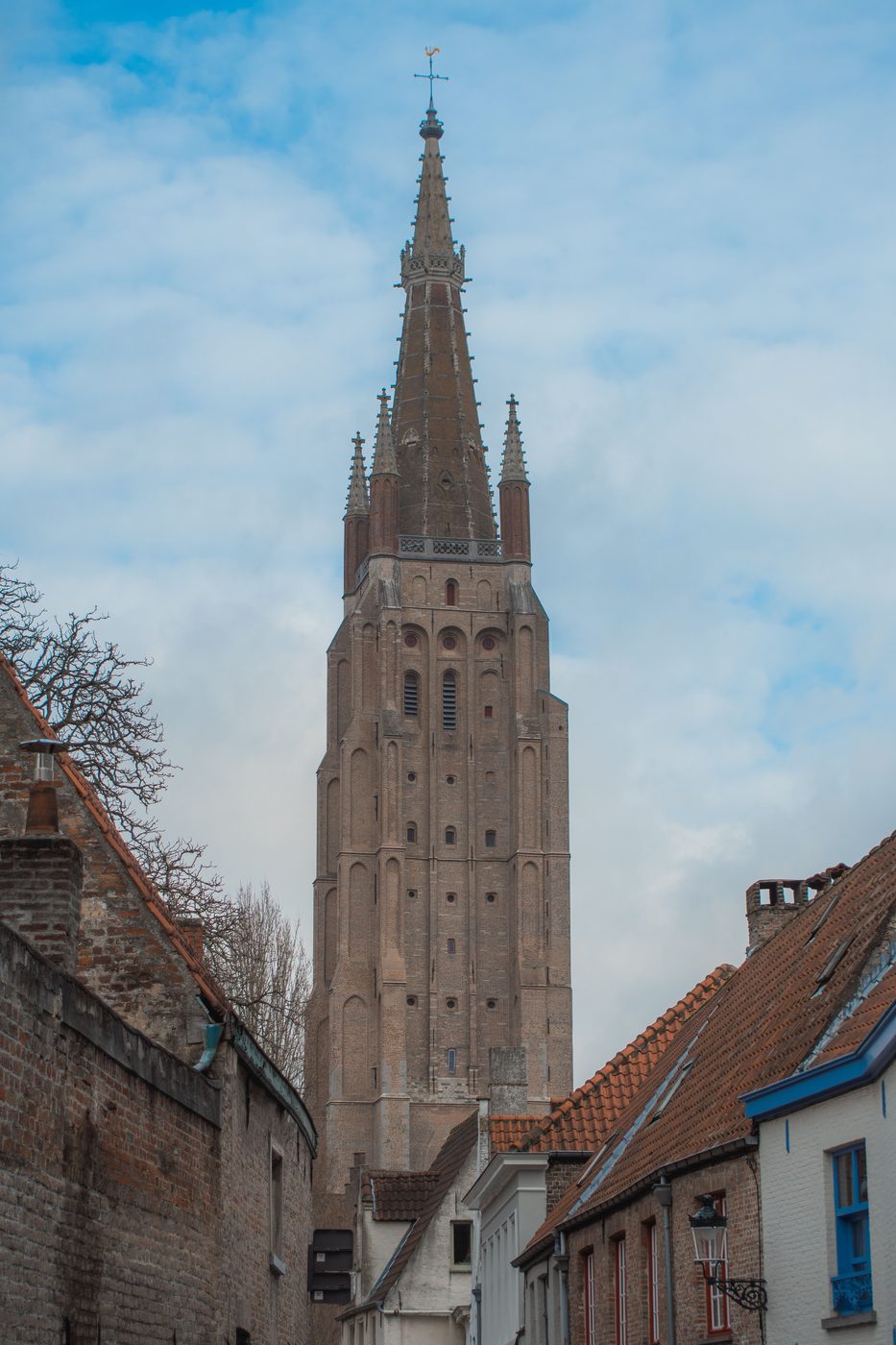
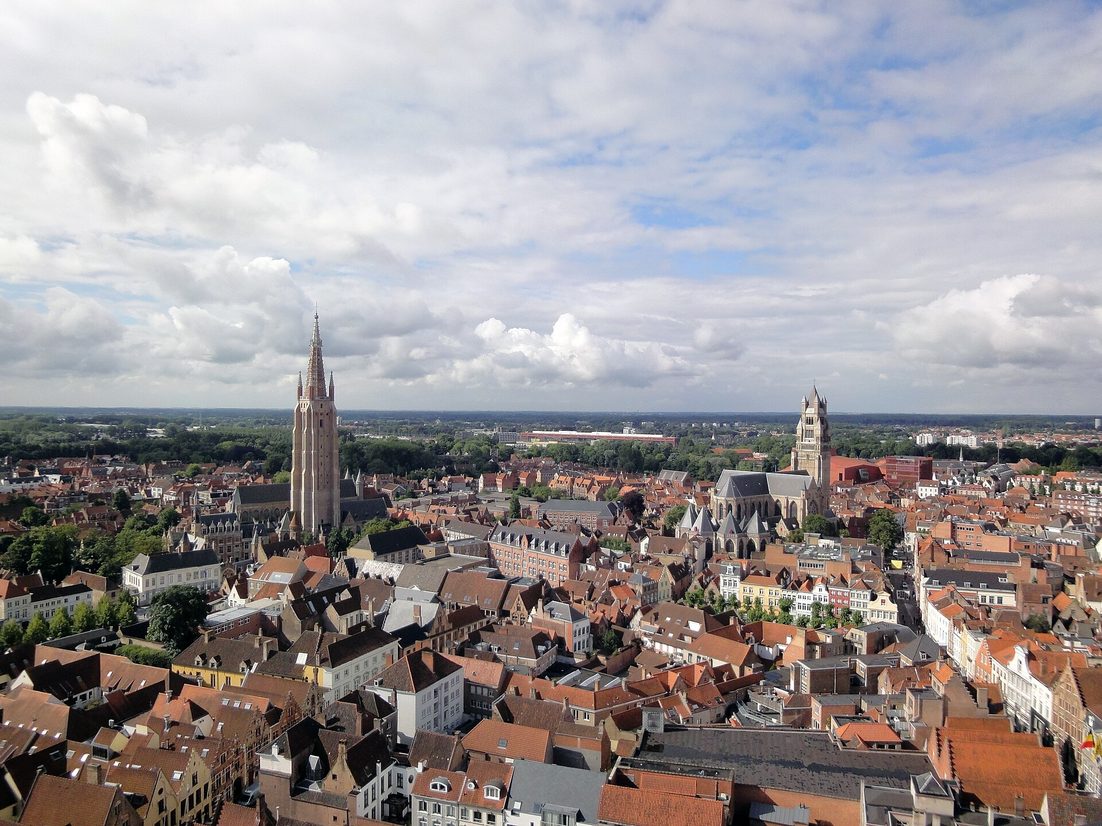
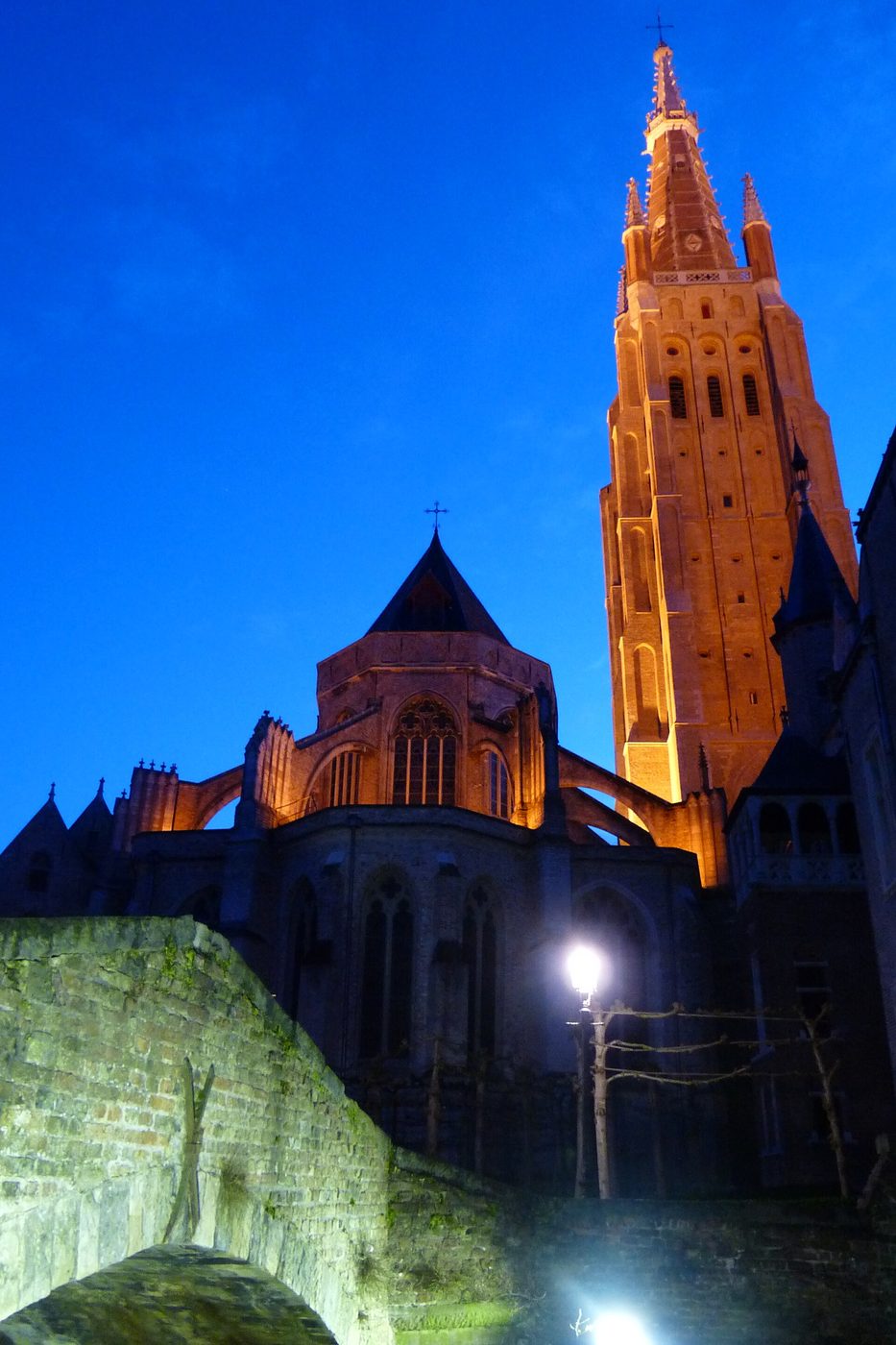
The Church of Our Lady is Bruges’s tallest building, its brick tower climbing 115.5 metres over the canals. Inside, past a free nave, is a small museum of treasures: Michelangelo’s Madonna and Child, the first sculpture of his to leave Italy in his lifetime, and the gilded tombs of Mary of Burgundy and her father, Charles the Bold.
A church of the Burgundian city
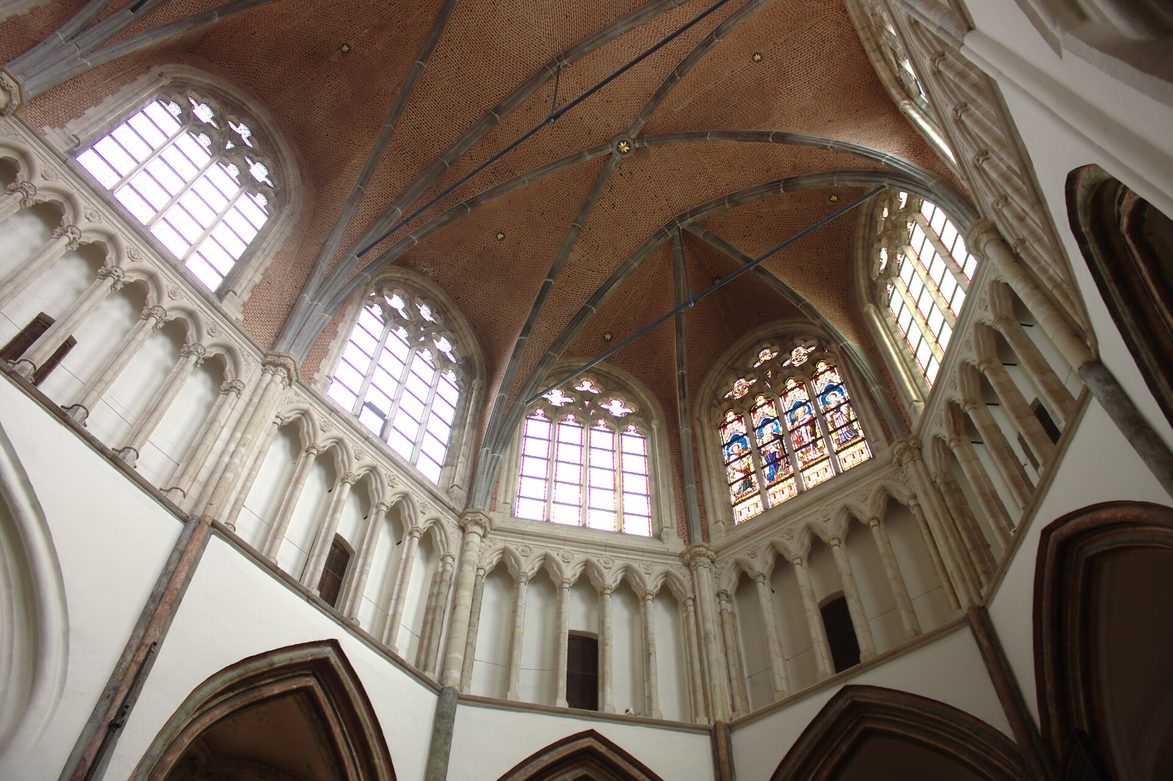
A chapel probably stood here by the 9th century, and a parish church by 1089. The present building was begun in the 13th century: a nave of grey Tournai stone, then a French Gothic choir from about 1270 and the great brick tower, built from the late 13th to the 14th century and given its spire in 1440. Musea Brugge calls it the second-highest brick tower in the world.
In the 15th century Bruges was one of the richest cities in Europe, and its nobles and merchants filled the church. The lords of Gruuthuse built a private oratory looking into the choir from their palace next door, in about 1472, and in 1468 the Order of the Golden Fleece held a chapter here; thirty knights’ coats of arms hang above the choir stalls in memory of it. The spire was rebuilt in the 1850s and the west front in 1906–08.
The visitor’s cheat sheet
| Opening hours | Mon–Sat 9.30am–5pm; Sun and holy days 1.30pm–5pm. Closed 25 Dec, 1 Jan and Ascension Day |
|---|---|
| Admission | Free to the nave. Museum (Madonna, tombs, choir), 2026: €10, under-26s €9, under-18s €5, under-13s free |
| Combined tickets | With the Gruuthusemuseum €19; Musea Brugge Card €49 for 72 hours |
| Booking | Not essential, but a time slot online is recommended at busy times |
| Facilities | No toilets on site; steep ramp at the entrance |
| Getting there | About 15 minutes’ walk from Brugge station, or a short bus ride |
| How long | About an hour; add an hour for the Gruuthusemuseum |
Hours and admission checked against the official site in November 2026. They change; the official site is always the last word.
What to see
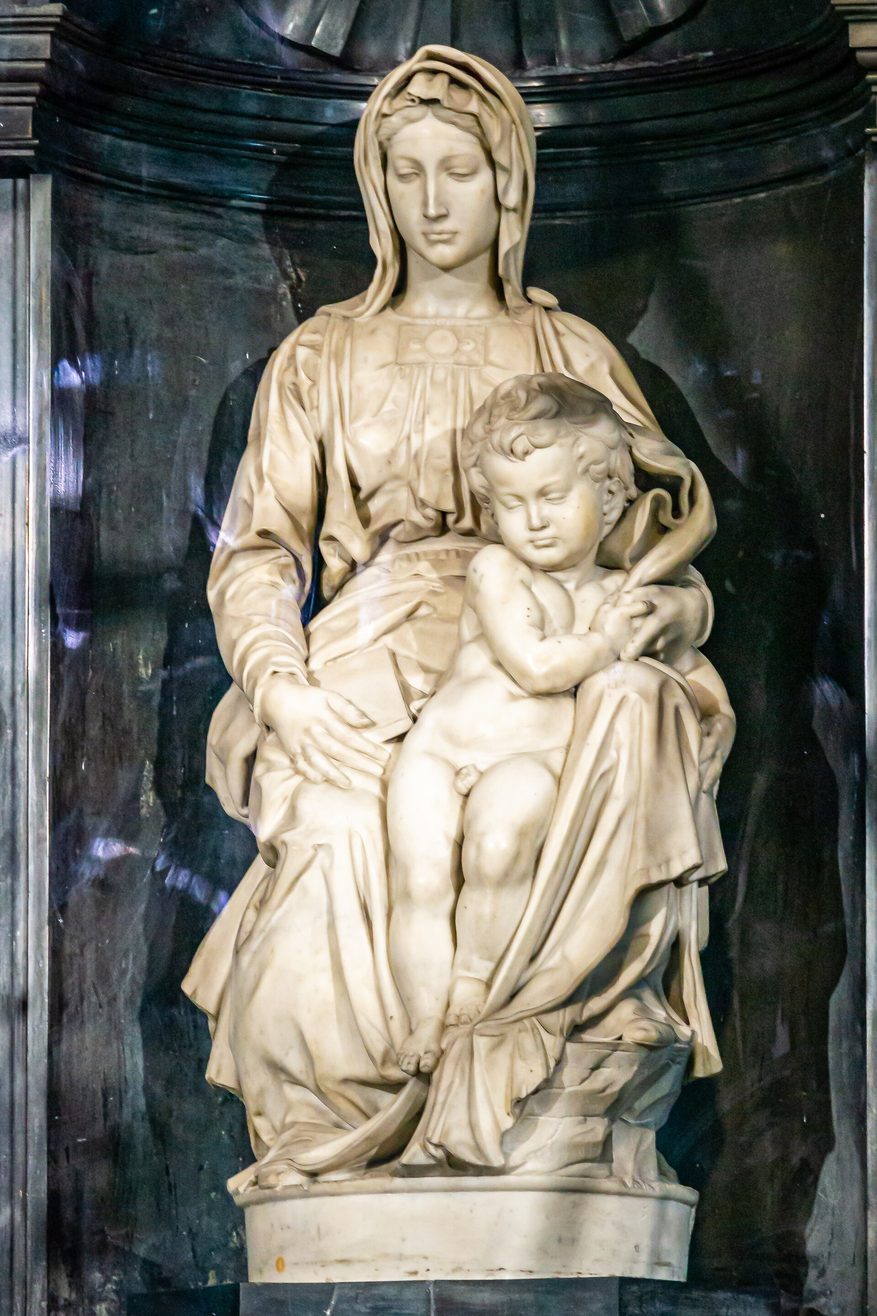
Michelangelo’s Madonna and Child
Carved in white marble in 1503–05, the Madonna sits in a black marble altar in the south aisle. The Christ Child, unusually, is not held in her lap but steps down from it, as if about to walk into the world, while she looks past him. Merchants of the Mouscron family brought it from Italy and gave it to the church in 1514. It is part of the paid museum, and there is a touch station for blind and partially sighted visitors.
The tombs of Mary of Burgundy and Charles the Bold
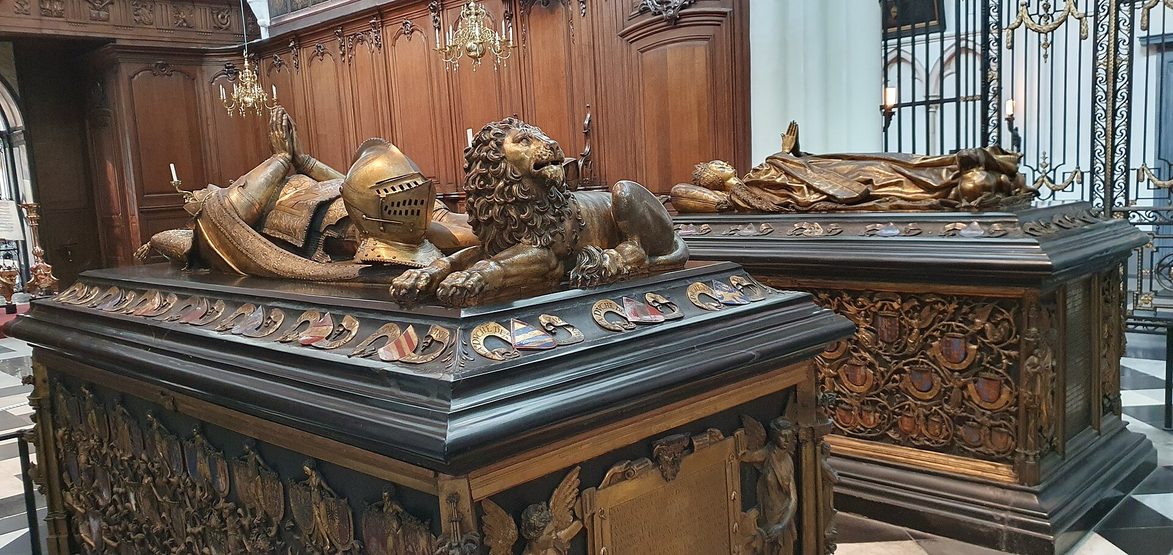
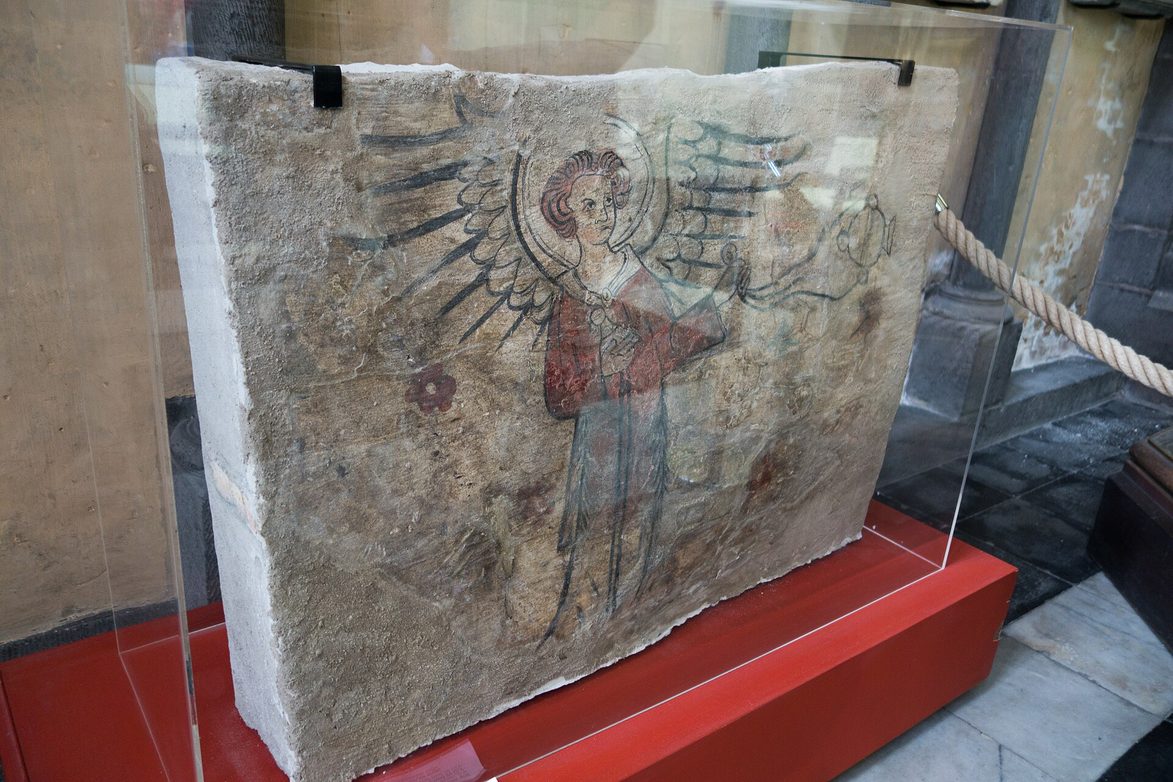
In the choir are the tombs of the last of the Valois dukes of Burgundy. Charles the Bold was killed at Nancy in 1477; his daughter Mary died after a riding accident in 1482, aged 25. Her tomb, with its gilded bronze effigy, was finished in about 1502; his was added in 1563 to match it. Beneath them, excavations uncovered medieval burial vaults painted with angels, saints and crosses, some of which you can see.
The paintings and the choir
Over the high altar is a Passion triptych by Bernard van Orley, finished by Marcus Gerards, and around the choir and chapels hang works by Pieter Pourbus, Adriaen Isenbrant and Anthony van Dyck. Look up on the north side of the choir for the carved wooden front of the Gruuthuse oratory.
The nave
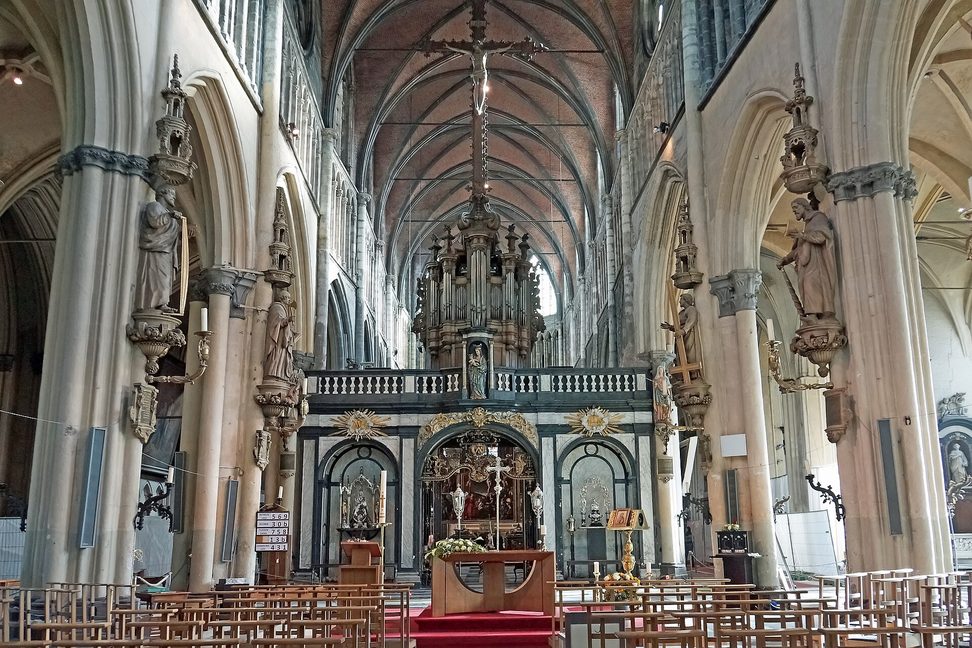
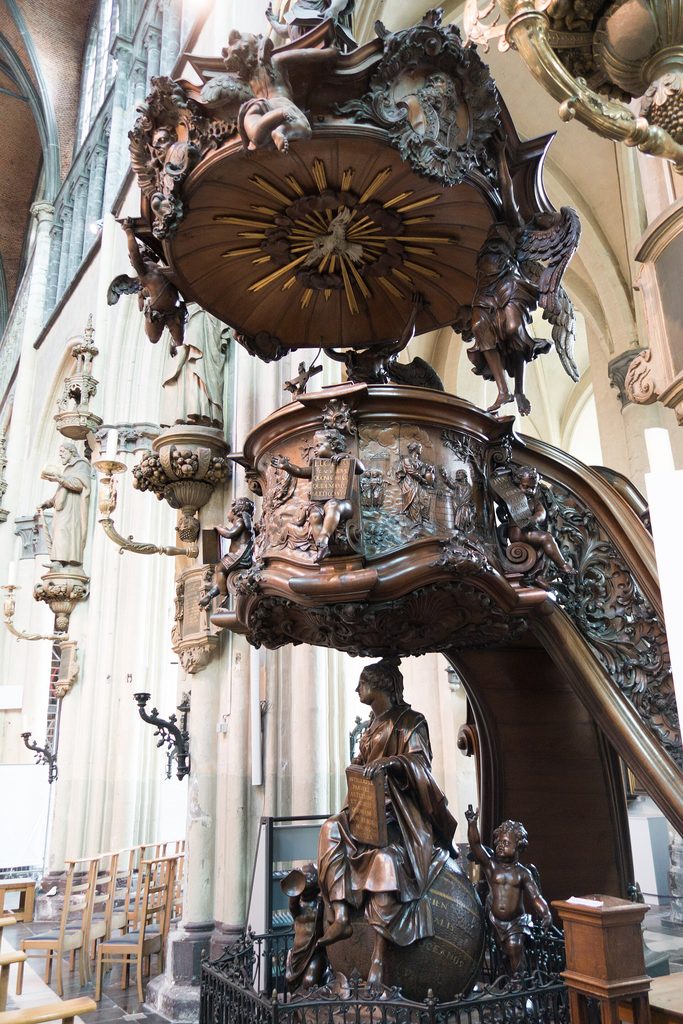
The nave is free and open to all. It has a flamboyant Rococo pulpit of 1743 and 17th-century statues of the apostles on the pillars.
Getting there
The church is on Mariastraat, in the south of the old centre beside the Gruuthusemuseum and Sint-Janshospitaal. From Brugge station it is about 15 minutes on foot; buses from the station to the centre run every few minutes and stop by the church. Drivers should use the big car park at the station, where the ticket includes a bus into town. Trains from Brussels take about an hour, and from Ghent about 25 minutes.
Tickets are sold at the reception pavilion between the church and the Gruuthusemuseum. There are no toilets on site.
Tickets, tours and where to stay
Museum tickets and time slots are sold on the Musea Brugge website and at the reception pavilion.
These links go to GetYourGuide and Booking.com. This site earns nothing from them at present — they are here because they are the quickest way to check what is actually available.
Don’t miss
- The Madonna and Child The only statue by Michelangelo in Flanders.
- The Burgundian tombs Gilded bronze, in the choir.
- The painted graves Medieval burial vaults under the choir.
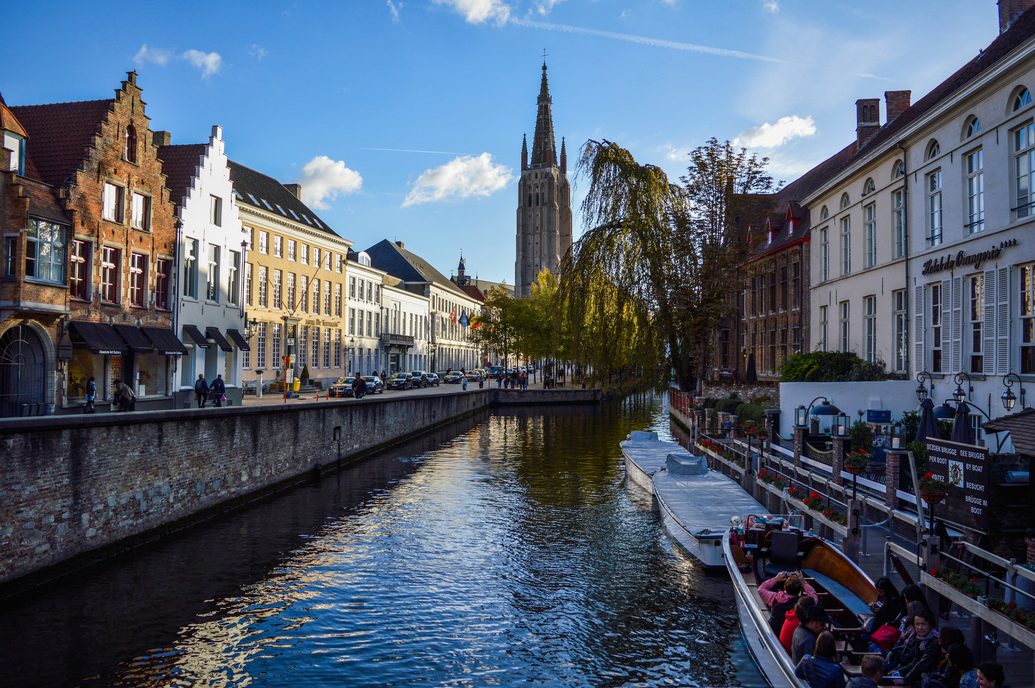
- The tower from the Dijver The classic view across the canal.
Insider tips
Avoid Sunday mornings. The church opens to visitors only at 1.30pm on Sundays, after Mass, so go on a weekday morning soon after 9.30am.
Take in the Gruuthusemuseum too. The €19 combined ticket saves €6, and from the museum you can look down into the choir from the Gruuthuse oratory. The museum is currently closed on Wednesdays; check before you go.
Common questions
Is the Church of Our Lady free?
The nave is always free. The choir, ambulatory and chapels, with Michelangelo’s Madonna and the Burgundian tombs, form a museum run by Musea Brugge: in 2026 it costs €10, €9 under 26, €5 under 18, and nothing under 13.
Why is Michelangelo's Madonna in Bruges?
The Mouscron family, Bruges cloth merchants, bought the statue in Italy and gave it to the church in 1514. It was the first sculpture by Michelangelo to leave Italy in his lifetime. It was carried off to Paris after the French Revolution and by the Germans in 1944, and came back both times.
When is it open?
Monday to Saturday 9.30am to 5pm, Sundays and Catholic holy days 1.30pm to 5pm (Sunday Mass is at 11.15am). It closes on 25 December, 1 January and Ascension Day, and can close for weddings and funerals.
Can you climb the tower?
No. For a view over Bruges, climb the Belfry on the Markt instead.
Is there a combined ticket?
Yes: €19 for the church museum and the Gruuthusemuseum next door, from where you can look down into the choir through the Gruuthuse family’s private oratory. The 72-hour Musea Brugge Card (€49) covers both and other city museums.
More churches nearby
- Antwerp Cathedral — three Rubens altarpieces under a 123-metre spire.
- Amiens Cathedral — the largest Gothic cathedral in France.