
All Saints’ Church, Brixworth
On a hill above a Northamptonshire village stands a church that looks unlike any other in England. All Saints’, Brixworth, was built in the Anglo-Saxon period, more than a thousand years ago, and it is the largest church in the country that still stands substantially as its first builders left it. Its arches are made of Roman bricks, its tower has a round stair turret, and round its east end are the remains of a sunken passage, probably built to give pilgrims access to relics.
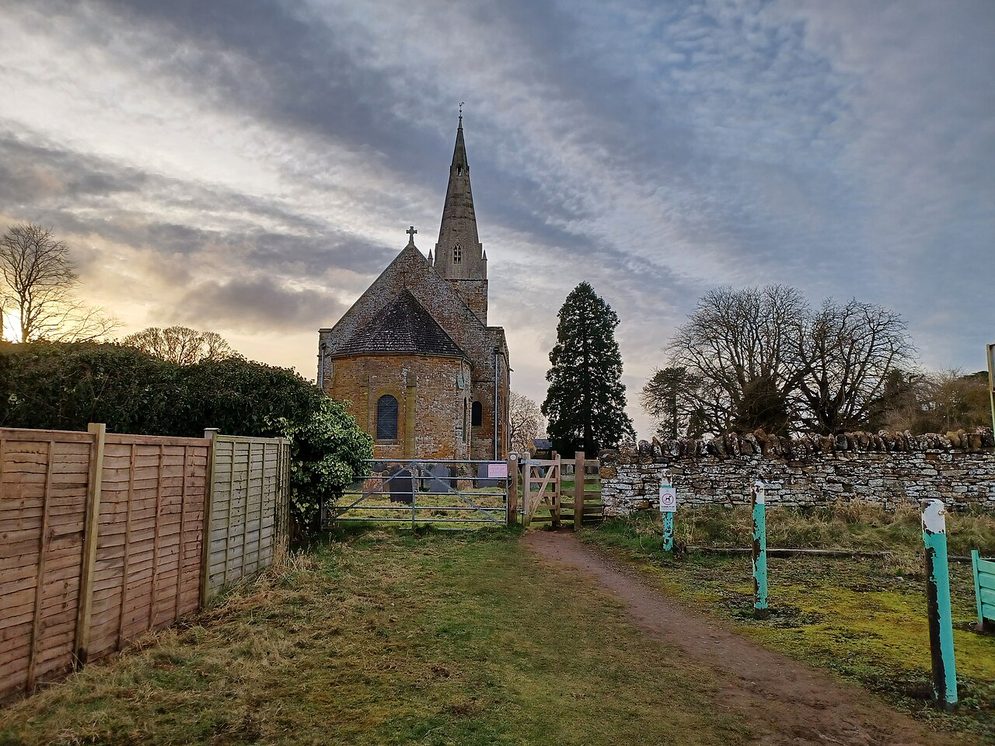
A basilica in the Midlands
A monastery was founded at Brixworth in the late seventh century, when Seaxwulf was bishop of the Mercians. The church that stands today was begun in the late eighth or early ninth century, in the time of the Mercian kings Offa or Coenwulf. It was laid out like an early Christian basilica in Rome: a tall nave with arcades on each side opening into side chambers, a presbytery beyond a great arch, and a rounded apse at the east end.
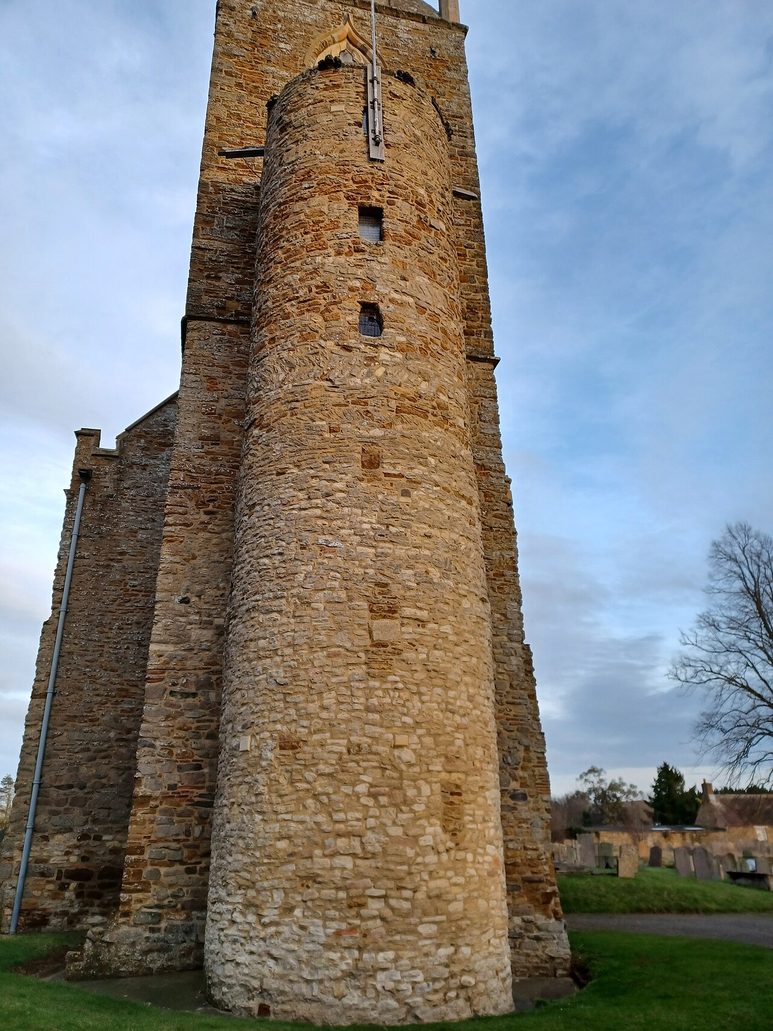
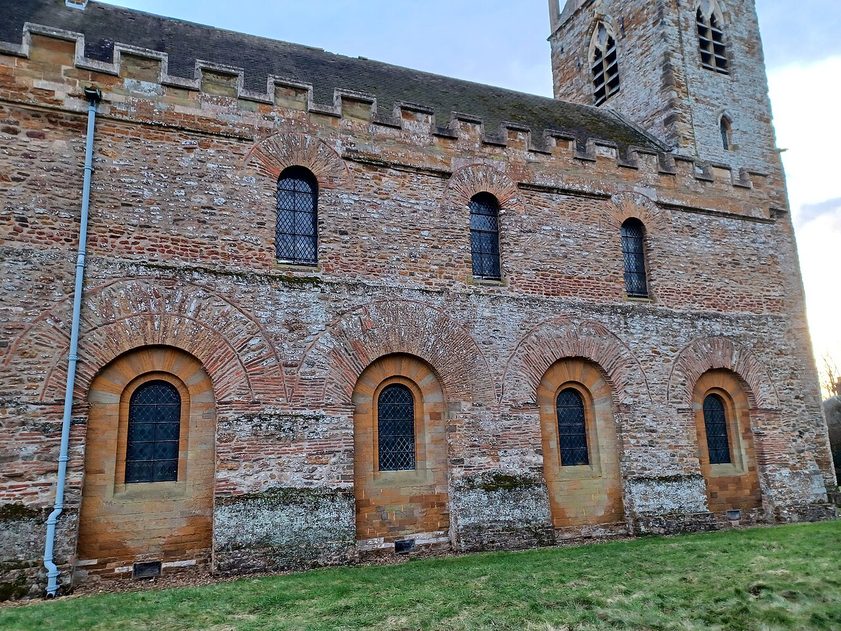
The builders had no quarries of their own to draw on. They took stone and brick tiles from the ruins of Roman towns, probably Towcester and Leicester, and used the thin red tiles to turn their arches. Later centuries took away the side chambers and filled in the arcades, and in the tenth century the porch at the west end was raised into a tower, with a round stair turret on its side.
The visitor's cheat sheet
| Where | Church Street, Brixworth, Northampton, NN6 9BZ |
|---|---|
| Getting there | About 7 miles north of Northampton off the A508; nearest station Northampton |
| Opening hours | Usually open in daylight: about 9am–5pm in summer, 10am–4pm in winter, except during private services |
| Admission | Free; donations welcome; group tours by arrangement (suggested at least £3 a head) |
| How long | 45 minutes to an hour |
| Best time | A clear day, to see the Roman tiles in the walls outside |
| Dress code | No rule; respectful dress in a working church |
| Tours | Self-guided; booked group tours of about 45 minutes; steps at the entrance |
Hours and admission checked against the official site in October 2026. They change; the official site is always the last word.
One of four. The round stair turret on the west tower is one of only four Anglo-Saxon stair turrets left in England. The others are at Brigstock, about 20 miles to the north-east, and at Broughton and Hough-on-the-Hill in Lincolnshire.
What to see, in the order you meet it
The outside
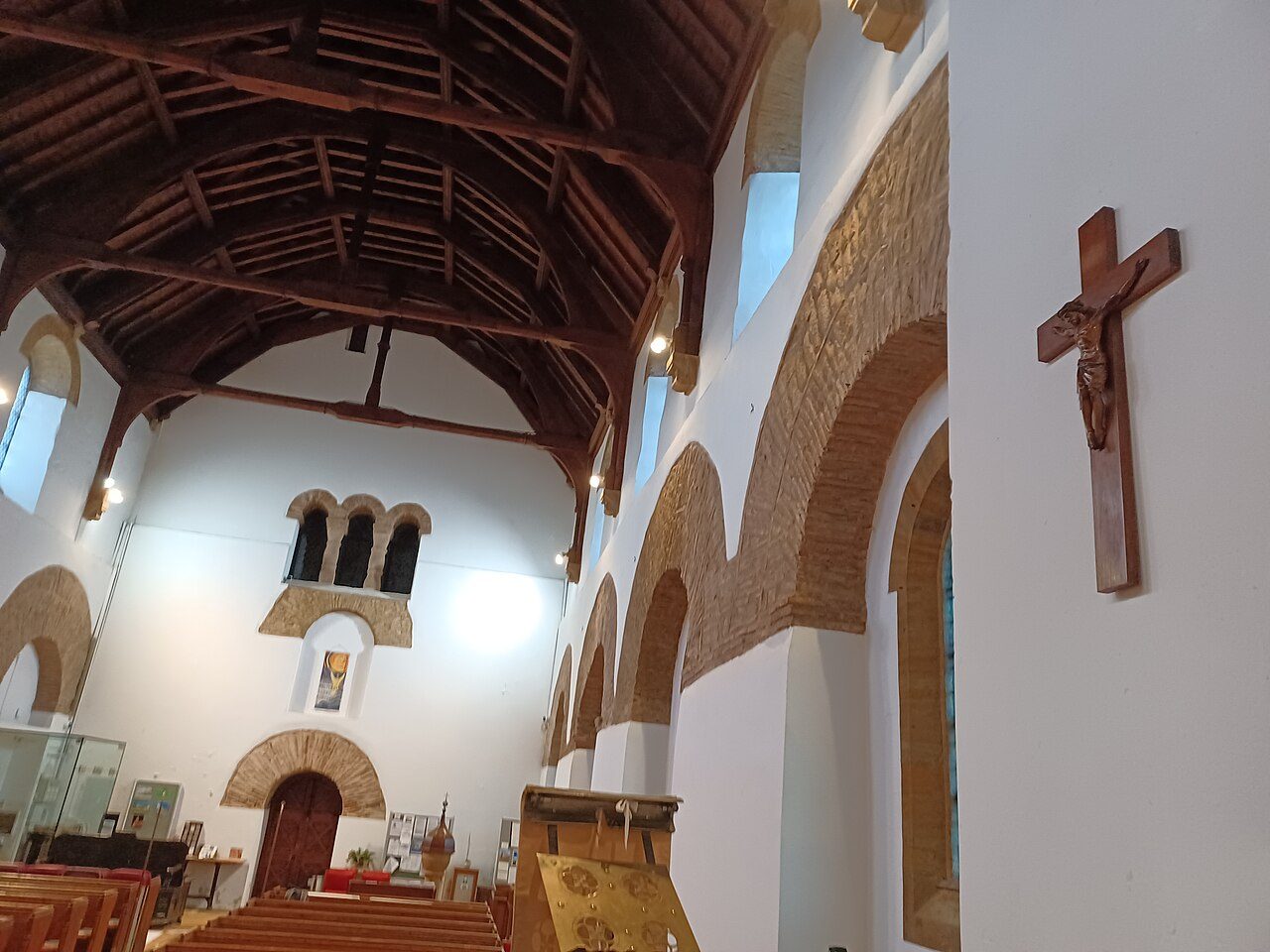
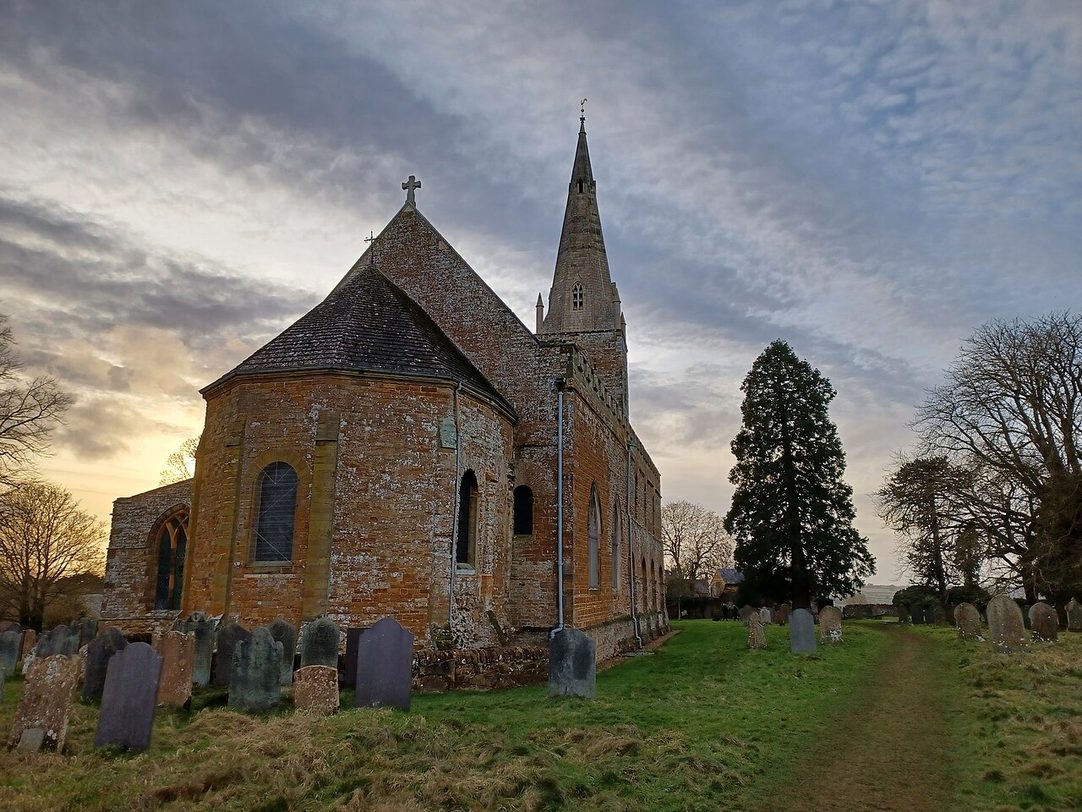
Walk round the church first. Along the walls of the nave you can see the great blocked arches of the original arcades, outlined in Roman tiles, with smaller windows set into them. At the west end is the tower with its stair turret and the broach spire added in the fourteenth century.
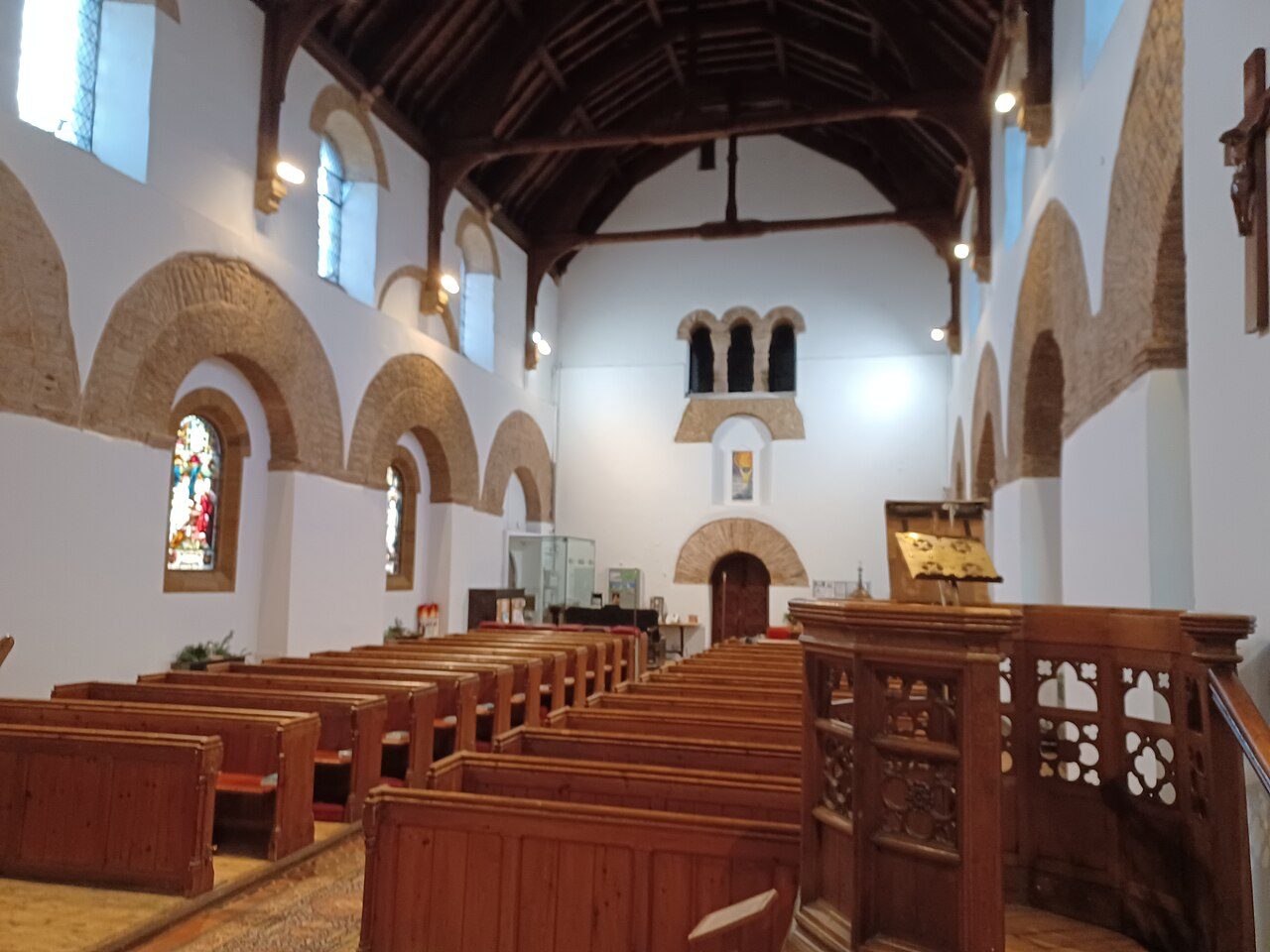
The nave
Inside, the nave is tall, plain and full of light. The blocked arches are clear in the walls, and high up at the west end is a triple opening with turned baluster shafts, a typically Anglo-Saxon detail that also appears in the tower at Earls Barton, not far away.
The east end and the ring crypt
Beyond the great arch is the presbytery and the rebuilt apse. Outside, around the foot of the apse, is a sunken passage that once ran right round it under a barrel vault. It probably gave pilgrims access to relics kept at the east end. The Victorians uncovered it in the 1860s.
Visiting
Free to visit
There is no admission charge. The church is usually open in daylight hours, roughly 9am to 5pm in summer and 10am to 4pm in winter.
The hotel link goes to Booking.com. This site earns nothing from it at present — it is here because it is the quickest way to check what is actually available.
Don't miss
- The Roman tiles Reused in the arches.
- The blocked arcades Traces of the lost side chambers.
- The stair turret One of four in England.
- The triple west opening With turned baluster shafts.
- The ring crypt The sunken passage round the apse.
- The spire Added in the fourteenth century.
Insider tips
Make a Saxon day of it. All Saints’, Earls Barton, with its famous Anglo-Saxon tower, is about 20 minutes’ drive away, and Brigstock’s stair turret is half an hour to the north-east. Pitsford Water, just east of Brixworth, is good for a walk afterwards.
Common questions
Does it cost anything to visit Brixworth church?
No. All Saints’ is a working parish church and free to visit; donations are welcome. Guided tours for groups can be booked, with a suggested contribution of at least £3 a head.
When is the church open?
It is usually open in daylight: about 9am to 5pm in summer and 10am to 4pm in winter, except during private services or events.
How old is All Saints’, Brixworth?
A monastery was founded here in the late seventh century. The present church was begun in the late eighth or early ninth century; the tower and stair turret were added in the tenth century, and the spire in the fourteenth. It has been a place of Christian worship for well over a thousand years.
Why are there Roman tiles in the walls?
The builders reused stone and brick tiles from abandoned Roman towns, probably Towcester and Leicester. You can see the thin red tiles outlining the arches of the nave.
Where is Brixworth?
Brixworth is a village about seven miles north of Northampton, just off the A508. The church is on Church Street, on the hill at the top of the village. The nearest station is Northampton.
Where to stay and eat nearby
Brixworth has pubs and a few shops; Northampton, a short drive south, has a wider choice of hotels.
More English churches
- St Peter’s, Barton-upon-Humber — another Anglo-Saxon tower
- St Laurence, Bradford on Avon — a tiny Saxon chapel
- Peterborough Cathedral — the abbey whose monks are said to have founded Brixworth
See all the cathedrals and churches worth visiting in England →