
Salle Church, Norfolk
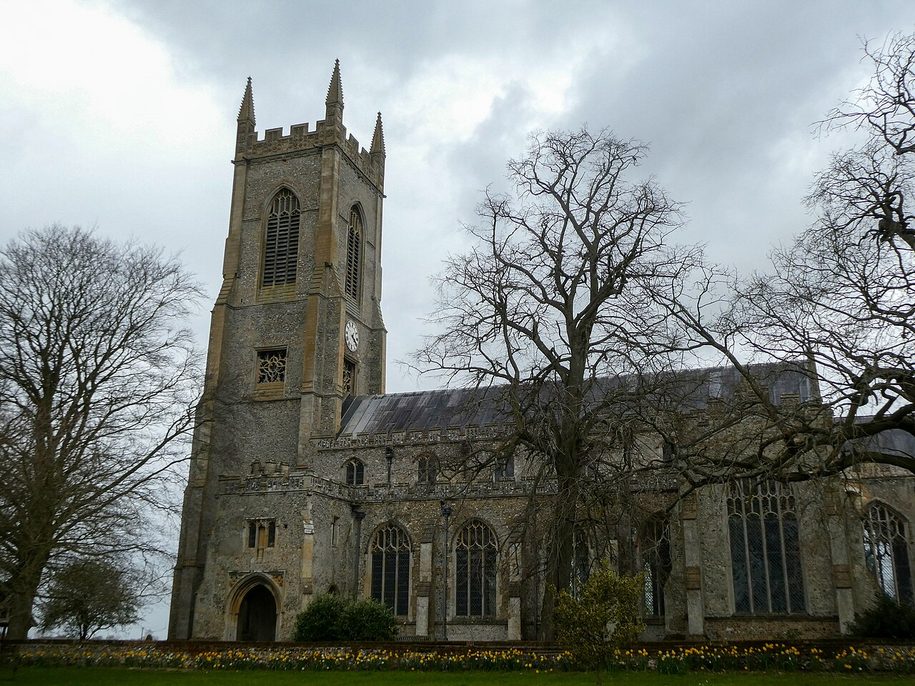
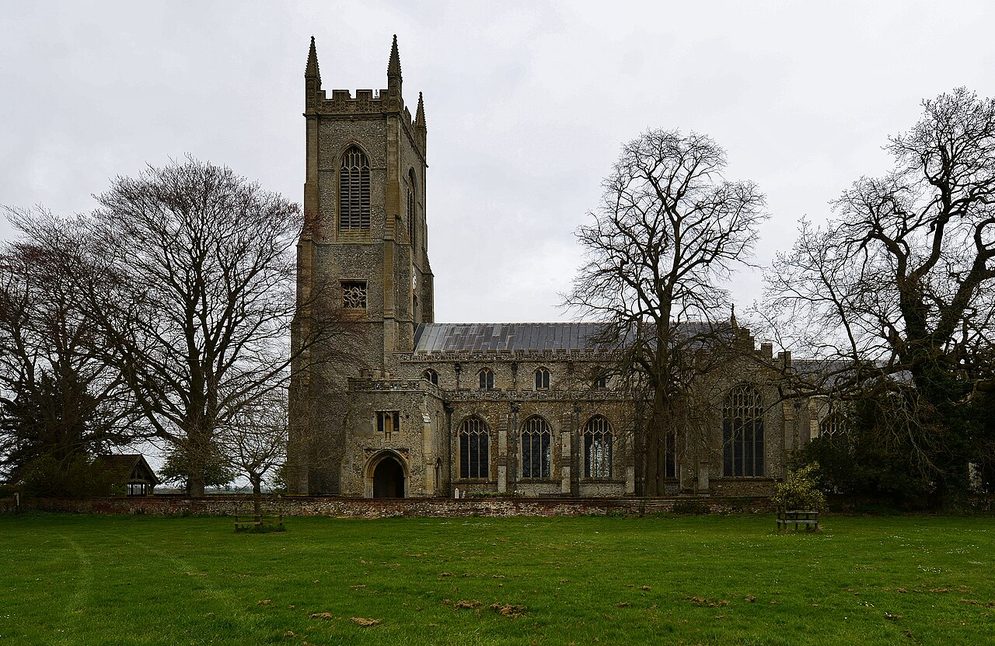
Drive through the lanes north of Norwich and a vast church appears in the middle of the fields, with hardly a house in sight. The Church of St Peter and St Paul at Salle was built in the fifteenth century by a handful of rich wool merchants, among them the ancestors of Anne Boleyn, and it is one of the finest parish churches in England: 171 feet long, with a 130-foot tower, and largely untouched by the Victorians.
Built by wool money
In the later Middle Ages, East Anglia grew rich on wool and cloth, and its village churches show it. At Salle a cluster of wealthy families — the Boleyns, the Briggs, the Mautebys, the Morleys and others — rebuilt their church on a grand scale, facing it in expensive Barnack limestone rather than the usual local flint. Their arms and initials are carved all over it.
The whole church was laid out at once in the early fifteenth century and built in stages: the nave by about 1411, the chancel by 1440, the transepts and south porch in the 1440s. The tower was finally finished in 1511. Because little was done to it in the nineteenth century, an unusual amount of its medieval furniture survives.
The visitor's cheat sheet
| Where | The Street, Salle, near Reepham, Norfolk, NR10 4SE |
|---|---|
| Getting there | About a mile and a half north of Reepham and 15 miles north-west of Norwich; parking by the church; no public transport to the door |
| Opening hours | No published opening times; often open in the daytime |
| Admission | Free; donations welcome |
| How long | An hour |
| Best time | A bright day, when the clear glass fills the nave with light |
| Dress code | No rule; respectful dress in a working church |
| Tours | Self-guided; level access to the main areas |
Hours and admission checked against the official site in October 2026. They change; the official site is always the last word.
A church for music. Salle’s acoustic is famous, and the church has been used to record choral music, notably by the Tallis Scholars.
What to see, in the order you meet it
The west door and the porches
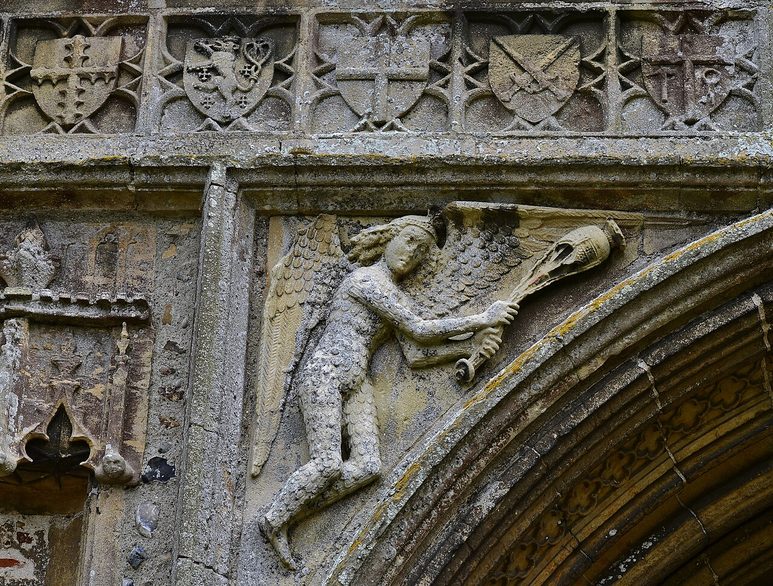
Begin at the west door, where two carved angels swing censers above the arch, under a frieze of heraldry. The north and south porches each have two storeys; the upper room of the north porch has an elaborate vault with carved bosses, including the Coronation of the Virgin.
The nave and the font
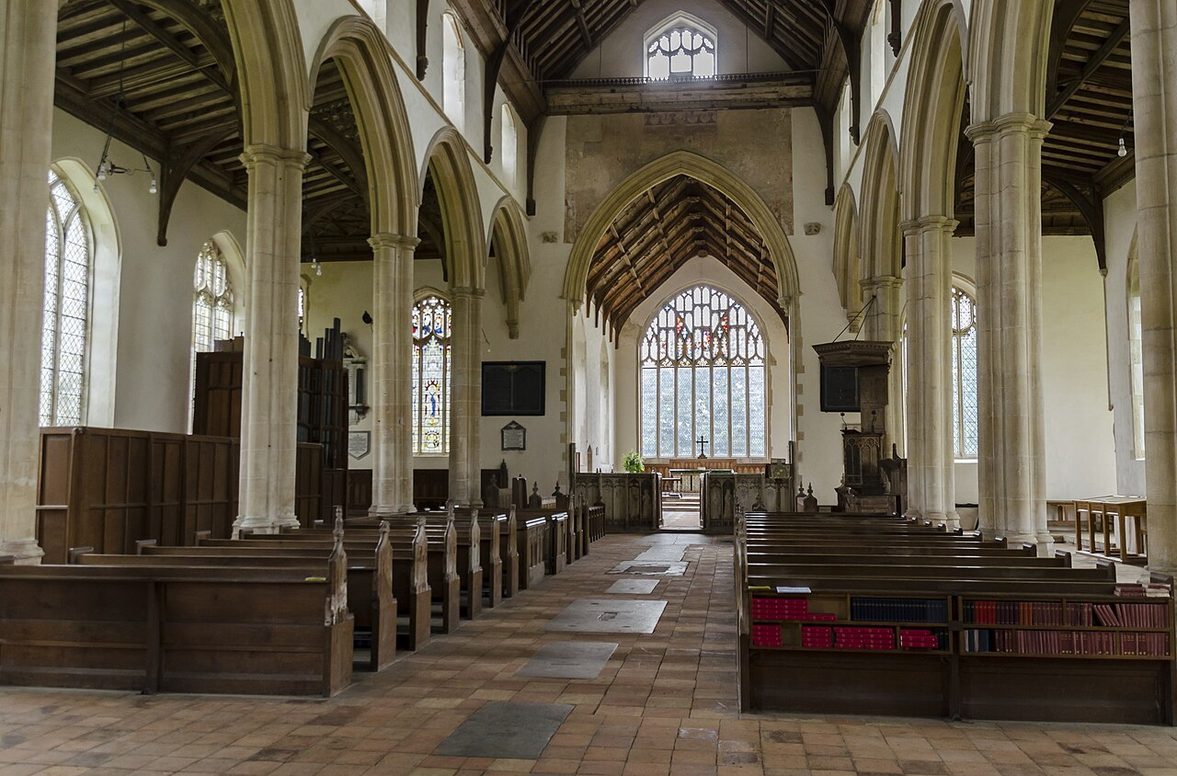
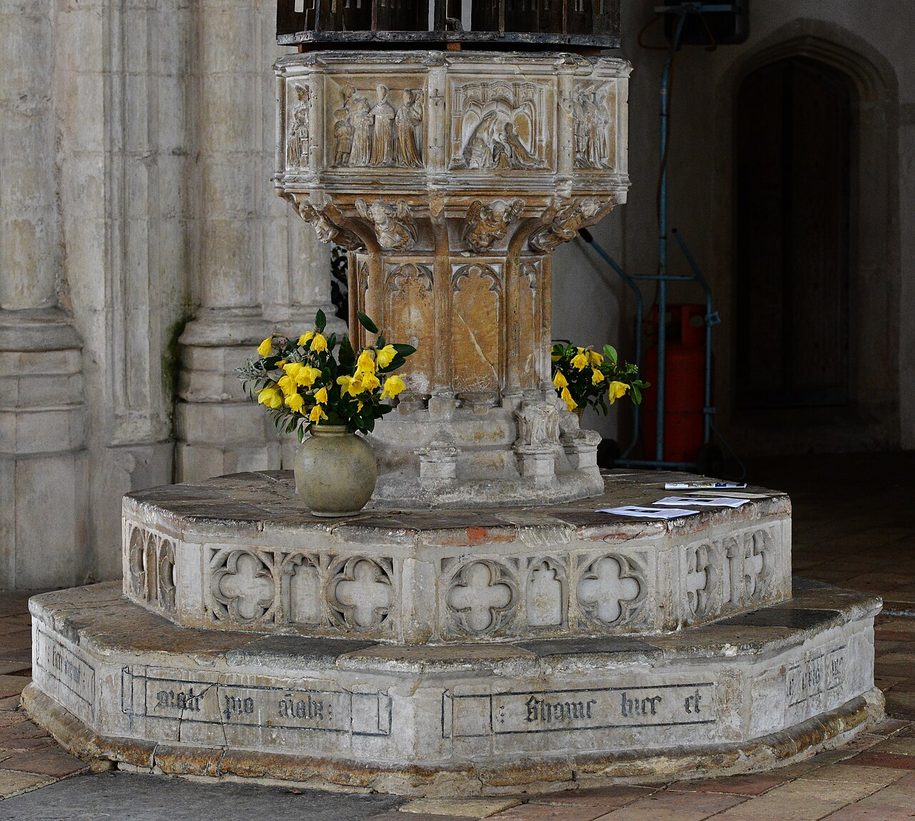
Inside, the nave is tall and light, with a clerestory and an angel roof. Near the west end is the font of about 1437, carved with the seven sacraments and the Crucifixion, and above it the remains of a tall wooden cover hanging from a crane fixed to the ringing gallery in the tower. In the nave floor are brasses of the families who paid for the church, among them Geoffrey and Alice Boleyn, great-grandparents of Anne Boleyn.
The pulpit and the screen
The fifteenth-century wine-glass pulpit still has its red and green paint; in about 1611 a sounding board and a clerk’s desk were added to make it a triple-decker. The lower part of the rood screen survives, with painted panels of the Evangelists and the Doctors of the Church.
The chancel
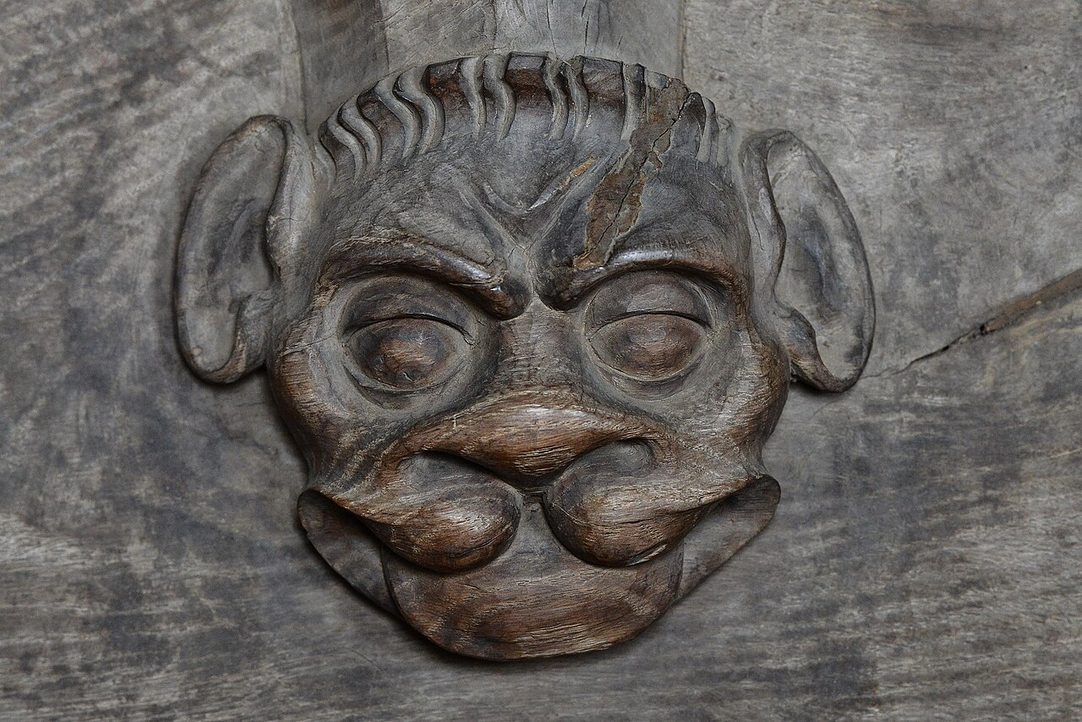
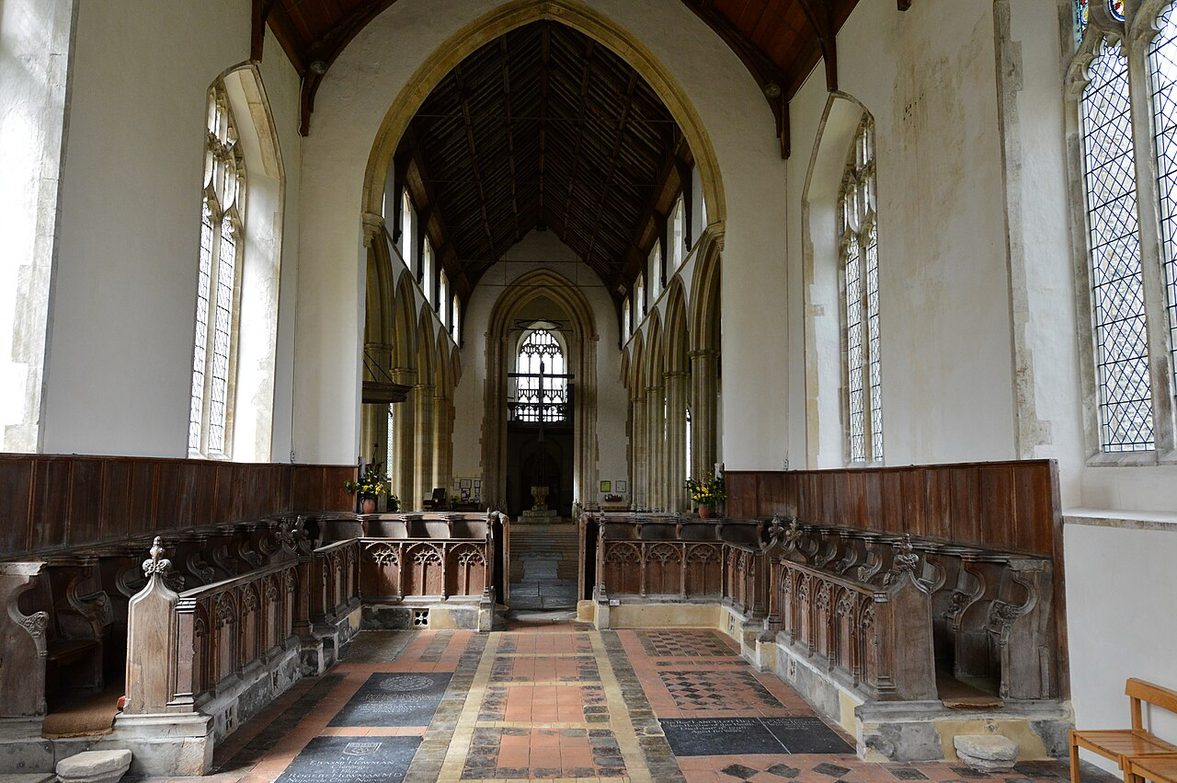
The chancel has twenty-six carved choir stalls with misericords, a roof with nine carved bosses of the life of Christ, and fragments of medieval glass in the tracery.
Visiting
Free to visit
There is no admission charge. There are no published opening times, so if you are coming from far away it is worth checking first.
The hotel link goes to Booking.com. This site earns nothing from it at present — it is here because it is the quickest way to check what is actually available.
Don't miss
- The censing angels Over the west door.
- The seven-sacrament font With its cover on a crane.
- The wine-glass pulpit Still painted red and green.
- The misericords Under the chancel stalls.
- The Boleyn brasses Anne’s great-grandparents.
- The chancel bosses Nine scenes from the life of Christ.
Insider tips
Two great churches in one trip. Cawston church, with its angel roof and painted screen, is only a couple of miles away and was rebuilt at much the same time, largely by a single great family. Bring binoculars for the roofs.
Common questions
Is Salle church open to visitors?
There are no published opening times. The church is often open during the day, but it is a working church in a very small parish, so it is worth checking with the benefice before making a long journey. Entry is free; donations are welcome.
Why is such a big church in such a small village?
In the fifteenth century Salle was home to several rich families who had made their money in the wool and cloth trade — the Boleyns, the Briggs, the Mautebys and others. They paid for the church to be rebuilt on a grand scale, faced in costly Barnack limestone, partly for the good of their souls and partly, no doubt, to outdo their neighbours.
Is Anne Boleyn buried at Salle?
Almost certainly not. A legend first recorded in the nineteenth century says her body was secretly brought here after her execution, but she is generally accepted to lie in the chapel of St Peter ad Vincula in the Tower of London. Her great-grandparents, Geoffrey and Alice Boleyn, are commemorated by brasses in the floor.
How big is the church?
It is 171 feet long, with a west tower 130 feet high, and it was built in the fifteenth century, between about 1405 and 1450; the tower was finished in 1511.
How do you get to Salle?
Salle is in open country about a mile and a half north of Reepham and 15 miles north-west of Norwich. There is no public transport to the church; there is parking by the church and in the lane.
Where to stay and eat nearby
Reepham, a mile and a half away, has pubs and cafés; Norwich, about half an hour away, has plenty of hotels.
More English churches
- Norwich Cathedral — the great Norman church of Norfolk
- Lavenham Church — another wool church, in Suffolk
- Blythburgh Church — the Cathedral of the Marshes
See all the cathedrals and churches worth visiting in England →