
Walsingham, Norfolk
For four hundred years Walsingham was the greatest pilgrimage place in England, visited by kings and called “England’s Nazareth”. Henry VIII destroyed it. Then, in the twentieth century, the pilgrims came back. Today this small flint village in north Norfolk has two shrines, Anglican and Catholic, the ruins of the medieval priory in a park, and a mile-long pilgrim path walked by thousands every year.
England’s Nazareth
According to tradition, in 1061 a widow of the manor, Richeldis de Faverches, had a vision of the Virgin Mary, who showed her the house in Nazareth where the Annunciation took place and asked her to build a copy at Walsingham. The Holy House she built, with its statue of Our Lady, became the focus of a pilgrimage that drew people from all over England and beyond. In the twelfth century a priory of Augustinian canons was founded to look after the shrine, and in 1347 a house of Franciscan friars followed.
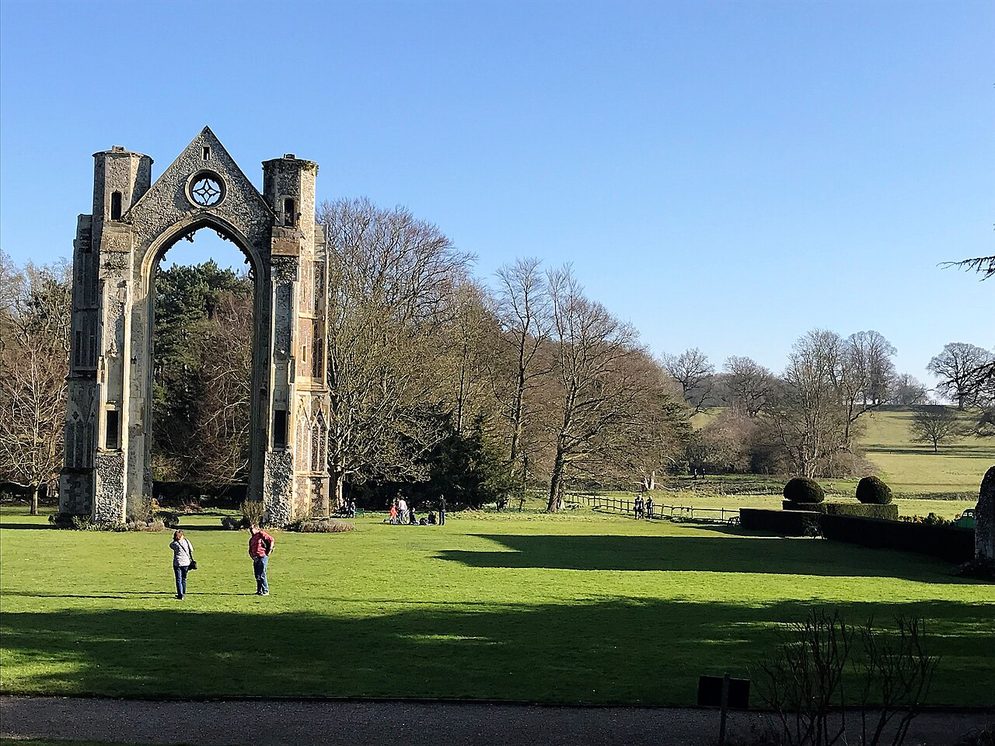
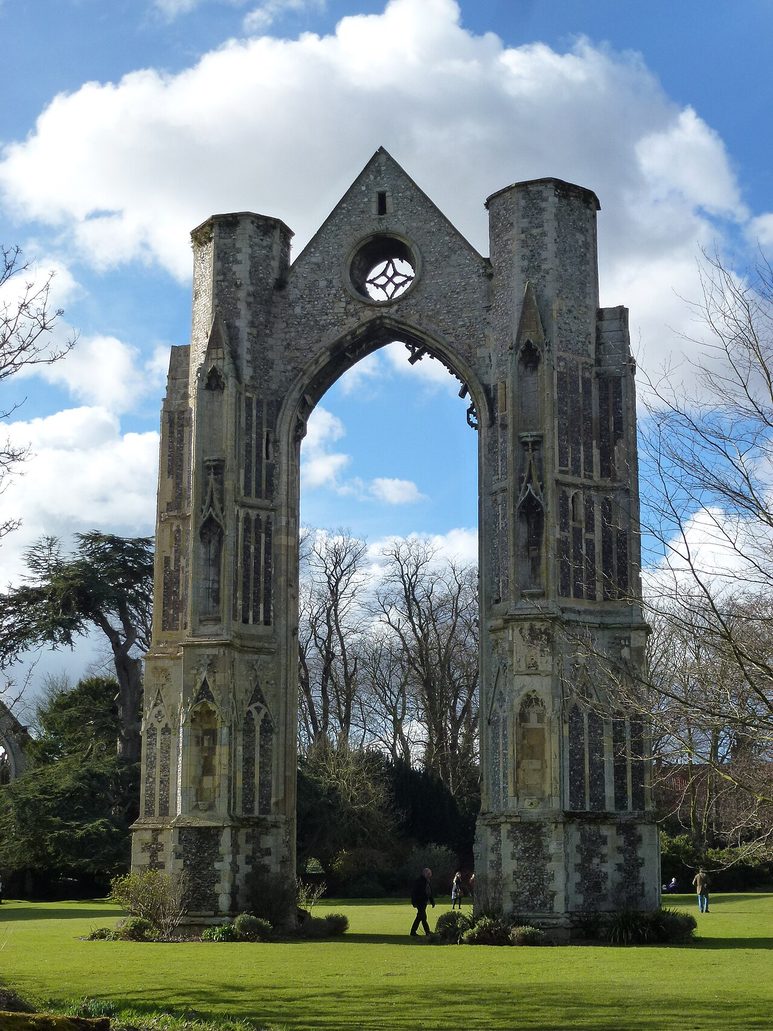
Pilgrims included many kings; Henry VIII himself came in 1511. But in 1538 the priory was dissolved, and the famous statue was taken to London and, it is said, burned. The Holy House was destroyed, and the priory church was pulled down, leaving only its great east window.
The visitor's cheat sheet
| Where | Common Place, Little Walsingham, Norfolk, NR22 6BP (Anglican shrine and Abbey grounds); the Slipper Chapel is a mile south at Houghton St Giles |
|---|---|
| Getting there | Bus from King’s Lynn or Norwich to Fakenham, then the Coastliner 36; light railway from Wells-next-the-Sea in season; pay car parks in the village |
| Opening hours | Anglican shrine: daily, dawn to dusk. Catholic shrine: 9am–5pm. Abbey grounds: daily 11am–4pm, late March to early November, and in the snowdrop season |
| Admission | Shrines: no charge, donations welcome. Abbey grounds and Shirehall Museum: adults £7.50, children (6–16) £3, under-6s free; card only |
| How long | Half a day, or a day with the Holy Mile |
| Best time | A weekday outside the big pilgrimages; February for the snowdrops |
| Dress code | Modest dress in the shrines |
| Tours | Daily services at the shrines; the Shirehall Museum is included in the abbey ticket |
Hours and admission checked against the official site in October 2026. They change; the official site is always the last word.
The revival. In 1896 Charlotte Boyd bought the medieval Slipper Chapel, then used as a barn, and had it restored; in 1934 it became the Catholic National Shrine. Meanwhile Father Alfred Hope Patten, the Anglican vicar, set up a new statue in the parish church in 1922, and in 1931 moved it to a new Holy House inside a shrine church of its own.
What to see, in the order you meet it
The Anglican Shrine and the Holy House
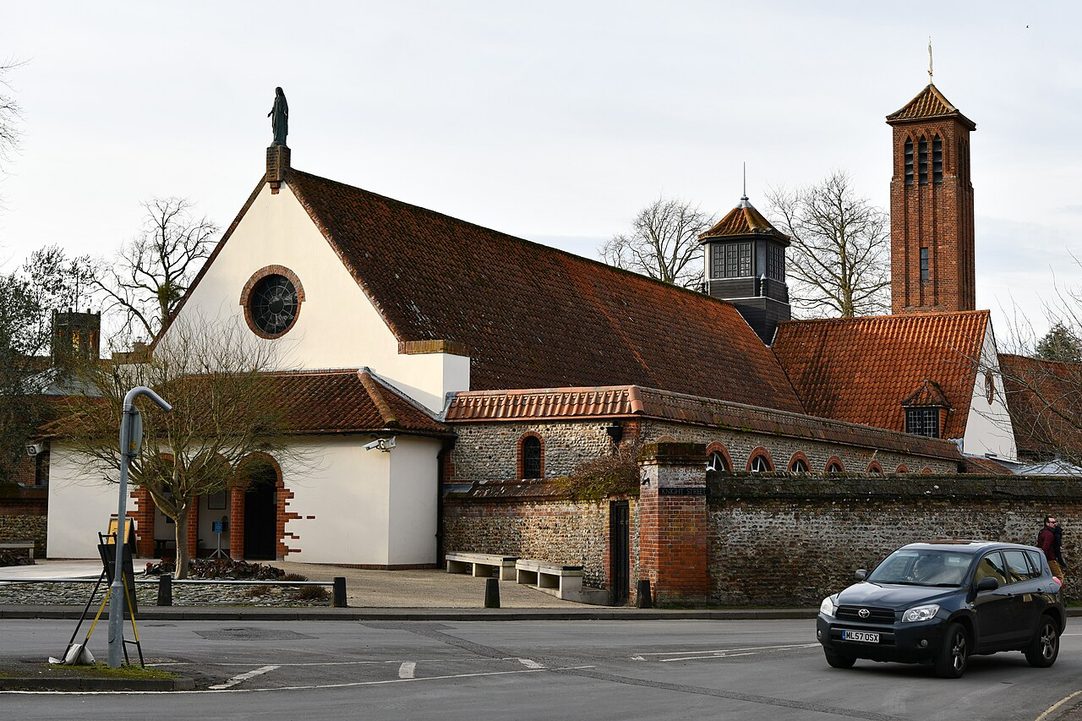
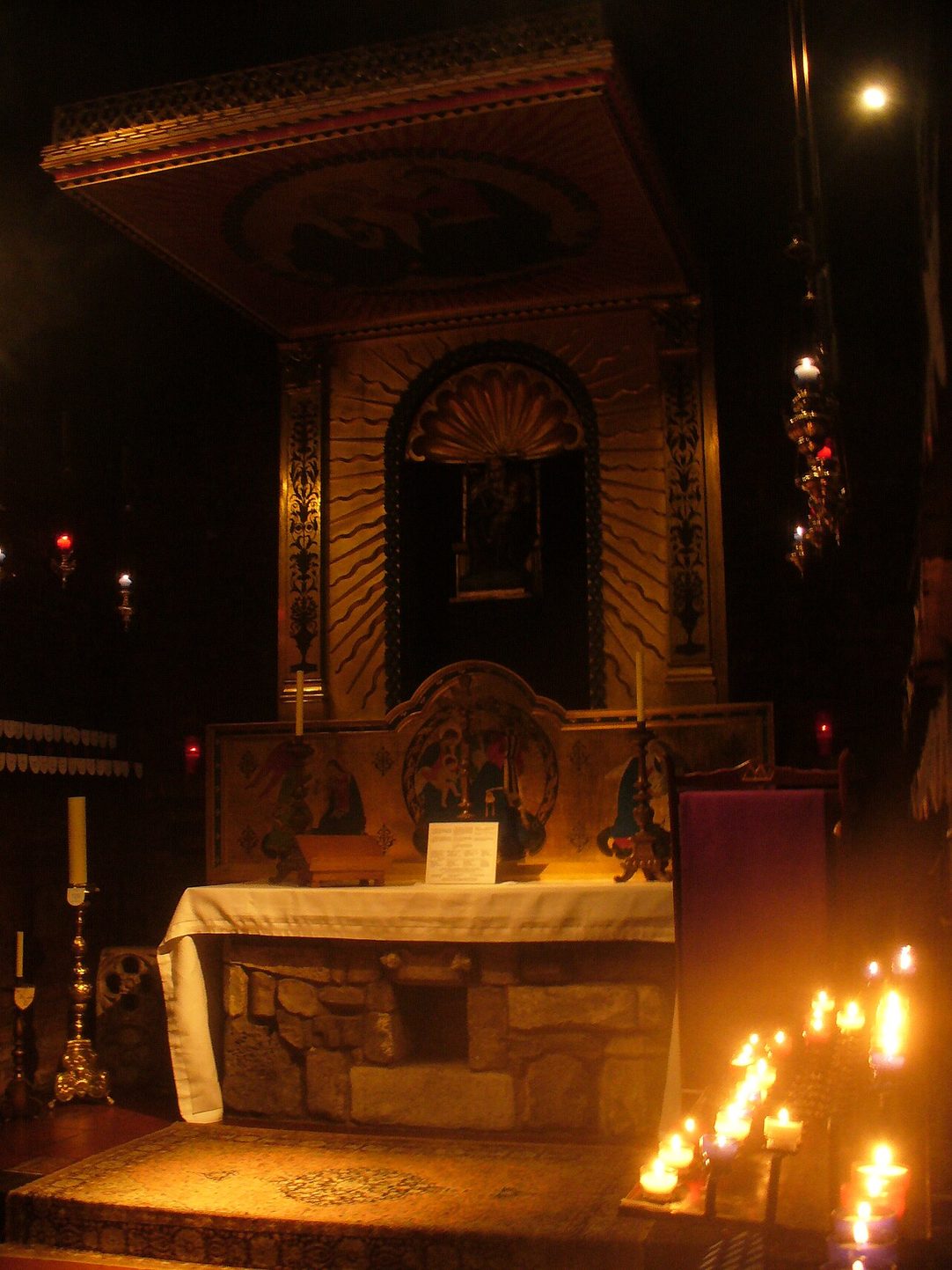
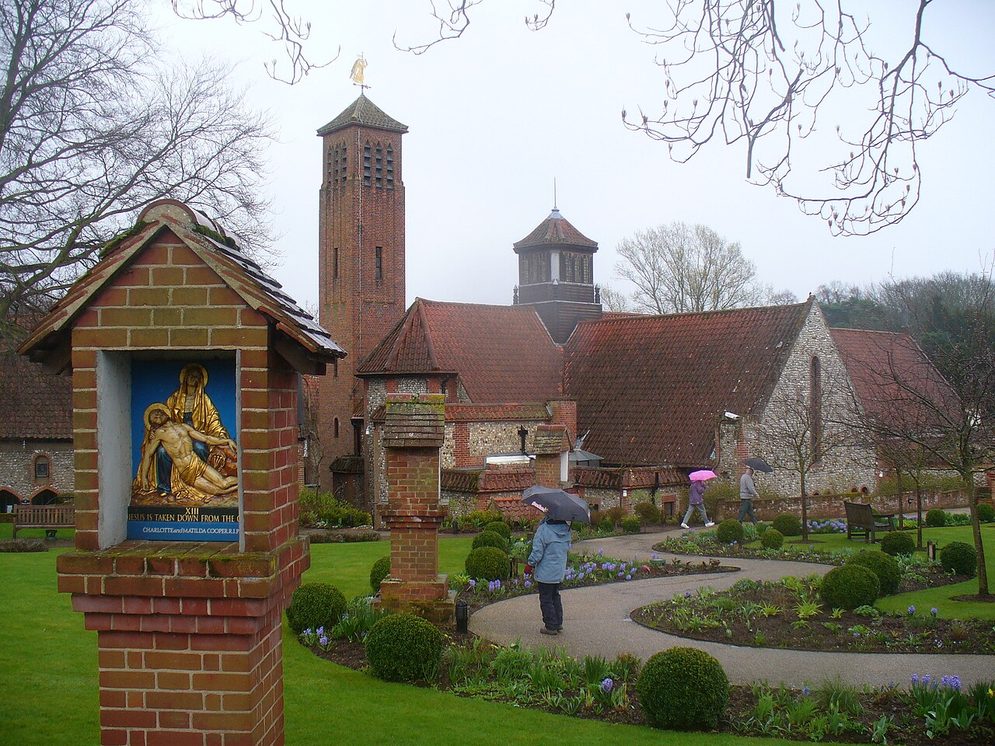
The Anglican shrine church, enlarged in 1938, stands just off Common Place. Inside it is the Holy House, a small dark chapel built to the measurements of the original, with the statue of Our Lady of Walsingham above the altar and the walls lined with candles. Around it are fifteen side chapels, and below is the holy well, where pilgrims are sprinkled with water each afternoon. Father Hope Patten is buried in the churchyard of St Mary’s.
The Abbey grounds
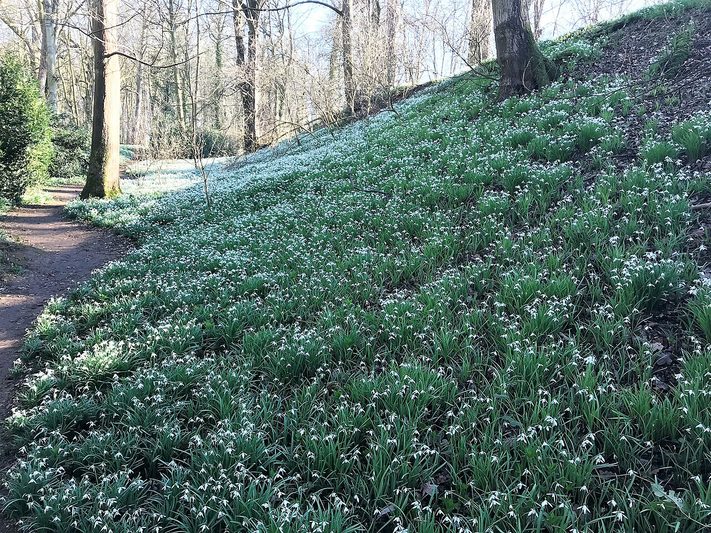
The ruins of the priory stand in parkland behind the High Street, entered through the Shirehall Museum, a Georgian courtroom. The great east window of the priory church, fourteenth century, stands alone on the lawn. Nearby are two ancient wells, a Norman arch moved here from elsewhere in the ruins, a packhorse bridge over the River Stiffkey, a nineteenth-century copy of a medieval one, and, in late winter, woods carpeted with snowdrops.
The village
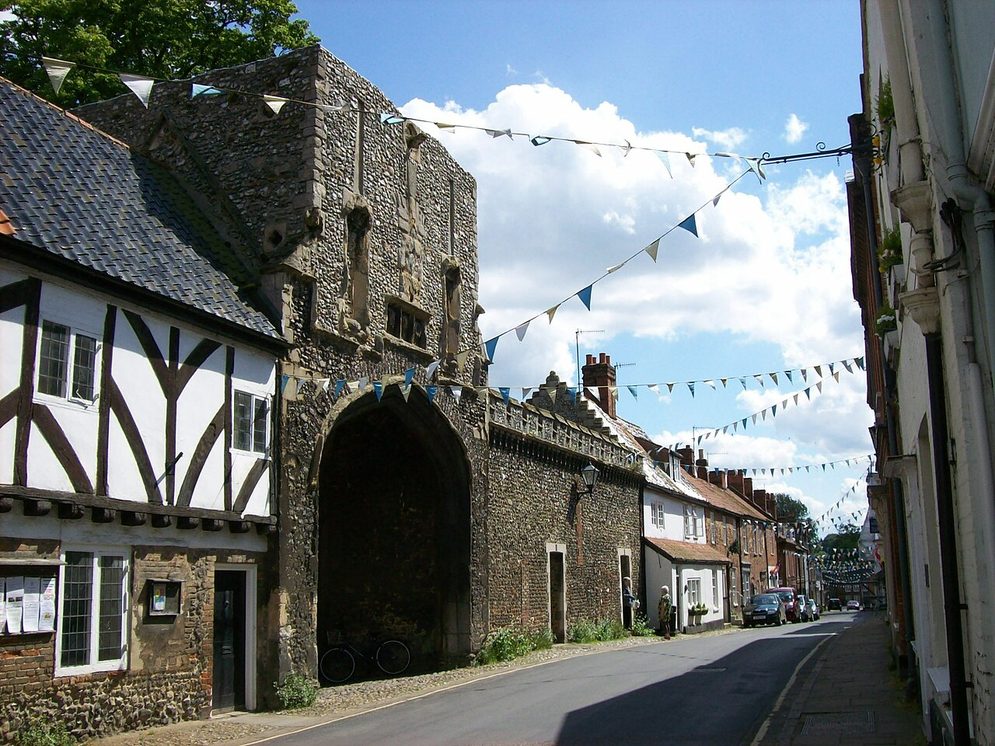
Little Walsingham is a village of flint and timber-framed houses around Common Place, with its octagonal pump house, and the Friday Market. The parish church of St Mary was gutted by fire in 1961 and rebuilt. The old railway station is now a Russian Orthodox chapel.
The Slipper Chapel and the Holy Mile
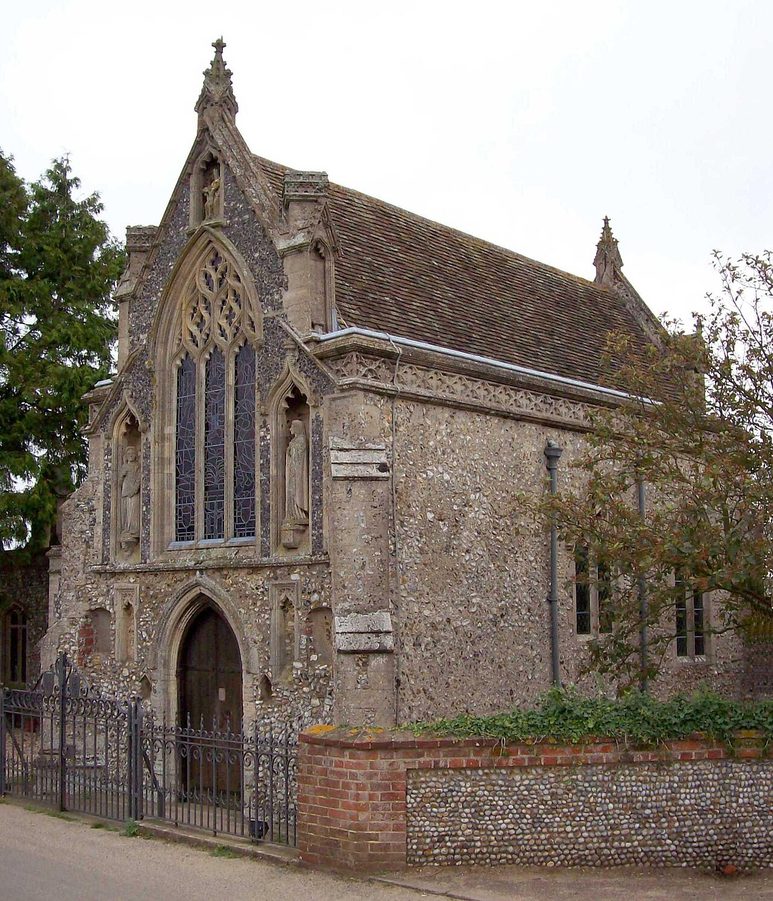
A mile south, at Houghton St Giles, is the Slipper Chapel, a fourteenth-century wayside chapel where pilgrims left their shoes before walking barefoot to the shrine. It is now the Catholic National Shrine, a minor basilica since 2015, with the large Chapel of Reconciliation of 1982 beside it for big pilgrimages. The Holy Mile, along the former railway line, links it to the village.
Visiting
Tickets
The shrines are free. Pay for the Abbey grounds at the Shirehall Museum on Common Place: £7.50 for adults, card only.
The hotel link goes to Booking.com. This site earns nothing from it at present — it is here because it is the quickest way to check what is actually available.
Don't miss
- The Holy House Candles and the crowned statue.
- The east window Alone on the lawn.
- The Shirehall Museum A complete Georgian courtroom.
- The Holy Mile The pilgrims’ walk.
- The Slipper Chapel Where the shoes came off.
- The snowdrops In the Dell, in February.
Insider tips
Walk the Holy Mile, then take the train. Park at the Slipper Chapel, walk the mile into the village, and, in season, ride the light railway on to Wells-next-the-Sea for the beach. On the big pilgrimage days the village fills up: come another day if you want quiet.
Common questions
How much does it cost to visit Walsingham?
The Anglican shrine and the Catholic shrine at the Slipper Chapel do not charge for entry; donations are welcome. The Walsingham Abbey grounds, with the priory ruins and the Shirehall Museum, cost £7.50 for adults and £3 for children aged 6–16, paid by card; under-6s are free.
When are the shrines and the abbey grounds open?
The Anglican shrine church, gardens and Holy House are open daily from dawn to dusk. The Catholic shrine is open from 9am to 5pm. The abbey grounds are open daily from 11am to 4pm from late March to the start of November, and for the snowdrop season from late January to the start of March.
What is the Holy Mile?
The mile-long walk from the Slipper Chapel at Houghton St Giles to Walsingham. Medieval pilgrims left their shoes at the chapel and walked the last stretch barefoot; many pilgrims still walk it today.
When is Walsingham busiest?
On the big pilgrimage days: the Anglican National Pilgrimage on the late May bank holiday Monday, and large Catholic pilgrimages through the summer. The village is quiet on weekdays outside the main season.
How do you get to Walsingham?
The nearest stations are King’s Lynn and Norwich, both about 27 miles away. From either, take a bus to Fakenham, then the Coastliner 36 to Walsingham. From March to October the Wells & Walsingham Light Railway runs steam trains along the four miles from Wells-next-the-Sea.
Where to stay and eat nearby
The village has pubs, tea rooms and pilgrim accommodation, and Wells-next-the-Sea and Fakenham are close by.
More English churches
- Salle Church — a great Norfolk church in the fields
- Norwich Cathedral — an hour away
- Castle Acre Priory — Norfolk’s other great priory ruin