
Hosios Loukas
The Monastery of Hosios Loukas stands alone on a mountainside in central Greece, about 40 minutes from Delphi. Its two churches, side by side, are among the finest Byzantine buildings anywhere: the larger, the Katholikon of the early 11th century, is lined with marble and covered in mosaics on gold. With Daphni and Nea Moni on Chios it is a UNESCO World Heritage Site, and it is still home to a community of monks. Entry is €10.
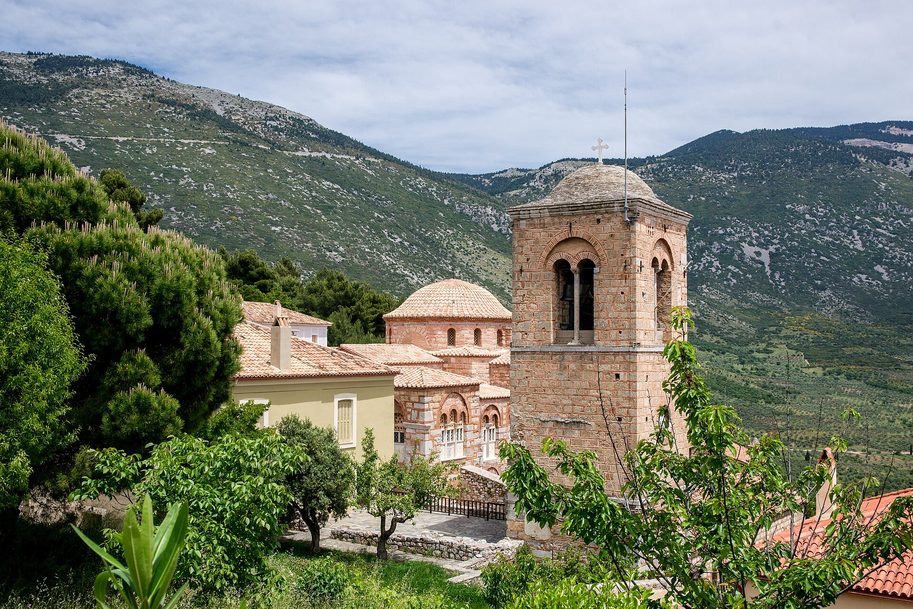
A hermit’s monastery
St Luke the Younger, known as Hosios Loukas, settled here as a hermit in 946 and died in 953, already famous for miracles and for a prophecy, it was said, that an emperor Romanos would win back Crete, which the Byzantines did in 961. A church and a monastery grew up around his tomb. The smaller church, the Panagia (Theotokos), is probably the earlier, built in the later 10th century; the Katholikon, dedicated to the saint, followed in the early 11th century, and its mosaics were made over the following decades. A legend that the emperor Romanos II founded the Katholikon and lies in its crypt cannot be right: he died in 963, long before the Katholikon was built, though he may have helped pay for the Panagia.
An earthquake brought down the dome, which was rebuilt, probably in the 18th century, with a painted Christ in place of the lost mosaic; the monastery was damaged again in the War of Independence (1821). The relics of St Luke, carried off in the 15th century and eventually taken to Venice, were returned in 1986. Hosios Loukas was inscribed on the World Heritage list in 1990.
The visitor’s cheat sheet
| Where | Near Steiri, Boeotia, about 9 km beyond Distomo |
|---|---|
| Opening hours | Daily 8.30am–3.30pm all year, last entry 3.10pm; closed 1 January, 25 March, 1 May, Easter Sunday and 25–26 December |
| Admission | €10, reduced €5; free on 6 March, 18 April, 18 May, 28 October, the last weekend of September and the first and third Sundays of November–March |
| Dress code | Shoulders and knees covered: a working monastery |
| Facilities | Car park, café, shop and toilets |
| How long | An hour to an hour and a half |
Hours and admission checked against the official site in October 2026. They change; the official site is always the last word.
What to see
The two churches
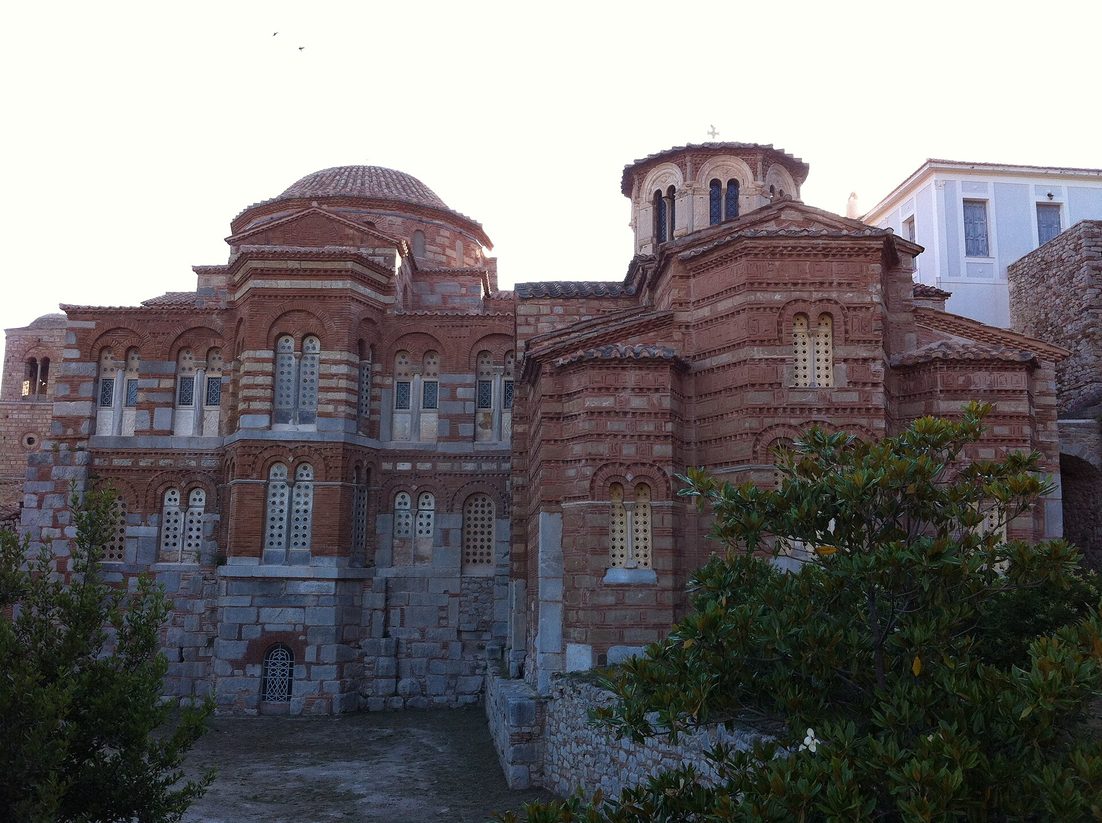
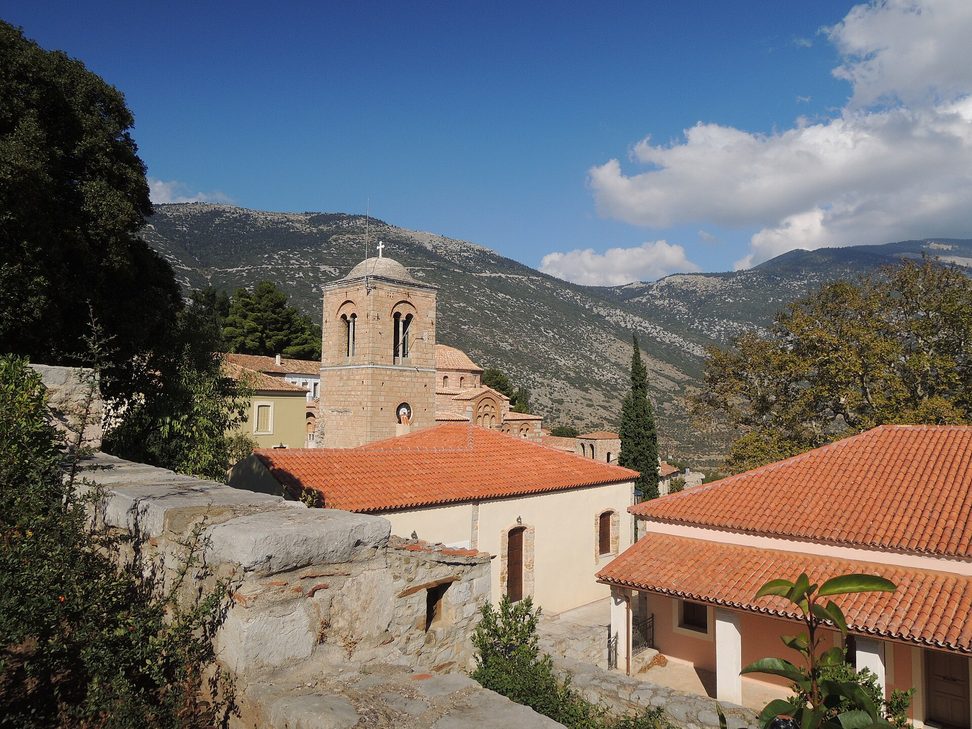
Walk round the outside first. The two churches stand side by side and adjoin each other, built in stone framed with brick in the Byzantine cloisonné manner; the Panagia, on the north, has brick patterns that imitate Arabic lettering on its walls.
The Katholikon
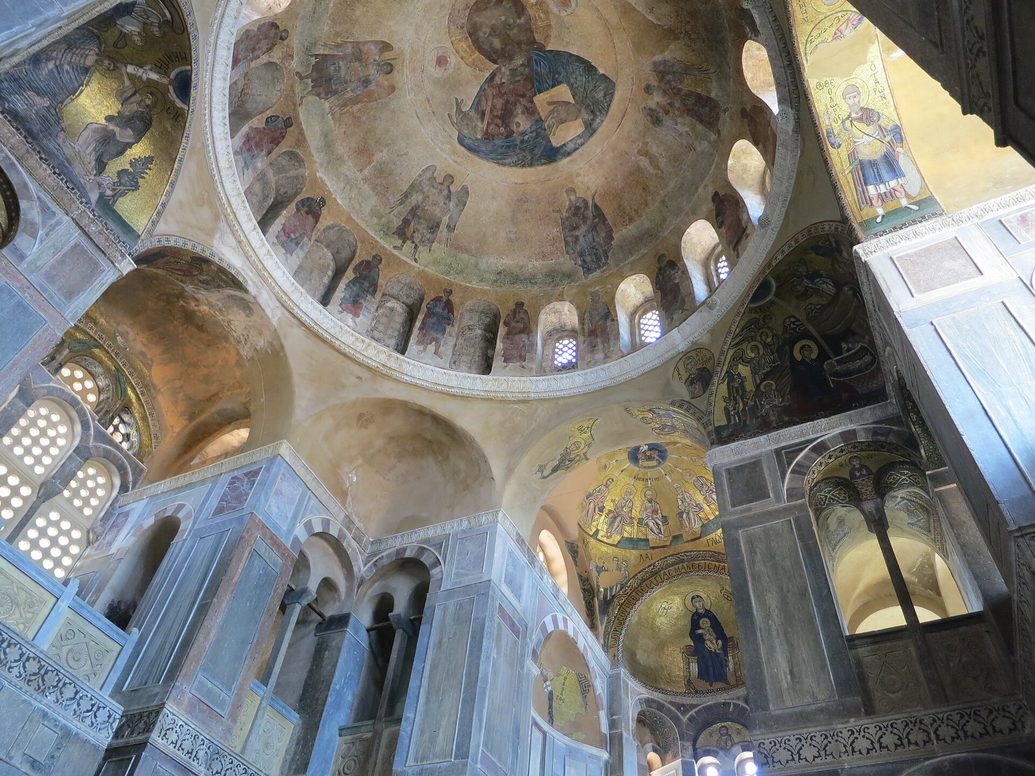
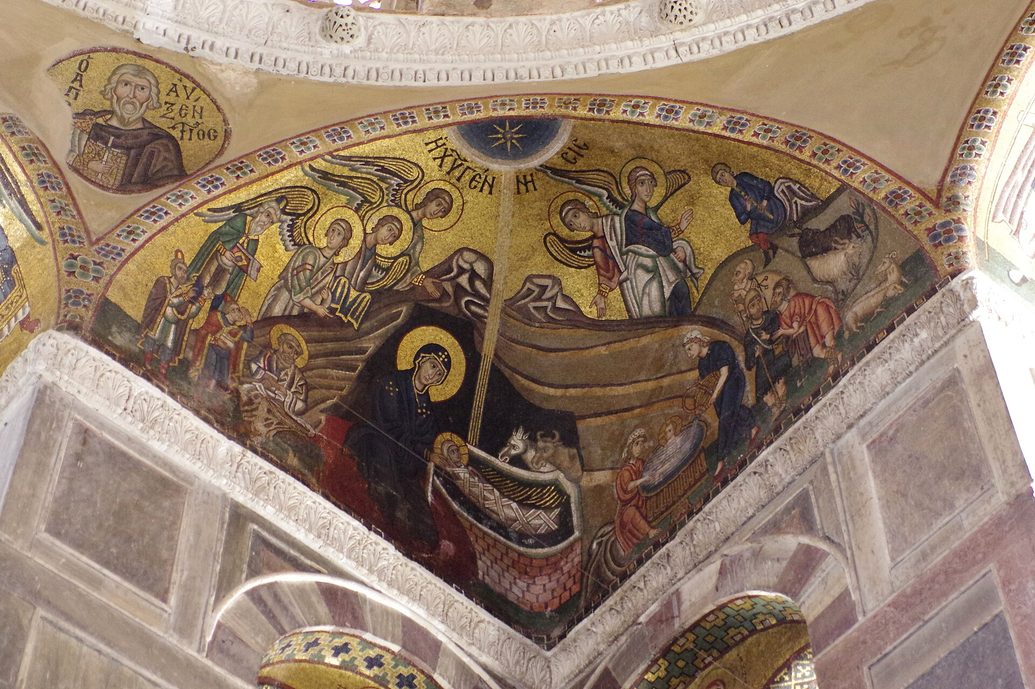
The Katholikon is the earliest surviving church of its type, with a broad dome carried on squinches over an octagon of piers, so that the space opens up in the centre. The lower walls are faced in coloured marble; above, the vaults are covered in mosaic on a gold ground. In the bema, the dome over the sanctuary shows Pentecost and the apse the Virgin and Child; on the squinches of the main dome are the Nativity, the Presentation and the Baptism. The great Christ in the dome itself is a later painting.
The narthex
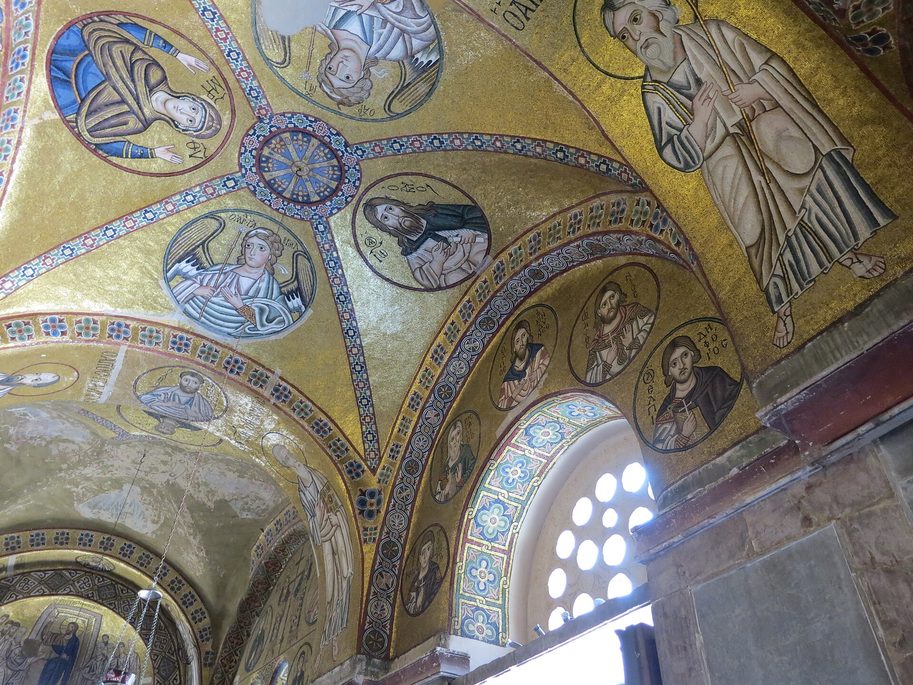
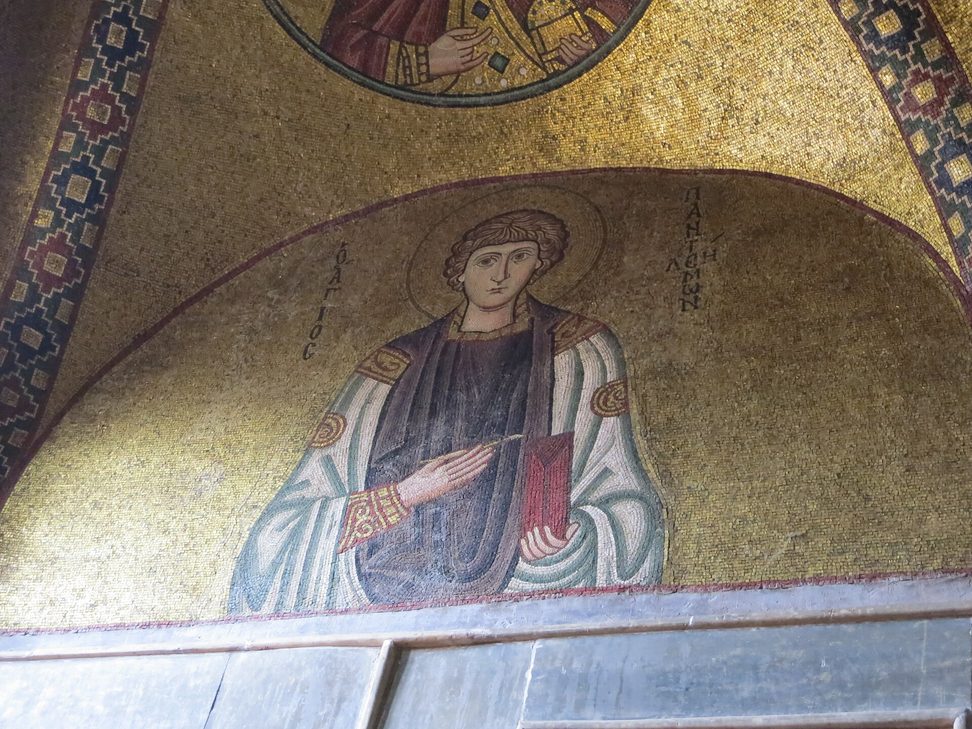
Don’t hurry through the narthex, the entrance hall, where some of the best-preserved mosaics are close enough to see in detail: the Washing of the Feet, the Crucifixion, the Anastasis (Christ freeing Adam and Eve from Hell) and Doubting Thomas, with Christ above the door into the church and saints in medallions on the vaults. Some 140 saints in mosaic appear around the church.

The crypt
Under the Katholikon, entered from outside on the south side, is the crypt of St Barbara, which holds the saint’s original tomb and a nearly complete set of 11th-century frescoes: scenes of the Passion and Resurrection, and some 40 portraits of saints in medallions. It is reached down a stairway.
Getting there
Hosios Loukas is in Boeotia, some 160–170 km from Athens: allow 2–2½ hours by car. Leave the Livadeia–Delphi road for Distomo and Steiri and follow the signs; from Delphi it takes about 40–45 minutes, from Arachova a little over half an hour. Buses (KTEL) run from Athens towards Distomo (check current times with KTEL Viotias), but there is none to the monastery: take a taxi for the last 9 km and arrange the return. In Distomo, a memorial on the hill above the village remembers the 218 villagers killed by German troops on 10 June 1944.
Where to stay
Most visitors combine Hosios Loukas with Delphi. Arachova, on the slopes of Parnassos, and Delphi itself are the best bases; Distomo has a few simple places to stay.
These links go to Booking.com. This site earns nothing from them at present — they are here because they are the quickest way to check what is actually available.
Don’t miss
- The narthex mosaics Washing of the Feet and Doubting Thomas.
- The squinches The Nativity and the Baptism.
- The crypt St Luke’s first tomb and its frescoes.
- The Panagia Brick patterns like lettering.
- The setting Alone on the slopes of Mount Helicon.
Insider tips
Come early. The site closes at 3.30pm all year, so it fits best into a morning on the way to Delphi. The church interiors are dim: give your eyes a minute to adjust, and don’t use flash. Dress modestly, with shoulders and knees covered, as in any Greek monastery.
Common questions
How much does it cost to visit Hosios Loukas?
€10, reduced €5, for the monastery as a state monument; tickets are sold at the gate and online. Entry is free on certain days, including 28 October and the first and third Sundays of each month from November to March.
When is Hosios Loukas open?
Daily from 8.30am to 3.30pm, all year, with last entry 20 minutes before closing. It is closed on 1 January, 25 March, 1 May, Easter Sunday and 25–26 December.
Is it still a monastery?
Yes. A small community of monks lives here, and the relics of St Luke, which came back from Venice in 1986, are venerated in the main church. Dress modestly, with shoulders and knees covered.
How do you get to Hosios Loukas?
By car: about 40 minutes from Delphi and about 2–2½ hours from Athens, by way of Distomo and Steiri. There is no bus to the monastery itself: take a KTEL bus to Distomo and a taxi for the last 9 km.
Can you combine it with Delphi?
Easily. The monastery closes at 3.30pm, so most people visit it in the morning and drive on to Delphi, about 35 km away, for the afternoon, or stay the night in Arachova or Delphi.
More churches in Greece
- Meteora — monasteries on the rocks of Thessaly, about three hours north.
- Mount Athos — the monks’ peninsula, for men with a permit.
- The Three Bells of Fira — the Santorini church on every postcard.