
Mount Athos
Mount Athos is a self-governing monastic republic on a mountainous peninsula in northern Greece: twenty great monasteries and many smaller houses, where Orthodox monks have lived and prayed for more than a thousand years. Only men may enter, with a permit and a booking at each monastery, for up to four days. Everyone else, women included, can see the monasteries from the sea, on the cruise boats that sail along the coast from Ouranoupoli.
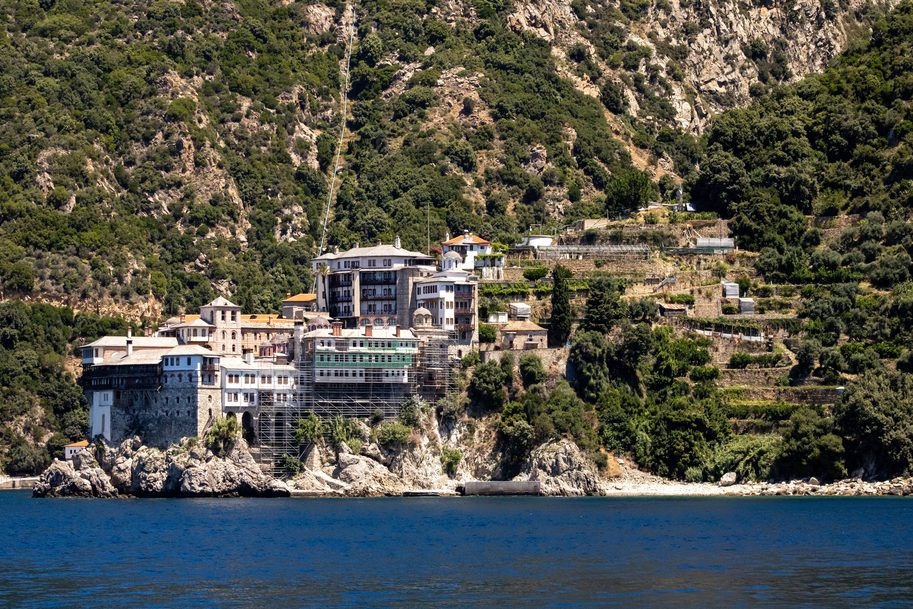
A thousand years of monks
Hermits were living on Athos by the ninth century. In 963 St Athanasius the Athonite founded the Great Lavra with the backing of the Emperor Nikephoros Phokas, and in 972 the first charter of the Holy Mountain, written on goatskin and known as the Tragos, was signed. Over the following centuries monasteries were founded by Greeks, Georgians, Serbs, Bulgarians and Russians, under the protection of Byzantine emperors, Serbian kings, Ottoman sultans and Russian tsars.
Today there are twenty ruling monasteries, seventeen of them Greek, with the Serbian Hilandar, the Bulgarian Zografou and the Russian St Panteleimon, as well as sketes and hermitages. Athos is part of Greece but governs itself from its small capital, Karyes, and is under the spiritual authority of the Ecumenical Patriarch in Istanbul. Some 2,000 monks live there. It has been a World Heritage site since 1988, both for its monasteries and for its landscape.
The visitor’s cheat sheet
| Where | The eastern peninsula of Halkidiki, northern Greece. Boats leave from Ouranoupoli (west coast) and Ierissos (east coast) |
|---|---|
| Who can go | Men only. Under-18s must be with their father or carry officially certified written consent from their parents. Clergy need a written blessing from the Ecumenical Patriarchate |
| Admission | Entry permit (diamonitirion) €25 for Orthodox visitors, €30 for others (some sources quote €35), €10 for students; cash. Reserve with the Pilgrims’ Bureau, Thessaloniki (+30 2310 252578), up to six months ahead |
| Length of stay | Four days, three nights; book a bed at each monastery in advance |
| Getting there | Bus from Thessaloniki to Ouranoupoli, about two to three hours; then the ferry or fast boat to Dafni, the port of Athos, and a bus up to Karyes |
| Rules | Long trousers and modest dress; no swimming; no video cameras. Monastery gates close at sunset |
| Without a permit | Sightseeing cruises from Ouranoupoli along the west coast, about three hours, open to everyone |
Hours and admission checked against the official site in October 2026. They change; the official site is always the last word.
Men only, and plan months ahead. Women may not enter Athos at all. For men, the permit for non-Orthodox visitors is limited, and summer dates can be fully booked months in advance: reserve as soon as the six-month window opens, reconfirm two weeks before, and book your bed at each monastery separately. Without a permit you can still see the west-coast monasteries from a sightseeing cruise.
Seeing Athos from the sea
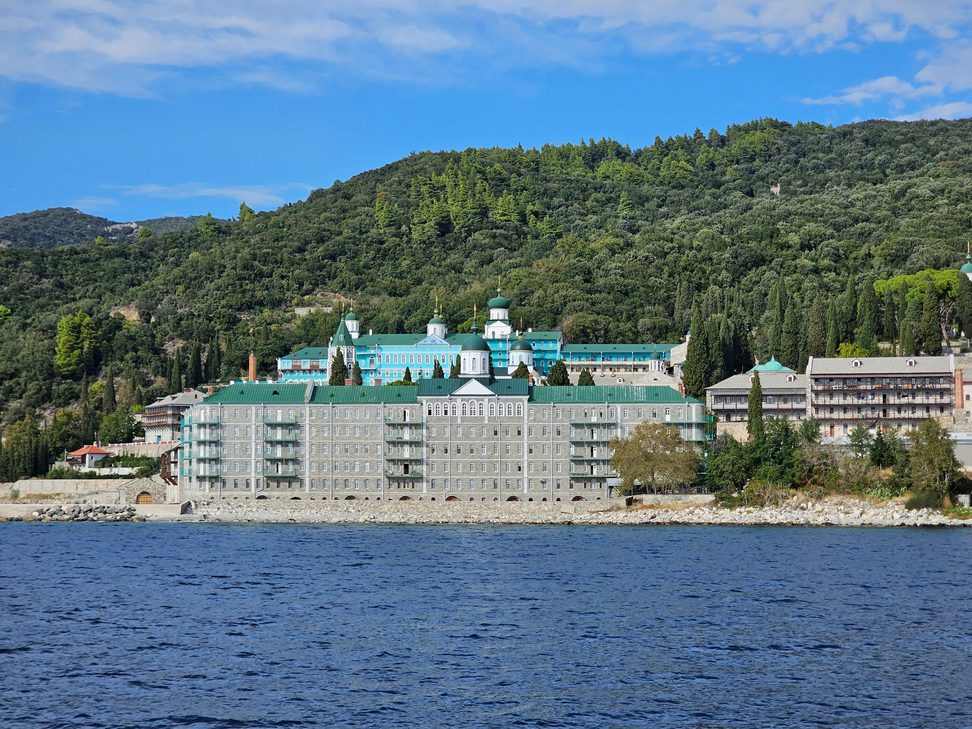
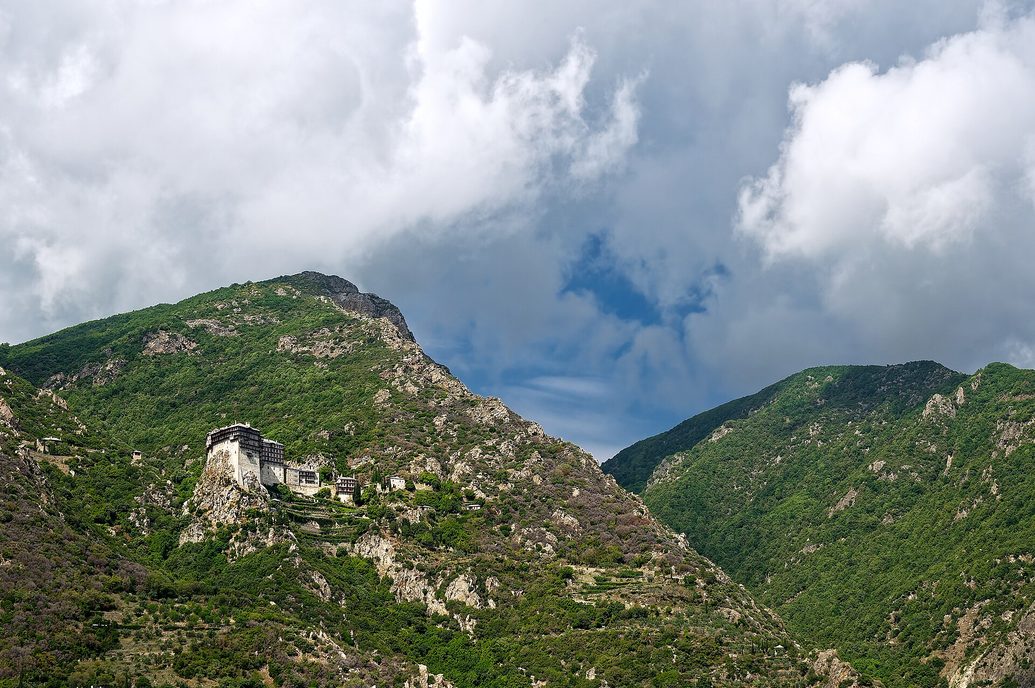
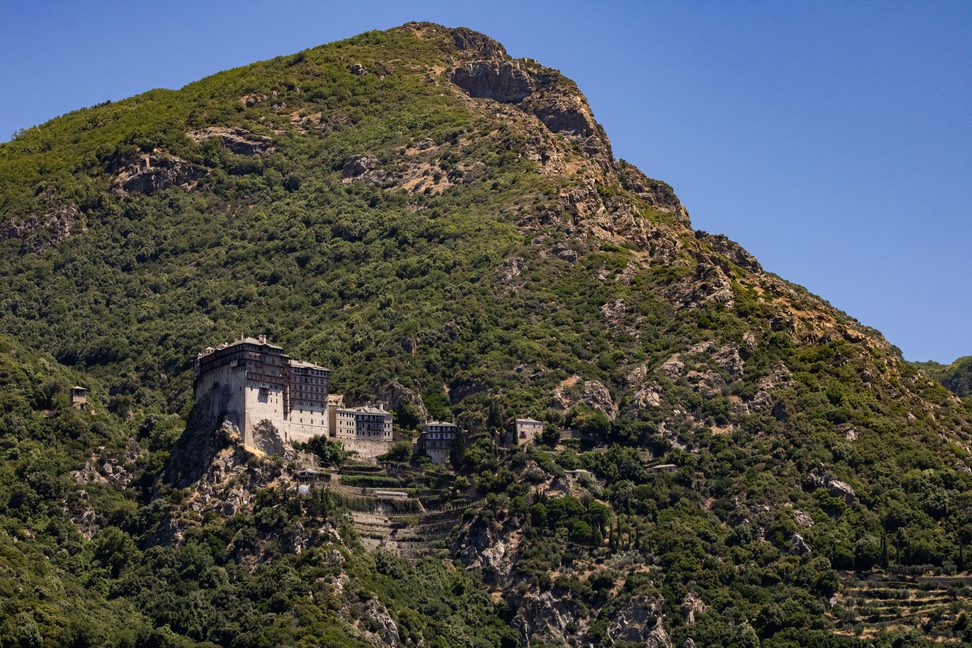
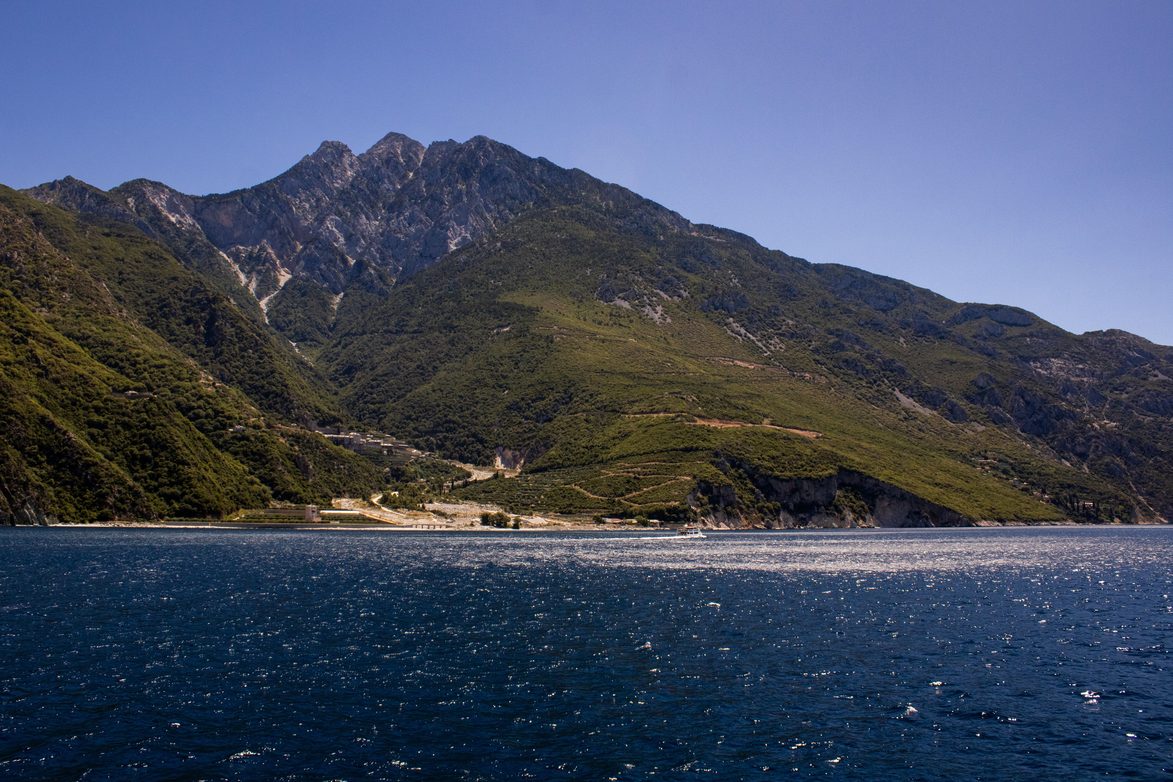
The cruises leave Ouranoupoli, the last village before the border, and sail down the west coast, keeping at least 500 metres offshore. In about three hours they pass the monasteries of Dochiariou, Xenophontos and the Russian St Panteleimon with its green domes, the port of Dafni, Simonopetra on its rock, Grigoriou, Dionysiou and St Paul’s, under the peak of the mountain. Longer trips add the islands of Ammouliani and Drenia. In Ouranoupoli itself, the twelfth-century Tower of Prosphori, by the harbour, is a museum, though it is being restored and may be closed.
Visiting as a pilgrim
The permit
Reserve with the Pilgrims’ Bureau in Thessaloniki, at 109 Egnatia Street, by phone or email, up to six months before your visit, with a scan of your passport. On the day of entry, collect and pay for the permit, the diamonitirion, at the Pilgrims’ Office by the harbour in Ouranoupoli, which opens early in the morning; bring your passport and cash, and arrive at least an hour before your boat. The permit allows four days and three nights.
Getting in
Buses run from Thessaloniki to Ouranoupoli, and because the boats leave early, it is best to spend the night before in the village. A conventional ferry and faster boats run to Dafni, calling at the west-coast monasteries on the way; the fast boats take only small bags. From Dafni a bus climbs to Karyes, and minibuses run on the rough roads beyond. From Ierissos a boat serves the east-coast monasteries.
Staying in the monasteries
You must book a bed at each monastery by phone or email, ideally a month ahead, and arrive before the gates close at sunset. Hospitality is free, though a donation is customary. Guests eat with the monks in the refectory, mostly simple vegetarian food, and are welcome at the services, which begin in the small hours. The monasteries keep the old Julian calendar, thirteen days behind ours, and most keep Byzantine time, in which the day starts at sunset.
What to see
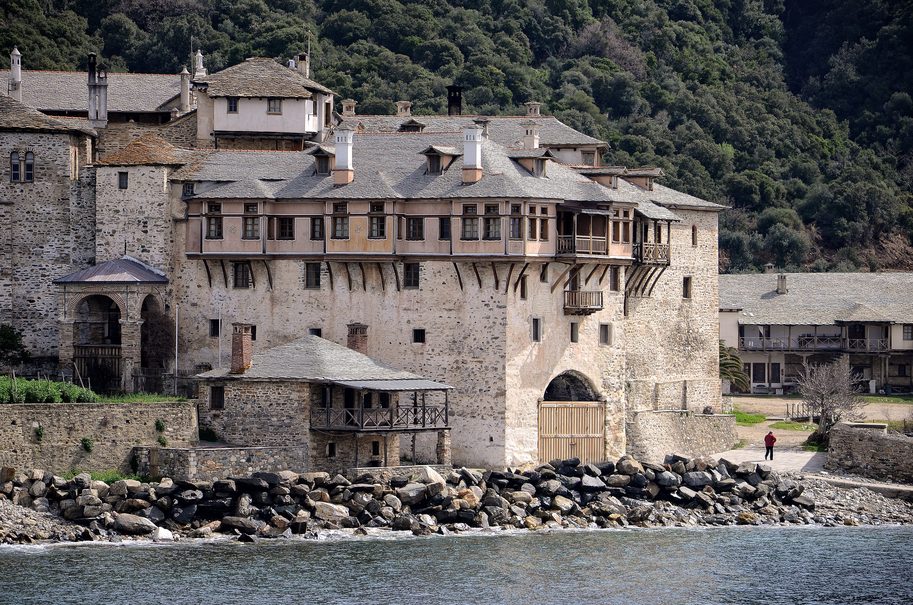
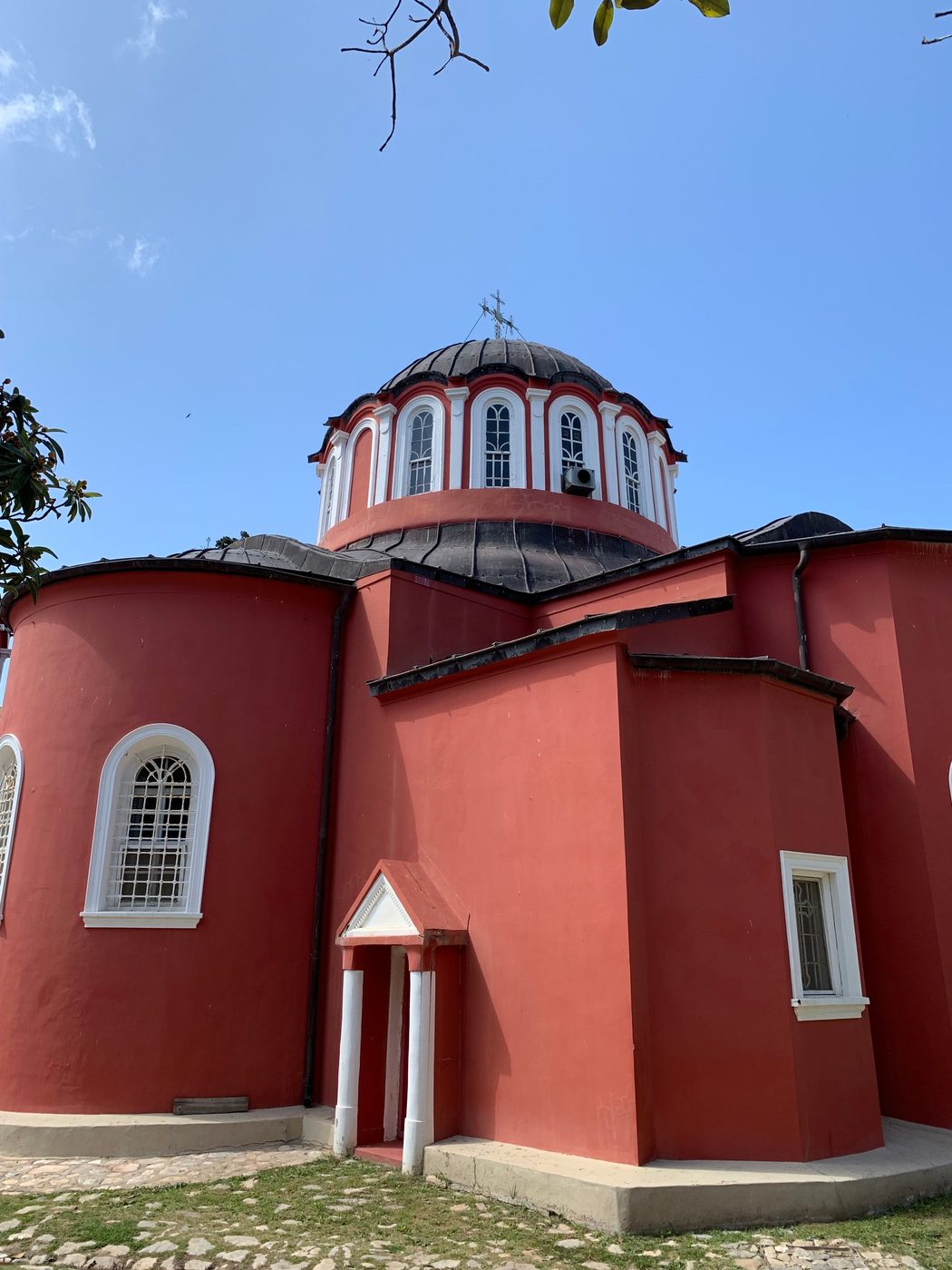
In Karyes, the Protaton church has wall paintings of about 1290–1310 attributed to Manuel Panselinos, the finest on the mountain. The Great Lavra, founded in 963, is the oldest and largest monastery. Vatopedi keeps the Girdle of the Virgin, Iviron the icon of the Virgin Portaitissa by its gate, and Simonopetra stands on a rock some 330 metres above the sea. Fit pilgrims climb the peak, 2,033 metres, with its chapel of the Transfiguration, in summer, staying at the refuge on the way.
Cruises and where to stay
Athos cruises and Ouranoupoli hotels
The sightseeing cruises from Ouranoupoli are open to everyone and run mainly from spring to autumn; in July and August, book ahead. Pilgrims need a night in Ouranoupoli before the early boat.
Tour and hotel links go to GetYourGuide and Booking.com. This site earns nothing from them at present — they are here because they are the quickest way to check what is actually available.
Don’t miss
- Simonopetra On its rock, from the boat or from inside.
- St Panteleimon The Russian monastery’s green domes.
- The Protaton Panselinos’s paintings in Karyes.
- The Great Lavra The first monastery, founded in 963.
- A night service For pilgrims: the long vigils in candlelight.
Insider tips
Travel light, and carry cash. The fast boats take one bag of up to 10kg; heavier luggage has to go on the slow ferry. The permit is paid in cash, and there are few shops on the mountain, so stock up in Ouranoupoli.
Dress for the monasteries: long trousers, no shorts, and nothing bright or flashy. Do not swim, and ask before taking photographs. Boat times change with the weather, especially in winter, and buses on Athos may wait for the boats rather than run to the minute.
Spring and autumn are popular, and summer weekends and Greek holidays fill first. Off-season, from November to March, permits are easier to get but the weather and the boats are less reliable.
Common questions
Can women visit Mount Athos?
No. By law and by a tradition about a thousand years old, women may not enter Athos. Women can see the west-coast monasteries from the sightseeing cruises that leave Ouranoupoli, which keep at least 500 metres offshore.
How do I get a permit for Mount Athos?
Men reserve a permit, the diamonitirion, with the Pilgrims’ Bureau in Thessaloniki up to six months ahead, sending a scan of their passport. On the morning of entry you collect and pay for it at the Pilgrims’ Office in Ouranoupoli, before buying a ferry ticket.
How much does a Mount Athos permit cost?
About €25 for Orthodox visitors and €30 for others (some sources quote €35), with €10 for students; pay in cash. Staying in the monasteries is free, though a donation is customary.
How long can I stay on Mount Athos?
Four days and three nights. Longer stays need an extension from the Holy Community in Karyes. You must book a bed at each monastery where you plan to sleep.
Can I take photographs on Mount Athos?
Still photographs are generally allowed, but video cameras are forbidden. Ask before photographing monks or the insides of churches; the Russian monastery of St Panteleimon does not allow photography at all.
How many non-Orthodox visitors are allowed each day?
Traditionally ten a day, alongside a hundred Orthodox pilgrims, and the figure is still widely quoted; since 2025 the Holy Community has added monthly limits on pilgrims at each monastery and a monthly cap on permits for foreign visitors. In summer, permits can be booked up months ahead.
Where to stay and eat nearby
Ouranoupoli, the village at the border of Athos, has hotels, tavernas and the boat offices, and Ierissos, on the east coast, is quieter. Both are a few hours by bus or car from Thessaloniki.