
St Basil’s Cathedral
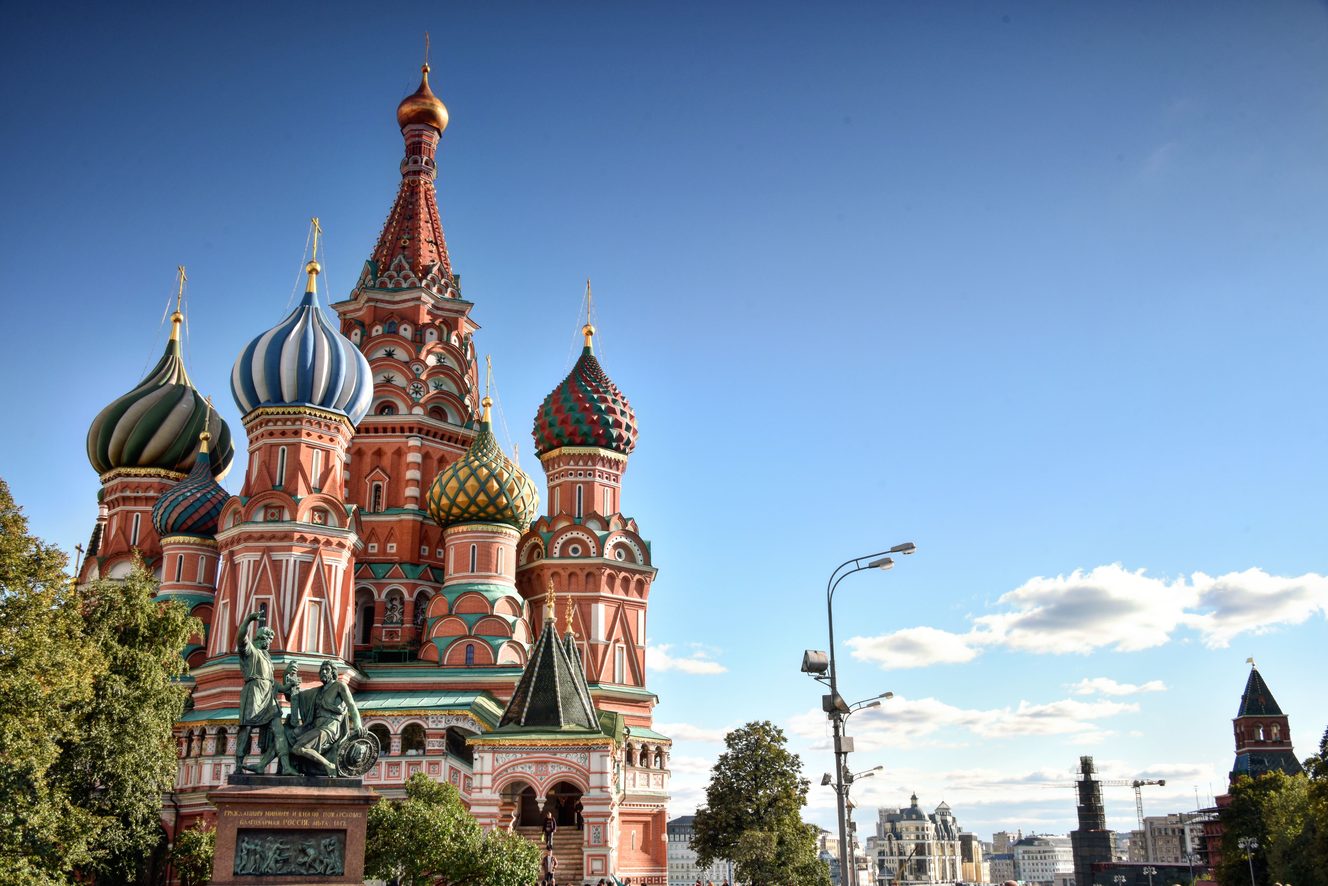
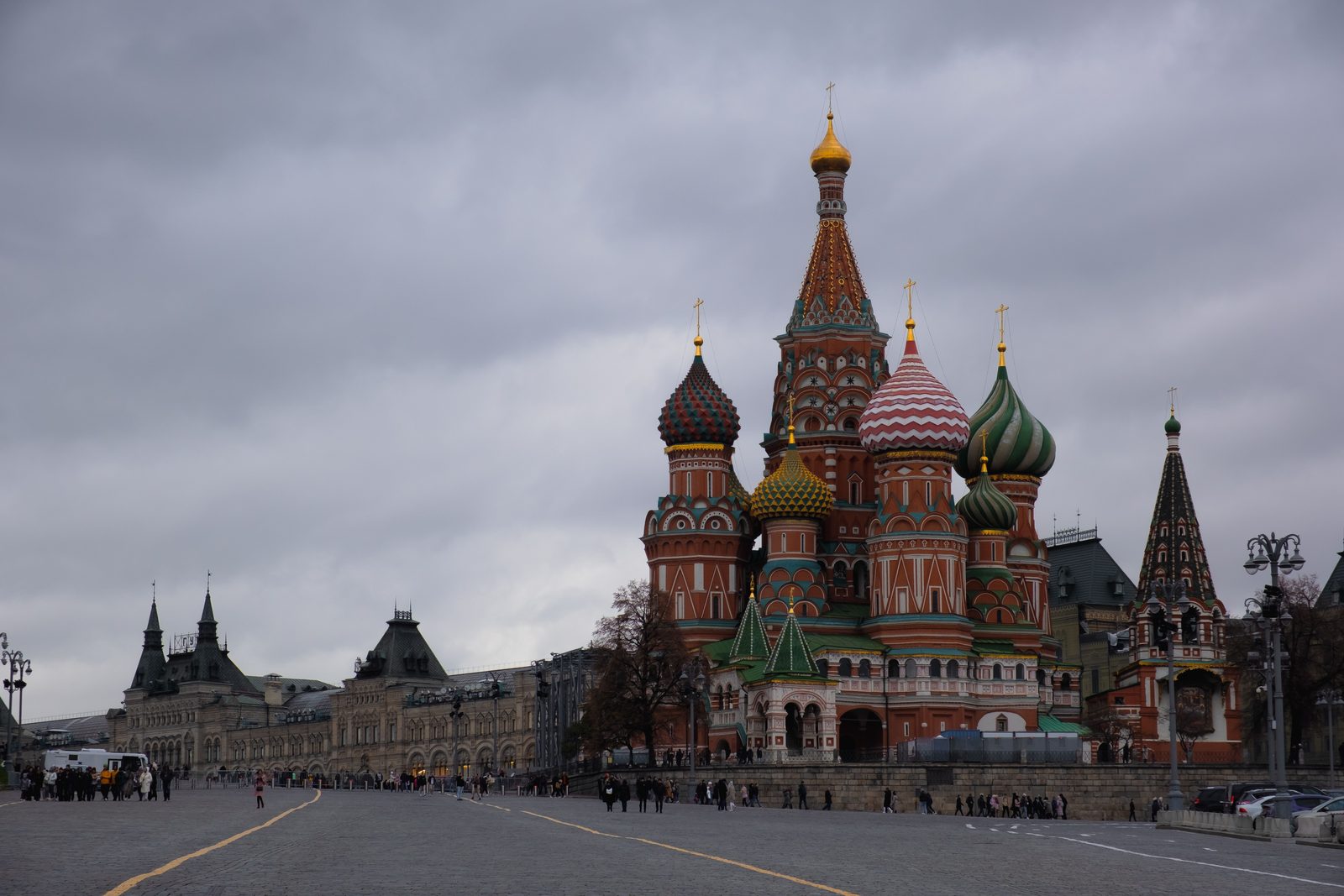
With its cluster of striped and spiralled onion domes at the end of Red Square, St Basil’s is the most famous building in Russia. Ivan the Terrible built it in 1555–61 to celebrate the capture of Kazan: nine churches on one base, joined by galleries, with a tenth added over the grave of a holy fool, Basil the Blessed. Inside it is a museum of narrow passages and small, tall, painted churches.
Before you go
Read the travel advice first. In October 2026 the UK Foreign Office advised against all travel to Russia, and the US State Department’s advice was “Do not travel”; travel insurance may not cover you if you go against your government’s advice. British, American and Australian visitors need a full visa, not the e-visa. Visa and Mastercard cards issued abroad do not work in Russia, and international booking sites such as Booking.com and Viator withdrew from Russia in 2022, which is why this page has no booking links.
Ivan the Terrible’s cathedral
The assault on Kazan, the Tatar capital on the Volga, began on 1 October 1552 (Old Style), the feast of the Intercession of the Virgin, and the city fell the next day. To give thanks, Ivan IV ordered a church on the edge of the moat beside the Kremlin. The stone cathedral was begun in 1555 and finished in 1561: a tall central church of the Intercession with a tent-shaped roof, ringed by eight smaller churches, each dedicated to a saint or feast linked to the campaign. The architects are named as Barma and Postnik, perhaps the same man; the story that Ivan blinded them so they could build nothing finer is a later legend.
In 1588 a small church was added over the grave of St Basil the Blessed, a holy fool who, tradition says, dared to rebuke Ivan, and the people came to call the whole cathedral after him. In the 1680s the arcades were enclosed, a bell tower was built, and the painting of the walls and domes began that, over the next two centuries, produced the bright colours seen today. The cathedral survived the French occupation of 1812, and in the Soviet era it became a museum, closed to worship in 1929. It was threatened with demolition in the early 1930s, to clear Red Square for parades; the story that Stalin personally saved it is probably legend. Occasional services returned in 1991, and regular ones in 1997, and since 1990 it has been part of the World Heritage site of the Kremlin and Red Square.
The visitor’s cheat sheet
| Where | Red Square, Moscow, at the southern end; Okhotny Ryad, Teatralnaya, Ploshchad Revolyutsii and Kitay-Gorod metro stations, about 10 minutes’ walk |
|---|---|
| Travel advice | In October 2026 the UK advised against all travel to Russia and the US said “Do not travel” |
| Opening hours | Usually daily, closed one day a month; summer 10am–6pm (to 7pm Thursday–Saturday), 16 September–31 October 11am–6pm, 1 November–14 May 11am–5pm; ticket office closes 45 minutes before the museum. Check the State Historical Museum website |
| Admission | Adults 2,000 roubles, children 7–17 1,000 roubles, audio guide 600 roubles (October 2026); check before you go |
| Money | Visa and Mastercard cards issued outside Russia do not work; bring cash to exchange |
| Bags | Bags over 30 × 40cm, backpacks and umbrellas go in lockers |
| Red Square | Closed for events and for weeks around the 9 May parade |
| How long | About an hour |
Hours and admission checked against the official site in October 2026. They change; the official site is always the last word.
Check that Red Square is open. The square is closed for official events, and for several weeks around the Victory Day parade on 9 May, when the cathedral can be hard or impossible to reach. Opening hours and prices have changed often and different sources disagree, so check the State Historical Museum’s own site before you go.
What to see, in the order you meet it
The outside
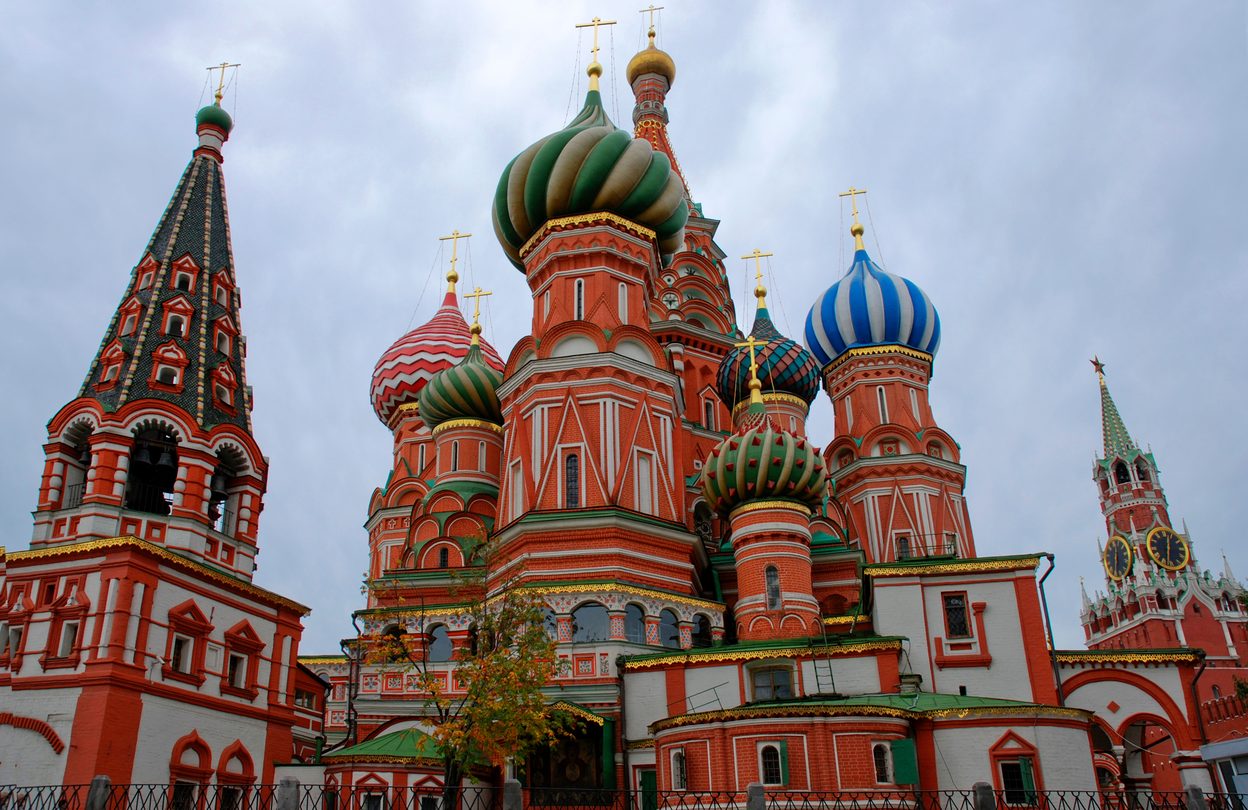
Walk all the way round before you go in: all four sides were designed to be seen. Each of the domes is different (there are eleven, counting the bell tower’s), striped, spiralled, faceted or scaled, and the central church rises above them in a tall tent roof. In front stands the bronze monument to Minin and Pozharsky, who freed Moscow from Polish–Lithuanian occupation in 1612, moved here in the early 1930s to make room for parades.
The church of St Basil
Visitors usually enter through the ground-floor church of St Basil the Blessed, added in 1588, with the saint’s shrine, an iconostasis of 1895 and wall paintings of 1905. It is the only heated church in the cathedral and the one where services are held. A stair inside the thickness of the wall leads up to the main level.
The galleries
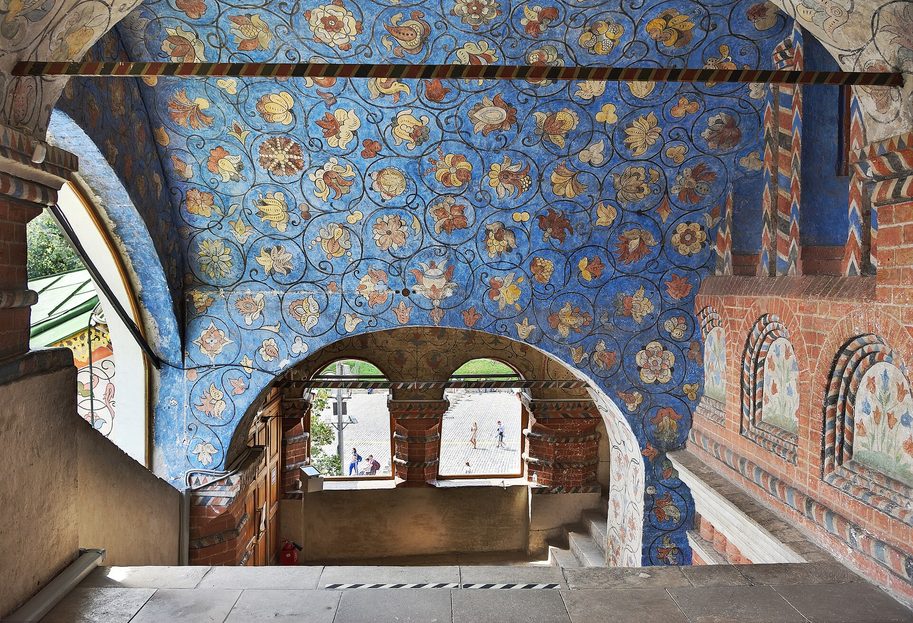
Upstairs, narrow vaulted galleries wind between the churches, painted all over with flowers, leaves and scrolls, first painted in the late seventeenth century. They are the cathedral’s most memorable rooms.
The Church of the Intercession
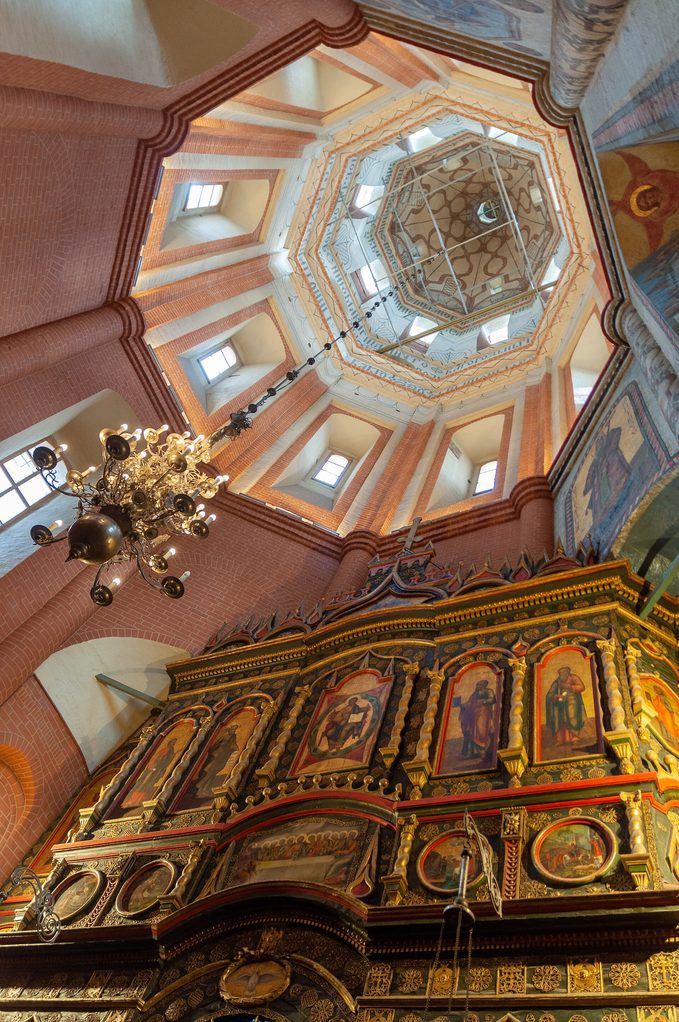
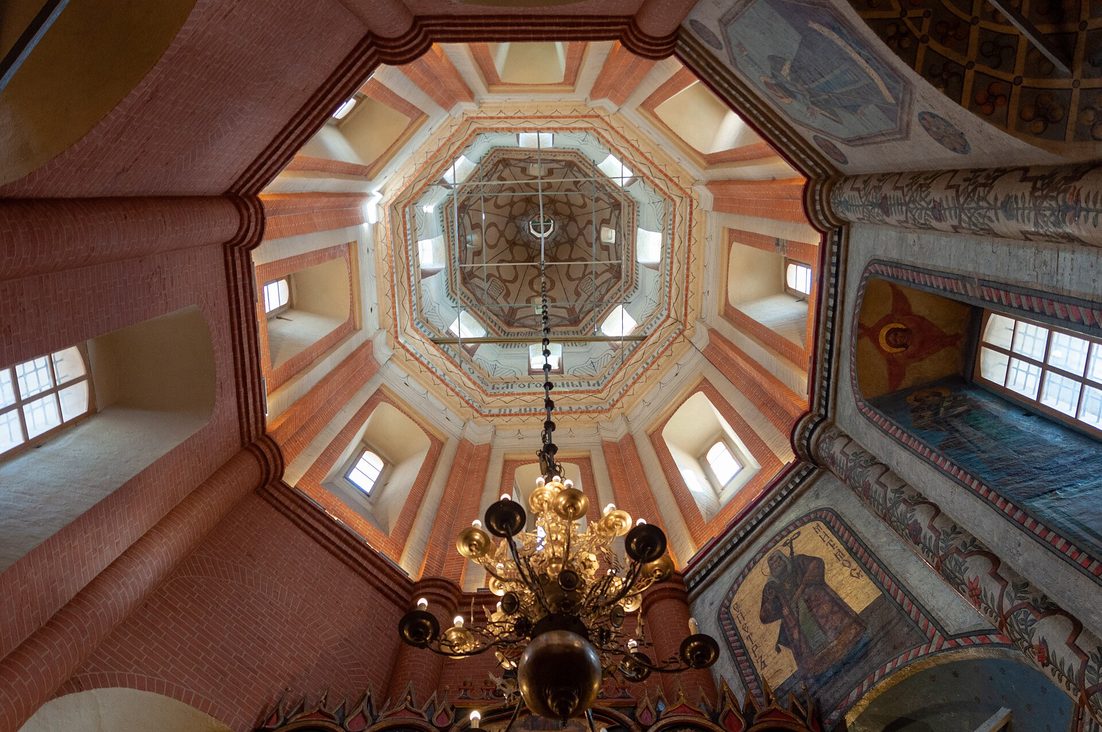
At the centre is the Church of the Intercession, a small floor beneath a tower 47.5 metres high. Restoration has partly brought back its original sixteenth-century painting, which imitates brickwork, and its Baroque iconostasis was brought here from a Kremlin church in 1770. The eight churches around it are small and tall, each with its own iconostasis.
Tickets
Tickets and tours
Tickets are sold at the cathedral and on the State Historical Museum’s website, which may not accept cards issued abroad. International booking sites such as Booking.com and Viator withdrew from Russia in 2022, so there are no tour or hotel links on this page.
Don’t miss
- The domes From every side of the cathedral.
- The painted galleries Flowers and scrolls on every surface.
- The Church of the Intercession Looking up into the tent roof.
- The church of St Basil With the holy fool’s shrine.
Insider tips
Leave the big bag behind. Bags over 30 by 40 centimetres and backpacks must go in the lockers, and the stairs and galleries inside are narrow. Go on a weekday, early, before the tour groups.
The upper level is reached only by a narrow stair, so the cathedral is not suitable for wheelchairs or pushchairs.
The best views of the domes are from the Minin and Pozharsky monument, from the slope down towards the river, and from near the Spasskaya Tower of the Kremlin.
Common questions
Can I visit St Basil's Cathedral at the moment?
The cathedral is open as a museum, but in October 2026 the UK Foreign Office advised against all travel to Russia, and the US State Department’s advice was “Do not travel”. Read your own government’s current advice; travel insurance may not be valid against it.
How much does it cost to visit St Basil's Cathedral?
In October 2026 the State Historical Museum listed adult tickets at 2,000 roubles and children aged 7–17 at 1,000 roubles, with the audio guide extra (600 roubles). Check the State Historical Museum’s website before you go, and remember that foreign Visa and Mastercard cards do not work in Russia.
Is St Basil's a church or a museum?
Mostly a museum, a branch of the State Historical Museum since the 1920s. Services were held again in the ground-floor church of St Basil from 1991, and regularly since 1997, mainly on Sunday mornings.
Who built St Basil's Cathedral?
Ivan the Terrible built it in 1555–61 to celebrate the capture of Kazan in 1552. The architects are named as Barma and Postnik, who may have been one man, Postnik Yakovlev. The story that Ivan had them blinded is a legend.
Can I take photos inside St Basil's Cathedral?
Yes, in the museum rooms, without flash or tripod; be discreet during services.
Is St Basil's Cathedral accessible?
Not fully. The ground floor has high steps, and the upper level, where most of the churches are, is reached by a narrow stair and cannot be visited in a wheelchair or with a pushchair.
Where to stay and eat nearby
The cathedral is in the very centre of Moscow, beside the Kremlin and the GUM department store, with Zaryadye Park and its views over the river just to the east.