
The Monasteries of Meteora
Meteora is one of the most extraordinary sights in Europe: monasteries built on the summits of sheer rock pillars hundreds of metres above the plain of Thessaly. Of the two dozen that once stood here, six are still lived in by monks and nuns, and all six are open to visitors, each with its own small cash fee, its own opening hours and its own closed day. Plan around those, dress for the door, and come early or late to miss the coaches.
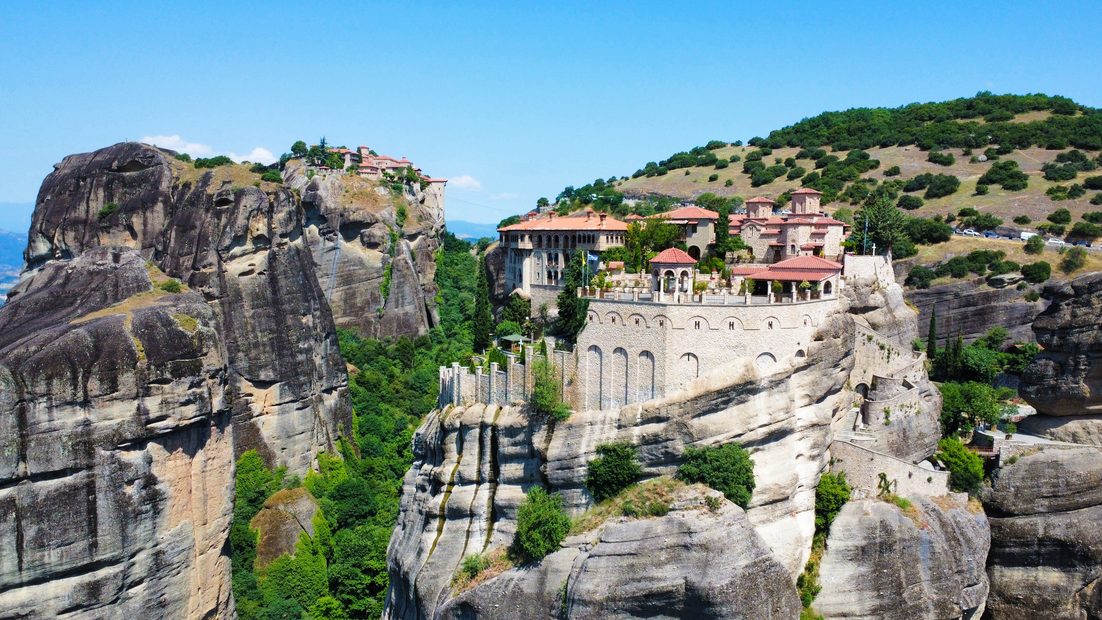
Monasteries in the air
Hermits were living in the caves of these rocks by the eleventh century, perhaps earlier, and by about 1200 there was a small church at the foot of the rocks. In the troubled fourteenth century, with Serbs, Byzantines and Ottomans fighting over Thessaly, the monks moved up onto the summits. St Athanasios the Meteorite founded the Great Meteoron on the highest rock in the mid-fourteenth century and gave the place its name: Meteora means “suspended in the air”.
At their height, in the fifteenth and sixteenth centuries, there were some two dozen monasteries. They were reached only by removable ladders, or by a net hauled up on a rope by a windlass; it was said the rope was replaced only when the Lord let it break. Steps were cut into the rock in the 1920s. The monasteries were damaged in the Second World War, and most of the others had long since fallen into ruin. Meteora was declared a sacred place by Greek law in 1995, and has been a World Heritage site since 1988, for both its monasteries and its landscape.
The visitor’s cheat sheet
| Where | Above Kalambaka and the village of Kastraki, Thessaly, central Greece; the monasteries lie 5–10km by road from Kalambaka |
|---|---|
| Opening hours | Opening between 9am and 10am, closing between 3pm and 5.30pm, varying by monastery and season; St Stephen’s closes for two hours at midday. Check on the day |
| Closed days | Great Meteoron Tuesday; St Stephen’s Monday; Rousanou Wednesday; Holy Trinity Thursday; Varlaam and St Nicholas Friday. November–March the Great Meteoron also closes Wednesday and Thursday, and Varlaam Thursday |
| Admission | €5 at each monastery, under-12s free; cash only at the gate; no combined ticket |
| Dress code | Skirts below the knee and covered shoulders for women; long trousers for men. Wraps lent at most monasteries |
| Photography | Not inside the churches |
| Getting there | Coach from Athens (Liosion bus station) or Thessaloniki to Trikala, changing there for Kalambaka: about five and a half hours from Athens, three to three and a half from Thessaloniki. Trains from Athens run to Palaiofarsalos, with a replacement bus on to Kalambaka |
| How long | Half a day for two or three monasteries; two nights to see all six |
Hours and admission checked against the official site in October 2026. They change; the official site is always the last word.
Check the closed days, and bring cash. Every monastery closes one day a week, and the hours differ between them and between summer and winter, so the published timetables do not always agree: check on the day, and arrive well before closing. From November some close on extra days. Each charges €5 at the gate, cash only, with no card machines. Dress codes are enforced, though most monasteries lend wrap skirts.
The six monasteries
The road from Kastraki climbs past St Nicholas, then reaches the Great Meteoron and Varlaam, which stand close together, and Rousanou. It then runs along the top of the rocks to Holy Trinity and St Stephen’s, which overlook Kalambaka.
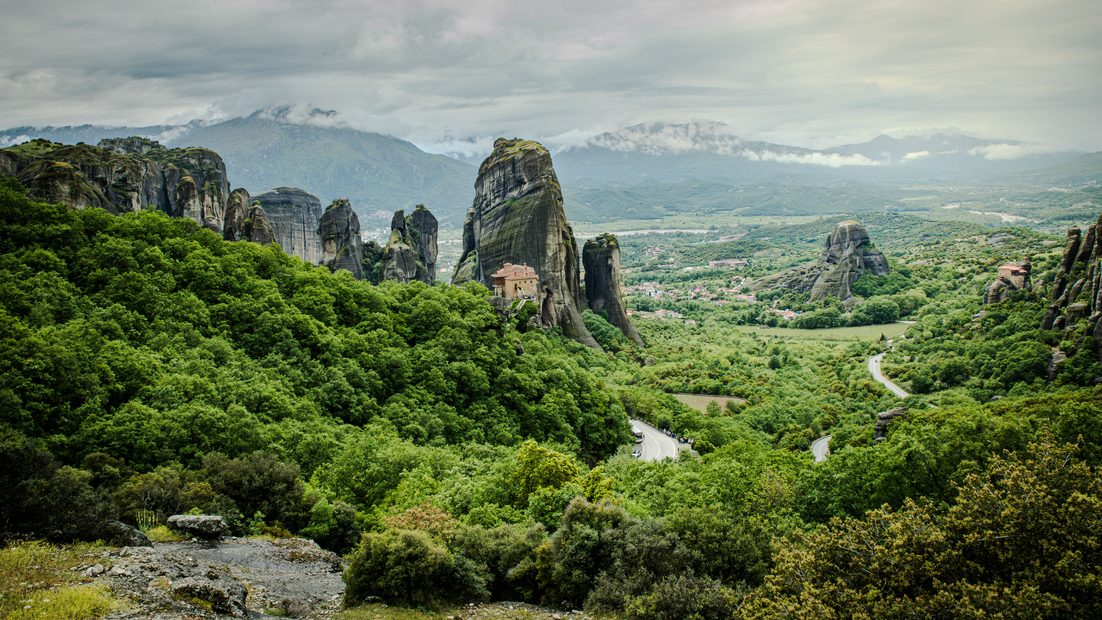
St Nicholas Anapafsas
The first monastery you reach from Kastraki, and the smallest, built in the fourteenth century and restored in the sixteenth. Its little church is painted with frescoes of 1527 by Theophanes the Cretan, one of the great painters of the post-Byzantine world. It is usually the quietest of the six.
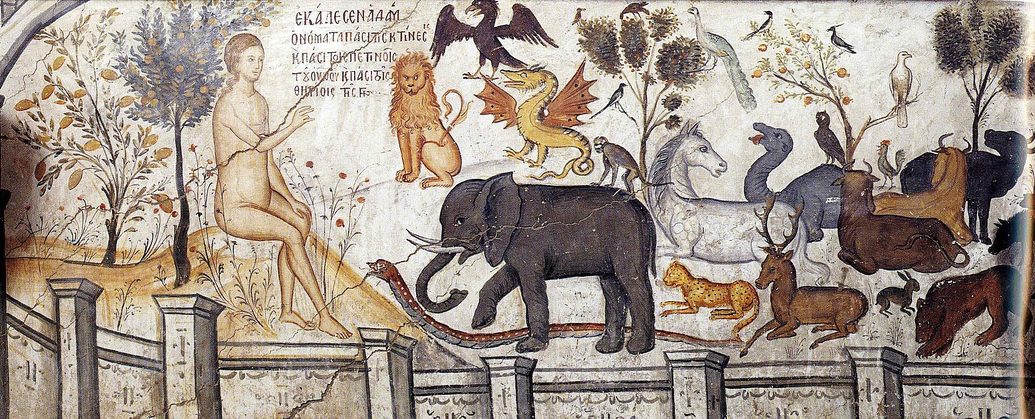
The Great Meteoron
The largest and highest monastery, founded by St Athanasios in the fourteenth century and dedicated to the Transfiguration. A long flight of steps leads up through a tunnel in the rock. Inside are the frescoed church, with its dome, an old kitchen and refectory, an ossuary with the skulls of former monks on shelves, and a museum of icons, manuscripts and embroidery. Allow an hour or more.
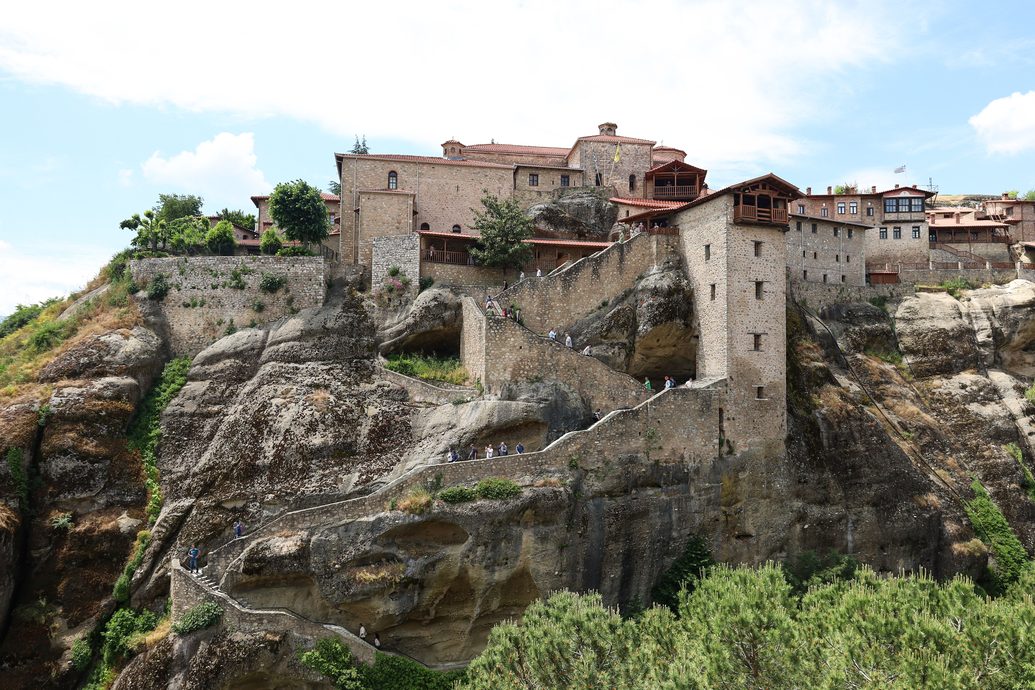
Varlaam
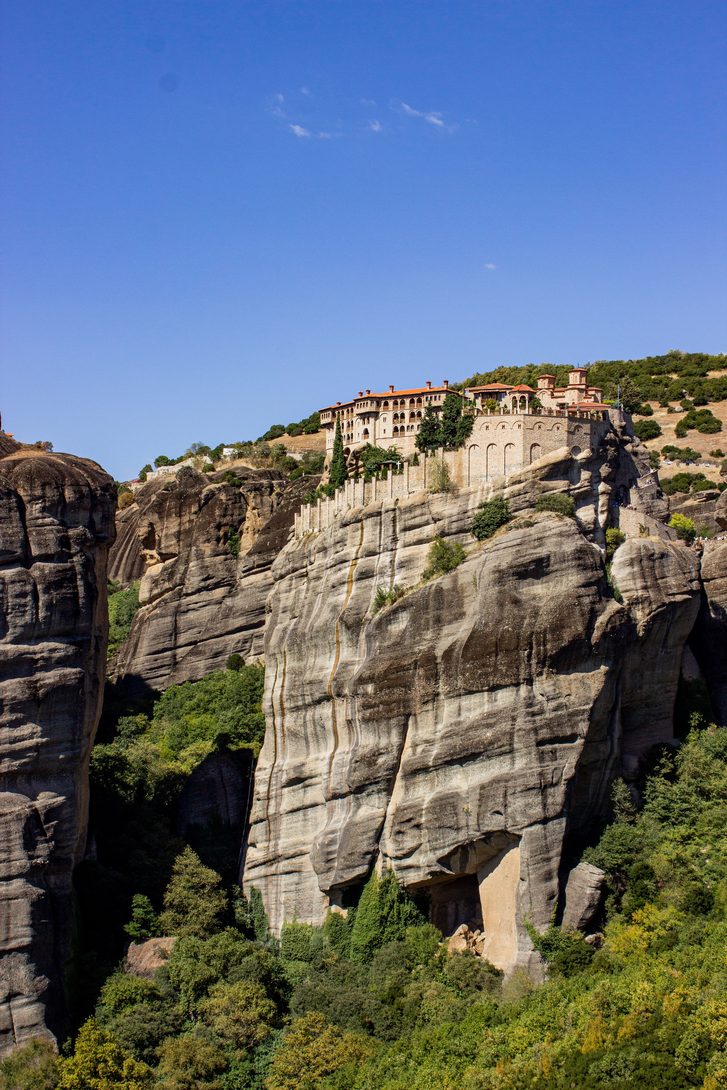
Named after a fourteenth-century hermit, Varlaam was refounded in the sixteenth century; its church, built in 1541–42, is covered in frescoes. You can still see the net that was used to haul up people and supplies, and the windlass that wound it. Some 195 steps lead up from the road.
Rousanou
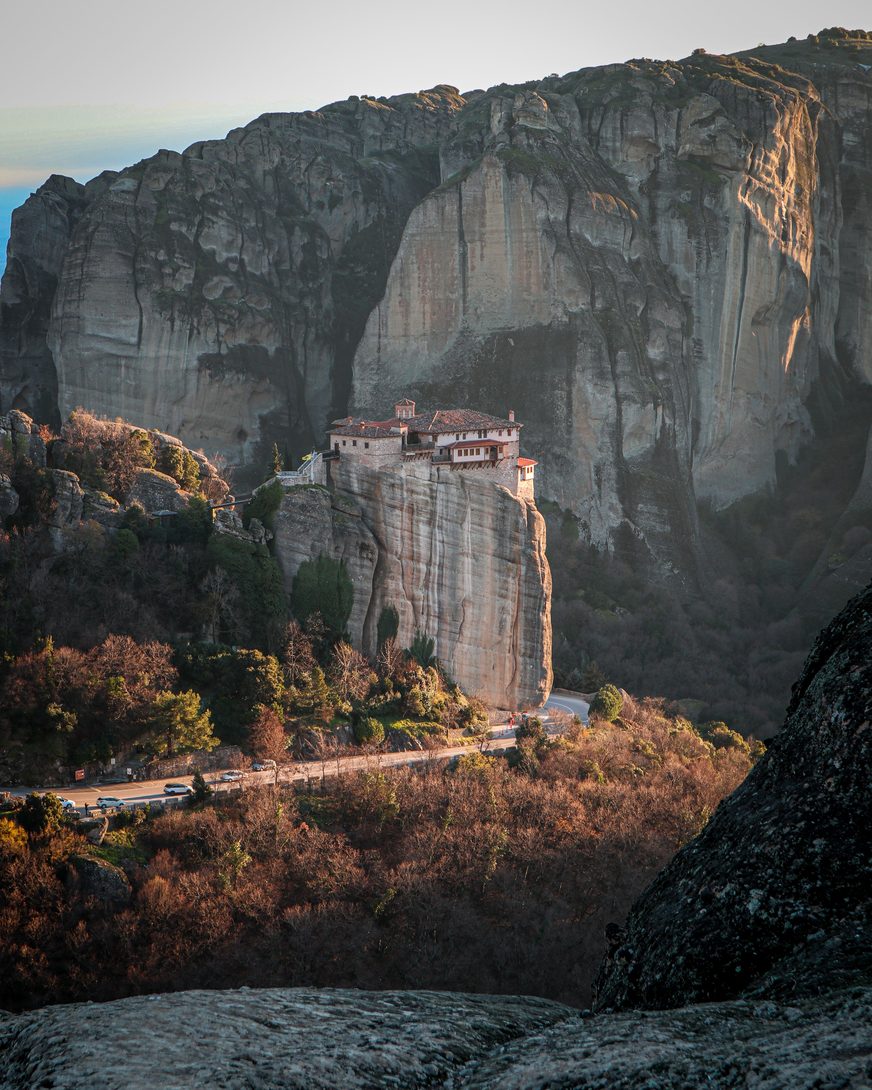
A convent on a narrow rock, reached by a bridge, with a church painted in the mid-sixteenth century and an intimate, flower-filled setting. The climb is moderate.
Holy Trinity
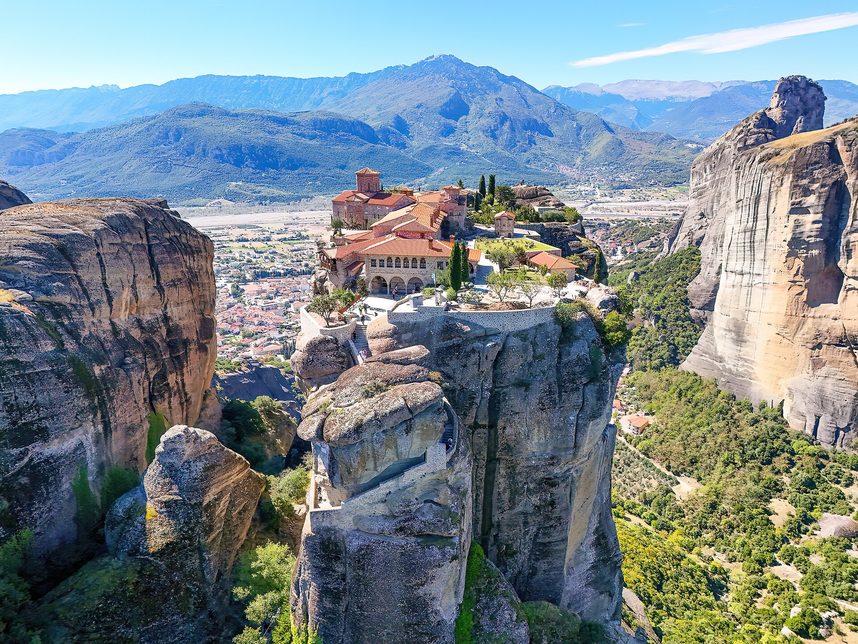
The most isolated, on its own pillar, and the most demanding to reach: a path down into a valley, then some 140 steps cut into the rock. It was built in the 1470s and appears in the James Bond film For Your Eyes Only. The views over Kalambaka are among the best at Meteora.
St Stephen’s
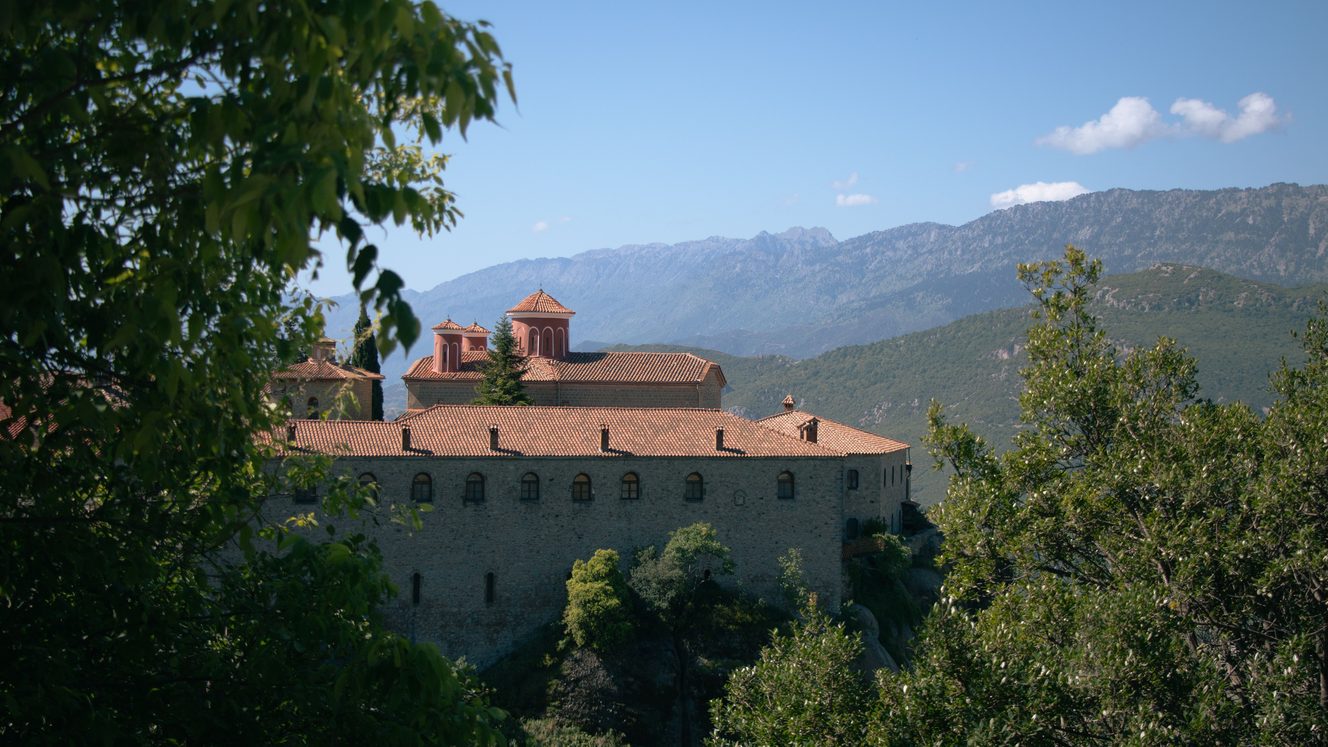
A convent since 1961, reached by a short bridge from the road, so it is the easiest for anyone who finds steps difficult. Its main church dates from 1798, and there is a small museum. It is the last stop on the road and closes for a few hours at midday.
Tours and where to stay
Staying near Meteora
Kalambaka, the town at the foot of the rocks, has most of the hotels and the coach station; Kastraki, a village a little higher up, is closer to the monasteries and quieter. Local companies run half-day tours and sunset trips from both, and the day tours from Athens are long, with ten hours or more of driving and train.
The hotel link goes to Booking.com. This site earns nothing from it at present — it is here because it is the quickest way to check what is actually available.
Don’t miss
- Theophanes’ frescoes At St Nicholas, the first monastery from Kastraki.
- The Great Meteoron The museum, the old kitchen and the ossuary.
- Varlaam’s net How monks and supplies once went up the rock.
- Holy Trinity The steps, and the view over Kalambaka.
- The viewpoints Free, along the road between the monasteries.
Insider tips
Start early, or go late. Most coach tours arrive in the late morning, when the Great Meteoron and Varlaam are at their busiest and the car parks fill. Be at the first monastery when it opens, and leave the quieter St Nicholas and St Stephen’s for later. In summer, avoid the midday heat on the steps.
Spring, September and October are the best months. Old footpaths link Kastraki and Kalambaka with the monasteries: from Kastraki to the Great Meteoron is about an hour and ten minutes’ climb. Rock climbing is banned on the monastery pillars.
The railway from Palaiofarsalos to Kalambaka has been closed since Storm Daniel damaged it in 2023, and a replacement bus runs from Palaiofarsalos. Check the current position with Hellenic Train before you travel.
Common questions
How much does it cost to visit the Meteora monasteries?
Each monastery charges its own entrance fee, €5 in 2026, paid in cash at the gate; under-12s are free. There is no combined ticket and no online booking.
Which Meteora monasteries are open on which days?
Each of the six closes one day a week: the Great Meteoron on Tuesday, St Stephen’s on Monday, Rousanou on Wednesday, Holy Trinity on Thursday, and Varlaam and St Nicholas on Friday. From November to March the Great Meteoron also closes on Wednesday and Thursday, and Varlaam on Thursday, so on a winter Thursday only three are open.
Is there a dress code at Meteora?
Yes. Women need a skirt below the knee and covered shoulders, and men long trousers; shorts and sleeveless tops are not allowed. Wrap skirts are lent at the entrance of most monasteries.
How many monasteries can I see in a day?
Three or four comfortably, more at a rush. The Great Meteoron alone deserves an hour or more. Two nights in Kalambaka or Kastraki let you see all six without hurrying and catch the evening light.
Which Meteora monastery is easiest to reach?
St Stephen’s, reached by a short bridge from the road with no long staircase. Holy Trinity is the hardest, up some 140 steps cut into the rock.
Can I take photographs inside the monasteries?
Not inside the churches, and usually not in the museums; photographs in the courtyards and from the terraces are fine. Do not fly drones near the monasteries.
Where to stay and eat nearby
Kalambaka and Kastraki both have tavernas and small family hotels, many with views of the rocks. Staying two nights lets you see the monasteries at a sensible pace and watch the sunset from the rocks.
More churches in Greece
- Mount Athos — the other great Greek monastic world, for men only.
- Three Bells of Fira — Santorini’s famous blue dome.