
St Edmundsbury Cathedral
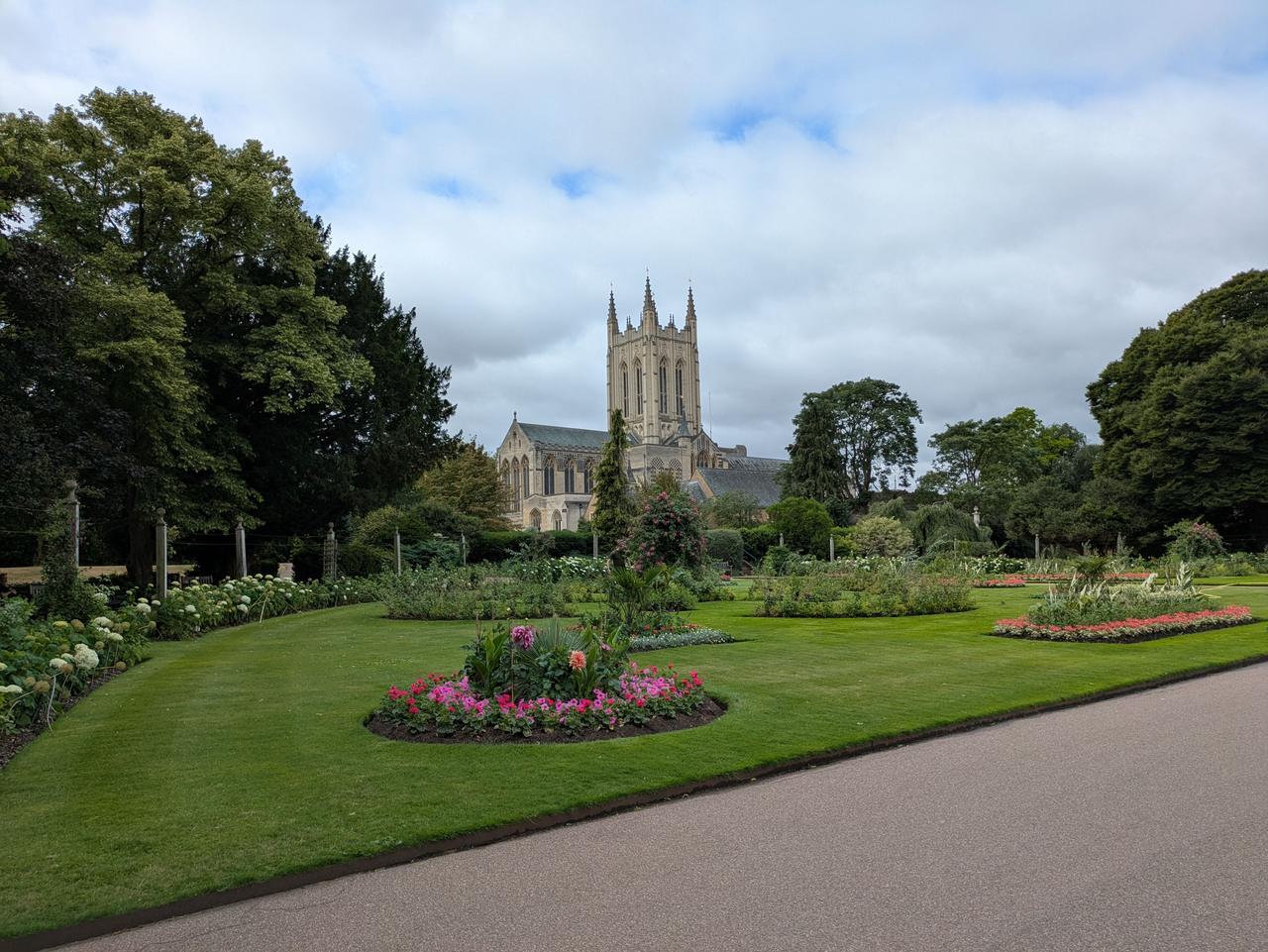
St Edmundsbury Cathedral was built across five centuries. Its nave is a parish church of the early 1500s; its quire was built in the 1960s; and its soaring stone tower went up only in the 2000s. It stands beside the ruins of one of the richest abbeys in medieval England, built over the shrine of St Edmund, the East Anglian king killed by the Vikings.
From parish church to cathedral
For five centuries the great Benedictine Abbey of St Edmund dominated Bury. Within its precinct stood the church of St James, built for the townspeople. From 1503 the master mason John Wastell, who also worked on King’s College Chapel in Cambridge, rebuilt its nave in the Perpendicular style. When the abbey was dissolved in 1539 and its church pulled down, St James survived.
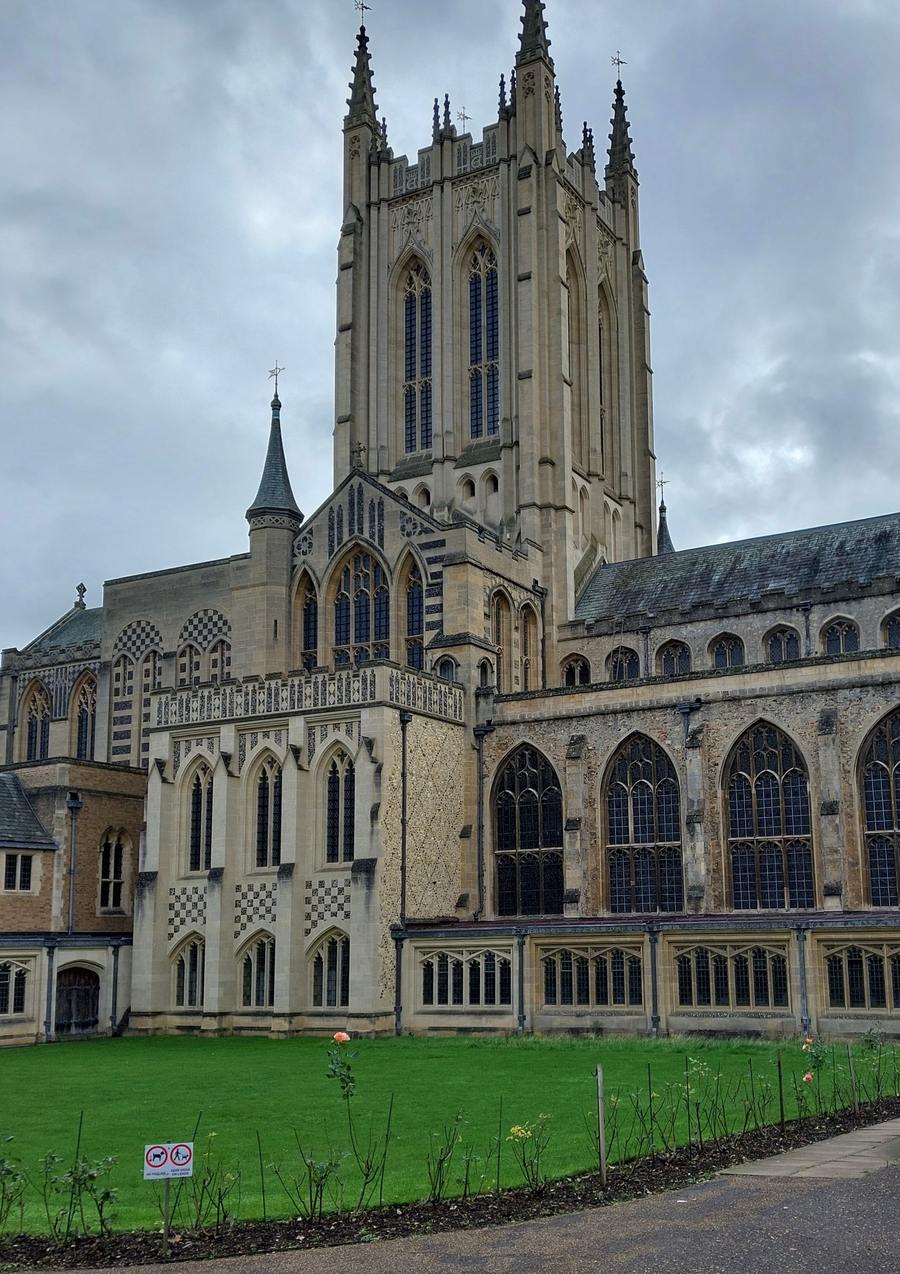
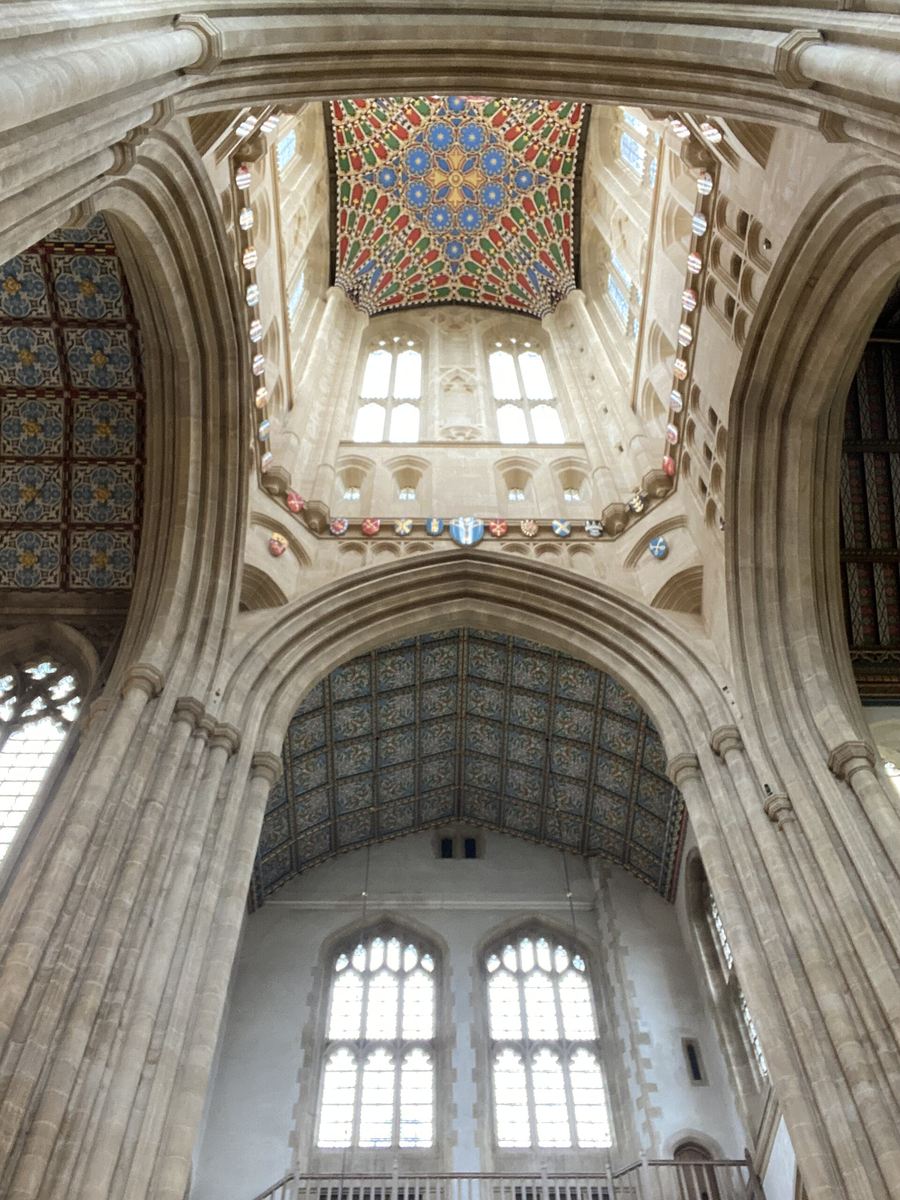
In 1914 St James became the cathedral of the new Diocese of St Edmundsbury and Ipswich. The architect Stephen Dykes Bower, in charge from 1943 to 1988, set out to turn a parish church into a cathedral: the Victorian chancel was replaced between 1959 and 1970 by a new quire, crossing and transepts, with a cloister on the west side. He left money in his will towards finishing the work, and with Millennium Commission funding the central tower was built from 2000 and its completion celebrated on 22 July 2005.
The visitor's cheat sheet
| Where | Angel Hill, Bury St Edmunds, Suffolk, IP33 1LS, beside the Abbey Gardens |
|---|---|
| Getting there | Bury St Edmunds station is about 15 minutes’ walk; Angel Hill car park opposite |
| Opening hours | Mon–Sat 10am–5pm; Sun 12.30pm–3pm; bank holidays 10am–4pm |
| Admission | Free; entry by donation |
| How long | About 1 hour, more with the Abbey Gardens |
| Best time | A weekday morning from April to October, for the 11.30am tour |
| Dress code | No formal code; respectful dress as in any working church |
| Tours | Guided tours Apr–Oct, Mon–Sat 11.30am; tower tours Mar–Oct, Wed 2pm and Sat 10.30am and 2pm, booked online, 202 steps, ages 10 to 79 |
Hours and admission checked against the official site in October 2026. They change; the official site is always the last word.
Shrine of a king, cradle of the law. Bury’s motto recalls its two claims to fame: St Edmund, king of the East Angles, killed by the Vikings in 869 and enshrined in the abbey, and the tradition that in 1214 the barons met at the abbey and swore to make King John accept the charter that became Magna Carta.
What to see, in the order you meet it
The nave
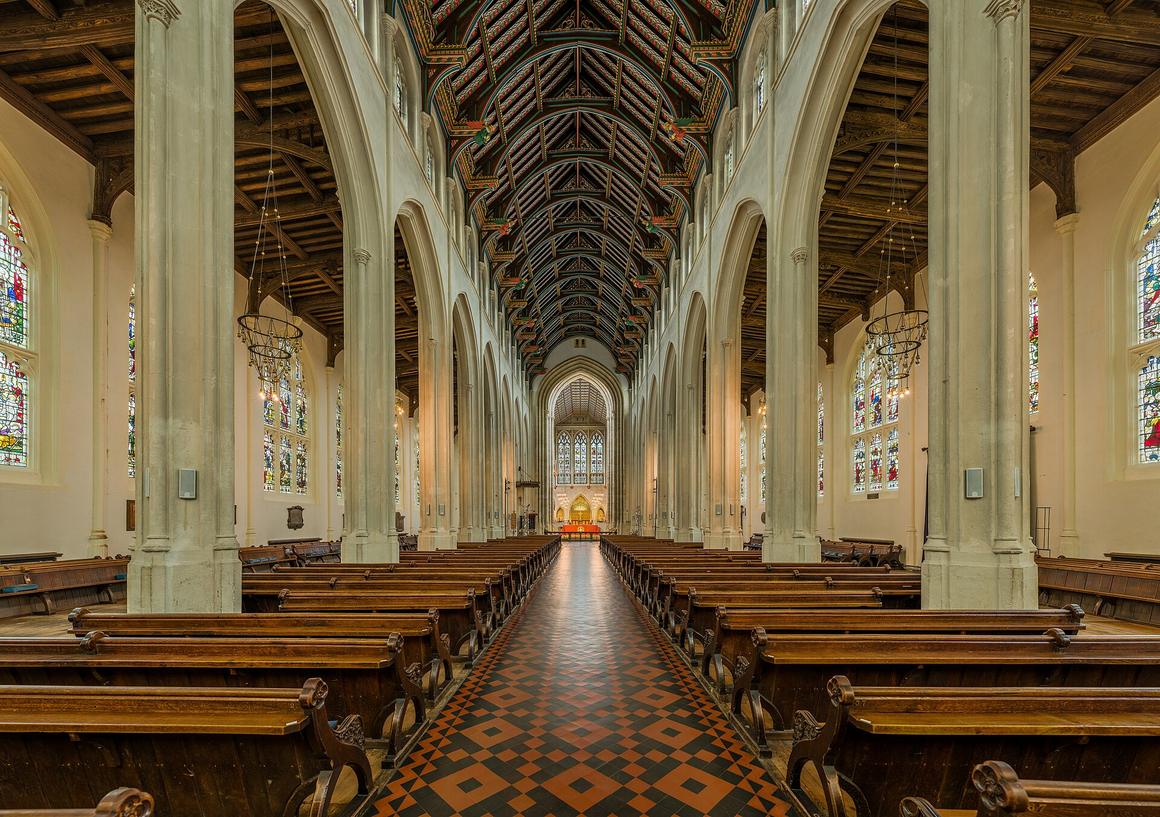
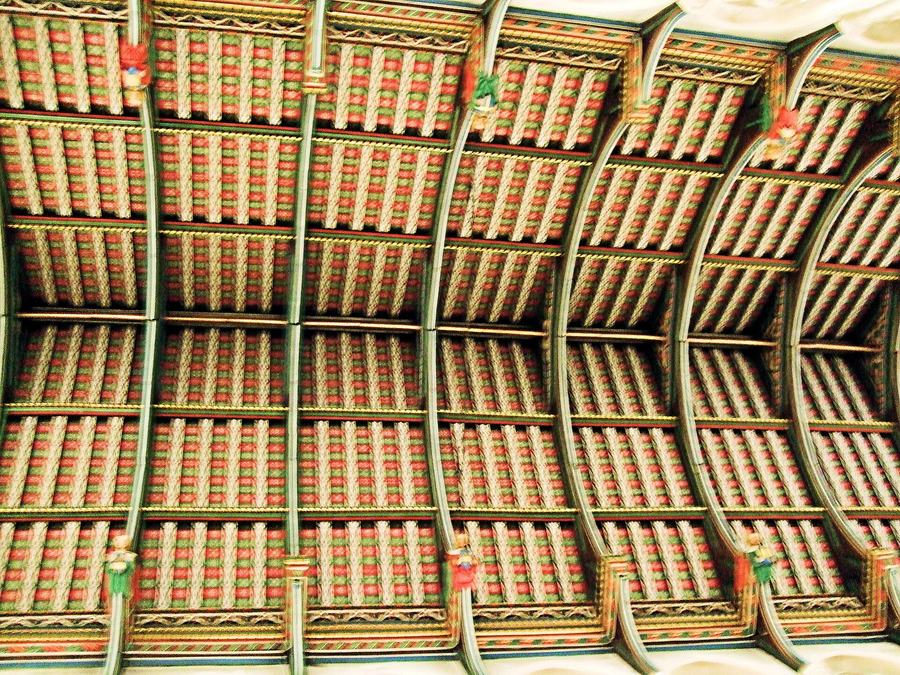
Wastell’s nave is tall and light, with slender piers and big Perpendicular windows. Above it is the Victorian hammerbeam roof, painted in strong colours. Look for the medieval Susanna window, which tells the story of Susanna and the Elders in a mix of Flemish and English glass, and Elisabeth Frink’s figure of the Crucifixion by the Treasury steps.
The crossing and the quire
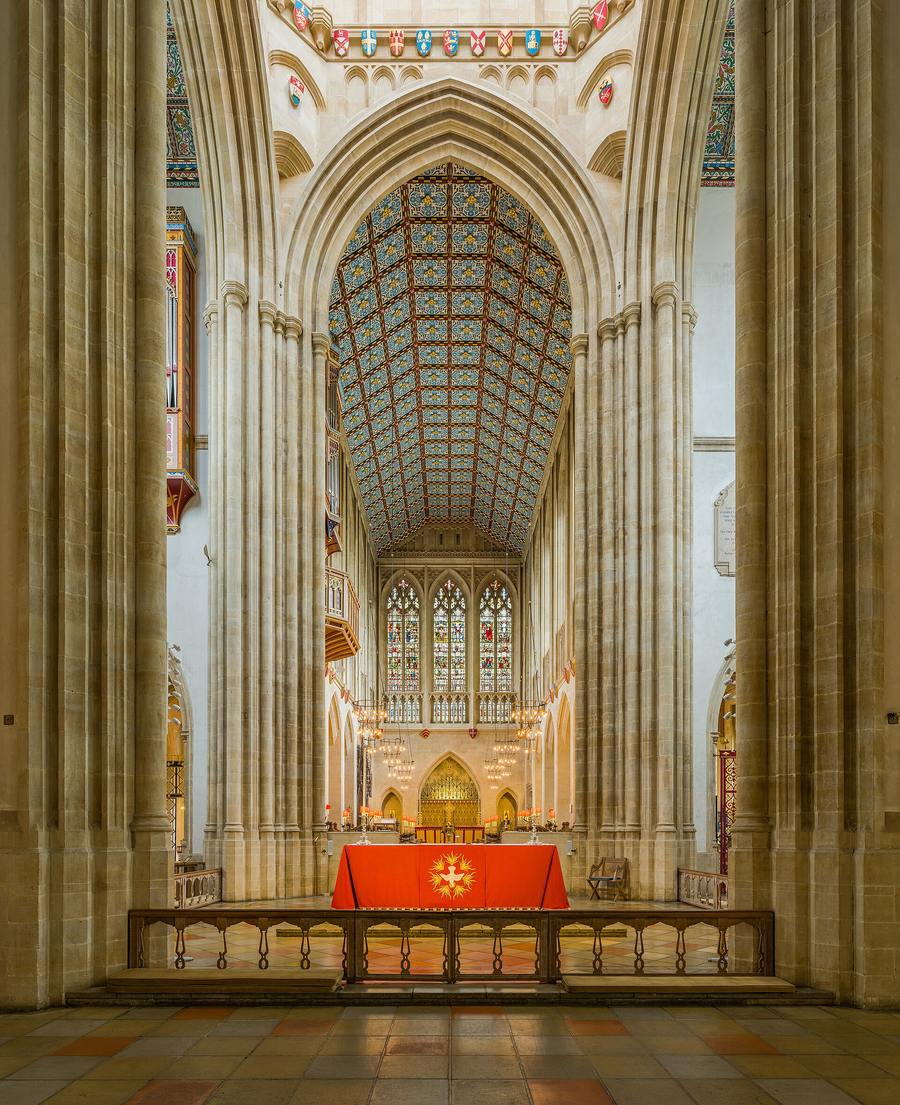
Walk east into the crossing and look up into the vault beneath the new tower. The quire and transepts beyond are Dykes Bower’s work of the 1960s, in a Gothic style that matches the old nave, with painted ceilings and gilding.
The Norman Tower and the Abbey Gardens
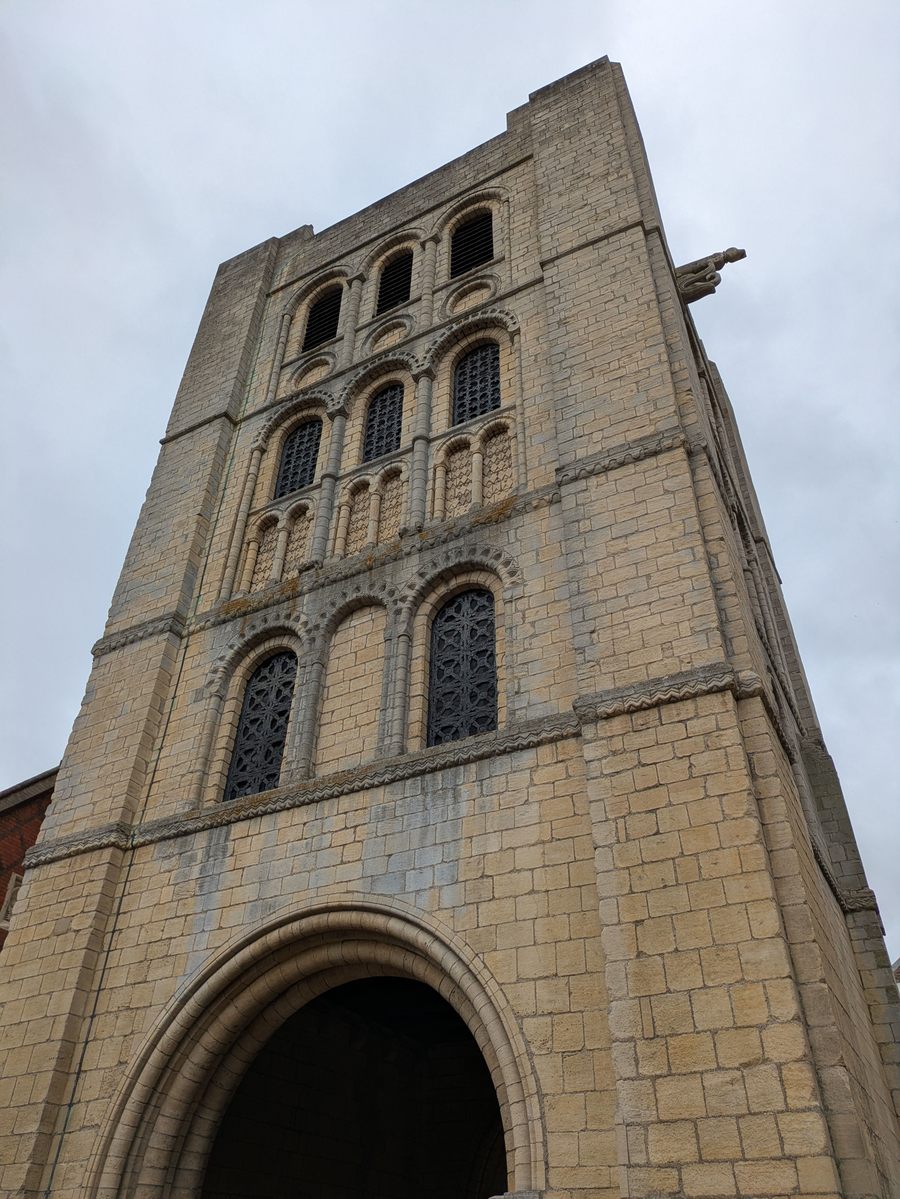
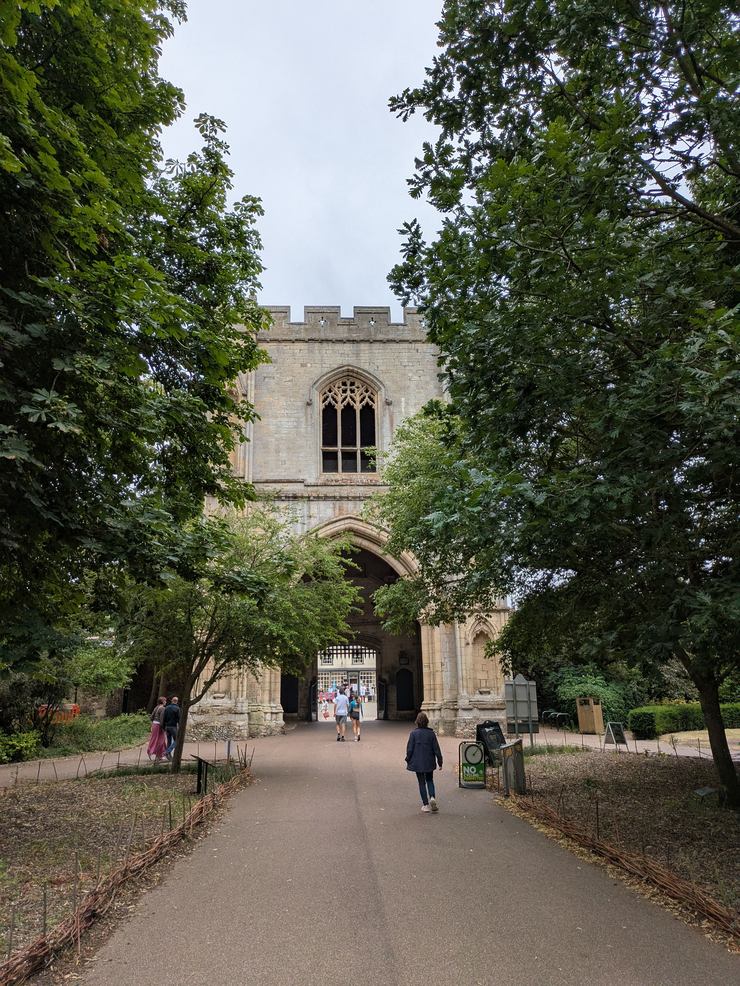
Outside, the Norman Tower, built in the early twelfth century as a gateway into the abbey, serves as the cathedral’s bell tower. North of the cathedral, the fourteenth-century Abbey Gate leads into the Abbey Gardens, where the flint cores of the abbey church, the site of St Edmund’s shrine, stand among lawns and flower beds.
Tickets and tours
Tours and the tower
Entry is by donation. Guided tours run from April to October, Monday to Saturday at 11.30am, and on some Wednesdays and Thursdays at 2pm. Tower tours of about 1 hour 15 minutes run from March to October, on Wednesdays at 2pm and Saturdays at 10.30am and 2pm; they are booked online, climb 202 steps and are not open to children under 10 or to visitors aged 80 or over.
The hotel link goes to Booking.com. This site earns nothing from it at present — it is here because it is the quickest way to check what is actually available.
Don't miss
- The Millennium Tower A Gothic tower finished in 2005, inside and out.
- Wastell's nave Perpendicular Gothic of the early 1500s.
- The painted roofs Colour and gilding overhead.
- The Susanna window Medieval glass telling an Old Testament story.
- The Norman Tower A twelfth-century abbey gateway.
- The Abbey Gardens The ruins of St Edmund’s abbey, next door.
Insider tips
Make a morning of it. The cathedral, the Abbey Gardens and the ruins sit side by side on Angel Hill, so one visit covers all three. The cathedral’s café, the Pilgrims’ Kitchen, is on site, and well-behaved dogs on a lead are welcome in the cathedral.
Bury St Edmunds is a handsome Georgian market town; the Theatre Royal, Britain’s only surviving Regency playhouse, and the brewery of Greene King are a short walk away.
Common questions
Is St Edmundsbury Cathedral free to visit?
Yes. Entry is by donation. Guided tours run from April to October, and tower tours are booked separately online.
Can you climb the tower?
Yes, on tower tours of about 1 hour 15 minutes on Wednesdays at 2pm and Saturdays at 10.30am and 2pm, from March to October. There are 202 steep, narrow steps; children under 10 are not allowed, and the cathedral’s insurers do not allow visitors aged 80 or over. Numbers are limited and dates are released a month at a time.
When was the tower built?
Between 2000 and 2005. The Millennium Tower, about 150 feet high, is built of some 600,000 bricks faced with Barnack and Clipsham stone, and finished the cathedral that Stephen Dykes Bower had begun to enlarge in the 1950s.
Where was St Edmund buried?
In the great Benedictine abbey that stood beside the cathedral and gave the town its name. Its ruins lie in the Abbey Gardens next door; the shrine itself was destroyed at the Dissolution.
How do you get to St Edmundsbury Cathedral?
Bury St Edmunds station is about 15 minutes’ walk. There is no visitor parking at the cathedral; the Angel Hill car park is directly opposite.
Where to stay and eat nearby
Angel Hill and the streets around the market have hotels, pubs and restaurants, and the town makes an easy base for Suffolk.
More English churches
- Ely Cathedral — the Ship of the Fens, under an hour away
- Norwich Cathedral — the great Norman cathedral of East Anglia
- Guildford Cathedral — another cathedral finished in living memory
See all the cathedrals and churches worth visiting in England →