
Basilica of Our Lady of Guadalupe, Mexico City
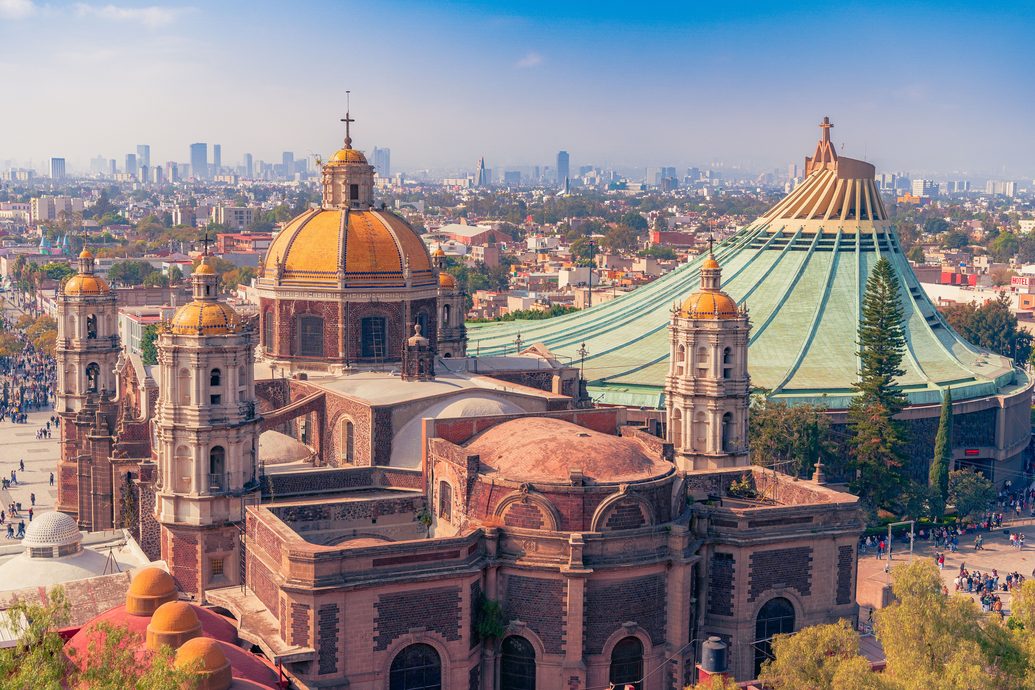
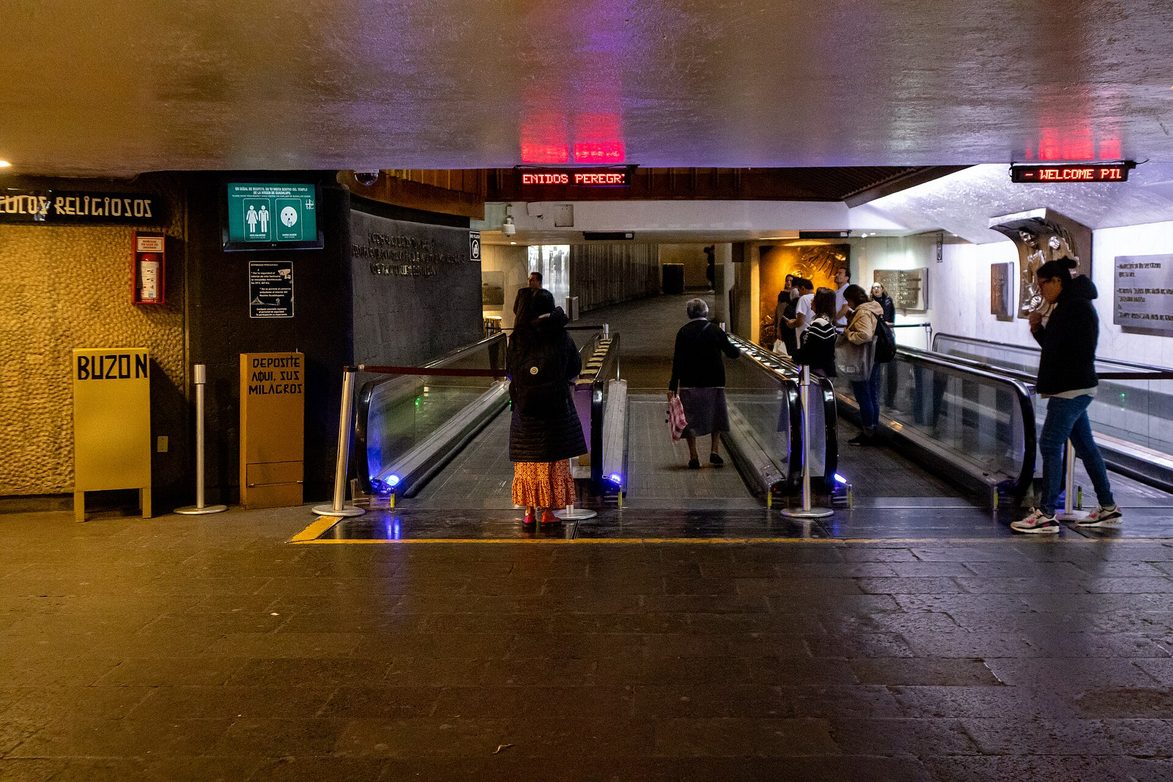
At the foot of Tepeyac hill in the north of Mexico City is the shrine that holds perhaps the most famous image in the Americas: Our Lady of Guadalupe, on the cloak of the Indigenous saint Juan Diego. It is among the most visited Catholic shrines in the world. Two basilicas stand side by side on the great atrium, the baroque Old Basilica of 1709 and the round New Basilica of 1976, and chapels climb the hill behind. Entry is free, Mass is said many times a day, and moving walkways carry visitors beneath the image.
The image and the shrine
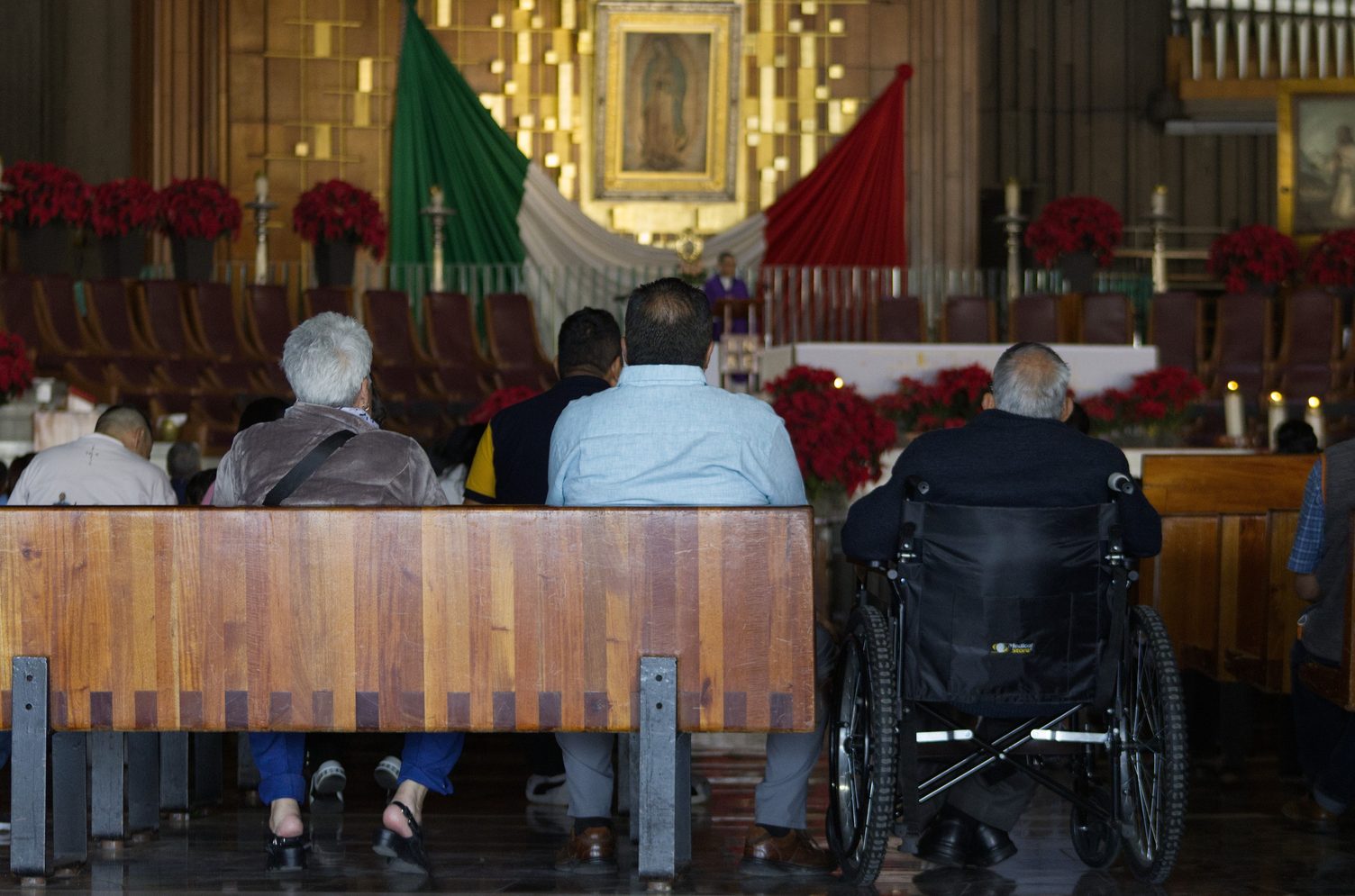
By tradition, in December 1531 the Virgin Mary appeared four times on Tepeyac to Juan Diego, a Nahua convert, and asked for a church to be built there. When he opened his tilma, a cloak traditionally said to be of agave fibre, to show the bishop the roses she had sent as a sign, her image was found printed on it. That cloth, framed behind the high altar, is the reason for everything here. Juan Diego was canonised in 2002.
The first great church, now called the Old Basilica, was built in 1695–1709 by Pedro de Arrieta. On 14 November 1921 a bomb hidden in a vase of flowers exploded at its altar; the image was unharmed, and a metal crucifix bent by the blast is kept as the “Santo Cristo del Atentado”. Sinking into the soft ground of the old lakebed, the church was close to collapse by the 1970s, and in 1974–76 a new basilica was built beside it. On 12 October 1976 the image was carried across in procession, and the New Basilica marked its 50th anniversary in October 2026.
The visitor’s cheat sheet
| Before you travel | Read your government’s travel advice for Mexico; take the usual big-city care with pickpockets in the crowds |
|---|---|
| Opening hours | New Basilica daily 6am–9pm, Mass many times a day; Capilla del Cerrito 7am–6pm; museum closed Mondays |
| Admission | Free to the basilicas and chapels; small fee for the museum |
| Guided tours | The shrine’s own tours in Spanish, Monday–Saturday at 11am and 3pm, booked ahead, for a donation |
| Dress | No shorts above the knee, crop or strappy tops, miniskirts or caps in the churches and museum |
| Getting there | Metro Line 6 to La Villa-Basílica (5 minutes’ walk); Lines 3 and 6 to Deportivo 18 de Marzo |
| Busiest | 1–12 December, above all 11–12 December; also Holy Week |
| How long | Two to three hours with the Old Basilica, the museum and the climb up Tepeyac |
Hours and admission checked against the official site in November 2026. They change; the official site is always the last word.
What to see
The New Basilica and the tilma
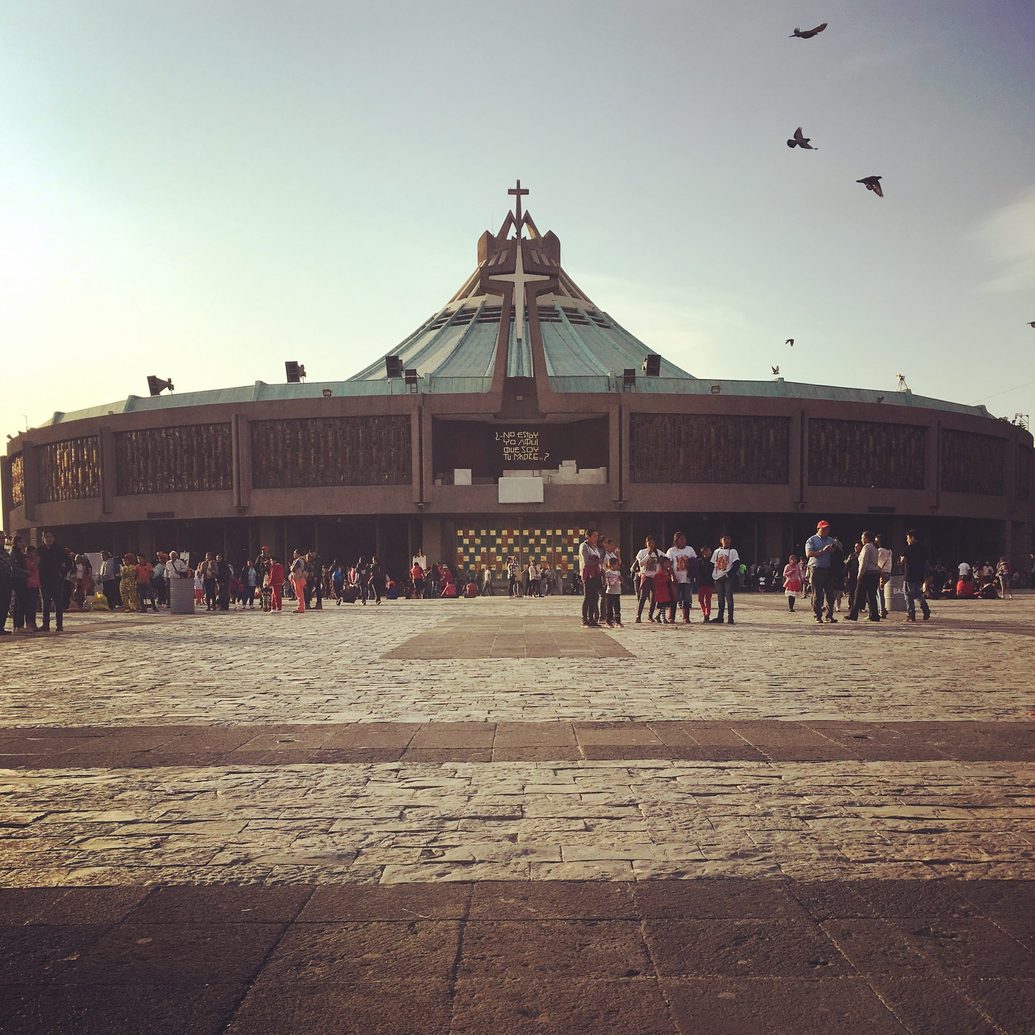
The New Basilica, designed by a team of architects including Pedro Ramírez Vázquez, is round, with a sweeping green copper roof and no pillars inside, so that some ten thousand people can all see the image at once. The tilma hangs behind and above the high altar. To see it close up, follow the signs to the passage beneath the altar, where moving walkways carry you past it; you can go round more than once. Mass goes on above you the whole time, so keep your voice down.
The Old Basilica
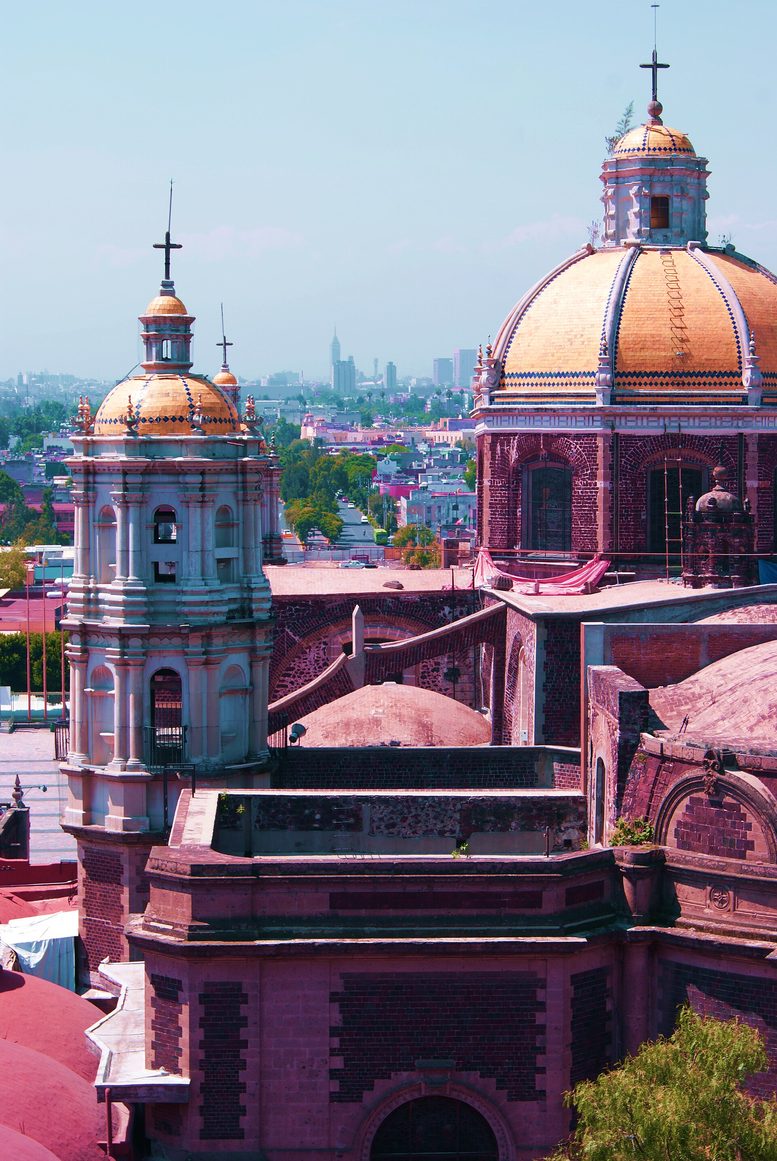
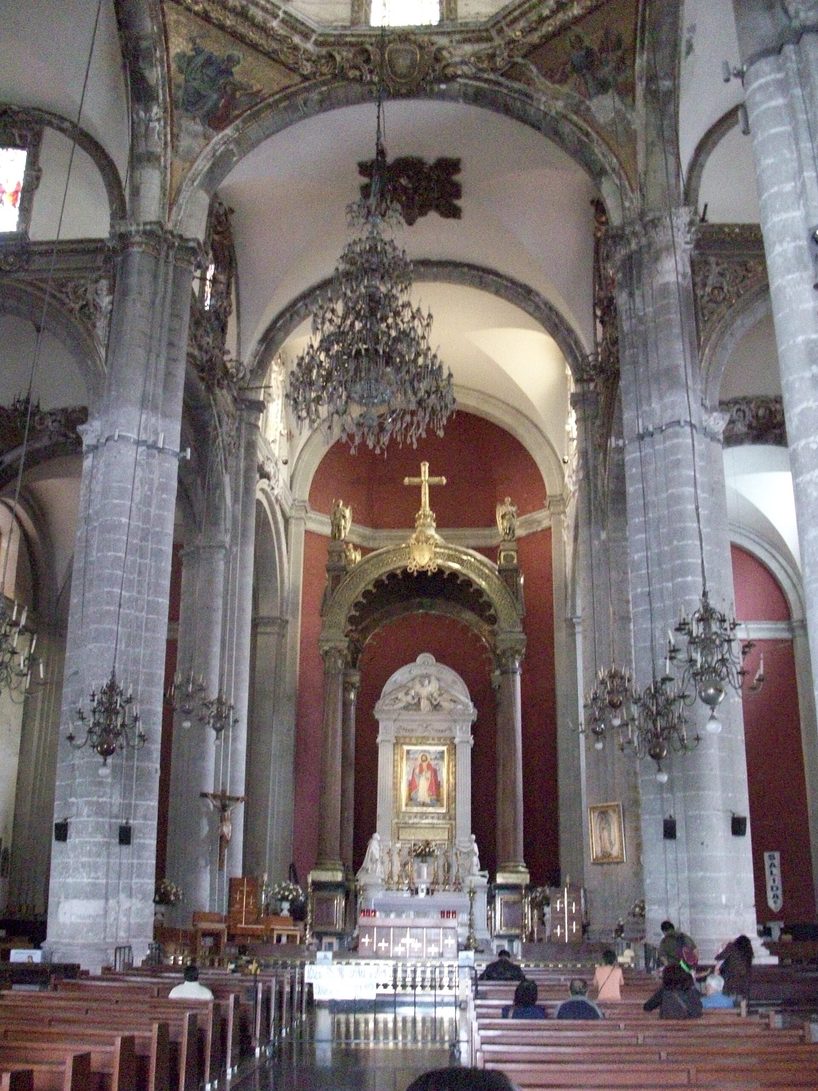
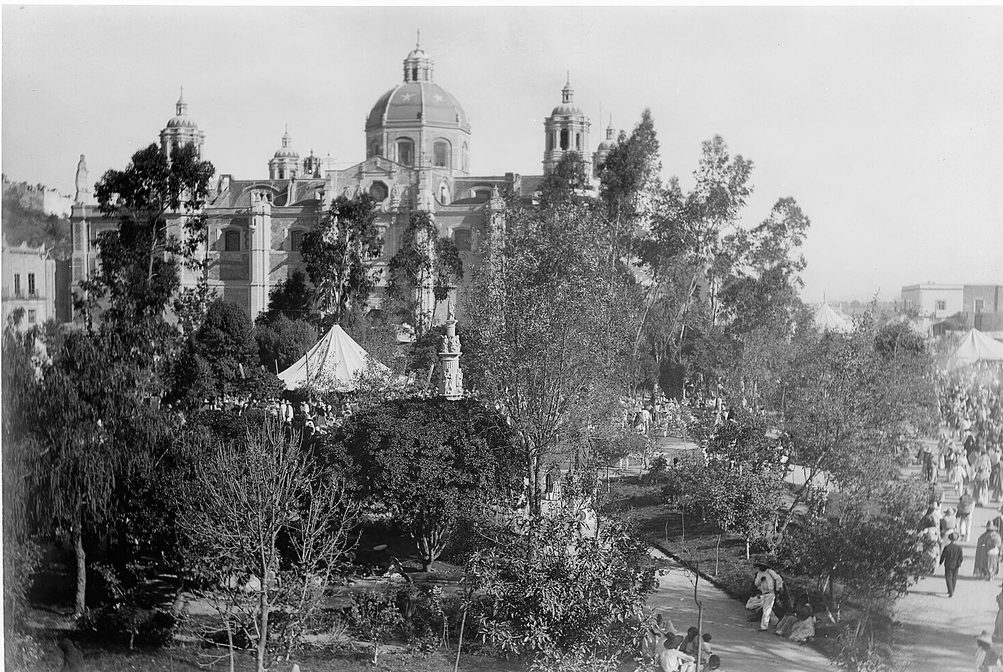
East of the new church across the atrium, the Old Basilica was stabilised from 1979 and reopened in 2000 as the Templo Expiatorio a Cristo Rey. Inside are a white marble high altar of the 19th century and large paintings added for the image’s coronation in 1895. Look at the floor and the walls: the whole building still leans. Next to it is the former church of the Capuchin nuns, of the 1790s, and behind it the basilica museum, with colonial paintings and a wall of ex-votos left by pilgrims.
Up Tepeyac hill
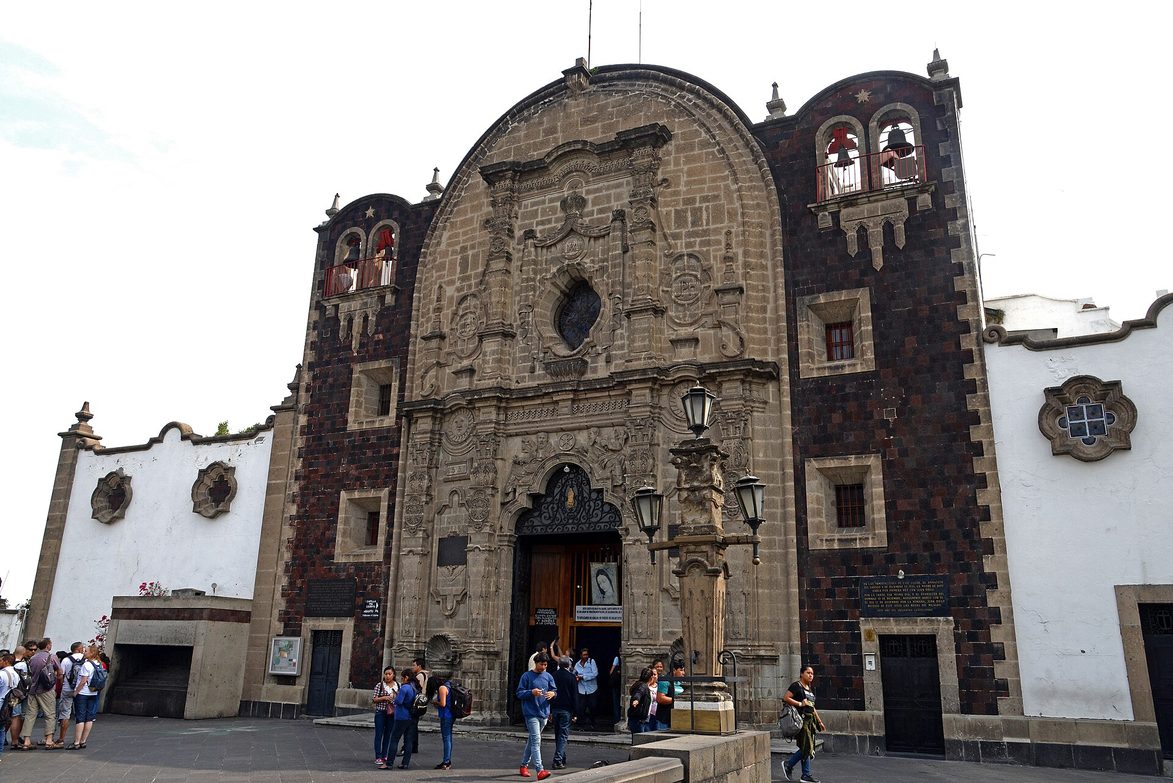
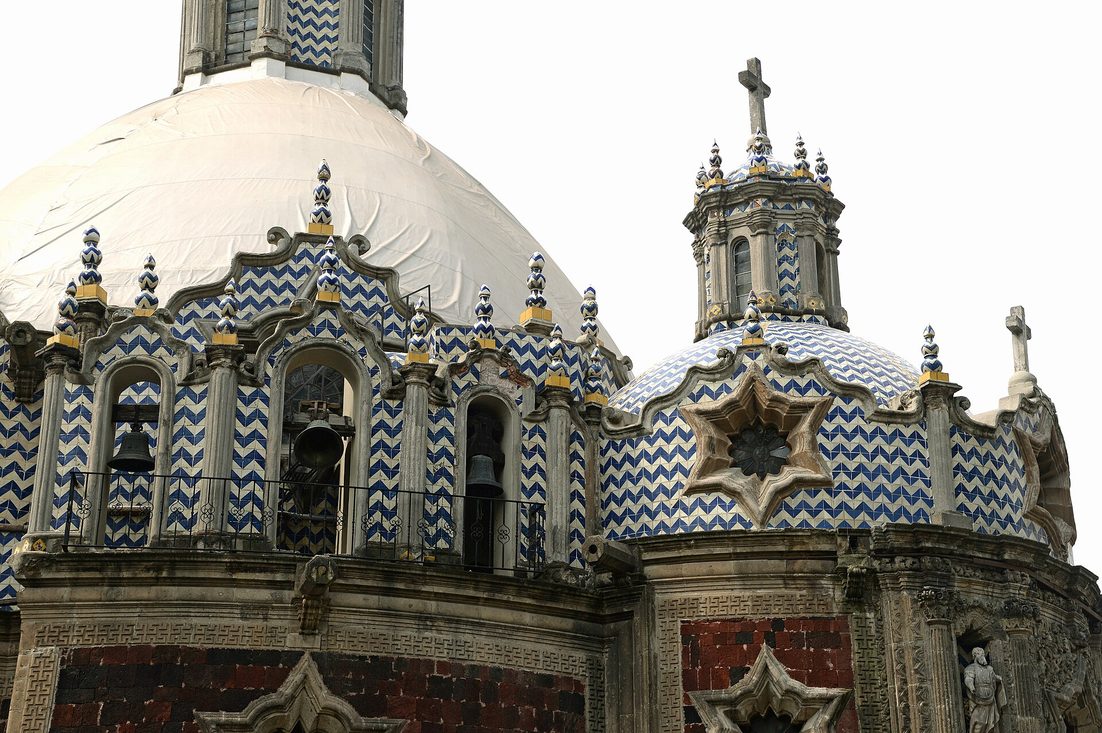
Paths and terraced stairs climb the hill behind the basilicas to the Capilla del Cerrito, which marks the spot of the first apparition. The present chapel, begun in 1740, was rebuilt in 1945–50, and the terrace in front of it has a wide view over the shrine and the city. Coming down the east side, you pass gardens and fountains on the way to the Capilla del Pocito, an oval baroque chapel of 1777–91 by Francisco Guerrero y Torres, built over a spring linked to the apparitions and with domes of blue and white tiles.
The carillon
On the east side of the atrium, by the Plaza Mariana, the carillon tower of 1991 has 48 bells and clocks of several kinds. At 10am, noon, 2pm and 4pm, a revolving scene of figures inside it tells the story of the apparitions.
12 December
The feast of Our Lady of Guadalupe on 12 December brings the largest crowds of the year: local officials counted 12.8 million pilgrims over 11 and 12 December 2025. Many arrive on foot or by bicycle, and dancers perform on the atrium. The Mañanitas are sung to the Virgin at midnight. Metrobús stops near the shrine are usually closed on 12 December, and in past years La Villa-Basílica Metro station was too (it stayed open in 2025), so check before you go, and expect a crush. The first days of December are festive and less crowded.
Getting there
The shrine is in the borough of Gustavo A. Madero, about half an hour north of the historic centre. Metro Line 6 stops at La Villa-Basílica, about five minutes’ walk away; Deportivo 18 de Marzo, on Lines 3 and 6, is about fifteen minutes’ walk. From the Zócalo, take Line 2 to Hidalgo, then Line 3 towards Indios Verdes as far as Deportivo 18 de Marzo, and walk or change to Line 6 for one stop to La Villa-Basílica. A taxi from the centre takes about 30 minutes; use an authorised taxi or a ride-hailing app. Many day tours to the pyramids of Teotihuacan stop here on the way.
Tours and where to stay
No ticket is needed. Day tours often combine the basilica with Teotihuacan.
These links go to GetYourGuide and Booking.com. This site earns nothing from them at present — they are here because they are the quickest way to check what is actually available.
Don’t miss
- The tilma From the walkways beneath the altar.
- The Santo Cristo del Atentado The crucifix bent by the 1921 bomb, now in the New Basilica.
- The leaning Old Basilica Baroque, of 1709.
- The Capilla del Cerrito And the view from the top of Tepeyac.
- The carillon At 10am, noon, 2pm or 4pm.
Insider tips
Go early on a weekday. The basilica opens at 6am, and early on a weekday morning there is usually little queue for the walkways beneath the image.
Walk the circuit. See the image first, then the Old Basilica, then climb Tepeyac to the Capilla del Cerrito and come down past the gardens to the Pocito. Time it to pass the carillon at 10am, noon, 2pm or 4pm.
Leave the cap at the hotel. Caps are not allowed in the churches, and neither are shorts above the knee.
Common questions
Is the Basilica of Guadalupe free?
Yes. There is no charge to enter the New Basilica, the Old Basilica or the chapels on the hill. The basilica museum charges a small fee, and the shrine’s own guided tours ask for a donation.
What are the opening hours?
The New Basilica is open every day from 6am to 9pm, with Mass many times a day between 6am and 8pm. The Capilla del Cerrito on the hilltop is open from 7am to 6pm. The museum is closed on Mondays.
Can you see the real tilma of Juan Diego?
Yes. The original image hangs behind the high altar of the New Basilica. Moving walkways in a passage beneath the altar carry visitors close to it without disturbing Mass.
How do I get there by Metro?
Take Line 6 to La Villa-Basílica, about five minutes’ walk away, or Lines 3 and 6 to Deportivo 18 de Marzo, about fifteen minutes away. From the historic centre, allow about half an hour.
What should I wear?
The shrine does not allow shorts above the knee, crop tops, strappy tops, miniskirts or caps in its churches, chapels, museum and crypt.
When is the busiest time to visit?
Around 12 December, the feast of Our Lady of Guadalupe, when more than twelve million pilgrims came over two days in 2025 and the nearest Metrobús stops were closed. Weekday mornings are the quietest time.
More churches in Mexico City
- Metropolitan Cathedral — the great cathedral on the Zócalo.