
Roche Abbey
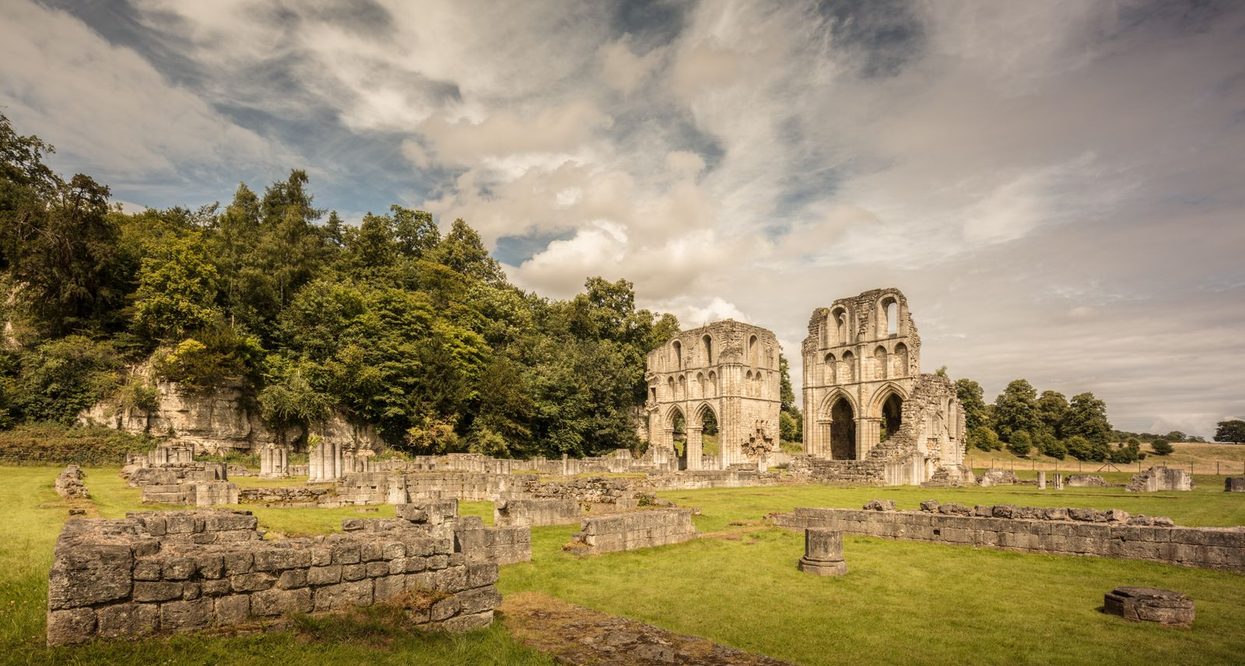
In a hidden valley near Rotherham, between cliffs of white limestone, stand the two tall transepts of a Cistercian abbey church, among the earliest Gothic buildings in the north of England. Around them are the foundations of the monks’ buildings, a stream channelled through the site, and the traces of an eighteenth-century landscape garden by Capability Brown. It is free, quiet and little known.
The monks of the rock
Roche was founded in 1147, when an abbot and twelve monks came from Newminster Abbey in Northumberland to this valley. The land was given by two local lords, Richard de Busli and Richard FitzTurgis, who are said to have let the monks build on whichever side of the stream they preferred. The church was built in the late twelfth century, in the new pointed Gothic style, and at its height in the early thirteenth century the abbey had about fifty monks and a hundred lay brothers.
On 23 June 1538 the abbey was surrendered to Henry VIII. A local rector, Michael Sherbrook, later wrote down his uncle’s memory of what followed: the lead torn from the roofs, the choir stalls burned to melt it, and local people carrying off whatever they could.
The visitor's cheat sheet
| Where | Maltby, Rotherham, South Yorkshire, S66 8NW |
|---|---|
| Getting there | Near Maltby, off the A634 east of Rotherham; free parking for about ten cars, 250 metres from the entrance on a rough path |
| Opening hours | Any reasonable time in daylight; check English Heritage before a winter visit |
| Admission | Free; English Heritage site |
| How long | An hour |
| Best time | Late spring or a bright autumn afternoon |
| Dress code | Outdoor site; good shoes; dogs on leads welcome |
| Tours | Self-guided; no toilets on site; steps at the entrance, with a side gate for wheelchairs |
Hours and admission checked against the official site in October 2026. They change; the official site is always the last word.
Buried by Capability Brown. In the 1770s the 4th Earl of Scarbrough asked Lancelot ‘Capability’ Brown to make the ruins a feature of his park at Sandbeck. Brown pulled down buildings, covered the rest in earth and turf, and made a lake. The foundations were cleared again in the 1880s and the 1920s.
What to see, in the order you meet it
The transepts
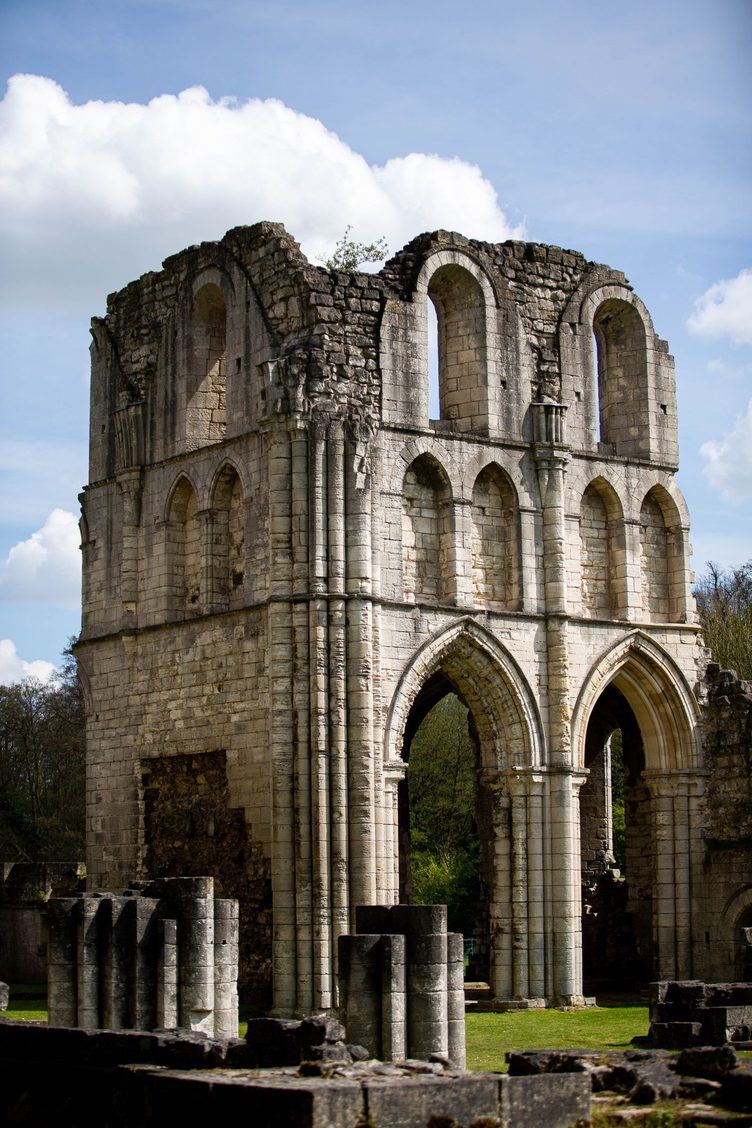
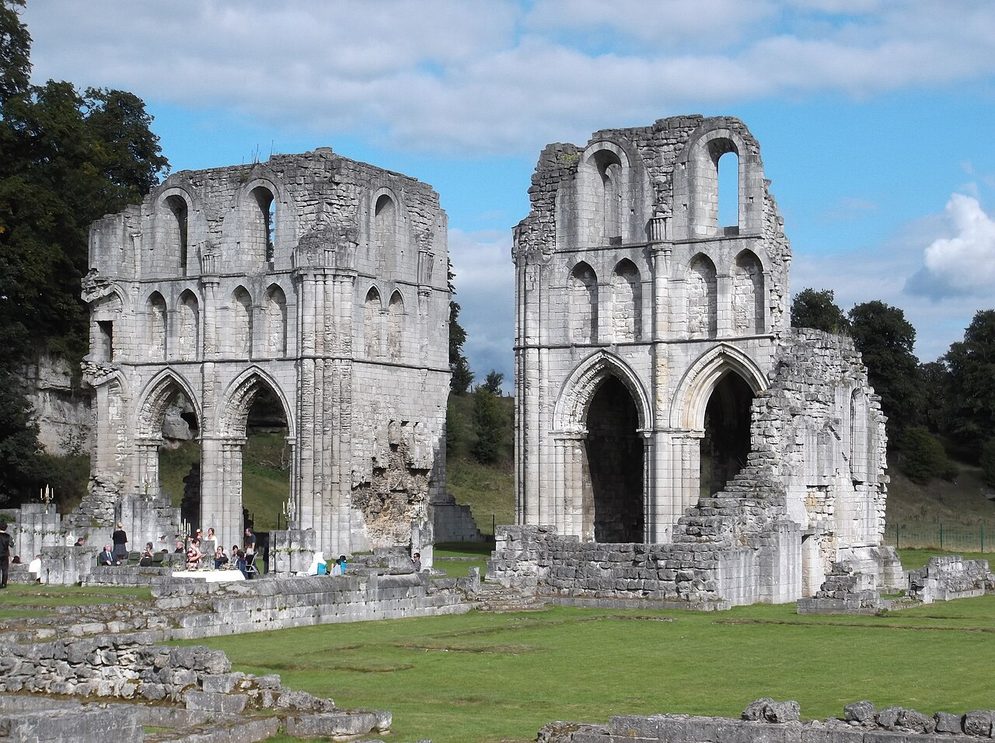
The east walls of the two transepts still stand to their full height, facing each other across the crossing. Each has its tall pointed arches, a middle stage of arcading and the clerestory windows above: a rare chance to see the elevation of an early Gothic Cistercian church almost complete.
The church and the cloister
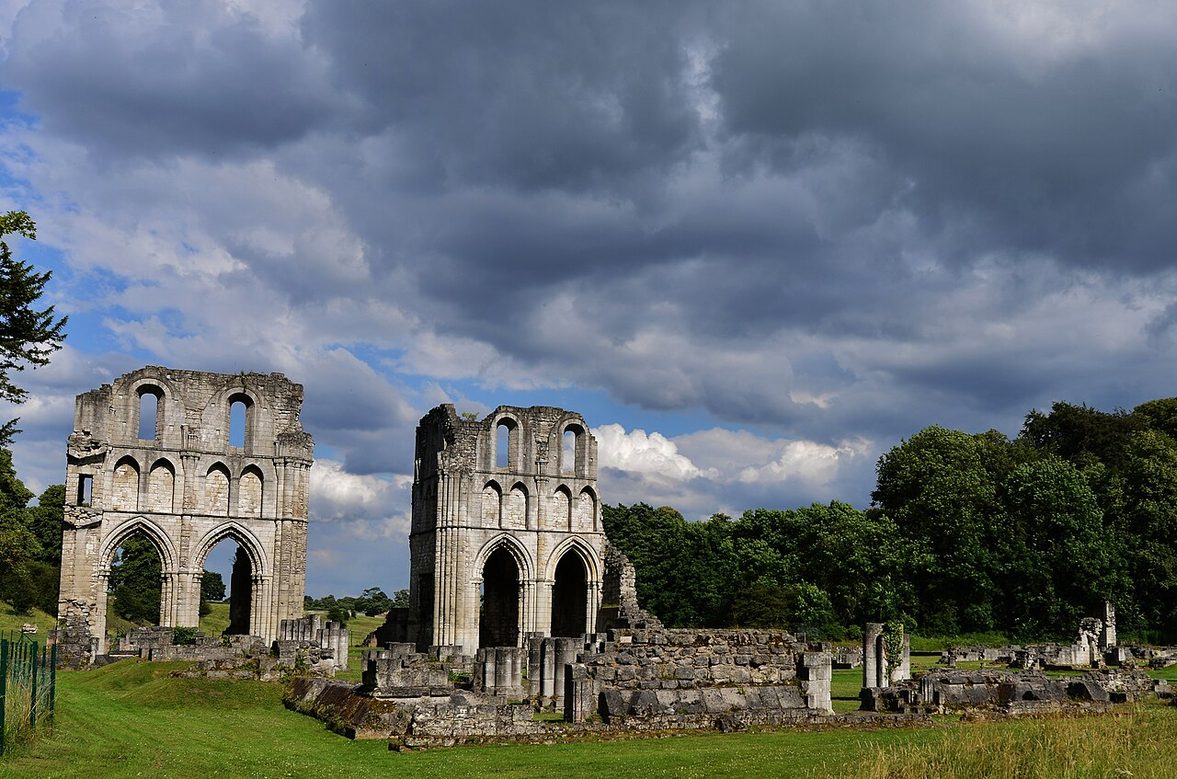
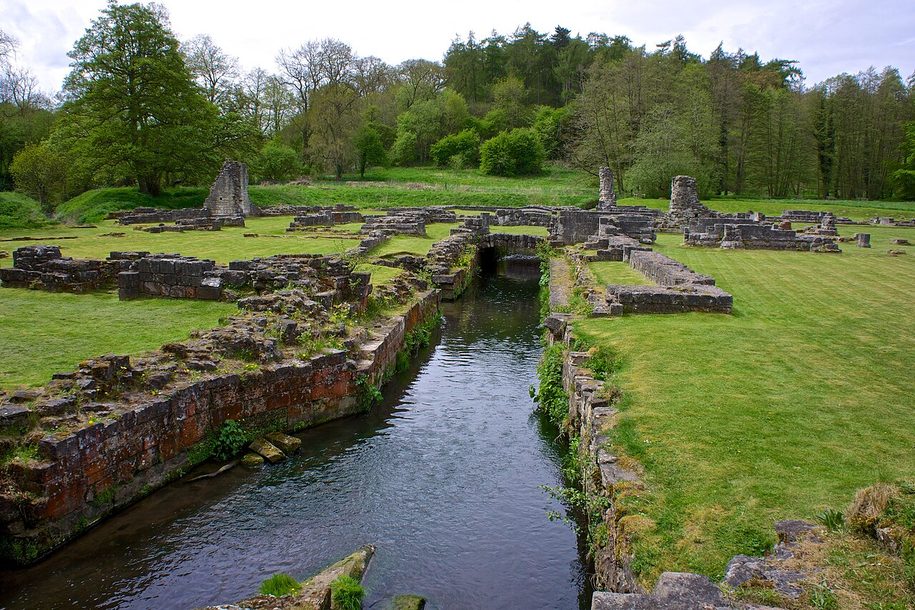
West of the transepts, the nave is marked out by the bases of its piers. South of it are the cloister and the low walls of the chapter house, the monks’ dormitory and their refectory, laid out on the grass.
The beck and the abbot’s side
Maltby Beck runs through the site in a stone channel, carrying away the waste from the latrines. Across it, reached by a medieval bridge, were the kitchen and the abbot’s lodging.
The gatehouse and the valley
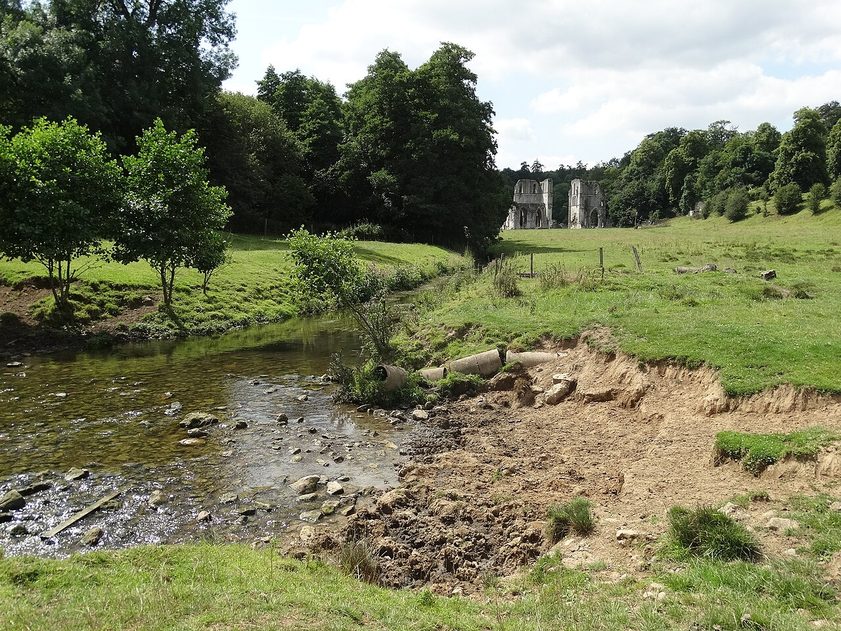
At the entrance stands the early thirteenth-century gatehouse. Walk up onto the cliff path for a view down over the whole abbey, and along the valley to see how Brown made the ruins into a picture.
Visiting
Free to visit
Roche Abbey is cared for by English Heritage and is free to enter, at any reasonable time in daylight. Parking is limited to about ten cars, and there are no toilets.
The hotel link goes to Booking.com. This site earns nothing from it at present — it is here because it is the quickest way to check what is actually available.
Don't miss
- The transepts Early Gothic, still full height.
- The cliff path A view down over the whole abbey.
- The beck Channelled through the latrines.
- The gatehouse Early thirteenth century.
- The limestone White rock outcrops that gave the abbey its name.
- Brown’s landscape Traces of an eighteenth-century park.
Insider tips
Arrive early on fine weekends. The tiny car park fills quickly. Bring a picnic, as there is no café, and combine the abbey with Conisbrough Castle or a walk in the woods of the valley.
Common questions
Does it cost anything to visit Roche Abbey?
No. Roche Abbey is cared for by English Heritage and is free to enter.
When is Roche Abbey open?
It is open at any reasonable time during daylight hours. English Heritage changes the arrangements from season to season, so check its website before a winter visit.
Why is it called Roche?
From the rock: the abbey stands in a narrow valley between outcrops of white limestone, and its name comes from the Latin rupes, a rock or cliff.
What did Capability Brown do to the abbey?
In the 1770s the Earl of Scarbrough hired Lancelot ‘Capability’ Brown to turn the ruins into a picturesque feature of his park at Sandbeck. Brown pulled down some of the buildings, buried the rest under grass, and made a lake. Clearance in the 1880s and the 1920s brought the foundations to light again.
How do you get to Roche Abbey?
The abbey is near Maltby, about eight miles east of Rotherham, off the A634. There is free parking for about ten cars, around 250 metres from the entrance along a rough path. There are no toilets on site.
Where to stay and eat nearby
Maltby and Tickhill have pubs, and Doncaster, Rotherham and Sheffield are within half an hour.
More English churches
- Fountains Abbey — the greatest Cistercian ruin in England
- Kirkstall Abbey — another free Cistercian ruin in a Yorkshire city
- Southwell Minster — about 40 minutes south
See all the cathedrals and churches worth visiting in England →