
St Patrick’s Church, Patrington
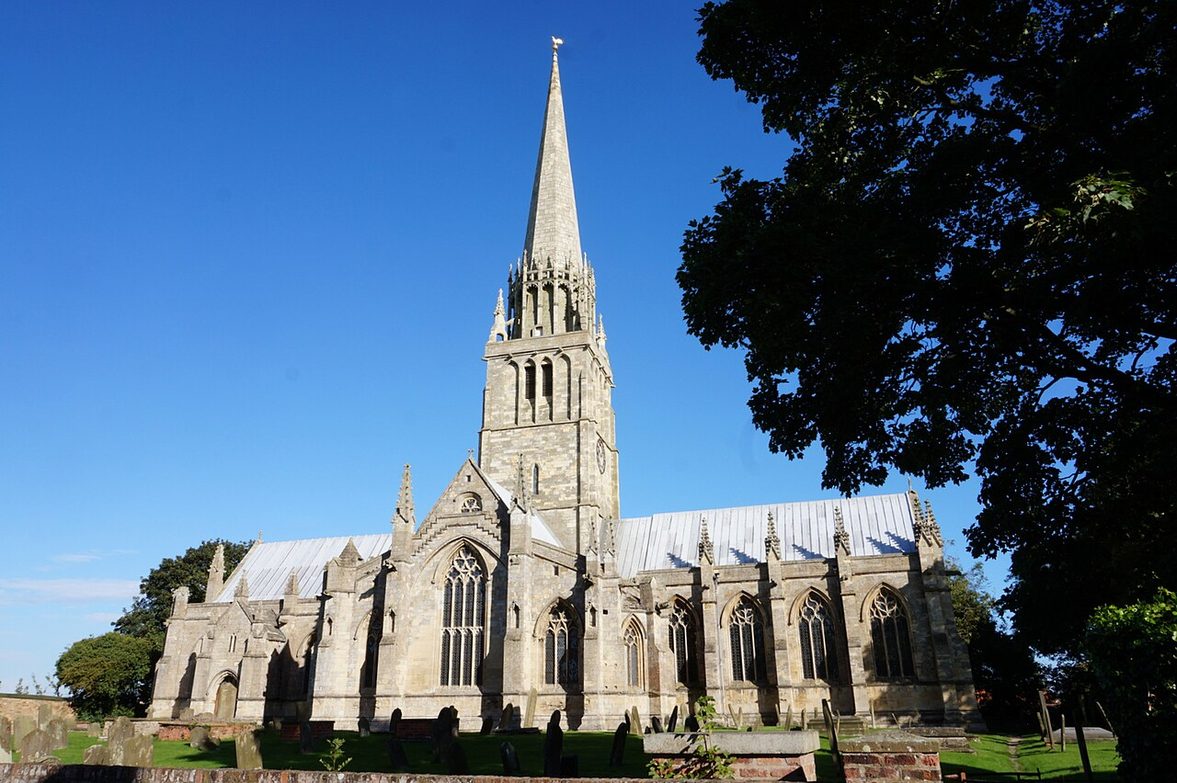
In a village on the flat plain of Holderness, between Hull and the sea, stands one of the most perfect medieval churches in England. St Patrick’s was rebuilt in the fourteenth century, most of it by a single generation of masons, so that almost the whole building is in one style, the Decorated Gothic. Its slender spire is a landmark for miles, and inside and out it is covered in carved heads, beasts and grotesques.
Built in one go
From 1033 until 1545 the manor of Patrington belonged to the Archbishops of York. It was a rich manor, with a small port on the Humber, and its wealth paid for a new church. The work began around 1300 with the south transept, moved on to the north transept, the central tower and the nave, and by the 1340s the aisles and the chancel were up.
Then the Black Death struck, and work stopped. Only the great east window and the spire remained to be built, and when they were added in the decades that followed, they were in the new Perpendicular style. Everything else belongs to a single generation of masons, which is why the church feels so unified.
The visitor's cheat sheet
| Where | Patrington, East Riding of Yorkshire, HU12 0RE |
|---|---|
| Getting there | About 15 miles east of Hull on the A1033; buses from Hull; parking in the street by the church |
| Opening hours | Usually 9am–5pm; closes at dusk in winter |
| Admission | Free; donations welcome |
| How long | 45 minutes to an hour |
| Best time | A bright afternoon, when the carvings are lit from the side |
| Dress code | No rule; respectful dress in a working church |
| Tours | Self-guided; accessible toilets nearby |
Hours and admission checked against the official site in October 2026. They change; the official site is always the last word.
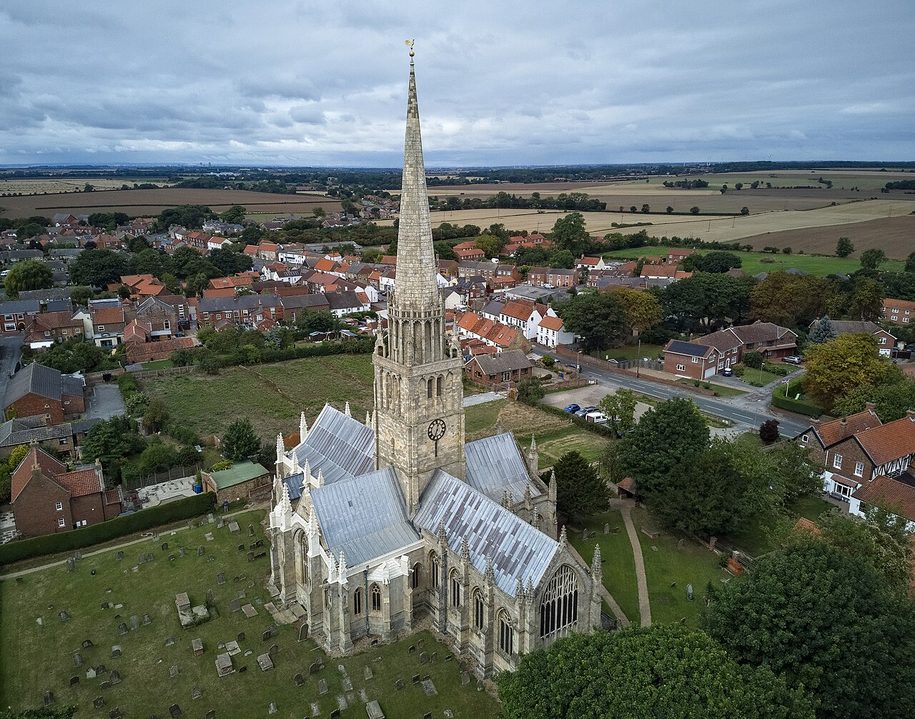
Pevsner’s verdict. Nikolaus Pevsner called the spire one of the finest in the country, “not at all showy, but wonderfully satisfying”. Look for the open crown of arches at its base, tied to the pinnacles of the tower by little flying buttresses.
What to see, in the order you meet it
The outside and the carvings
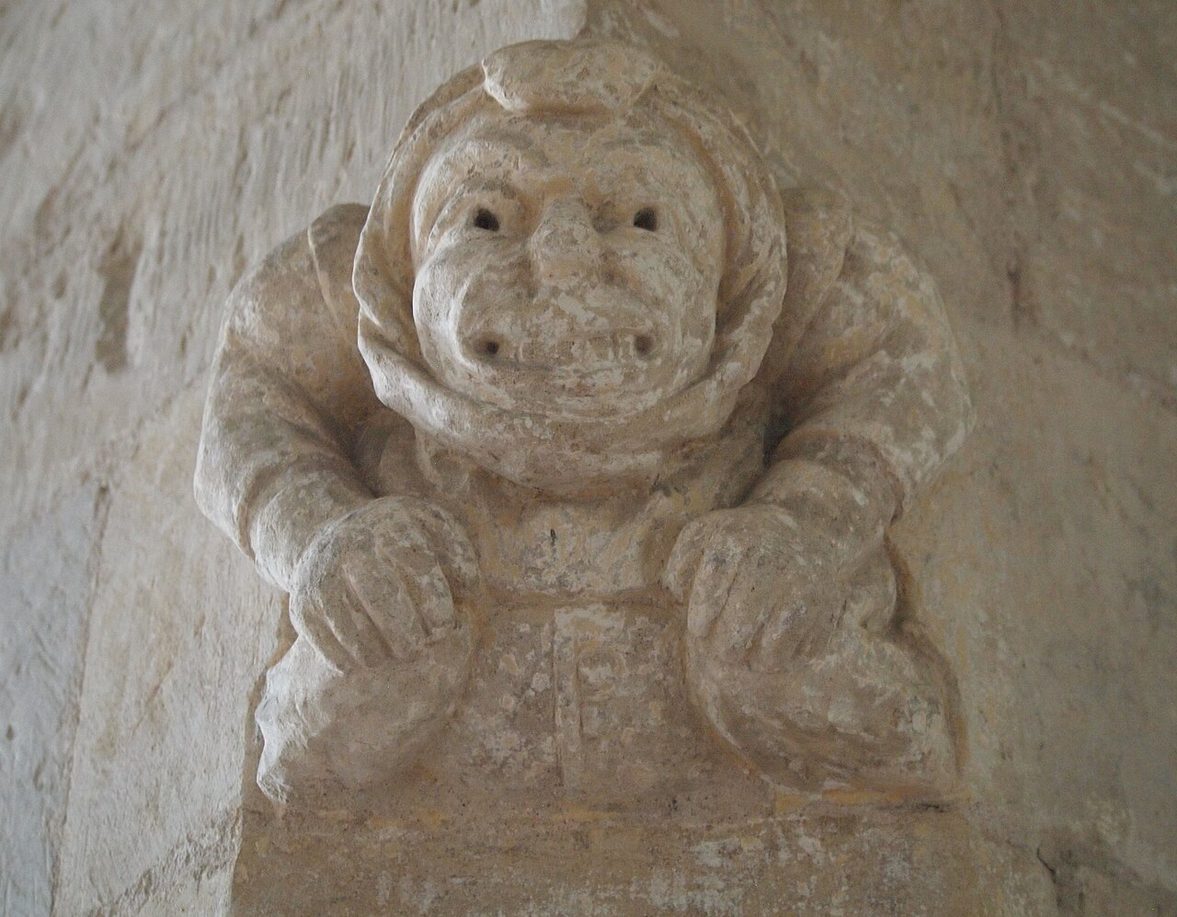
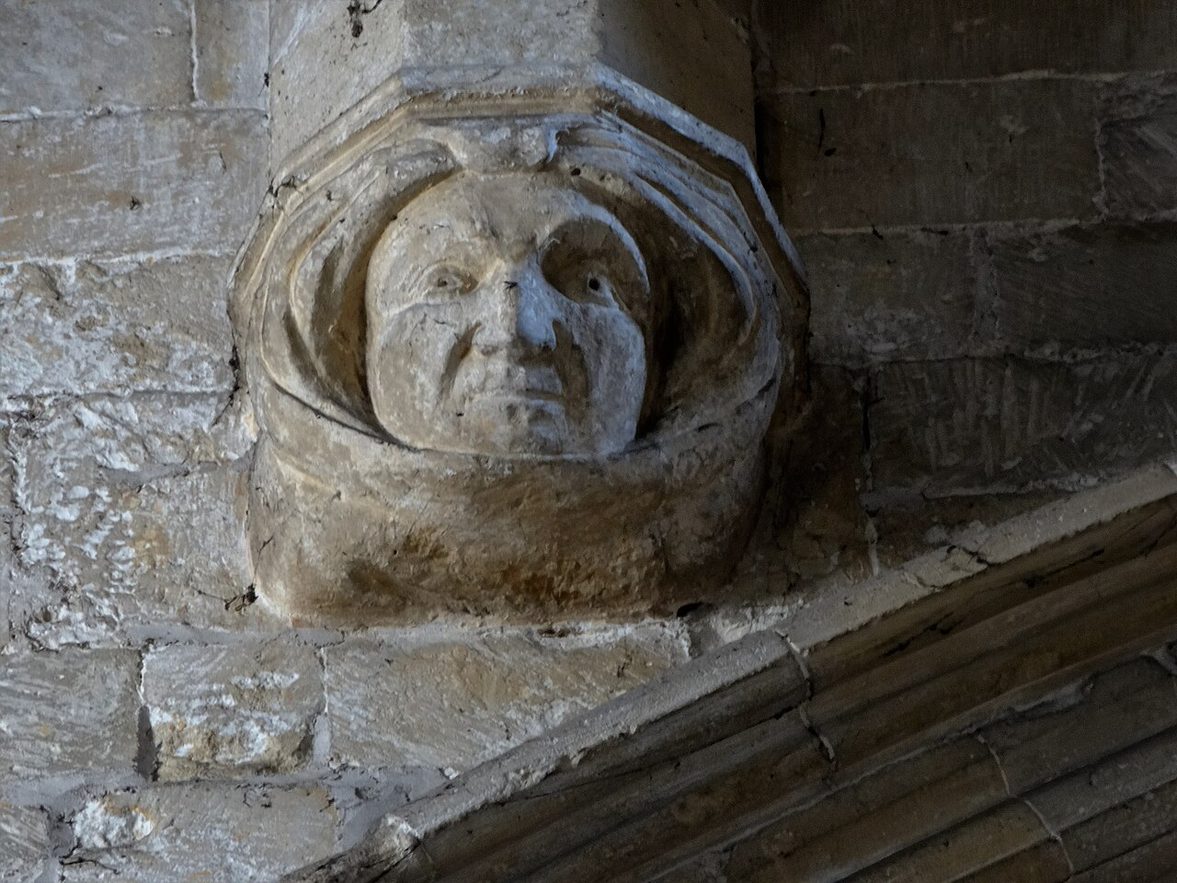
Walk around the church before you go in. The buttresses of the transepts carry niches and carved grotesques, and heads of people and animals look down from the walls. There are said to be more than two hundred carved faces on the building.
The nave and the transepts
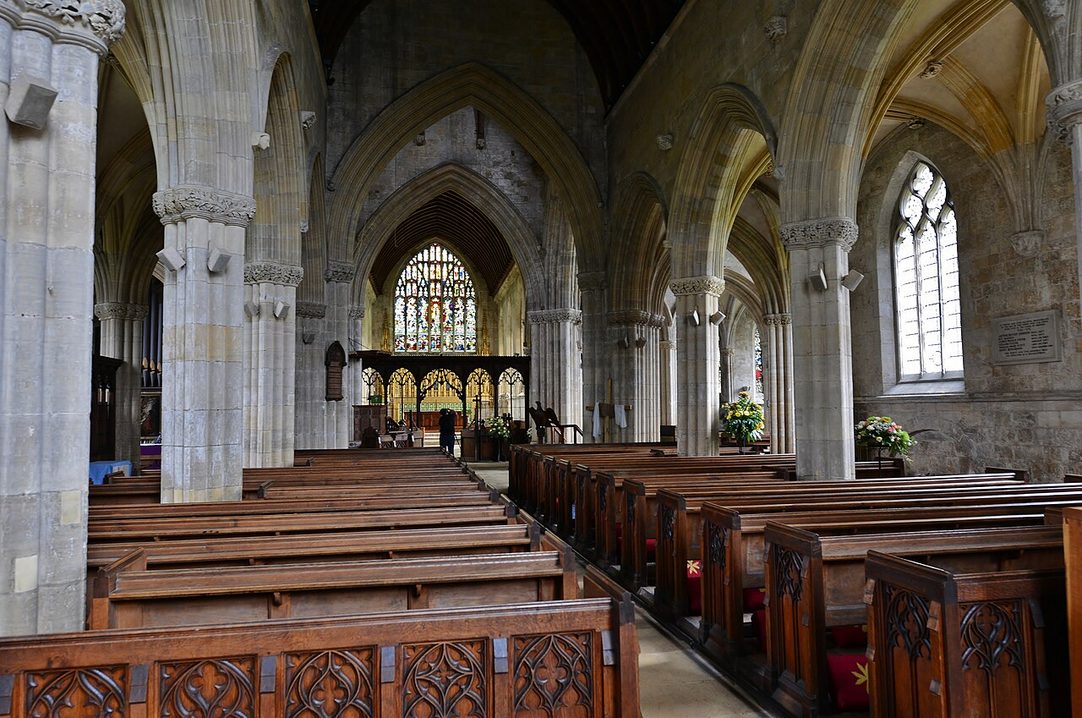
Inside, clustered piers rise to capitals carved with stylised leaves, and the transepts are almost as large as the nave. In the south transept is a tiny Lady Chapel, a three-sided apse with its own vault and a fine medieval statue of the Virgin and Child. Look up, too, at the tower stair, which climbs the crossing arch in a bold zigzag.
The chancel and the Easter Sepulchre
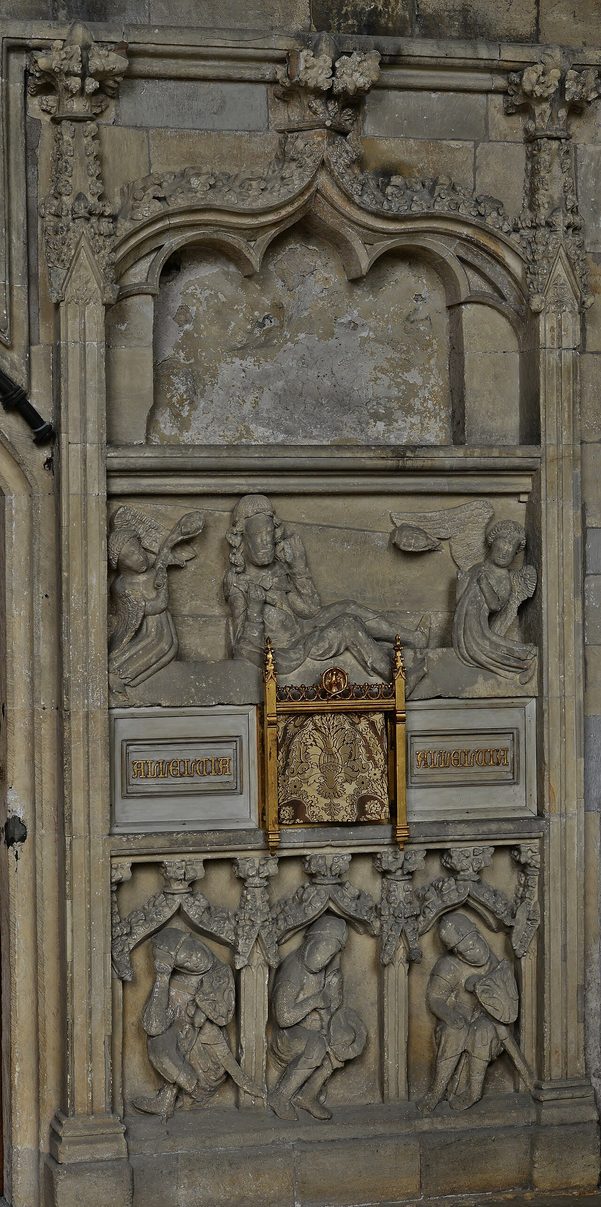
In the chancel are the canopied priests’ seats and, opposite, a carved stone Easter Sepulchre, where the consecrated bread was kept between Good Friday and Easter morning. Below it are three sleeping soldiers, guarding the tomb of Christ.
The screen, the font and the reredos
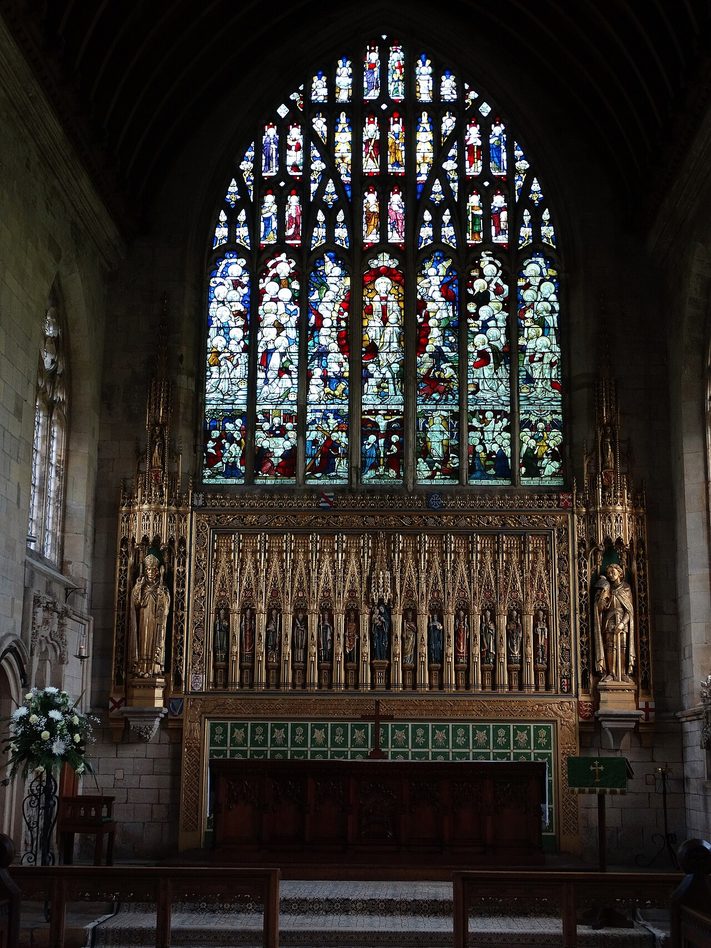
The chancel screen dates from the late fourteenth century, and the twelve-sided font at the west end is of the same date as the church. Under the east window is a gilded reredos of 1936 with twelve Northumbrian saints and the Virgin, a memorial to King George V.
Visiting
Free to visit
There is no admission charge. The church is usually open from 9am to 5pm, and closes at dusk in winter.
The hotel link goes to Booking.com. This site earns nothing from it at present — it is here because it is the quickest way to check what is actually available.
Don't miss
- The spire Rising from an open crown of arches.
- The carved faces Hundreds of heads, beasts and grotesques.
- The Lady Chapel A tiny vaulted apse in the south transept.
- The zigzag stair Climbing the crossing arch.
- The Easter Sepulchre With its three sleeping soldiers.
- The font Twelve-sided, as old as the church.
Insider tips
Combine it with Hull and Spurn. Patrington is half an hour from Hull Minster, and the long sand spit of Spurn Point, at the mouth of the Humber, is a short drive further on. Bring binoculars for the carvings high up on the outside.
Common questions
Does it cost anything to visit St Patrick’s, Patrington?
No. The church is free to visit, and donations are welcome to help look after it.
When is the church open?
It is usually open from 9am to 5pm, and closes at dusk in winter. Services and events can affect access.
Why is it called the Queen of Holderness?
Because it is the finest of the churches of Holderness, the flat country between Hull and the North Sea, and its spire can be seen for miles across the fields. It was rebuilt in the fourteenth century with the wealth of a manor that belonged to the Archbishops of York.
How tall is the spire?
The spire rises to about 175–180 feet. It sits on the central tower inside an open stone crown of arches, linked to the corner pinnacles by small flying buttresses.
How do you get to Patrington?
Patrington is in the East Riding of Yorkshire, about 15 miles east of Hull on the A1033 towards Withernsea. Buses run from Hull. There is parking in the street by the church.
Where to stay and eat nearby
Patrington has a pub and shops, and there is more choice in Hull and along the coast at Withernsea.
More English churches
- Hull Minster — England’s largest parish church
- Beverley Minster — the masterpiece of the East Riding
- St Mary’s, Ottery St Mary — another fourteenth-century church built as a whole
See all the cathedrals and churches worth visiting in England →