
Metropolitan Cathedral, Mexico City
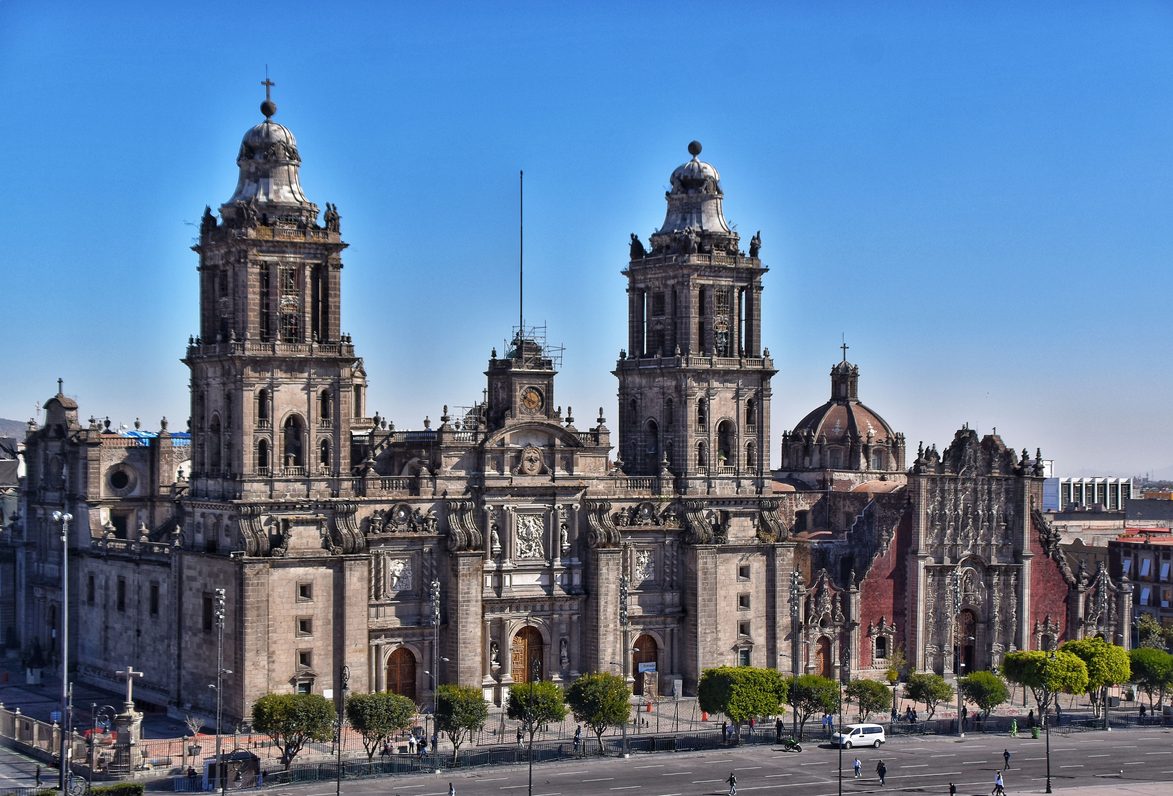
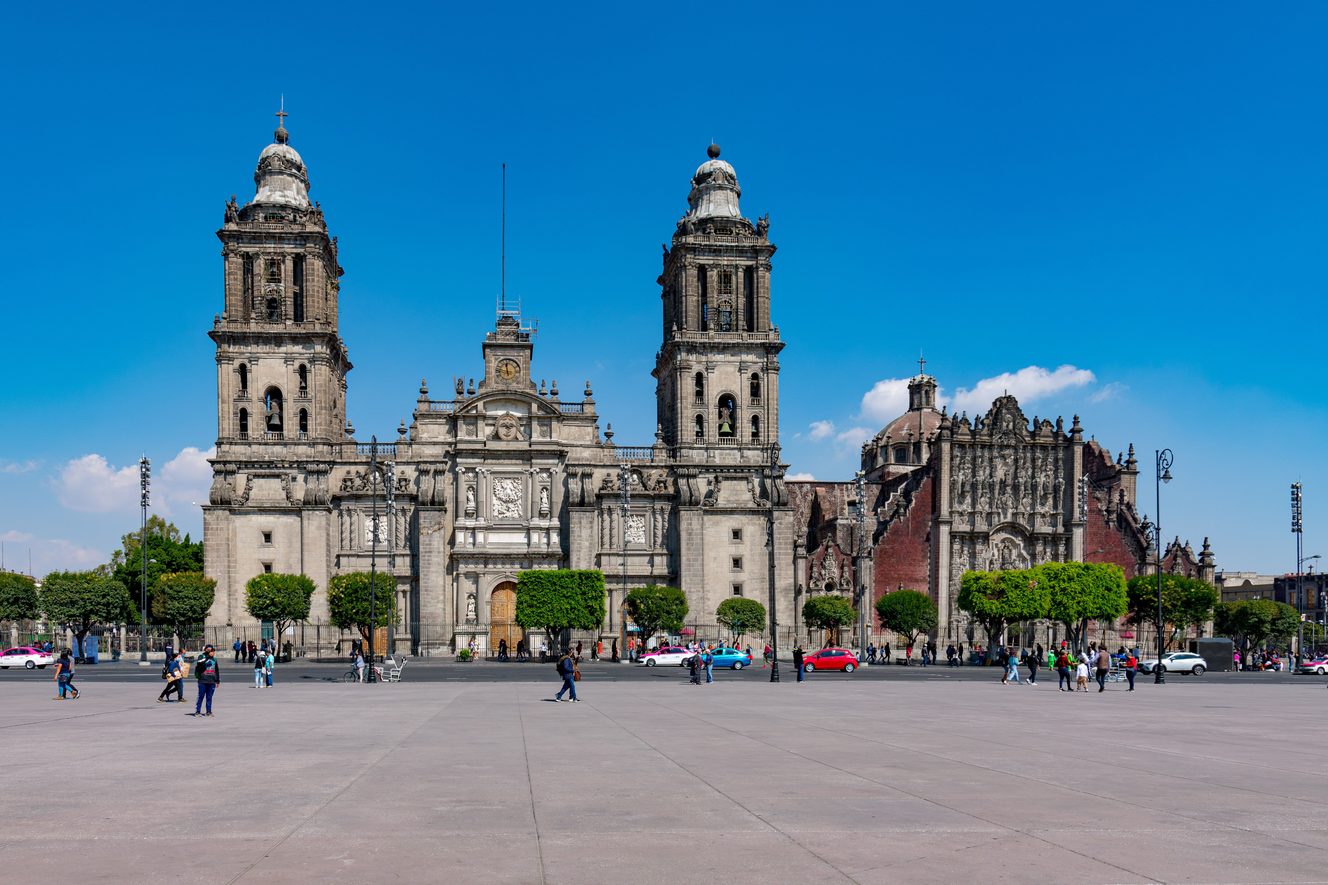
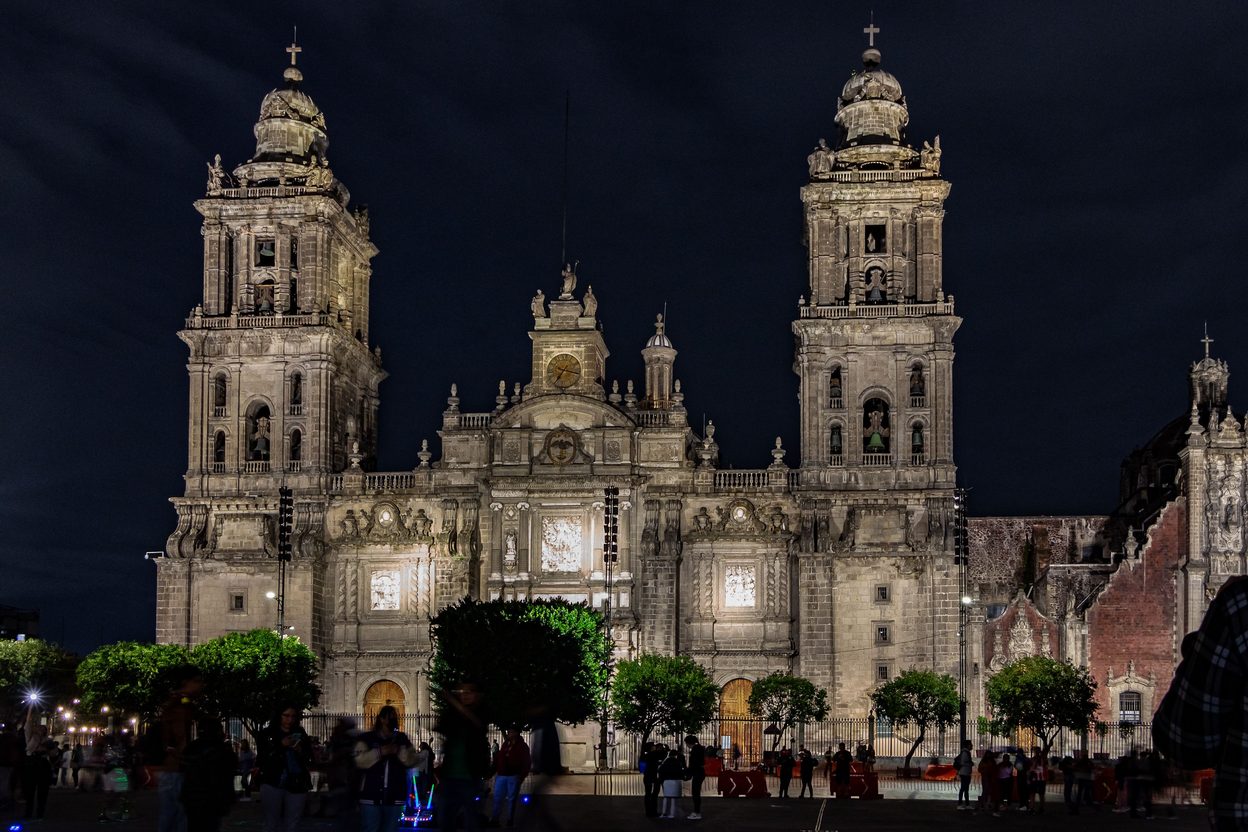
Often called the largest cathedral in Latin America, the Metropolitan Cathedral fills the north side of the Zócalo, on the ruins of the sacred precinct of the Aztec capital, Tenochtitlan. It took almost 250 years to build, from 1573 to 1813, and holds two of the finest gilded altarpieces in Mexico, a pair of 18th-century organs and a floor that slopes where the building has sunk into the old lakebed. It is free, and the Templo Mayor is next door.
Built on a lake
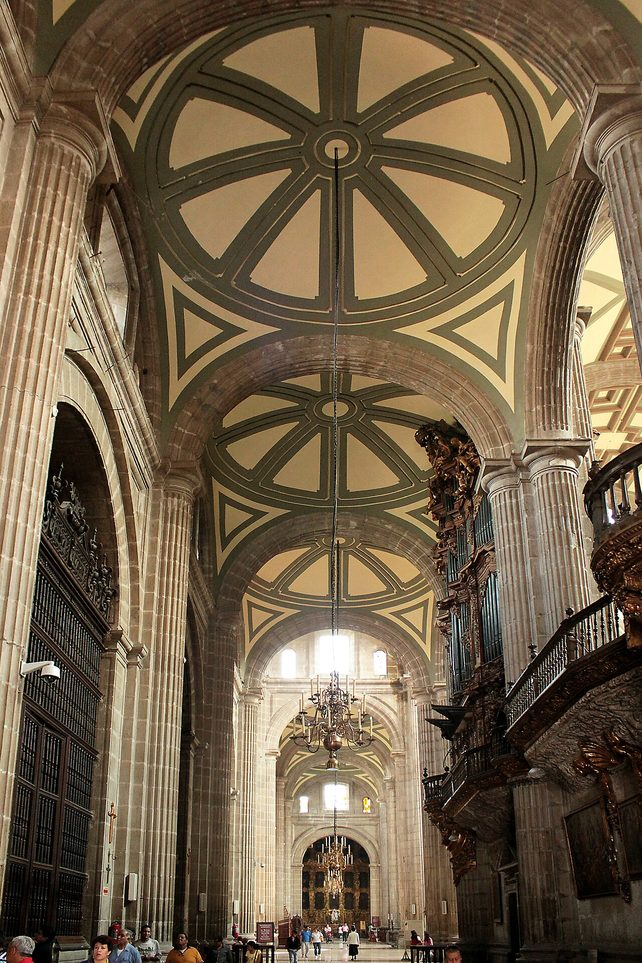
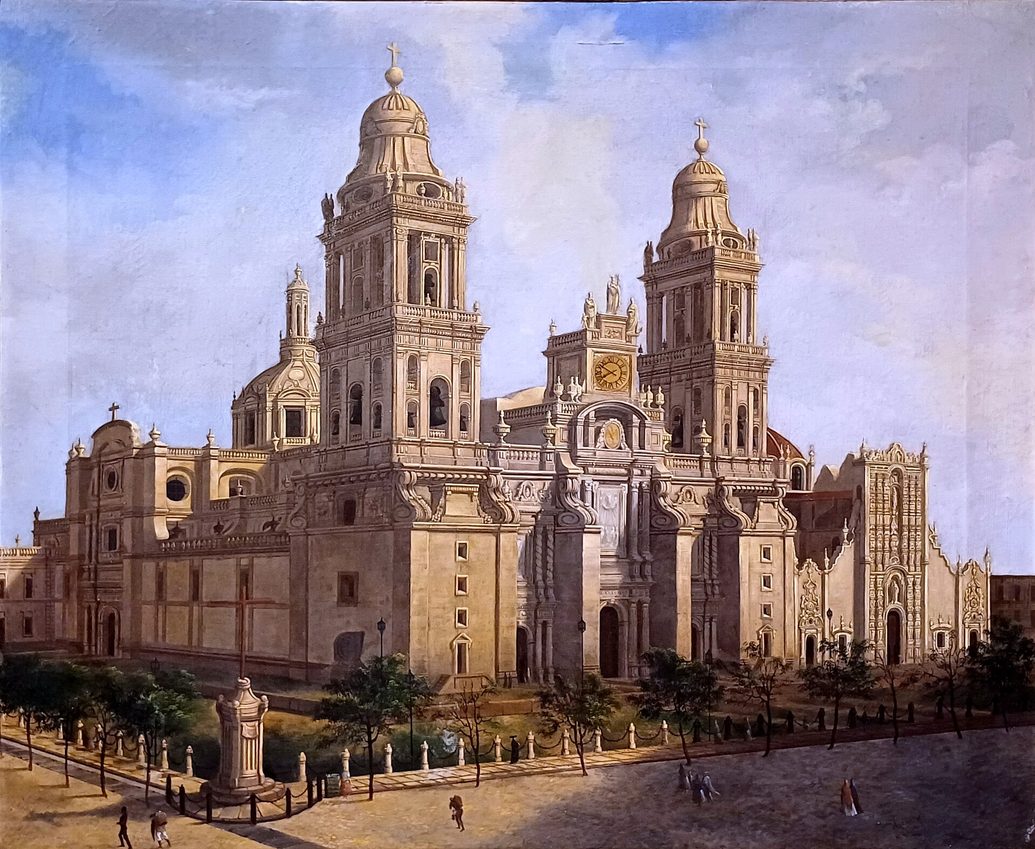
After the Spanish conquest, a first church was built here in the 1520s, partly from the stones of the Aztec temples. The present cathedral was begun in 1573 to plans by Claudio de Arciniega and went up slowly, a section at a time: the interior was finished in the 1660s, José Damián Ortiz de Castro built the bell towers and facade from 1787, and Manuel Tolsá completed the dome and the clock tower in 1813. The result mixes Renaissance, Baroque and Neoclassical styles.
The ground is the problem. Mexico City stands on the clay bed of a drained lake, and the cathedral sank unevenly until its towers leaned dangerously. In the 1990s engineers dug shafts beneath it and removed soil under the higher parts so that the whole building would settle evenly. It is still sinking, but far more evenly than before.
The visitor’s cheat sheet
| Before you travel | Read your government’s travel advice for Mexico; watch for pickpockets in the crowds on the Zócalo |
|---|---|
| Opening hours | Daily from early morning to early evening; sightseeing about 9am–5.30pm; Sagrario daily 8am–8pm |
| Admission | Free to the cathedral and the Sagrario |
| Tours | Tours of the crypts run on some days for a fee, booked by phone; bell-tower visits reported suspended in 2026 |
| Tour scams | Book only through the cathedral itself: the archdiocese has warned of fake “secret tours” sold online |
| Dress | Dress modestly (covering shoulders and knees is safest); no flash |
| Getting there | Metro Line 2 to Zócalo/Tenochtitlan, on the square |
| How long | About an hour; half a day with the Templo Mayor next door |
Hours and admission checked against the official site in November 2026. They change; the official site is always the last word.
What to see
The Altar of Forgiveness and the choir
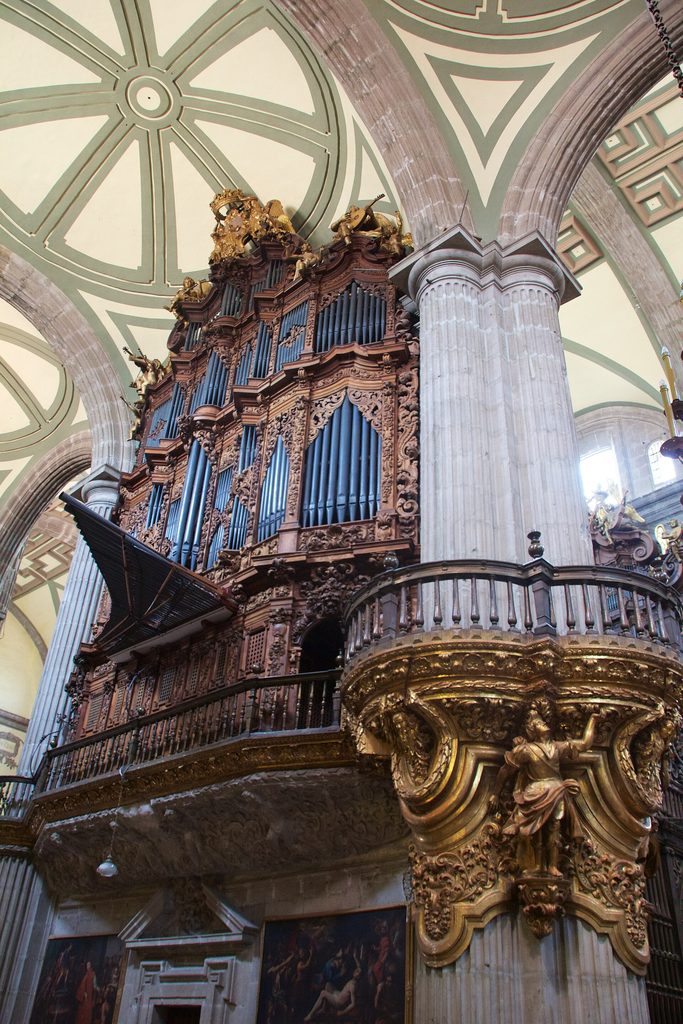
Facing you as you enter by the main door is the Altar del Perdón, the Altar of Forgiveness, a gilded altarpiece by Jerónimo de Balbás on the back of the choir. It was badly damaged in a fire in 1967 and restored. The choir behind it has carved stalls of 1696–97, largely rebuilt after the fire, and a railing cast in Macao, and above its side walls are two monumental organs completed in 1736, among the largest 18th-century organs in the Americas.
The Altar of the Kings
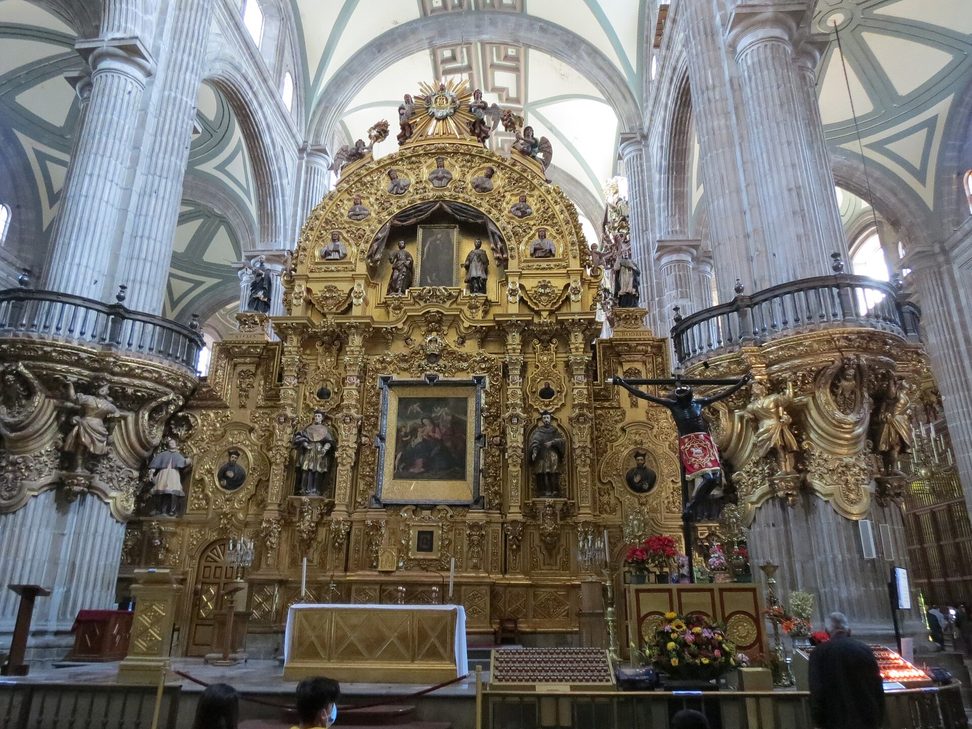
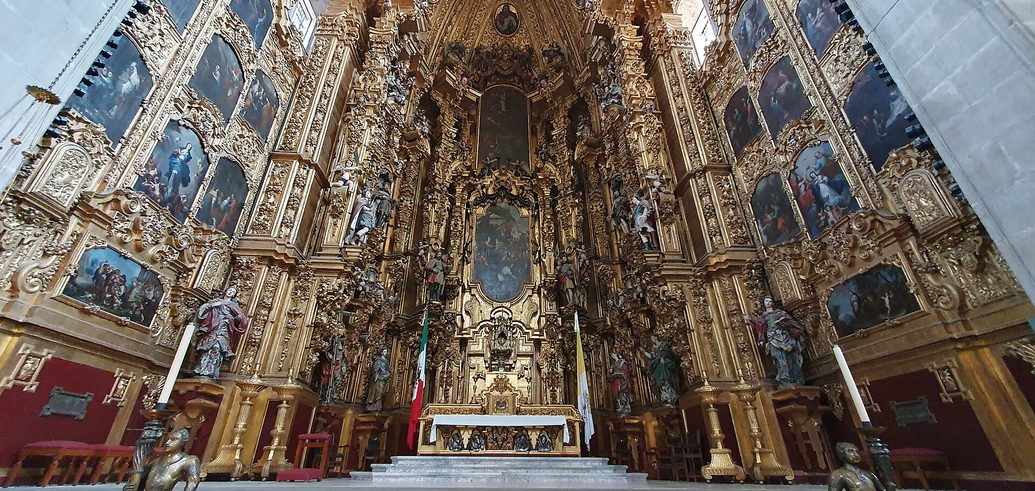
At the far north end, behind the high altar, is the Altar de los Reyes, Balbás’s masterpiece, carved in cedar from 1718 and gilded by 1737. It is about 25 metres high, crowded with saints, kings and paintings, and is often called “the golden cave”. Its tapering pilasters, the estípites, were among the first in the Americas and set the style for much of 18th-century Mexican Baroque.
The chapels and the sinking floor
Sixteen side chapels line the aisles, fourteen of them open to visitors, packed with altarpieces and paintings; one of them holds the remains of Agustín de Iturbide, Mexico’s first emperor. As you walk, look at the floor and the chandeliers: the floor slopes, and the chandeliers hang out of line with the columns, the plainest sign of how far the building has moved.
The Sagrario
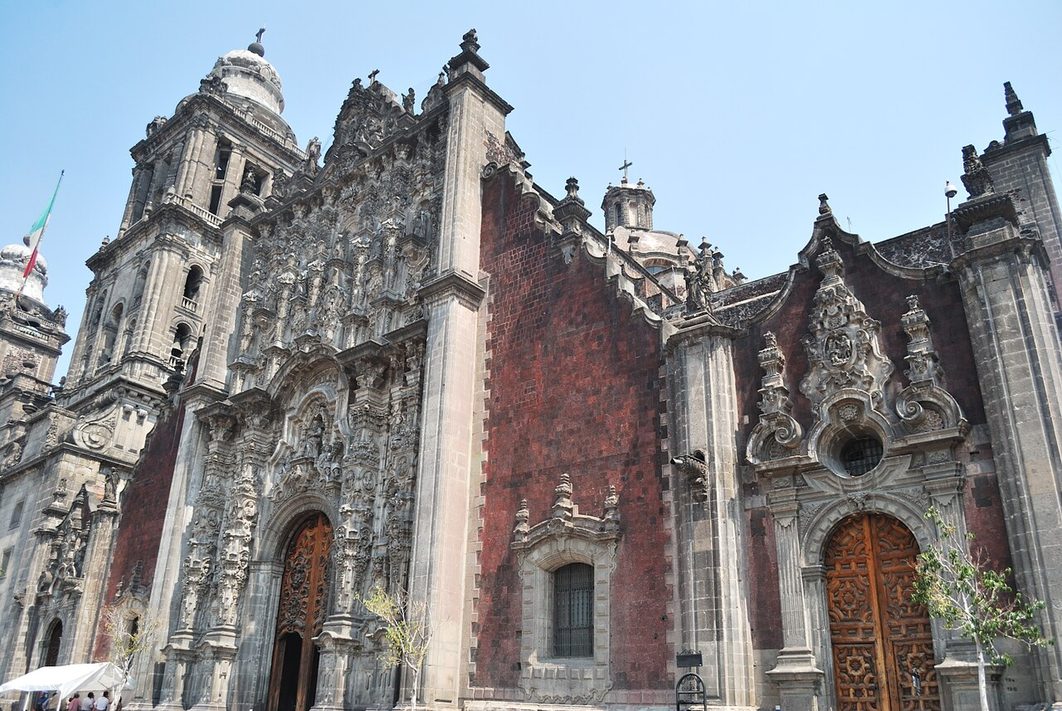
The church to the right of the cathedral, joined to it inside, is the Sagrario Metropolitano, the parish church, built in 1749–60 by Lorenzo Rodríguez. Its two carved white stone fronts, set in walls of red volcanic stone, are among the finest examples of the Churrigueresque style in Mexico. It is free and open daily from 8am to 8pm.
Getting there
The cathedral is on the north side of the Zócalo, the Plaza de la Constitución, in the historic centre. Metro Line 2 stops at Zócalo/Tenochtitlan, which comes out on the square in front of it. The station is sometimes closed during events and protests on the Zócalo; Allende, on Line 2, and Pino Suárez, on Lines 1 and 2, are a few minutes’ walk away. The ruins of the Templo Mayor, the great Aztec temple, are immediately north-east of the cathedral (closed on Mondays), and the National Palace, with Diego Rivera’s murals, is on the east side of the square.
Tours and where to stay
The cathedral needs no ticket. Walking tours of the historic centre usually begin on the Zócalo.
These links go to GetYourGuide and Booking.com. This site earns nothing from them at present — they are here because they are the quickest way to check what is actually available.
Don’t miss
- The Altar of the Kings At the north end, behind the high altar.
- The Altar of Forgiveness Just inside the main door.
- The two organs Above the choir.
- The sloping floor And the chandeliers out of line.
- The Sagrario’s carved front To the right of the cathedral.
Insider tips
Go before 10am on a weekday. The cathedral is quieter, and you can see it between morning Masses. Midday and Sundays are the busiest times.
Book tours only through the cathedral. The archdiocese has warned about fake tours sold on social media that promise “secret” areas and ask for a deposit. Ask at the information desk inside instead.
Common questions
Is Mexico City Cathedral free to visit?
Yes, both the cathedral and the Sagrario beside it are free. Guided tours of the crypts and other closed areas, when they run, cost extra.
What are the opening hours?
The cathedral opens every day from early morning to early evening, from about 7am or 8am into the evening, but sources give different times, and the best hours for sightseeing are about 9am to 5.30pm. The Sagrario is open daily from 8am to 8pm. Avoid walking round during Mass.
Can you climb the bell towers?
Tower visits have run in the past for a small fee, but they were reported suspended in early 2026. Ask at the information desk inside the entrance.
Why does the cathedral lean?
Mexico City is built on the bed of a drained lake, and the heavy cathedral has sunk unevenly into the soft clay. Engineering work in the 1990s made the sinking much more even, but you can still see sloping floors and chandeliers that hang out of line with the columns.
How do I get there?
Take Metro Line 2 to Zócalo/Tenochtitlan, which comes out on the square in front of the cathedral. When the station is closed for events on the Zócalo, use Allende or Pino Suárez.
More churches in Mexico City
- Basilica of Our Lady of Guadalupe — the great shrine at the foot of Tepeyac.