
The Hanging Church, Cairo
In Coptic Cairo, the old Christian quarter on the edge of the Nile, a flight of steps climbs to a church perched on the gatehouse of a Roman fortress. The Hanging Church, dedicated to the Virgin Mary, is the best-known Coptic church in Cairo and was for centuries the seat of the Coptic Pope. Inside are screens of ebony and ivory, a marble pulpit on slender columns and a ceiling like the hull of an ark. It is free, open every day, and opposite a metro station.
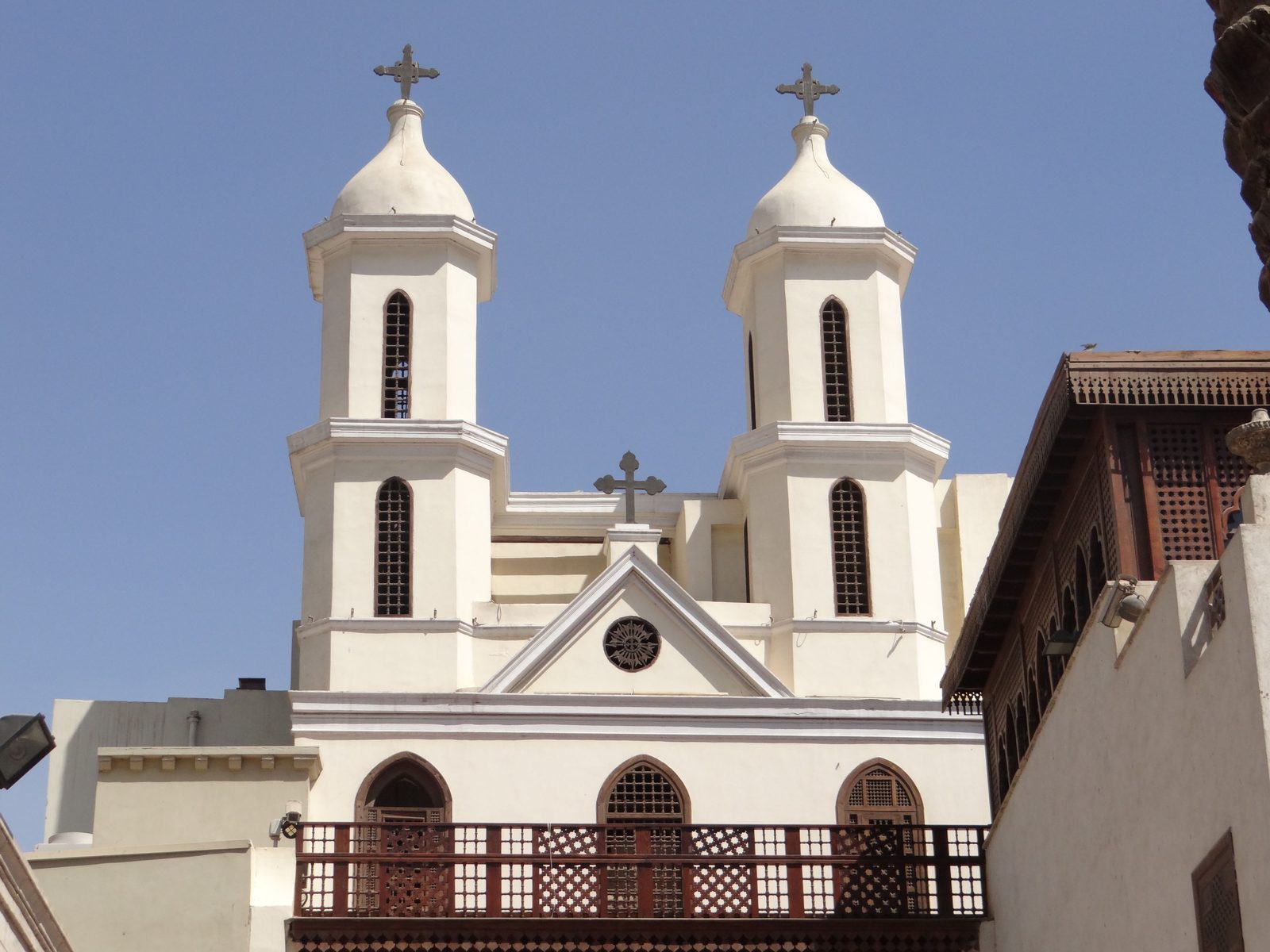
A church on a fortress
The Romans built Babylon Fortress to guard the river crossing at what is now Old Cairo, and the church stands on top of its southern gatehouse, whose Roman masonry survives beneath it. A church has stood here since at least the ninth century, when it is first mentioned, and Coptic tradition places its origins earlier still. From the eleventh century it was the seat of the Coptic Patriarch, and popes were chosen here.
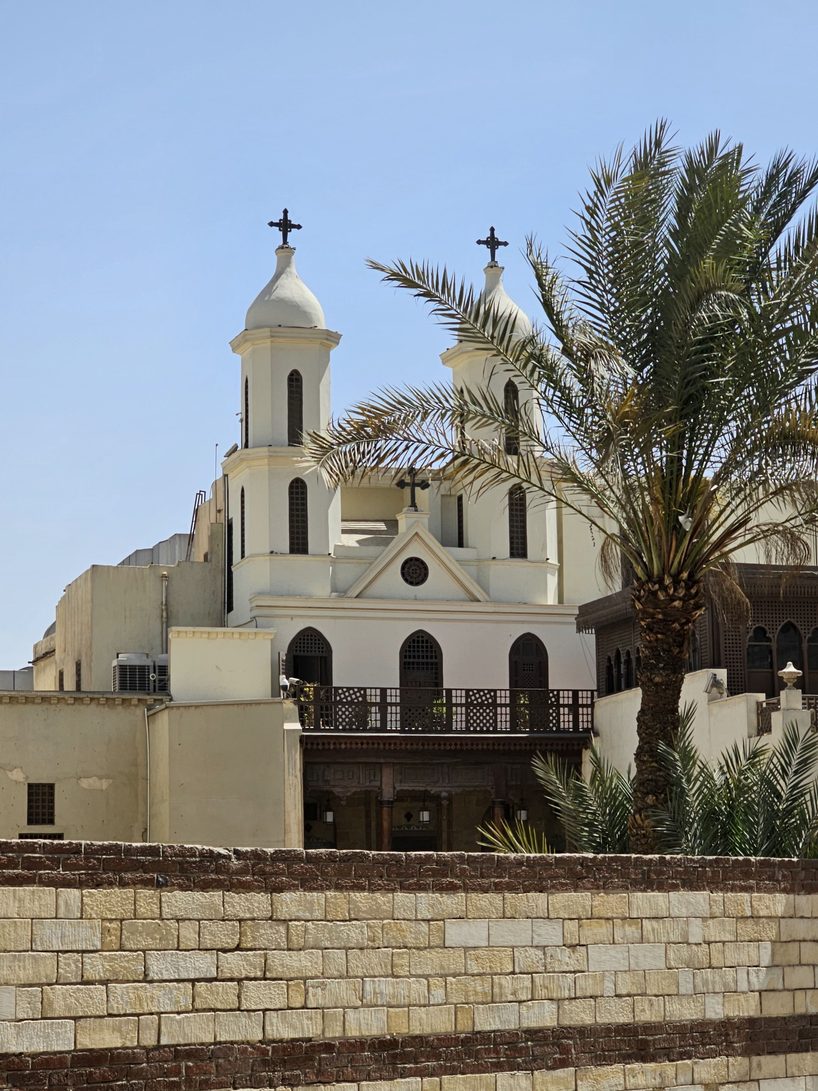
The facade, with its twin bell towers, is nineteenth-century, but the church behind it keeps medieval screens, its pulpit and more than a hundred icons, most of them from the eighteenth century. A long restoration ended with the church’s official reopening in 2014.
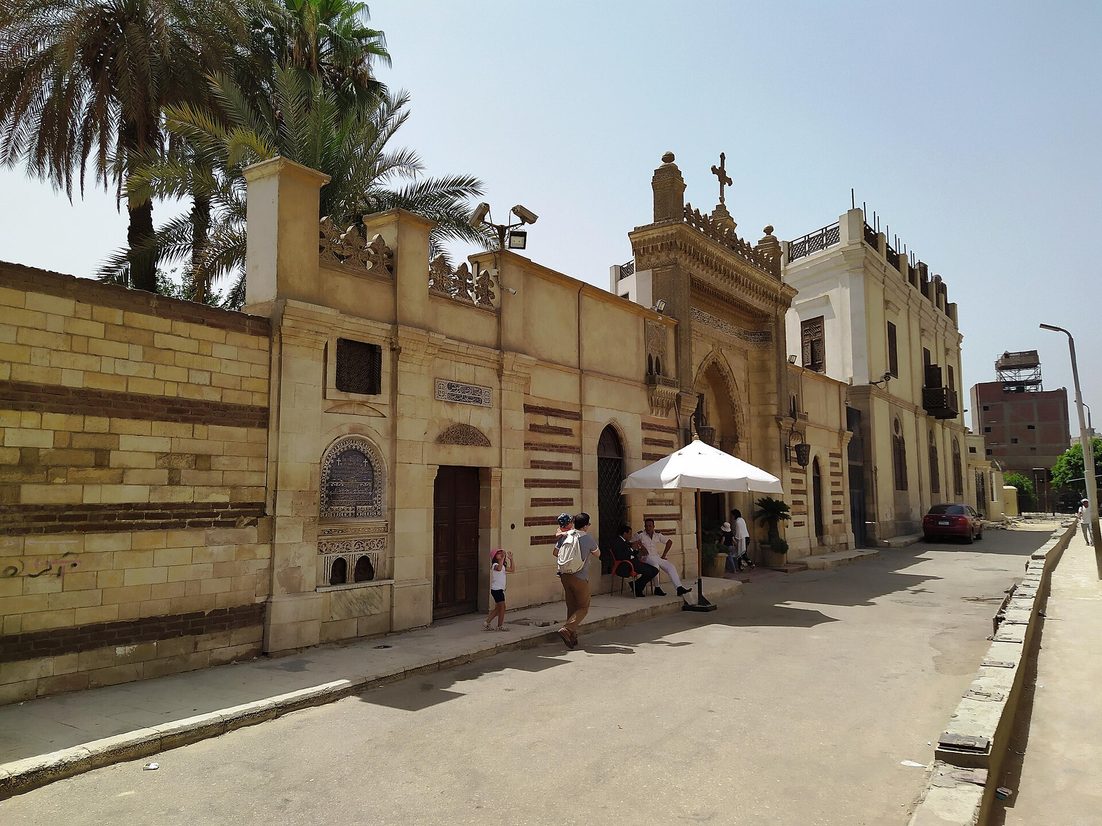
The visitor’s cheat sheet
| Before you travel | Read your government’s travel advice: the UK lists religious sites among likely terrorist targets in Egypt, and the US (Level 2, exercise increased caution) lists churches among potential targets |
|---|---|
| Opening hours | Daily 9am–4pm (antiquities ministry); services reportedly Sunday, Wednesday and Friday mornings |
| Admission | Free |
| Dress | Knees and shoulders covered |
| Access | Up 29 steps from the courtyard |
| Getting there | Cairo Metro Line 1 to Mar Girgis, opposite the entrance |
| Nearby | Coptic Museum (separate ticket), the churches of St Sergius and St George, Ben Ezra Synagogue |
| How long | 30–45 minutes; half a day for Coptic Cairo |
Hours and admission checked against the official site in November 2026. They change; the official site is always the last word.
What to see
The steps and the porch
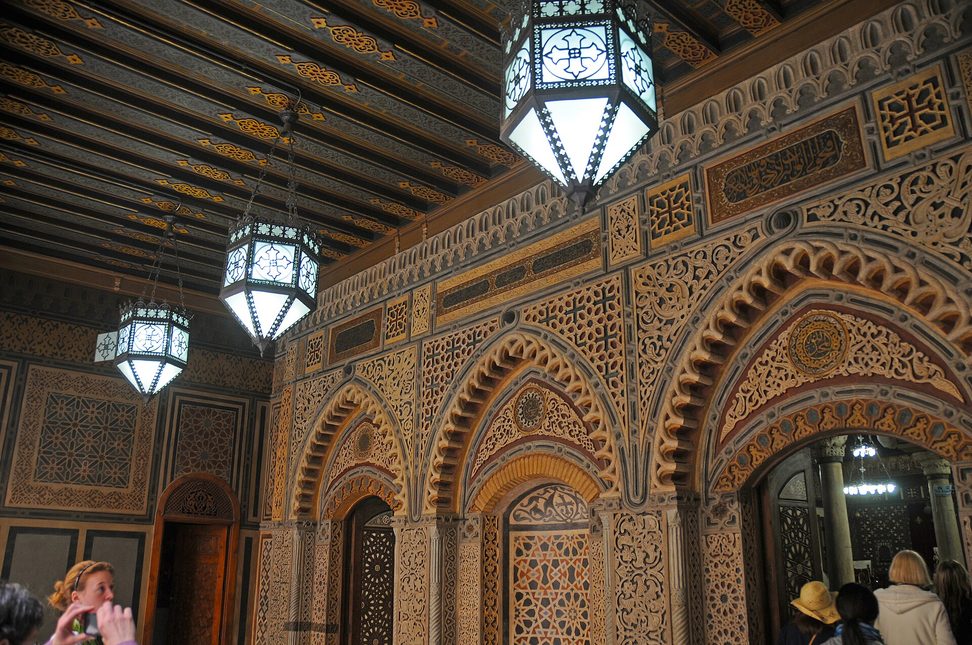
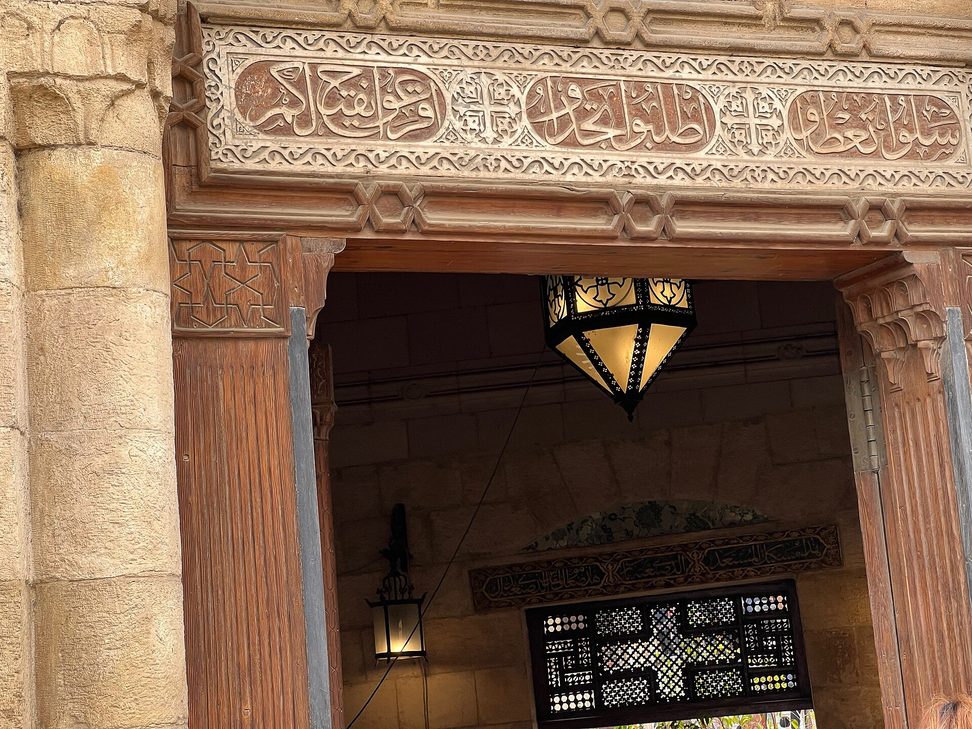
From the gate on Mar Girgis Street a narrow courtyard leads to the 29 steps up to the church. At the top, the outer porch has carved woodwork and lanterns, and doors with geometric patterns lead into the church.
The nave
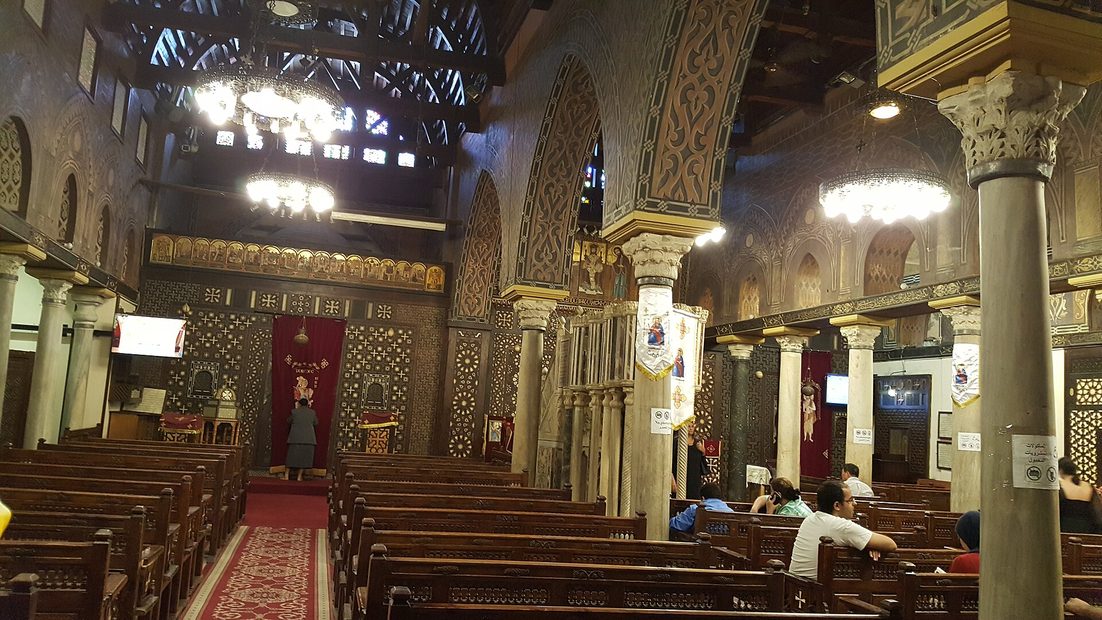
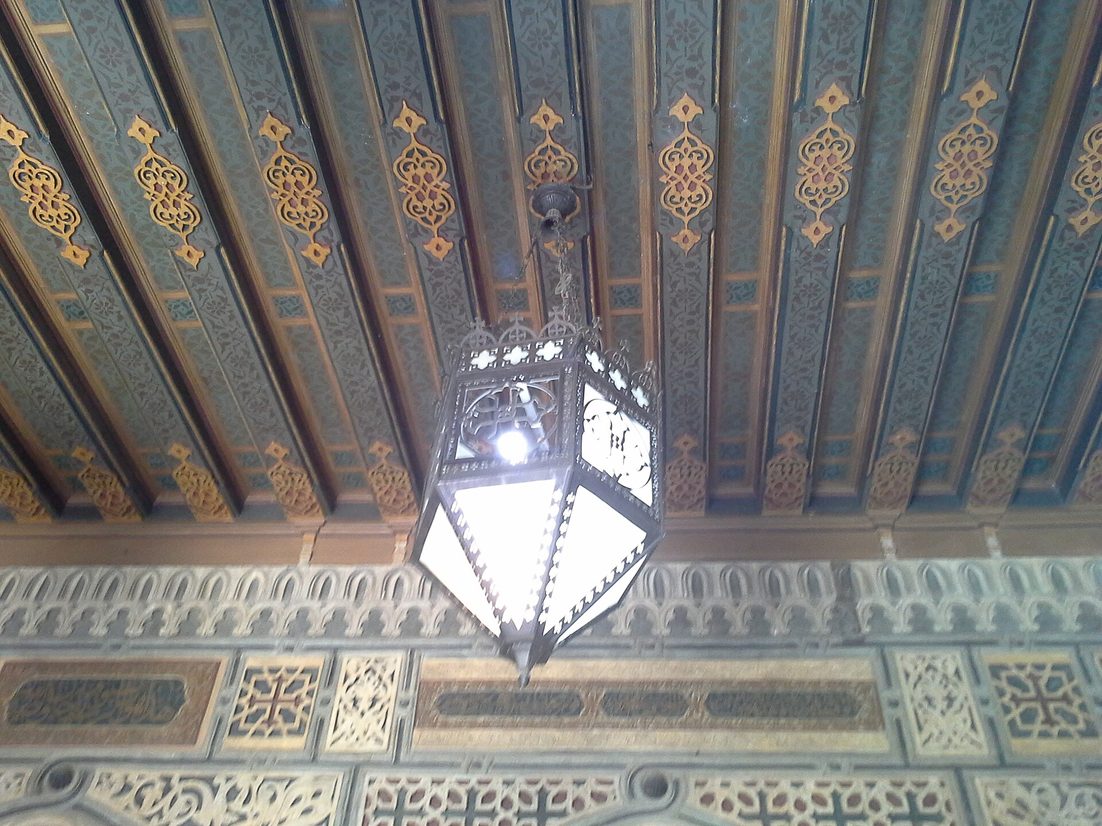
Marble columns divide the church into a nave and aisles under a wooden roof, said to recall Noah’s Ark. The marble pulpit, raised on slender columns, is about a thousand years old; tradition says there are thirteen columns for Christ and the apostles, one of them darker for Judas.
The screens and icons
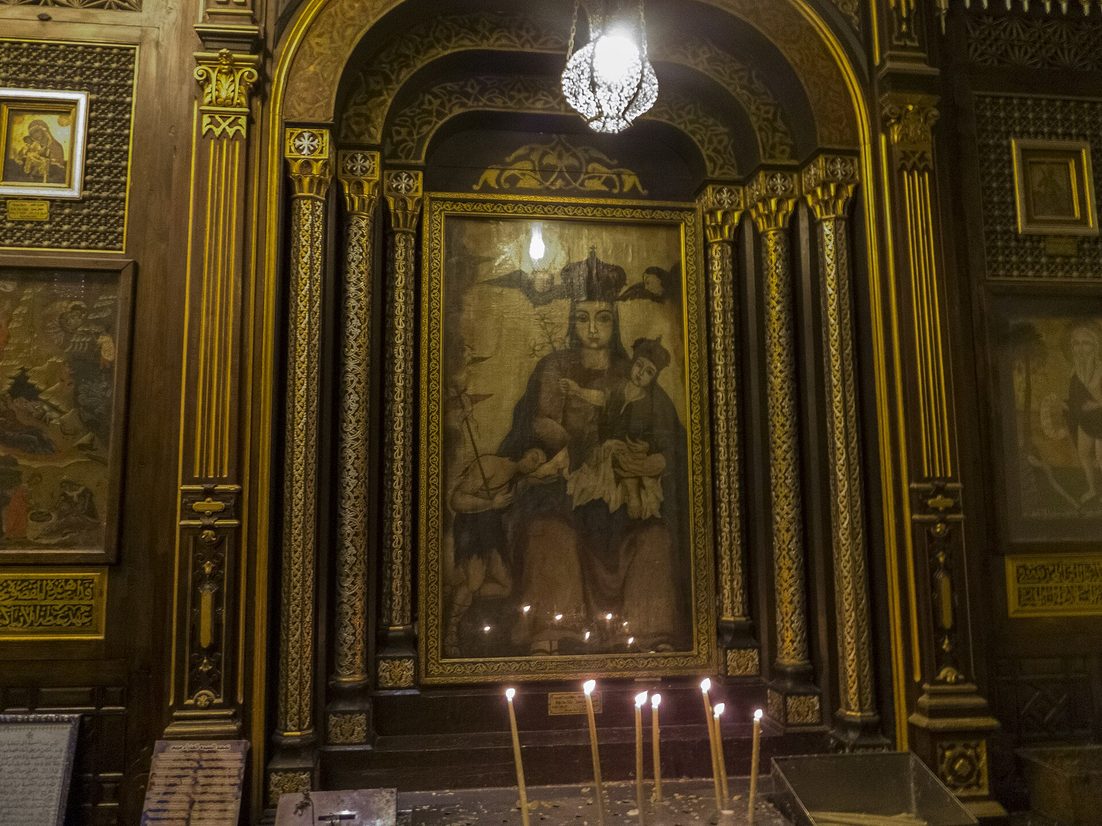
Across the east end, screens of ebony inlaid with ivory in fine geometric patterns close off the three sanctuaries; the central one, dedicated to the Virgin, carries a row of large icons. The side screens carry icon cycles of St George and St John the Baptist dated 1777, attributed to the Armenian-born painter Yuhanna al-Armani, and more icons of the saints hang around the walls. Look for the icon of the Virgin known as the “Coptic Mona Lisa”, whose eyes are said to follow you.
The fortress below
Near the baptistery on the south side, a glass panel in the floor looks down into the Roman fortress beneath the church, the clearest sign of why it “hangs”.
Coptic Cairo
The Hanging Church is the gateway to a walled quarter of old churches, all close together: St Sergius (Abu Serga), built over a cave where the Holy Family is said to have sheltered; the round Church of St George; and the Ben Ezra Synagogue. The Coptic Museum, next to the Hanging Church, has one of the great collections of early Christian art; in 2026 its ticket cost 280 Egyptian pounds for foreign adults.
Getting there
Coptic Cairo is in Old Cairo, south of the city centre. Cairo Metro Line 1 runs to Mar Girgis station, directly opposite the entrance on Mar Girgis Street. Expect security checks at the entrance to the quarter. Taxis and ride-hailing apps are easy to use from anywhere in the city.
Tours and where to stay
The church needs no ticket. Many day tours of Cairo include Coptic Cairo, often with the Citadel and the Egyptian Museum.
These links go to GetYourGuide and Booking.com. This site earns nothing from them at present — they are here because they are the quickest way to check what is actually available.
Don’t miss
- The ebony and ivory screens Across the east end.
- The marble pulpit On its slender columns.
- The glass floor Onto the Roman fortress.
- The “Coptic Mona Lisa” The icon of the Virgin.
- St Sergius The Holy Family’s cave, a few minutes away.
Insider tips
Come in the morning. Coptic Cairo can be busy with tour groups from late morning, and the church closes at 4pm. Start here, then walk on to the other churches and the Coptic Museum.
Common questions
Is the Hanging Church free to visit?
Yes, there is no charge. The Coptic Museum next door has its own ticket.
What are the opening hours?
Daily from 9am to 4pm, according to Egypt’s antiquities ministry. Services are reported on Sunday, Wednesday and Friday mornings, when sightseeing may be restricted.
Why is it called the Hanging Church?
Because it was built on top of the gatehouse of Babylon Fortress, the Roman stronghold on the Nile, so that its nave seems to hang above the passage below. Its Arabic name, al-Muallaqa, means “the suspended”.
What should I wear?
Cover your knees and shoulders. Women may wish to carry a scarf, though it is not required.
How do I get there?
Take Cairo Metro Line 1 to Mar Girgis station, which is directly opposite the entrance to Coptic Cairo.
More churches nearby
- St Catherine’s Monastery — the Burning Bush, at the foot of Mount Sinai.
- Church of the Holy Sepulchre — Calvary and the Tomb, Jerusalem.