
Birmingham Cathedral (St Philip’s)
Birmingham Cathedral is the third smallest cathedral in Britain and one of the finest baroque churches in the country. Thomas Archer built it as a parish church for the growing town in the early eighteenth century, with a tower that would not look out of place in Rome. Its treasure is a set of four windows by Edward Burne-Jones, the Birmingham-born Pre-Raphaelite, made by William Morris’s firm.
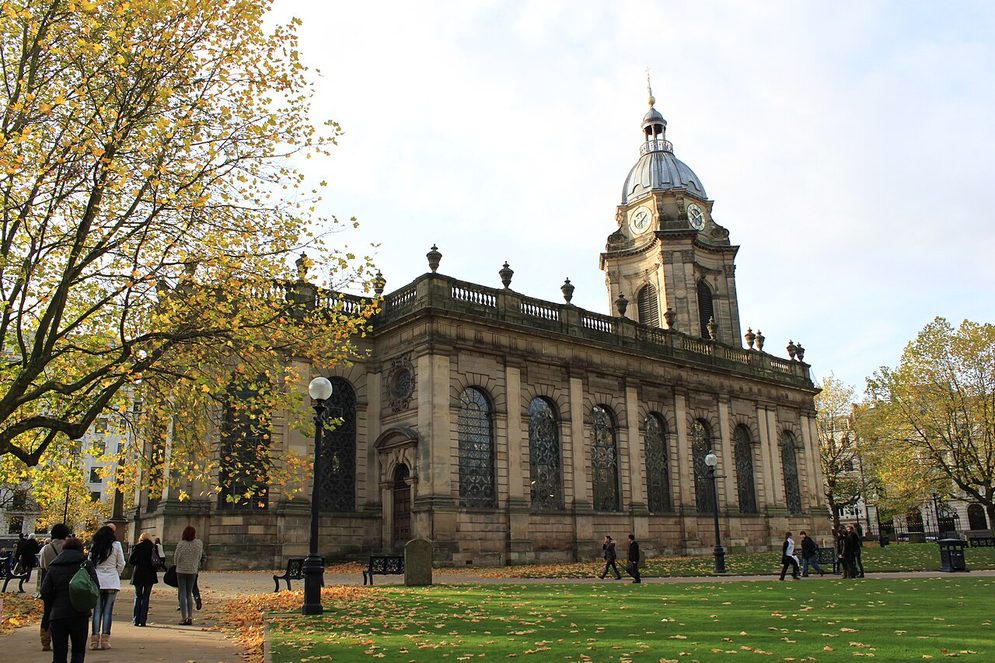
Archer's baroque church
In 1710 the Phillips family gave land on the edge of the town for a new church, which was named St Philip’s in compliment to them. Thomas Archer, who had studied the baroque churches of Rome, designed it, and it was consecrated in 1715; the tower was finished in 1725. In 1883–84 J. A. Chatwin extended the shallow apse into a chancel, which made room for the great windows.
When the Diocese of Birmingham was created in 1905 St Philip’s became its cathedral, with Charles Gore as the first bishop. The windows were taken out for safekeeping in 1939 and stored in a Welsh slate mine; in 1940 the cathedral was gutted by a fire bomb. It was restored in 1947–48 and the windows were put back unharmed. They were cleaned and conserved in 2023.
The visitor's cheat sheet
| Where | Cathedral Square, Colmore Row, Birmingham, B3 2QB |
|---|---|
| Getting there | About three minutes’ walk from Snow Hill station, five to seven from New Street; Bull Street tram stop; no parking |
| Opening hours | Monday–Friday 7.20am–5pm; Saturday 8.20am–5pm; Sunday 8.20am–5.15pm; may vary for events |
| Admission | Free; donations welcome, £5 suggested |
| How long | About 45 minutes |
| Best time | A sunny morning, when the light comes through the east windows |
| Dress code | None; it is a working cathedral |
| Tours | Group tours £6.50, concessions £5, under-16s £2.50, booked two weeks ahead; free self-guided tour on the Bloomberg Connects app |
Hours and admission checked against the official site in October 2026. They change; the official site is always the last word.
Pigeon Park. The old churchyard around the cathedral, now Cathedral Square, is known to Brummies as Pigeon Park. Look for the obelisk to Colonel Fred Burnaby, the soldier and balloonist, unveiled in 1885.
What to see, in the order you meet it
The west end and the Last Judgement
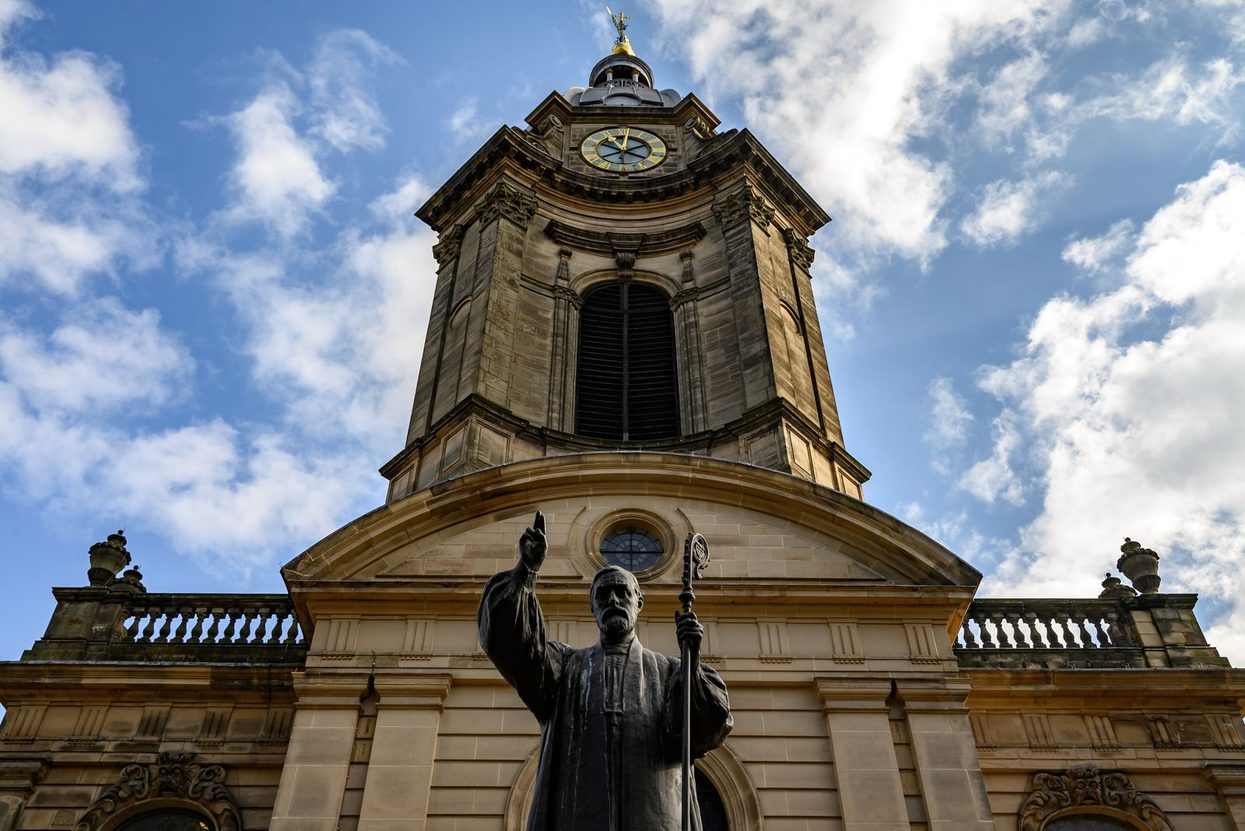
You enter beneath the tower, past the statue of Bishop Gore of 1914 by Thomas Stirling Lee. Turn round once inside to see the Last Judgement of 1897, the last of the Burne-Jones windows, made as a memorial to Bishop Bowlby.
The nave
Archer’s nave is a bright, galleried space with tall arcades. The organ was first built by Thomas Swarbrick of Warwick and keeps an early Georgian case.

The chancel windows
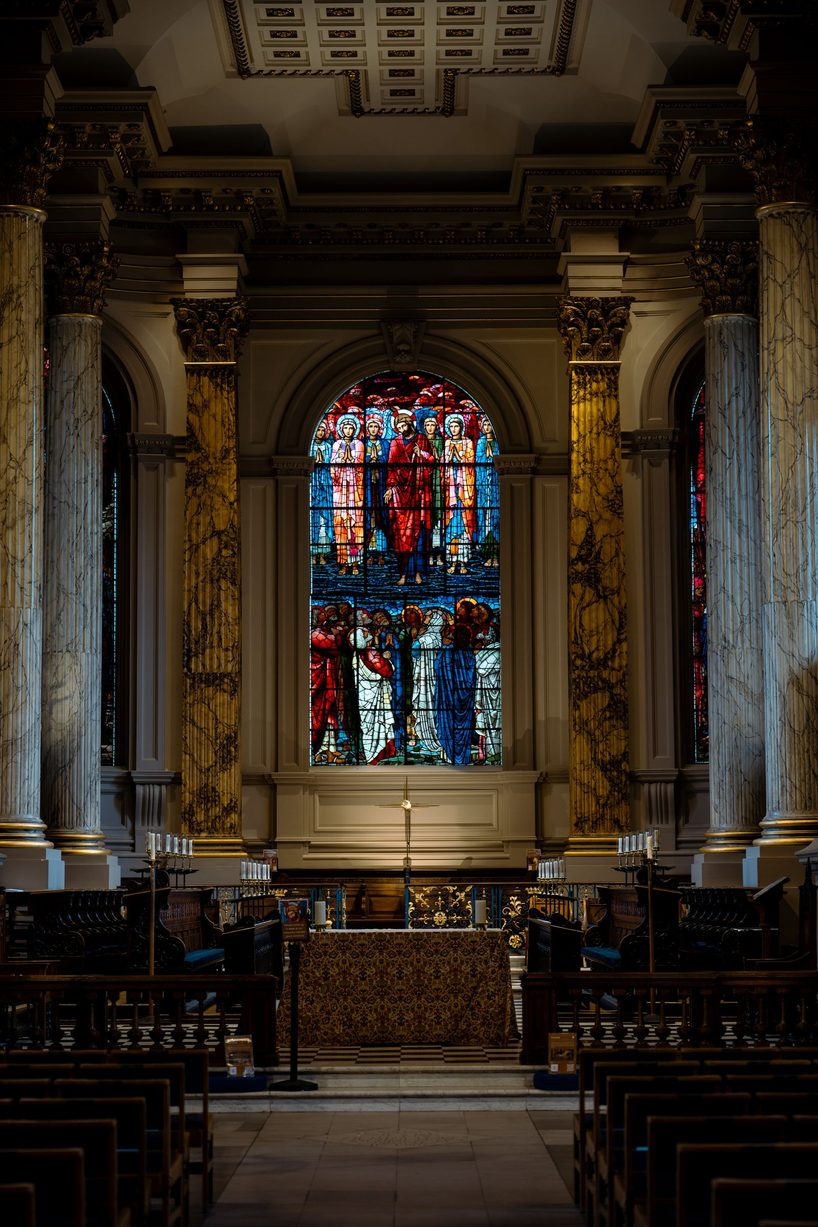
At the east end, between gilded columns, are the three chancel windows: the Ascension of 1885 in the centre, with the Nativity and the Crucifixion of 1887 to either side. Their deep reds and blues are at their best on a bright morning. The wrought-iron rails are in the style of Tijou or Bakewell.

Visiting
Visiting and tours
Entry is free, with £5 suggested. Group tours can be booked through the cathedral website, and a free self-guided tour is on the Bloomberg Connects app.
The hotel link goes to Booking.com. This site earns nothing from it at present — it is here because it is the quickest way to check what is actually available.
Don't miss
- The Ascension window Burne-Jones at his best.
- The Last Judgement Turn round at the west end.
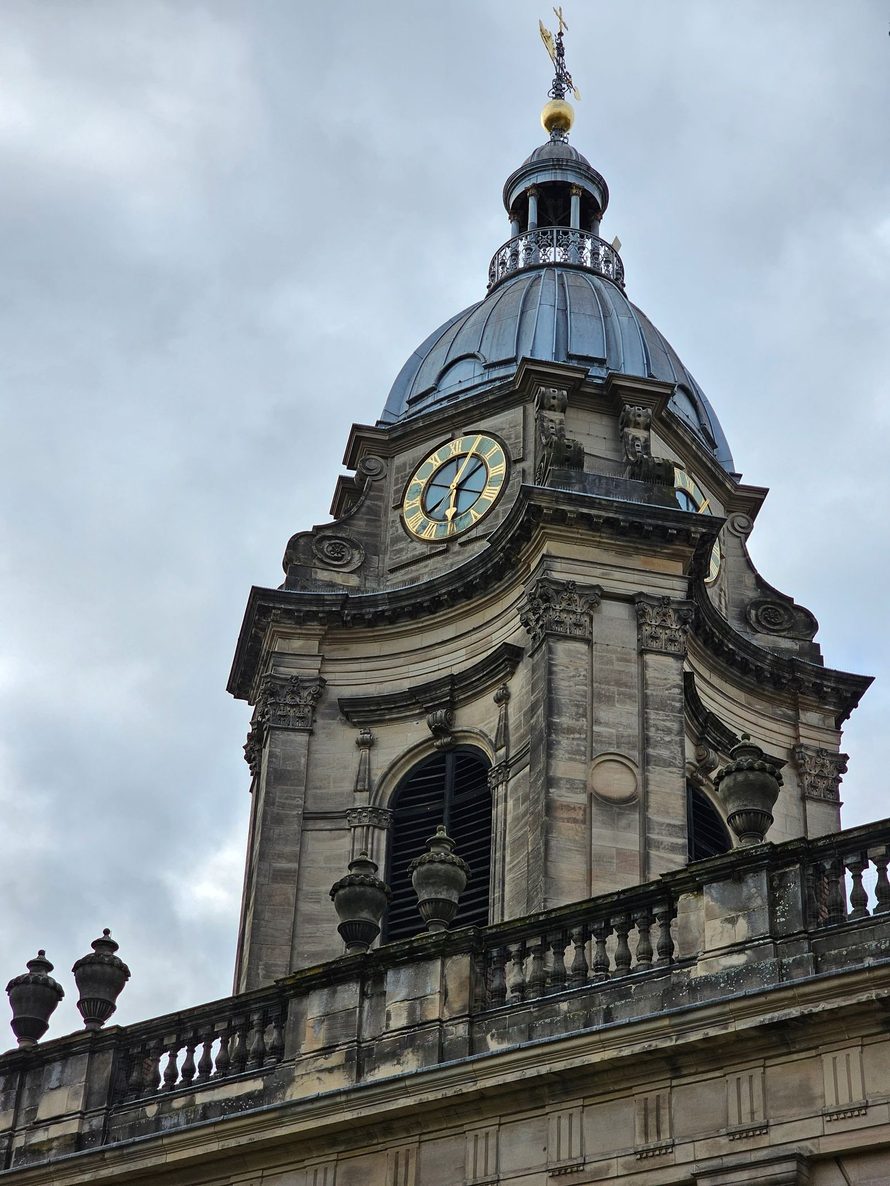
- The baroque tower Archer’s Roman tower in Birmingham.
- Bishop Gore The first bishop, at the west door.
- The Burnaby obelisk In Pigeon Park.
- Choral Evensong Several times a week in term.
Insider tips
Make it a Burne-Jones day. Birmingham Museum and Art Gallery, about seven minutes’ walk away, has one of the great collections of Pre-Raphaelite art, including many works by Burne-Jones. Pugin’s St Chad’s Cathedral is ten minutes to the north.
Common questions
Is Birmingham Cathedral free to visit?
Entry is free, with a suggested donation of £5 per person. Group tours cost £6.50 per person, £5 for concessions and £2.50 for under-16s, booked at least two weeks ahead; for a self-guided tour, use the free Bloomberg Connects app.
When is Birmingham Cathedral open?
It is open every day: 7.20am to 5pm on weekdays, 8.20am to 5pm on Saturdays and 8.20am to 5.15pm on Sundays. Hours occasionally vary and events can restrict access, so check the cathedral’s website before a special trip.
Where are the Burne-Jones windows?
Three are in the chancel, at the east end: the Nativity, the Ascension and the Crucifixion. The fourth, the Last Judgement, fills the west window under the tower. All four were designed by Edward Burne-Jones, who was born in Birmingham, and made by Morris & Co. between 1885 and 1897.
Does Birmingham Cathedral have a café or toilets?
No. There is no café and there are no public toilets, though postcards and guidebooks are sold at the welcome desk. The cafés and shops of the city centre are a few minutes away.
How do you get to Birmingham Cathedral?
It is about three minutes’ walk from Birmingham Snow Hill station and five to seven minutes from New Street. The nearest tram stop is Bull Street. There is no parking at the cathedral; the nearest car park is at Snow Hill station.
Where to stay and eat nearby
The cathedral has no café, but Colmore Row and the streets around Snow Hill and New Street are full of places to eat and stay.
More English churches
- Coventry Cathedral — about 20 minutes by train
- Lichfield Cathedral — three spires, about 40 minutes by train
- St Mary’s, Warwick — the Beauchamp Chapel