
Arundel Cathedral
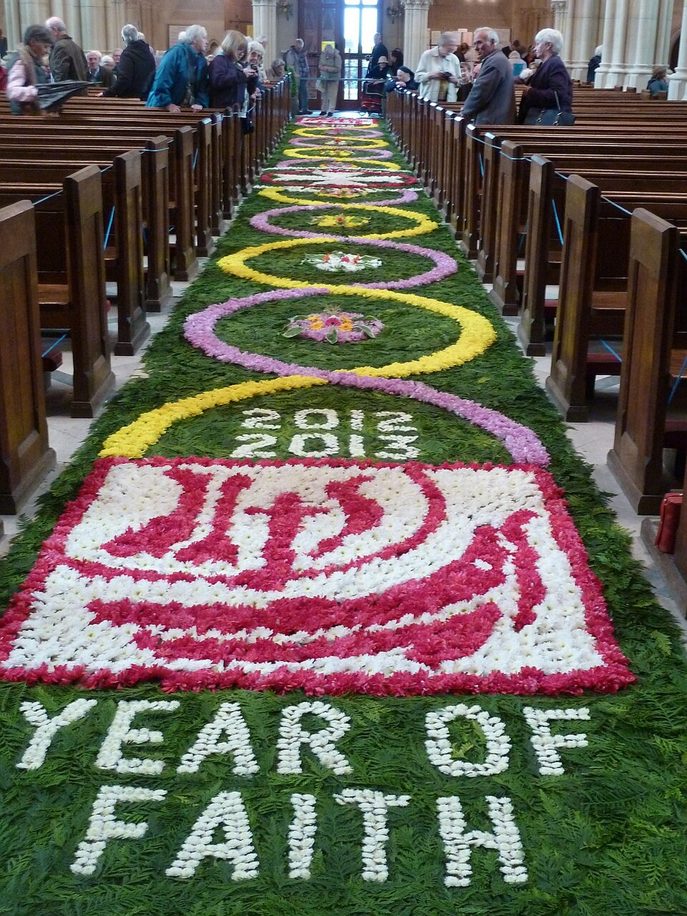
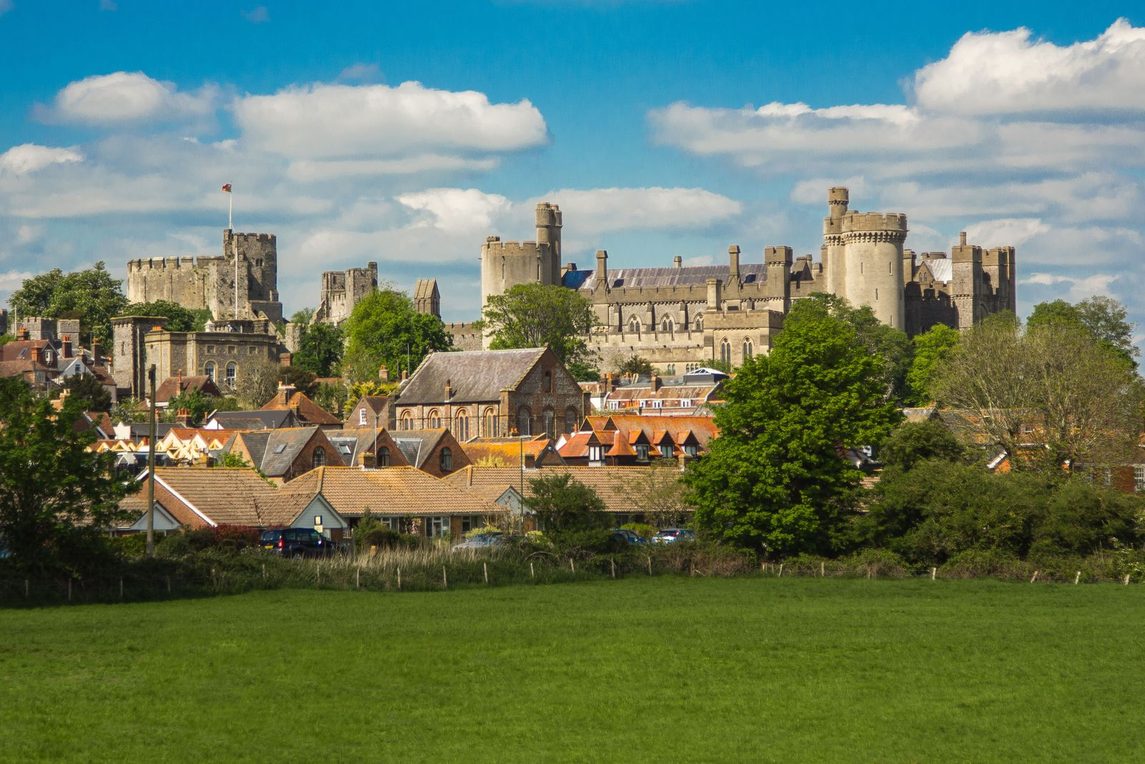
On the hill above Arundel, looking across to the castle of the Dukes of Norfolk, stands a Victorian Catholic church built as if it were a French cathedral. The 15th Duke paid for it in the 1870s; a century later it became a cathedral, and the shrine of an Elizabethan martyr, St Philip Howard, was set up inside. Each June the nave is covered with a carpet of flowers for Corpus Christi.
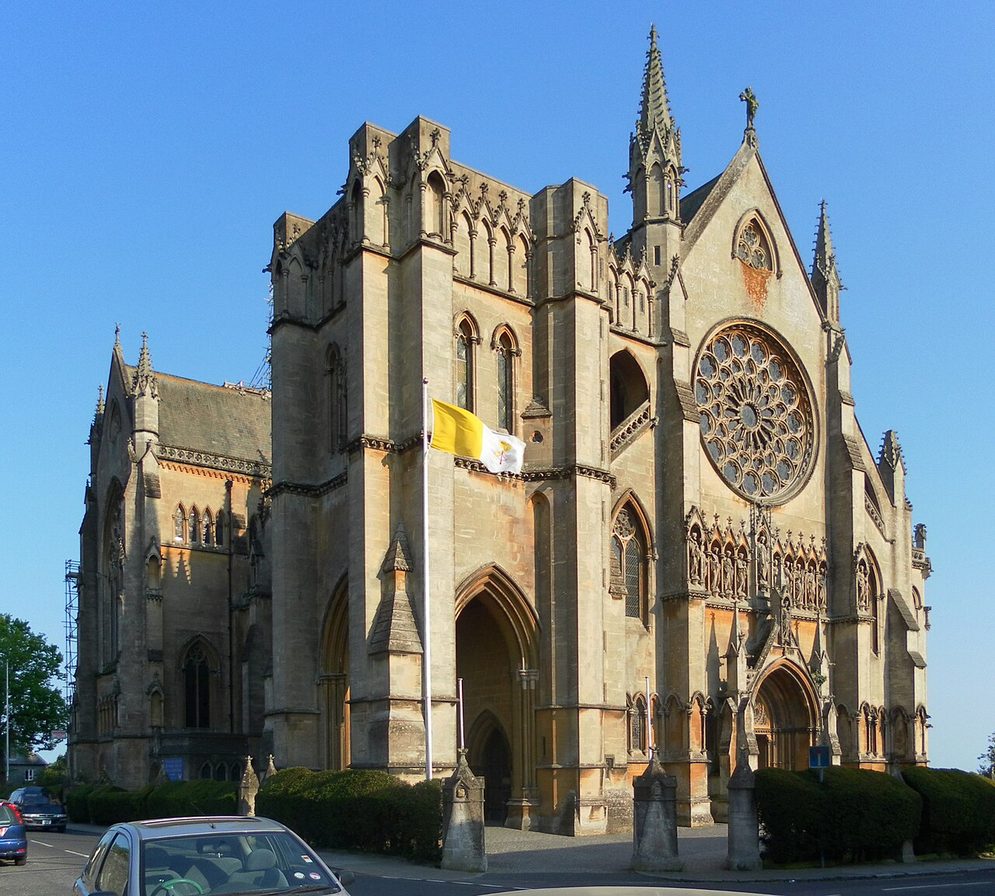
A duke's church on the hill
Henry Fitzalan-Howard, 15th Duke of Norfolk and England’s leading Catholic layman, commissioned the church in 1868, when he came of age. His architect, Joseph Hansom — the inventor of the hansom cab — designed it in the French Gothic style of the fourteenth century. It opened in 1873 as the church of St Philip Neri. A spire about 280 feet tall was planned but never built; its base is the north-west porch.
When the Diocese of Arundel and Brighton was created in 1965 the church became its cathedral. Philip Howard, the Duke’s ancestor who died a prisoner in the Tower in 1595, was canonised in 1970, and in 1971 his relics were brought here from the Fitzalan Chapel. The cathedral was renamed for Our Lady and St Philip Howard in 1973.
The visitor's cheat sheet
| Where | London Road, Arundel, West Sussex, BN18 9AY |
|---|---|
| Getting there | About 15–20 minutes’ walk, mostly uphill, from Arundel station; car parks in the town, including Mill Road |
| Opening hours | Generally daily 9am–4.30pm; no visiting during Mass |
| Admission | Free; donations welcome |
| How long | Half an hour to an hour |
| Best time | Corpus Christi week (late May or June), for the carpet of flowers |
| Dress code | None; it is a working cathedral |
| Tours | No regular tours; groups can contact the parish office |
Hours and admission checked against the official site in October 2026. They change; the official site is always the last word.
The carpet of flowers. For more than 140 years the people of Arundel have laid a carpet of flowers down the nave for the feast of Corpus Christi. It is laid on the Tuesday, can be seen on the Wednesday and Thursday, and is walked over by the procession to the castle after Mass on the feast day.
What to see, in the order you meet it
The west front and rose window
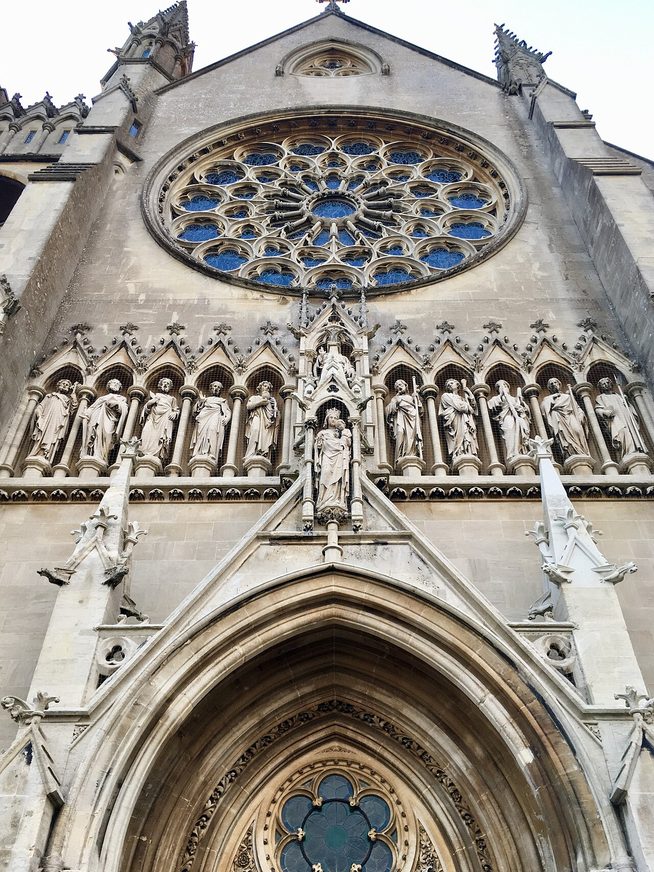
The west front faces the street, with a great rose window showing the Virgin and Child surrounded by the fifteen Mysteries of the Rosary. Below it, at the back of the church, is the organ, built by William Hill in the 1860s for a church in Islington and moved here soon after the cathedral opened.
The nave
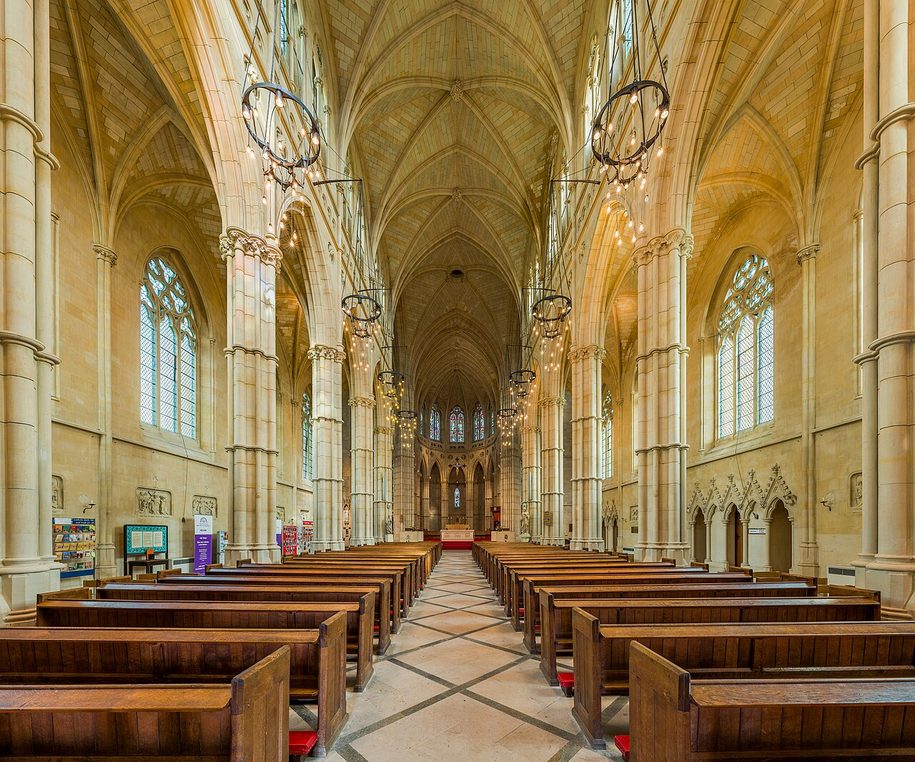
The nave is tall and narrow, with slender columns and plain glass, so that the colour is concentrated in the transepts and the apse. Much of the Victorian glass was designed by Nathaniel Westlake, and the five windows of the apse were brought here in the 1940s from the chapel of Derwent Hall in Derbyshire.
The shrine of St Philip Howard
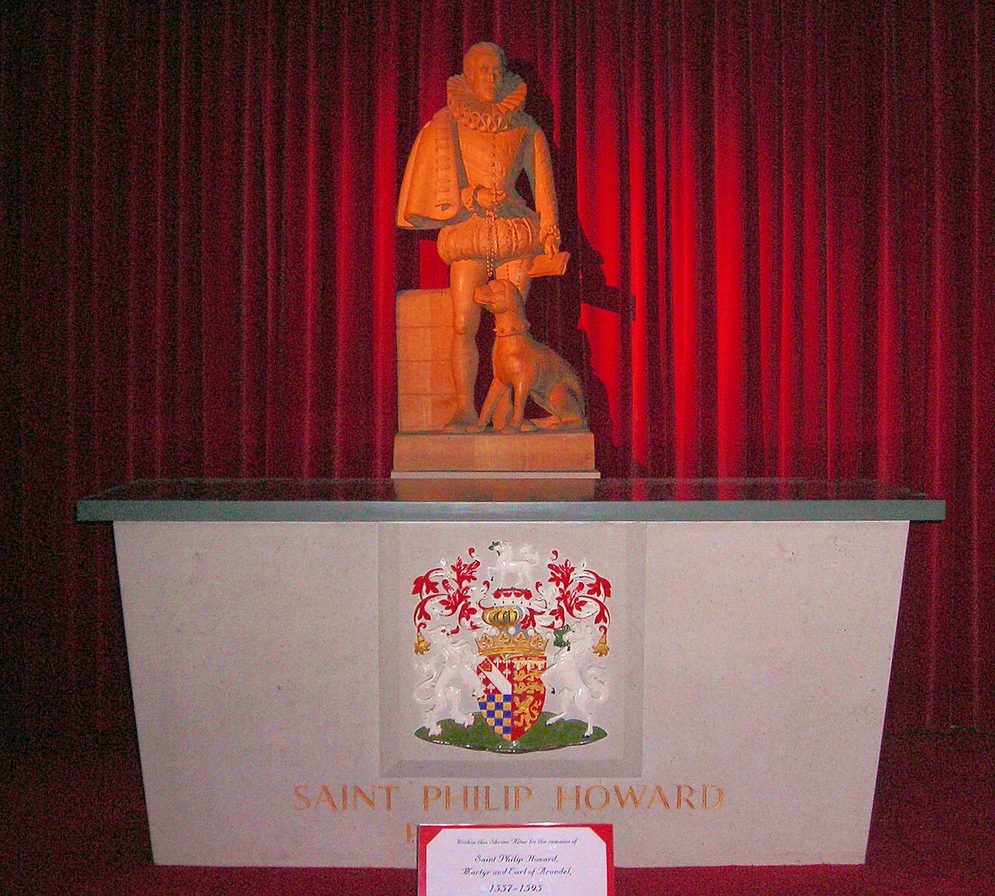
In the north transept is the shrine of St Philip Howard, made in 1971: a tomb chest of Nabresina stone under a slab of green Westmorland slate, with a limewood statue of the saint and his dog. Look also for the tabernacle made in 1730 by Charles Kandler for a Duke of Norfolk, thought to be the first made in England after the Reformation, and the high altar consecrated in 1971.
Visiting
Free to visit
Entry is free. The small gift shop is next to the shrine and is run by volunteers.
The hotel link goes to Booking.com. This site earns nothing from it at present — it is here because it is the quickest way to check what is actually available.
Don't miss
- The rose window The Rosary in glass.
- St Philip Howard’s shrine In the north transept.
- The Kandler tabernacle Made in 1730.
- The carpet of flowers At Corpus Christi.
- The view of the castle From the hill outside.
- The Fitzalan Chapel The Howard tombs, in the castle grounds.
Insider tips
See the Fitzalan Chapel too. The Howards’ burial chapel, with their medieval tombs, is the Catholic east end of the Anglican parish church of St Nicholas, a short walk down London Road. It is reached from the castle grounds with a castle ticket, during the castle’s season (April to the start of November). Boxgrove Priory and Chichester Cathedral are both within about half an hour.
Common questions
Is Arundel Cathedral free to visit?
Yes. The cathedral is open every day and there is no charge; donations are welcome. Viewing the Corpus Christi carpet of flowers is also free.
When is Arundel Cathedral open?
It is generally open every day from 9am to 4.30pm. Mass is said on Saturday evening and on Sunday morning, and on most weekday mornings; please do not walk round during Mass.
When is the Corpus Christi carpet of flowers?
Every year for the feast of Corpus Christi, in late May or June, a carpet of flowers is laid the length of the nave, a tradition of more than 140 years. It is usually laid on the Tuesday and can be seen on the Wednesday and Thursday, after which there is a procession to the castle. Check the cathedral website for the year’s dates.
Who was St Philip Howard?
Philip Howard, 13th Earl of Arundel, was imprisoned in the Tower of London by Elizabeth I for his Catholic faith and died there in 1595. He was canonised in 1970, and in 1971 his relics were brought from the Fitzalan Chapel to the cathedral.
How do you get to Arundel Cathedral?
Arundel has a station on the line from London Victoria and the south coast. The cathedral is at the top of the town, about 15–20 minutes’ walk, mostly uphill, from the station. There are pay-and-display car parks in the town, including on Mill Road opposite the castle.
Where to stay and eat nearby
Arundel is a small, hilly town of antique shops, tea rooms and pubs, all within walking distance of the cathedral and the castle.
More English churches
- Boxgrove Priory — a painted vault, a short drive west
- Chichester Cathedral — about 20 minutes by train
- Westminster Cathedral — the mother church of English Catholics