
Naples Cathedral
Naples Cathedral, the Duomo, is three churches in one: an Angevin Gothic cathedral of the early 14th century, the older basilica of Santa Restituta opening off its aisle, and one of the oldest baptisteries in the West. Its Baroque Chapel of the Treasure keeps the blood of San Gennaro, the city’s patron, which Neapolitans wait to see liquefy three times a year. The cathedral is free; the Treasure museum next door has its own ticket.
Kings, a saint and a city’s vow
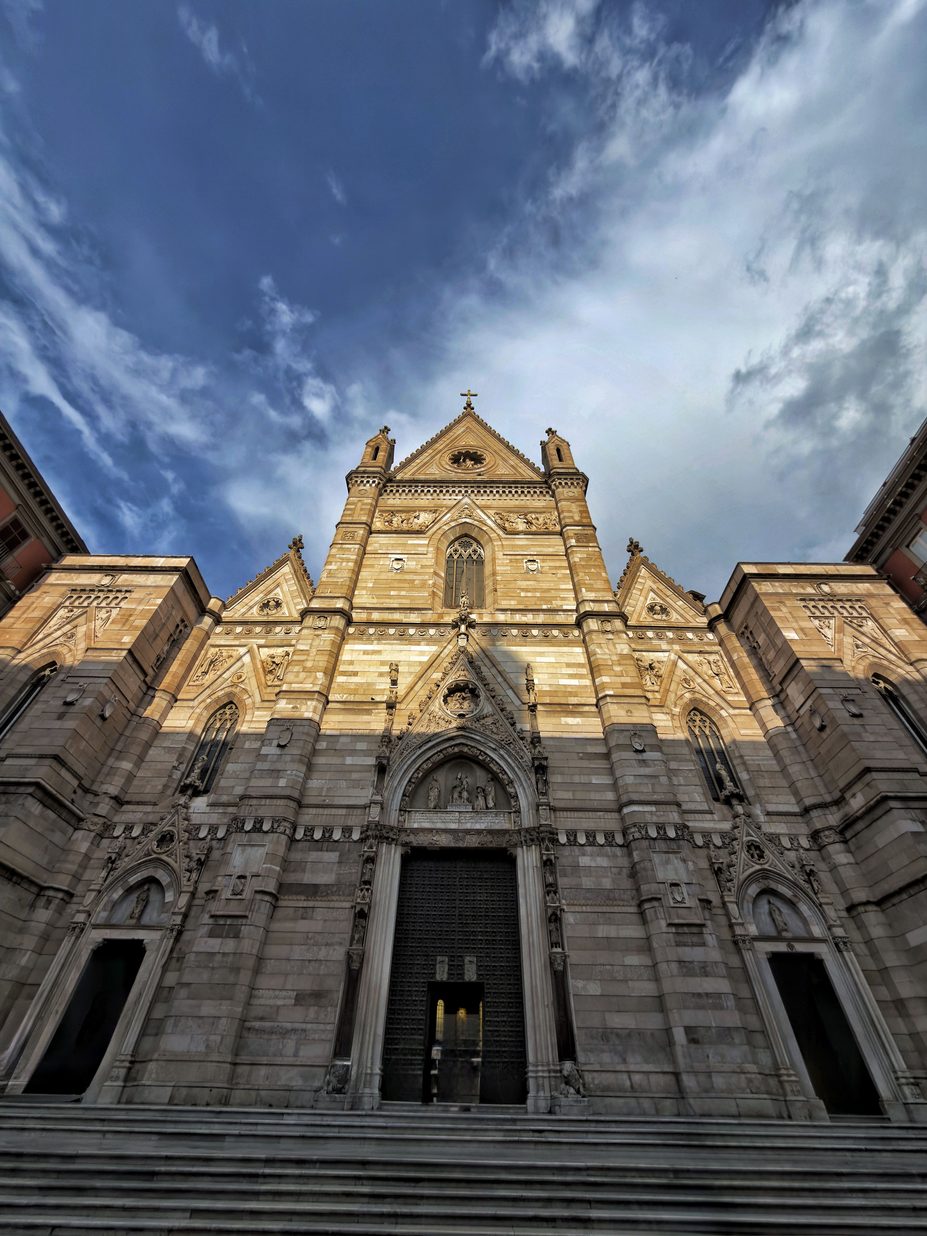
The cathedral was begun under the Angevin kings of Naples in the late 13th century — traditionally in 1272 under Charles I of Anjou, though much of the work is dated from about 1290 under Charles II — and finished under Robert of Anjou in 1313; it was dedicated to the Virgin of the Assumption in 1314. It swallowed part of an older cathedral, Santa Restituta, which survives as a chapel off the left aisle, and the baptistery beside it. Earthquakes in 1349 and 1456 caused heavy damage (in 1349 the facade and bell tower fell), and the building was repaired many times; the gilded ceiling is 17th-century and the facade a neo-Gothic design by Enrico Alvino, built in 1877–1905.
San Gennaro (St Januarius), a bishop of Benevento martyred around 305, became the city’s protector against plague, war and Vesuvius. In 1527, after siege, plague and an eruption, the city vowed a new chapel to him, and from 1608 the Royal Chapel of the Treasure was built off the right aisle. It belongs not to the Church but to a lay body representing the city, the Deputazione, which still runs it.
The visitor’s cheat sheet
| Where | Via Duomo 147, in the historic centre of Naples; about 10 minutes’ walk from the Cappella Sansevero |
|---|---|
| Opening hours | Daily 8.30am–7.30pm (some sources give a short lunchtime closure); no sightseeing during Mass |
| Admission | Free. Santa Restituta and the baptistery: free guided visits every half hour, 9.30am–5pm, from the Infopoint in the left aisle. Treasure of San Gennaro museum and Royal Chapel: separate ticket, about €15 (over-65s about €11; under-12s free), entrance at Via Duomo 149. Rooftops from €6 |
| Mass | Daily 9am and 6.30pm; Sundays and holy days also 11am and 12.30pm |
| Blood of San Gennaro | Shown on the Saturday before the first Sunday in May, on 19 September and on 16 December |
| Access | The cathedral is step-free; the rooftop route is not |
| How long | An hour for the cathedral, Santa Restituta and the baptistery; another hour for the Treasure |
Hours and admission checked against the official site in October 2026. They change; the official site is always the last word.
What to see
The nave
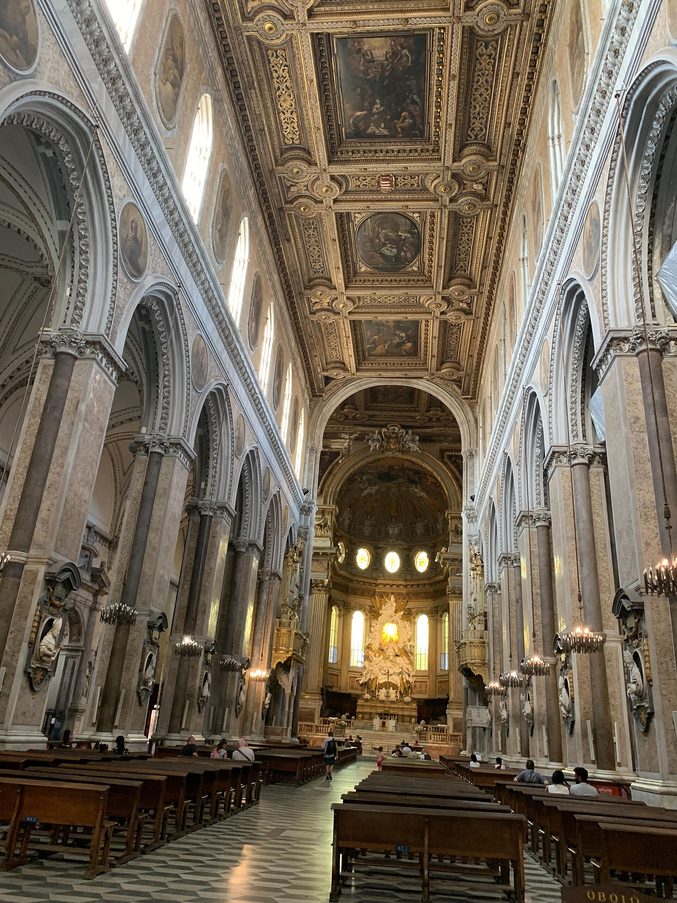
The nave and aisles are lined with ancient columns built into the piers. Above the arcades runs a 17th-century gilded coffered ceiling with paintings set into it; at the east end the Baroque apse holds an Assumption. Look for Perugino’s Assumption (1506) in the Cappella Seripando, where the Infopoint is, and the tomb of Pope Innocent IV in the left transept.
The Royal Chapel of the Treasure of San Gennaro
Halfway down the right aisle, behind a gilded gate designed by Cosimo Fanzago, is the chapel the city built from 1608 to designs by the Theatine Francesco Grimaldi. Domenichino painted the frescoes of the pendentives and lunettes and several altarpieces on copper; after his death in 1641 Giovanni Lanfranco painted the dome with a Paradise. Jusepe de Ribera’s San Gennaro emerging unscathed from the furnace hangs on one of the altars. Silver busts of the city’s patron saints line the walls, and behind the high altar are kept the reliquary bust of San Gennaro and the two ampoules of his blood.

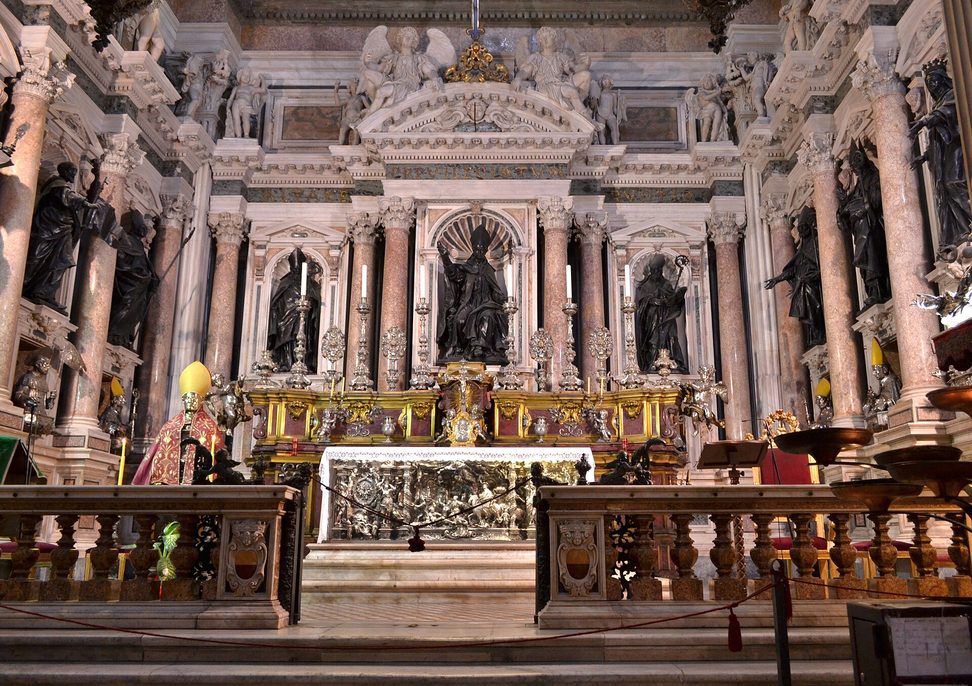
The chapel’s treasure — jewelled mitre, necklace, chalices and silver — is shown in the Museo del Tesoro di San Gennaro, entered separately at Via Duomo 149. Its ticket includes the chapel with an audio guide. The treasure is counted among the richest in the world.
The blood of San Gennaro
Three times a year the archbishop shows the ampoules, and the dried blood inside is expected to turn liquid: on the Saturday before the first Sunday in May, the anniversary of the translation of the relics; on 19 September, the saint’s feast; and on 16 December, which recalls the eruption of Vesuvius in 1631. It is usually called a prodigio rather than a miracle; scientists have proposed natural explanations. In popular belief a failure is a bad omen, and the years it failed, such as September 1980, two months before the Irpinia earthquake, are remembered. On these days the cathedral fills long before the doors open.
The Succorpo
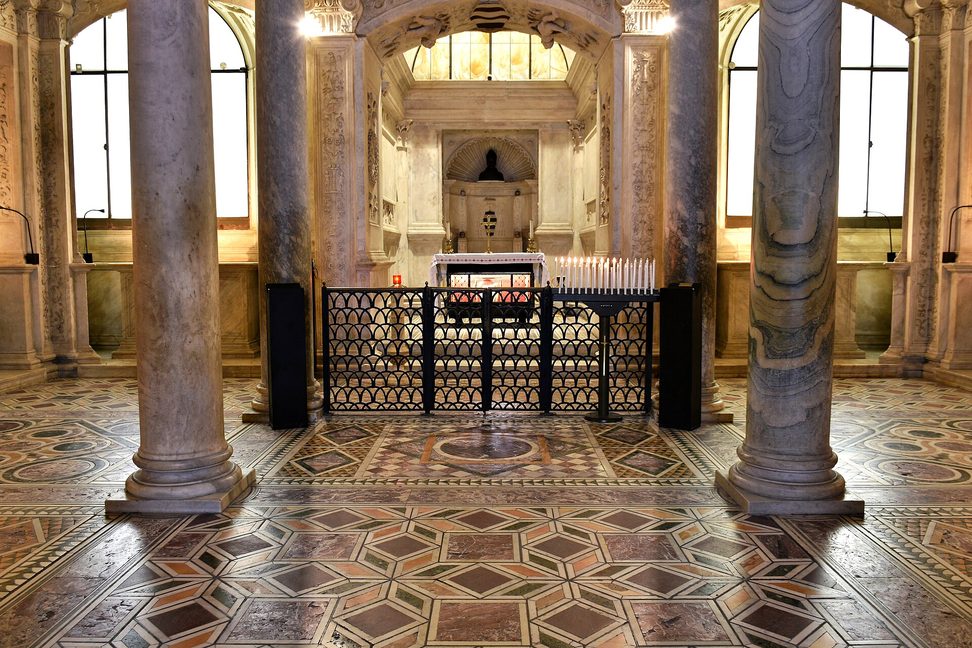
Under the high altar is the crypt known as the Succorpo, built in white marble for Cardinal Oliviero Carafa between 1497 and 1508 to receive the saint’s body, brought back from Montevergine. It is carved by Tommaso Malvito, and a kneeling statue of the cardinal faces the altar.
Santa Restituta and the baptistery
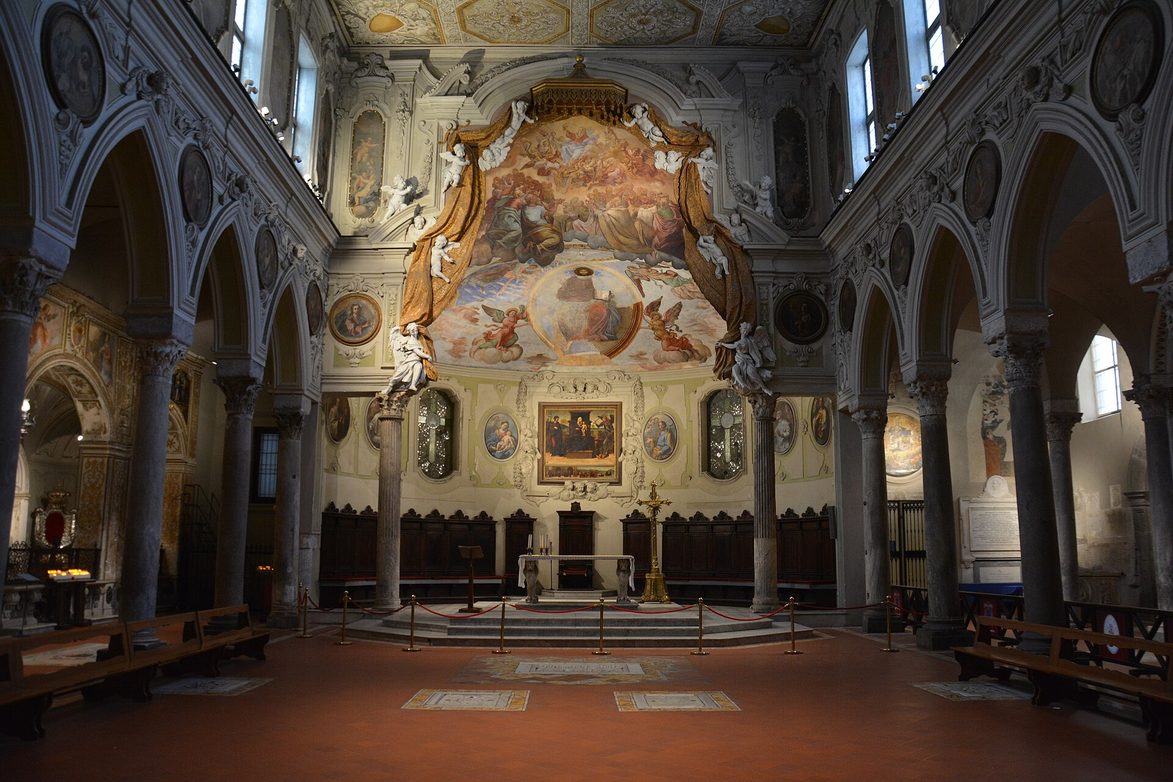
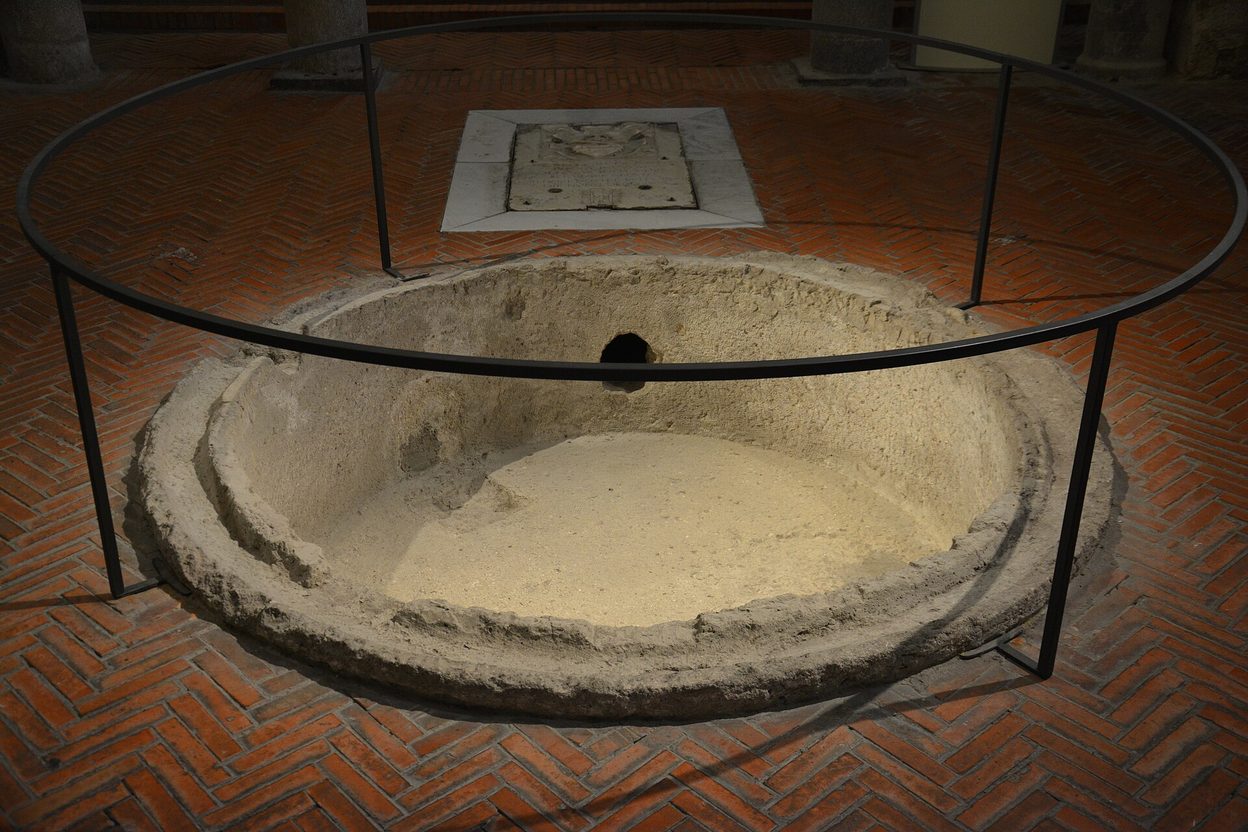
Off the left aisle is the Basilica of Santa Restituta, traditionally founded in the 4th century and the city’s first cathedral; it lost part of its length when the Gothic cathedral was built, and was remodelled in the late 17th century. Its Cappella di Santa Maria del Principio has an early 14th-century mosaic by Lello da Orvieto. Beyond it is the baptistery of San Giovanni in Fonte, founded by Bishop Severus around 400 and one of the oldest baptisteries in the West; fragments of its original mosaics survive in the dome. Both are seen on free guided visits that leave every half hour from the Infopoint in the Cappella Seripando, in the left aisle.
Getting there
The cathedral is on Via Duomo, at the eastern end of the historic centre, about ten minutes’ walk from the Cappella Sansevero along Via dei Tribunali. The nearest metro stations are Duomo (Line 1), to the south down Via Duomo, and Museo (Line 1) or Piazza Cavour (Line 2), to the north-west. The Pio Monte della Misericordia, with Caravaggio’s Seven Works of Mercy, is a few minutes away on Via dei Tribunali.
Tours and where to stay
The cathedral needs no booking; tickets for the Treasure museum can be bought at the door or online. A walking tour of the centro storico is a good way to combine it with Sansevero and the underground city.
These links go to GetYourGuide and Booking.com. This site earns nothing from them at present — they are here because they are the quickest way to check what is actually available.
Don’t miss
- The Chapel of the Treasure Domenichino and Lanfranco, behind Fanzago’s gate.
- The baptistery Mosaics of around 400.
- Santa Restituta The first cathedral, inside the second.
- The Succorpo Renaissance marble under the high altar.
- 19 September The feast, if you can stand the crowd.
Insider tips
Start at the Infopoint. The free half-hourly visit to Santa Restituta and the baptistery is the only way into the oldest parts, and it fills up in the middle of the day. Allow time afterwards for the Treasure museum next door. On the three days of the blood, expect queues from dawn and a cathedral too full to see anything else.
Common questions
Is Naples Cathedral free to visit?
Yes. The cathedral is free, and so is the guided visit to Santa Restituta and the baptistery, which leaves from the Infopoint every half hour (a donation is invited). The Treasure of San Gennaro museum, with the Royal Chapel, has its own ticket of about €15, and the rooftop walk costs from €6.
When does the blood of San Gennaro liquefy?
The ampoules of the saint’s blood are shown three times a year: on the Saturday before the first Sunday in May (1 May in 2027), on his feast day, 19 September, and on 16 December. The cathedral is packed on all three days; arrive very early for the morning Mass in September and December.
When is Naples Cathedral open?
Every day from 8.30am to 7.30pm, according to the cathedral; some guides still mention a short closure around lunchtime. Visits stop during Mass, which is at 9am and 6.30pm daily, with extra Masses at 11am and 12.30pm on Sundays and holy days.
Who owns the Chapel of the Treasure?
Not the Church. The chapel was built by the city of Naples after a vow made during the plague of 1527, and it is still administered by a lay body, the Deputazione, which commissions its works and keeps its treasure.
Is there a dress code?
Dress as for any working church: cover shoulders and knees, and take off hats inside.
More churches in Italy
- Cappella Sansevero, Naples — the Veiled Christ, ten minutes’ walk away.
- Amalfi Cathedral — another Campanian cathedral, built for the relics of St Andrew.
- San Vitale, Ravenna — for early Christian mosaic on a grander scale.