
Amalfi Cathedral
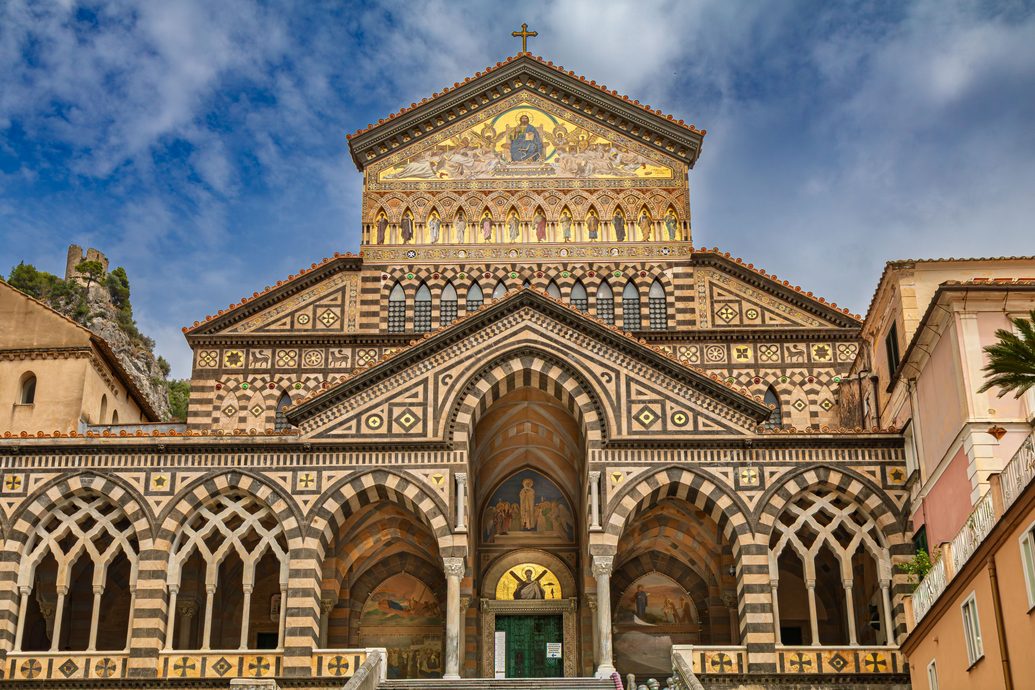
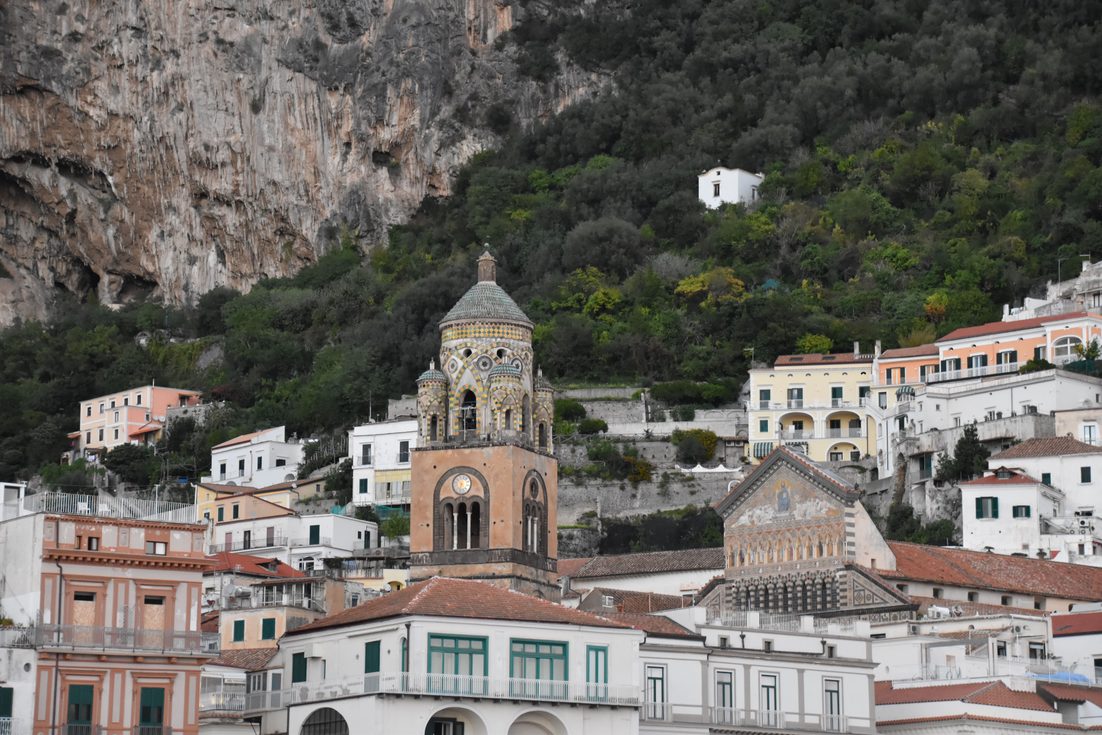
Amalfi Cathedral stands at the top of 62 steps above the town’s main square: a striped facade of black and white stone, a bell tower with a crown of coloured tiles, and bronze doors made in Constantinople nearly a thousand years ago. Behind it are a cloister of white interlaced arches, a medieval basilica and the crypt of St Andrew. One ticket of about €4 covers the lot, and it takes about an hour.
A cathedral for a sea republic
In the 10th and 11th centuries Amalfi was one of Italy’s maritime republics, trading with Constantinople, Egypt and the Levant, and its cathedral shows it. The oldest part is the church now called the Basilica del Crocifisso, which goes back to the 9th century; in 987, when the see became an archbishopric under Duke Manso, it was enlarged, and a second church was built beside it. For a time the two formed a single church of six aisles. The present cathedral grew out of the newer one.
In 1206, after the Fourth Crusade, Cardinal Pietro Capuano, a son of Amalfi, brought relics of the apostle Andrew from Constantinople, and on 8 May 1208 he laid them in the new crypt. The bell tower was begun in 1180 and finished in 1276; the Cloister of Paradise followed in 1266–68. In the early 1700s Archbishop Michele Bologna had the interior dressed in Baroque marble and gilding. On 24 December 1861 a gale brought down part of the old facade, and the one you see now was rebuilt to a design by Errico Alvino in a striped Arab-Norman and Gothic style, with mosaics after Domenico Morelli in the gable; it was finished in 1891. Amalfi and its coast became a UNESCO World Heritage Site in 1997.
The visitor’s cheat sheet
| Where | Piazza Duomo, Amalfi; 62 steps up from the square |
|---|---|
| Opening hours | Usually 9am–6.45pm March–June and 9am–7.45pm July–September; November–February 10am–1pm and 2.30–4.30pm. No official timetable is published; hours change around services |
| Admission | About €4 for the cloister, Basilica del Crocifisso, museum and crypt (some listings give €3), with a reduced price; free for Mass, through the bronze doors |
| Dress code | Shoulders and knees covered; no beachwear |
| Feasts | St Andrew on 27 June and 30 November, with the run up the steps |
| How long | About an hour |
Hours and admission checked against the official site in October 2026. They change; the official site is always the last word.
No official timetable. The cathedral and its museum publish no hours or prices online, so the figures here come from recent visitor reports and local listings, which mostly agree. On feast days, in Holy Week and during services the route may close; for Mass, enter by the bronze doors and leave the camera alone.
What to see
The steps and the facade
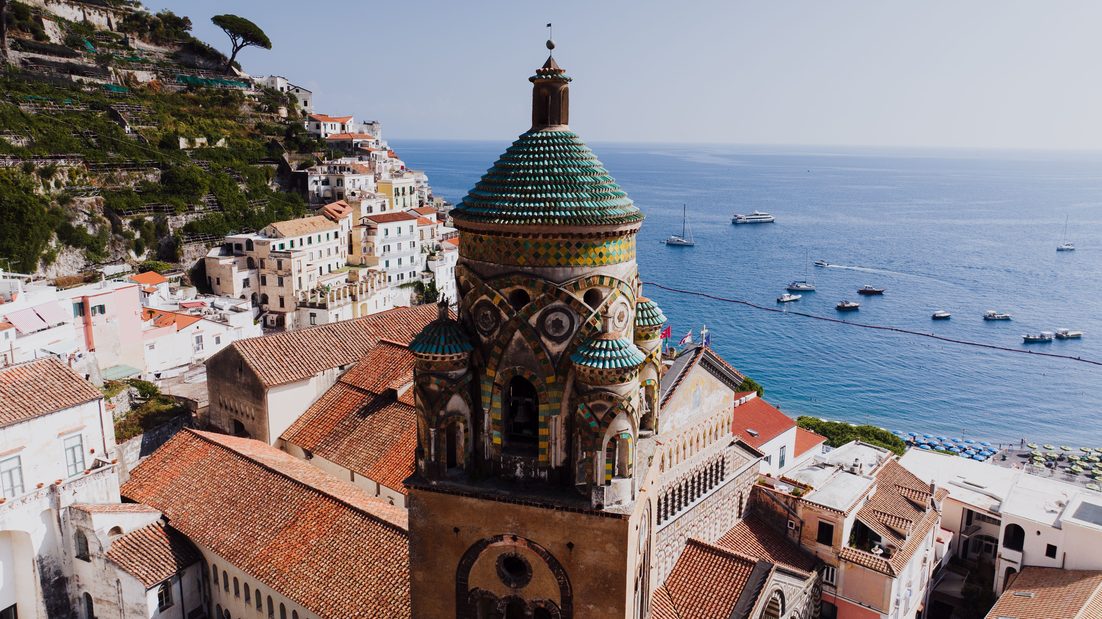
The 62 steps rise straight from Piazza Duomo, and the facade and its arcaded porch fill the view from the square. The best time to photograph it is early morning, before the day-trippers arrive. The bell tower stands apart to the left; its lower storeys are Romanesque, and its crown of interlaced arches, with green and yellow majolica tiles, is in the Arab-Norman style of southern Italy.
The bronze doors
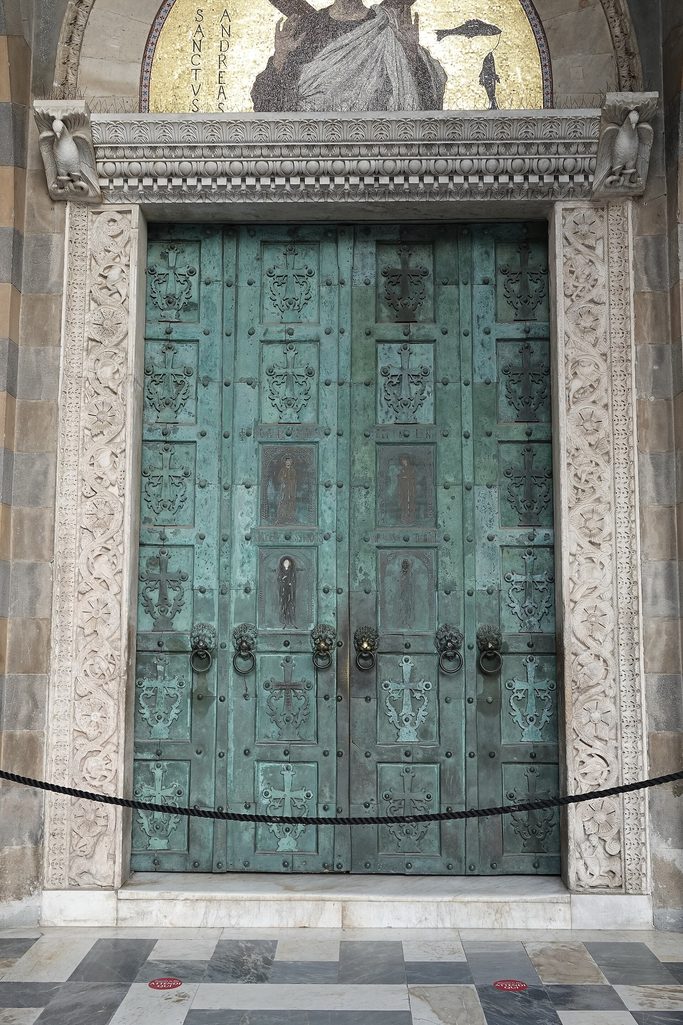
The central doors were cast in Constantinople around 1060 and given by Pantaleone, of the Mauro (de Comite Maurone) family of Amalfi merchants who lived there. They are among the earliest Byzantine bronze doors in Italy. Most of the 24 panels carry a plain cross; the four in the middle have inlaid figures — Christ and the Virgin above, St Andrew and St Peter below, inlaid in silver and copper.
The Cloister of Paradise
The route begins here, on the left of the porch. The cloister was built in 1266–68 as the cemetery of Amalfi’s noble families, and its 120 slender columns carry interlaced pointed arches with an eastern look, around a small garden of palms. Along the walks are Roman sarcophagi of the 2nd century, pieces of the cathedral’s medieval mosaic pulpits, and funerary chapels with 13th- and 14th-century frescoes. Look up from the north side for the best view of the bell tower.

The Basilica del Crocifisso and the museum
From the cloister you pass into the oldest church of the complex. A restoration begun in 1931 stripped its Baroque decoration to show the medieval walls and the Roman columns reused in its arcades. It now holds the diocesan museum, opened in 1996, with the cathedral treasury: silver, reliquaries, vestments and paintings.

The crypt of St Andrew
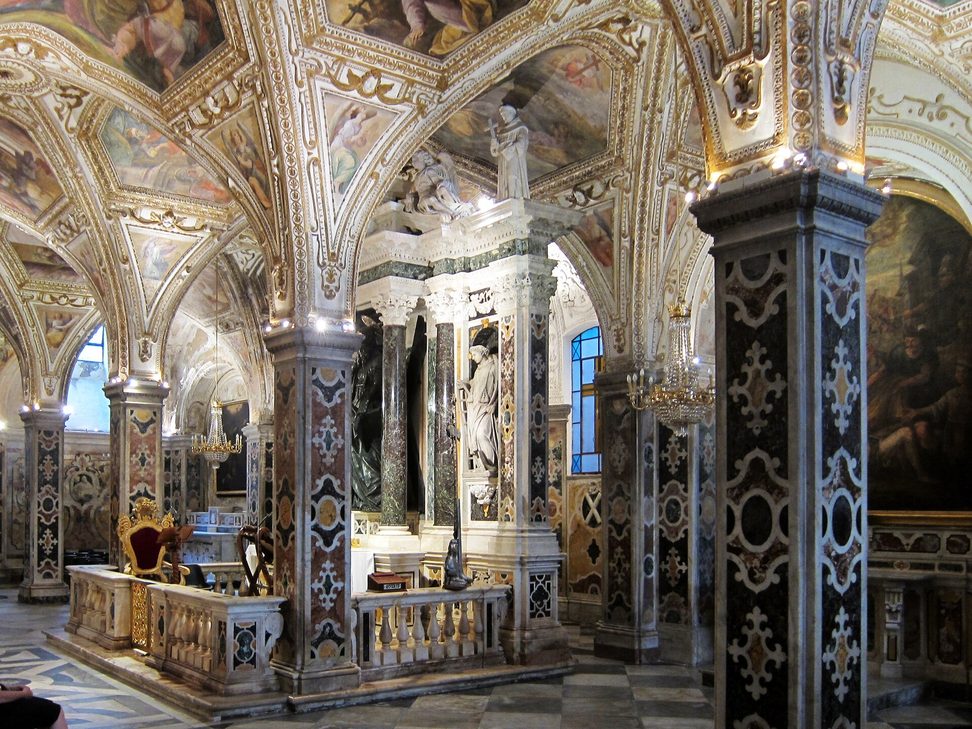
Steps lead down to the crypt, built for the relics in 1203–08 and redecorated in 1719, its vaults covered in painting and its walls in coloured marble. Above the altar stands a bronze St Andrew by Michelangelo Naccherino. The “manna of St Andrew”, a liquid said to seep from the tomb and by tradition first reported in 1304, is collected on the saint’s feasts.
The cathedral
The route ends in the cathedral itself, a nave and two aisles under a gilded coffered ceiling of 1702. Its four great canvases, by Andrea d’Aste, show St Andrew’s flagellation, crucifixion and burial and the Miracle of the Manna, and he also painted the Crucifixion of St Andrew over the high altar. The altar reuses the 14th-century marble sarcophagus of an Archbishop Pietro Capuano.

Getting to Amalfi
The cathedral is in the centre of Amalfi, two minutes from the bus stop and the ferry pier. SITA buses run all year from Sorrento station by way of Positano, a timetabled hour and a half that is often longer, and from Salerno; buy tickets before you board, at a tabacchi or newsstand. From about April to October ferries run from Salerno (around 35 minutes) and Positano; from November to March, plan on the bus or a car.
Driving is hard work. The centre of Amalfi is a limited traffic zone, parking is scarce and expensive (the Luna Rossa garage is in a tunnel towards Atrani), and on set days in the busy season the coast road, the SS163, is closed to cars with odd or even number plates from 10am to 6pm. Residents and hotel guests on their days of arrival and departure, among others, are exempt; check the rules from ANAS before you drive.
Tours and where to stay
Tickets are sold at the office beside the steps. Most tours of the Amalfi Coast stop in Amalfi for an hour or two, which is enough for the cathedral; staying overnight lets you see it before the day boats arrive.
These links go to GetYourGuide and Booking.com. This site earns nothing from them at present — they are here because they are the quickest way to check what is actually available.
Don’t miss
- The bronze doors Made in Constantinople around 1060.
- The Cloister of Paradise 120 columns and interlaced arches.
- The crypt The tomb of St Andrew.
- The bell tower Best seen from the cloister.
- 27 June or 30 November The saint’s silver bust run up the steps.
Insider tips
Come early or late. Between about 10am and 4pm the steps and the cloister fill with tour groups and cruise passengers. On St Andrew’s feasts, 27 June and 30 November, the bearers carry the saint’s silver bust in procession and finish by running it up the steps into the cathedral: watch from halfway up the stairs.
Common questions
How much does it cost to visit Amalfi Cathedral?
The visitor route through the Cloister of Paradise, the Basilica del Crocifisso with the diocesan museum, and the crypt costs about €4, with a reduced price. There is no official price list online, and some 2026 listings still give €3. Going in for Mass is free.
When is Amalfi Cathedral open?
The visitor route usually opens at 9am and closes at about 6.45pm from March to June and about 7.45pm from July to September; from November to February it opens 10am–1pm and 2.30–4.30pm. Hours change around services and feast days, and nothing is published officially.
How many steps are there up to Amalfi Cathedral?
Sixty-two, straight up from Piazza Duomo; they are wide but steep, and busy in the middle of the day. There is step-free access to the crypt from Piazza Municipio, with a lift up to the cathedral: ask at the ticket office.
Which way do you go round Amalfi Cathedral?
Buy the ticket at the cloister entrance, to the left of the porch at the top of the steps. The route starts in the Cloister of Paradise, continues into the Basilica del Crocifisso and the museum, goes down to the crypt and comes out in the cathedral nave.
Is St Andrew really buried in Amalfi Cathedral?
Relics of the apostle Andrew were brought from Constantinople after the Fourth Crusade, in 1206, and laid in the crypt on 8 May 1208 by Cardinal Pietro Capuano. The saint’s head is kept in a chapel in the church above.
Is there a dress code?
Yes: cover shoulders and knees, and no swimwear. People who come up from the beach dressed for it may be turned away or offered a shawl.
More churches in Italy
- Monreale Cathedral — Norman Sicily’s cathedral of gold mosaic, with its own cloister.
- St Mark’s Basilica, Venice — the other maritime republic’s church, with its Byzantine treasures.
- St Peter’s Basilica — where Andrew’s brother Peter is traditionally buried.