
Dunkeld Cathedral, Perthshire
Dunkeld Cathedral stands on a lawn by the River Tay, half ruin and half parish church. The relics of St Columba were brought here in the ninth century, making Dunkeld for a time the chief church of Scotland. The medieval nave is a roofless shell, but the choir is still in use, with the tomb of the Wolf of Badenoch, a Pictish cross-slab and the scars of a battle fought in the streets in 1689.
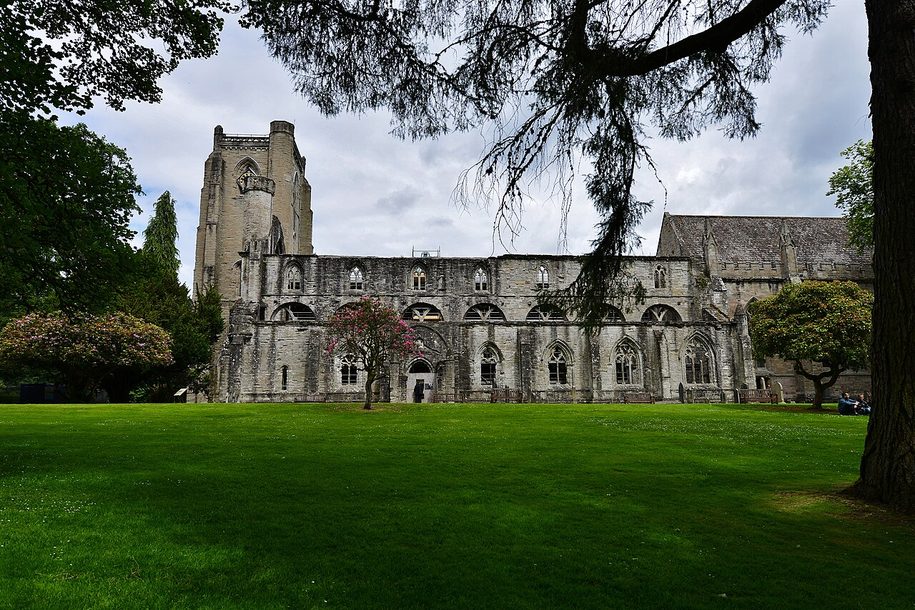
Columba's church on the Tay
In about 849 Kenneth MacAlpin, king of the Picts and the Scots, brought relics of St Columba from Iona to a church built for them at Dunkeld. A bishop is recorded here from 1114. The present cathedral was built slowly: the choir from the thirteenth century, the nave from 1406 and the tower from 1469, with the work largely finished by about 1500.
The Reformation stripped the cathedral, and after 1571 the roof came off. In 1600 the choir was repaired as the parish church. On 21 August 1689 the Cameronian regiment fought off a Jacobite army here; the town was burned around them. In the early twentieth century the choir was re-roofed and refitted, and a major restoration of it is now being planned.
The visitor's cheat sheet
| Where | Cathedral Street, Dunkeld, Perthshire, PH8 0AW |
|---|---|
| Getting there | About 15 miles north of Perth off the A9; Dunkeld & Birnam station, 15–20 minutes’ walk; pay-and-display car parks on Atholl Street and Tay Terrace |
| Opening hours | April–September 9.30am–5.30pm; October–March 10am–4pm; nave and tower currently closed |
| Admission | Free; donations to the restoration welcome |
| How long | About an hour, more with a walk by the Tay |
| Best time | Autumn, when the woods along the Tay turn |
| Dress code | None; the choir is a working parish church |
| Tours | Free audio tour by QR code; chapter house museum; guides often on hand in summer |
Hours and admission checked against the official site in October 2026. They change; the official site is always the last word.
The Parent Larch. In the grounds is the last of the larch trees brought from the Tyrol in 1738. Seed from these trees was used to plant the great larch forests of the Atholl estates.
What to see, in the order you meet it
The nave and tower
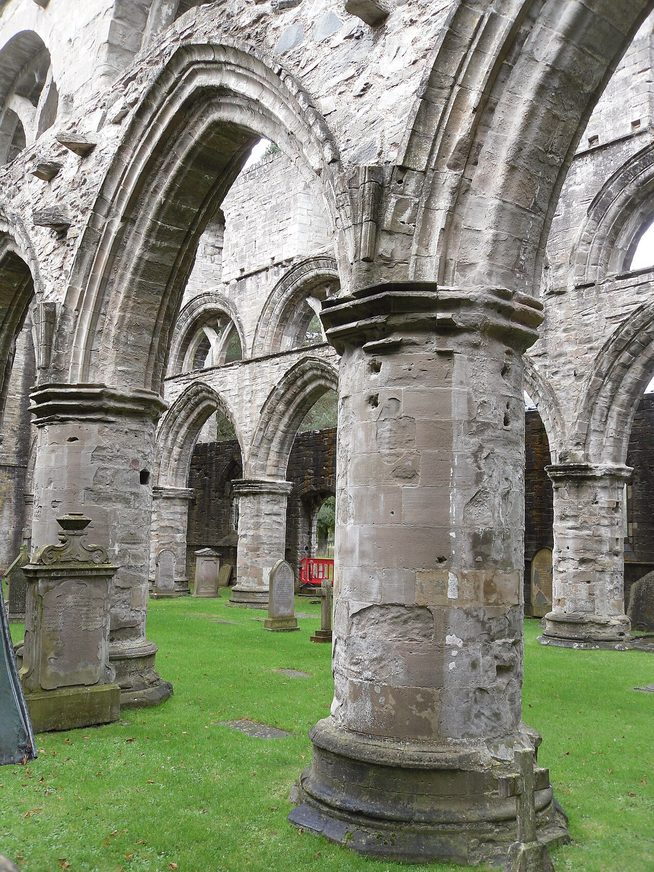
The roofless nave, with its arcades and the tower at its west end, is the first thing you see from the town. For now it is fenced off while repairs to its stonework are planned; Lieutenant-Colonel Cleland, the Cameronian commander, is buried inside. The tower contains medieval wall paintings, among them the Judgement of Solomon, which cannot be seen while it is closed.
The choir
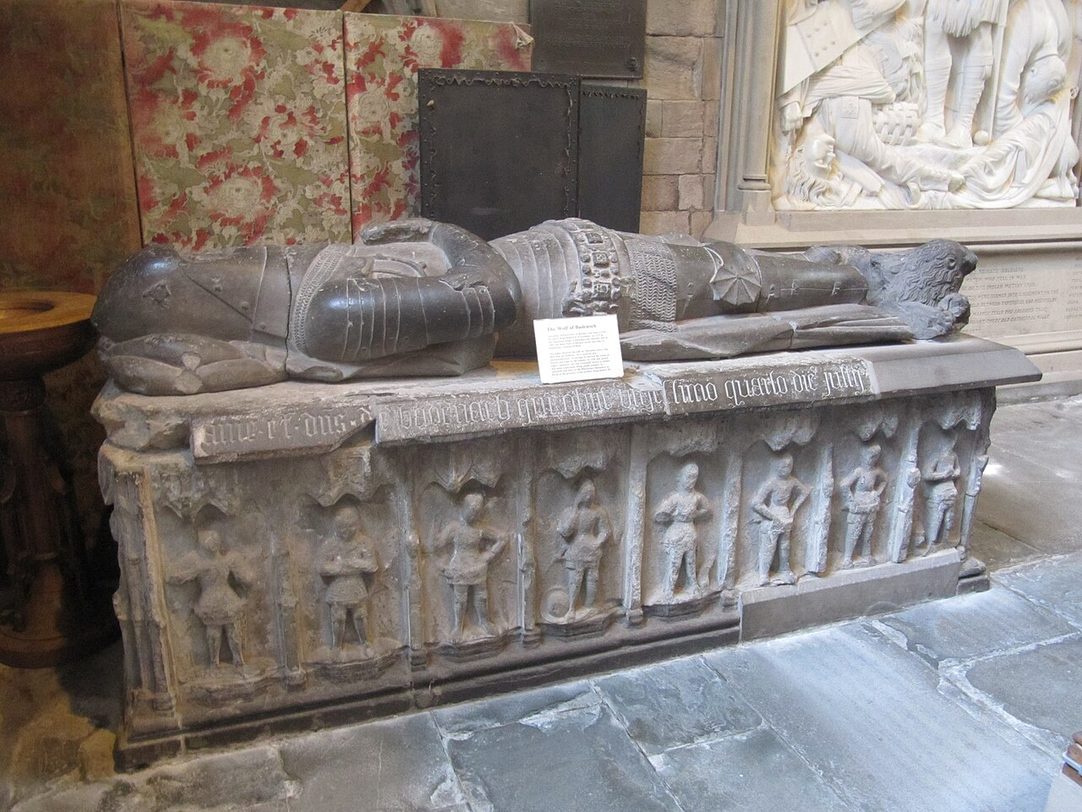
The choir is the parish church, entered from the grounds. At the east end is a great window of 1908, with St Columba preaching at its foot. Look for the tomb of Alexander Stewart, Earl of Buchan, the “Wolf of Badenoch”, who burned Elgin Cathedral in 1390; his effigy lies in armour. Nearby is the Black Watch memorial by Sir John Steell.

The chapter house museum
The fifteenth-century chapter house, once the burial place of the Atholl family, is now a small museum. Its prize is the Apostles’ Stone, a Pictish cross-slab of the ninth century carved with rows of figures; displays cover the town, the fiddler Niel Gow and Beatrix Potter, who spent summer holidays nearby.

Visiting
Free to visit
There is no charge. A free audio tour can be played on your phone by scanning the QR codes around the cathedral.
The hotel link goes to Booking.com. This site earns nothing from it at present — it is here because it is the quickest way to check what is actually available.
Don't miss
- The Wolf of Badenoch His effigy in armour.
- The Apostles’ Stone A Pictish cross-slab.
- The shot marks On the east gable, from 1689.
- The Parent Larch The mother of the Atholl forests.
- The Tay The riverside lawns below the cathedral.
- The Hermitage Waterfalls and a folly a mile or so away.
Insider tips
Make a day of it. Cross Telford’s bridge to Birnam to see the Birnam Oak, said to be the last tree of Macbeth’s Birnam Wood, and go a mile or so west, across the A9, to the Hermitage, the National Trust for Scotland’s woodland with the Black Linn falls.
Common questions
Is Dunkeld Cathedral free to visit?
Yes. There is no charge for the cathedral or the grounds, and donations to the restoration are welcome. The choir is a parish church; the ruined nave and tower are cared for by Historic Environment Scotland.
When is Dunkeld Cathedral open?
From April to September it is open from 9.30am to 5.30pm, and from October to March from 10am to 4pm. Historic Environment Scotland closes it on 25–26 December and 1–2 January. Services, weddings and concerts can limit access to the choir.
Can you go into the ruined nave?
Not at the moment. After inspections of the high stonework, Historic Environment Scotland has closed the nave and the tower as a precaution; you can see them from the grounds and through the fencing. The choir and the grounds are open.
What happened at the Battle of Dunkeld?
On 21 August 1689 a regiment of Cameronians held the town against a Jacobite army several times their size, fighting from the cathedral and the houses around it. Most of the town was burned. Their commander, Lieutenant-Colonel William Cleland, was killed and is buried in the nave, and the east gable still has the marks of musket shot.
How do you get to Dunkeld?
Dunkeld is about 15 miles north of Perth, just off the A9. Trains on the Highland Main Line stop at Dunkeld & Birnam station, a walk of about 15–20 minutes through Birnam and over Telford’s bridge across the Tay. There are pay-and-display car parks in the town.
Where to stay and eat nearby
Dunkeld and Birnam have cafés, a bakery, pubs and small hotels, all within a few minutes’ walk of the cathedral.
More churches in Scotland
- Iona Abbey — where Columba’s relics came from
- Elgin Cathedral — burned by the Wolf of Badenoch
- St Andrews Cathedral — an hour and a half away