
St Andrews Cathedral, Fife
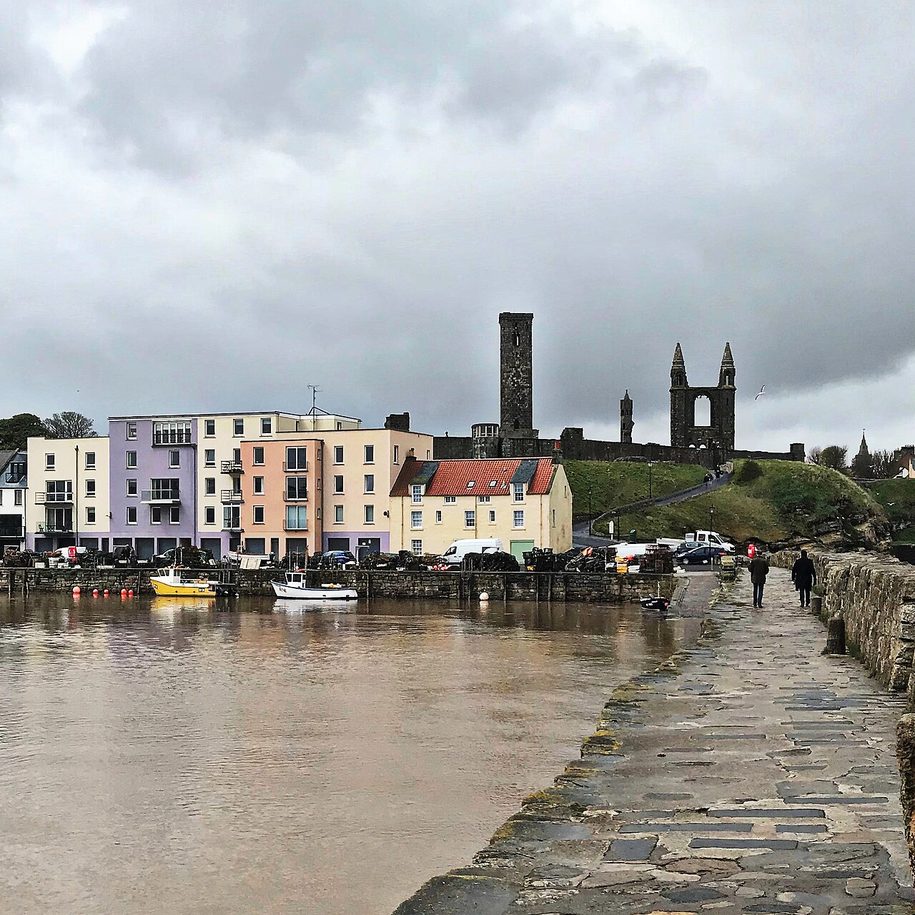
For four centuries this was the largest church in Scotland and the centre of the Scottish Church, built around relics of the country’s patron saint. Today it is a ruin on the cliffs at the end of the town: a towering east gable, a long nave wall, a cemetery of golfers and professors, and a plain square tower older than any of it. The grounds are free, and the view from the tower is one of the best in Fife.
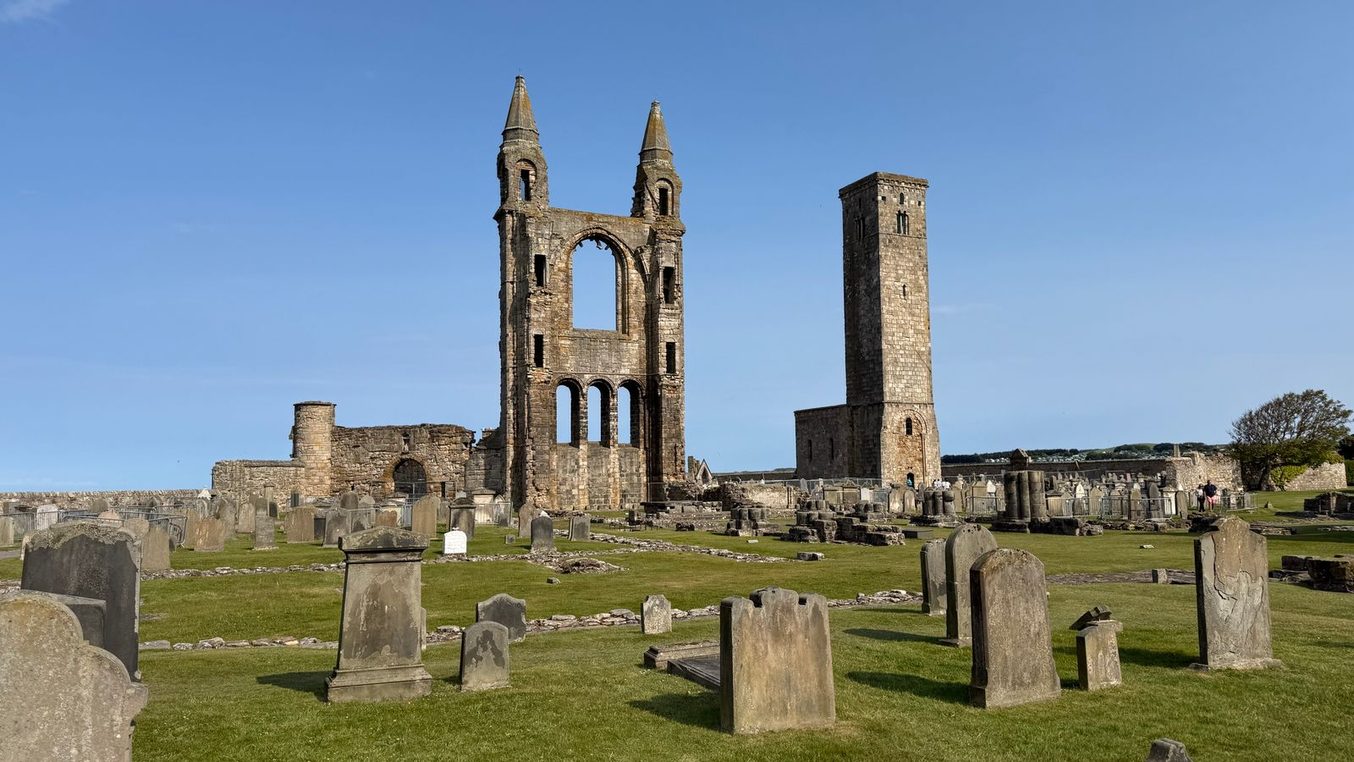
The shrine of St Andrew
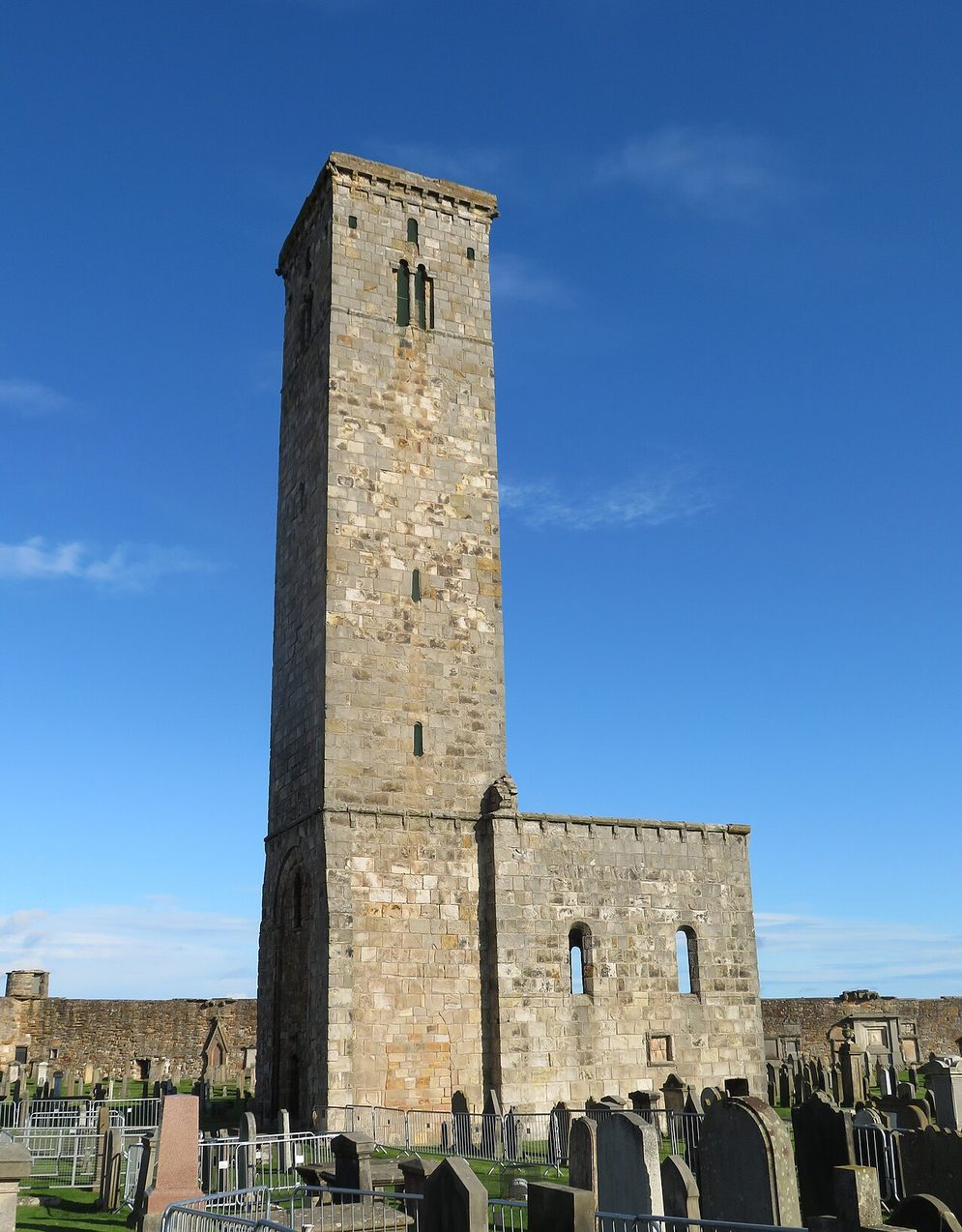
According to legend, St Rule brought bones of St Andrew from Greece and was shipwrecked on this coast. The more likely story is that Bishop Acca of Hexham brought relics here around 732. Either way, St Andrews became Scotland’s religious capital and a great place of pilgrimage. The first church to hold the relics was St Rule’s, built around 1130, whose tall square tower still stands.
The cathedral was begun around 1160 under Bishop Arnold. Building took more than 150 years: a storm blew down the west front in the 1270s, and the Wars of Independence held up the work. It was dedicated on 5 July 1318 in the presence of Robert the Bruce. At about 119 metres long, it was the largest church ever built in Scotland.
In June 1559, after John Knox preached in the town, a crowd stripped the cathedral of its furnishings. It was abandoned, and over the following century the townspeople used it as a quarry.
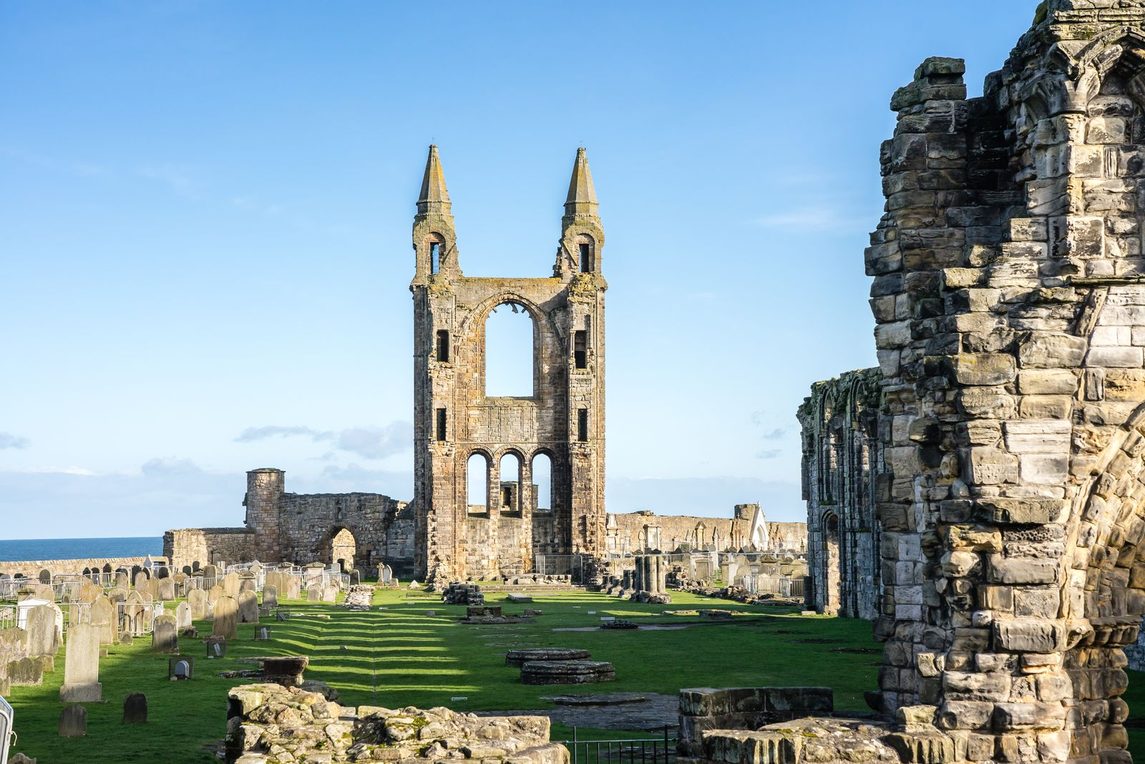
The visitor's cheat sheet
| Where | The Pends, St Andrews, Fife, KY16 9QL |
|---|---|
| Getting there | Train to Leuchars, then bus 99 to St Andrews; on-street parking nearby, with a drop-off at the top of North Street |
| Opening hours | 1 April–30 September daily 9.30am–5.30pm; 1 October–31 March Friday–Monday 10am–4pm; last entry 45 minutes before closing |
| Admission | Free; St Rule’s Tower by free guided tour only (book by email); St Andrews Castle £10 online |
| How long | An hour, or two with the castle |
| Best time | A clear day, for the view from the tower and the light on the sea |
| Dress code | Outdoor shoes; grass, gravel and uneven ground |
| Tours | Free guided tours with a tower climb, booked by email; the museum is currently closed |
Hours and admission checked against the official site in October 2026. They change; the official site is always the last word.
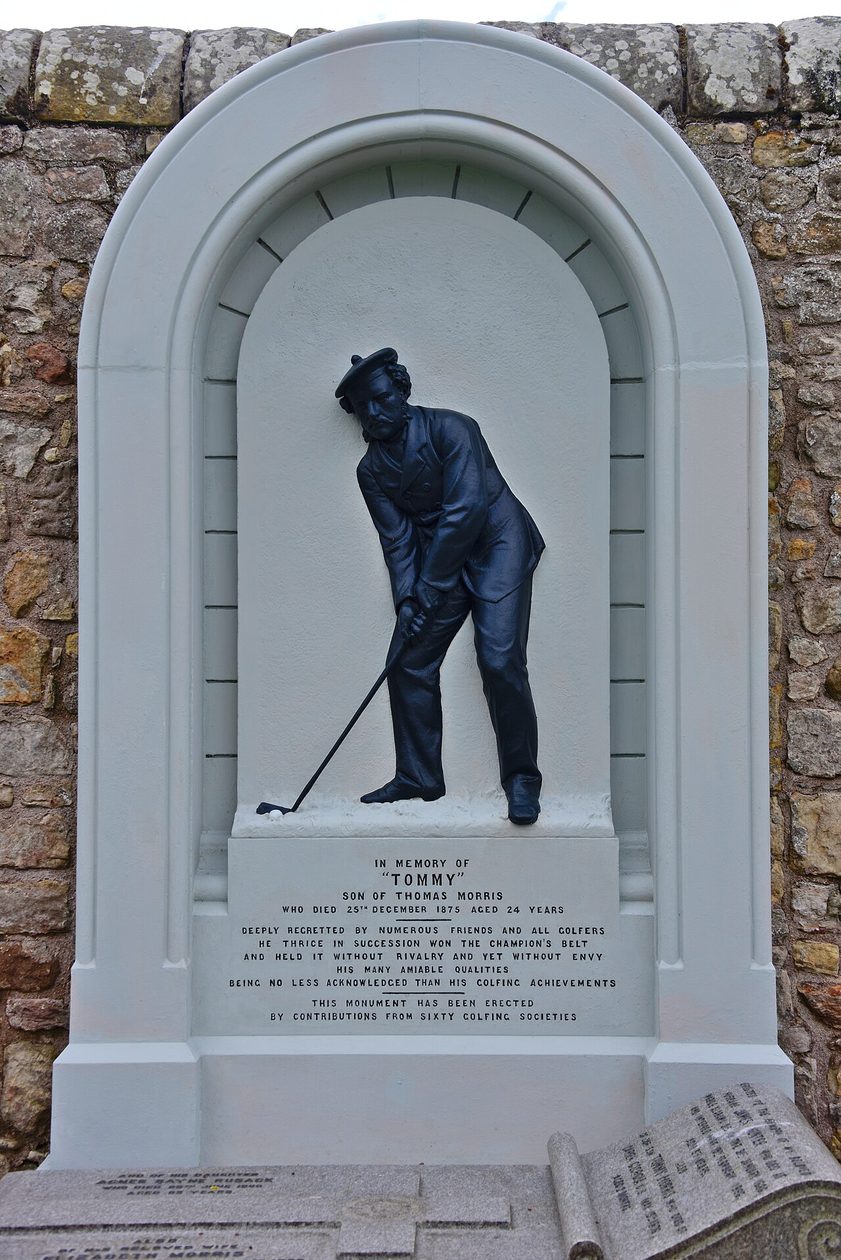
The golfers’ graveyard. St Andrews is the home of golf, and the cathedral graveyard holds some of the game’s first champions: Old Tom Morris, his son Young Tom Morris, who won the Open four times in a row and died at 24, and Allan Robertson, said to be the first professional golfer. Parts of the graveyard are currently fenced off because some gravestones are unstable.
What to see, in the order you meet it
The west front and the nave
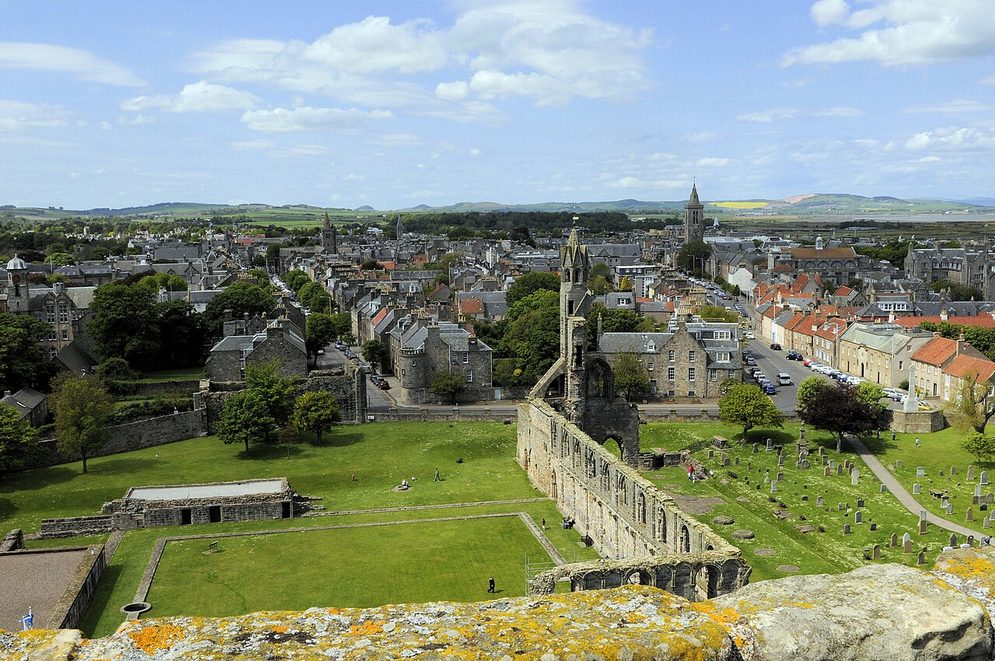
Enter through the war memorial gate at the top of North Street. The west front, rebuilt after the storm of the 1270s, faces the town. From its doorway you look along the whole length of the vanished nave, whose south wall still stands, to the east gable.
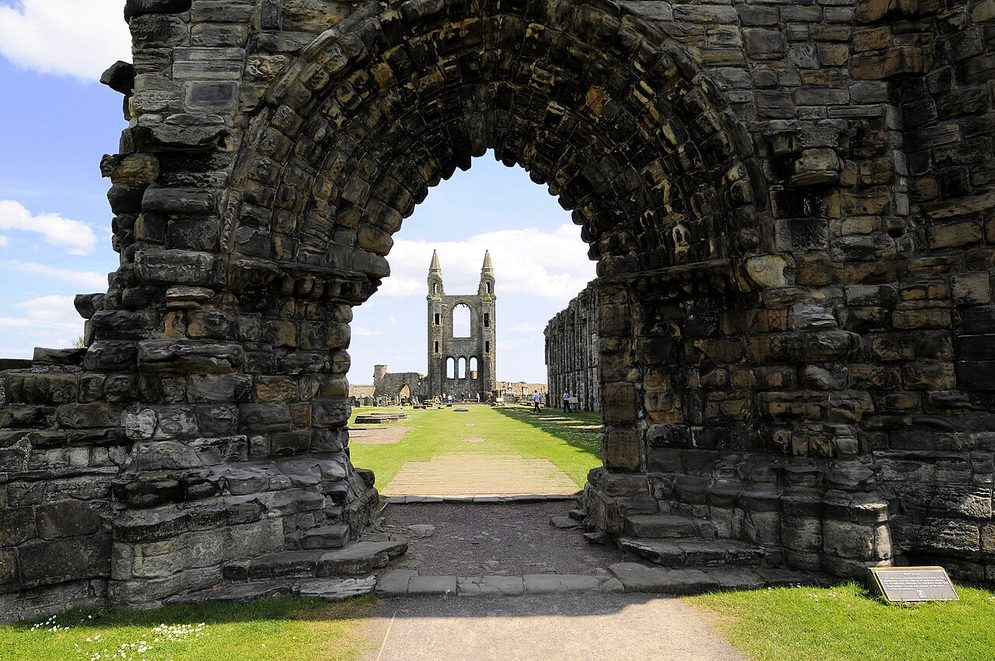
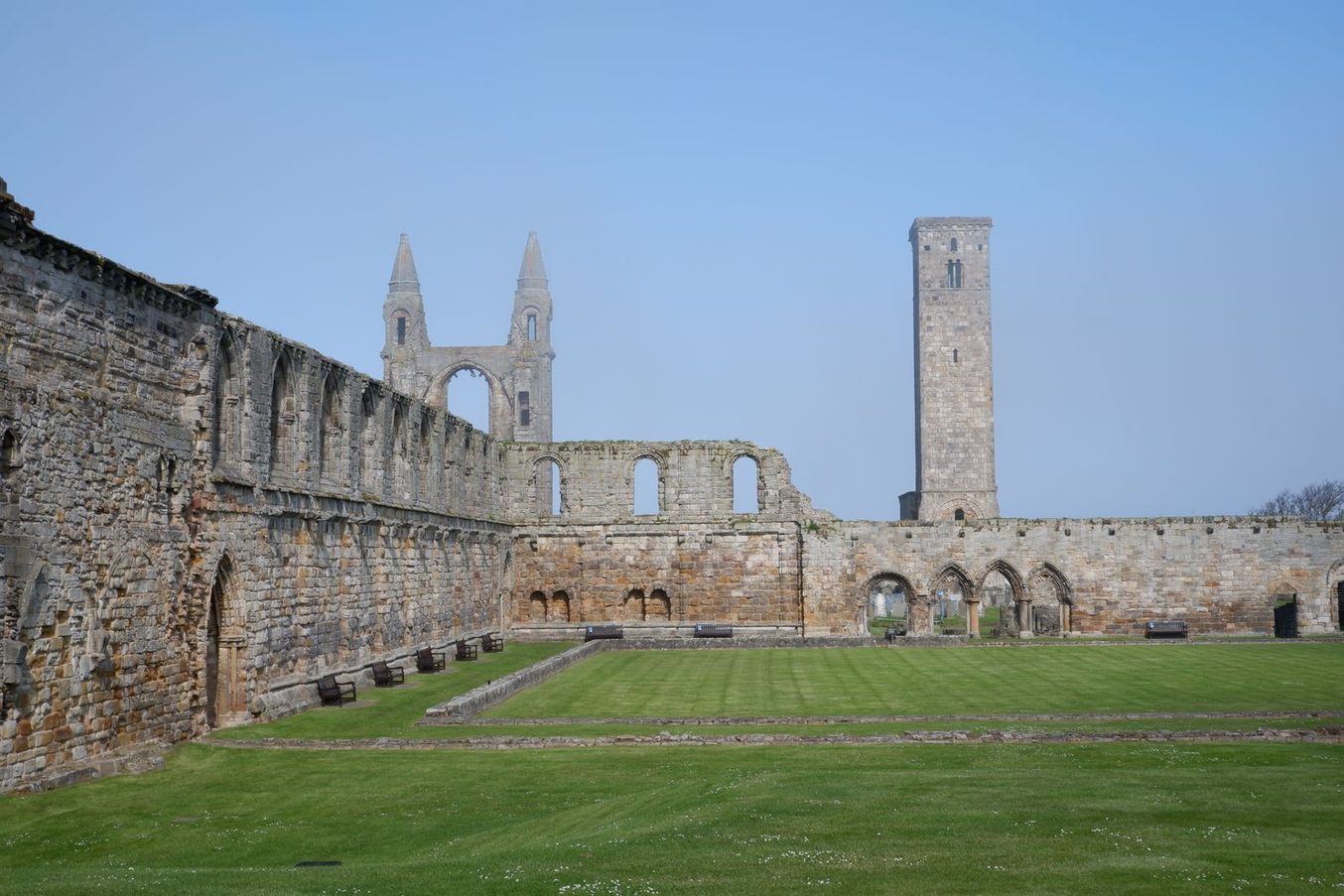
The east gable
Behind the site of the high altar, where the relics of St Andrew were kept, the east gable still rises to its full height between two turrets.
St Rule’s Tower
The tower of the older church of St Rule is about 33 metres tall and was built around 1130. At present it can be climbed only on a guided tour: 156 steps, ending on a narrow spiral stair, to a view over the ruins, the town, the harbour and the coast.
The cloister and the museum
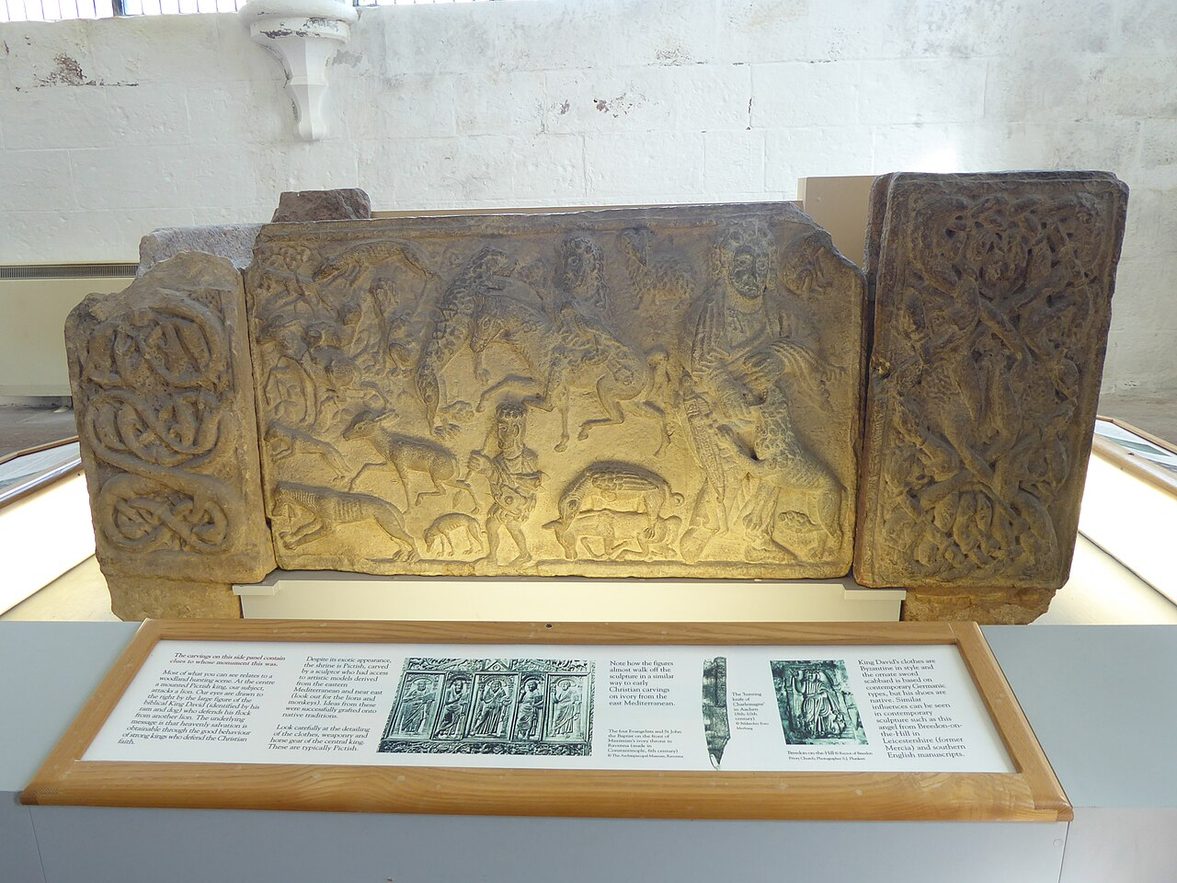
South of the nave are the outlines of the cloister and the chapter house. The museum, in the undercroft of the canons’ refectory, holds the St Andrews Sarcophagus, a Pictish stone shrine carved in the eighth century with a figure, probably David, fighting a lion. The museum is currently closed.
The graveyard and the harbour
Look for the graves of the Morrises and Allan Robertson, then walk down to the harbour, where the foundations of the early church of St Mary on the Rock lie just outside the precinct wall.
Visiting
Free to visit
No tickets are needed for the grounds. To climb St Rule’s Tower, book a free guided tour by emailing [email protected].
The hotel link goes to Booking.com. This site earns nothing from it at present — it is here because it is the quickest way to check what is actually available.
Don't miss
- The east gable Full height, between its turrets.
- St Rule’s Tower 156 steps to the best view in town.
- The Sarcophagus Pictish carving, when the museum reopens.
- Young Tom Morris The golfers’ graves.
- The Pends The fourteenth-century gateway.
- The castle A short walk along the cliffs.
Insider tips
Mind the winter days. From October to March the cathedral is closed on Tuesdays, Wednesdays and Thursdays. Combine it with St Andrews Castle, with its bottle dungeon (the siege mine is currently closed), and a walk along West Sands, the beach of Chariots of Fire.
Common questions
Is St Andrews Cathedral free to visit?
Yes. The cathedral grounds are free. The museum and shop are currently closed for conservation and maintenance work, and St Rule’s Tower is open only on free guided tours, booked by email with Historic Environment Scotland; donations are welcome.
When is St Andrews Cathedral open?
From 1 April to 30 September it is open daily from 9.30am to 5.30pm. From 1 October to 31 March it is open Friday to Monday from 10am to 4pm, and closed on Tuesdays, Wednesdays and Thursdays. Last entry is 45 minutes before closing.
Can you climb St Rule's Tower?
At present only as part of a free guided tour, which ends with the chance to climb the tower. The climb is 156 steps, the last part up a narrow spiral stair, and on a clear day the view reaches Dundee and beyond. Book the tour by emailing [email protected].
Is there a joint ticket with St Andrews Castle?
Not at the moment, because the cathedral grounds are free. The castle, a few minutes’ walk along the cliffs, has its own tickets: £10 for adults online.
How do you get to St Andrews?
The nearest station is Leuchars, on the Edinburgh–Dundee line. Bus 99 runs from Leuchars to St Andrews every 15 minutes or so. The cathedral is at the east end of the town, at the top of North Street and The Pends.
Where to stay and eat nearby
St Andrews has plenty of hotels, guest houses, cafes and restaurants, though rooms are scarce and expensive during big golf tournaments and university graduations.
More churches in Scotland
- Dunfermline Abbey — also in Fife, an hour away
- Elgin Cathedral — the other great ruined cathedral
- St Giles’ Cathedral — in Edinburgh