
León Cathedral
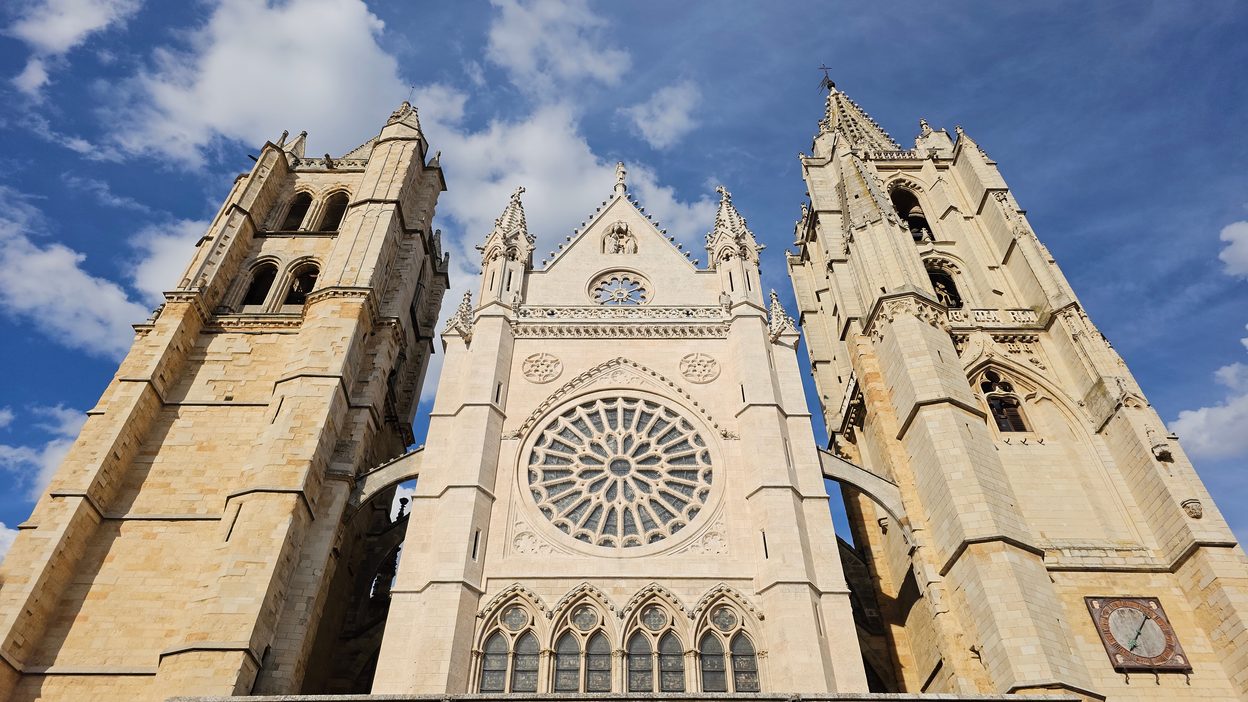
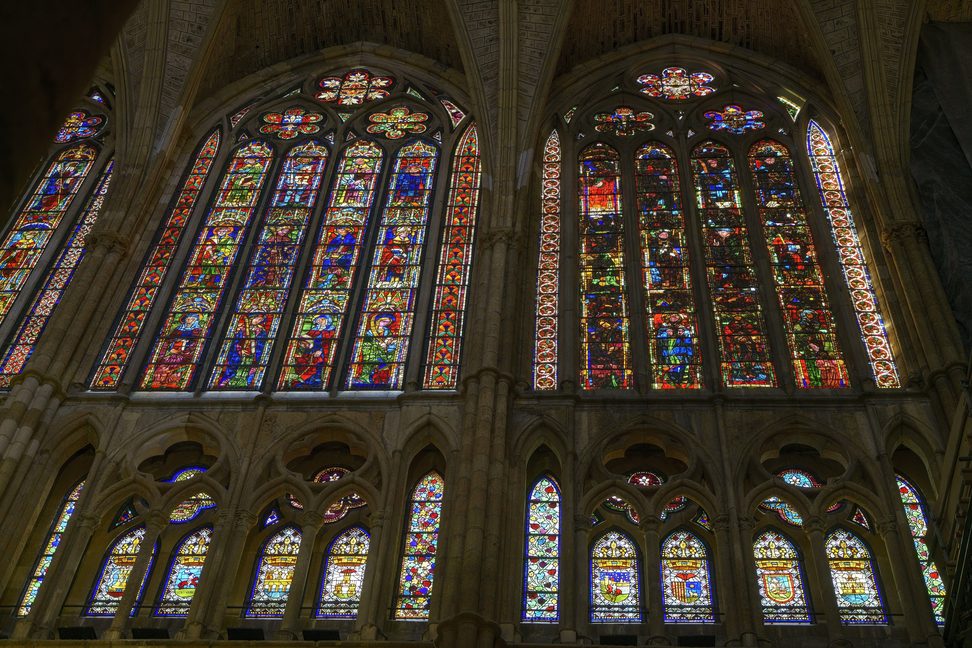
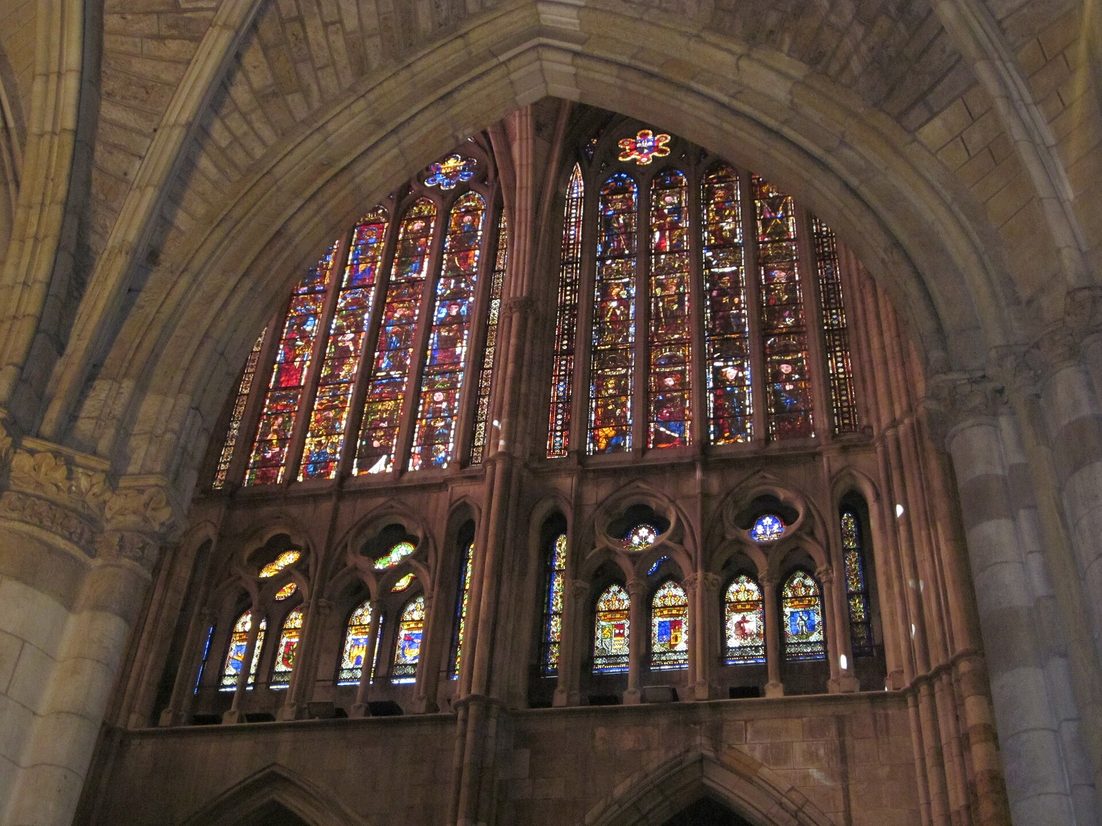
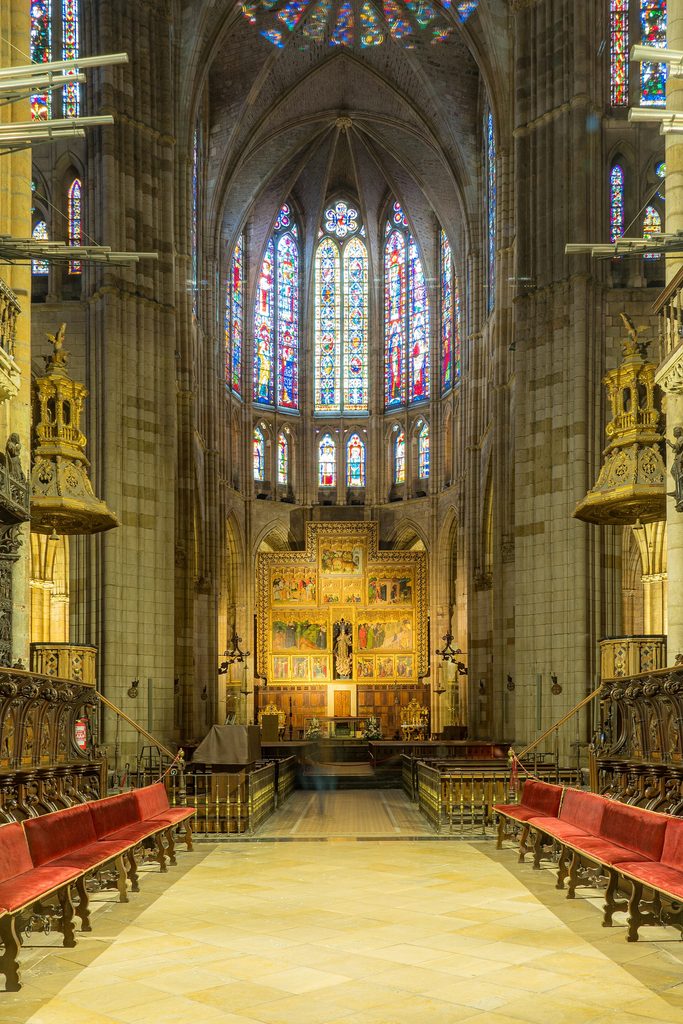
León Cathedral, Santa María de Regla, is the most French of Spain’s cathedrals and the one with the most glass: walls almost entirely of colour, about 1,800 square metres of stained glass, the largest collection of Gothic glass in Spain. Known as the Pulchra Leonina, “the beautiful one of León”, it stands on the Camino de Santiago in the old town, and pilgrims pay a reduced rate.
Light from Reims
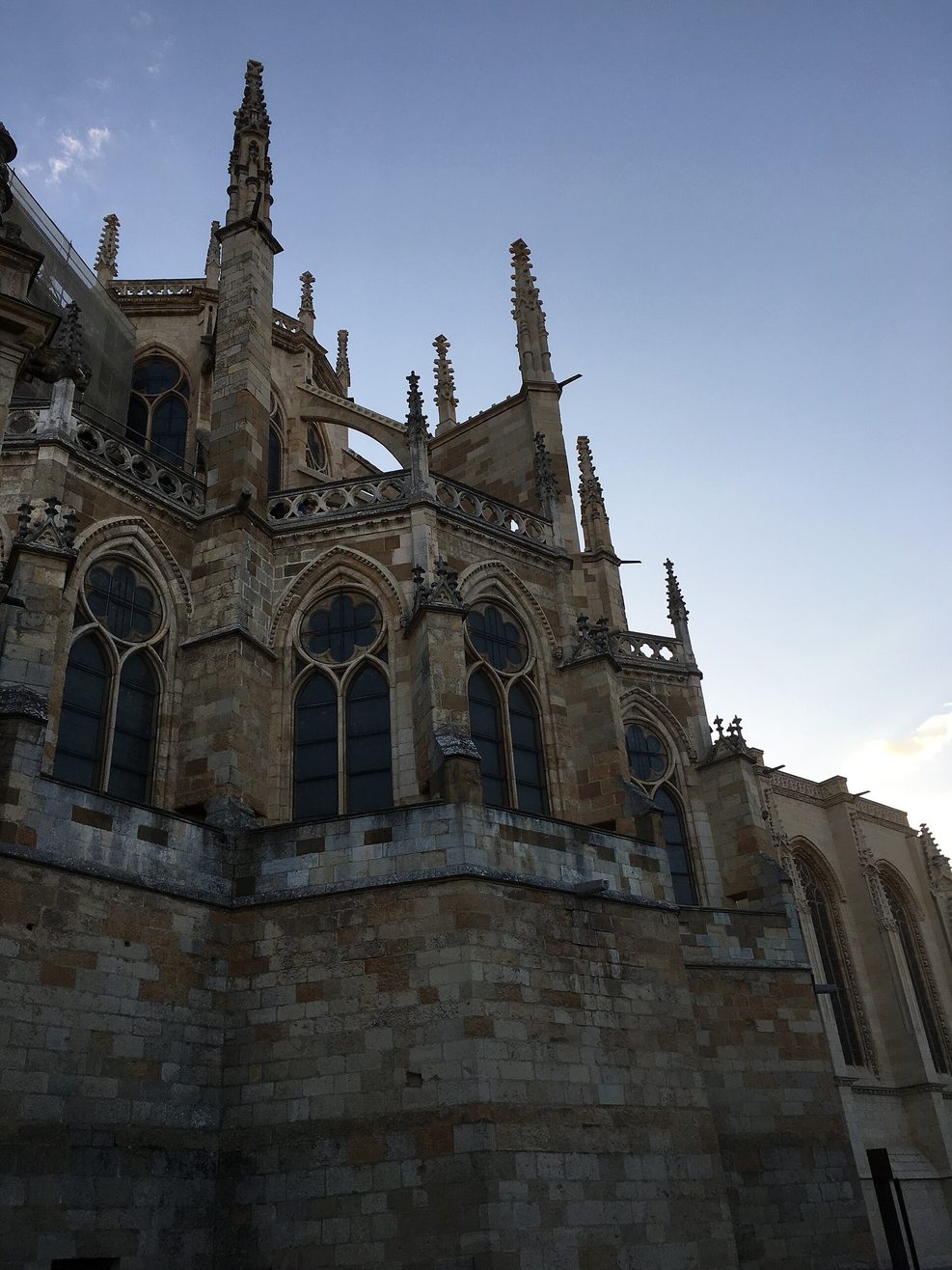
The cathedral stands over Roman baths of the Legio VII Gemina, which gave León its name, and over the palace King Ordoño II gave for the first cathedral in 916. The present Gothic building was begun around 1255 under Bishop Martín Fernández, with the support of Alfonso X, and its main structure was largely complete by the early 1300s. Its plan follows Reims on a slightly smaller scale, and its builders, led by a Maestro Enrique who was probably French, pushed the walls back to a skeleton of stone so that glass could fill almost everything in between.
That daring nearly brought it down. By the 19th century, weakened by poor stone and a heavy Baroque dome, the cathedral was close to collapse. A huge restoration began in 1859: the glass was taken out and stored, the dome removed and much of the structure rebuilt, and the cathedral reopened in 1901. In 1844 it had become the first building in Spain declared a national monument.
The visitor’s cheat sheet
| Where | Plaza de Regla, 24003 León; about 25 minutes’ walk from the station. Visitor entrance: the west door, under the rose window |
|---|---|
| Opening hours | October–April: 9.30am–1.30pm and 4pm–7pm, closed at lunchtime; shorter on Sundays and holidays, around the Masses. Last entry 30 minutes before closing |
| Admission | €8; reduced €7 (pilgrims with credencial, students, over-65s, groups); under-12s free with an adult. Museum €4 extra, or €12 combined |
| Free entry | Tuesdays 5.30pm–7pm, October–April |
| Mass | Daily at 9am, noon and 6pm, with more on Sundays and holidays; no sightseeing during services |
| Works | Glass and west portico restoration programme funded from 2026 (4–8 years); north rose under restoration; trascoro restoration contracted |
| Access | Ramps inside; the museum route is step-free |
| How long | An hour; add an hour for the cloister and museum |
Hours and admission checked against the official site in October 2026. They change; the official site is always the last word.
What to see
The stained glass
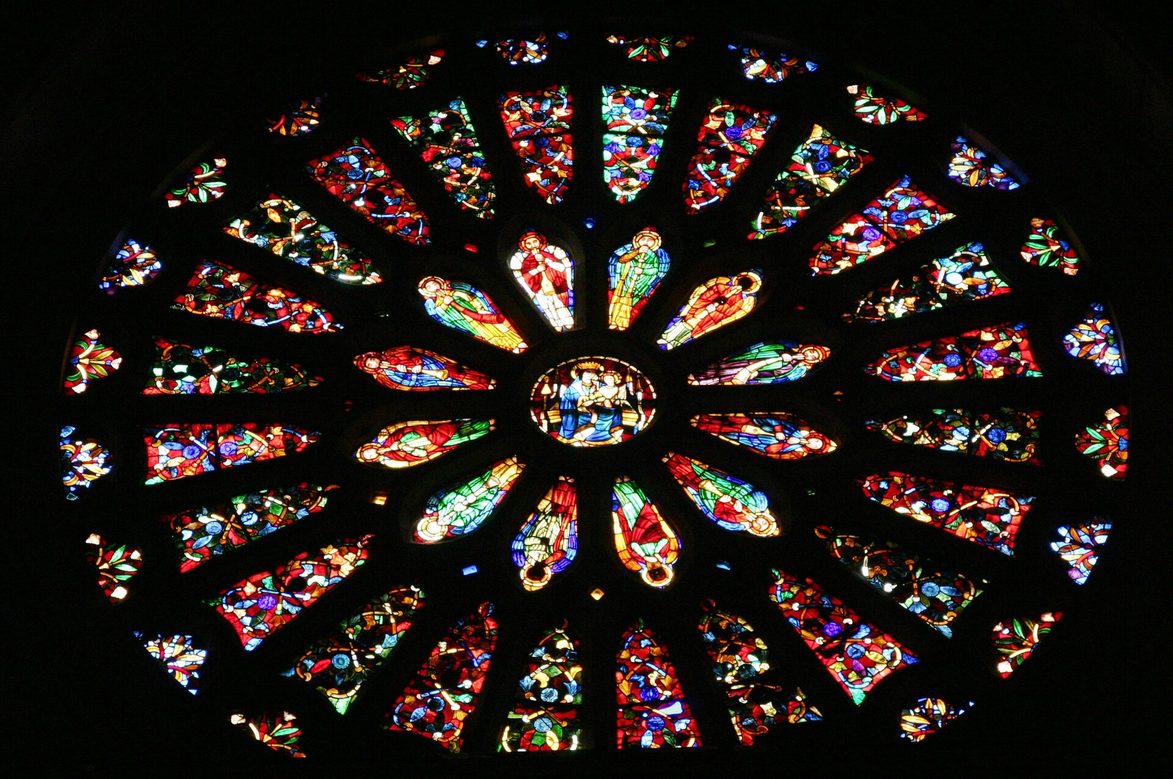
The glass is the reason to come. Three rose windows, about eight metres across, fill the west front and the ends of the transepts, and tall windows run all round the clerestory and the triforium. Much of the oldest glass is in the apse and the west and north roses, which shows the Virgin and Child among angels. Much of the rest was restored or remade after 1859, some of it in the cathedral’s own workshop. Come on a sunny morning for the east windows and in the late afternoon for the west.
The choir and the trascoro
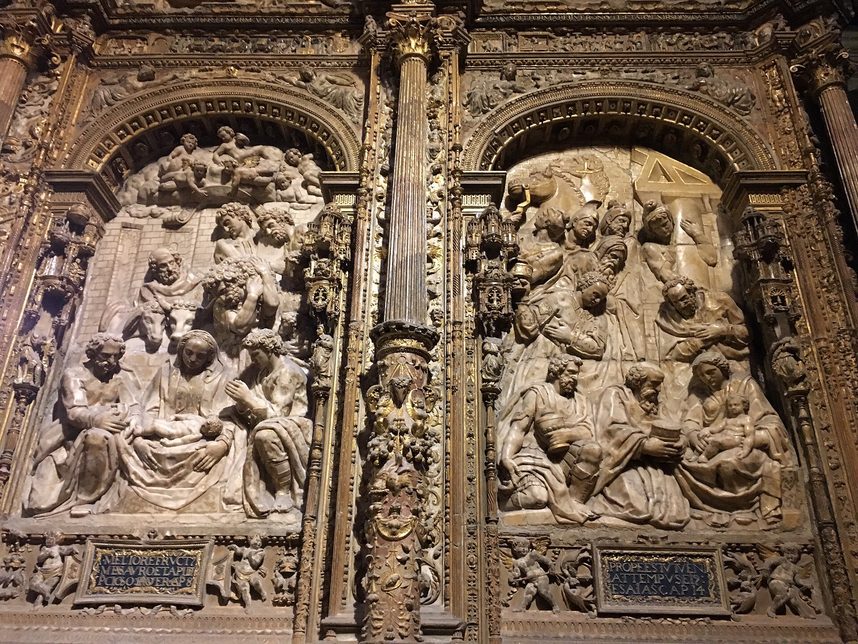
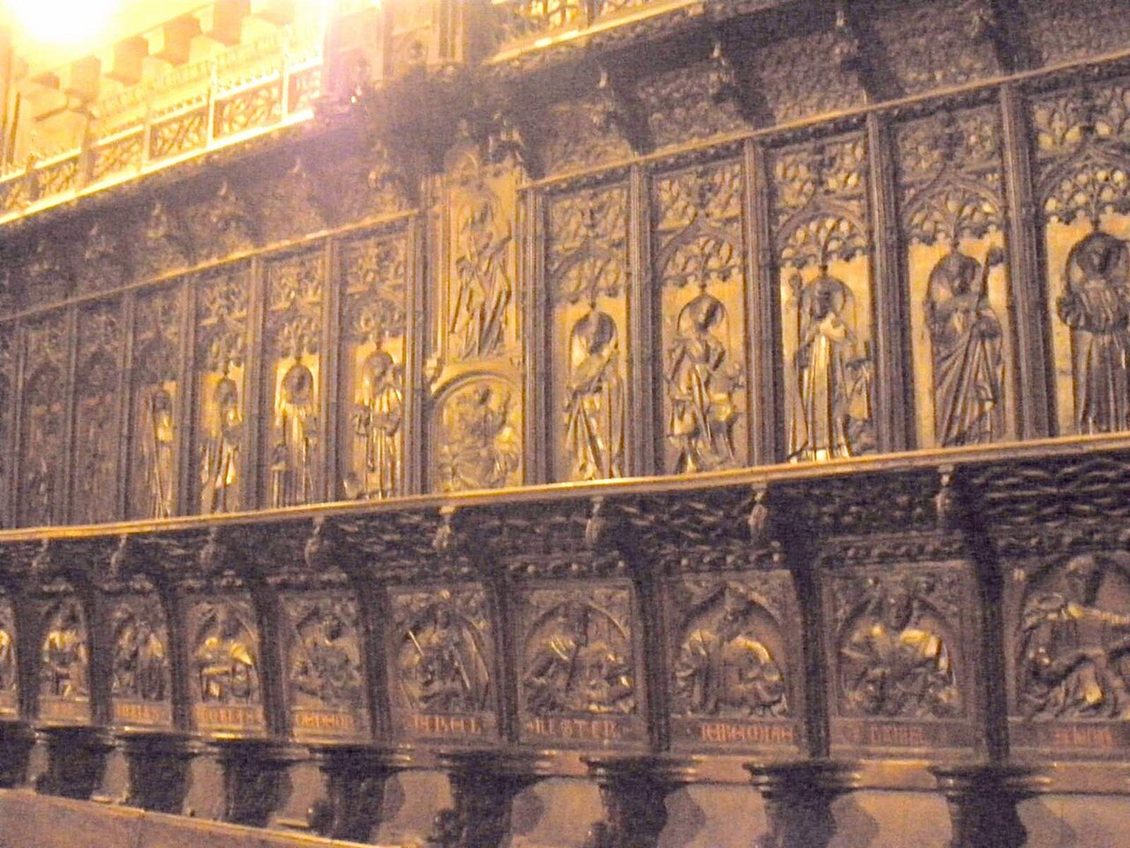
The choir in the middle of the nave has 15th-century walnut stalls. Its back, facing the west door, is the trascoro, a Renaissance triumphal arch in alabaster begun in 1577, with reliefs carved by Esteban Jordán; a restoration has been contracted, so it may be under scaffolding. At the high altar, the Gothic altarpiece has panels painted by Nicolás Francés in the 15th century, and the silver casket of San Froilán, the city’s patron.
The west front and the Virgen Blanca
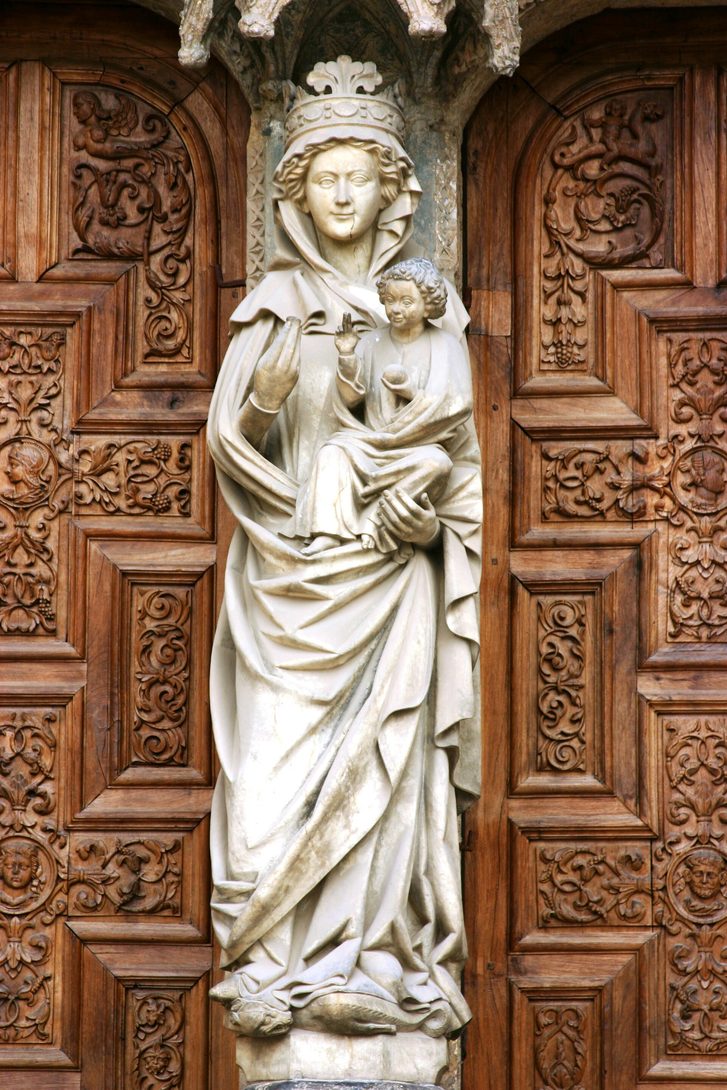
The west front has a triple portal under the rose window. The central door is the Last Judgement, and on the pillar between its doors stands the Virgen Blanca, the White Virgin; the figure there now is a copy, and the 13th-century original is in the central chapel of the apse. In the ambulatory behind the high altar, facing the Virgen Blanca chapel, is the tomb of King Ordoño II.
The cloister and museum
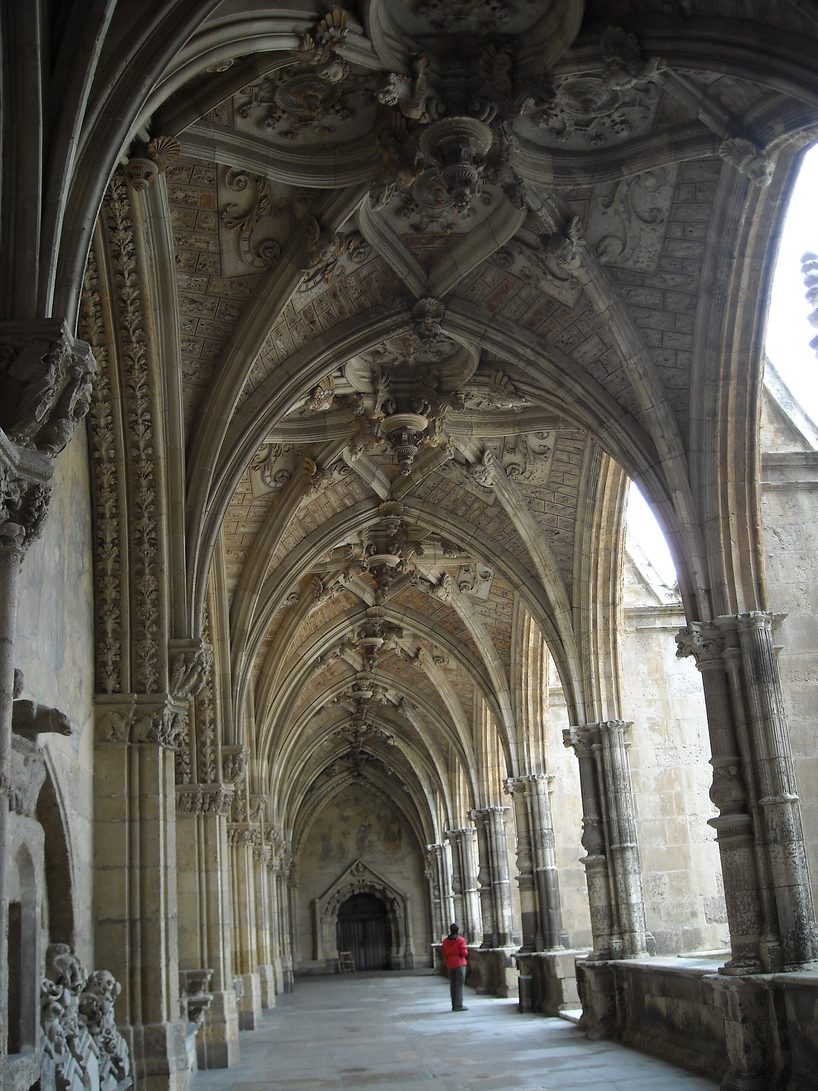
The cloister, entered from the north side, was built in the late 13th and early 14th centuries and given Renaissance vaults by Juan de Badajoz the Younger in about 1540; its walls keep murals by Nicolás Francés. The Museo Catedralicio-Diocesano fills 17 rooms around it, with everything from Roman finds to Renaissance art.
Getting there
The cathedral is at the top of the old town, on the Plaza de Regla. From León station, on the west bank of the Bernesga, walk east along the Avenida de Ordoño II and up through the Plaza de Santo Domingo, about 20 to 25 minutes. High-speed trains from Madrid Chamartín take about two hours. The Romanesque royal pantheon of San Isidoro and Gaudí’s Casa Botines are both within a ten-minute walk.
Where to stay
Tickets are sold at the cathedral. León is a major stop on the Camino Francés, so the old town fills up in summer and in Holy Years, and 2027 is one.
This link goes to Booking.com. This site earns nothing from it at present — it is here because it is the quickest way to check what is actually available.
Don’t miss
- The glass Above all in the apse and the west rose.
- The trascoro Renaissance alabaster facing the west door.
- The Virgen Blanca The original, in the apse chapel.
- The cloister Murals and tombs.
- San Isidoro The painted royal pantheon, ten minutes away.
Insider tips
Pick your light, and your Tuesday. The glass changes completely with the sun: mornings for the apse, late afternoons for the west rose. Between October and April entry is free on Tuesday afternoons from 5.30pm, but that is also when it is busiest. Walking the Camino? Bring your credencial for the reduced ticket.
Common questions
How much does León Cathedral cost?
€8, or €7 reduced for pilgrims with a credencial, students, over-65s and groups. Children under 12 go in free with an adult. The museum costs €4 extra, or €12 with the cathedral.
When is León Cathedral open?
From October to April, 9.30am to 1.30pm and 4pm to 7pm, closing at lunchtime. Sunday and holiday hours can be shorter and change around the Masses; check the cathedral’s agenda. Summer hours run later in the evening (check locally). Last entry is half an hour before closing.
Is there a free time to visit?
Yes: on Tuesday afternoons from 5.30pm to 7pm between October and April, entry is free.
How much stained glass does León Cathedral have?
About 1,800 square metres, in three great rose windows, 31 tall clerestory windows and 37 triforium windows, the largest collection of Gothic stained glass in Spain. Much of it is medieval, with a great deal restored or remade in the 19th century.
Are there works going on?
Yes. A long restoration programme for the stained glass and the west portico, funded from 2026, is expected to take four to eight years, and the north rose window is under restoration. Expect some scaffolding and some windows to be missing or covered.
More churches in Spain
- Burgos Cathedral — the other great Gothic cathedral on the Camino, two hours to the east.
- Santiago de Compostela Cathedral — the end of the road for pilgrims.
- Toledo Cathedral — the primate cathedral of Spain, another French-inspired Gothic church.
- Salamanca Cathedrals — the Old and New Cathedrals of the university city, two hours to the south.