
Salamanca’s Cathedrals
Salamanca has two cathedrals, built side by side and joined together: the Romanesque Old Cathedral of the 12th century, and the towering late-Gothic New Cathedral, begun in 1512–13, which leans against it. One ticket covers both, and a walkway through the towers takes you over their roofs. They stand at the heart of Salamanca’s golden-stone old city, a UNESCO World Heritage Site.
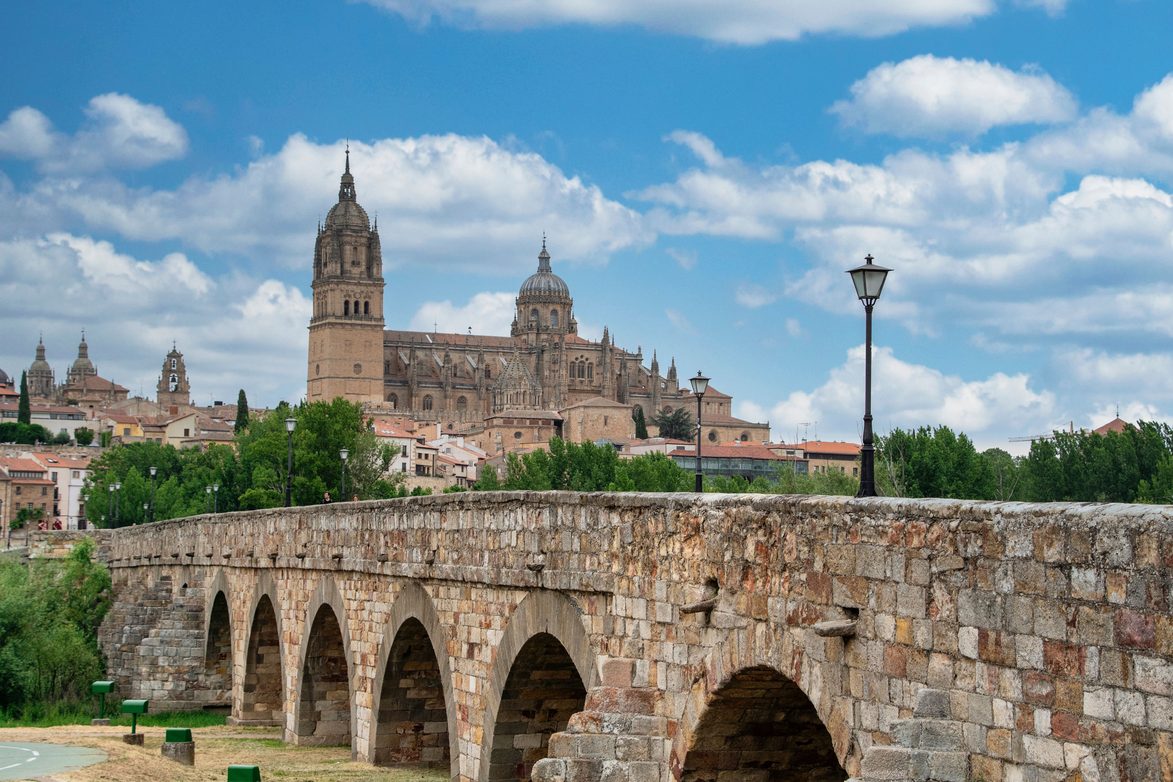
Old and new
The Old Cathedral, Santa María de la Sede, was begun in the first half of the 12th century and built over the following century or so, with chapels added later. By the early 16th century Salamanca, home of one of the oldest universities in Europe, wanted something grander. Rather than demolish the old church, the canons built the new one alongside it, so that the Old Cathedral survived almost intact. The New Cathedral was begun in 1512–13 under Juan Gil de Hontañón and Juan de Álava, continued by Rodrigo Gil de Hontañón, and finished only in 1733, still in a late-Gothic style mixed with later Baroque.
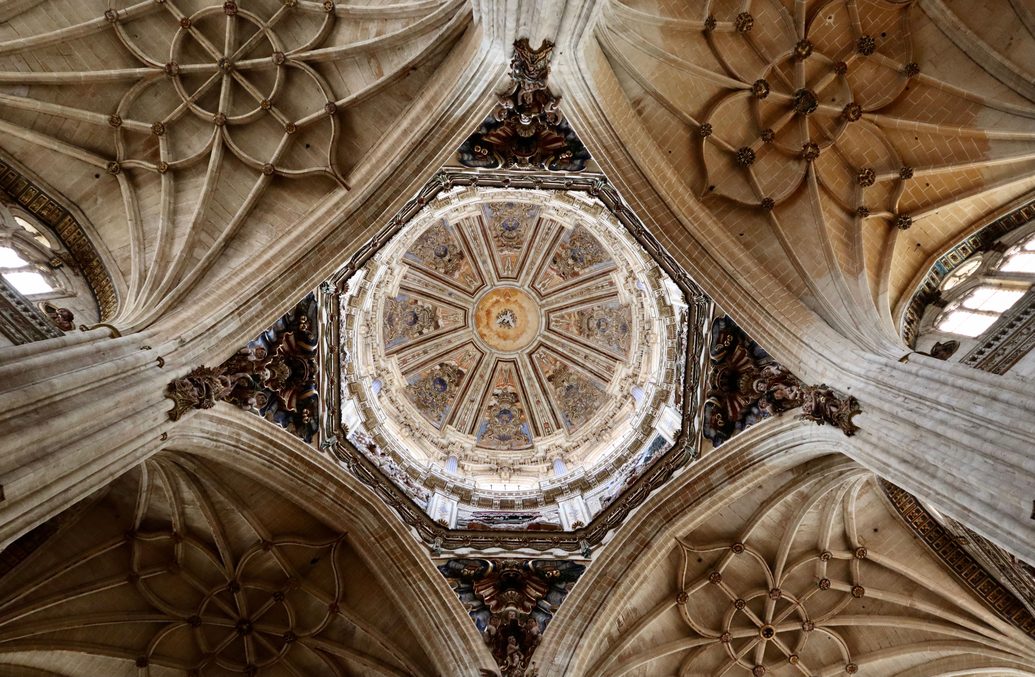
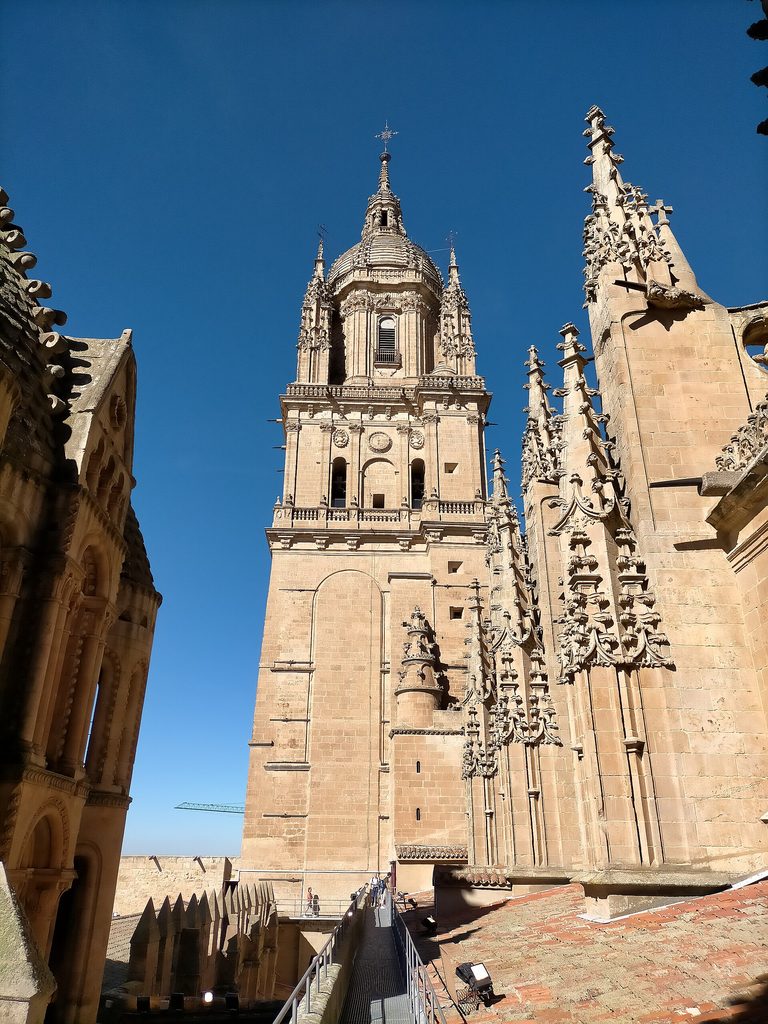
The Lisbon earthquake of 1 November 1755 cracked the New Cathedral’s dome and left its bell tower leaning; the tower was bound with chains and cased in new stone, and it still leans slightly. Every 31 October a man in traditional dress, the “Mariquelo”, climbs to the top of the tower to give thanks that the city was spared.
The visitor’s cheat sheet
| Where | Plaza Juan XXIII, Salamanca; about ten minutes’ walk from the Plaza Mayor |
|---|---|
| Opening hours | Mon–Sat 10am–8pm, Sun 10am–6pm; last entry 45 minutes before closing |
| Admission | €10 with audio guide (both cathedrals, cloister and chapter rooms); reduced €9, €7 or €6; children up to six free |
| Ieronimus | Towers and roofs, separate ticket, about €6 by day; daily 10am–8pm (to 6pm in January and February); about 200 steps |
| Mass | Chapter Mass daily at noon (check locally) |
| Access | The New Cathedral entrance is usable with help (a ramp is usually in place). The Old Cathedral route is not adapted: ask at the New Cathedral. Ieronimus, with about 200 steps, is not accessible |
| How long | An hour and a half; add an hour for Ieronimus |
Hours and admission checked against the official site in October 2026. They change; the official site is always the last word.
What to see
The New Cathedral
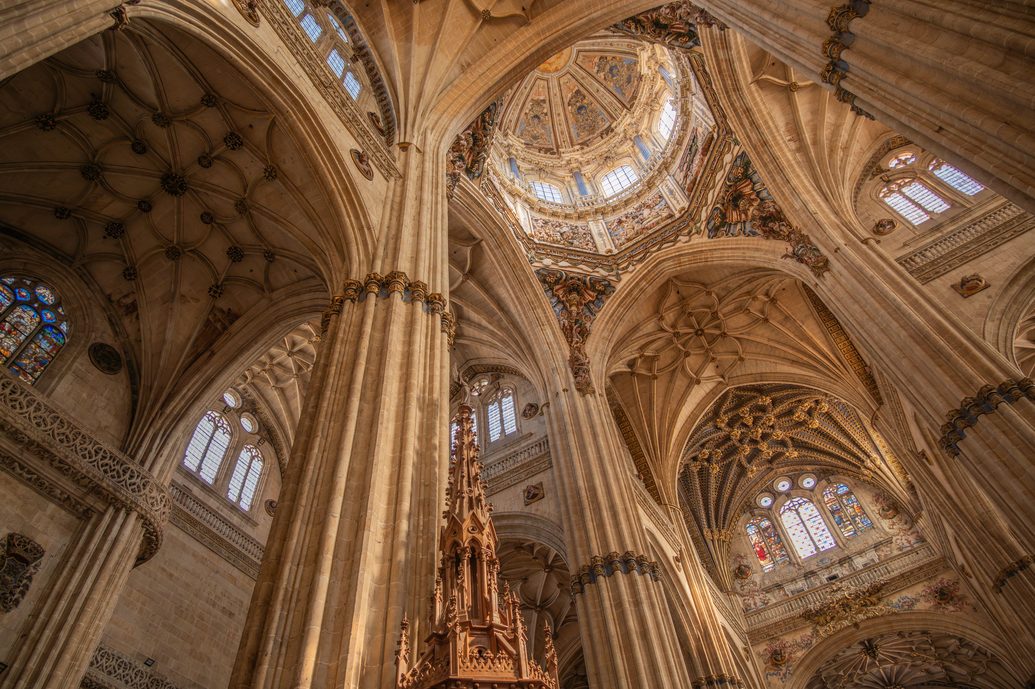
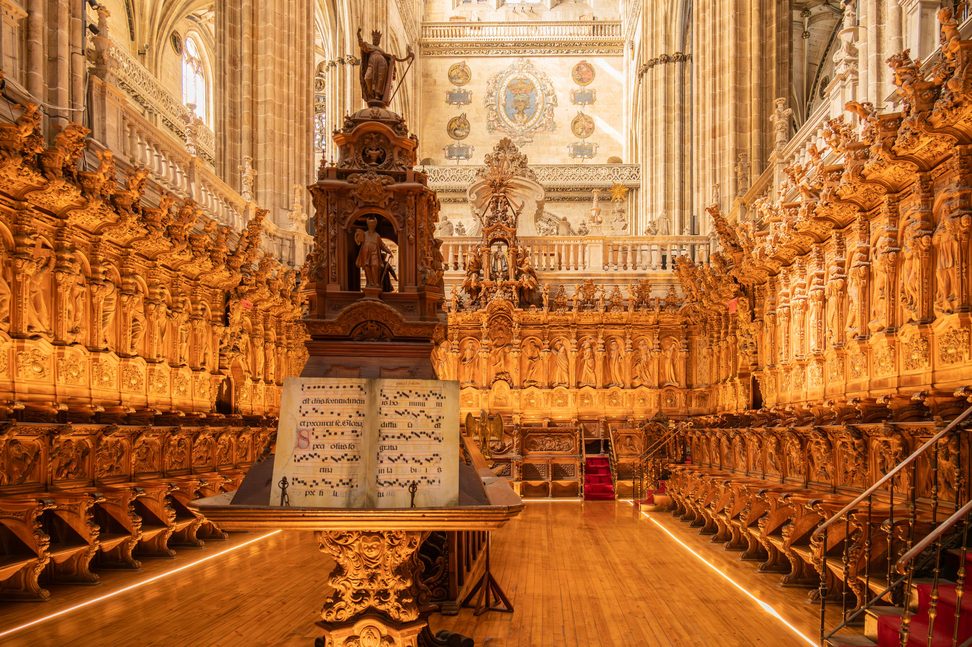
The visit starts in the New Cathedral: tall, light, and crowded with chapels. Look up at the ribbed vaults and the dome over the crossing, rebuilt after the earthquake. In the middle of the nave stands the Baroque choir, carved by the Churriguera family in the 18th century, with two great organs above it. The west front is a mass of Plateresque carving around the main door.
The Old Cathedral
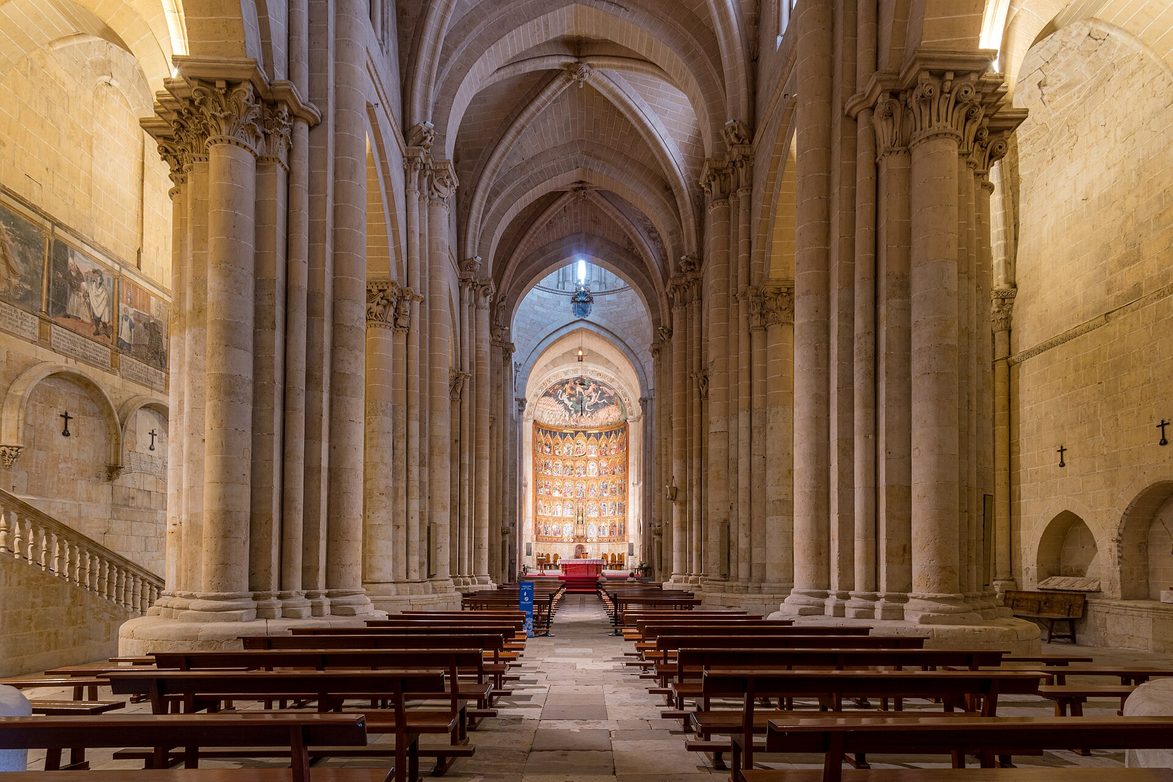
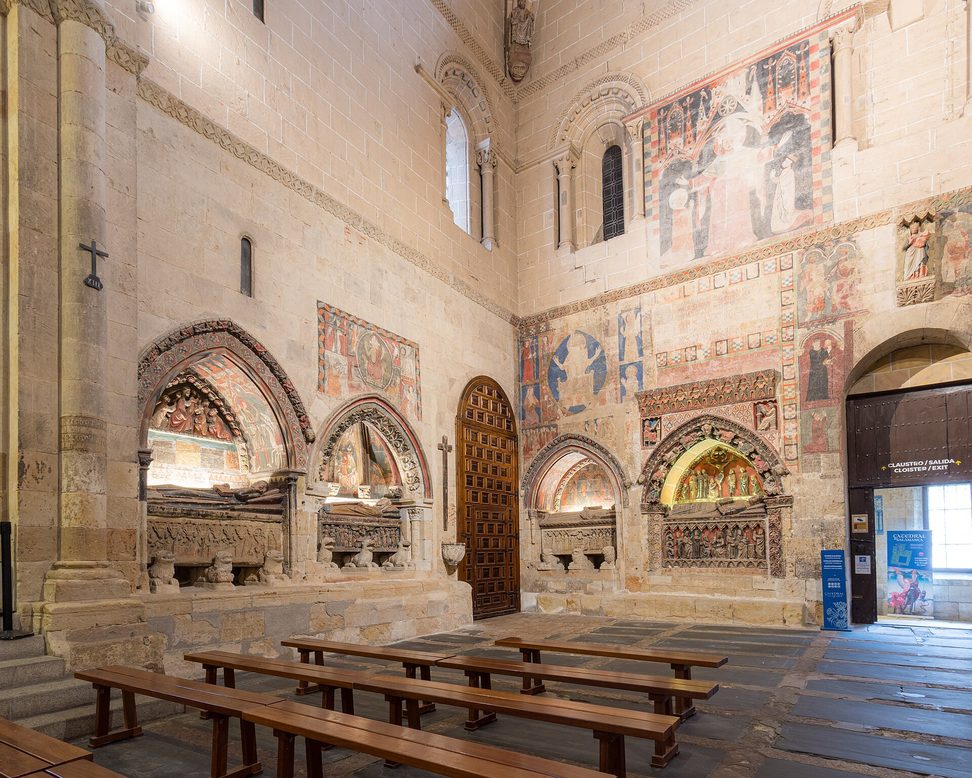
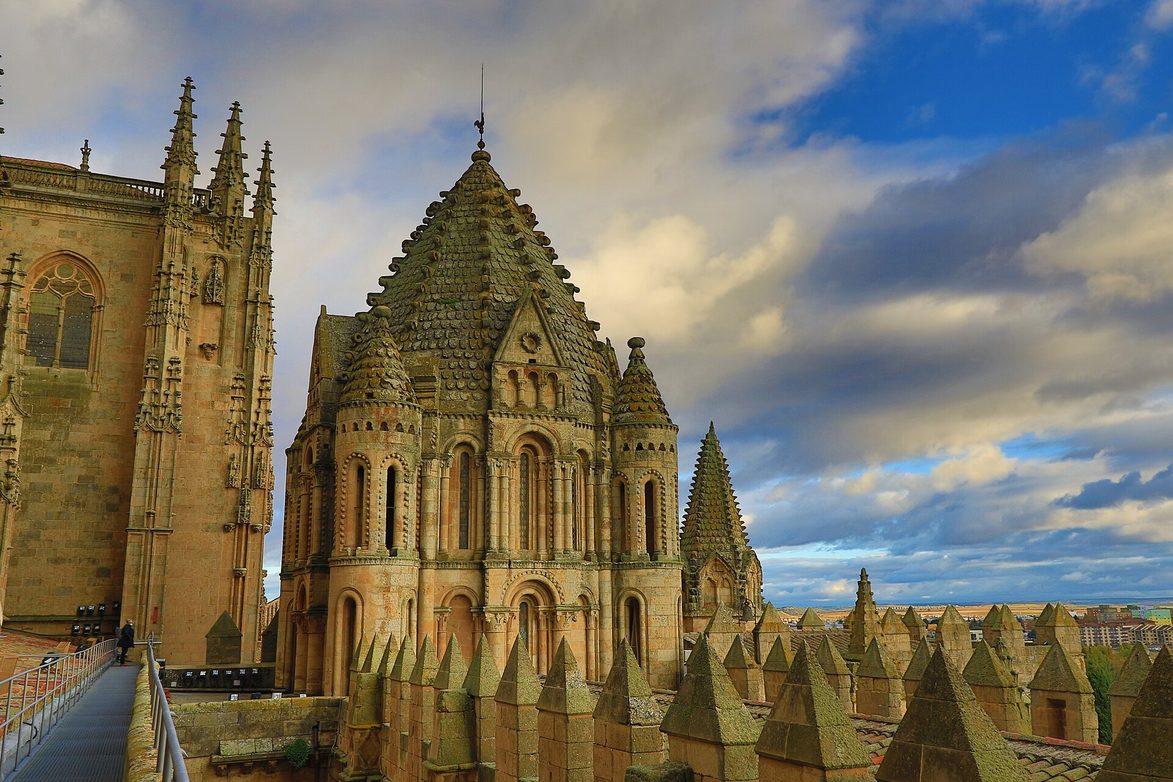
From the New Cathedral you pass into the Old Cathedral, which feels a world away: simple Romanesque arches and, behind the altar, a 15th-century altarpiece of 53 painted panels attributed to the Florentine Delli brothers, beneath a fresco of the Last Judgement. Above the crossing rises the Torre del Gallo, a dome covered in stone scales. Around the cloister are the chapels, among them the Capilla de Santa Bárbara, where students of the university once kept vigil before their final examination.
Ieronimus: the towers and roofs
A separate visit, Ieronimus, climbs through the medieval towers to galleries and terraces over both cathedrals, with close views of the Torre del Gallo and across the city. It takes about an hour, with about 200 steps, and on Friday and Saturday evenings there are night visits.
The astronaut
On the Puerta de Ramos, the north door facing the Plaza de Anaya, look among the carving for a small astronaut and, a little way off, a creature eating an ice cream. They are not medieval: a stonemason carved them during the restoration of 1992, a modern signature in the old tradition of masons leaving their mark.
Getting there
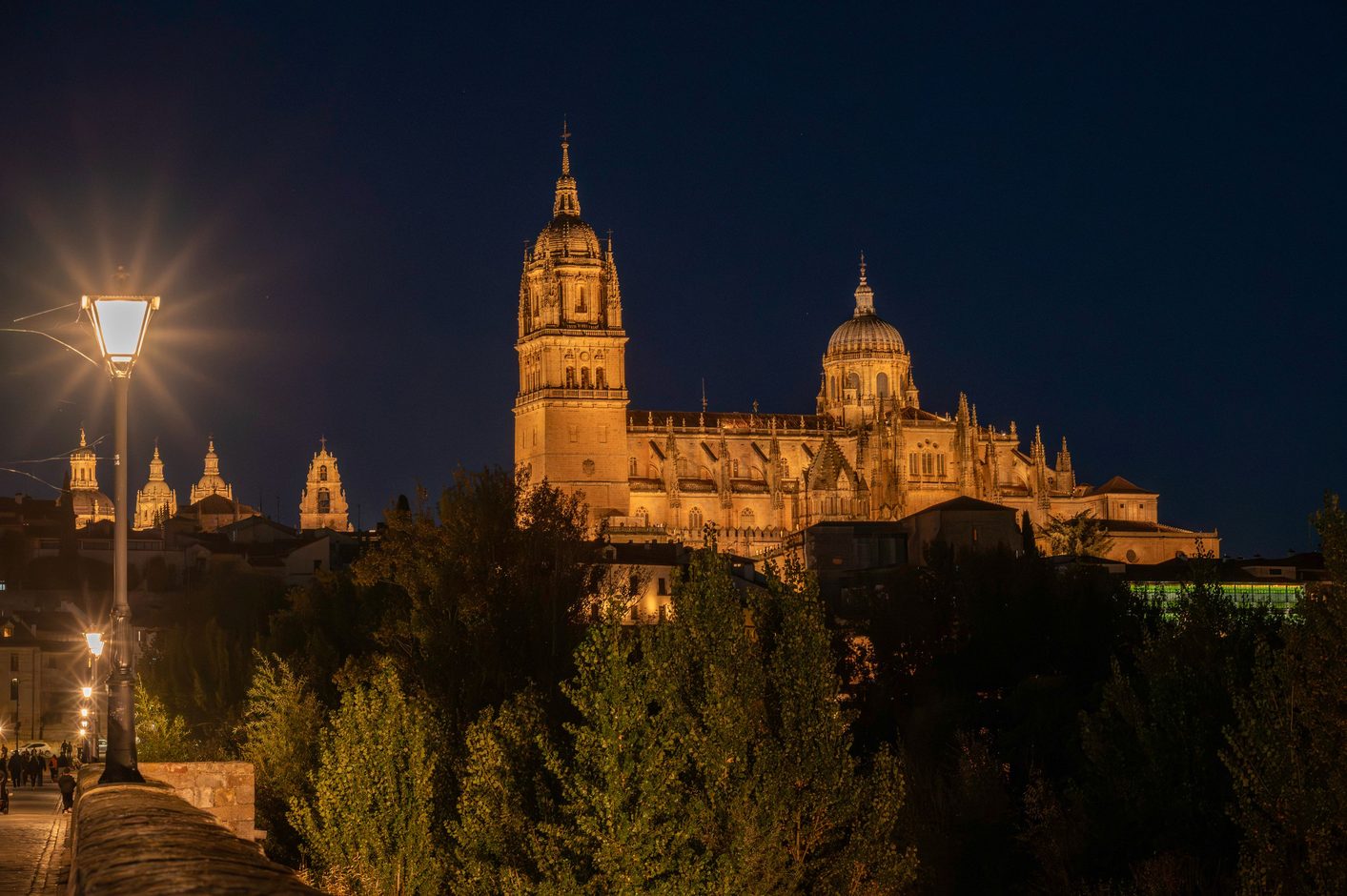
The cathedrals are in the southern part of the old city, about ten minutes’ walk from the Plaza Mayor and close to the university. Direct trains from Madrid-Chamartín take about an hour and forty minutes, and direct buses about two and a half hours. For the classic view, cross the Roman bridge over the Tormes and look back.
Tours and where to stay
Cathedral and Ieronimus tickets are sold online and at the door. For guided tours of Salamanca, including day trips from Madrid, and for hotels in the old city, try these.
These links go to GetYourGuide and Booking.com. This site earns nothing from them at present — they are here because they are the quickest way to check what is actually available.
Don’t miss
- The Old Cathedral altarpiece Fifty-three painted panels.
- The Torre del Gallo Best seen from the roofs.
- The Capilla de Santa Bárbara Where students sat their final examinations.
- The astronaut On the north door, 1992 vintage.
- The Roman bridge view At sunset, or floodlit at night.
Insider tips
Do Ieronimus at night. The evening tower visits, when the cathedral is closed and floodlit, are the most memorable way to see it; book ahead. By day, come at opening time, before the coach tours from Madrid arrive, and leave time to stand in the Patio de las Escuelas next door, looking for the frog on the university’s façade.
Common questions
How much does Salamanca Cathedral cost?
One ticket covers both cathedrals: €10 with an audio guide, with reductions to €9, €7 or €6. It includes the New Cathedral, the Old Cathedral, the cloister and the chapter rooms, plus the exhibitions in the Palacio Episcopal. Children up to six go free.
Are the Old and New Cathedrals separate visits?
No. They are joined, and you visit them on a single one-way route, entering through the New Cathedral. The Ieronimus walk through the towers and roofs is separate.
Where is the astronaut?
On the Puerta de Ramos, the north door facing the Plaza de Anaya. A stonemason carved the little astronaut, along with a creature eating an ice cream, during a restoration in 1992; they are modern additions, not medieval prophecies.
When is Salamanca Cathedral open?
Monday to Saturday 10am to 8pm and Sunday 10am to 6pm, with last entry 45 minutes before closing. Check opening around Christmas and New Year, and during services.
Can you climb the towers?
Yes, with the Ieronimus visit, which climbs about 200 steps through the towers to walkways over the roofs of both cathedrals. It has its own ticket, about €6 by day, with night visits on Friday and Saturday evenings.
More churches in Spain
- Segovia Cathedral — the other great late-Gothic cathedral of Castile, begun by the same Juan Gil de Hontañón.
- León Cathedral — the French-style Gothic cathedral of glass, further north.
- Santiago de Compostela Cathedral — the pilgrims’ cathedral, at the end of the Camino.