
Segovia Cathedral
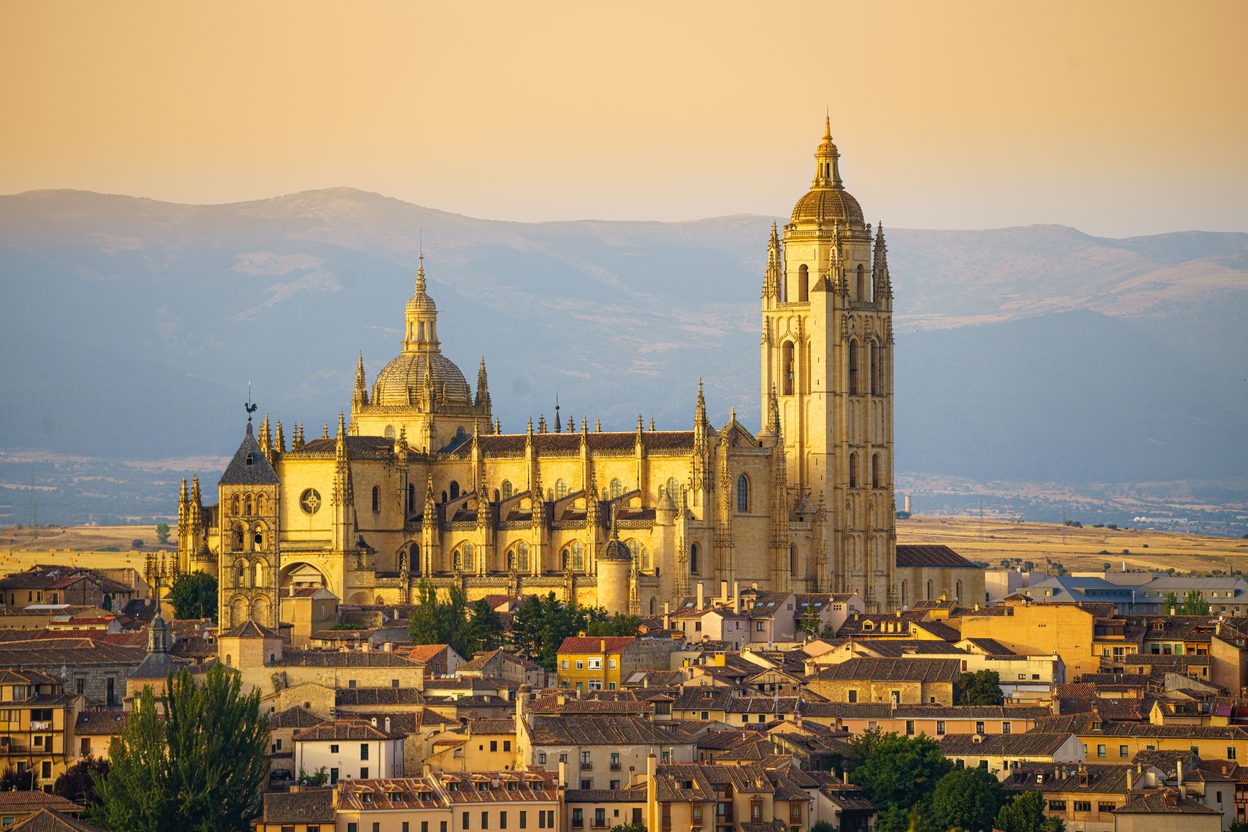
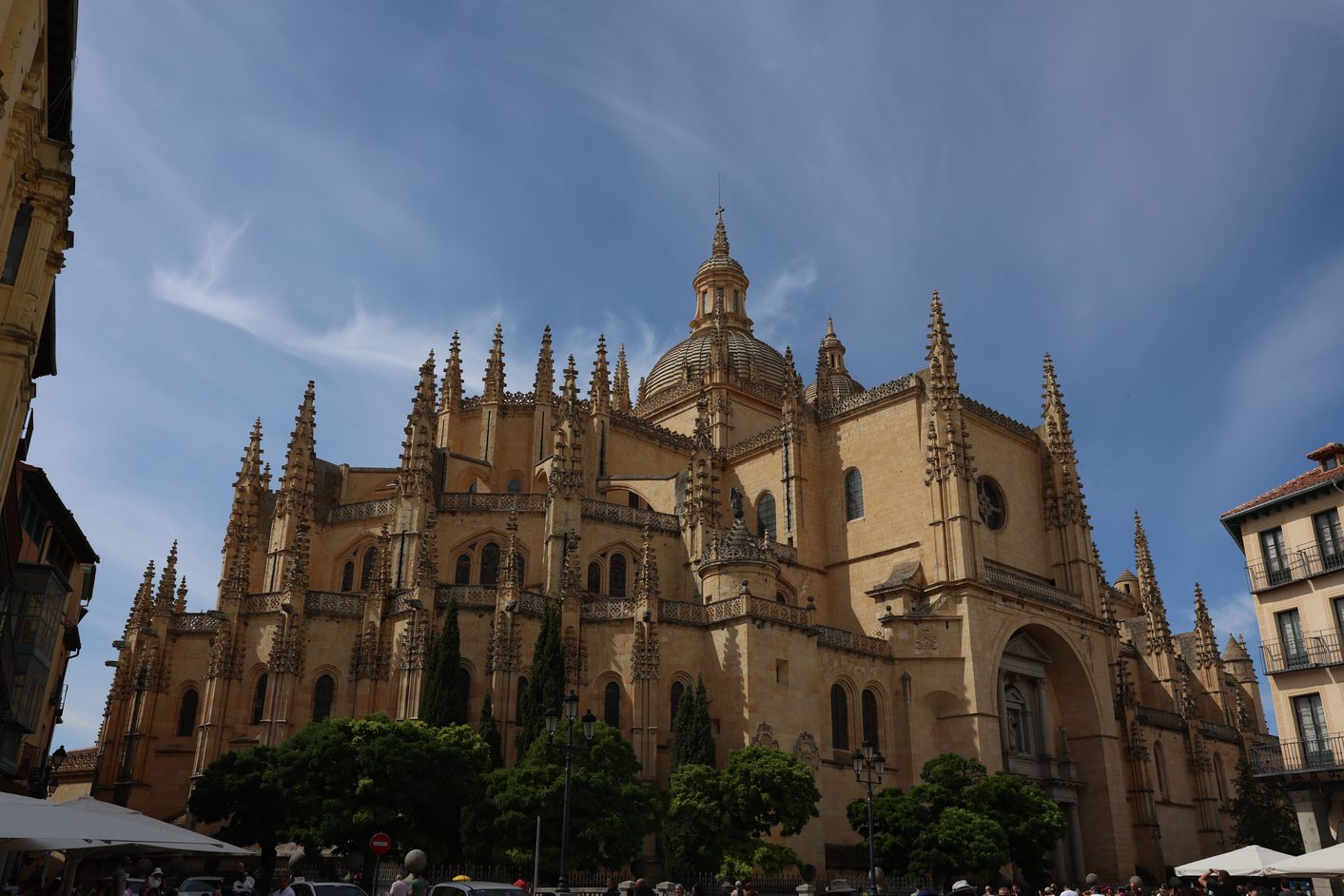
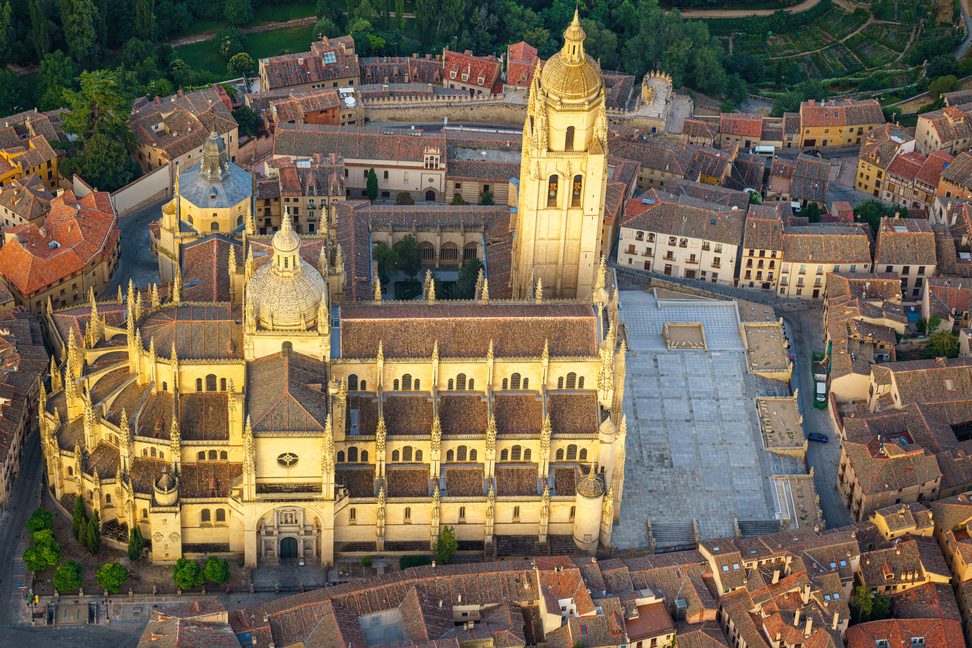
Segovia Cathedral rises above the Plaza Mayor like a golden ship, all pinnacles and buttresses, between the Roman aqueduct and the Alcázar. Begun in 1525, it is often called Spain’s last great Gothic cathedral, and the Segovians call it “the Lady of Cathedrals”. Inside are the choir stalls and cloister rescued from the old cathedral, Juan de Juni’s Entombment, and a tower you can climb. Entry is €4.
A cathedral built twice
Segovia’s first cathedral stood beside the Alcázar, and it was badly damaged in the revolt of the Comuneros against Charles V in 1520–21. The emperor had a new one built in the middle of the city, on the site of a convent and part of the Jewish quarter. The first stone was laid in 1525, to designs by Juan Gil de Hontañón, and his son Rodrigo continued the work. Building went on for nearly two centuries, still in the late Gothic style long after the rest of Spain had turned to the Renaissance; the east end was closed only in 1685, and the cathedral was consecrated in 1768.
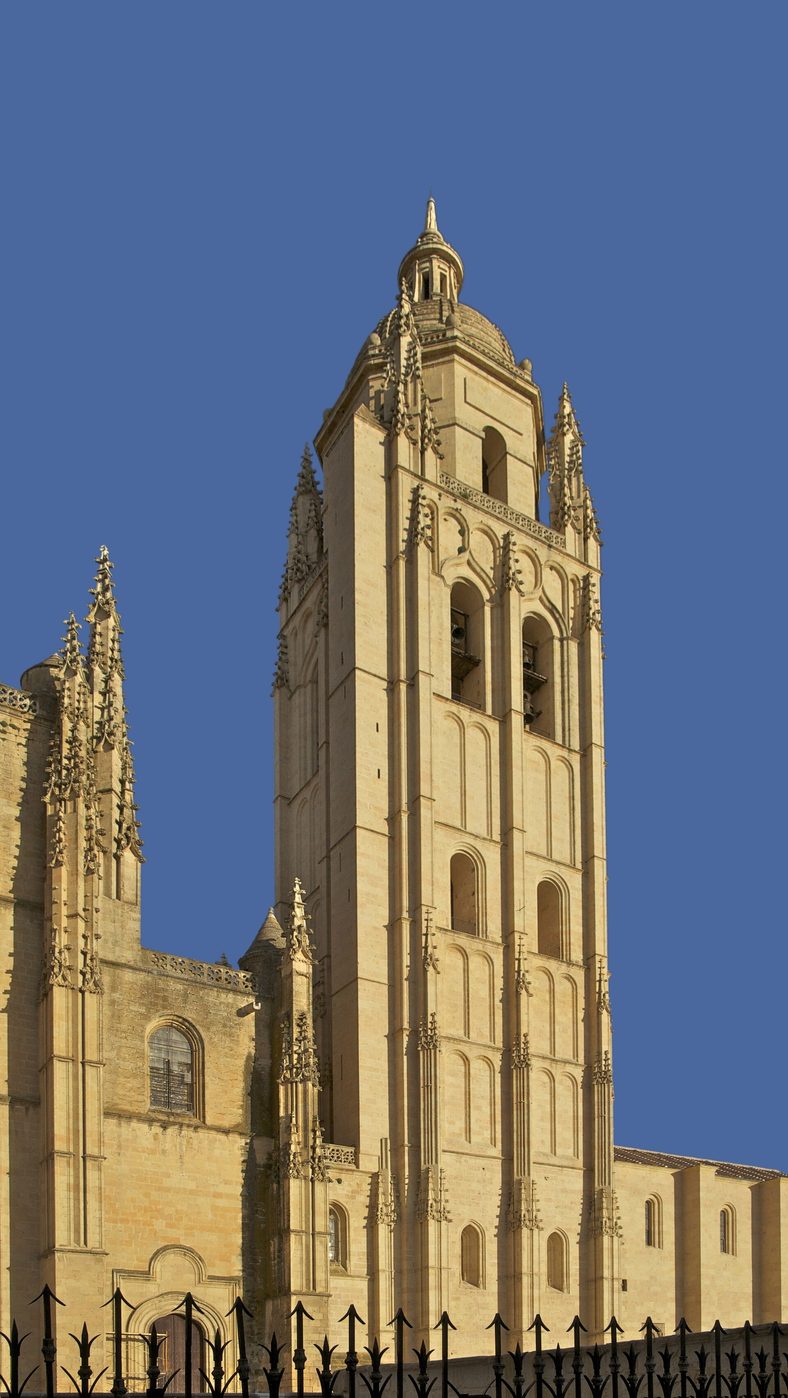
The tower was finished in 1548 with a tall wooden spire that made it, by the cathedral’s own account, the tallest in Spain. Lightning set the spire on fire in 1614, and it was replaced by the stone top you see now, 88 metres high.
The visitor’s cheat sheet
| Where | Plaza Mayor, Segovia (C/ Marqués del Arco 1); 12–15 minutes’ walk up from the Aqueduct |
|---|---|
| Opening hours | Winter: Mon–Sat 9.30am–6.30pm, Sun 1.30pm–6.30pm. Summer (from about late April to mid-September): Mon–Sat 9am–9.30pm, Sun 1.30pm–9.30pm. Last entry 30 minutes before closing |
| Admission | €4, reduced €3, with the cloister, chapels, exhibition rooms and bishop’s palace; under-8s free. Church only free early on Sunday mornings (9.30–10.30am Nov–Mar, 9–10am Apr–Oct) |
| Tower | Guided only, about 1 hour, 308 steps: €7 (reduced €6); cathedral and tower guided together €10 (Mon–Sat only) |
| Mass | Mon–Sat 10am; Sundays and holy days 11am and 12.30pm. No sightseeing during services |
| Closed | 1 and 6 January, Good Friday, 25 and 31 December; closed to tourists for part of some feast days |
| Access | A mobile ramp at the entrance on request; only partial wheelchair access inside; ask at the ticket office. The tower is not accessible |
| How long | An hour; two with the tower |
Hours and admission checked against the official site in October 2026. They change; the official site is always the last word.
What to see
The nave and the Capilla Mayor
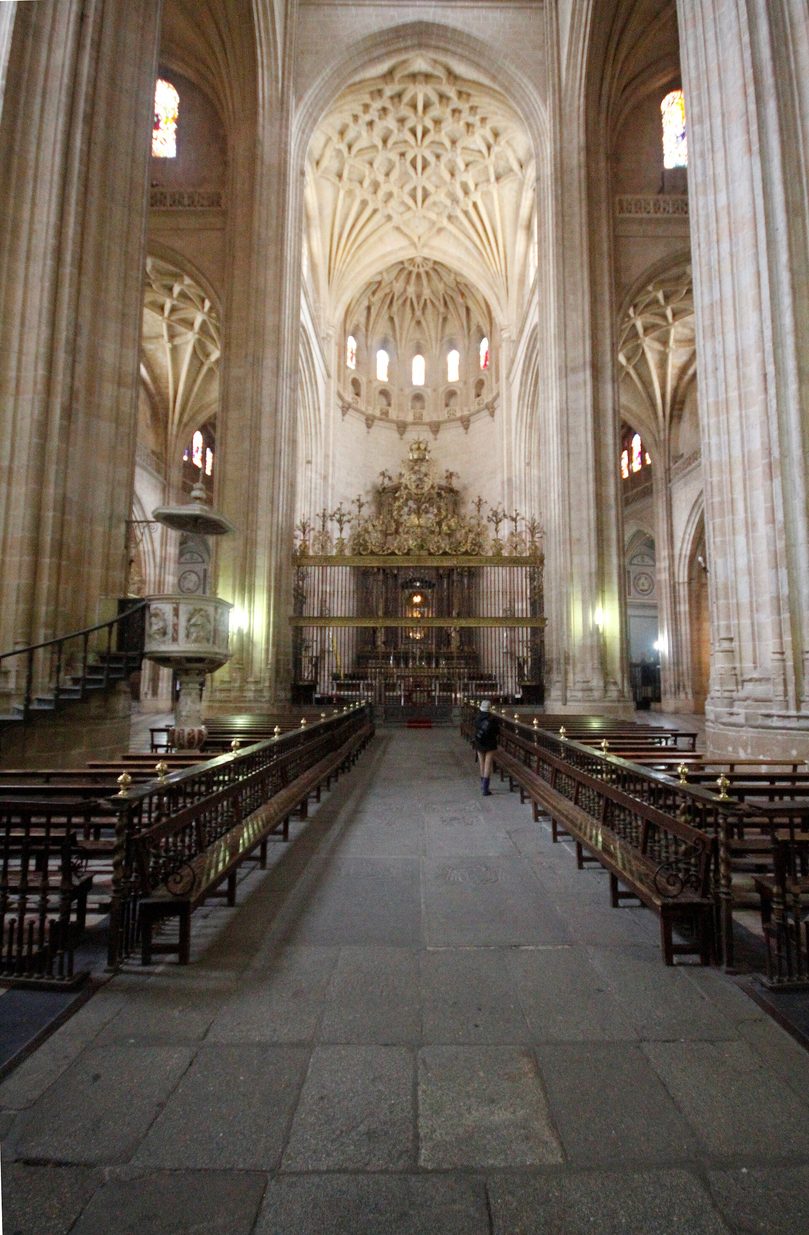
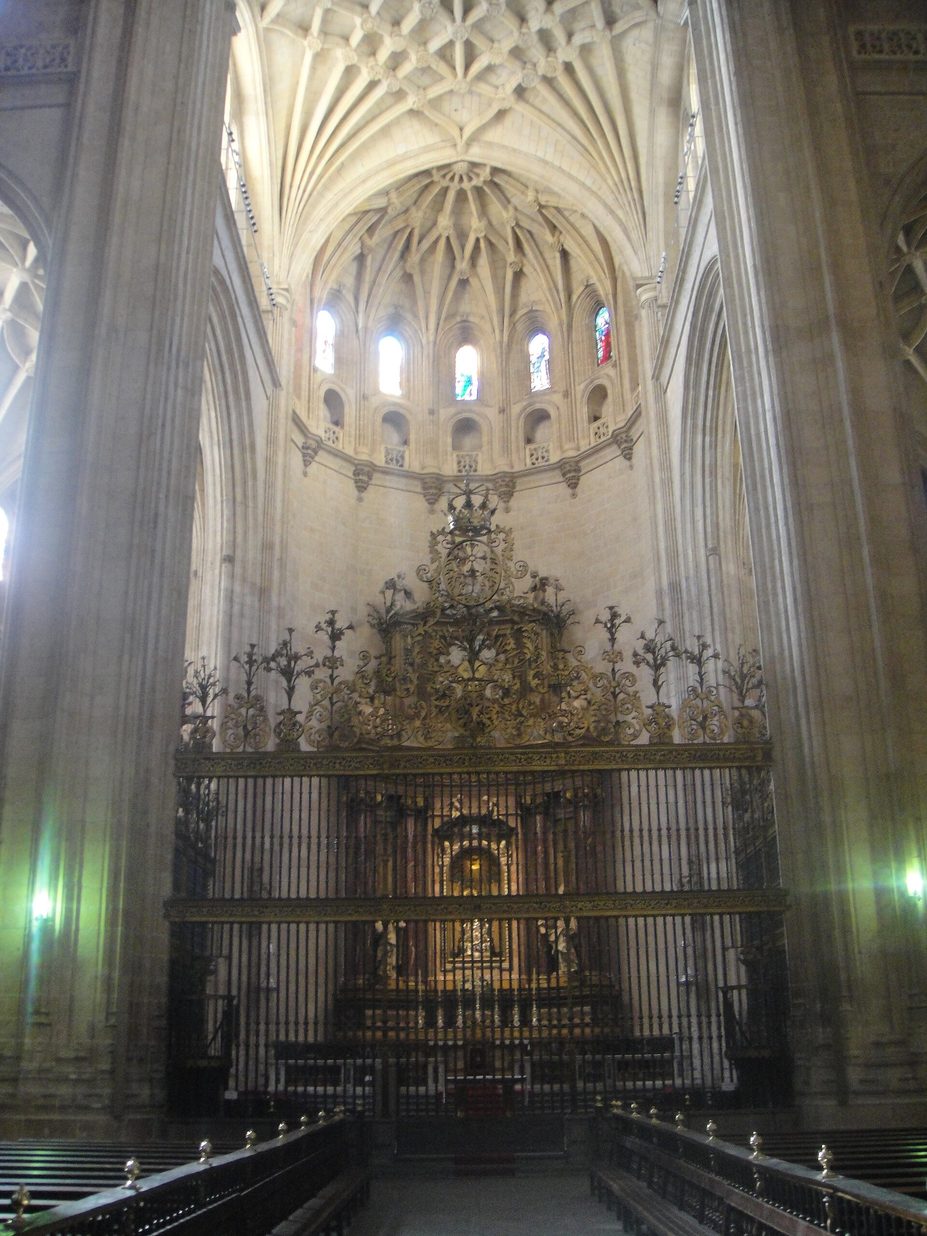
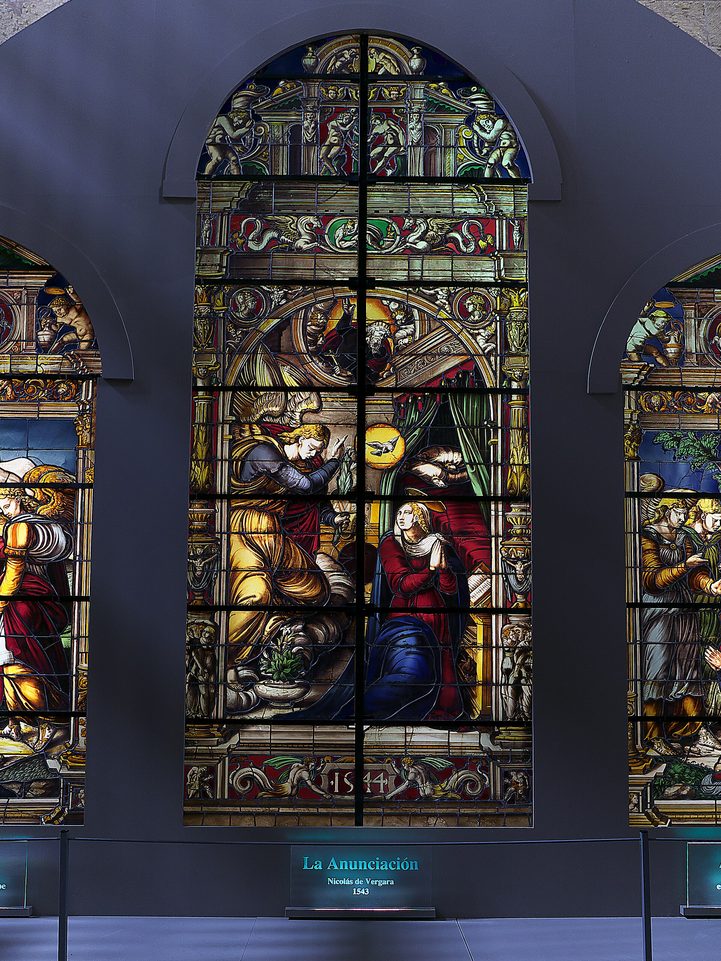
Inside, the cathedral is light, tall and unusually unified, its star vaults all of a piece. In the Capilla Mayor stands a neoclassical altarpiece of marble, jasper and bronze, designed by Francisco Sabatini for Charles III and made in 1768–75, around a medieval seated Virgin, the Virgen de la Paz. Look up at the windows: most of the glass is of the 16th and 17th centuries, though the seven windows of the Capilla Mayor date from 1916.
The choir and the chapels
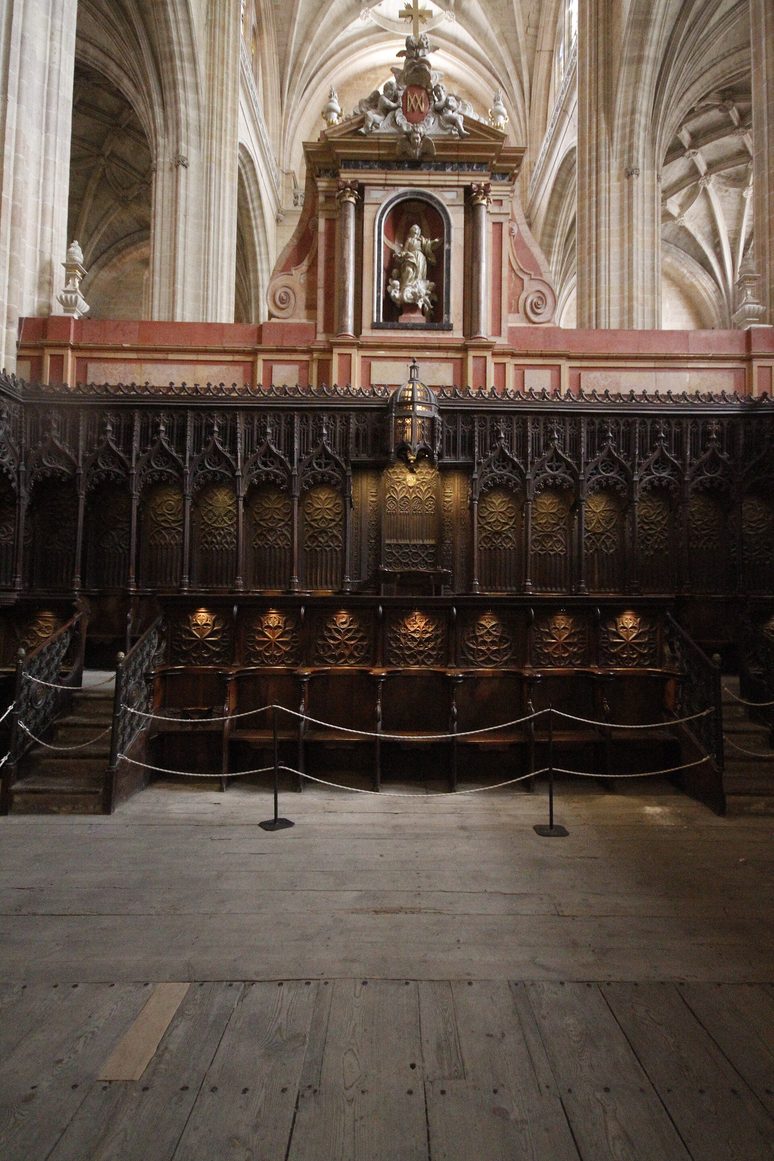
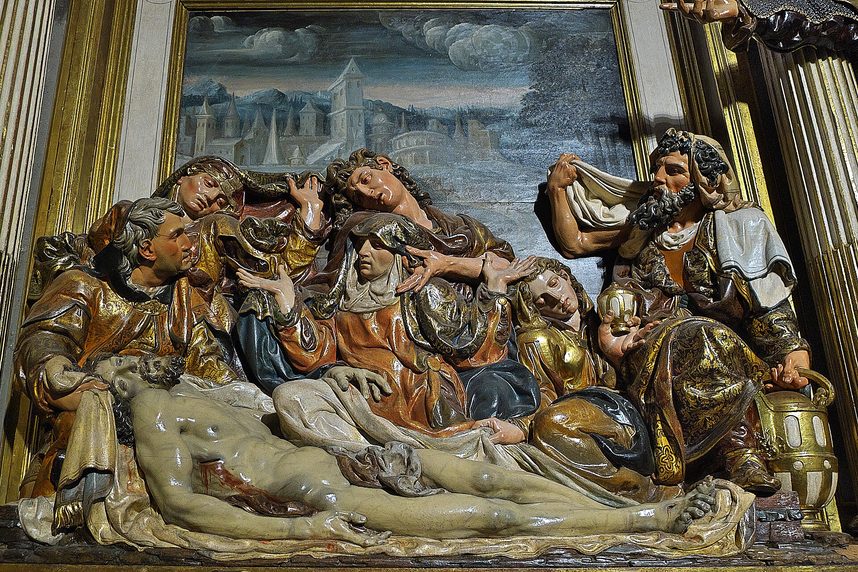
The late-Gothic choir stalls were made for the old cathedral in the 15th century and brought here in 1558. In the side chapels the great treasure is Juan de Juni’s Entombment of 1571, in the Capilla de la Piedad: a group of life-size painted figures around the dead Christ, full of movement and grief.
The cloister and the rooms
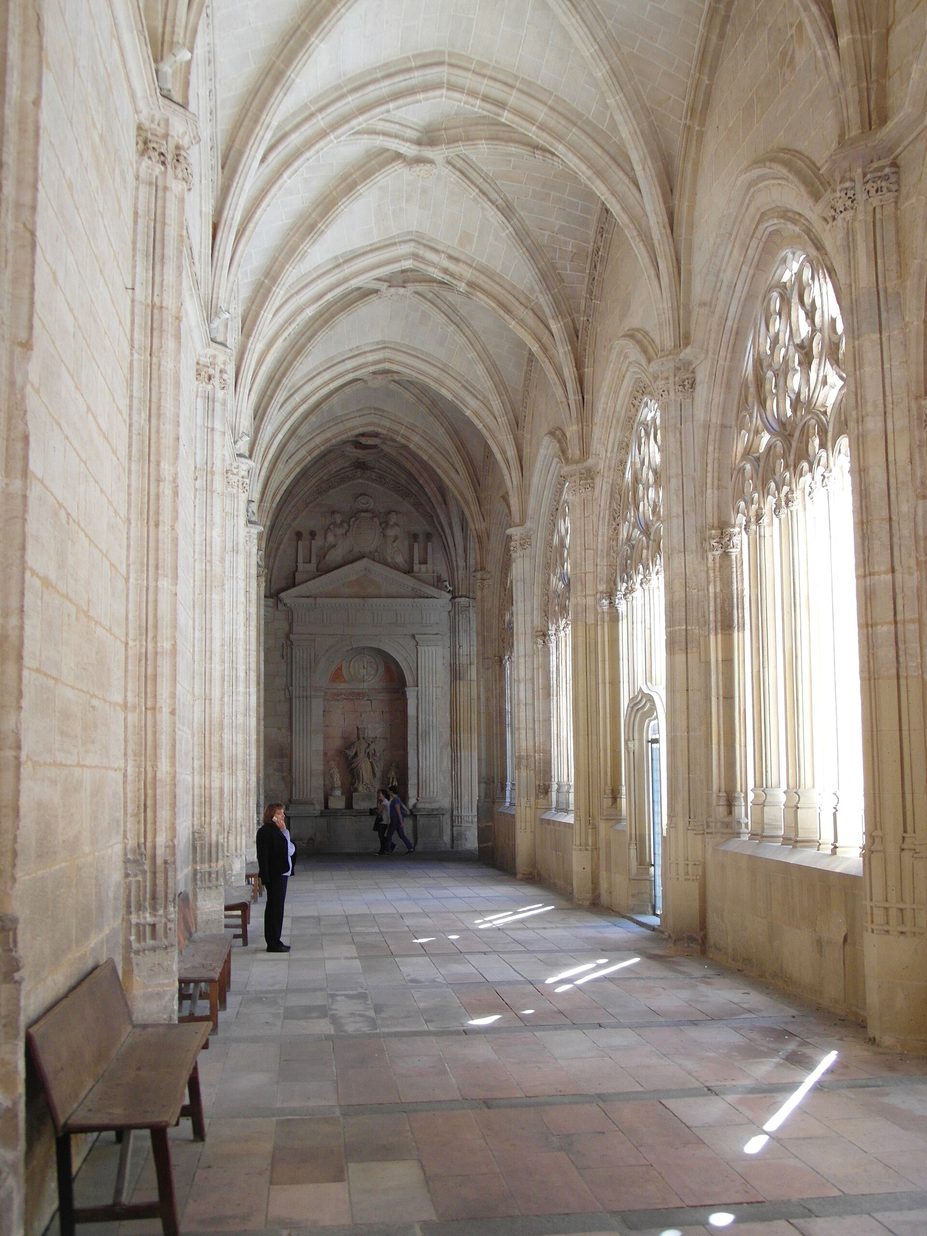
The Gothic cloister was taken down at the old cathedral and rebuilt here stone by stone from 1524. Around it are the chapter house, with Flemish tapestries, and the exhibition rooms. In the Sala de Santa Catalina is the tomb of the Infante Don Pedro, son of Enrique II, who according to legend fell from a window of the Alcázar from his nurse’s arms; a 2020 study suggests he was only about a year old.
The tower
The tower is climbed only on a guided visit of about an hour, with 308 steps up a spiral stair and stops on the way, including the bell chamber. The view from the top takes in the whole of Segovia, the Alcázar and the Guadarrama mountains. In summer there are night visits on Friday, Saturday and Sunday evenings.
Getting there
The cathedral stands on the Plaza Mayor, at the top of the old town. From the Aqueduct it is a 12–15 minute walk uphill along the main street, and the Alcázar is about ten minutes further on. High-speed trains from Madrid-Chamartín reach Segovia-Guiomar, outside the town, in about half an hour; city bus 11 runs from there to the Aqueduct. Buses from Madrid’s Moncloa interchange take about an hour and a quarter and stop in the town.
Tours and where to stay
Cathedral and tower tickets are sold on the cathedral’s own ticket site and at the door. For guided tours of Segovia, many of them day trips from Madrid, and for hotels in the old town, try these.
These links go to GetYourGuide and Booking.com. This site earns nothing from them at present — they are here because they are the quickest way to check what is actually available.
Don’t miss
- Juan de Juni’s Entombment In the Capilla de la Piedad.
- The cloister A medieval cloister that moved house.
- The tower climb For the best view in Segovia.
- The choir stalls Late Gothic, from the old cathedral.
- The east end Walk round the back for the pinnacles.
Insider tips
Book the tower early, and come back at dusk. Tower visits are in small groups and fill up at weekends, so book a slot on the cathedral’s ticket site. Day-trippers from Madrid crowd the town from mid-morning; the cathedral is calmest at opening time, and floodlit, seen from the Plaza Mayor, after dark.
Common questions
How much does Segovia Cathedral cost?
€4, or €3 reduced, including the cloister, the chapels and the exhibition rooms, and the bishop’s palace on the same day. The guided tower visit costs €7. Children under eight go free.
Is there a free time?
Only on Sunday mornings, for an hour early in the morning (9.30 to 10.30am from November to March, 9 to 10am from April to October), and only to the church itself; the cloister and rooms are closed then.
Can you climb the tower?
Yes, on a guided visit of about an hour, several times a day, with 308 steps to the top at 88 metres. In summer there are also night visits on Friday, Saturday and Sunday evenings.
When is Segovia Cathedral open?
In winter Monday to Saturday 9.30am to 6.30pm and Sunday 1.30pm to 6.30pm; in summer it stays open until 9.30pm. Last entry is half an hour before closing, and there are no tourist visits during services.
How do you get to Segovia from Madrid?
High-speed trains from Madrid-Chamartín reach Segovia-Guiomar in about half an hour; city bus 11 then runs to the Aqueduct. Buses from Moncloa take about an hour and a quarter and stop closer to the centre.
More churches in Spain
- El Escorial — Philip II’s monastery-palace, on the other side of the Guadarrama mountains.
- Toledo Cathedral — the primate cathedral of Spain, another easy day trip from Madrid.
- Salamanca Cathedrals — where Juan Gil de Hontañón also worked, on Salamanca’s New Cathedral.