
Temple Church, London
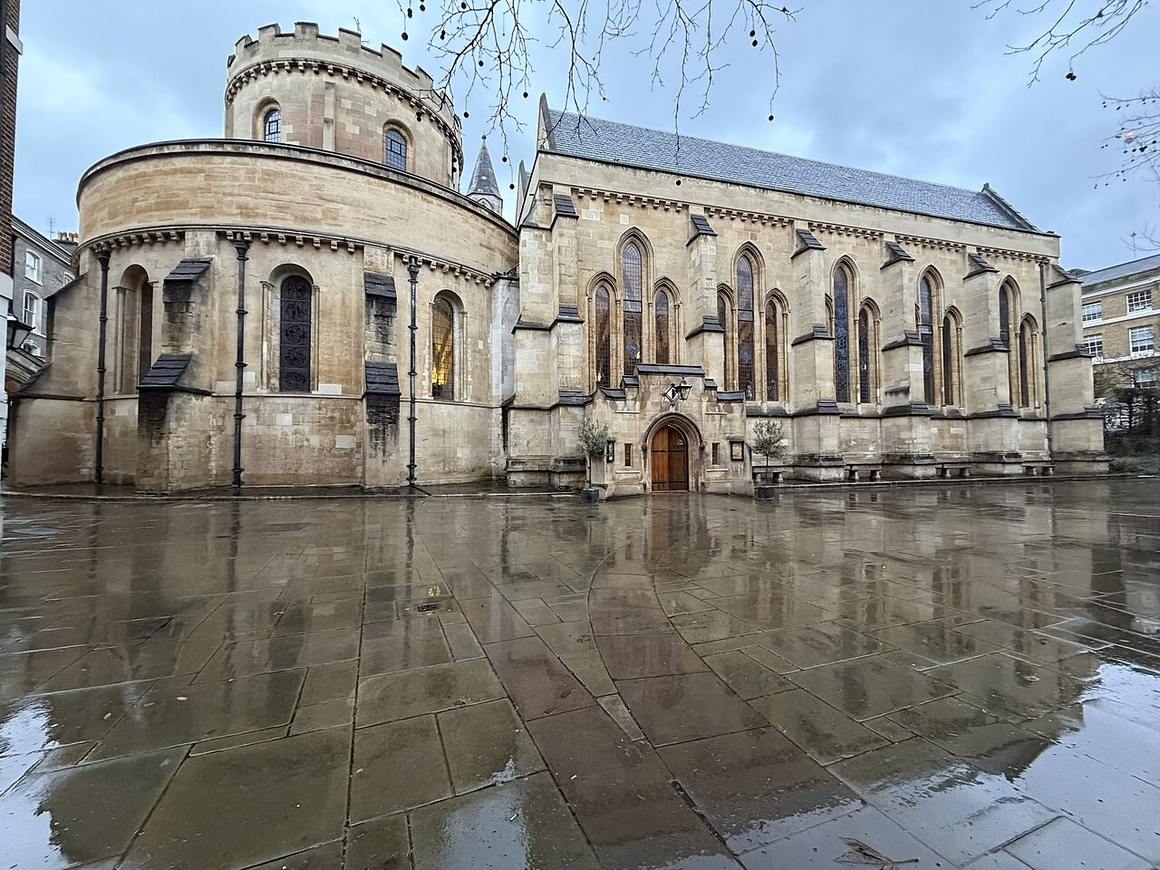
Tucked among the lawyers’ courts between Fleet Street and the Thames, Temple Church was built by the Knights Templar as their English headquarters. Its circular nave, modelled on the Church of the Holy Sepulchre in Jerusalem, was consecrated in 1185; its luminous Gothic chancel followed in 1240. On the floor of the Round lie stone knights, among them William Marshal, the greatest soldier of his age.
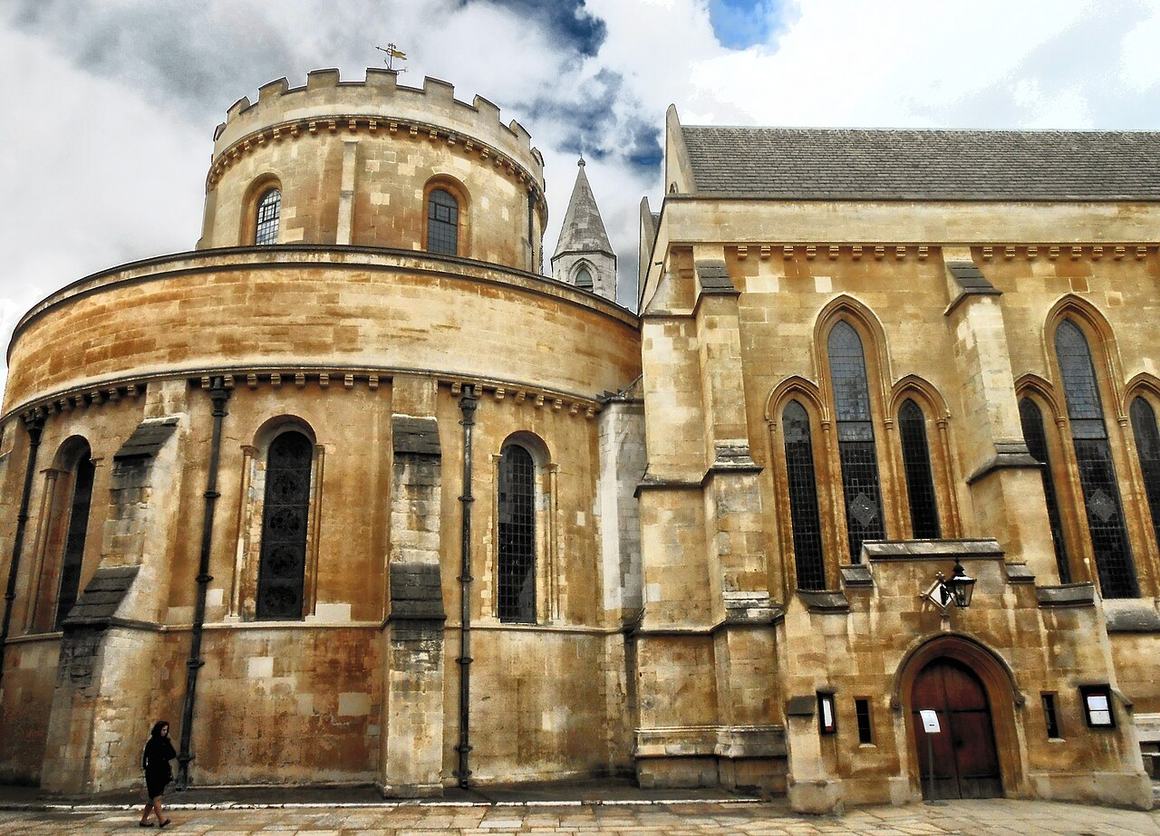
The church of the Templars
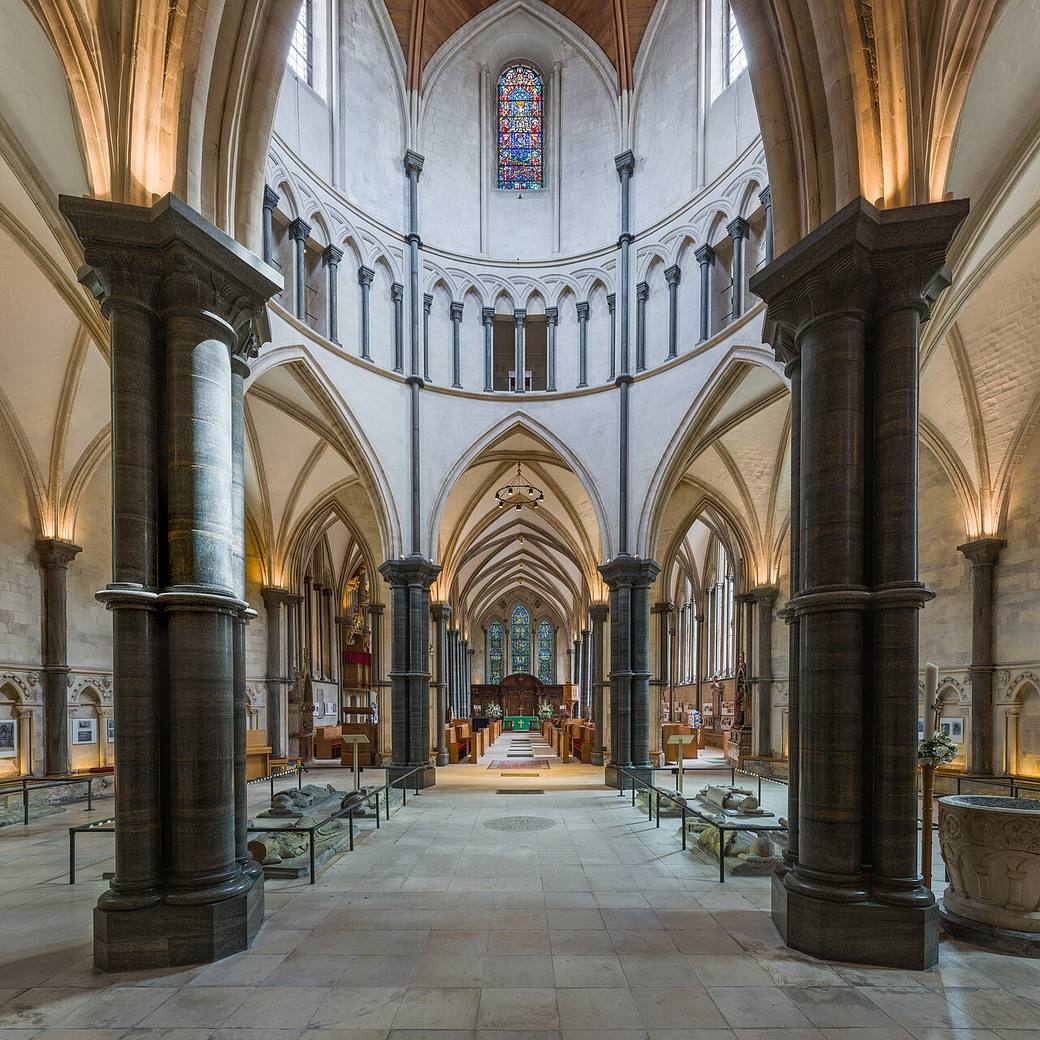
The Knights Templar built the Round as the chapel of their London house, and on 10 February 1185 it was consecrated by Heraclius, Patriarch of Jerusalem. Like other Templar churches, it took its round shape from the Church of the Holy Sepulchre. Its columns are the earliest surviving free-standing columns of Purbeck marble, a polished stone that became a hallmark of English Gothic.
The Temple was at the centre of English politics. William Marshal, who lies here, negotiated between King John and the rebel barons, and in January 1215 John was staying at the Temple when the barons demanded the charter that became Magna Carta. The chancel was consecrated on Ascension Day 1240.
After the Templars were suppressed in the early fourteenth century, the property passed to the Knights Hospitaller, who leased it to lawyers. In 1608 James I granted it to two Inns of Court, the Inner Temple and the Middle Temple, which still own and look after the church.
The visitor's cheat sheet
| Where | Temple, London, EC4Y 7BB |
|---|---|
| Getting there | Temple Underground, about 5 minutes’ walk; enter the Temple through the lanes from Fleet Street |
| Opening hours | Usually Mon–Fri 10am–4pm; closed to sightseers at weekends; hours vary with services and events — check the Temple Church website |
| Admission | Visitor ticket, about £5 for adults, less for concessions; children free; services free |
| How long | 30 minutes to an hour |
| Best time | A weekday, or a Sunday service with the choir |
| Dress code | No rule; respectful dress in a working church |
| Tours | Self-guided; occasional talks and organ recitals |
Hours and admission checked against the official site in October 2026. They change; the official site is always the last word.
Rebuilt after the Blitz. On 10 May 1941 incendiary bombs set the church on fire. The roofs fell, the marble columns cracked and the effigies were badly damaged. The restoration was completed in 1958.
What to see, in the order you meet it
The west door
You enter through a deep Norman doorway under a porch, carved with round arches and foliage. It is the oldest part of the church that most visitors notice.
The Round
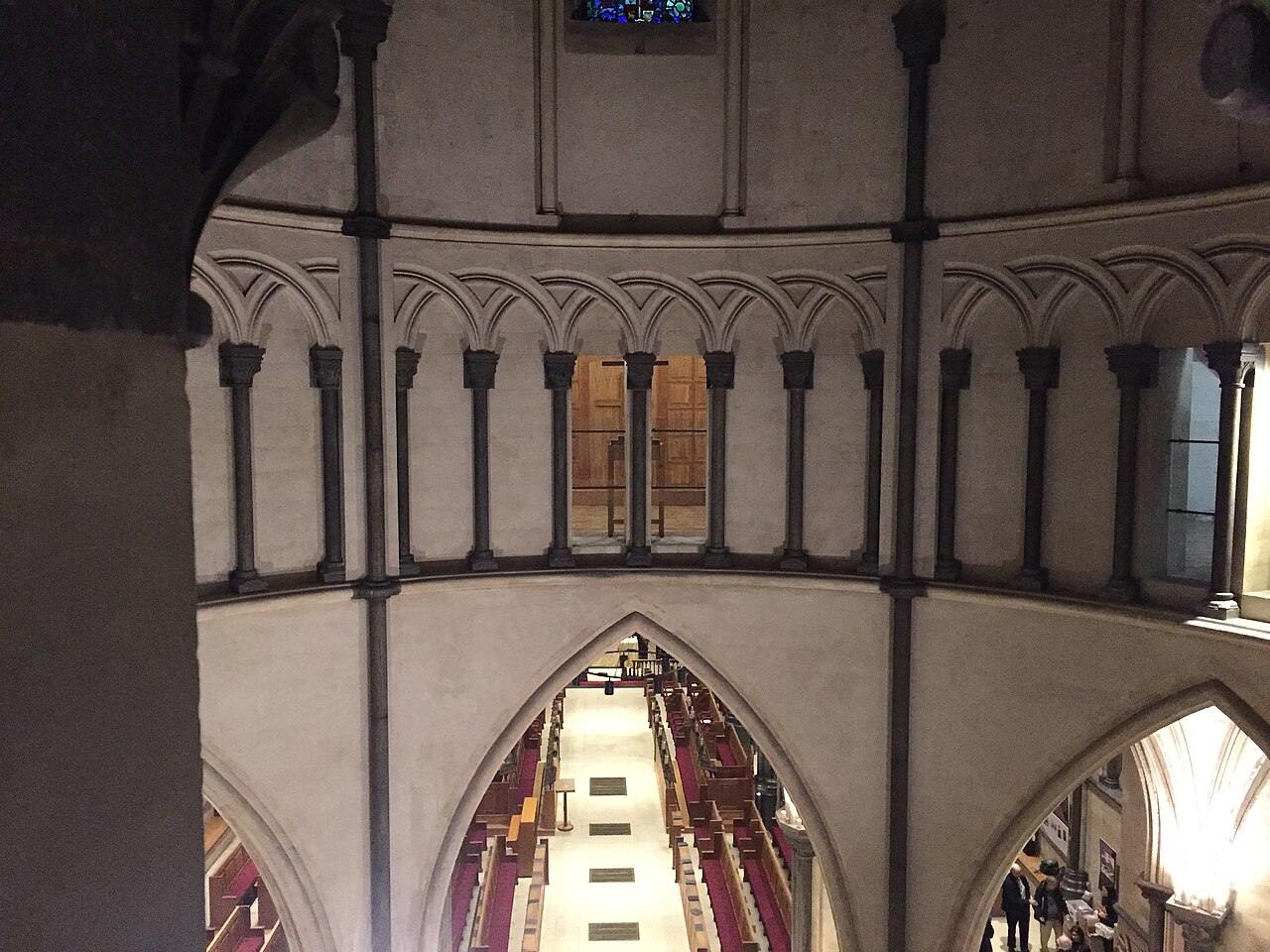
Inside, six clustered columns of Purbeck marble carry a ring of pointed arches, while the arcading round the walls still has the round arches of the Norman style. It is a building caught between two ages. Round the walls runs a stone bench and a chain of carved heads.
The effigies
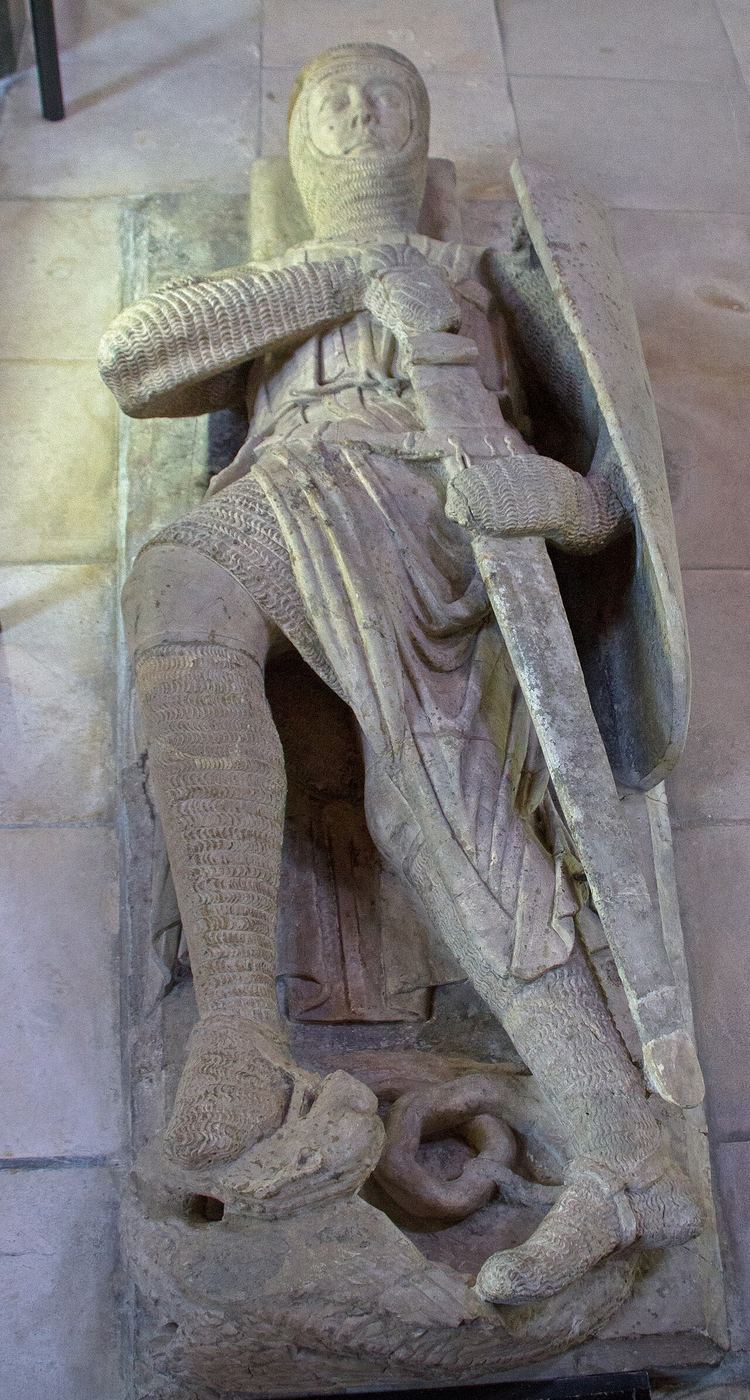
On the floor lie the stone effigies of knights of the twelfth and thirteenth centuries, several of them cross-legged in armour. They were damaged in 1941 and have been repaired. One of them is believed to be William Marshal, Earl of Pembroke, who died in 1219.
The chancel
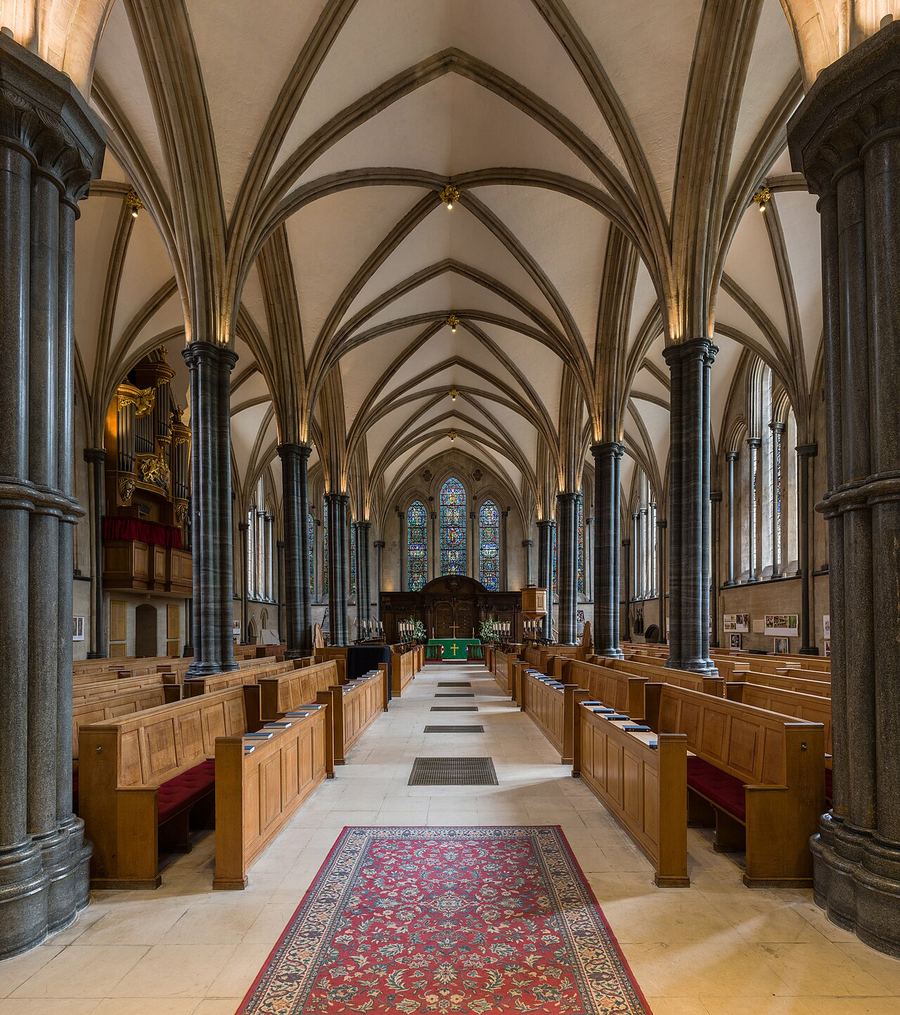
East of the Round is the chancel, a hall church whose three aisles rise to the same height, with slender Purbeck shafts and tall lancet windows. It was largely rebuilt after the war, with a new east window and an altar screen by Wren, which had been taken down in the nineteenth century and was brought back.
Tickets and opening times
Visitor ticket
Expect to pay about £5 for an adult, with reductions for concessions and free entry for children. Opening hours change from week to week, so check the Temple Church website before you go. Services, including choral services on Sundays, are free.
The hotel link goes to Booking.com. This site earns nothing from it at present — it is here because it is the quickest way to check what is actually available.
Don't miss
- The Round A copy of the Holy Sepulchre in the City of London.
- The effigies Including William Marshal.
- Purbeck marble The earliest free-standing columns of it to survive.
- The chancel A tall, light Gothic hall church.
- The choir Famous since its 1927 recording of “Hear My Prayer”.
- The Temple Lanes, courts and gardens of the Inns of Court.
Insider tips
Go to a service. The Temple Church choir is one of the finest in London, and its Sunday services are free. Afterwards, walk through the courts and gardens of the Inner and Middle Temple, one of the quietest corners of central London.
Common questions
How much does it cost to visit Temple Church?
There is a small admission charge for visitors: about £5 for an adult and less for concessions, with children free. Services are free and open to all. Check the Temple Church website for current prices.
When is Temple Church open?
It is usually open to visitors Monday to Friday, 10am to 4pm, and closed to sightseers at weekends. Hours can change for services and events, so check the Temple Church website before you go.
Who were the Knights Templar?
A military order of monks founded in Jerusalem around 1119 to protect pilgrims to the Holy Land. They grew rich and powerful across Europe, built their English headquarters here, and were suppressed in 1307–12.
Is Temple Church in The Da Vinci Code?
Yes. In Dan Brown’s novel, and the film made from it, the characters come to the Round looking for a knight’s tomb. The church has since welcomed many visitors who first heard of it that way.
How do you get to Temple Church?
The church lies in the Temple, between Fleet Street and the Thames. Temple Underground station is about five minutes’ walk away. On weekdays you can walk in through the lanes from Fleet Street or from the Embankment.
Where to stay and eat nearby
Fleet Street, Holborn and the Strand have plenty of pubs, cafés and restaurants, and hotels are close by around Covent Garden and the Embankment.
More English churches
- St Paul’s Cathedral — about fifteen minutes’ walk east
- St Bartholomew the Great — London’s great Norman church
- Westminster Abbey — along the river
See all the cathedrals and churches worth visiting in England →